
How to Open the Gas Tank on a Hyundai Tucson

Opening the gas tank on a Hyundai Tucson is typically done via a lever inside the vehicle or a button on the driver’s door, depending on the model year. For newer models (2021+), a push-button release on the fuel door is standard. If the electronic release fails, a hidden manual override inside the trunk provides a reliable backup. Always ensure the vehicle is unlocked and parked safely before attempting to refuel.
Key Takeaways
- Primary Release Method: Most Hyundai Tucsons use a lever on the floor near the driver’s seat or a button on the door panel to pop open the fuel filler door.
- Model Year Variations: Pre-2021 models often have a floor lever, while 2021 and newer models predominantly feature an electronic button on the driver’s door.
- Manual Override Exists: If the electronic or lever release fails, a manual release cord is located inside the trunk, behind a removable panel.
- Unlock First: The vehicle must be unlocked (via key fob or door handle) for the fuel door release mechanism to function properly.
- Cold Weather Caution: The fuel door can freeze shut in icy conditions; gentle force with a gloved hand or a de-icer spray may be needed.
- Safety First: Always turn off the engine, set the parking brake, and avoid smoking or open flames when refueling.
📑 Table of Contents
Introduction: Why This Simple Task Matters
Let’s talk about something we all do but rarely think about: opening the gas tank. For Hyundai Tucson owners, this everyday action is surprisingly straightforward, yet a moment of confusion at the pump can be frustrating. Whether you’re a new driver, just rented a Tucson, or are helping someone else, knowing exactly how to access the fuel filler is a small but essential piece of automotive knowledge. It saves time, prevents fumbling, and gets you back on the road faster. This guide will walk you through every method, for every generation of Tucson, so you’ll never be caught off guard at a gas station again.
The Hyundai Tucson has evolved significantly over its production runs, and so has its fuel door mechanism. From simple mechanical levers to modern electronic buttons, the core principle remains the same: a controlled release that keeps the fuel system secure and tamper-proof. We’ll break it down by era, highlight the common points of failure, and give you the insider tricks to handle any situation. Think of this as your complete manual for that small but mighty panel on the side of your SUV.
Locating the Fuel Release: Your First Step
Before you can open anything, you need to know where the command center is. In the Hyundai Tucson, the fuel door release is always found inside the passenger cabin, conveniently placed for the driver. You will not find an external keyhole on the fuel door itself—it’s a design choice for security and aesthetics. Your search begins either on the floor by your left foot or on the driver’s side door panel.
Visual guide about How to Open the Gas Tank on a Hyundai Tucson
Image source: vehq.com
The Floor Lever (Common in Older Models)
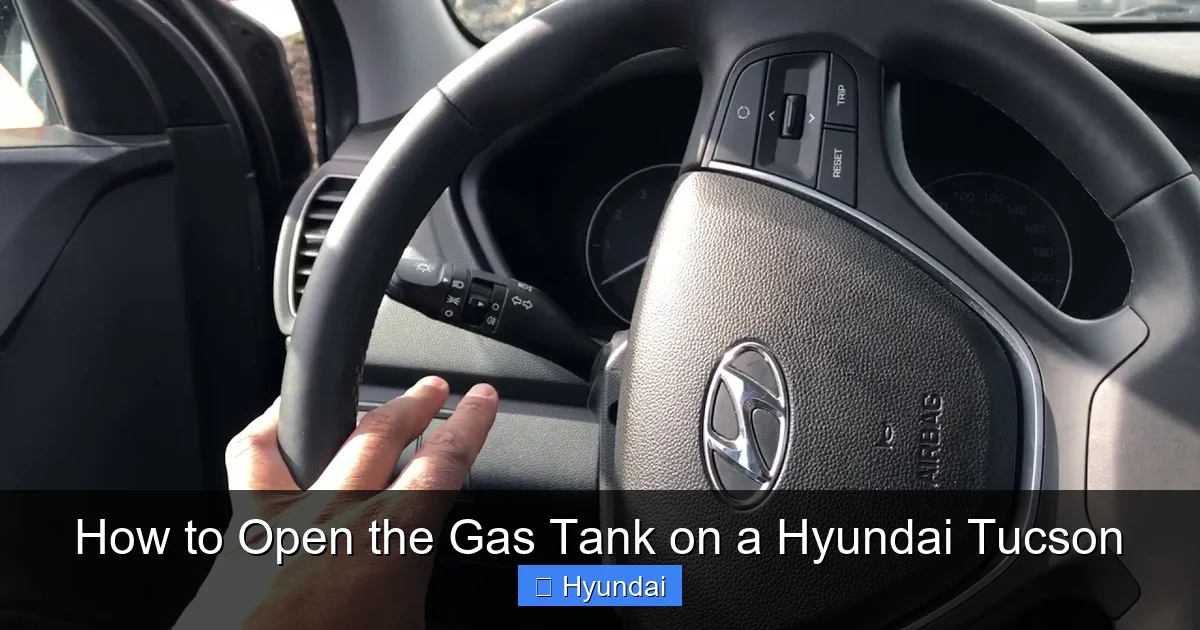
If you drive a Tucson from the early 2000s up through approximately the 2020 model year, your primary control is likely a small, textured lever on the driver’s side floor. It’s typically located just to the left of the pedals, near the kick panel. It might have a small gas pump icon embossed on it. To use it, simply pull up on the lever firmly but gently. You should hear a distinct pop or click as the fuel door latch releases. The door will then spring open a few inches, held by a small hinge or stay. This is a fully mechanical connection—pulling the lever physically moves a cable that unlatches the door.
The Door Panel Button (Modern Standard)
Starting with the significant redesign for the 2021 model year, Hyundai moved to an electronic button. You’ll find this button on the driver’s door, usually integrated into the armrest or the door panel itself. Look for a small button with the same fuel pump symbol. Pressing it sends an electronic signal to a solenoid that unlocks the fuel door. You’ll hear an audible click. This method is cleaner and allows for more flexible interior design. If your Tucson has this button, that’s your go-to. For comparison, many modern crossovers like the Toyota RAV4 also use a similar door-mounted button, making this a very common industry feature now.
Step-by-Step: Opening the Gas Tank for Your Specific Model
Now, let’s get practical. The exact steps depend on which release system your Tucson has. Follow the guide below that matches your vehicle’s characteristics.
Visual guide about How to Open the Gas Tank on a Hyundai Tucson
Image source: hyundaisonatamanual.com
For Models with the Floor Lever (Pre-2021)
- Ensure the vehicle is unlocked. Use your key fob to unlock all doors. The fuel door is electronically locked/unlocked with the central locking system. If the car is locked, the lever will not work.
- Locate the lever. Crouch down slightly to see the floor area to the left of the pedals. Find the lever with the gas pump icon.
- Pull the lever upward in one smooth motion. You should feel resistance and then a release. Do not yank it harshly.
- Proceed to the fuel door. Walk to the rear quarter panel on the driver’s side. The door should now be slightly ajar. Push it fully open to its hinge stop.
- Remove the fuel cap. Turn the cap counter-clockwise to unscrew it. Some models have a tether to keep it from dangling.
For Models with the Door Button (2021 and Newer)
- Unlock the vehicle. Again, this is critical. Press the unlock button on your key fob or use the passive entry handle.
- Locate the button. Check the driver’s door armrest or the lower part of the door panel. The symbol is your guide.
- Press the button firmly once. You will hear a click from the rear of the vehicle. There is no need to hold it down.
- Go to the fuel door. It should pop open automatically. If it doesn’t, ensure the car is unlocked and try again. A weak key fob battery can sometimes cause central lock issues.
- Refuel as usual. The cap is now accessible.
What If It Doesn’t Open? The Manual Override
Both systems can fail. A broken cable, a dead solenoid, or a blown fuse can render your primary method useless. Don’t panic; Hyundai included a failsafe. This is a universal feature across nearly all Tucson model years.
Here’s how to access and use the manual release:
- Open the trunk. You’ll need full access to the cargo area.
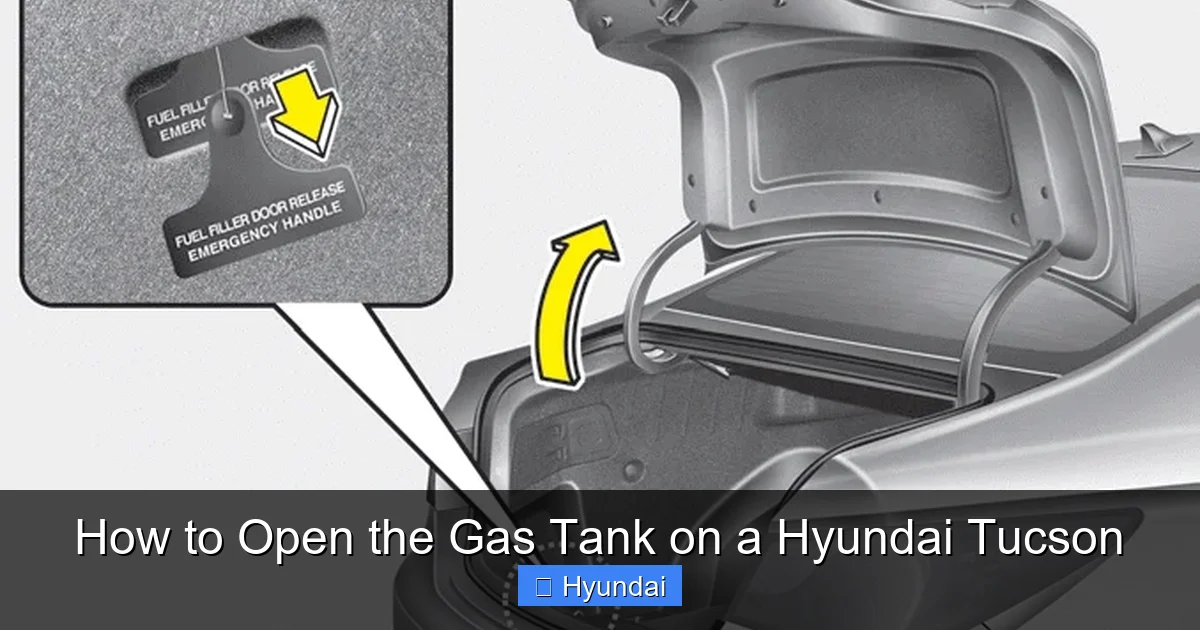
- Locate the access panel. On the side of the trunk liner (the fabric or plastic covering the wheel well), directly behind where the fuel door is located on the outside, you’ll find a small, square or rectangular plastic flap. It might have a small cutout or seam. It’s often held in place by plastic clips or a single screw.
- Remove the panel. Gently pry it open with a flat-head screwdriver wrapped in a cloth to avoid scratching, or unscrew it if necessary.
- Find the bright-colored release cord or lever. Inside the cavity, you’ll see a red, yellow, or orange plastic tab attached to a metal cable or lever. This is your manual release.
- Pull the cord/lever firmly. You will feel and hear the fuel door latch disengage. The door will pop open.
- Refuel and secure. After refueling, simply push the fuel door closed until it latches. You do not need to re-engage the manual cord; it resets automatically when the door closes.
This manual release is a critical backup. It’s a good idea to familiarize yourself with its location and operation when you aren’t in a hurry, perhaps when washing the car. The process is similar to finding the manual trunk release in vehicles like the Subaru Forester, which also uses a hidden interior cable for certain functions.
Troubleshooting Common Issues
Even with clear instructions, things can go wrong. Here’s a diagnostic guide for the most frequent problems.
Visual guide about How to Open the Gas Tank on a Hyundai Tucson
Image source: i.ytimg.com
The Lever/Button Does Nothing
First, confirm the vehicle is unlocked. If it is, the issue is likely mechanical or electrical.
- For lever systems: The cable may be stretched, broken, or detached from the latch. You might notice excessive slack or no resistance when pulling. This requires cable replacement, which is a moderate DIY task or a quick job for a mechanic.
- For button systems: Check the fuse for the “Fuel Door” or “Body Control Module” in the fuse box (owner’s manual diagram). A blown fuse is a common and easy fix. If the fuse is good, the solenoid or its wiring may be faulty.
The Fuel Door is Stuck Closed (Not Frozen)
If the latch mechanism itself is jammed, the manual override is your only solution. After using the manual cord, you may need to inspect the latch for debris or damage. Sometimes, a good cleaning and lubrication with a graphite-based spray (not oil-based, which attracts dirt) can free it up.
The Fuel Door is Frozen Shut
This is a cold-weather reality. The rubber seal can ice to the body.
- Do NOT force it. You can tear the seal or damage the latch.
- Use warm water. Gently pour lukewarm (not hot) water around the seam of the door to melt the ice.
- Use a de-icer spray. Products designed for locks and seals work well.
- Push gently on the door as the ice melts to break the seal.
Prevention is key: apply a silicone-based spray to the rubber seal before winter sets in.
The Fuel Cap Won’t Come Off
This is a separate issue from the door. If the cap is stuck:
- Ensure it’s unlocked. Some caps have a lock that disengages with the door unlock. A locked cap won’t turn.
- Use the key fob. Press the unlock button again while trying to turn the cap.
- Apply steady pressure. Use your palm, not fingers, for more torque. Push down slightly as you turn counter-clockwise.
- Check for damage. A cross-threaded or damaged cap may need replacement. Never use tools to force it.
Safety and Best Practices
Refueling is routine, but it involves flammable liquids. Following safety protocols is non-negotiable.
Essential Pre-Refuel Checklist
- Turn off the engine. This is a universal rule at all gas stations.
- Set the parking brake. Prevent any vehicle movement.
- No smoking, no flames. Absolutely no cigarettes, lighters, or anything that could spark.
- Discharge static electricity. Touch a metal part of the car (like the door handle) before touching the fuel nozzle. This grounds any static charge you might have built up from sliding on the seat.
- Use the correct fuel grade. Check the sticker inside the fuel door or your owner’s manual. Most Tucsons take regular unleaded (87 octane), but some turbo models require premium.
At the Pump
Once the door is open, remove the cap by turning it counter-clockwise. Some caps are tethered; others come off completely. Place it somewhere safe, like the top of the fuel door. Insert the nozzle fully into the filler neck before squeezing the handle to avoid splashing and ensure proper venting. Do not top off the tank; modern vehicles are designed to shut off automatically. Overfilling can damage the evaporative emission (EVAP) system, leading to costly repairs and a persistent check engine light. For specific reset procedures after such an issue, our guides for other models, like the Honda Civic, detail the process, though Tucson-specific procedures differ.
Maintenance and Long-Term Care
Your fuel door and latch are designed to last the life of the car, but they benefit from occasional attention.
- Clean the area regularly. Dirt and road salt can work into the latch mechanism. Wash the area around the fuel door with your regular car wash soap. Rinse thoroughly.
- Lubricate the latch annually. With the door open, spray a small amount of a dry, graphite-based lubricant (like those used for locks) into the latch mechanism. Work the door open and closed a few times to distribute it. Avoid WD-40 for this, as it’s a solvent that can dry out and attract grime over time.
- Inspect the rubber seal. Look for cracks, tears, or hardening. A damaged seal allows dirt and moisture into the fuel system and can cause the door to fly open at high speeds. Replacement seals are available from Hyundai dealers or aftermarket suppliers.
- Listen and feel. When operating the release, note any unusual noises (grinding, squeaking) or changes in resistance. Early detection of a failing cable or solenoid saves you from being stranded with an inoperable fuel door.
Taking these few minutes each year ensures your Tucson’s refueling process remains effortless and trouble-free. It’s a small investment that prevents a major inconvenience.
Conclusion: Knowledge is Power at the Pump
Opening the gas tank on your Hyundai Tucson is a simple task with a couple of easy-to-master methods. For most drivers, it’s a matter of remembering whether your model has the classic floor lever or the modern door button. The universal manual override in the trunk is your ultimate safety net, a feature that embodies good engineering by providing a mechanical solution when electronics fail. By understanding these mechanisms, performing basic maintenance, and following safety rules, you transform a mundane chore into a confident, efficient part of your driving routine. So next time you pull up to a pump, you’ll approach the fuel door with certainty, not guesswork. And if you ever find yourself in a different vehicle, like a Nissan Sentra or a Dodge Charger, you’ll know exactly where to look for that essential release.
Frequently Asked Questions
What if my Hyundai Tucson’s fuel door won’t open and the car is unlocked?
First, ensure all doors are fully unlocked using the key fob. If it still won’t open, the primary release mechanism (cable or solenoid) has likely failed. Your solution is the manual override release located inside the trunk behind an access panel. Pulling that cord will open the door mechanically.
Is there a keyhole on the Hyundai Tucson fuel door for emergencies?
No. Hyundai Tucsons do not have an external keyhole on the fuel filler door. The design relies entirely on interior mechanical or electronic releases, plus the hidden manual trunk release. This is a security and styling feature common in modern vehicles.
Can a dead key fob battery prevent the fuel door from opening?
Yes. Since the fuel door is electronically locked and unlocked with the vehicle’s central locking system, a completely dead key fob battery can prevent the car from unlocking, which in turn will disable the fuel door release. Use the physical key hidden inside your fob to unlock the driver’s door, which should then allow the fuel door to operate.
Where exactly is the manual fuel door release in a Hyundai Tucson?
It’s inside the cargo area. Open the trunk and look at the side liner (the fabric or plastic covering the wheel well) on the driver’s side. You’ll find a small plastic access panel. Remove it to reveal a brightly colored (usually red or yellow) cord or lever. Pulling this will pop open the fuel door from the outside.
Is it safe to force a frozen fuel door open?
No. Forcing a frozen door can tear the rubber seal or break the latch mechanism. Instead, gently pour lukewarm water around the door’s seam or use a dedicated automotive de-icer spray. Once the ice melts, the door should open normally. Prevention with a silicone spray on the seal before winter is the best approach.
Why does my fuel cap feel stuck even after opening the door?
A stuck fuel cap is a separate issue from the door. It may be cross-threaded, have debris in the threads, or be locked (some caps have a lock that disengages with the door unlock). Ensure the car is unlocked, press the unlock button on the fob again while trying, and use the palm of your hand for steady, firm pressure to turn it counter-clockwise. Never use tools, as this can damage the cap.