
Are Bmw Electric Cars Reliable?

BMW electric cars are generally reliable, benefiting from simpler powertrains and strong build quality, but they come with unique considerations like software dependence and higher-tech maintenance costs. Their warranty coverage is competitive, and real-world data shows promising battery longevity, though long-term studies are still emerging as these models are relatively new. Ultimately, reliability often matches or exceeds their gasoline counterparts in many areas, but potential owners should be aware of the evolving nature of EV technology and support networks.
So, you’re thinking about going electric with a BMW. The sleek design, the instant torque, the prestige badge—it’s an appealing package. But then the big question creeps in, the one every potential EV buyer asks: Are BMW electric cars reliable? It’s a fair and crucial question. After all, you’re investing in a complex, high-tech machine from a brand famous for its engineering prowess, but also sometimes for expensive repairs. Let’s pop the hood, not on a gasoline engine, but on the electric heart of BMW’s lineup and see what the data, owners, and experts really say.
Reliability isn’t just about whether the car breaks down. It’s a holistic picture encompassing battery longevity, software stability, maintenance ease, repair costs, and long-term durability. For BMW, a brand with over a century of internal combustion engineering, the shift to electric represents both an opportunity to simplify and a challenge to master new technologies. We’ll separate the myths from the facts, look at real owner experiences, and give you a clear, balanced view to help you make an informed decision.
Key Takeaways
- Strong Powertrain Simplicity: Electric drivetrains have far fewer moving parts than combustion engines, reducing traditional failure points and contributing to solid reliability for components like motors and single-speed transmissions.
- Competitive Battery Warranty: BMW offers an 8-year/100,000-mile battery warranty on its EVs, providing significant peace of mind against premature capacity loss, which is a benchmark in the industry.
- Software-Dependent Experience: Reliability is increasingly tied to software; while over-the-air updates can fix bugs, glitches in infotainment or vehicle control systems can cause temporary “faults” that may require a dealer visit or reboot.
- Maintenance Shifts, Not Disappears: You’ll skip oil changes and spark plug replacements, but EVs introduce new maintenance items like coolant for the battery and power electronics, and repairs to complex high-voltage systems can be costly and require specialized technicians.
- Real-World Data is Promising but Young: Early data from models like the i3 and early iX3s shows good battery retention, but the newest platforms (i4, iX, i7) haven’t been on the road long enough for decade-plus longevity studies.
- Build Quality is a Mixed Bag: BMW’s general manufacturing standards apply, so interior trim and conventional components are typically well-built, but early EV models sometimes had niche issues (e.g., i3 range extender engine problems) that are being engineered out.
- Cost of Ownership Can Be Favorable: Lower “fueling” and routine maintenance costs often offset the potentially higher price of repairs for specialized EV parts, making total ownership cost a key part of the reliability equation.
📑 Table of Contents
- BMW’s Electric Vehicle Strategy and Heritage
- The Heart of the Matter: Battery and Powertrain Technology
- Real-World Reliability Data and Owner Experiences
- Maintenance and Ownership Costs: The EV Advantage?
- Software and Technology: A Double-Edged Sword
- The Future Outlook: Building on Strengths and Facing Competition
BMW’s Electric Vehicle Strategy and Heritage
To understand the reliability of today’s BMW EVs, you have to appreciate the journey. BMW wasn’t a latecomer to electrification; it was actually an early pioneer with the quirky but groundbreaking BMW i3, launched in 2013. That car, with its carbon-fiber reinforced plastic (CFRP) passenger cell and optional range-extending gasoline engine, taught BMW invaluable lessons about EV packaging, battery management, and customer expectations. The i3’s reliability record is a mixed bag—praised for its simple electric drive but plagued by issues with its optional two-cylinder range extender engine and some early battery thermal management quirks. However, it served as a critical, real-world laboratory.
From i3 to iX: Evolution of BMW’s EV Platform
The current generation of BMW EVs—the i4, iX, i7, and iX1—are built on a completely different, more conventional philosophy. They use a flexible, fifth-generation electric drive module that integrates the motor, transmission, and power electronics into a single unit. This design improves efficiency and packaging. Crucially, these cars share their foundational platforms (CLAR for i4/iX, the new Neue Klasse platform coming in 2025) with their gasoline and hybrid siblings. This “shared platform” strategy means BMW can leverage its decades of experience in chassis tuning, suspension design, and overall vehicle integration. The fundamental bones are proven, even if the propulsion system is new. This is a significant reliability advantage over startups that had to engineer everything from the ground up.
Commitment to Electrification and Investment
BMW has pledged to have half of its global sales be fully electric by 2030. This isn’t a side project; it’s the core of the company’s future. Billions are being invested in battery cell technology, e-motor production, and software development. This massive commitment means resources for engineering quality, rigorous testing, and building a robust service network are heavily focused on EVs. You can see this investment extending beyond cars, too. BMW’s push into electric mobility includes products like the BMW Electric Cycle and the sleek BMW CE 04 electric scooter. While these are two-wheelers, the battery management systems, thermal management principles, and electric motor tech are closely related. The R&D flowing into these smaller products feeds back into the automotive division, creating a virtuous cycle of electric expertise.
The Heart of the Matter: Battery and Powertrain Technology
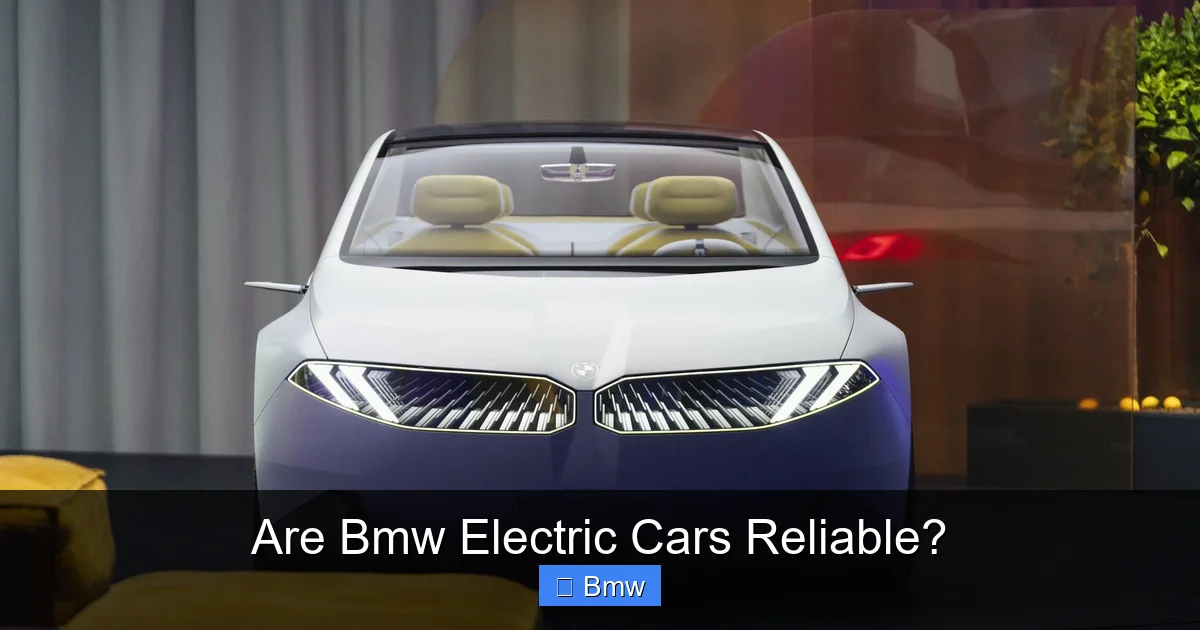
When people worry about EV reliability, 90% of the concern is about the battery. It’s the most expensive single component, and its health dictates the car’s usable range and value. BMW sources its high-voltage lithium-ion batteries from established partners like CATL and Northvolt. The battery pack itself is a sophisticated assembly of cells, a battery management system (BMS), cooling circuits, and a sturdy housing.
Visual guide about Are Bmw Electric Cars Reliable?
Image source: storage.myseldon.com
Battery Chemistry and Longevity Engineering
BMW uses NMC (Nickel Manganese Cobalt) chemistry for most of its current models, a balanced choice for energy density, power, and longevity. The BMS is the unsung hero here; it constantly monitors each cell’s temperature, voltage, and state of charge. Its primary jobs are to keep the battery in its optimal temperature window (using liquid cooling/heating) and to prevent any cell from being overcharged or deeply discharged. This careful stewardship is key to long-term health. BMW engineers its batteries to retain a high percentage of their original capacity over time. Their 8-year/100,000-mile warranty guarantees at least 70% of that original capacity. Real-world data from early i3s and other EVs suggests that with proper thermal management, batteries degrade slowly—often at about 1-2% per year under normal use. For a new i4 with, say, 300 miles of EPA range, you could reasonably expect 240-270 miles after 8 years, which is still highly usable.
Electric Drive Units: Simplicity and Durability
Contrast this with a traditional BMW inline-6 or turbocharged 4-cylinder. An electric drive unit has one (or sometimes two) electric motors, a single-speed reduction gear, and a power electronics module. There are no pistons, valves, crankshafts, fuel injectors, turbochargers, or complex exhaust systems. The potential failure points are dramatically reduced. These motors are incredibly robust, often rated for over a million miles of operation in commercial applications. The main wear items are bearings and coolant seals, but the design is inherently simpler. This is the core reliability argument for EVs: fewer things to go wrong. BMW’s fifth-gen e-drives are sealed units, not designed for user service, which is a trend across the industry. Their reliability will be proven over time, but the engineering simplicity is a major positive indicator.
Real-World Reliability Data and Owner Experiences
Numbers and engineering are one thing; what are people actually experiencing on the road? We have to look at a few sources: warranty data, independent reliability surveys, and owner forums.
Visual guide about Are Bmw Electric Cars Reliable?
Image source: cdn.thedailyautomotive.com
Warranty Coverage: What BMW Promises
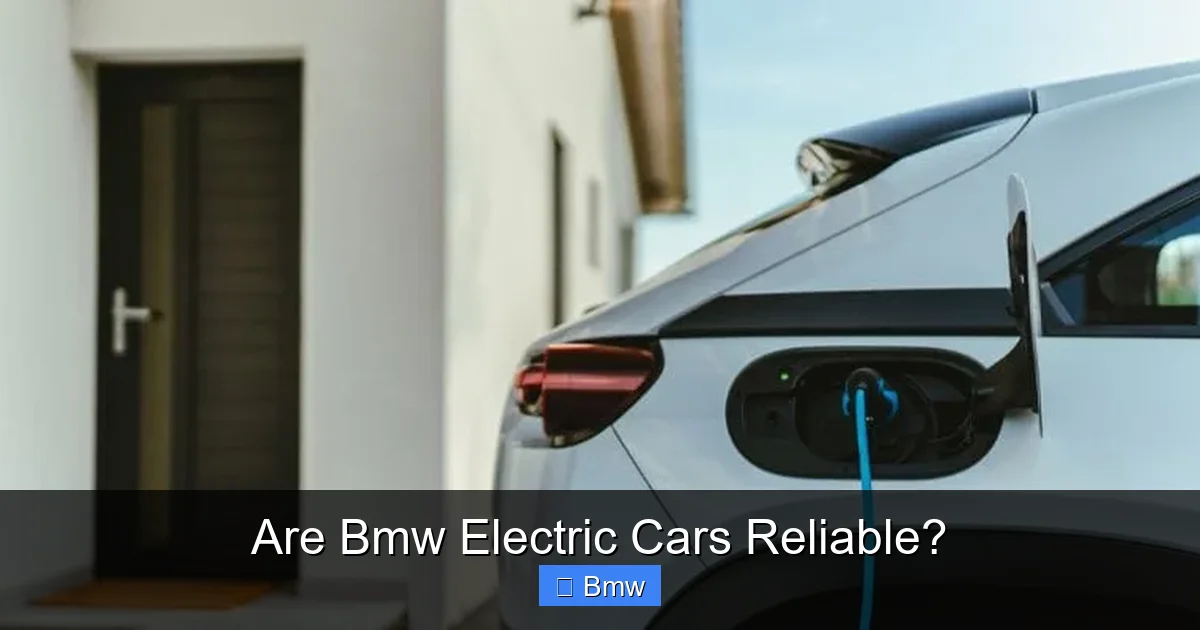
As mentioned, the battery and electric drive components are covered for 8 years/100,000 miles. This is a strong, industry-leading warranty that directly addresses the biggest reliability fear. The rest of the vehicle—suspension, electronics, interior—is covered by BMW’s standard New Vehicle Limited Warranty, which is 4 years/50,000 miles in most markets. This comprehensive coverage period is a huge factor in perceived reliability. If something does go wrong with the EV-specific system within that 8-year window, you’re largely protected from a catastrophic bill.
Independent Reliability Surveys and Reports
Organizations like J.D. Power and Consumer Reports are still building robust datasets on EVs, simply because they haven’t been around long enough. However, early signals are positive. In J.D. Power’s 2023 U.S. Electric Vehicle Experience (EVX) Study, BMW ranked among the top brands for overall EV ownership satisfaction, which correlates heavily with reliability perceptions. Consumer Reports’ predicted reliability scores for the i4 and iX have been “average” in recent years, not stellar, but not poor either. This “average” rating often reflects teething issues with new technology (software bugs, fit-and-finish quirks) rather than fundamental powertrain failures. It’s important to note that brands like Tesla, with a longer pure-EV history, often score higher in these same surveys, but they have their own well-documented quality control inconsistencies.
Common Issues Reported by Owners
Delving into owner forums like the BimmerPost forums for the i4 and iX reveals a pattern. The most frequent complaints are not about motors or batteries dying, but about:
- Software Glitches: Infotainment screen freezes, backup camera errors, glitchy driver-assist systems (like the Driving Assistant Professional package). Many of these are resolved with over-the-air (OTA) updates, but some require a dealer visit.
- Fit and Finish: Panel gaps, interior rattles, and minor trim issues. This is classic BMW variability, not unique to EVs.
- 12-Volt Battery Issues: Yes, EVs still have a standard 12V battery to power lights and computers. If it fails (a common issue in all modern cars with many always-on systems), the car won’t start and needs a jump or replacement.
- Charging Port or Cable Problems: Occasionally, the vehicle’s charging port or the supplied cable can have communication errors with certain public chargers.
The powertrain and battery themselves are rarely the source of chronic complaints in the first few years of ownership. The reliability concerns are more about the “computer on wheels” aspects than the “electric motor” aspects.
Maintenance and Ownership Costs: The EV Advantage?
Reliability must be viewed through the lens of cost. A car that never breaks is the most reliable. A car that breaks but costs $500 to fix is more “reliable” in practice than one that costs $5,000 for the same inconvenience.
Visual guide about Are Bmw Electric Cars Reliable?
Image source: cdn.thedailyautomotive.com
Fewer Moving Parts, But New Challenges
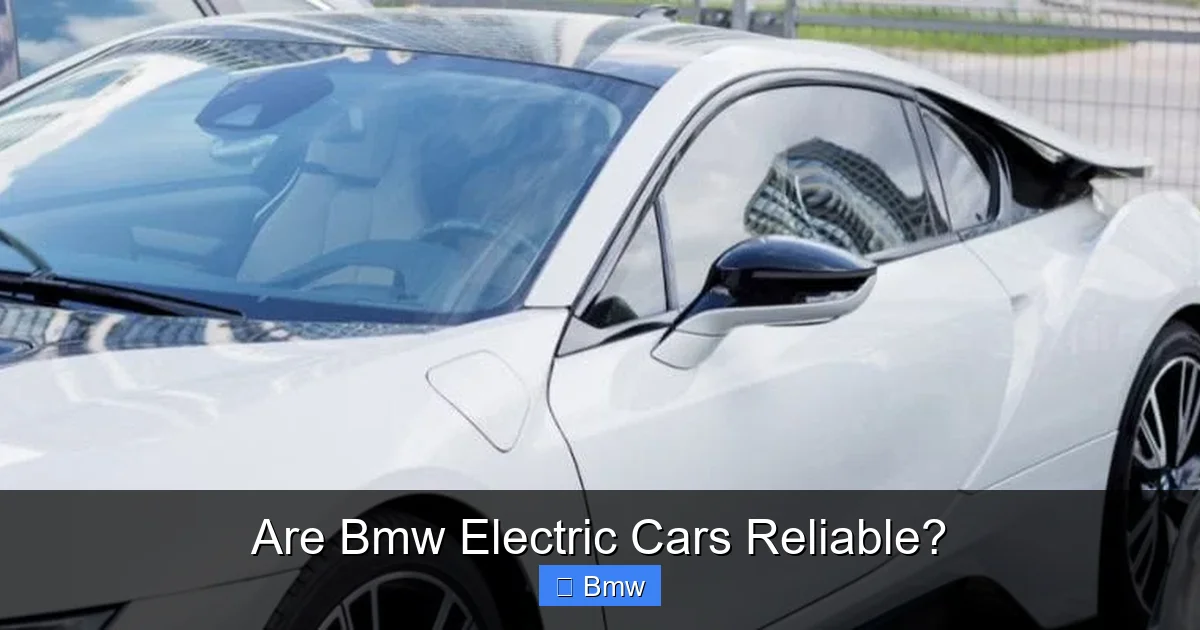
The maintenance schedule for a BMW i4 is beautifully simple compared to a 330i. No oil changes, no spark plugs, no transmission fluid swaps, no exhaust systems, no fuel filters. Your routine maintenance is largely limited to: tire rotations, brake fluid changes (though regenerative brakes greatly reduce brake pad wear), cabin air filter, and coolant for the battery/power electronics (every few years). This is a massive reduction in scheduled maintenance costs and hassle. However, when something *does* go wrong with the EV-specific system, the repair can be complex. A faulty power electronics module or a battery pack that needs module replacement requires high-voltage certified technicians and expensive parts. The key is that these major failures are statistically rare within the warranty period and, anecdotally, even beyond it for well-managed packs.
Software Updates and Subscription Services
This is the new frontier of automotive “maintenance.” BMW, like others, is moving certain features to a subscription model (e.g., heated seats, advanced driver-assist functions). While not a reliability issue per se, it’s a shift in ownership cost and value. More critically, software is now a core component. A buggy update can temporarily disable features. The good news is BMW can and does push OTA updates to fix these issues, a major advantage over older cars that need a dealer visit for any software tweak. The reliability of this OTA process itself is part of the equation—it must work seamlessly. There have been rare instances where an OTA update caused issues, requiring a rollback or dealer intervention, but these are exceptions. For complex diagnostics, independent shops may need tools like the best scan tool for BMW and Mercedes to properly interface with the high-voltage systems and vehicle software, which can be a barrier for non-dealer repairs.
Software and Technology: A Double-Edged Sword
The iDrive infotainment system, now in its 8th generation, is a central hub. It controls everything from climate to vehicle settings. Its reliability is paramount.
Over-the-Air Updates: Keeping Cars Current
BMW’s OTA capability is a huge plus for long-term reliability. If a bug is discovered in the braking logic or a new feature is ready, it can be deployed overnight. This means the car can actually *improve* over time and fix vulnerabilities without you needing to do anything. It’s a paradigm shift from “what you bought is what you get” to “a continuously evolving product.” This should, in theory, enhance reliability as software matures.
Infotainment Glitches and System Resets
The flip side is that this complexity creates new failure modes. A frozen touchscreen, a non-responsive voice command system, or a driver-assist system that gives false warnings are all “reliability” issues from an owner’s perspective, even if the motor is perfect. BMW’s software, while feature-rich, has sometimes felt less polished than Tesla’s or even some mainstream brands in early iterations of a model year. These are often software bugs that get patched. The question is how quickly and effectively BMW deploys those patches. The need for occasional system resets (holding down the iDrive controller for 10 seconds) has been reported by some owners as a troubleshooting step, which feels like a step backward in refinement.
The Future Outlook: Building on Strengths and Facing Competition
Looking ahead, BMW’s reliability trajectory is positive but has hurdles.
Next-Generation Platforms and Solid-State Batteries
The upcoming Neue Klasse platform, debuting around 2025, is being designed from the ground up as an EV architecture. This will allow for even greater optimization of battery placement, thermal management, and structural rigidity. BMW is also investing heavily in solid-state battery technology, which promises higher energy density, faster charging, and potentially even longer calendar life. If these pan out, they could be a game-changer for long-term reliability and range retention.
How BMW Stacks Up Against Tesla and Others
Compared to Tesla, BMW likely has an edge in traditional build quality—panel gaps, interior material feel, and chassis refinement. Tesla has a lead in pure EV experience, software integration, and charging network (Supercharger) convenience. In terms of raw powertrain reliability, both are strong due to simplicity. Where BMW may lag is in the “tech quotient” and the sheer volume of real-world data Tesla has accumulated from its larger EV fleet. Against legacy brands like Mercedes (EQS, EQE) and Audi (e-tron GT, Q8 e-tron), BMW is in a tight race. All are leveraging their internal combustion expertise for platform sharing, which is a smart reliability play. The brand that best marries traditional manufacturing quality with flawless, intuitive software will win the long-term reliability crown.
So, are BMW electric cars reliable? The evidence suggests yes, with important caveats. The core electric powertrain is inherently simple and robust, backed by a strong warranty. The battery technology is proven and managed carefully. The main reliability risks are not the motor or battery dying, but the software glitches, electronic gremlins, and potential high-voltage system repair costs that come with any sophisticated EV. For the first 5-8 years of ownership, under warranty, a BMW EV should be a very reliable daily driver. Beyond that, the long-term data is still being written. Your best bet is to choose a model with a proven battery pack (the current 5th-gen drives are looking solid), ensure you have a good dealer or certified independent shop for service, and keep all software updates current. The electric BMW is a compelling blend of driving dynamics and tech, and its reliability foundation is firm, even if the top layer of software still has a few bugs to iron out.
Frequently Asked Questions
How long do BMW electric car batteries last?
BMW warrants its batteries for 8 years or 100,000 miles, guaranteeing at least 70% of original capacity. Real-world data from early models suggests most batteries degrade slowly, often at 1-2% per year with normal use, meaning they should retain ample range well beyond the warranty period with proper care.
Are BMW EVs more or less reliable than gasoline BMWs?
They are reliable in different ways. EVs eliminate many traditional failure points like oil leaks, timing chain issues, and turbocharger problems common in some combustion engines. However, they introduce new complexity with high-voltage systems and software. Early data suggests overall problem rates may be similar or slightly better for EVs, but the *nature* of the problems shifts from mechanical to electronic/software-based.
What is the maintenance schedule for a BMW i4 or iX?
It’s significantly simpler. There are no oil changes or spark plugs. The primary scheduled maintenance includes: tire rotations every 7,500-10,000 miles, brake fluid change every 2 years, cabin air filter replacement, and periodic checks of the battery and power electronics coolant system (typically every few years). Always consult your owner’s manual for the exact schedule.
Do BMW electric cars have enough charging infrastructure support?
BMW does not operate its own large-scale charging network like Tesla’s Superchargers. Instead, it partners with various charging providers and offers access through the BMW ConnectedDrive app and in-car navigation. While public charging is widely available, the reliability and speed of third-party networks can be inconsistent, which is a usability factor more than a direct car reliability issue. Planning longer trips requires a bit more forethought.
How do software updates affect BMW EV reliability?
They are a net positive. Over-the-air (OTA) updates can fix bugs, improve performance, and add features without a dealer visit, effectively enhancing the car’s reliability over time. However, a buggy update can temporarily cause glitches. These are usually resolved with a subsequent update, but they represent a new type of “failure” that internal combustion vehicles rarely experienced.
Are used BMW electric cars a good buy?
They can be, but with caution. The steepest depreciation hits early adopters of the i3. For newer models like the i4, prices are holding relatively well. The key is battery health—always get a pre-purchase inspection that includes a battery state-of-health report. Also, verify the remaining factory warranty period. A certified pre-owned (CPO) BMW EV from a dealer offers the best protection and is highly recommended for first-time EV buyers.
