
How to Join the Hyundai Oil Consumption Lawsuit

Thousands of Hyundai owners are joining a class-action lawsuit over excessive oil consumption that can lead to engine failure. If you own a specific Hyundai model from certain years and have experienced low oil levels or engine damage, you may be eligible. Joining typically involves contacting the law firm handling the case, providing repair records, and understanding your legal options without upfront costs.
If you’re a Hyundai owner constantly topping off your oil between changes or have seen that dreaded low oil pressure warning light, you’re not alone. A significant and growing number of drivers have reported that their vehicles consume oil at an alarming rate—a problem that can silently destroy an engine. This widespread issue has culminated in major class-action lawsuits against Hyundai Motor America. For many, joining this legal action is a critical step to seek compensation for repairs, diminished value, or a replacement engine. But how do you actually join? It’s less intimidating than you might think. This guide will walk you through every single step, from understanding the lawsuit to confirming your eligibility and making your official claim.
Key Takeaways
- The lawsuit addresses a known defect: It targets specific Hyundai engines (like the 2.4L Theta II) that allegedly burn oil at an abnormally high rate due to design or manufacturing flaws, leading to potential engine seizure.
- Eligibility is model and year-specific: Not all Hyundais are covered. The current litigation focuses on models like the Sonata, Santa Fe, and Elantra from roughly 2011-2019, but criteria can vary by case.
- Documentation is your strongest evidence: Keep all records of oil changes, repairs for low oil/oil consumption, dashboard warning lights, and any engine-related issues to prove the problem existed while under warranty.
- Joining is usually free and simple: You simply contact the court-appointed law firm, provide your vehicle info and documents, and they handle the legal process. You pay fees only if the case wins or settles.
- Act promptly: There are strict court deadlines (called “cut-off dates”) to join as a class member. Missing the deadline could bar you from any future settlement or award.
- Repairs may still be an option: Even if you join the lawsuit, Hyundai may still offer a warranty extension or repair program. Understand how your actions could affect both legal and dealer paths.
- Consult experts for your specific case: Laws are complex and vary by state. The law firm managing the suit can provide the most accurate eligibility assessment based on your VIN and repair history.
📑 Table of Contents
- What Is the Hyundai Oil Consumption Lawsuit, Really?
- Which Hyundai Models and Engines Are Affected?
- How to Recognize Excessive Oil Consumption in Your Hyundai
- Am I Eligible? The Crucial Criteria
- Step-by-Step: How to Actually Join the Lawsuit
- What to Expect After You Join: Settlements, Trials, and Timelines
- Important Considerations and Next Steps
- Conclusion: Your Car, Your Rights, Your Action
What Is the Hyundai Oil Consumption Lawsuit, Really?
At its core, a class-action lawsuit is a legal tool that allows a large group of people with similar grievances against a company to sue together. In this case, the plaintiffs are Hyundai owners, and the defendant is Hyundai Motor America. The central claim is that Hyundai designed, manufactured, and sold vehicles with engines that have a inherent defect causing them to burn through oil at a rate that is not normal for modern engines.
The Heart of the Allegation: A Design Defect
The lawsuits don’t just say “your car uses oil.” They allege a specific engineering failure. The most commonly cited culprit is the 2.4L and 2.0L Theta II gasoline engines found in many popular models. Allegations point to issues like piston ring design, valve stem seals, or engine computer (ECU) calibration that fail to maintain proper oil control. This isn’t about wear and tear; it’s about a defect present from the start that manifests often within the first few years of ownership, sometimes even before the powertrain warranty expires.
What Are Owners Asking For?
The legal complaints seek various forms of relief. This can include:
- Repair Costs: Reimbursement for past out-of-pocket repairs related to oil consumption, such as replacing piston rings, valve covers, or even entire short or long blocks.
- Extended Warranties: A court-ordered extension of Hyundai’s original warranty to cover these specific engine components for a longer period or higher mileage.
- Diminished Value: Compensation for the loss in your vehicle’s resale value because the known oil consumption issue makes it less desirable to future buyers.
- Injunctive Relief: A court order forcing Hyundai to issue a formal recall and repair program to fix the defect in all affected vehicles.
It’s important to know that lawsuits can take years. The immediate goal of joining is to secure your place in line for any future settlement or award. If you are experiencing symptoms, monitoring your oil level is non-negotiable. Learning how to check the oil in your car properly is the first line of defense against catastrophic engine failure.
Which Hyundai Models and Engines Are Affected?
This is the most crucial question for eligibility. The lawsuits are not blanket coverage for every Hyundai ever made. They specifically target model years and engine types where the alleged defect is most prevalent. The landscape changes as new cases are filed and consolidated, but the primary focus remains on a specific family of engines and the vehicles they power.
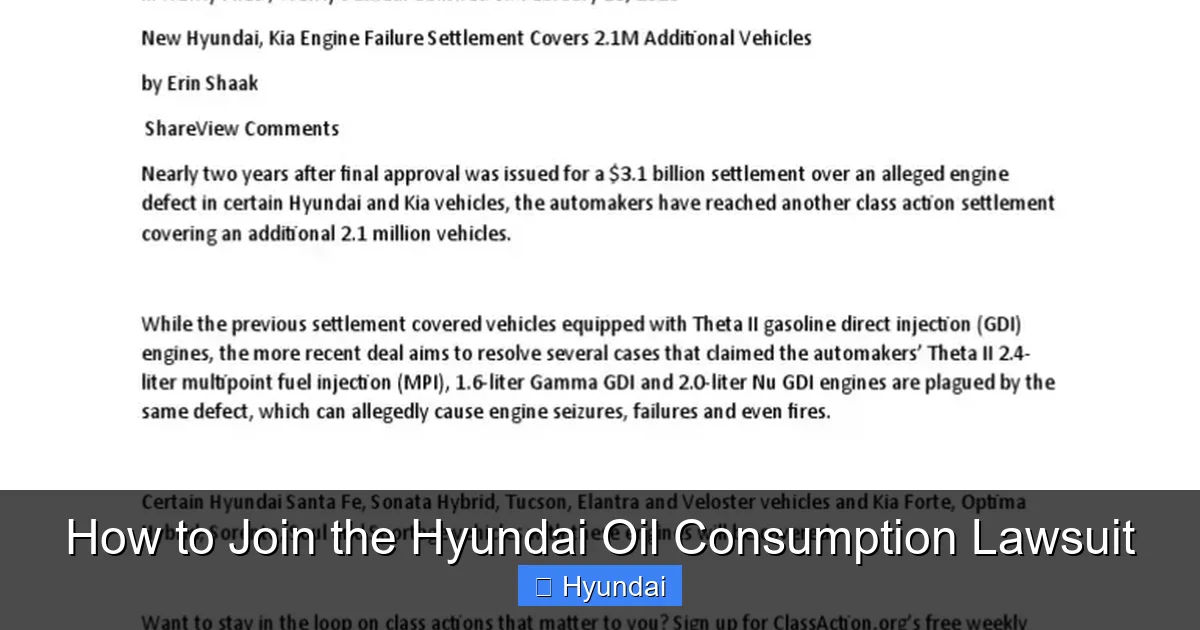
Visual guide about How to Join the Hyundai Oil Consumption Lawsuit
Image source: imgv2-2-f.scribdassets.com
The Prime Suspect: The Theta II Engine Family
The 2.4L GDI (Gasoline Direct Injection) and 2.0L GDI versions of the Theta II engine are the main subjects. This engine powered a huge portion of Hyundai’s fleet in the early 2010s. Key models alleged to be affected include:
- Hyundai Sonata (2011-2019)
- Hyundai Santa Fe (2013-2019, including the Santa Fe Sport)
- Hyundai Elantra (2011-2018)
- Hyundai Tucson (2016-2019)
- Hyundai Kona (2018-2019, some with 2.0L)
Some lawsuits also include certain Kia models (like the Optima, Sorento, and Sportage) that use the same Theta II engines, as Kia and Hyundai share platforms and powertrains.
How to Find Your Exact Engine and VIN
Your Vehicle Identification Number (VIN) is the golden ticket. You can find it on your dashboard (visible through the windshield), on your driver’s side door jamb, or on your insurance/registration cards. Once you have it:
- Use Hyundai’s official owner portal or a free VIN decoder online to confirm your exact model year, engine size (e.g., 2.4L), and production date.
- The law firms managing these cases have specific VIN ranges and model year cutoffs. They will ask for your VIN during the intake process to verify eligibility.
- Do not assume your car is affected based on model year alone. A 2018 Sonata with a different engine (like the 1.6L Turbo) would not be covered. Being precise with your VIN is as important as knowing what the oil light on your car means—both are vital for protecting your engine and your investment.
How to Recognize Excessive Oil Consumption in Your Hyundai
Before you can join a lawsuit about a problem, you need to know you have it. While all engines burn *some* oil, the rate alleged in these lawsuits is far beyond normal. A healthy engine might burn a quart every 3,000-5,000 miles. An affected Theta II engine could burn a quart or more in just 1,000 miles.

Visual guide about How to Join the Hyundai Oil Consumption Lawsuit
Image source: m.media-amazon.com
The Tell-Tale Warning Signs
Be hyper-aware of these red flags:
- Low Oil Warning Light: The most obvious sign. If this light comes on between scheduled oil changes, especially in newer cars with low miles, it’s a major red flag. Don’t just add oil and forget it—this is a symptom.
- Frequent Need to Add Oil: You find yourself checking the dipstick monthly and needing to add a quart or more to keep it between the MIN and MAX marks. Keep a log of dates, mileage, and amount added.
- Blue or Gray Exhaust Smoke: This indicates oil is being burned in the combustion chamber. A small puff on startup can be normal, but persistent smoke while driving is not.
- Engine Noise (Knocking/Pinging): Low oil levels can cause dangerous engine knock. If you hear a rhythmic tapping or pinging from the engine bay, shut it off immediately and check the oil.
- Failed Emissions Tests: Excess oil burning can foul spark plugs and oxygen sensors, leading to a check engine light and failed smog test.
Document Everything: Create Your Paper Trail
This cannot be stressed enough. Your documentation is the evidence that turns your experience into a credible legal claim. Start a dedicated folder (physical and digital) for your Hyundai. Save:
- Every single repair order and invoice from the dealership or mechanic, especially those mentioning “oil consumption,” “low oil level,” “piston rings,” “valve cover gasket,” or “engine diagnosis.”
- Photocopies of your oil change receipts, even if done at home. Note the mileage and date.
- A personal logbook tracking oil level checks (date, mileage, dipstick reading) and any instances of adding oil.
- Screenshots or photos of any dashboard warning lights.
- Any technical service bulletins (TSBs) Hyundai issued to dealers about oil consumption for your model year. Your dealer can provide these if they performed the bulletin.
If you haven’t been documenting, start now. Even records from the last 6-12 months can be powerful. This evidence directly supports your claim that the problem existed during the warranty period.
Am I Eligible? The Crucial Criteria
Eligibility for a class-action lawsuit isn’t automatic. You must fit the class definition as outlined in the court filings. While the exact parameters are set by the judge and the lead plaintiff’s attorneys, the general criteria for the Hyundai oil consumption cases typically include:

Visual guide about How to Join the Hyundai Oil Consumption Lawsuit
Image source: m.media-amazon.com
1. Vehicle Ownership and Timeline
You usually need to have:
- Owned or Leased the specific Hyundai model (e.g., 2012-2018 Sonata with 2.4L engine) during the proposed class period, which is often defined by the model years and a purchase/lease date window.
- Experienced the problem while the vehicle was still under the original Hyundai New Vehicle Limited Warranty (typically 5 years/60,000 miles for powertrain) or shortly after. This is key—the lawsuit alleges the defect was present from the start.
- Resided in the United States (and sometimes specific states, if lawsuits are filed separately in certain jurisdictions).
2. The “Problem” Requirement
You generally must be able to show you experienced the alleged defect. This means having repair records for oil consumption issues, or having documented the need for frequent oil top-offs. Simply owning an affected VIN is not always enough; you must have suffered the harm (oil burning, repair costs, etc.).
3. Understanding “Cut-Off Dates”
This is the most urgent part. The court sets a deadline, called a “cut-off date,” for potential class members to opt-in or file a claim. This date is often tied to when the lawsuit was filed or when a preliminary settlement is reached. If you miss this deadline, you are forever barred from participating in that specific lawsuit’s settlement, even if your car is perfectly eligible. You must act now. The law firms’ websites will list the current, official cut-off date.
Step-by-Step: How to Actually Join the Lawsuit
Once you’ve determined your car might be eligible and you’ve gathered your records, the process to formally join is straightforward. You do not file anything with the court yourself.
Step 1: Identify the Correct Law Firm
Major class-action lawsuits are handled by plaintiff’s law firms that the court has appointed as “co-lead counsel” or “class counsel.” These firms represent all class members. Do not contact random lawyers. Find the official law firm(s) for the specific Hyundai oil consumption case. This information is available on:
- The official court docket (PACER.gov, though this can be technical).
- The law firms’ own dedicated websites for the Hyundai litigation (e.g., “Hyundai Theta II Engine Litigation”).
- Reputable legal information sites like ClassAction.org or Top Class Actions, which list current cases and counsel.
Step 2: Complete the Intake Form
On the law firm’s case website, there will be a section to “Join the Class” or “Submit a Claim.” You will need to provide:
- Your full name and contact information.
- Vehicle details: VIN, model year, make, model.
- A brief description of your problems and any repairs done.
- You will likely need to upload digital copies of your repair records and documentation.
This form is your formal opt-in. It tells the court and Hyundai that you wish to be included as a class member and bound by any future settlement or trial outcome.
Step 3: What Happens After You Submit?
After you submit your information:
- Review: The law firm’s staff will review your submission and documents to preliminarily confirm eligibility based on the current class definition.
- Confirmation: You should receive an email or letter confirming your registration as a class member. Keep this safe.
- No Upfront Cost: You do not pay anything to join. The law firms work on a contingency fee basis. They only get paid (a court-approved percentage of the settlement) if the case is successful.
- Stay Informed: You will be added to the law firm’s notification list. They will mail you official court documents, notices of settlements, and your rights to object or opt-out of a final deal.
Your active participation now may be minimal, but your registration is essential to secure your rights.
What to Expect After You Join: Settlements, Trials, and Timelines
Joining is the first step. The legal process is long. Here’s a realistic timeline of what comes next and what it means for you.
The Long Road: From Filing to Finish
Class actions move in stages. After the initial filings and your registration, the case enters “discovery,” where both sides exchange evidence. This is followed by motions, possible mediation, and ultimately, if no settlement is reached, a trial. The Hyundai litigation has already seen some settlements on a state-by-state basis, but a nationwide resolution is still evolving. It is common for these complex technical lawsuits to take 3-5 years or more to reach a final settlement or verdict.
If There Is a Settlement
If Hyundai agrees to settle, the court must approve the deal as “fair, adequate, and reasonable.” You will receive a formal “Notice of Class Action Settlement.” This notice will detail:
- What You Get: This could be a reimbursement check for past repairs, a voucher for future repairs at a Hyundai dealer, an extended warranty certificate, or a cash payment for diminished value.
- How to Claim Your Share: You will likely need to file a “Claim Form” with proof of your eligible repairs and ownership. Your prior documentation is vital here.
- Your Options: You can accept the settlement, object to it (if you think it’s unfair), or opt-out and pursue your own separate lawsuit (which is risky and expensive).
If the Case Goes to Trial
If no settlement is reached, the case proceeds to a jury or bench trial. A verdict could order Hyundai to pay damages or create a court-supervised repair program. As a class member, you would be bound by the outcome. If Hyundai wins, the lawsuit ends and you have no claim. If the plaintiffs win, the process of distributing remedies begins.
Important Considerations and Next Steps
Joining the lawsuit is a significant step, but it’s not your only option. You must weigh your choices carefully.
Your Dealer and Warranty Routes Are Still Open
Joining the lawsuit does not prevent you from seeking repairs under any remaining warranty or goodwill programs. Hyundai has, at times, issued extended service campaigns or warranty enhancements for oil consumption on certain engines. Always check with your dealer about any open campaigns for your VIN. You can pursue both paths: get a repair under a goodwill program now and still be in the lawsuit for potential future compensation or diminished value.
The Role of Your Own Insurance and Lease
If your engine fails catastrophically and you have comprehensive/collision coverage, your insurance company might cover it as a “mechanical breakdown” if you have that optional coverage, but this is rare and often has exclusions for known defects. If you lease your Hyundai, the leasing company is the legal owner. You should still notify them of the issue and your intent to join the lawsuit, as the diminished value affects their asset.
Don’t Delay—Act Today
The single most important action you can take is to verify your eligibility and the current cut-off date immediately. Visit the official court-appointed law firm websites for the Hyundai Theta II engine litigation. Have your VIN and repair records ready. Even if you’re unsure if you qualify, a quick call or form submission with the legal team can give you a definitive answer. The cost of inaction is potentially losing your right to any compensation forever.
While you’re focused on your Hyundai’s engine health, don’t forget that proper maintenance across all systems is key. For instance, staying on top of simple tasks like selecting the correct oil filter for your car ensures clean oil circulation, which is even more critical in an engine already prone to consumption issues.
Conclusion: Your Car, Your Rights, Your Action
The Hyundai oil consumption lawsuit represents a collective stand by thousands of consumers against a perceived engineering flaw that has caused financial strain and anxiety. Joining this class action is a proactive step to hold the manufacturer accountable and seek recompense for the troubles you’ve endured. The process is designed to be accessible—you don’t need to be a legal expert. The power lies in your documentation and your timely action. Start by gathering your VIN and repair records, find the official legal counsel for the case, and submit your information before the court deadline. By taking these steps, you protect your financial interests and contribute to a larger effort that could lead to meaningful repairs, compensation, and ultimately, more reliable vehicles for everyone on the road.
Frequently Asked Questions
Is there any cost to join the Hyundai oil consumption lawsuit?
No. The plaintiff’s law firms work on a contingency fee basis. You pay nothing upfront or out-of-pocket to join the class. Their fees are only paid as a percentage of the final settlement or award if the case is successful.
What if I sold my Hyundai already? Can I still join?
Possibly, yes. The class definition usually includes anyone who owned the vehicle during the class period and experienced the problem, even if they no longer own it. However, any compensation for repairs would likely be limited to what you paid out-of-pocket. You must disclose the sale date in your claim.
My Hyundai’s warranty expired last year. Can I still be part of the lawsuit?
Yes, eligibility is not solely based on current warranty status. The key is whether you experienced the alleged oil consumption defect and incurred repair costs while the vehicle was under the original factory warranty or shortly thereafter, demonstrating the problem was pre-existing.
If I join the lawsuit, can I still get my Hyundai dealer to fix the oil consumption problem?
Absolutely. Joining the lawsuit does not waive your rights to seek any available repairs under existing warranties or goodwill campaigns from Hyundai. You should still take your vehicle to the dealer for diagnosis and repair attempts. Document all interactions.
How long will the entire lawsuit process take from joining to getting paid?
It is a long-term process. Even after you join, it could take several more years for the case to conclude, either through a settlement approval or a trial verdict. Once a settlement is final, the claims process for individuals to submit proofs and receive payment typically takes an additional 6-18 months.
What happens if I miss the cut-off date to join?
If you miss the court-mandated cut-off date, you are almost certainly barred from participating in that specific litigation’s settlement or award. You would lose your right to any compensation from this class action, regardless of your vehicle’s condition or your eligibility. This is why acting immediately is critical.