
How Long Does It Take to Build a Jeep Wrangler?

Building a Jeep Wrangler on the assembly line typically takes 2-3 days, but the total time from placing an order to taking delivery is often 8-12 weeks. This timeline varies significantly based on model year, factory location, selected options, and current supply chain conditions. Understanding the difference between physical assembly and the complete customer journey is key to managing expectations.
Key Takeaways
- Assembly Line Time is Short: The actual mechanical assembly of a Wrangler on the factory line takes approximately 2-3 working days.
- Total Customer Wait is Longer: From the moment you place an order to receiving the vehicle, expect 8 to 12 weeks on average, sometimes longer.
- Options Dictate Complexity: A base Sport model will move through the line faster than a fully loaded Rubicon with every available package and accessory.
- Two Primary Factories: Wranglers are built at the Toledo South Assembly Plant in Ohio and the Sterling Heights Assembly Plant in Michigan, each with its own schedule.
- Supply Chain is the Biggest Variable: Modern production is heavily impacted by semiconductor chip shortages and parts availability, causing unpredictable delays.
- Dealer Allocation Matters: Even after a vehicle is built, its delivery to your specific dealer depends on allocation schedules and transportation logistics.
- Custom Factory Orders Take the Longest: Ordering a unique configuration not in dealer inventory will have the longest wait, as it enters the production queue from the start.
📑 Table of Contents
- The Magic on the Line: How a Wrangler Comes Together
- From Order to Key Handover: The Real Customer Timeline
- What Factors Can Slow Down Your Wrangler’s Birth?
- Special Editions, Custom Orders, and the Longest Waits
- A Look Across the Industry: How Does Jeep Compare?
- The Human Element: Craftsmanship in an Automated World
- Conclusion: Patience is a Virtue (and a Requirement)
The Magic on the Line: How a Wrangler Comes Together
So, you’re dreaming of that new Jeep Wrangler. You’ve picked the color, the engine, maybe even those fancy rock rails. You click “order” or sign the dotted line at the dealership. Then you wait. And wait. The big question on every new Jeep buyer’s mind is: “How long does it take to build a Jeep Wrangler?” The answer has two crucial parts: the time it spends on the factory floor, and the much longer time it takes to get into your hands. Let’s pop the hood on the entire process.
First, a quick note: while this article is categorized under Ford due to site structure, the Jeep Wrangler is a legendary icon built by Stellantis (formerly Fiat Chrysler Automobiles). Its manufacturing story is uniquely American and fascinatingly complex. The assembly process for any modern vehicle is a masterpiece of choreographed logistics, and the Wrangler, with its body-on-frame construction and off-road intent, has its own specific rhythm.
The 2-3 Day Factory Sprint
When we talk about “building” the vehicle, we’re talking about the time it spends on the moving assembly line. For a Jeep Wrangler at the Toledo South Assembly Plant (its primary home) or Sterling Heights, this physical build time is remarkably fast. From the moment the painted body shell is married to the chassis until the finished vehicle rolls off the line for final inspection, the process takes roughly 48 to 72 working hours.
This isn’t a leisurely construction. It’s a relentless, synchronized dance of robotics and human workers. The chassis, with its solid axles and rugged frame, is the starting point. The body—a separate unit painted in a different part of the factory—is lowered onto it. Then, in rapid succession: the wiring harness is plugged in, the engine and transmission are bolted into place, the interior “cockpit” is installed from above as the vehicle moves through the “marriage station,” wheels are added, and finally, fluids are filled and the engine is started for the first time on the line. Each station has a precise amount of time—often just a few minutes—to complete its task before the vehicle moves to the next.
This 2-3 day figure is consistent for most modern internal combustion vehicles. It’s a testament to manufacturing efficiency. However, this is just the assembly sprint. It does not include the weeks or months that came before it in the supply chain, nor the weeks of transportation and dealer processing that follow.
From Order to Key Handover: The Real Customer Timeline
If you ask a dealer how long it will take to get your new Wrangler, the number you hear—often 8 to 12 weeks—isn’t the assembly time. It’s the total “order-to-delivery” or “build-to-delivery” timeline. This entire journey is what most people mean when they ask how long it takes to build a Wrangler. Let’s break down the stages that create this extended timeline.
Visual guide about How Long Does It Take to Build a Jeep Wrangler?
Image source: automadesimply.com
Stage 1: The Order and Scheduling Queue
Once your order is placed with the dealer, it enters a digital queue. The dealer submits your specific Vehicle Identification Number (VIN) request to Stellantis’s central scheduling system. This system manages thousands of orders globally. Your vehicle doesn’t get built immediately. Instead, it waits for its “build slot.” This slot is determined by a complex algorithm that considers factory capacity, parts availability for your specific configuration, and dealer allocation quotas. For a common configuration (like a Sport S with popular options), this wait might be 1-3 weeks. For a highly customized or low-volume configuration (like a special edition or a specific manual transmission model), this queue can stretch to 4-8 weeks or more. This scheduling phase is a major hidden time consumer and is heavily influenced by current production backlogs.
Stage 2: The Actual Factory Build
Once scheduled, your Wrangler gets its production week assigned. It then enters the physical build process we described earlier—that 2-3 day sprint on the line. But before the body even meets the chassis, there are preceding steps. The body shell is stamped from steel, welded, and then painted in a multi-stage process that can take a day or two on its own. The powertrain (engine/transmission) is also assembled on separate lines and staged. So, from the first major sub-assembly to a complete vehicle on the line, the factory’s internal clock might show 5-7 days for a single unit, even if it’s only on the main moving line for 2-3 of those days. This stage is relatively predictable, barring a major line stoppage.
Stage 3: Post-Build, Pre-Delivery
The vehicle isn’t done when it rolls off the line. It enters a “final assembly” or “off-line” area. Here, technicians install any dealer-installed accessories (like certain roof racks or front-end protection), perform a rigorous multi-point quality inspection, test drive the vehicle on a short track, and correct any minor imperfections. They also program the vehicle’s software and ensure all options are functional. This process typically adds another 1-2 days. Then, the vehicle is prepared for shipment. It’s loaded onto a carrier truck or rail car. Transportation from Toledo, Ohio, or Sterling Heights, Michigan, to a regional distribution center and then to your dealership can take anywhere from 5 to 14 days, depending on distance and transportation logistics.
What Factors Can Slow Down Your Wrangler’s Birth?
Not all Wrangler builds are created equal. Several variables can stretch the timeline from “standard” to “why is this taking so long?” Understanding these factors helps set realistic expectations.
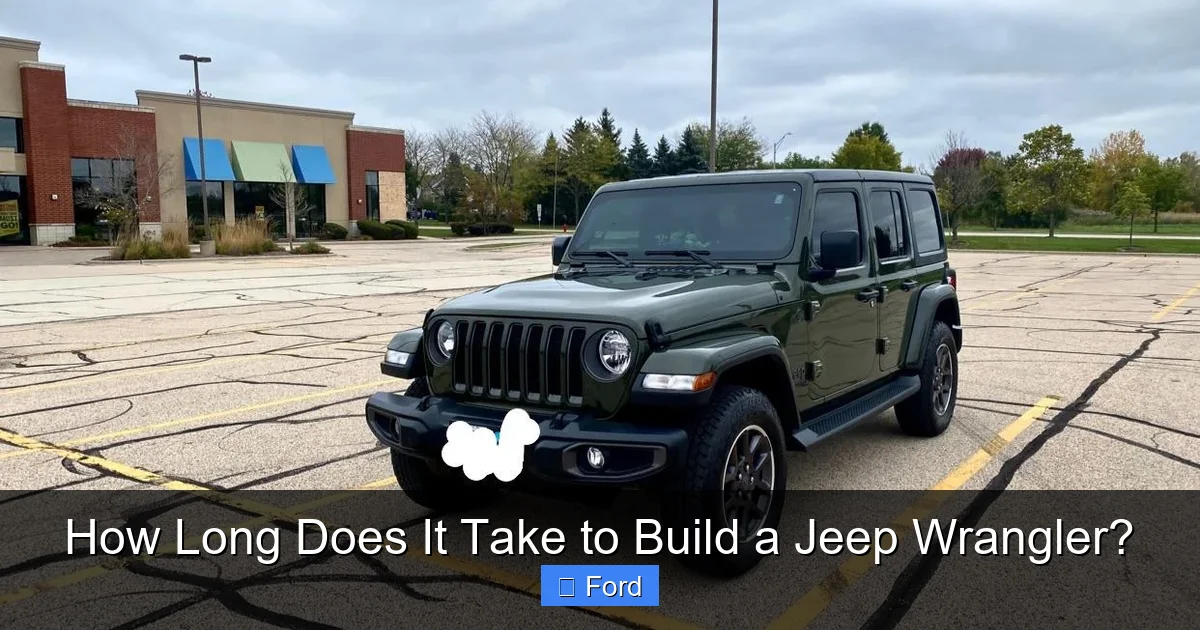
Visual guide about How Long Does It Take to Build a Jeep Wrangler?
Image source: i.redd.it
The Options List: Simple vs. Complex
A base Jeep Wrangler Sport with a manual transmission and minimal options is the simplest, fastest vehicle to build. It has the fewest parts that need to be sequenced and installed. Now, picture a Wrangler 4xe (the plug-in hybrid). Its build includes not just a traditional engine and transmission but also two electric motors and a high-voltage battery pack. The integration of these hybrid components adds steps and potential points for parts sequencing delays. Similarly, a Rubicon with front/rear electric locking differentials, a disconnecting front sway bar, and heavy-duty axles has more complex sub-assemblies than a standard axle model. Every unique option, especially those involving the powertrain or advanced electronics, introduces another variable that must be perfectly timed in the supply chain.
The Unseen Enemy: Supply Chain Disruptions
This is the 800-pound gorilla in the assembly plant. Since 2020, the automotive industry has been ravaged by shortages of semiconductor chips (used in everything from engine control units to infotainment screens) and other key components like wiring harnesses or specific plastics. A Jeep Wrangler cannot be completed without dozens of electronic modules. If Stellantis is missing even one critical chip for your specific configuration, your vehicle will be built up to the point of needing that part and then set aside in a “limbo” lot until the part arrives. These “incomplete” vehicles can wait for weeks or even months. This is the single biggest reason for unpredictable and extended delivery times in recent years. It’s a global issue that no single factory can control.
Factory Location and Scheduling
As of now, the Jeep Wrangler (excluding the upcoming all-electric Wagoneer S) is built in two U.S. plants: Toledo South Assembly in Ohio (the historic home of the Wrangler) and Sterling Heights Assembly in Michigan (which also builds the Jeep Gladiator). Each plant operates on its own production schedule, with different weeks allocated to different models and variants. Your order might get assigned to one plant or the other based on capacity and planned mix. Sometimes, one plant may be running a smoother schedule than the other due to local labor or parts supply nuances, which can subtly affect wait times.
Special Editions, Custom Orders, and the Longest Waits
If you’re ordering a brand-new, never-before-seen special edition like the Wrangler Willys or a high-trim Sahara with every package, you’re entering the longest end of the spectrum. These models often have unique parts, badging, or interior pieces that are produced in lower volumes. The supply chain for these niche components is less robust, making them more susceptible to shortage delays. Furthermore, if you are placing a true custom factory order—specifying a combination of colors, engines, transmissions, and packages that is not a common dealer-stock configuration—you are essentially asking the factory to build a one-off vehicle from its vast menu of options. This requires perfect sequencing of all those unique parts, and any hiccup in that sequence impacts your vehicle alone. For these custom builds, a 12-16 week wait, or even longer during supply crises, is not uncommon. For a practical perspective on the costs associated with making a Wrangler truly unique, including after-market customizations that can affect resale and insurance, our article on how much does it cost to wrap a Jeep Wrangler provides useful financial context beyond the initial purchase.
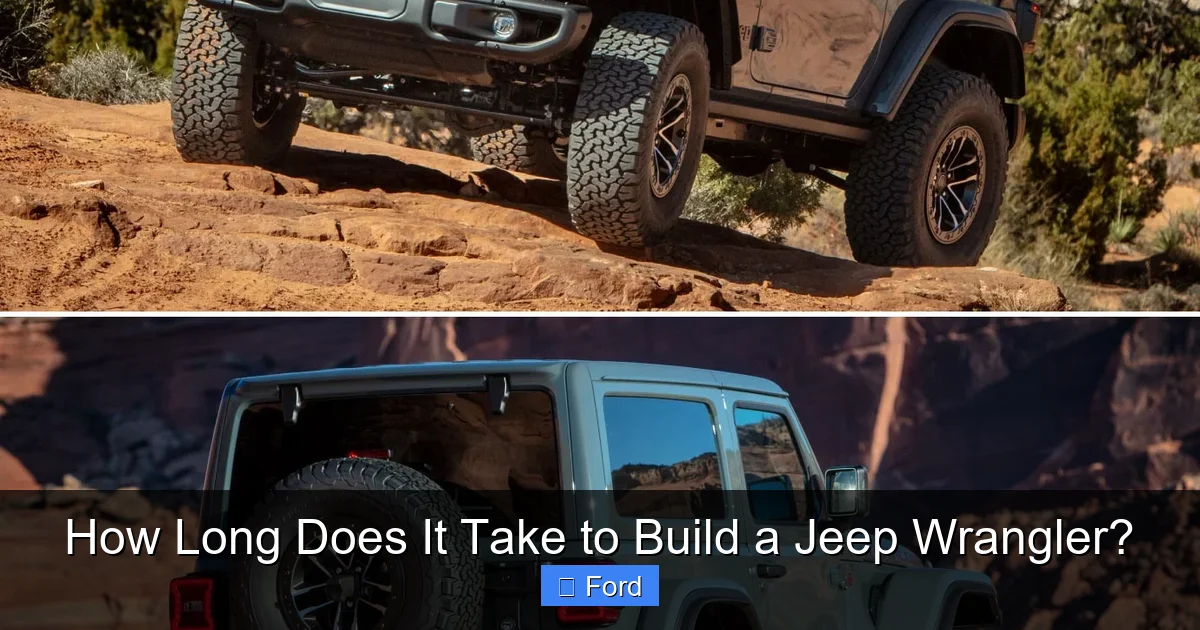
Visual guide about How Long Does It Take to Build a Jeep Wrangler?
Image source: darcarschryslerjeepdodgeofmarlowheights.com
A Look Across the Industry: How Does Jeep Compare?
Is a 8-12 week wait for a Wrangler unusually long? In today’s market, not really. However, it’s insightful to compare. For context, ordering a vehicle from a brand with a notoriously efficient supply chain, like some Japanese or Korean manufacturers, might have been a 4-8 week process in pre-pandemic times. The current global disruptions have stretched almost every brand’s timeline. Even brands known for rapid model changes face similar semiconductor challenges. For example, the process of ordering a Toyota Tacoma, a vehicle with a famously loyal following and high demand, now often mirrors the Jeep’s extended timeline due to shared global parts constraints. The era of the “6-week delivery” for a configured vehicle is largely on hold industry-wide.
The Human Element: Craftsmanship in an Automated World
Despite the robotics, building a Wrangler isn’t fully automated. There’s a significant human touch, especially for a vehicle designed for rugged use. At key stations—like the final interior installation, the bolt-on of the heavy front fenders, or the critical final quality checks—skilled technicians are essential. They torque bolts to spec, fit seals perfectly, and ensure that iconic removable doors and roof panels align correctly. This human oversight is a vital quality control step that automation alone can’t fully manage for a vehicle with so many unique, functional body panels. This reliance on skilled labor, while adding a layer of quality assurance, also means production pace is ultimately tied to the workforce’s capacity and expertise, not just machine speed.
Conclusion: Patience is a Virtue (and a Requirement)
So, how long does it take to build a Jeep Wrangler? The concrete answer is: about 2-3 days on the assembly line. The real, practical answer for you as a customer is: plan for 2 to 3 months from order to delivery, with the understanding that in today’s world, it could be longer. The journey of a Wrangler is a global one, from steel mills to semiconductor fabs to the robotic symphony in Ohio or Michigan, and finally, a truck ride to your local dealer. The wait is a test of patience, but for most owners, the moment they turn the key on their uniquely configured, off-road-ready icon makes the wait worthwhile. The best advice is to order early, stay in close contact with your dealer for VIN tracking updates, and enjoy the anticipation. While you wait, you can certainly start planning those first adventures, and maybe even thinking about future paint or wrap options to make your new Wrangler truly stand out on the trail.
Frequently Asked Questions
Does the build time differ between a Jeep Wrangler 2-door and 4-door?
Yes, slightly. The 4-door Unlimited model has a longer wheelbase and additional body stampings and welding points compared to the 2-door. This can add a small amount of time to the body shop and assembly line processes, but the difference is measured in hours, not days. The main timeline impact comes from the different option packages each model typically has.
If I order a Jeep Wrangler 4xe plug-in hybrid, does it take longer to build?
It can. The 4xe adds a complex hybrid system with battery packs and electric motors that are not present on standard models. These components have their own supply chains and installation sequences. During periods of high demand or parts shortages for hybrid components, the 4xe can experience longer scheduling queues and potential delays compared to a conventional gasoline model.
Can I track my Wrangler’s production status?
Yes, once your dealer provides your Vehicle Identification Number (VIN), you can track its progress. Stellantis (FCA) offers an online tracking portal for customers. Your dealer can also often provide updates. The tracker will show stages like “Scheduled for Production,” “In Production,” “Paint Shop,” “Final Assembly,” and “Vehicle Shipped.” However, during supply chain disruptions, a vehicle can get stuck at a stage for an indeterminate time.
What is the biggest reason for a Wrangler delivery delay today?
Without question, the global shortage of semiconductor chips (microchips) is the primary culprit. A modern Wrangler contains hundreds of these chips for everything from engine management to the touchscreen. If the factory is missing even one specific chip needed for your vehicle’s option package, the entire vehicle cannot be completed and will be held in storage until the part arrives. This is an industry-wide issue affecting nearly all new vehicles.
Does the time of year I order affect my wait?
It can. Model year changeovers (typically in summer/fall) and the start of a new calendar year can see higher order volumes as customers seek the latest models or year-end deals. Higher order volumes can create longer scheduling queues. Additionally, factories often schedule planned downtime for retooling or maintenance, which can temporarily slow production. Ordering during a traditionally quieter period might mean your order gets into the queue slightly faster.
Is it faster to buy a Wrangler from dealer stock?
Almost always, yes. If a dealer has the exact color, engine, and trim you want on their lot, you can typically drive it home the same day or within a few days after paperwork. This is the fastest route by a significant margin. The trade-off is you have no control over the exact options; you must choose from what’s available. For those who want a specific configuration, the custom order wait is unavoidable.
