
How to Fix Moisture Under Car Cover: Causes, Fixes, and Prevention

Quick Answer
To fix moisture under a car cover, remove the cover immediately and let both the vehicle and cover dry completely. Then find the moisture source, which is usually condensation, a wet vehicle, damp ground, rain intrusion, or poor evaporation beneath the cover. A breathable car cover can help trapped moisture escape instead of holding damp air against the vehicle.
Quick Steps to Fix It
- Remove the cover: Do not leave the vehicle sitting wet underneath it.
- Dry the vehicle: Wipe the paint, glass, trim, mirrors, seams, and other water-holding areas.
- Dry the cover: Hang or spread it out until both sides are completely dry.
- Find the source: Check for condensation, rain leakage, damp ground, poor garage ventilation, or leftover wash water.
- Improve airflow: Use a breathable cover and correct persistent humidity around the parked vehicle.
- Recheck later: Inspect underneath after the next cool night or rainstorm.
One Simple Rule
- If either the car or the cover feels damp, don’t reinstall the cover yet.
Finding moisture beneath a car cover is frustrating because the cover is supposed to protect the vehicle from water. In most cases, though, the solution starts with moisture management rather than simply buying a more waterproof cover.
I treat wetness under a cover as a troubleshooting problem. First I dry everything, then I determine whether the water came through the cover or formed underneath it.
In This Guide
Why Is There Moisture Under My Car Cover?
Moisture appears under a car cover when water enters or forms beneath the fabric faster than it can evaporate. The most common sources are condensation, a wet vehicle, a damp cover, rain intrusion, and moisture from the surrounding environment.
Condensation is liquid water created when moist air contacts a surface cool enough for water vapor to become droplets. This can happen even when no rain passes through the cover.
The National Weather Service explains that the dew point is the temperature at which water vapor begins condensing into liquid water. A vehicle’s metal and glass can cool enough overnight for that process to happen.
- Wet car: Rain or wash water remains in seams, mirrors, badges, weatherstripping, and wheel openings.
- Damp cover: A cover installed before it fully dries transfers moisture back toward the vehicle.
- Humid air: Moist air becomes trapped around cooler body panels.
- Wet ground: Soil, grass, pavement, or a damp garage floor keeps moisture close to the vehicle.
- Rain intrusion: Water enters through damaged fabric, seams, loose edges, or openings.
- Poor evaporation: Low airflow keeps existing moisture underneath longer.
I always check hidden water pockets before blaming the fabric. Mirror housings and door seams can release water long after the visible paint looks dry.
A clean microfiber towel makes a useful test. Run it around the mirrors, door handles, trunk edge, fuel door, trim, and lower seams before installing the cover.
How Do I Fix Moisture Under a Car Cover?
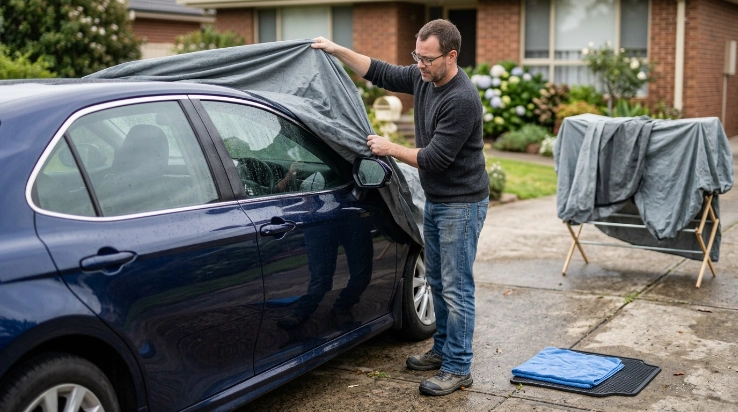
The immediate fix is simple: uncover the vehicle, dry everything completely, and do not reinstall the cover until you’ve identified the likely moisture source. Leaving the car covered while wet only increases drying time.
1. Remove the cover completely
Take the entire cover off rather than rolling back one corner. Full removal gives the vehicle and fabric much better exposure to moving air.
If the exterior is soaked from rain, avoid dragging a dirty wet cover across the paint. Lift and fold it away from the vehicle as carefully as possible.
2. Dry the vehicle thoroughly
Dry the obvious areas first, then inspect places that hold hidden water. The roof and hood may feel dry while seams are still dripping.
- Mirror housings
- Door handles
- Window seals
- Trunk or hatch channels
- Fuel-door opening
- Badges and trim
- Wheel arches
- Lower rocker-panel areas
If the car has road salt, mud, or heavy grime on it, clean those contaminants before long-term storage. Moisture sitting with contamination is a worse combination than clean water alone.
3. Dry the car cover separately
Spread or hang the cover so air reaches as much material as possible. Check thick seams, elastic hems, straps, and folded areas before putting it away.
Covercraft’s official storage guidance recommends allowing a vehicle cover to dry fully before storage. It also recommends avoiding moisture-prone storage locations.
4. Inspect the parking environment
Look beyond the cover itself. A vehicle parked over wet grass will experience a different moisture environment from one sitting inside a dry, ventilated garage.
- Garage: Check roof leaks, plumbing leaks, damp walls, wet concrete, and poor ventilation.
- Driveway: Watch for standing water and repeated overnight condensation.
- Grass or soil: Ground moisture can keep the air beneath the vehicle damp.
- Carport: Wind-driven rain may reach beneath loose cover edges.
5. Reinstall only after everything is dry
Don’t put the cover back on because the paint merely looks dry. Touch the cover lining and check body seams first.
After reinstalling it, inspect underneath again after one or two weather cycles. If moisture returns, the pattern usually makes the source easier to identify.
Section Takeaway: Remove the cover first, dry the car and cover separately, then diagnose the environment before covering the vehicle again.
Is It Condensation or a Leaking Car Cover?
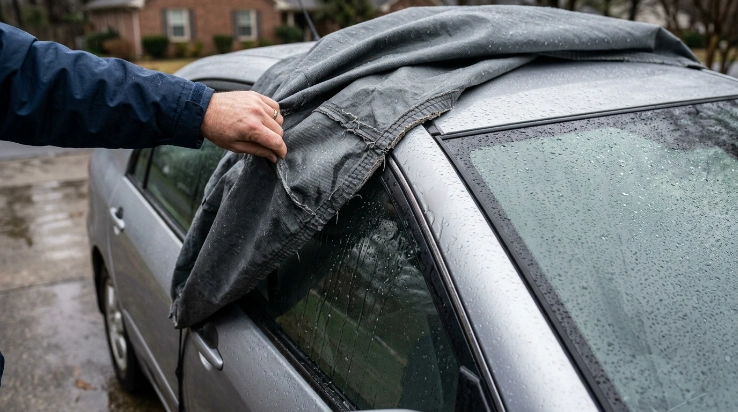
Condensation usually creates widespread fine droplets after temperature changes. Leakage is more likely when wet areas repeatedly appear beneath the same seam or section during rain.
This distinction matters. Replacing a perfectly usable cover won’t solve condensation caused by humidity or a wet vehicle.
| What You See | Likely Cause | First Check |
|---|---|---|
| Fine droplets across roof and glass | Condensation | Temperature change and humidity |
| Wet patch beneath one seam after rain | Possible seam leakage | Stitching, wear, or damaged coating |
| Moisture after covering a washed car | Trapped wash water | Mirrors, trim, seals, and gaps |
| Lower areas repeatedly stay damp | Ground or environmental moisture | Parking surface and airflow |
| Cover lining already feels damp | Cover stored wet | Dry cover completely before reuse |
Try a controlled rain check
Start with a completely dry car and dry cover. Inspect the vehicle before rain, then check underneath once the weather passes.
A wet spot that consistently matches one damaged area of the cover deserves closer inspection. Fine moisture across several cool panels points more toward condensation.
What Type of Car Cover Prevents Moisture Best?
A breathable cover designed for your actual storage environment is usually the better choice for moisture management. Breathability helps water vapor and heat escape instead of remaining trapped around the car.
That doesn’t mean every breathable cover is suitable for heavy outdoor weather. Water resistance, breathability, fit, UV protection, and intended location are separate characteristics.
Indoor storage
For a dry garage, prioritize breathability, clean fabric, proper fit, and a soft inner surface. Heavy rain protection matters much less indoors.
Humidity still matters in an enclosed building. A garage with a damp floor or poor ventilation can create condensation beneath an indoor cover.
Outdoor storage
An outdoor cover needs weather resistance while still allowing moisture to escape. Completely sealing a damp car inside an airtight barrier would work against that goal.
Covercraft describes several of its outdoor fabrics as water-resistant rather than completely waterproof because the materials are designed to release heat and moisture. Match any cover to the manufacturer’s stated use conditions.
Fit matters too
A loose cover may lift in wind and allow rain to enter from below. Movement over dusty paint can also increase rubbing.
An excessively tight cover creates its own installation problems around mirrors, spoilers, antennas, and sharp body features. Use the correct size and secure it according to its instructions.
How Do I Prevent Moisture Under a Car Cover?
Prevention comes down to starting dry and giving moisture a way to escape. The best cover cannot compensate for repeatedly covering a wet vehicle.
Never cover the car immediately after washing
Give trapped wash water enough time to drain from seams and trim. Drying visible paint alone isn’t enough for long-term covered storage.
- Dry the exterior with clean towels.
- Check mirrors and door handles.
- Open the trunk or hatch briefly if water sits around the seal.
- Inspect badges, trim, and fuel-door edges.
- Make sure wheels and lower body areas are dry.
Control garage humidity
If condensation keeps appearing inside a garage, investigate the building. Look for leaks, wet concrete, blocked ventilation, and water entering beneath the door.
A dehumidifier can help in consistently humid enclosed spaces when it’s sized and operated correctly. Fix active water leaks rather than relying only on humidity control.
Avoid long-term parking over damp ground
Grass and bare soil release moisture close to the underside of the vehicle. A dry paved surface is usually easier to manage for covered storage.
If the parking area floods or holds standing water after rain, solve that drainage problem first. The cover cannot correct a wet storage environment.
Check the vehicle during long-term storage
Long-term storage shouldn’t mean installing a cover and ignoring the vehicle for months. Periodic checks can catch dampness, pest activity, leaks, and developing corrosion earlier.
For broader maintenance planning, Consumer Reports’ maintenance and repair guidance emphasizes staying ahead of routine vehicle care rather than waiting for small issues to become expensive problems.
I also like to look beneath the cover after unusual weather. A cold night following a warm humid day is particularly useful for spotting condensation behavior.
Section Takeaway: Start with a clean, completely dry vehicle, manage humidity around the parking area, and inspect underneath periodically during storage.
Can Moisture Under a Car Cover Damage the Vehicle?
Persistent moisture can contribute to corrosion, musty odors, mildew, staining, and finish problems. Risk increases when surfaces remain damp repeatedly instead of drying normally.
One brief episode of condensation does not automatically mean serious damage occurred. Long-term wetness deserves much more attention.
Can moisture cause rust?
Steel corrodes when environmental conditions allow oxidation to continue, and moisture plays a major role. Road salt can make corrosion concerns more serious.
The National Highway Traffic Safety Administration notes that excessive rust or corrosion can become important when it affects structural or safety-related vehicle components. Its flood-damage guidance also recommends watching for unusual rust and corrosion after substantial water exposure.
- Inspect exposed metal fasteners.
- Check wheel wells and lower body seams.
- Look for bubbling around existing paint chips.
- Watch suspension and underbody areas for unusual corrosion.
- Investigate recurring musty smells inside the vehicle.
Mechanic Alert: If you find heavy corrosion on the frame, suspension, brake-related components, mounting points, or other structural areas, have the vehicle inspected by a qualified mechanic rather than attempting structural rust repairs yourself.
What about the paint?
Modern automotive paint is designed to handle ordinary environmental exposure, but keeping dirt and moisture trapped against the finish isn’t good storage practice. Loose dirty covers can also move against the surface.
Inspect existing chips, scratches, failing clear coat, and repainted areas carefully. Older or damaged finishes may need more cautious handling than sound factory paint.
General maintenance references from Edmunds and Kelley Blue Book are useful when moisture exposure reveals another maintenance or repair concern that goes beyond the cover itself.
Frequently Asked Questions
Why is my car wet under the cover when it didn’t rain?
Condensation is the most likely explanation when no rain entered. Humid air beneath the cover can contact cooler body panels and glass, causing water vapor to turn into droplets.
Should I remove a car cover when it is wet?
If the car underneath is also damp, remove the cover and let both surfaces dry. Don’t fold and store a wet cover because retained moisture can encourage musty odors or mildew.
Can I put a car cover on a wet car?
Avoid covering a wet vehicle for extended storage. Water can remain around mirrors, seals, trim, badges, wheel openings, and body gaps even after the main painted surfaces look dry.
Will a waterproof car cover stop condensation?
Not necessarily. Condensation can form from moisture already beneath the cover, so stopping rain from entering does not automatically eliminate the problem.
Does a breathable car cover let rain through?
Breathability and water resistance are different properties. Some outdoor covers are engineered to shed rain while allowing moisture vapor and heat to escape, so check the manufacturer’s ratings for the specific material.
How often should I check a covered car in storage?
There is no universal interval for every environment, but periodic inspections are smart during long-term storage. Check more often after heavy rain, major temperature swings, unusually humid conditions, or whenever the storage area has had a moisture problem.
Can a car cover cause mold?
A cover can contribute to mildew or mold problems when moisture remains trapped for long periods. Dry the vehicle and cover completely, correct the moisture source, and avoid sealing damp fabric in a storage bag.
The main takeaway is simple: moisture under a car cover is a sign to uncover, dry, and diagnose rather than leave the vehicle sealed up. Most recurring problems come from condensation, wet surfaces, poor airflow, or an unsuitable storage environment.
As of 2026, I would still prioritize the basics before spending money on another cover. Start clean, start dry, use the right cover for the location, and check underneath when weather conditions change.
