
How to Fix Electronic Throttle Control on a Jeep

Is your Jeep’s throttle acting up—hesitating, sticking, or triggering warning lights? The electronic throttle control (ETC) system is likely the culprit. This guide walks you through understanding the system, diagnosing common faults like a dirty throttle body or failed sensors, and performing key repairs and resets. While some fixes are DIY-friendly, we’ll also help you recognize when it’s time to call a professional for safety.
Key Takeaways
- The ETC system replaces a traditional cable with electronic sensors and an actuator for precise engine control. Understanding this helps you diagnose issues like unresponsive acceleration or erratic idle.
- Common symptoms include a check engine light, throttle hesitation, sudden surges, or a “limp mode” engagement. These often point to a contaminated throttle body, faulty sensor, or wiring issue.
- Diagnosis starts with reading trouble codes (like P0121, P0122, P0123) using an OBD2 scanner. This tells you which component—throttle position sensor, accelerator pedal sensor, or the throttle body itself—is failing.
- A dirty throttle body is a frequent, fixable cause. Carefully cleaning the carbon buildup around the butterfly valve can restore proper function without replacement.
- After any repair or sensor replacement, an ETC reset/relearn procedure is mandatory. This allows the vehicle’s computer to calibrate the new or cleaned components to the motor’s position.
- Safety is paramount: a failing ETC can cause unintended acceleration or a complete loss of power. If you’re uncomfortable with the diagnostics or repair, seek a certified technician.
- Preventative maintenance, like regular throttle body inspection during service, can avoid most ETC problems. Keeping the intake system clean is key to long-term reliability.
📑 Table of Contents
- Understanding Your Jeep’s Electronic Throttle Control System
- Symptoms of a Failing Electronic Throttle Control
- Diagnosing the Electronic Throttle Control System
- Step-by-Step Repair Guide: Cleaning and Component Replacement
- How to Reset and Relearn the Electronic Throttle Control
- When to Seek Professional Help
- Preventative Maintenance for Long-Term Health
- Conclusion: Taking Control of Your Jeep’s Throttle
Understanding Your Jeep’s Electronic Throttle Control System
Gone are the days of a simple metal cable connecting your foot to the engine. In modern Jeeps, from the Wrangler JK/JL to the Grand Cherokee and Cherokee, that job is handled by a sophisticated network of sensors and motors called the Electronic Throttle Control (ETC) system. It’s a critical part of your vehicle’s driveability and emissions control. When it fails, you feel it immediately—the Jeep might not respond when you press the gas, it could surge forward unexpectedly, or it might go into a reduced-power “limp mode” to protect itself. Fixing an electronic throttle control issue on a Jeep isn’t about adjusting a cable; it’s about diagnosing electronic components and performing precise procedures.
The core of the system is the throttle body. Inside, a motor-driven “butterfly” valve controls how much air enters the engine. Two sensors—the Throttle Position Sensor (TPS) and the Idle Air Control (IAC) valve—tell the engine computer (PCM) exactly where that valve is. On the other side, your Accelerator Pedal Position (APP) sensor tells the PCM how far you’ve pressed the pedal. The PCM’s job is to match the pedal position to the throttle valve opening. If any signal is out of range, missing, or contradictory, the system sets a fault code and often illuminates the check engine light. Your Jeep’s traction control and stability systems (ESP/BAS) also rely on this data, so a failing ETC can trigger those warning lights too, a point we’ll touch on later.
Why Jeeps Are Prone to ETC Issues
Jeep’s off-road capability and often harsh operating environments contribute to ETC problems. Dust, dirt, and especially oil vapor from the PCV system can coat the throttle blade and housing. This carbon buildup prevents the valve from sealing or moving freely, causing the TPS to read incorrectly. Additionally, the wiring harnesses for the throttle body and pedal sensors run through areas exposed to heat and vibration, leading to cracked insulation or loose connectors. For many Jeep owners, the first sign of trouble is a rough idle or a frustrating “dead spot” when trying to merge onto the highway.
Symptoms of a Failing Electronic Throttle Control
Before you start fixing anything, you need to confirm the ETC system is the problem. The symptoms can be subtle or dramatic, but they almost always point to a lack of communication between your right foot and the engine.
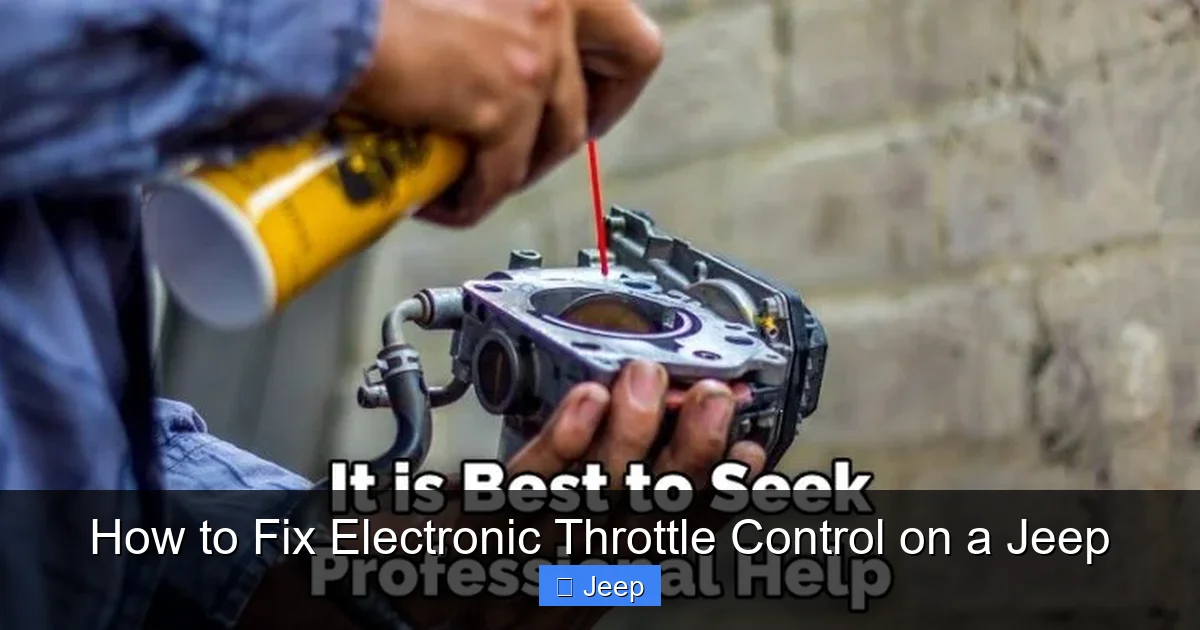
Visual guide about How to Fix Electronic Throttle Control on a Jeep
Image source: jeepfixes.com
- Check Engine Light (CEL): This is the most common indicator. The PCM stores a specific diagnostic trouble code (DTC) related to the throttle circuit.
- Throttle Hesitation or “Bogging Down”: You press the pedal, and there’s a noticeable delay before the engine responds. It feels like the Jeep is dragging its feet.
- Erratic Idle: The engine RPMs fluctuate wildly when stopped, sometimes dropping so low the engine stalls.
- Unintended Acceleration or Surging: The opposite problem—the throttle opens on its own, causing the vehicle to speed up without your foot on the pedal. This is dangerous and requires immediate attention.
- Limp Mode: The PCM detects a critical fault and severely limits engine power (often to ~30%) to prevent damage, making the Jeep feel dangerously slow and weak.
- ESP/BAS Lights On: Since these systems use throttle input for stability control, a faulty ETC signal will illuminate their warning lights. You can learn more about the specific relationship between these systems in our guide on how to fix the ESP BAS light, as many Chrysler-based systems share similar architecture.
If you experience any of these, especially unintended acceleration or limp mode, stop driving the vehicle until it’s diagnosed. Continuing to operate a Jeep with a severely compromised throttle system is a safety risk.
Diagnosing the Electronic Throttle Control System
You cannot fix what you don’t understand. Diagnosis is the most important step and will save you from throwing parts at the problem blindly. The process is methodical and relies on reading the vehicle’s own data.
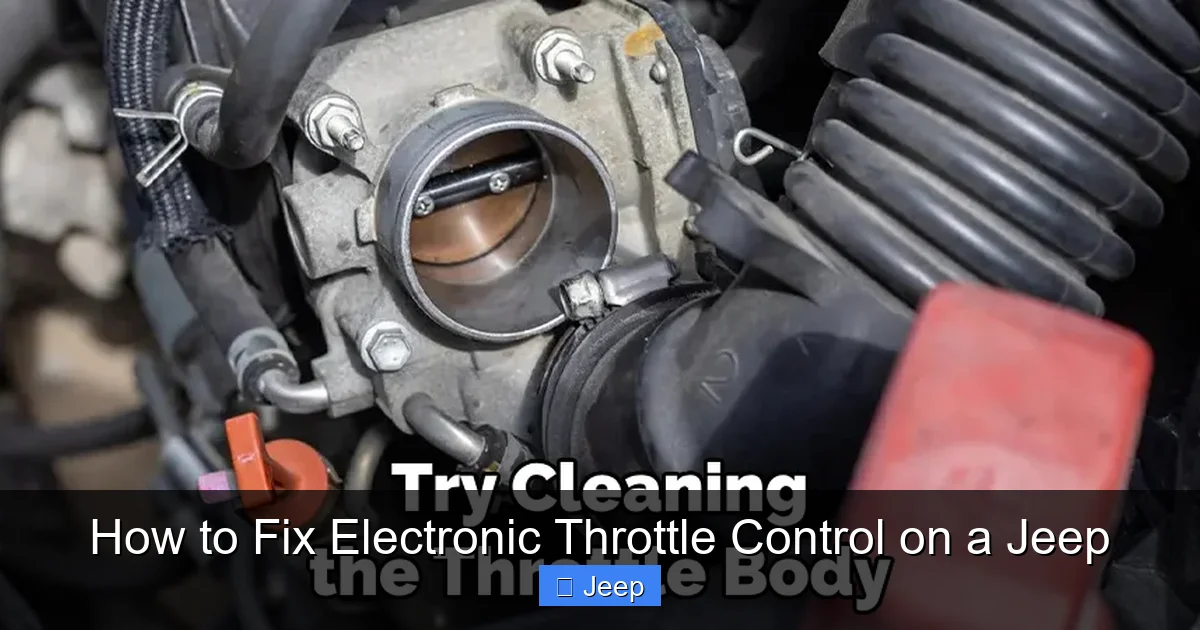
Visual guide about How to Fix Electronic Throttle Control on a Jeep
Image source: jeepfixes.com
Step 1: Read the Trouble Codes
You must use an OBD2 scanner that can read manufacturer-specific codes, not just generic P-codes. A basic code reader might show a “P0121 – Throttle Position Sensor/Switch ‘A’ Circuit Range/Performance,” but a more advanced scan tool or a professional mechanic’s tool can show live data from the sensors. The most common Jeep ETC codes include:
- P0121, P0122, P0123: Throttle Position Sensor (TPS) circuit issues.
- P0128, P0129: Often related to the Idle Air Control (IAC) valve or system performance.
- P0221, P0222, P0223: Accelerator Pedal Position (APP) sensor circuit issues.
- P2135: “Throttle/Pedal Position Sensor/Switch ‘A’ & ‘B’ Correlation” – This is a big one. It means the two redundant sensors in the throttle body are disagreeing with each other, a classic sign of a dirty throttle body or a failing TPS.
Pro Tip: Note whether the code is “current” or “history.” A history code might indicate an intermittent problem, while a current code means the fault is active now.
Step 2: Perform a Visual and Physical Inspection
With the engine off and the key removed, pop the hood and locate the throttle body (follow the air intake tube from the air filter box). Visually inspect it for:
- Carbon Buildup: A black, sooty coating around the butterfly valve and in the housing bore. This is the #1 cause of ETC issues on high-mileage Jeeps.
- Wiring and Connectors: Check the electrical connector on the throttle body for corrosion, bent pins, or cracked housing. Follow the wiring harness back, looking for chafed insulation, especially where it might rub against the engine or frame.
- APP Sensor: Locate the sensor on the accelerator pedal assembly (under the dash). Check its connection and the pedal for any binding or excessive wear.
Gently move the throttle linkage (if accessible) by hand. It should move smoothly from fully closed to fully open with no binding. Any stickiness is a sign the throttle body needs cleaning or the motor is failing.
Step-by-Step Repair Guide: Cleaning and Component Replacement
Based on your diagnosis, the repair path becomes clear. The most common and successful fix is a thorough throttle body cleaning. If that doesn’t solve it, sensor or throttle body replacement may be necessary.
Visual guide about How to Fix Electronic Throttle Control on a Jeep
Image source: jeepfixes.com
Project: Deep Clean the Throttle Body
This is the classic DIY fix for many Jeep ETC woes. You’ll need: throttle body cleaner (NOT carburetor cleaner, which can damage sensors), a soft toothbrush, rags, and basic hand tools.
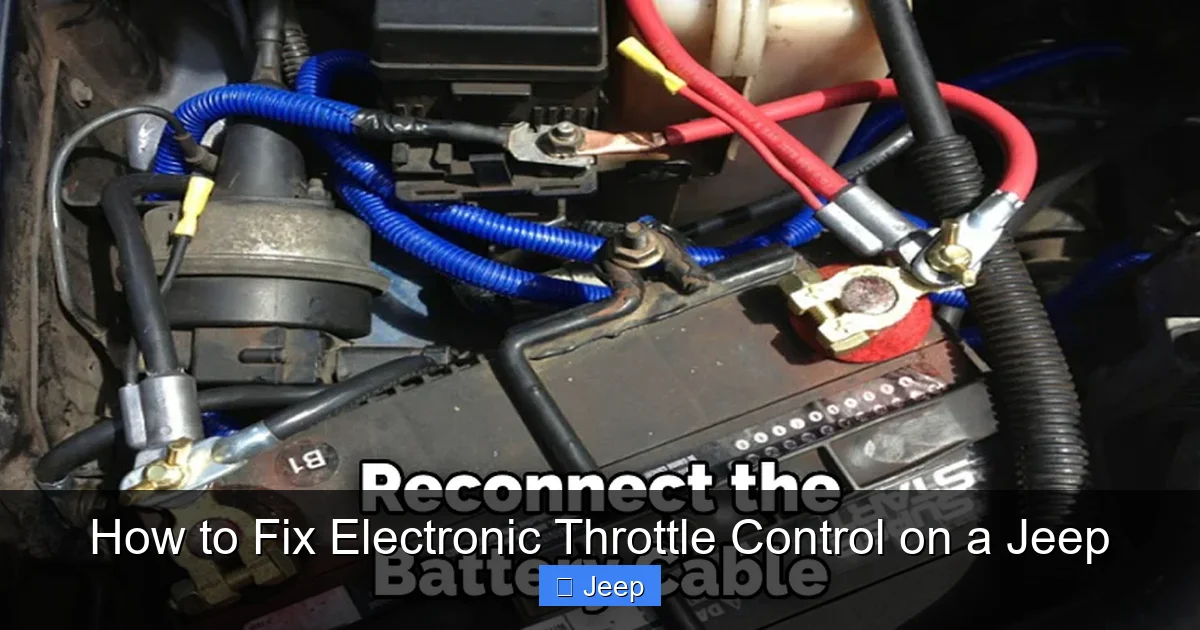
- Disconnect the Battery: Always start by disconnecting the negative battery terminal. This prevents any accidental short circuits and will be necessary for the later reset procedure.
- Remove the Air Intake Duct: Loosen the clamps holding the air intake tube to the throttle body and air filter box. Remove the tube to expose the throttle body.
- Disconnect the Electrical Connector: Press the tab and pull the wiring harness connector from the throttle body. Handle it carefully.
- Remove the Throttle Body (Optional but Recommended): For best access, unbolt the throttle body from the intake manifold. Have a clean container ready for the bolts and gasket. If you leave it installed, be very careful not to let cleaner drip into the intake manifold.
- Clean: Spray throttle body cleaner liberally onto the butterfly valve and inside the housing. Use the toothbrush to gently scrub away the carbon deposits. Pay special attention to the valve seat where it closes. Wipe everything clean with a lint-free rag until it’s spotless. Do NOT use any abrasive tools.
- Reinstall: Place the throttle body back with a new gasket if you removed it. Reconnect the electrical connector and the air intake tube. Reconnect the battery.
After this, you must perform the ETC reset/relearn procedure (see next section). In many cases, this cleaning resolves P2135 codes and idle/stumbling issues.
Replacing Sensors or the Throttle Body
If cleaning doesn’t help, or if your codes point directly to a failed sensor (e.g., P0122 for TPS “A” circuit low), component replacement is next.
- Accelerator Pedal Position (APP) Sensor: This is usually the easier fix. Located under the dash on the pedal assembly, it’s held by a couple of bolts and a connector. Replacement is straightforward. After replacing, a reset is required.
- Throttle Position Sensor (TPS): On some older Jeep models, the TPS is a separate, replaceable part on the throttle body. On most modern models, it’s integrated into the throttle body assembly. If the integrated sensor fails, you must replace the entire throttle body.
- Throttle Body Assembly: This is the most expensive and complex repair. After installing a new unit, the PCM must be taught the new motor’s position limits via a specific relearn procedure. This often requires a dealership-level scan tool, though some aftermarket tools can do it.
Important: Always use OEM or high-quality aftermarket parts. A cheap throttle body can fail prematurely and cause the same problems all over again.
How to Reset and Relearn the Electronic Throttle Control
This is the non-negotiable final step after any work on the throttle body, APP sensor, or after clearing codes. The PCM needs to “learn” the fully closed and fully open positions of the new or cleaned throttle blade. If you skip this, the Jeep will likely run poorly, stall, or have a high idle.
The procedure varies slightly by year and model, but the general Jeep/Chrysler method is as follows:
- Start with a fully charged battery. A low voltage during relearn can cause failure.
- Turn the ignition to the “ON” position (engine OFF). Do not press the accelerator pedal yet. Wait about 2 seconds.
- Slowly and smoothly press the accelerator pedal all the way to the floor. Hold it there for about 3 seconds.
- Slowly release the pedal all the way back to the fully released position. Hold it there for about 5 seconds.
- Turn the ignition “OFF.” Wait at least 10 seconds.
- Start the engine. Let it idle in park/neutral for at least 2-3 minutes. The idle should be smooth and around 600-800 RPM. Do not touch the throttle, brake, or any accessories during this time.
- Take the vehicle for a short test drive. Accelerate normally, decelerate, and come to a stop. The system should adapt fully during this drive cycle.
If the idle remains high or rough, or if the check engine light returns with the same codes, the relearn may not have been successful or there is a persistent mechanical issue (like a vacuum leak). For some Jeep models, especially newer ones with more complex systems, a professional scan tool is required to initiate the relearn function. You can find model-specific procedures in your factory service manual or reputable online Jeep forums.
When to Seek Professional Help
While cleaning the throttle body is a manageable DIY task, there are times when calling a professional is the smart, safe choice.
- Persistent Codes After Repair: If you’ve cleaned the throttle body and performed the reset, but the P2135 or other ETC codes return immediately, there may be an underlying wiring harness issue, a failing PCM, or a problem with the throttle body motor itself that requires specialized diagnosis.
- Unintended Acceleration: This is a serious safety hazard. Do not attempt to diagnose or drive the vehicle. Have it towed to a trusted shop.
- Limp Mode with Multiple Codes: If you have codes for the ETC system alongside transmission or other engine codes, the problem could be interconnected and complex.
- Lack of Proper Tools: If your Jeep requires a proprietary scan tool for the throttle body relearn (common on 2014+ models), you’ll need a dealer or a well-equipped independent shop.
- Warranty Concerns: If your Jeep is still under a powertrain warranty, having the work done at the dealer ensures the repair is covered and doesn’t void any future claims.
Remember, a professional technician has access to wiring diagrams, factory service bulletins (which often list known issues and fixes for specific Jeep years/models), and advanced diagnostic equipment that can graph sensor data in real-time to pinpoint intermittent faults.
Preventative Maintenance for Long-Term Health
Once you’ve fixed your Jeep’s electronic throttle control, you’ll want to keep it that way. Prevention is far easier than repair.
- Regular Inspection: Every 30,000 miles or during major service, have the throttle body inspected for carbon buildup. A quick visual check during an air filter change can give you a heads-up.
- Quality Air Filters: A clean, high-quality air filter prevents dust and debris from entering the intake system and coating the throttle blade.
- PCV System Service: A faulty Positive Crankcase Ventilation (PCV) valve or clogged hoses can send excessive oil vapor into the intake, leading to faster carbon accumulation. Service this system as recommended in your owner’s manual.
- Use Fuel System Cleaners: Occasionally using a quality fuel system cleaner can help keep intake valves and the throttle body cleaner by reducing combustion chamber deposits that make their way back.
- Gentle Driving After Cold Start: Avoid high-RPM, heavy-throttle driving until the engine is fully warmed up. This reduces the amount of unburned fuel that can condense and form carbon on the throttle body.
By following these simple steps, you can significantly extend the life of your Jeep’s ETC system and enjoy smooth, responsive acceleration for years to come.
Conclusion: Taking Control of Your Jeep’s Throttle
Fixing the electronic throttle control on a Jeep is a journey from symptom to solution. It starts with recognizing the signs—hesitation, a rough idle, or a warning light—and then moves through careful diagnosis with an OBD2 scanner. For the vast majority of cases, the hero is a simple, thorough cleaning of the throttle body, followed by the critical reset/relearn procedure. This process underscores a key principle of modern vehicle ownership: many performance issues stem from dirty, neglected components rather than catastrophic failures.
However, the electronic nature of the system means that not every problem is a dirt problem. Faulty sensors, damaged wiring, or a failed throttle body motor require precise replacement and, often, professional recalibration. Your safety is the ultimate priority; if there’s any doubt, especially with symptoms like unintended acceleration, professional diagnosis is the only prudent path. By understanding your Jeep’s ETC system, you empower yourself to make informed decisions, communicate effectively with technicians, and keep your vehicle running as the capable, responsive machine it was built to be. Whether you’re a dedicated DIYer or a informed owner who knows when to call for help, this knowledge is your best tool for a smooth ride.
Frequently Asked Questions
Can I drive my Jeep with a bad electronic throttle control?
It is not safe to drive with a severely failing ETC. Symptoms like unintended acceleration or sudden limp mode are dangerous. If you experience these, have the vehicle towed. Minor issues like a slight idle rough may be driven cautiously to a repair shop, but it’s risky and can cause further damage.
How much does it cost to fix electronic throttle control on a Jeep?
Costs vary widely. A DIY throttle body cleaning costs under $20 for cleaner. A new APP sensor is $50-$150 plus labor. A replacement throttle body assembly ranges from $300 to over $1000 for the part, with labor adding 1-2 hours. A professional diagnostic fee typically applies if you don’t DIY.
Will disconnecting the battery reset the electronic throttle control?
Disconnecting the battery will clear the fault codes, but it will not reset the learned throttle position values. The vehicle will run poorly until the proper manual or scan-tool relearn procedure is completed. You must follow the specific reset steps after any battery disconnect related to ETC work.
What is the most common cause of electronic throttle control problems?
The #1 cause is carbon buildup on the throttle body blade and housing. This prevents the valve from closing properly and confuses the Throttle Position Sensor, leading to correlation errors (P2135) and poor performance. Regular cleaning is the most effective preventative maintenance.
Is the electronic throttle control related to the ESP/BAS light?
Yes. The ESP (Electronic Stability Program) and BAS (Brake Assist System) rely on data from the throttle position sensor to manage engine power during stability events. A faulty ETC signal will cause these systems to shut down and illuminate their warning light. Fixing the underlying ETC issue will typically turn off the ESP/BAS light as well.
Can a bad battery cause electronic throttle control problems?
A severely weak or failing battery can cause voltage drops that confuse the sensitive electronic sensors in the ETC system, potentially triggering codes. However, a bad battery is rarely the sole, permanent cause. It’s more likely to cause intermittent issues. Always check battery health if you have multiple electrical gremlins.
