
How to Disengage Auto Park on a Jeep Grand Cherokee

Stuck in Auto Park? This guide covers safe disengagement methods for your Jeep Grand Cherokee, common causes, and when to seek help. Follow step-by-step instructions to avoid transmission damage.
Hey there, Jeep owner! Have you ever found yourself in that frustrating situation? You’re ready to go, you’ve got your foot on the brake, you press the start button, but the gear shifter is stubbornly stuck in Park (P). That’s the Auto Park system doing its job—or at least, it’s supposed to. This safety feature is a great idea in theory, preventing you from accidentally shifting into gear without your foot on the brake. But when it malfunctions, it can leave you stranded. Don’t worry. We’re going to walk through exactly how to safely disengage auto park on a Jeep Grand Cherokee, why it happens, and what to do if the quick fixes don’t work.
First, take a breath. This is a common issue, and in most cases, it’s not a catastrophic transmission failure. It’s usually an electrical or small mechanical problem. We’ll start with the simplest, safest methods and move to more involved ones. The goal is to get you mobile again without causing damage. So, let’s pop the hood, check the basics, and get that shifter moving.
Key Takeaways
- Safety First: Always set the parking brake and ensure the vehicle is on level ground before attempting any disengagement procedure.
- Common Culprits: A dead battery, faulty brake light switch, or blown fuse are frequent reasons the Auto Park system won’t release.
- Manual Override: Your Grand Cherokee has a hidden manual release—typically under the center console shifter bezel—for emergency use only.
- Brake-Shift Interlock: This system requires the brake pedal to be pressed. If it’s not working, check your brake lights and the associated fuse.
- Don’t Force It: Never use excessive force on the gear shifter. You risk breaking the shift linkage or parking pawl, leading to expensive repairs.
- Know When to Call a Pro: If basic steps fail, the issue may be with the transmission range sensor or internal components, requiring a qualified technician.
- Preventative Care: Regular battery checks and timely addressing of brake light issues can prevent many Auto Park lock-ups.
📑 Table of Contents
Understanding Your Grand Cherokee’s Auto Park System
Before we start pulling things apart, it helps to know what we’re dealing with. The system that locks your shifter in Park is officially called the Brake-Shift Interlock (BSI). It’s a safety interlock system. Its main job is to physically prevent you from moving the shifter out of Park unless two conditions are met: the ignition is in the ON/RUN position (or the engine is running), and your foot is pressing the brake pedal.
The Role of the Brake Light Switch
The hero (or villain) of this story is often the brake light switch. This little switch, mounted on the brake pedal arm, does two jobs. It turns on your brake lights when you press the pedal, and it sends a signal to the vehicle’s computer (the TCM – Transmission Control Module) saying, “Hey, the driver’s foot is on the brake!” The TCM then energizes a solenoid (an electromagnetic switch) near the shifter, which releases the mechanical lock. If that switch fails, or if there’s no power to it, the solenoid never activates. The lock stays put. This is why checking your brake lights is always the first step.
Electronic vs. Mechanical Overrides
Modern Grand Cherokees (typically 2005 and newer) rely almost entirely on this electronic solenoid. There is, however, a manual override mechanism. It’s a little secret door or tab you can access to physically release the parking pawl lock. It’s not meant for daily use—it’s an emergency escape hatch. On older models (pre-2005), the system might have a more mechanical cable linkage, but the principle is similar. Knowing where this manual release is located is your ultimate backup plan.
Common Reasons Your Auto Park Won’t Disengage
So why does this happen? It’s rarely a broken transmission right out of the gate. Here are the most frequent suspects, starting with the simplest.
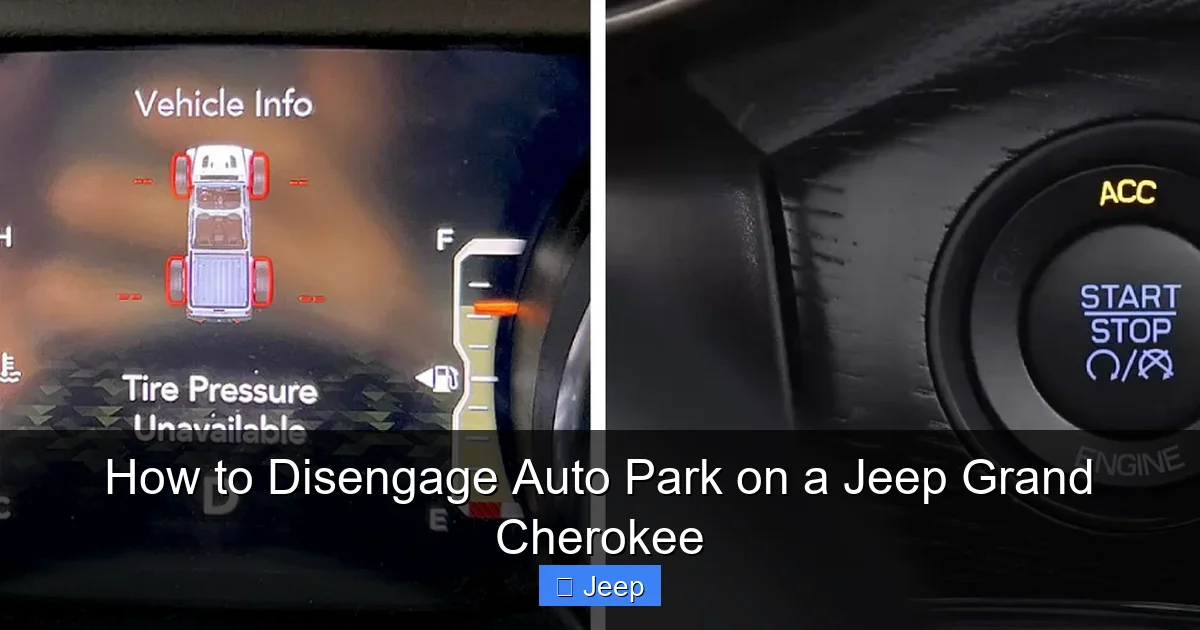
Visual guide about How to Disengage Auto Park on a Jeep Grand Cherokee
Image source: jeepfixes.com
Dead or Weak Battery
This is a big one. The BSI solenoid needs a solid 12 volts to operate. If your battery is weak, dead, or the terminals are corroded, there might not be enough juice to energize the solenoid. The dash lights might come on, but that’s not enough power. A quick jump start or battery charge often resolves the issue immediately. Always check battery voltage first if you can.
Faulty Brake Light Switch
As mentioned, this is the most common culprit. These switches wear out. The plunger gets sticky, the plastic breaks, or the electrical contacts corrode. If your brake lights aren’t coming on when you press the pedal, you’ve found your problem. Even if the lights work, the switch itself could be failing to send the proper signal to the TCM.
Blown Fuse or Faulty Wiring
The circuit that powers the BSI solenoid and brake light switch is protected by a fuse. A short circuit or wire chafing can blow this fuse. Check your owner’s manual fuse box diagram for the “Brake Lights,” “Stop Lights,” or “BSI” fuse. Also, inspect the wiring harness under the driver’s side dash near the brake pedal for any obvious damage or loose connectors.
Transmission Range Sensor (TRS) Issues
The Transmission Range Sensor tells the computer what gear you’re in (P, R, N, D, etc.). If it’s misaligned, dirty, or failed, it can send a conflicting signal. The computer might think you’re not in Park, or it might not get the signal that you’ve pressed the brake, preventing the unlock command. This is a more complex diagnosis.
How to Disengage Auto Park: Step-by-Step Methods
Okay, let’s get practical. Try these methods in order. Start with the easiest and safest. Always ensure your parking brake is fully engaged before attempting any of these. If you’re on a hill, chock the wheels.
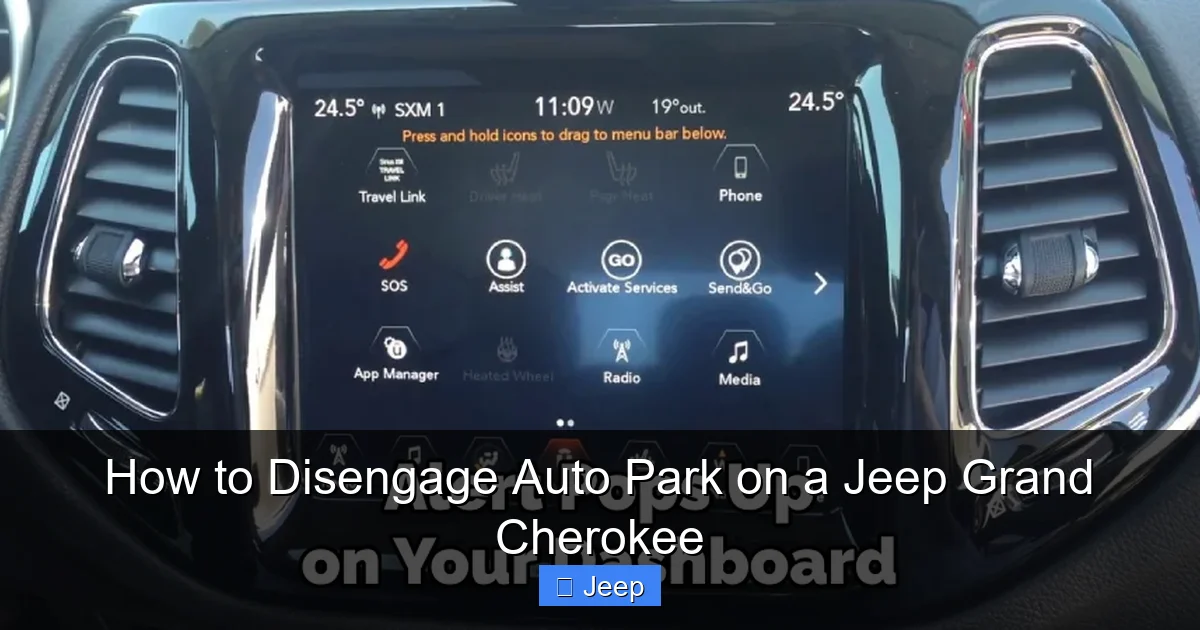
Visual guide about How to Disengage Auto Park on a Jeep Grand Cherokee
Image source: jeepfixes.com
Method 1: The Brake Pedal Technique (The Standard Way)
This sounds obvious, but there’s a trick to it. Many people press the brake pedal lightly. You need to press it FIRMLY, all the way to the floor, and hold it there. The pedal must depress the brake light switch completely.
- Step 1: Sit in the driver’s seat. Confirm the vehicle is in Park.
- Step 2: Press the brake pedal down as hard as you can and hold it. Don’t pump it.
- Step 3: While holding the brake, press the ignition button to start the engine, or turn the key to the ON/RUN position (do not start if you’re just trying to shift).
- Step 4: While still holding the brake firmly, attempt to move the shifter out of Park. Push the release button on the shifter knob if it has one.
Tip: Have a helper stand behind the vehicle to confirm your brake lights are illuminating brightly. If they’re dim or out, the brake light switch is your problem. For those with a key ignition, turn the key to the ON position (the position right before START where dash lights come on), press the brake, and then try shifting. Sometimes the ignition position matters.
Method 2: The Manual Override (Your Emergency Key)
If the brake pedal trick fails, it’s time for the manual override. This is different for different model years, but the location is generally the same.
For 2011-2021 Grand Cherokee Models (WK2, WL platform):
- Step 1: Locate the small, rectangular plastic cover on the side of the center console shifter bezel (the trim around the shifter). It’s often near the front or side, sometimes with a tiny notch. You might need a flat-head screwdriver or your fingernail to pry it off.
- Step 2: Under the cover, you’ll see a small hole or a button. If it’s a hole, insert a small, thin screwdriver or even a pen barrel straight down. You should feel it engage with a plastic tab.
- Step 3: While pressing/turning the tool inside the hole, use your other hand to firmly press the brake pedal and attempt to move the shifter out of Park. You need to hold the tool in place while shifting.
- Step 4: Once the shifter moves, you can remove the tool. The vehicle will likely go into Neutral (N). You can then start the engine (while still pressing the brake) and shift into Drive or Reverse.
Important: This is for emergency use only to move the vehicle a short distance (like to the side of the road). The system is designed this way so you can still move the car if the electronics fail. Driving extensively with the manual override engaged or with a known BSI fault is not recommended, as the vehicle may not start in gear properly and could roll unexpectedly.
Method 3: The “Key Trick” (For Older Models)
This is a clever workaround for some older Grand Cherokees (pre-2008-ish) that have a traditional key ignition. It works by tricking the ignition switch into thinking the key is in the “ON” position while you use the brake.
- Step 1: Insert the key and turn it to the ON/RUN position (dash lights on). Do not start the engine.
- Step 2: While holding the brake pedal firmly, press the shifter release button and attempt to shift to Neutral.
- Step 3: If it doesn’t budge, while still holding the brake and the shifter button, quickly turn the key back to LOCK and then back to ON a couple of times. The brief interruption can sometimes jolt the solenoid into working.
- Step 4: Once in Neutral, start the engine (still on the brake) and shift to Drive.
This method is less reliable on newer models with push-button start, but the principle of “jiggling” the ignition state can sometimes work.
Method 4: Check and Reset the Fuse
A blown fuse is a simple fix. Locate the fuse panel inside the vehicle, usually on the lower left side of the dash panel near the driver’s knee, or under the hood. Consult your owner’s manual for the exact fuse location and amperage.
- Step 1: Identify the fuse for “Brake Lights,” “Stop Lights,” or “BSI.” It’s often a 10-15 amp fuse.
- Step 2: Pull it out with a fuse puller or needle-nose pliers. Inspect the metal strip inside. If it’s broken, replace it with a new fuse of the same amperage.
- Step 3: If the fuse blows immediately after replacement, there’s a short circuit—stop and seek professional help.
- Step 4: With a good fuse in place, try the brake pedal method again.
Pro Tip: While you’re there, check the fuses for the “Ignition” and “TCM” as well, just in case.
Troubleshooting Persistent Auto Park Issues
If you’ve tried all the above and the shifter is still locked, the problem is deeper. Now we need to diagnose. Do not keep attempting to force the shifter. You’re at the point where systematic troubleshooting is needed.
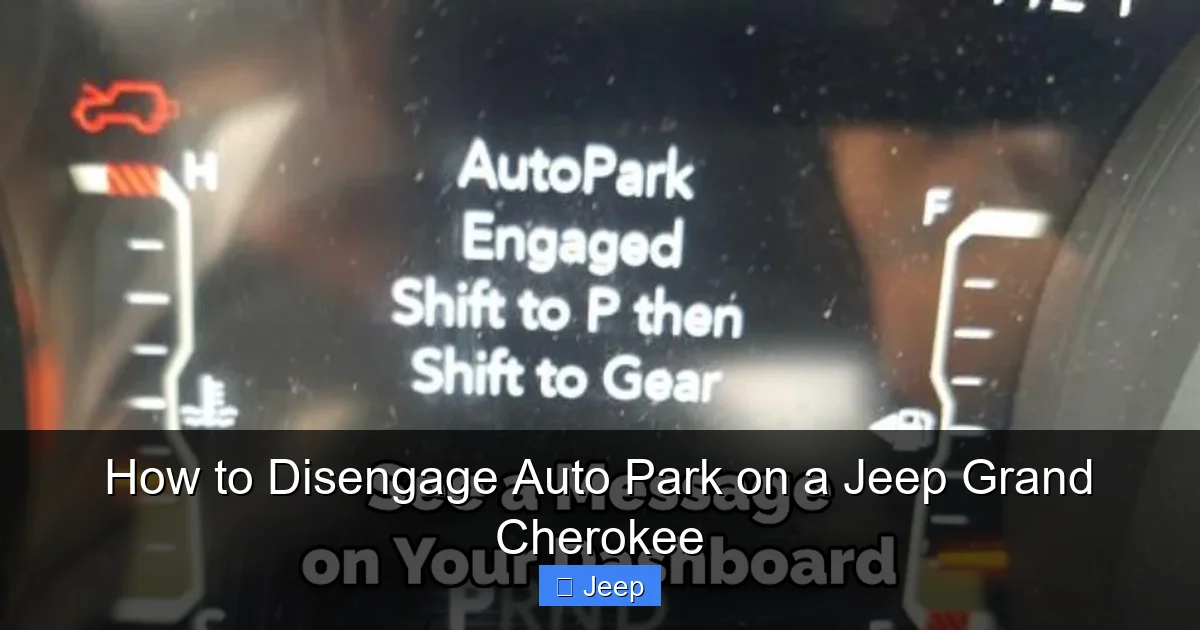
Visual guide about How to Disengage Auto Park on a Jeep Grand Cherokee
Image source: jeepfixes.com
Step 1: Confirm the Brake Light Switch
This remains the prime suspect. Have someone press the brake pedal while you watch the brake lights from the rear of the vehicle. No lights? The switch is bad. Even if lights work, the switch can be weak. You can often adjust it. Locate the switch on the brake pedal arm under the dash. There’s usually a lock nut. Loosen it and adjust the switch position so the plunger is fully depressed when the pedal is at rest. Tighten the nut and test.
Step 2: Scan for Diagnostic Trouble Codes (DTCs)
Your Grand Cherokee’s computer stores trouble codes. You’ll need an OBD-II scanner that can read not just engine codes, but also Transmission (TCM) and Body (BCM) codes. A simple code reader from the auto parts store might not cut it; you may need a more advanced scanner. Look for codes related to:
- Brake Switch (P0571, P0572, P0573)
- Transmission Range Sensor (P0706, P0707)
- BSI Solenoid circuit
These codes will point you directly to the faulty component. If you’re not comfortable with this, a mechanic or dealership can perform a quick scan.
Step 3: Inspect the Manual Override Mechanism
Sometimes the manual override itself jams or breaks. If you used it once and it worked, but now it doesn’t, the plastic tab inside might be snapped. You may need to remove the center console trim to inspect and potentially replace the override assembly. This is a more involved DIY job. Search for a YouTube tutorial for your specific Grand Cherokee year for visual guidance.
Safety Precautions and Best Practices
Working on your vehicle’s safety systems requires caution. Here are non-negotiable rules.
Always Use the Parking Brake
Before you even sit down to diagnose, set the parking brake firmly. If you’re on a slope, use wheel chocks. The parking pawl (the metal pin that locks the transmission in Park) is a small piece of metal. If the vehicle rolls while you’re prying or underneath it, the results are catastrophic.
Never Use Excessive Force on the Shifter
I cannot say this enough. The shift linkage and internal parking pawl are not designed to be yanked. If it doesn’t move with normal pressure and the brake held, stop. You will break something. That little manual override is there for a reason. Use it. Forcing the shifter can bend the shift linkage or shear the parking pawl, turning a simple electrical fix into a multi-thousand-dollar transmission rebuild.
Beware of Rolling Vehicles
Once you disengage Auto Park and shift to Neutral, the vehicle is free to roll. Never, ever get in or out of a vehicle in Neutral on a slope. Always have the parking brake set. When you’re ready to move, start the engine (foot on brake), shift to Drive or Reverse, and then release the parking brake smoothly.
When to Seek Professional Help
Some issues are beyond a safe DIY fix. Here’s when to call a qualified mechanic or dealership.
Signs of Internal Transmission Trouble
If your Grand Cherokee is exhibiting other symptoms—hard shifts, slipping gears, delayed engagement, strange noises (clunking, whining), or fluid leaks—the Auto Park issue could be a symptom of a larger transmission problem. The Transmission Range Sensor might be failing, or internal pressure could be off. This requires professional diagnosis with specialized tools.
Complex Electrical Diagnostics
If you’ve confirmed the brake light switch and fuses are good, but there’s still no power to the BSI solenoid, the fault could be in the wiring harness, a connector under the dash, the Body Control Module (BCM), or the TCM. Tracing these circuits is time-consuming and requires expertise.
The Cost of Repairs
- Brake Light Switch: $30 – $100 for the part, 30-60 minutes labor.
- Fuse: $2 – $10.
- Manual Override Assembly: $50 – $150 part, 1-2 hours labor.
- Transmission Range Sensor: $100 – $300 part, 1-2 hours labor.
- Wiring/BCM/TCM Issues: Highly variable, from $200 to $1000+.
Getting a proper diagnosis first will save you from throwing parts at the problem. A reputable shop will perform a “BCD” (Brake Circuit Diagnostic) or similar procedure.
Conclusion: Staying Mobile and Safe
Getting stuck in Auto Park on your Jeep Grand Cherokee is a nuisance, but it’s almost always fixable without a transmission teardown. Start with the basics: check the brake lights, press the brake pedal firmly, and locate your manual override. A weak battery or a $20 brake light switch are the most common fixes. Remember, this system is a critical safety feature designed to keep you from rolling away unexpectedly. While knowing how to disengage it in an emergency is a valuable skill, the goal is to repair the underlying fault so the system works as intended.
Regular maintenance is your best defense. Keep your battery terminals clean, address any brake light issues immediately, and don’t ignore warning lights. A well-maintained Grand Cherokee is a reliable one. If you’ve tried the steps in this guide and are still stuck, don’t hesitate to seek professional help. It’s better to pay for a correct diagnosis than to cause damage by forcing things. For more on maintaining your Jeep, check our guide on how to reset the oil change light on a Jeep Grand Cherokee. Keeping up with all service intervals helps prevent a cascade of problems. And if you’re curious about the value of your well-maintained Grand Cherokee, you can learn how much a 2014 Jeep Grand Cherokee is worth to see how proper care pays off. Drive safe!
Frequently Asked Questions
Why is my Jeep Grand Cherokee stuck in Auto Park?
It’s most commonly caused by a faulty brake light switch, a dead battery, or a blown fuse in the brake light circuit. The system isn’t getting the signal that your foot is on the brake, so it won’t release the lock.
Can I disable Auto Park permanently?
Technically, you could bypass the brake-shift interlock solenoid, but this is extremely dangerous and illegal in many areas. It removes a critical safety feature that prevents accidental movement. We strongly advise against disabling it.
Where is the manual override on a Jeep Grand Cherokee?
For 2011-2021 models, it’s a small plastic cover on the side of the center console shifter bezel. Pry it off to reveal a hole. Insert a small screwdriver and hold it down while pressing the brake and moving the shifter. The exact location varies slightly by year; consult your owner’s manual.
Will disengaging Auto Park damage my transmission?
Using the manual override or proper brake pedal method will not damage the transmission. However, forcing the shifter with excessive strength can break the shift linkage or the internal parking pawl, causing serious and expensive damage.
How much does it cost to fix an Auto Park problem?
It depends on the cause. A simple brake light switch replacement might cost $50-$150 installed. A transmission range sensor could be $200-$400. More complex wiring or module issues can run higher. Always get a diagnosis first.
Is it safe to drive with a broken Auto Park system?
You can drive it if you can shift out of Park using the manual override, but it’s not ideal. The system is a safety interlock. You must be extremely careful to always set the parking brake, as the vehicle could theoretically roll if the parking pawl is the only thing holding it. Have it repaired as soon as possible.
