
How to Deodorize a Car Cover: Safe, Effective Methods That Work
Quick Answer
To deodorize a car cover, remove it from the vehicle, shake off loose debris, and check its care label before cleaning. Air it out in a shaded, well-ventilated area, then wash it with a mild detergent if the manufacturer permits washing. Make sure the cover dries completely before storing or putting it back on your car.
Best ways to remove car cover odors
- Air it out: Hang the cover in moving air to help release trapped odors.
- Wash gently: Use mild detergent and cool or lukewarm water only when the care instructions allow it.
- Remove mildew sources: Clean visible dirt and investigate persistent musty smells before reuse.
- Skip harsh chemicals: Avoid bleach, strong solvents, and unapproved sprays that could damage coatings or waterproofing.
- Dry it fully: Keep the cover off the vehicle until both sides and any thick seams are completely dry.
Before putting it back on
- Check for remaining odor, damp patches, mold-like spots, and damaged fabric.
- Make sure the vehicle is clean and dry, too, so trapped moisture doesn’t bring the smell back.
A car cover can start smelling stale after weeks of outdoor use, damp weather, or storage in a garage with poor airflow. The right fix depends on whether you’re dealing with ordinary fabric odor, road grime, mildew, or a chemical smell from the cover itself.
As a DIY-minded car enthusiast, I’d start with the least aggressive method and move to washing only when the cover’s care instructions permit it. This guide explains how to deodorize a car cover without unnecessarily damaging its material or protective finish.
In This Guide
- How do you identify the smell coming from a car cover?
- How do you deodorize a car cover without washing it?
- How do you wash a car cover to remove odors?
- Which odor-removal method is safest for your car cover?
- How do you handle mildew and stubborn car cover smells?
- How do you prevent car cover odors from returning?
- Frequently asked questions
How do you identify the smell coming from a car cover?
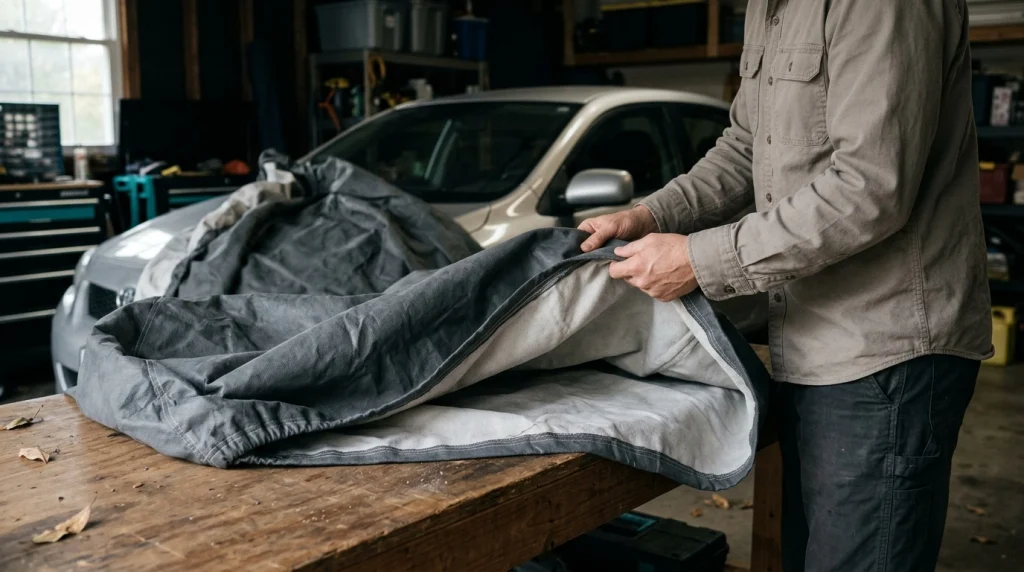
A car cover is a protective layer placed over a vehicle to limit exposure to dust, debris, moisture, and other environmental contaminants. Its fabric, backing, coatings, and storage conditions all affect how it holds odors.
Before cleaning, identify the likely source of the smell. That helps you choose a suitable treatment instead of applying unnecessary chemicals.
Musty or damp smells
A musty smell often points to trapped moisture, poor ventilation, or possible mildew growth. This is especially worth investigating when a cover has been folded away while damp or left on a wet vehicle.
Inspect both sides of the fabric, paying particular attention to folds, seams, elastic hems, and areas that stay against the car. If you see suspicious growth, avoid shaking the cover indoors.
Stale fabric and outdoor odors
Dust, pollen, leaves, bird droppings, and general outdoor grime can leave a cover smelling stale. A cover stored near fuel, cleaning products, smoke, or other strong-smelling materials may absorb those odors as well.
Loose dirt and mild outdoor odors may respond to brushing and ventilation. A cover with embedded grime may need a manufacturer-approved wash.
New-cover or chemical smells
Some new covers have a noticeable material or manufacturing odor. Ventilation may help it fade, but a persistent solvent-like or unusually sharp smell deserves extra caution.
Keep the cover away from flames and ignition sources if it smells strongly of chemicals or fuel. Contact the manufacturer before applying cleaners or using the cover if the odor persists.
| Odor type | Possible cause | First step |
|---|---|---|
| Musty or earthy | Trapped moisture or possible mildew | Inspect and dry thoroughly |
| Dusty or stale | Accumulated dirt and environmental debris | Shake out and gently brush |
| Smoke or garage odor | Absorbed airborne odors | Ventilate away from the source |
| Strong chemical smell | Material odor or chemical contamination | Isolate and contact the manufacturer if persistent |
Section takeaway: Identify the odor before treating it. Moisture-related smells need a different approach from ordinary dust or new-material odors.
How do you deodorize a car cover without washing it?
Ventilation is the best first step when a car cover smells stale but isn’t visibly dirty. Fresh airflow can help disperse ordinary trapped odors without exposing the fabric to detergents or unnecessary water.
Step 1: Remove the cover carefully
Take the cover off the vehicle and choose an outdoor location with enough room to spread it out. If it has visible mold-like growth or heavy contamination, handle it carefully and avoid spreading debris.
Don’t drag the cover across the ground, where it can pick up grit that may later scratch the vehicle’s finish. Fold or carry it loosely until you reach the cleaning area.
Step 2: Shake away loose dirt
Gently shake the cover to release dust, dried leaves, and other loose debris. For remaining surface dirt, use a soft brush if the manufacturer permits brushing.
Avoid aggressive scrubbing, stiff brushes, and abrasive pads. These can damage delicate fabric, seams, or surface coatings.
Step 3: Let the cover breathe
Spread the cover over a clean, suitable support or hang it according to its care instructions. Choose a dry, shaded, well-ventilated spot where air can reach both sides.
Direct sunlight may help dry some materials, but prolonged exposure can affect certain fabrics, colors, and coatings. Shade is the safer default unless the manufacturer specifies otherwise.
Step 4: Check whether the odor has faded
After the cover has aired out and dried, smell it again and inspect its seams and inner surface. If the odor has substantially faded, a wash may not be necessary.
If the smell returns quickly or remains strong, look for embedded dirt, moisture, mildew, or contamination. Don’t simply cover the smell with fragrance.
Practical tip: Airing works best when the cover itself is the source of a mild stale smell. It won’t reliably remove heavy grime, mold contamination, or a substance absorbed deep into the fabric.
How do you wash a car cover to remove odors?
Washing is usually the next step when ventilation doesn’t eliminate the smell. The key is to remove odor-causing residue without damaging the cover’s fabric, lining, seams, or water-resistant treatment.
Step 1: Read the care label first
Car covers differ in material and construction. Some lightweight fabric covers permit machine washing, while specialty, multilayer, and coated covers may require a specific hand-washing method.
Check the label or the manufacturer’s care instructions before choosing a detergent, water temperature, washing machine, or drying method. If the instructions are missing, contact the manufacturer rather than guessing.
Step 2: Prepare a gentle cleaning solution
For a cover that permits hand washing, start with cool or lukewarm water and a small amount of manufacturer-approved mild detergent. Use a clean bucket, soft sponge, or microfiber cloth to work in manageable sections.
Don’t add several household cleaners together. Mixing products can create harmful fumes, and unapproved chemicals may damage the cover’s protective finish.
Step 3: Clean both sides carefully
Place the cover on a clean, smooth surface that won’t snag the fabric. Gently wipe the outer surface, then clean the inner surface if the care instructions permit it.
Give extra attention to seams, hems, and folds where dirt and moisture can collect. Avoid aggressive scrubbing, especially around thin or coated areas.
Step 4: Rinse thoroughly
Rinse away the cleaning solution according to the manufacturer’s instructions. Soap residue can leave a film and may attract dirt or interfere with the cover’s intended performance.
Use ordinary gentle water flow rather than a pressure washer. High-pressure water may force moisture into seams or damage some cover constructions.
Step 5: Dry the cover completely
Spread or hang the cover in a clean, shaded, well-ventilated location. Make sure air reaches the inner surface, seams, and thick hems.
Don’t put the cover in a tumble dryer unless the manufacturer explicitly permits that method for your specific material. Heat can shrink some fabrics or damage bonded layers and coatings.
Important: A car cover doesn’t need perfume to smell clean. Thorough cleaning, rinsing, and complete drying are more useful than adding another fragrance to the fabric.
For more detailed cleaning guidance, see this step-by-step guide to washing a car cover. If your cover has unusual construction or a specialty coating, follow its own instructions over general advice.
Section takeaway: Wash only when the cover’s care instructions allow it. Removing the source of the odor and drying every part of the fabric matters more than using a strong cleaner.
Which odor-removal method is safest for your car cover?
The safest method depends on the odor’s severity, the cover’s material, and the manufacturer’s cleaning restrictions. Begin with ventilation for mild smells and move to an approved wash when dirt or residue remains.
| Method | Best use | Main limitation |
|---|---|---|
| Shaking and brushing | Loose dust and dry debris | Won’t remove embedded grime |
| Outdoor ventilation | Mild stale or trapped odors | May not address contamination |
| Gentle hand washing | Dirt and persistent fabric odors | Requires compatible cleaning instructions |
| Machine washing | Covers specifically labeled machine-washable | Agitation or heat may damage some covers |
| Professional cleaning or replacement | Persistent contamination or delicate specialty covers | Requires material-specific advice and may cost more |
Can you use baking soda on a car cover?
Baking soda is commonly used to absorb odors in household settings, but that doesn’t automatically make it suitable for every automotive cover. Fine powder may lodge in seams, linings, or textured material, and it can be difficult to remove completely.
Before applying it, check the manufacturer’s guidance. If powder-based treatments aren’t approved, choose ventilation or a compatible cleaning method instead.
Can you spray vinegar or a fabric deodorizer on it?
Don’t assume vinegar, essential oils, fragrance sprays, or commercial fabric deodorizers are safe for coated automotive textiles. Their ingredients may affect certain materials, leave residue, or mask an odor without removing its cause.
Use a spray product only if the cover manufacturer confirms compatibility. Never combine vinegar with bleach or bleach-containing products.
Should you use an odor eliminator instead of washing?
An odor eliminator may be useful for some compatible materials, but it isn’t a substitute for removing dirt or correcting a moisture problem. Follow the product’s directions and test only as the cover manufacturer permits.
If the smell persists after proper cleaning, investigate the source before applying another treatment. Repeatedly adding products can complicate the problem.
Section takeaway: There is no universal deodorizer for every car cover. Choose the least aggressive method that addresses the actual cause and is approved for the material.
How do you handle mildew and stubborn car cover smells?
A persistent musty odor can indicate that the cover stayed damp or developed mildew. Cleaning the surface alone may not solve the problem if moisture or contamination remains trapped in its layers.
Inspect the cover before cleaning
Move the cover to a suitable outdoor area if you suspect mold or mildew. Avoid shaking a visibly contaminated cover, which may spread spores and debris into the air.
Look for dark or discolored spots, unusual residue, damp seams, and deterioration. Odor alone cannot confirm mold, and stains alone don’t always establish what caused them.
Clean only with a compatible treatment
Check the manufacturer’s instructions for dealing with mildew or persistent contamination. If ordinary approved washing is appropriate, clean the cover gently and rinse it as directed.
Don’t automatically use bleach, strong disinfectants, or concentrated mold removers. These can damage fabrics or coatings, and some chemical combinations are hazardous.
Dry it fully and reassess
After cleaning, dry the cover completely in a ventilated area. Inspect the seams, inner lining, and folds before deciding whether it is ready to use again.
If the musty smell remains, returns shortly afterward, or accompanies widespread visible growth, contact the manufacturer or a professional cleaner familiar with automotive covers. Replacement may be more sensible if the material is deteriorating or cannot be cleaned safely.
What if the odor comes from fuel, oil, or another chemical?
Treat a strong fuel-like, oily, or solvent-like smell as possible contamination rather than ordinary stale fabric. Keep the cover away from flames, sparks, and other ignition sources, and avoid putting it back on the vehicle until the source is understood.
Don’t try to dissolve an unknown substance with household chemicals. Seek manufacturer or professional advice about safe handling, cleaning, or disposal.
Section takeaway: Persistent mildew or chemical odors need investigation, not perfume. If the cover cannot be cleaned safely or the contamination remains unexplained, stop using it until you have suitable guidance.
How do you prevent car cover odors from returning?
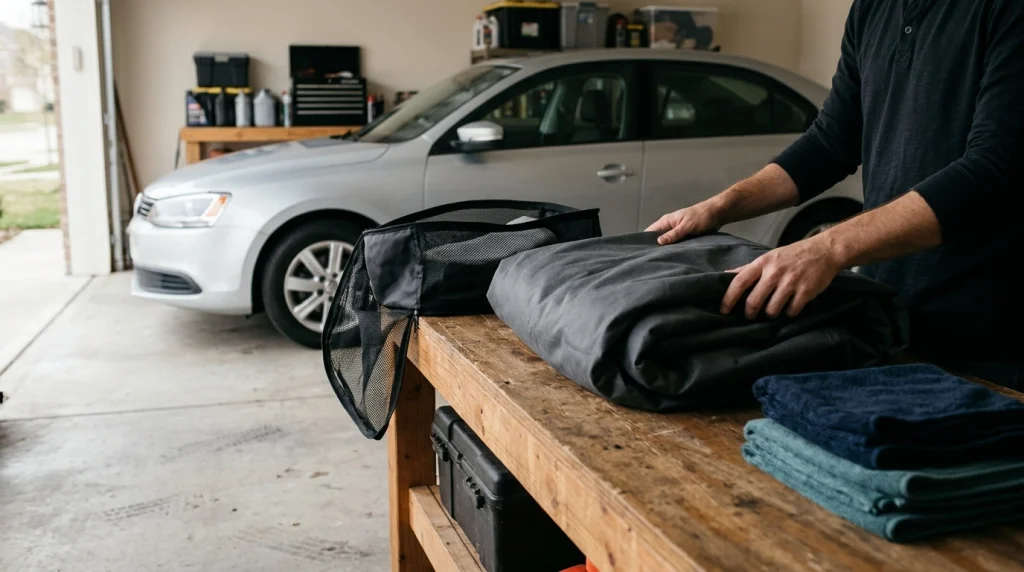
The easiest way to keep a car cover smelling fresh is to prevent moisture, dirt, and poor storage conditions from building up. A simple maintenance routine reduces the need for repeated washing.
Keep the vehicle and cover dry
Whenever possible, cover a clean, dry vehicle with a dry cover. Trapped moisture between the fabric and paint can contribute to musty odors, especially when the vehicle remains covered for extended periods.
If rain catches you out, remove or reposition the cover when conditions allow and dry it according to the manufacturer’s instructions. Don’t leave a damp cover tightly folded in its storage bag.
Store the cover in a ventilated place
Once completely dry, fold the cover loosely and store it in a clean, dry location. Avoid damp basements, wet garage floors, and storage containers that trap moisture.
Keep the cover away from fuel cans, solvents, paint products, and other strong-smelling substances. This reduces the chance of absorbing unwanted odors between uses.
Remove debris before putting it away
Shake off loose dust and leaves before folding the cover. Check the inner surface for grit, since debris trapped against the car can scratch its finish when the cover moves.
Inspect the fabric regularly for tears, loose seams, and persistent stains. Addressing contamination early is usually easier than trying to remove a deeply embedded odor later.
Follow a practical maintenance schedule
| When | What to do |
|---|---|
| Before installation | Check for moisture, grit, and unusual odors. |
| After wet weather | Inspect the cover and allow it to dry properly. |
| During regular use | Remove loose debris and check for developing smells. |
| Before long-term storage | Clean if needed, dry completely, and store loosely. |
These are practical reminders rather than fixed cleaning intervals. A cover used outdoors beneath trees may need more frequent attention than one used occasionally in a clean garage.
For more advice, read this guide on maintaining a car cover and the recommendations for storing a car cover correctly.
Section takeaway: Dry the cover before storing it, keep it away from odor sources, and check it regularly. Prevention is simpler than repeatedly treating a cover that smells musty.
Frequently asked questions about deodorizing a car cover
1. How long does it take to deodorize a car cover?
A mildly stale cover may smell better after several hours of ventilation, although the time varies with humidity, airflow, and material. A dirty or contaminated cover may need cleaning and a longer drying period. Don’t reinstall or store it until it’s completely dry.
2. Can I use air freshener on my car cover?
It’s better to avoid ordinary air fresheners unless the manufacturer confirms they’re safe for your cover. Fragrances can mask odors without removing their source, and some ingredients may leave residue or affect protective coatings.
3. Will sunlight remove a musty smell from a car cover?
Drying can help reduce moisture-related odors, but direct sunlight isn’t the safest choice for every cover. Some fabrics and coatings can deteriorate with prolonged UV exposure. Use a shaded, well-ventilated area unless the manufacturer recommends otherwise.
4. Can I put my car cover in the washing machine?
Only if the manufacturer specifically permits machine washing for your cover. Follow the recommended machine type, cycle, water temperature, detergent, and drying method. When those instructions are unavailable, contact the manufacturer before washing.
5. Does vinegar remove mildew smell from a car cover?
Vinegar isn’t a universal solution for automotive fabrics. Its suitability depends on the material and its coatings, so don’t apply it without checking the care instructions. Never mix vinegar with bleach, as this can release hazardous chlorine gas.
6. Why does my car cover smell again after washing?
The cover may not have dried completely, residue may remain, or the odor source may still be present. Check the seams and inner surface, review the cleaning method, and inspect the vehicle and storage area for moisture or contamination before repeating the treatment.
7. When should I replace a smelly car cover?
Consider replacement if the cover has widespread persistent contamination, deteriorating fabric, damaged seams, or an unexplained chemical odor that cannot be resolved safely. For a specialty cover, ask the manufacturer whether professional cleaning is appropriate before discarding it.
Final takeaway: Keep your car cover clean, dry, and odor-free
Learning how to deodorize a car cover starts with identifying the smell and choosing a gentle, material-compatible solution. Ventilation often helps with mild stale odors, while dirt-related smells may require an approved wash.
Don’t rely on fragrance, bleach, or aggressive cleaning to solve every odor problem. Protect the cover’s fabric and coatings by following its care instructions and drying it thoroughly before reuse.
Most importantly, keep moisture and dirt from accumulating in the first place. A clean, dry cover stored in a suitable environment is easier to maintain and better prepared to protect your vehicle.