How to Check Miles on a Tesla

Contents
- 1 Key Takeaways
- 2 📑 Table of Contents
- 3 Method 1: Checking Miles via the Tesla Touchscreen
- 4 Method 2: Checking Miles via the Tesla Mobile App
- 5 Method 3: Checking Miles via Your Tesla Account (Web Browser)
- 6 Understanding the Data: Odometer, Trip Meters, and Range
- 7 Practical Examples and Tips for Accuracy
- 8 Why Teslas Do It This Way: The Digital Advantage
- 9 Conclusion: Your Miles, Your Way
- 10 Frequently Asked Questions

Bluetooth FM Transmitter

Portable Work Light

Tire Shine Spray

Radiator Coolant
Checking the miles on your Tesla is incredibly simple and can be done in multiple ways directly from the driver’s seat. The primary method is through the vehicle’s central touchscreen display, which shows both the odometer and trip meters. You can also access your Tesla’s mileage instantly via the official Tesla mobile app on your smartphone or by logging into your Tesla account on a web browser. These digital methods eliminate the need for a traditional mechanical gauge and provide additional trip data for efficient driving.
Welcome to the wonderful world of Tesla ownership! One of the first things you might wonder as a new driver is how to perform the basic checks you’re used to in a traditional gasoline car. Checking your mileage is a fundamental task—whether you’re tracking fuel efficiency (or in this case, energy efficiency), logging trips for business, or simply curious about your car’s total journey. The great news is that Tesla has made this process remarkably straightforward and integrated into its digital ecosystem. There’s no twisting a mechanical cable or peering at a small analog dial. Instead, you have clear, digital readouts available at your fingertips, or even from your couch. This guide will walk you through every single method to check miles on a Tesla, ensuring you know exactly where to look and how to interpret the data, no matter which model you drive.
Key Takeaways
- Understanding How to Check Miles on a Tesla: Provides essential knowledge
📑 Table of Contents
- Method 1: Checking Miles via the Tesla Touchscreen
- Method 2: Checking Miles via the Tesla Mobile App
- Method 3: Checking Miles via Your Tesla Account (Web Browser)
- Understanding the Data: Odometer, Trip Meters, and Range
- Practical Examples and Tips for Accuracy
- Why Teslas Do It This Way: The Digital Advantage
- Conclusion: Your Miles, Your Way
Method 1: Checking Miles via the Tesla Touchscreen
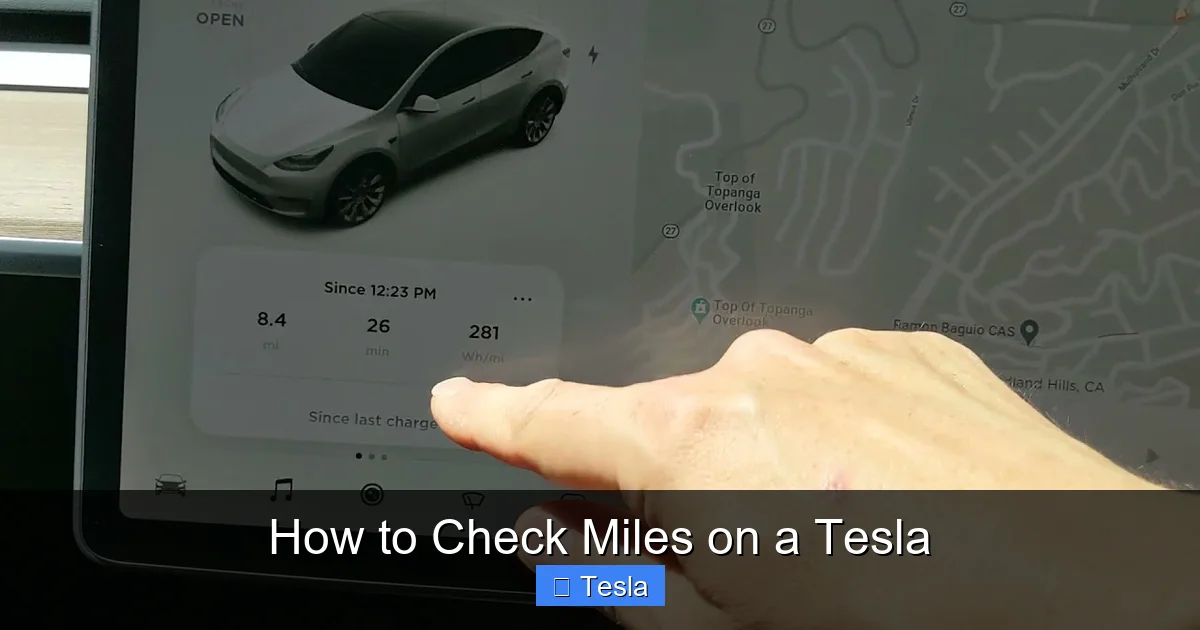
The heart of your Tesla’s interface is the large, responsive touchscreen mounted in the center of the dashboard. This is your command center for virtually all vehicle information and settings. Checking the odometer and trip data here is the most common method and provides the most comprehensive view. The layout is consistent across all modern Tesla models (Model S, 3, X, Y), though minor software updates can slightly adjust menu locations.
Finding the Odometer and Trip Meters
When you first get into your Tesla and start it, the main driving screen (often called the “Canvas” or “Drive” screen) is active. At the very top of this screen, in the status bar, you will typically see your current speed, the current time, and—most importantly for our purposes—your total odometer reading. It’s usually displayed in small, white or light-colored digits. This number represents the cumulative miles (or kilometers, depending on your regional setting) the vehicle has driven since it was first put into service.
For more detailed trip information, you need to access the “Trip” application or widget. Here’s how:
- Step 1: While parked or driving, look at the bottom of your touchscreen. You should see a row of app icons (like Media, Energy, Cameras, etc.).
- Step 2: Tap the Trip icon. It often looks like a small speedometer or a route marker.
- Step 3: The Trip screen will display. Here you will see two primary sections: Trip A and Trip B. These are separate, resettable trip meters. You’ll also see the Odometer prominently displayed again, often at the top or bottom of this specific screen for easy reference.
- Step 4: Each trip meter will show the distance traveled since you last manually reset it. There are also usually additional stats like average energy consumption (Wh/mi or Wh/km) and duration for each trip.
Pro Tip: You can also often see a small, simplified version of the odometer and one trip meter on the “Drive” screen itself by tapping the small “i” or info icon in the top status bar, if available in your software version. This keeps the data visible without leaving the main navigation view.
Resetting Your Trip Meters
The power of the trip meters is in their reset function. This allows you to track specific journeys. For example, you could reset Trip A at the start of your daily commute to see that day’s efficiency, and keep Trip B accumulating for a full week or a road trip. Resetting is simple:
- Navigate to the Trip screen as described above.
- Look for a small Reset button or icon next to the trip meter (Trip A or Trip B) you wish to zero out.
- Tap it. You will likely get a confirmation prompt (“Reset Trip A?”). Confirm, and that trip meter will return to 0.0.
You cannot reset the main odometer. That number is permanent and records the vehicle’s total life mileage, which is crucial for warranty, service scheduling, and resale value.
Method 2: Checking Miles via the Tesla Mobile App
One of the biggest conveniences of owning a Tesla is the official Tesla mobile app. It turns your smartphone into a remote control and information hub for your car. Checking the odometer is one of its simplest and most useful features, especially when you’re not near the vehicle.
Visual guide about How to Check Miles on a Tesla
Image source: i.ytimg.com
Step-by-Step App Guide
To find your Tesla’s mileage from your phone:
- Step 1: Ensure your phone has a stable internet connection (cellular data or Wi-Fi) and that your Tesla is also connected to the Tesla network (it usually is when parked at home or with a good cellular signal).
- Step 2: Open the Tesla app and log in if prompted.
- Step 3: The app will connect to your vehicle. Once connected, the main screen (often called the “Controls” or “Dashboard” screen) will load. This screen typically shows a graphic of your car, the current battery charge level, and climate control status.
- Step 4: Look carefully at the top of this main screen, just below the vehicle name/vin. You will see the odometer reading displayed clearly, usually in a larger font. It might be labeled as “Odometer” or simply show the number with “mi” or “km”.
- Step 5: That’s it! You have your total mileage. The app may also show you the estimated range and other key data on this same home screen.
Why This is Useful: This method is perfect for quickly checking mileage when you’re at work and want to log a trip, when a friend asks “how many miles are on that thing?”, or when you’re preparing for a service appointment and need the number handy. It’s instant and requires no physical interaction with the car.
Method 3: Checking Miles via Your Tesla Account (Web Browser)
For those who prefer a desktop or laptop, or who need to access information from a shared or work computer, your Tesla account on a web browser provides the same essential data as the mobile app. This is also the place to find detailed trip data and charging history over longer periods.
Navigating the Online Dashboard
Here’s how to find your odometer online:
- Step 1: Open your preferred web browser and go to tesla.com.
- Step 2: Log into your Tesla account using your email and password. This is the same login you use for the mobile app and for ordering.
Once logged in, look for a section like “My Vehicle”, “Vehicle Dashboard”, or simply your vehicle’s name/model. Click on it. - Step 4: You will be taken to an overview page for your specific car. The design may change with website updates, but the odometer reading is always a primary data point. It’s typically displayed prominently near the top, alongside the battery state of charge and estimated range.
- Step 5: For historical trip data, look for tabs or links labeled “Trips” or “Drive History”. This section can show you past trips, energy used, and distances, which is great for analyzing long-term efficiency trends.
Note: The web interface might have a slight delay (a few seconds to a minute) syncing with your car if it’s currently asleep or in an area with poor connectivity. The mobile app often has a more direct, real-time connection via your phone’s Bluetooth to the car when you’re nearby.
Understanding the Data: Odometer, Trip Meters, and Range
Now that you know where to find the numbers, it’s critical to understand what each one means. Confusing the “Range” with the “Odometer” is a common new owner mistake.

Visual guide about How to Check Miles on a Tesla
Image source: koala.sh
Odometer: The Total Life Mileage
This is the big one. The odometer tells you the total distance your Tesla has traveled since it was manufactured. It is a non-resettable, permanent record. This number is used for:
- Warranty Claims: Your warranty is based on mileage or time, whichever comes first.
- Service Intervals: While Teslas need less scheduled maintenance than ICE cars, certain services (like battery coolant checks, brake fluid replacement) are still mileage-based.
- Resale Value: The odometer reading is the single biggest factor in determining your car’s used value.
- Logbook/Record Keeping: For business expense tracking or personal records.
Trip Meters (A & B): Your Personal Journey Trackers
Think of Trip A and Trip B as your own little digital notebooks. They start at 0 and accumulate miles as you drive. You reset them whenever you want. Common uses:
- Trip A: Reset daily to track your commute’s distance and efficiency.
- Trip B: Keep running for a full tank (charge) or week to see total consumption over a longer period.
- Specific Journeys: Reset before a road trip to see the total miles driven on that vacation.
They also calculate and display your average energy consumption for that specific trip in watt-hours per mile (Wh/mi). This is the EV equivalent of miles per gallon (MPG) and is the most useful metric for understanding your driving efficiency. A lower Wh/mi number means you’re using less energy per mile, which is better.
Range: The Estimated Miles Left
The “Range” number (often shown on the main drive screen and in the app) is not mileage. It is a real-time estimate of how many more miles you can drive based on your current battery charge and recent driving habits. It fluctuates dramatically with your speed, climate control use, elevation changes, and outside temperature. It is a prediction, not a measurement of distance traveled. Never confuse this with your odometer.
Practical Examples and Tips for Accuracy
Let’s make this practical with some everyday scenarios.

Visual guide about How to Check Miles on a Tesla
Image source: automotiveglory.com
Example 1: Preparing for a Long Road Trip
You’re about to drive from Los Angeles to San Francisco (~380 miles). You want to track your energy use.
- When you leave your driveway, go to the Trip screen on your touchscreen.
- Make sure both Trip A and Trip B are at 0. If not, reset them.
- Use Trip A for this journey. As you drive, watch the Trip A distance and, more importantly, its average Wh/mi. This tells you how efficiently you’re driving.
- Upon arrival, note the total miles on Trip A. It should match your map app’s distance closely.
- You can now see your total energy used for the trip (battery percentage change * battery capacity, or use the Energy app’s graph).
Example 2: Logging Business Miles
You need to log miles driven for client meetings.
- At the start of your workday, reset Trip B on the touchscreen.
- Drive to all your appointments.
- At the end of the day, check Trip B’s total miles. That is your deductible business mileage for the day.
- Record that number in your logbook or spreadsheet. The odometer is for the car’s total life, not your specific business use.
Tips for Reliable Readings
- Don’t Rely on Range for Distance: Always use the trip meter or odometer for actual distance. Range is for charge planning.
- Check at a Full Stop: While you can read it while driving, it’s safest to glance at the odometer when parked or at a complete stop.
- Sync Your App: If the app’s odometer seems off, open the app and pull down to refresh. Ensure your car has a good cellular or Wi-Fi connection. A sleeping car might not sync immediately.
- Calibration is Rare: Unlike some older cars, Tesla’s odometers are digital and don’t need mechanical calibration. If you suspect a major error (which is exceptionally rare), contact Tesla Service.
- Use for Maintenance: Note your current odometer reading. You can then reference Tesla’s official maintenance guide (in your manual or online) to see what service, if any, is due at that mileage.
Why Teslas Do It This Way: The Digital Advantage
You might miss the classic, always-visible speedometer and odometer of a traditional car. But Tesla’s approach has significant advantages. By consolidating all information onto a single, large, high-resolution screen, they provide:
- Rich Data: You don’t just see a number; you see trip averages, energy flow diagrams, tire pressure (which you can also check digitally—similar to how you check tire pressure on a Honda Civic via its own digital interface, though the process differs), and more, all contextually.
- Customization: Software updates can change how and where data is displayed, improving the experience over time.
- Remote Access: The ability to check mileage from your phone is a game-changer for logistics and record-keeping.
- Integration: The trip data automatically feeds into the Energy app, giving you beautiful graphs of your consumption over the trip, something a simple analog odometer could never do.
This digital philosophy extends to other areas of the car. For instance, checking transmission fluid on a Honda Civic is a physical, under-hood task, while a Tesla has no traditional transmission fluid to check—its drivetrain is sealed for life. This shift from mechanical to digital simplifies many owner interactions.
Conclusion: Your Miles, Your Way
Checking the miles on a Tesla is designed to be effortless and integrated into your digital life. Whether you’re the type who likes to see the big number on the drive screen every day, the planner who uses trip meters to optimize efficiency, or the remote manager who checks the car’s status from the office, Tesla provides a method for you. The key is understanding the vocabulary: the odometer is the car’s permanent life tally, the trip meters are your personal, resettable journey counters, and the range is a dynamic prediction of remaining battery life. Mastering these three pieces of information gives you complete control over your vehicle’s data. Make a habit of glancing at your touchscreen on your next drive—the information you need is right there, clear and simple. Welcome to the future of motoring, where even a basic check like reading the mileage is a smooth, digital experience.
Frequently Asked Questions
Can I reset the main odometer on my Tesla?
No. The main odometer is a permanent, non-resettable record of the vehicle’s total lifetime mileage. This is required by law and is essential for warranty and resale purposes. Only the Trip A and Trip B meters can be reset.
Why does the mileage shown in the Tesla app sometimes differ slightly from the car’s screen?
A minor difference of a few tenths of a mile can occur due to sync timing. The car’s screen is always the real-time, authoritative source. The app reads the data from Tesla’s servers, which are updated when the car goes online. If the car is asleep or has a poor connection, the app might show a slightly delayed reading. A manual refresh in the app usually resolves this.
Is there any way to see a digital speedometer alongside the odometer on the main screen?
Yes, your current speed is almost always displayed in large digits on the main “Drive” screen, typically at the top center. The odometer is also usually visible in the top status bar. Some display layouts or software versions might allow you to customize which data is prominent, but both speed and total miles are standard, permanent fixtures on the driving interface.
How do I change the odometer display from miles to kilometers?
You change the entire unit setting (miles vs. kilometers) via the touchscreen. Go to Controls > Display > Units. From there, you can select ‘US’ for miles or ‘Metric’ for kilometers. This change will update all distance and speed readings throughout the vehicle, including the odometer, trip meters, and range estimate.
My Tesla is showing a “—” or dashes for the odometer. What’s wrong?
This usually indicates the car’s systems are still booting up or the main touchscreen is in a reboot cycle. It’s typically temporary. If the dashes persist after the car is fully awake and you’ve driven for a few minutes, try a soft reboot of the touchscreen by holding down both scroll wheel buttons on the steering wheel until the screen turns black and then restarts. If the problem continues, contact Tesla Service.
Can I export my trip data or mileage history?
Yes, but not directly from the car’s screen. The most comprehensive historical data, including trip logs and charging sessions, is available through your Tesla account on the web. The “Trips” section there allows you to view past journeys. You can manually note the data or use third-party Tesla data logging apps (like TeslaFi or Stats for Tesla) that connect to your account and provide extensive exportable reports, including daily mileage summaries. This is more advanced than just checking tire pressure on a 2020 Honda Civic, which is a simple manual gauge check.