How to Adjust Side Mirrors in a Tesla Model 3

Contents
- 1 Key Takeaways
- 2 📑 Table of Contents
- 3 Why Perfect Mirror Adjustment is Non-Negotiable in Your Tesla Model 3
- 4 Understanding Your Model 3’s Side Mirror System
- 5 Method 1: The Primary Way – Touchscreen Adjustment
- 6 Method 2: Steering Wheel Scroll Wheels – The Quick Tweak
- 7 Autopilot and Mirror Positioning: A Symbiotic Relationship
- 8 Troubleshooting: When Your Mirrors Misbehave
- 9 Maintenance, Care, and Enhancements for Your Mirrors
- 10 Safety Best Practices: Making Adjustment a Habit
- 11 Conclusion: Empowerment Through Simple Control
- 12 Frequently Asked Questions

Solar Car Battery Maintainer

Car Wash Mitt

Bluetooth FM Transmitter
Car Body Cover
Adjusting the side mirrors on your Tesla Model 3 is a quick, digital process done through the touchscreen or physical buttons. Proper adjustment is critical for eliminating blind spots and maximizing safety, especially when using Autopilot. This guide walks you through every method, from manual tweaks to integrated Autopilot positioning, plus troubleshooting and maintenance tips.
Key Takeaways
- Digital Control: All mirror adjustments are made via the central touchscreen or steering wheel controls, not manual joysticks on the door.
- Autopilot Integration: The system can automatically adjust mirrors for optimal sensor visibility when you activate Autopilot, but you should still set a personal baseline.
- Blind Spot Elimination: The correct adjustment tilts the mirror slightly outward to see adjacent lanes, reducing the need for shoulder checks.
- Heated Mirror Function: The Model 3’s side mirrors are heated and defrost automatically in cold weather when you activate the rear window defroster.
- Common Issue: If a mirror becomes unresponsive or drifts, a simple software reset often resolves the issue before considering hardware repair.
- Glare Reduction: For night driving, use the manual day/night tab on the mirror’s housing; consider professional window tinting to further reduce glare.
- Regular Maintenance: Clean mirrors with a soft cloth and non-abrasive cleaner to maintain clear visibility and protect the reflective surface.
📑 Table of Contents
- Why Perfect Mirror Adjustment is Non-Negotiable in Your Tesla Model 3
- Understanding Your Model 3’s Side Mirror System
- Method 1: The Primary Way – Touchscreen Adjustment
- Method 2: Steering Wheel Scroll Wheels – The Quick Tweak
- Autopilot and Mirror Positioning: A Symbiotic Relationship
- Troubleshooting: When Your Mirrors Misbehave
- Maintenance, Care, and Enhancements for Your Mirrors
- Safety Best Practices: Making Adjustment a Habit
- Conclusion: Empowerment Through Simple Control
Why Perfect Mirror Adjustment is Non-Negotiable in Your Tesla Model 3
Let’s be honest: when you first slide into the driver’s seat of a Tesla Model 3, the minimalist interior is stunning. But that lack of physical buttons on the doors can be a head-scratcher. Where’s the mirror adjustment lever? How do you get that perfect view? Figuring out how to adjust side mirrors in a Tesla Model 3 isn’t just about convenience; it’s your first and last line of defense against blind spot accidents. Unlike many cars, your Model 3 uses a fully digital interface for this task, which is actually smarter once you get the hang of it.
Properly set mirrors transform your driving experience. They reduce anxiety on busy highways, make lane changes smoother, and work in harmony with the car’s advanced safety features. Think of it as a quick, 60-second ritual that pays dividends every single time you drive. We’re going to break down every single method, from the basic touchscreen controls to the clever Autopilot integration, and even what to do when things go wrong. By the end, you’ll be a mirror adjustment master, ensuring you see everything you need to see.
Understanding Your Model 3’s Side Mirror System
Before we start pushing buttons, let’s understand what we’re working with. The Tesla Model 3 uses power-adjustable side mirrors with a few key features that set them apart.

Visual guide about How to Adjust Side Mirrors in a Tesla Model 3
Image source: mirorfame.com
The Digital Brain: No Physical Levers
Forget everything you know about adjusting mirrors. There is no joystick on the door panel. All control resides in the car’s central computer. You’ll use the large touchscreen display or, for some functions, the steering wheel scroll wheels. This might feel strange at first, but it allows for precise, incremental adjustments and saves physical space on the door.
Standard Features: Heated, Auto-Dimming, and Integrated Turn Signals
Every Model 3 side mirror comes with a trio of useful features. First, they are heated. When you turn on the rear window defroster (via the touchscreen or physical button), heating elements in the mirror glass activate to clear fog, ice, and light snow. Second, they feature auto-dimming (electrochromic) glass. This is the magic that automatically darkens the mirror to reduce glare from vehicles behind you at night. It’s a passive, always-on system. Third, the mirror housing integrates the LED turn signal blinkers, which are highly visible to drivers in adjacent lanes.
The Physical Day/Night Tab
Despite the digital control, there’s one old-school lever on the bottom of the mirror housing. This is the manual day/night tab. Pulling it towards you flips a prism inside the mirror to a non-glare “night” position. Pushing it back returns to the standard “day” view. This is a manual override for the auto-dimming feature and is crucial if the auto-dimming function ever fails or for drivers who prefer manual control.
Method 1: The Primary Way – Touchscreen Adjustment
This is your go-to method for all initial setup and fine-tuning. It’s intuitive and gives you full control over both mirrors simultaneously or individually.
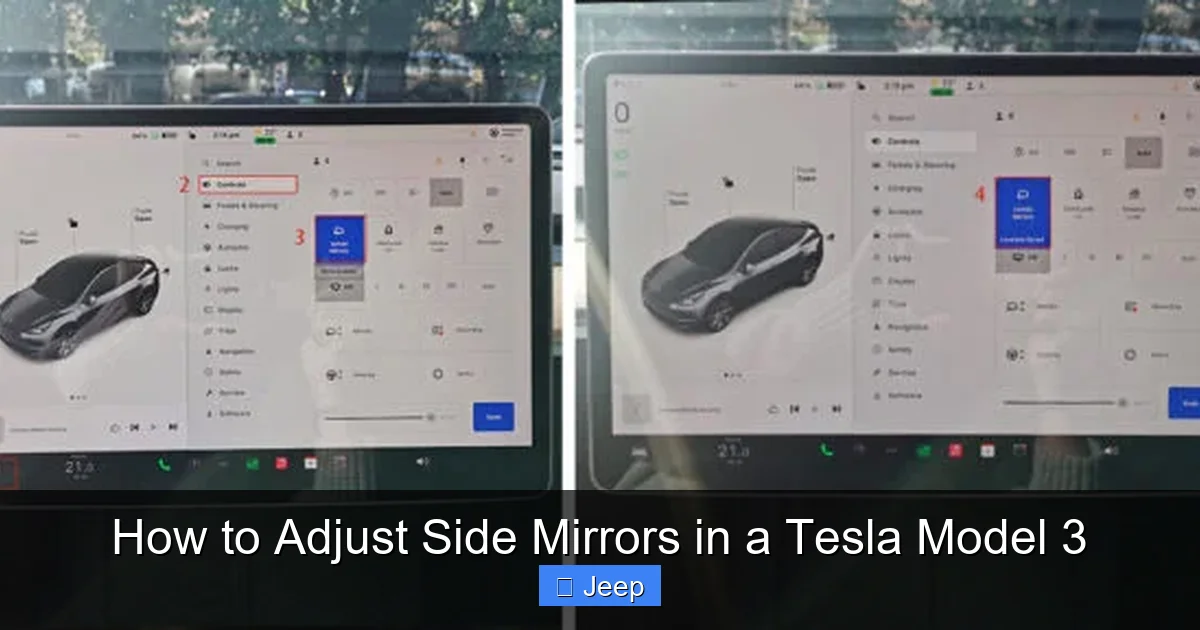
Visual guide about How to Adjust Side Mirrors in a Tesla Model 3
Image source: teslashooters.com
Step-by-Step Touchscreen Navigation
Start by ensuring the car is in “Park” or powered on with a door open. On the 15-inch touchscreen, tap the ‘Controls’ icon (the car symbol) at the bottom left. This opens the main vehicle settings menu. Next, find and tap the ‘Quick Controls’ bar near the top of the screen. You’ll see a row of icons for locks, charge port, frunk, etc. Look for the icon that looks like a car side mirror. Tap it.
This opens the mirror adjustment overlay. You’ll see a graphic of your Model 3 with two sliders or rings representing the driver and passenger side mirrors. To adjust the driver’s mirror, tap the left side of the graphic or select it. A set of four arrow buttons (Up, Down, Left, Right) will appear. Simply tap the arrows to move the mirror in that direction. The same process applies to the passenger mirror. The adjustments are smooth and precise. Take your time, looking out the window to see the effect. The goal is to see the side of your own car and a clear slice of the lane next to you.
Pro Tips for Touchscreen Adjustment
- Baseline Position: A great starting point is to adjust the mirror so you can just barely see the rear quarter panel of your own car in the inner edge of the mirror. This maximizes the view of the adjacent lane.
- One at a Time: Adjust one mirror fully, then sit back and check your blind spot visually. Then adjust the other. Don’t try to do both simultaneously.
- For Different Drivers: The Model 3 stores mirror positions per driver profile. If you share the car, make sure you’re logged into your own driver profile before adjusting. The settings will save automatically.
- Highway vs. City: Some drivers prefer a slightly wider-angle setting for highway driving to see vehicles earlier. You can create a second driver profile named “Highway” with this setting if you wish.
Method 2: Steering Wheel Scroll Wheels – The Quick Tweak
Once your mirrors are roughly set via the touchscreen, you might find you need a tiny nudge up or down while driving. You can do this without taking your hands off the wheel using the left scroll wheel on the steering wheel.
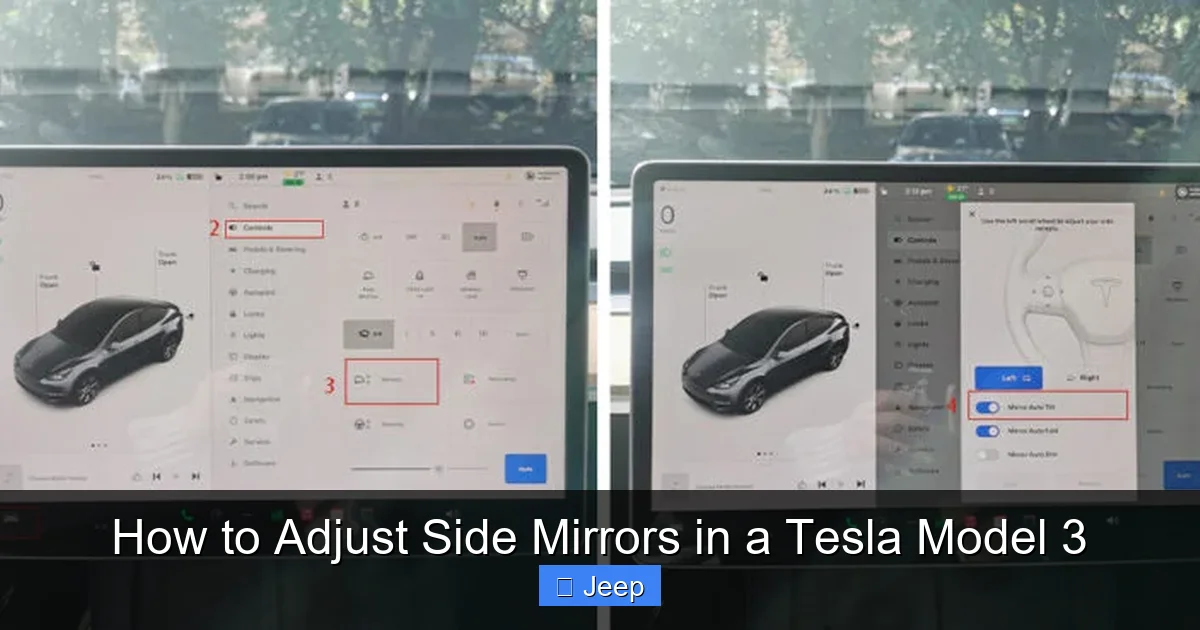
Visual guide about How to Adjust Side Mirrors in a Tesla Model 3
Image source: teslashooters.com
How It Works
First, ensure you are in “Drive.” Press the left scroll wheel inward to activate the mirror adjustment mode. A small icon will appear on the instrument cluster or touchscreen indicating which mirror is selected (usually it starts with the driver’s mirror). Now, simply roll the scroll wheel up or down to tilt the selected mirror vertically. To switch between the driver and passenger mirror, press the scroll wheel left or right. It’s a brilliantly simple system for on-the-fly adjustments, like when you’re carrying a tall passenger whose head might block your view.
Important Limitations
This method only controls the vertical tilt (up and down) of the mirror. It does not control the horizontal (left/right) pan. For major horizontal adjustments, you must return to the touchscreen. Also, this setting is temporary. If you power cycle the car or switch driver profiles, the scroll wheel adjustment will reset to the saved touchscreen position. Use it for fine-tuning, not permanent changes.
Autopilot and Mirror Positioning: A Symbiotic Relationship
This is where Tesla’s integration shines. Your side mirrors aren’t just for you; they’re critical sensors for the car’s Autopilot and Full Self-Driving (FSD) systems.
How Autopilot Uses the Mirrors
The Model 3’s Autopilot camera system has a primary forward-facing camera and additional cameras with a wide field of view. The side mirror cameras are part of this suite. When you engage Autopilot (by pulling the cruise control stalk towards you twice), the system performs a quick check. If it detects that the side mirrors are not in a position that provides optimal sensor visibility—for instance, if they are turned too far inward—it may display a warning on the screen: “Adjust side mirrors for optimal performance.”
Automatic Adjustment? Almost.
Here’s the key nuance: Autopilot does not physically move your mirrors for you. Instead, it relies on the mirrors being in their correct, factory-calibrated position. It uses the physical position of the mirror (as reported by its position sensors) to know what the cameras can see. Therefore, your personal, manual adjustment must also be the “Autopilot-optimal” position. The good news? The standard adjustment we described earlier—seeing a sliver of your car—is precisely what Autopilot needs. So, set your mirrors correctly once manually, and you’re good to go for both human and AI driving.
What If I Have a Different Setting?
If you prefer a more “sports car” mirror setting that points more downward to see your rear wheels, Autopilot might warn you. You’ll have two choices: either adjust to the standard position for Autopilot use, or ignore the warning (not recommended) and accept potentially reduced sensor performance. For maximum safety and system capability, always align your personal preference with the recommended setting.
Troubleshooting: When Your Mirrors Misbehave
Most of the time, your Model 3’s mirrors will work flawlessly. But occasionally, you might encounter an issue. Here’s how to diagnose and fix the common problems.
Symptom: A Mirror Won’t Move at All
First, check the basics. Is the car powered on? Is the selected driver profile active? Try adjusting the other mirror. If only one is dead, the problem is likely isolated to that mirror. If both are dead, it’s a system-wide issue. A simple soft reboot of the car’s computer fixes most glitches. Press and hold both scroll wheels on the steering wheel for about 10 seconds until the Tesla logo appears on the screen. The system will restart. After reboot, try adjusting again. If the problem persists, there could be a blown fuse or a failed mirror motor. For hardware issues, you’ll need to schedule a service appointment with Tesla.
Symptom: Mirror Moves Erratically or Sticks
This often indicates a mechanical obstruction or a failing motor. Listen for a straining sound. Check the mirror housing for any physical blockages like ice, snow, or dirt caked in the pivot point. Gently clean the area. If it’s clear, the motor gears may be stripped. This is not a user-serviceable part; the entire mirror assembly will need replacement by a technician.
Symptom: Auto-Dimming Isn’t Working
If your mirror doesn’t darken at night when following bright headlights, first ensure the feature is enabled. Go to Controls > Settings > Mirror & Wipers and confirm “Auto-Dimming Mirrors” is toggled on. If it is on and still not working, the electrochromic gel inside the mirror glass may have failed or developed an air bubble. This requires mirror glass replacement. For a deeper look into side mirror repairs, you can consult general automotive guides that cover the fundamentals of mirror mechanisms, though Tesla’s integrated systems are unique.
Symptom: Mirror Position Has drifted or Won’t Remember Setting
If your carefully set mirror position seems to shift over time or doesn’t save when you change driver profiles, it’s likely a software calibration issue. Perform the soft reboot mentioned above. If that doesn’t help, a more thorough calibration reset may be needed, which is best performed by Tesla service. They can reset the mirror position sensors to factory defaults.
Maintenance, Care, and Enhancements for Your Mirrors
Keeping your side mirrors in pristine condition ensures clear visibility and prolongs their lifespan.
Cleaning: The Right Way
Never use abrasive cleaners, ammonia-based window sprays (like Windex), or paper towels on your mirror glass. These can damage the reflective coating and the auto-dimming layer. Instead, use a soft microfiber cloth slightly dampened with plain water or a dedicated automotive glass cleaner labeled safe for coated glass. Gently wipe in a circular motion. For the mirror housing and moving parts, use a dry or slightly damp microfiber cloth. Avoid getting water or cleaner into the seam between the glass and housing.
Protecting from Damage
The mirror assemblies are robust but can be cracked by impacts (like in a tight parking spot or from a flying stone). Be mindful when folding them manually. The Model 3 has power-folding mirrors. You can enable/disable this feature in Controls > Settings > Mirror & Wipers > Fold Mirrors. Use the physical fold button on the touchscreen or, if enabled, have them auto-fold when you lock the car. This is great for preventing damage in narrow garages or car washes.
Aftermarket Considerations: Tint and Blind Spot Mirrors
Some owners consider adding small, adhesive blind spot spot mirrors to the corner of their side mirror for an extra wide-angle view. While effective, they can slightly distort distance perception and may interfere with the auto-dimming or heating function if placed incorrectly. Apply them with extreme care. A more popular and effective enhancement is professional window tinting. A high-quality, legal tint on your side windows significantly reduces glare from sunlight and other vehicles’ headlights, making your already excellent mirrors even more comfortable to use at night. Research the costs and legal limits in your state for a Tesla Model 3 tint.
The Heated Mirror Function in Depth
As mentioned, your mirrors heat up when you activate the rear defroster. There’s no separate switch for the mirrors. This is efficient but can be confusing. If you’re dealing with frost, turn on the defroster (via the touchscreen’s climate controls or the physical button). You should feel warmth on the mirror surface within a minute. If the mirrors remain icy while the rear window clears, there may be an issue with the heating circuit or a blown fuse specific to the mirror heaters.
Safety Best Practices: Making Adjustment a Habit
Knowing how to adjust the mirrors is one thing; making it a consistent safety habit is another. Here’s how to integrate this into your driving routine.
The 60-Second Pre-Drive Ritual
Before you put the car in Drive, take 30 seconds to check your mirrors. Are they clean? Do they show the correct view? If you share the car, this is your moment to adjust them to your preference. This simple act prevents the dangerous scenario of driving with someone else’s mirror settings, which can create blind spots.
Dynamic Adjustment for Load and Conditions
If you’re carrying a large item on the rear shelf or have passengers with high headrests, your rearview mirror view might be obstructed. You may need to adjust the side mirrors to compensate, providing a better peripheral view around the obstruction. Similarly, in heavy rain or fog, ensure your mirrors are clean and consider a slightly different angle to maximize the view of the lane markers beside you.
Never Rely Solely on Autopilot for Mirror Position
While Autopilot encourages correct mirror positioning, it does not adjust them. It is your responsibility as the driver to ensure your mirrors are set correctly before and during your trip. A system warning is a helpful prompt, not an automatic fix. Make it a point to glance at your mirrors and confirm their position periodically during long drives.
Combining Mirror Adjustment with Other Safety Tech
Your perfectly adjusted side mirrors work hand-in-hand with the Model 3’s Blind Spot Alert system. When a vehicle is in your blind spot, a white dot appears on the corresponding side of the touchscreen and the corresponding turn signal stalk will gently pulse. With properly adjusted mirrors, you’ll see the vehicle in your mirror and get the alert, creating a redundant safety system. This synergy is why correct adjustment is so critical for modern vehicles.
Conclusion: Empowerment Through Simple Control
Adjusting the side mirrors in your Tesla Model 3 is a fundamental skill that unlocks safer, more confident driving. It bridges the gap between you and the car’s incredible technology. Remember the core process: use the Controls > Quick Controls > Mirror icon on the touchscreen for primary setup, and the left scroll wheel for quick vertical tweaks. Always aim for that sweet spot where you see a sliver of your car and a wide expanse of the next lane. Embrace the digital interface—it’s precise and saves space. Respect the integration with Autopilot by keeping mirrors in their sensor-optimal position. Finally, treat your mirrors as vital safety equipment: clean them regularly, protect them from impact, and troubleshoot issues promptly. Mastering this simple task is a big step toward becoming a more competent and secure Tesla owner. Now, go adjust those mirrors and enjoy the view.
Frequently Asked Questions
Can I adjust the Tesla Model 3 side mirrors while the car is moving?
Yes, you can use the steering wheel scroll wheel method to make small vertical adjustments while driving. However, for major adjustments or horizontal changes, it’s safest to do so while parked with the car in Park or with a door open.
Why does my Tesla sometimes tell me to adjust the side mirrors for Autopilot?
Autopilot’s cameras need a clear, wide field of view. If your mirrors are turned too far inward, the system may not see vehicles in adjacent lanes effectively. The prompt reminds you to set the mirrors to the standard position (seeing a small part of your car) so the sensors have optimal coverage.
How do I manually fold the side mirrors on a Tesla Model 3?
You can fold them via the touchscreen by tapping the car icon > Quick Controls > the mirror icon, then select “Fold.” You can also enable “Auto-Fold” in Settings > Mirror & Wipers, which will fold them automatically when you lock the car. There is no manual folding lever.
Do the side mirrors automatically dim at night?
Yes, the Model 3’s side mirrors have auto-dimming (electrochromic) glass that automatically darkens to reduce glare from headlights behind you. This works independently and requires no activation. You can also manually engage the night position using the tab on the mirror housing.
What should I do if a side mirror stops working after a car wash?
First, try a soft reboot of the car’s system by pressing and holding both steering wheel scroll wheels for 10 seconds. If that doesn’t restore function, check for any physical obstruction or water in the mirror housing. If the problem persists, it may be a electrical issue requiring service.
Can I replace a broken Tesla Model 3 side mirror myself?
While possible for experienced DIYers, it’s not recommended for most owners. The mirror assembly is complex, integrated with wiring for heating, auto-dimming, and turn signals, and is calibrated with the car’s systems. Incorrect installation can damage the paint or leave the mirror uncalibrated. It’s best to schedule a service appointment with Tesla or a certified body shop. For general guidance on mirror replacement procedures, resources exist, but Tesla’s integrated design is specific.