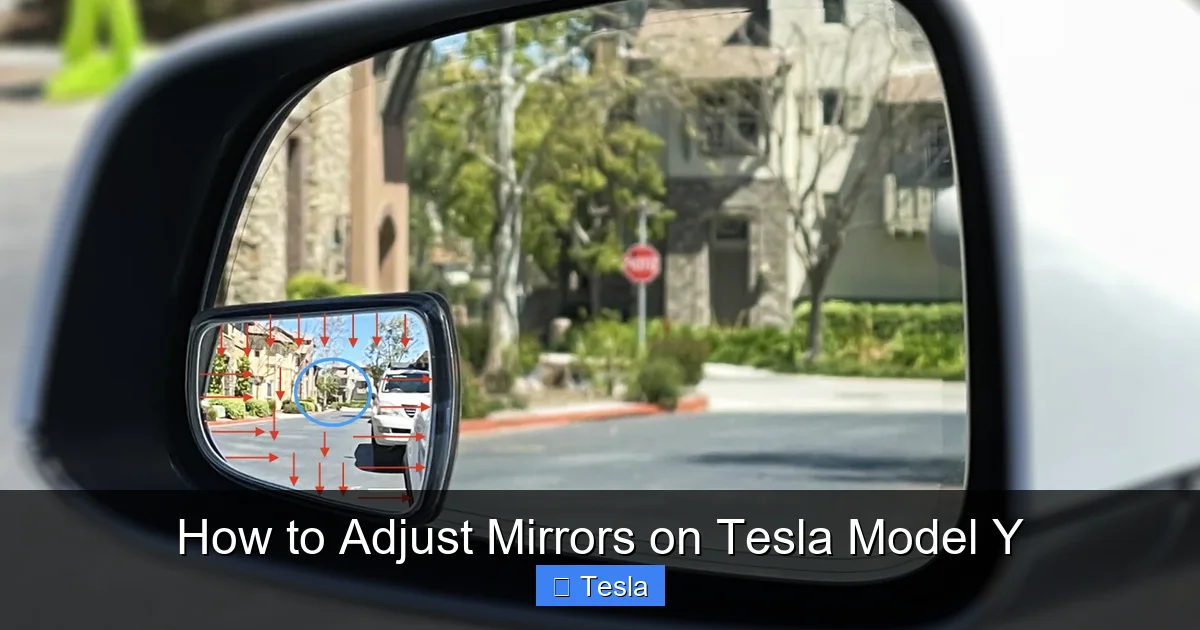
How to Adjust Mirrors on Tesla Model Y

Contents
- 1 Key Takeaways
- 2 📑 Table of Contents
- 3 Why Proper Mirror Adjustment is Non-Negotiable for Safety
- 4 Understanding Your Tesla Model Y Mirror System
- 5 Step-by-Step: Adjusting Each Mirror
- 6 Advanced Mirror Features and Customization
- 7 Troubleshooting Common Mirror Issues
- 8 Maintenance and Care for Long-Lasting Mirrors
- 9 Conclusion: Your Vision, Your Command
- 10 Frequently Asked Questions

Car Paint Touch Up Pen

Chain Lubricant Spray

Car Shampoo Concentrate

Tire Pressure Monitoring System (TPMS)
Properly adjusting the mirrors on your Tesla Model Y is a non-negotiable safety step that dramatically reduces blind spots and driving stress. While the primary control is through the central touchscreen, knowing the manual override process and understanding advanced features like autofold and heated mirrors is essential for every owner. This comprehensive guide walks you through every method, scenario, and troubleshooting tip to ensure your mirrors are perfectly configured for any drive.
Welcome to your definitive guide for mastering the mirrors on your Tesla Model Y. You’ve chosen a vehicle that redefines the driving experience with its minimalist interior and giant touchscreen. But when it comes to a fundamental safety task like adjusting your mirrors, the absence of traditional buttons and levers can be a bit of a puzzle. Don’t worry—it’s simpler than it seems, and once you learn the digital way, you might never want to go back to manual stalks. This article will walk you through every method, explain the smart features, and give you pro tips to ensure your sightlines are perfect for every commute, road trip, and lane change. Getting this right is one of the easiest and most impactful things you can do for your safety and the safety of others on the road.
We’ll start with the basics of locating the controls, then dive into the step-by-step process for each mirror. From there, we’ll explore the handy autofold feature, the integrated heated mirror system, and what to do if things don’t work as expected. By the end, you’ll be a mirror adjustment expert, fully in command of your Tesla’s fields of vision. Let’s get started.
Key Takeaways
- Primary Control is Touchscreen: All mirror adjustments on the Tesla Model Y are made via the central touchscreen display under the “Controls” menu, not with physical joysticks.
- Manual Override Exists: A small plastic lever on the mirror housing allows for manual folding and adjustment if the electronic system is unresponsive or during a power outage.
- Autofold is Customizable: The automatic folding feature when locking/unlocking the vehicle can be enabled or disabled in the settings to suit your preference and environment.
- Heated Mirrors are Automatic: The rear window defroster also activates the side mirror heaters, clearing fog and ice without a separate control.
- Camera Calibration is Key: For models with the optional Full Self-Driving (FSD) package, the side cameras must have a clear, correctly angled mirror view for proper system function.
- Regular Checks are Vital: Mirror positions can shift slightly over time or after car washes; make checking them part of your pre-drive routine, especially after someone else has driven.
- Safety Trumps Convenience: Always prioritize a blind-spot-free field of view over a “perfectly” symmetrical mirror position; the goal is maximum rearward visibility.
📑 Table of Contents
- Why Proper Mirror Adjustment is Non-Negotiable for Safety
- Understanding Your Tesla Model Y Mirror System
- Step-by-Step: Adjusting Each Mirror
- Advanced Mirror Features and Customization
- Troubleshooting Common Mirror Issues
- Maintenance and Care for Long-Lasting Mirrors
- Conclusion: Your Vision, Your Command
Why Proper Mirror Adjustment is Non-Negotiable for Safety
Before we talk about how to adjust them, let’s be crystal clear on why it matters so much. Your mirrors are your second set of eyes. They are your primary defense against side-impact collisions, especially during lane changes on busy highways. A correctly adjusted mirror should allow you to see a car in your blind spot the moment it begins to overlap with the side of your own vehicle in your peripheral vision. You should never have to turn your head sharply to check a blind spot if your mirrors are properly set.
In the Tesla Model Y, the side mirrors are also a critical component of the camera-based safety net. For vehicles equipped with the Full Self-Driving (FSD) hardware, the side cameras rely on an unobstructed view from the mirror housings. If a mirror is misadjusted or covered in dirt, it can degrade the performance of features like Blind Spot Monitoring, Auto Lane Change, and the Surround View camera display. So, proper adjustment isn’t just about your own eyes; it’s about keeping your car’s sensor suite happy and effective.
The “Two-Pane” Method vs. Traditional Adjustment
Many driving safety courses teach the “two-pane” method for setting mirrors. This involves adjusting the side mirrors so far outward that you can barely see the side of your own car in them. This creates a seamless transition of view between the rearview mirror and the side mirrors, minimizing blind spots. While this is an excellent technique, the digital controls on the Model Y make achieving this precise, wide-angle position much easier than with a manual stalk that has limited travel.
We recommend starting with the two-pane method as a baseline. Sit in your normal driving position, have a passenger or use a stationary object to gauge sightlines, and use the touchscreen to pan the mirror view until your own car’s B-pillar (the vertical post between front and rear windows) just disappears from the edge of the mirror. You’ll be amazed at how much more of the lanes beside you become visible. For a deeper dive into maximizing your vehicle’s visibility, you might also consider professional window tinting to reduce glare without obstructing your view—checking resources like how much to tint a Tesla Model Y can help you make an informed decision on that front.
Understanding Your Tesla Model Y Mirror System
The Tesla Model Y uses a sophisticated, fully electronic mirror system. There are no mechanical cables or levers connecting the interior controls to the mirror motors. Every movement is commanded by the vehicle’s central computer. This design allows for incredible precision and the integration of smart features, but it also means you need to know where to find the commands.
Visual guide about How to Adjust Mirrors on Tesla Model Y
Image source: teslarati.com
Where to Find the Mirror Controls on the Touchscreen
All mirror adjustments are housed within the “Controls” menu on your 15-inch (or 17-inch in newer models) touchscreen display. Here’s how to navigate:
- Tap the Car icon on the bottom dock (or the “Controls” option in the app menu).
- Scroll down to the “Locks” section.
- You will see three buttons representing the Left, Right, and Rearview mirrors.
- Tapping a button activates that specific mirror for adjustment. An on-screen graphic will highlight which mirror is active.
- Once a mirror is selected, a directional pad (up, down, left, right) appears on the screen. Use your finger to drag in any direction to move that mirror.
- The adjustment is smooth and continuous, allowing for very fine-tuning.
This interface might feel slower at first compared to a physical joystick, but it offers one key advantage: visual feedback. As you drag, you can watch the live camera feed from that mirror (if equipped with the optional mirror camera, available in some markets) or simply see the physical mirror move in real-time, allowing for precise positioning.
The Physical Manual Override Lever
Every Tesla Model Y is equipped with a hidden manual override. This is a small, often overlooked plastic tab or lever located on the inside edge of the mirror housing (the part attached to the door). You typically need to pry it gently with a fingernail or a plastic tool. Folding this lever inward will allow you to manually push the mirror glass in or out, effectively adjusting its angle without power. This is a lifesaver if:
- The vehicle’s 12V battery is completely dead, and the touchscreen is off.
- There is a malfunction in the mirror motor or control module.
- You need to reset a mirror that has been accidentally pushed out of its electronic range (e.g., during an automatic car wash).
Important: Use this only when necessary. It’s designed for emergency adjustment, not daily use. Forcing it can damage the delicate mounting mechanism. If you frequently need to use it, it’s a sign of a deeper issue that needs service.
Step-by-Step: Adjusting Each Mirror
Now, let’s get practical. We’ll go through the standard adjustment process for the driver’s side, passenger’s side, and rearview mirror. The process is identical for all three, just select the corresponding button.
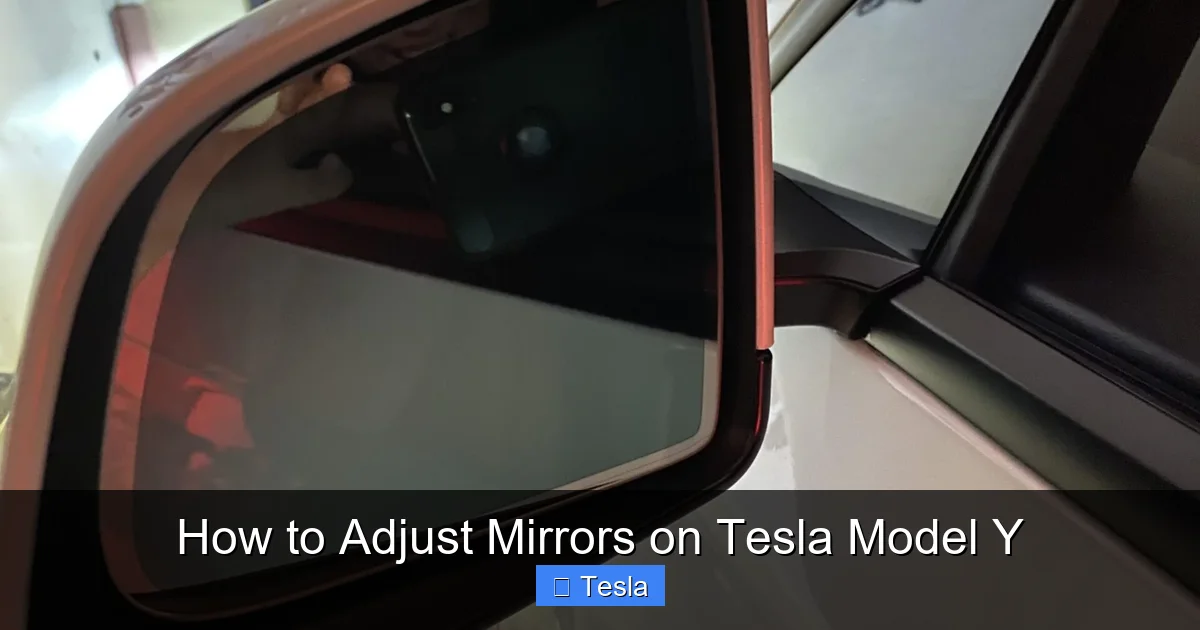
Visual guide about How to Adjust Mirrors on Tesla Model Y
Image source: cdn.teslanorth.com
Adjusting the Driver’s Side Mirror
- Sit in your normal, comfortable driving position. Adjust your seat and steering wheel first.
- On the touchscreen, go to Controls > Locks and tap the button for the Left Mirror.
- The adjustment pad will appear. Begin by centering the mirror so you can see straight back along the side of your car.
- Now, for the critical blind-spot adjustment: slowly tilt the mirror outward (drag the on-screen pad to the right) until the side of your own car (the B-pillar) is just barely visible or completely out of view. You should now see a much wider swath of the lane next to you.
- Fine-tune the up/down angle to see the horizon and the road behind you without cutting off the upper or lower thirds of your view.
Pro Tip: Have a friend or family member stand beside the car in the position that would typically be in your blind spot. As you adjust, have them tell you when they first appear in the mirror’s edge from a distance. This is the perfect test for blind spot coverage.
Adjusting the Passenger’s Side Mirror
The passenger mirror is your most valuable tool for seeing vehicles approaching from behind on your right. Due to its distance from your eye, it naturally has a wider field of view than the driver’s side, but it’s also more prone to the “close car” blind spot.
- Tap the Right Mirror button on the touchscreen.
- Start by looking straight back. You will likely see more of your own car in this mirror than the driver’s side. This is normal initially.
- Adjust the mirror outward (drag to the left on the screen) aggressively. The goal is to make the side of your car disappear from the mirror’s view as much as possible. You want to see the lane next to you, not your own door handle.
- Because of the angle, you might need to adjust the vertical tilt slightly more than the driver’s side to compensate for the different viewing angle.
Safety Note: The passenger mirror on many Model Ys is convex (curved outward) to provide a wider field of view. Objects in this mirror will appear closer than they are. Always be aware of this distortion when judging distances for lane changes.
Adjusting the Rearview Mirror
The interior rearview mirror is manually adjustable by the traditional method: grab the bezel (the plastic frame) and tilt it. There is no electronic control for this mirror. However, its proper adjustment is just as important as the side mirrors.
- With your seat fully adjusted, look through the mirror.
- Tilt it so that you can see straight back through your rear window. You should see the horizon roughly in the middle of the mirror.
- Your goal is to maximize the view of the road behind you, not to see the interior of your car. If the top of your rear seats or the top of the rear window is blocking the view, tilt the mirror down slightly.
Integration Tip: A clean rear window is essential for a good rearview mirror sightline. If you have a rear windshield wiper (standard on Model Y), use it regularly. If you’ve added a rear window tint, ensure it’s a high-quality, optically clear film to avoid distortion. Researching the cost to tint a Tesla Model Y from reputable installers can prevent poor application that would ruin your rear visibility.
Advanced Mirror Features and Customization
Your Tesla Model Y’s mirrors do more than just reflect light. They are integrated smart components. Let’s explore the high-tech features you can control.
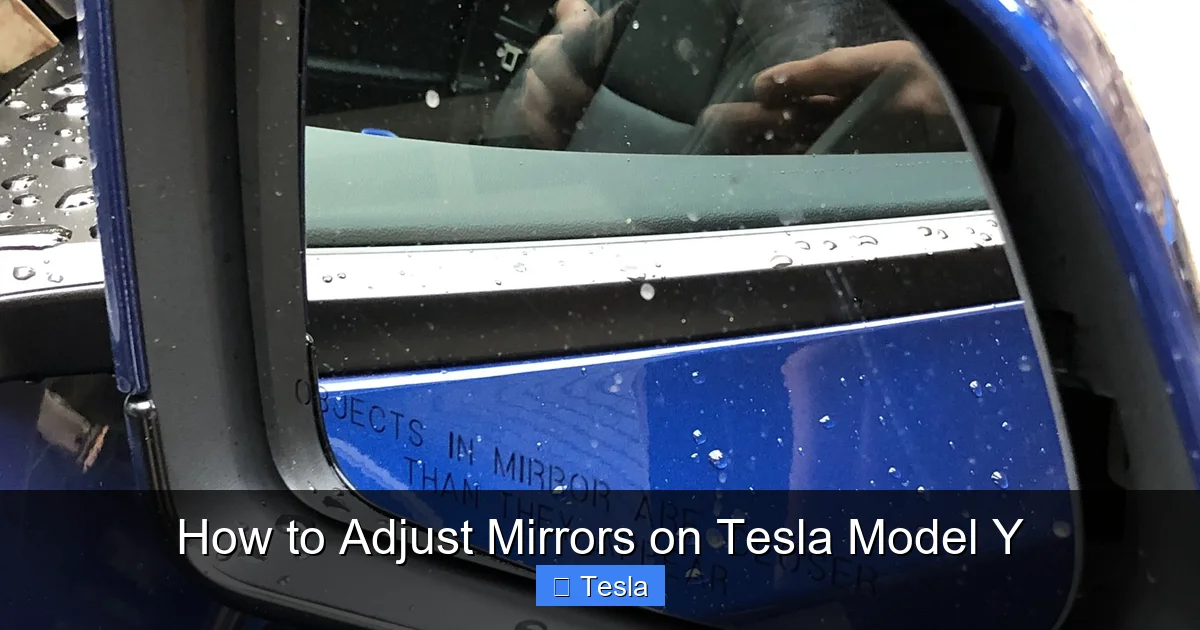
Visual guide about How to Adjust Mirrors on Tesla Model Y
Image source: driveteslacanada.ca
Auto-Fold Mirrors: Convenience and Protection
This feature automatically folds the side mirrors inward when you lock the car and unfolds them when you unlock and approach. It’s fantastic for protecting them from passing cars in tight parking lots or from accidental bumps.
- How to Enable/Disable: Go to Controls > Locks and toggle the “Fold Mirrors” switch on or off.
- Manual Fold: You can also manually fold them at any time by tapping the same “Fold Mirrors” switch. This is useful for squeezing into a very tight space.
- Important: The mirrors will not auto-unfold if you unlock the car from a distant key fob or phone key and then approach. They unfold when you open a door or press the unlock button on the door handle. This prevents them from unfolding into a garage wall or another car if you’re not ready to drive.
Heated Mirrors: Defogging and De-icing
There is no separate button for heated mirrors. They are seamlessly integrated with the rear window defroster system.
- To activate, simply press the rear defroster button (the rectangle with wavy lines) on the steering wheel stalk or via the touchscreen climate controls.
- Both the rear window and the side mirror heating elements will turn on. You’ll feel warmth on the mirror glass within a minute.
- This is your go-to solution for clearing fog, frost, or light ice from the mirror surfaces on cold, humid mornings.
Pro Tip: If your mirrors are consistently fogging in humid weather, it may indicate a seal issue around the mirror housing. This is a service item, as moisture inside the mirror assembly can eventually damage the reflective coating.
Mirror Camera Integration (If Equipped)
Some Tesla Model Ys, particularly those with the Enhanced Autopilot or FSD package in certain regions, feature a small camera mounted on the mirror housing. This camera feeds the side-rear view to the main touchscreen display, providing a digital blind-spot view when you activate a turn signal.
- This feature is called “Blind Spot Camera” and can be toggled on/off in Controls > Autopilot > Blind Spot Camera.
- For this system to work perfectly, the physical mirror must be correctly adjusted. If the mirror is angled such that the camera sees the edge of your own car or an obstruction, the digital blind-spot view will be inaccurate.
- If you notice the on-screen blind-spot view is cropped or shows your vehicle’s side, re-adjust the physical mirror to give the camera a clear, full view backward.
Troubleshooting Common Mirror Issues
Even a system as reliable as Tesla’s can occasionally hit a snag. Here’s what to do for common problems.
“One Mirror Won’t Move” or “Unresponsive Controls”
If you select a mirror on the touchscreen and the on-screen pad appears, but the physical mirror doesn’t move:
- First, check the obvious: Is the manual override lever accidentally engaged? Look at the inside edge of the mirror housing. If a small plastic tab is flicked out, it has disengaged the motor. Push it back in.
- Power Cycle: A simple restart of the car’s main computer often fixes temporary glitches. Park the car, ensure it’s in Park, and press and hold both scroll wheels on the steering wheel until the screen goes black and the Tesla logo reappears (about 10-15 seconds).
- Check Fuses: While not a user-serviceable item, a blown fuse for the mirror circuit can cause failure. This requires a service appointment.
- Motor Failure: If the mirror is completely dead after a restart, the small electric motor inside the assembly may have failed. This requires a mirror assembly replacement.
Mirror Stuck in Folded Position
Sometimes, after using the manual fold feature or after an automatic car wash, a mirror might not fully extend when you unlock the car.
- Gentle Manual Assistance: With the car unlocked and powered on, gently pull the mirror outward by hand while simultaneously tapping the “Unfold Mirrors” button on the touchscreen. Often, the motor just needs a little help overcoming a temporary bind.
- Use the Manual Override: Carefully use the internal lever to pop the mirror out to its fully extended position. Then, use the touchscreen to adjust it electronically to your preferred setting. The system should remember this new position.
- Debris Check: Inspect the mirror housing for ice, snow, or dirt packed in the seam that could physically block movement. Clear it carefully.
Mirror Vibration or Excessive Wind Noise
A loose or damaged mirror assembly can cause annoying vibrations at high speeds.
- Tighten the Mounting: The mirror is attached to the door with three Torx screws (usually T20 or T25) hidden under a small plastic cover on the inside of the door, near the mirror. Caution: Only attempt this if you are comfortable with DIY car repairs. Overtightening can crack the door skin.
- Check for Damage: Look for cracks in the mirror housing or the glass itself. A cracked housing can allow air to whistle through, causing noise.
- Professional Balance: Sometimes, the mirror motor itself can become unbalanced. A Tesla service center can diagnose and replace just the motor if needed, which is cheaper than a whole new mirror.
Maintenance and Care for Long-Lasting Mirrors
Your mirrors are exposed to the elements, car washes, and potential scratches. Proper care keeps them functioning and looking new.
Cleaning: The Right Way
Avoid ammonia-based window cleaners (like standard Windex) on the mirror glass. They can damage the protective coatings on the mirror and the camera lens (if equipped).
- Recommended: Use a dedicated automotive glass cleaner or a 50/50 mix of distilled water and isopropyl alcohol.
- Microfiber is Mandatory: Always use a clean, soft microfiber cloth. Paper towels can scratch the surface.
- Technique: Spray the cleaner onto the cloth, not directly onto the mirror (to avoid liquid seeping into the housing). Wipe in a gentle, circular motion, then buff dry with a separate dry microfiber.
- Don’t Forget the Housing: Wipe around the mirror housing and the seam where it meets the door. Dirt and grime buildup here can work its way into the folding mechanism.
Protecting During Car Washes and Modifications
Automatic car washes, especially touchless ones with high-pressure sprayers, can force water into the mirror housing and temporarily disrupt the electronics. Hand washing is always safest. If you use an automatic wash, consider manually folding the mirrors beforehand (if your wash allows it) to protect them.
If you’re planning major exterior modifications like a full vehicle wrap, the mirrors are a critical area. Installers must carefully remove the mirror glass or mask the housing to achieve a clean wrap job around the complex curves. Discuss this with your installer. A poorly wrapped mirror can lead to premature edge lifting. For those considering a wrap, understanding the full cost to wrap a Tesla Model Y, including potential extra labor for mirrors and door handles, is crucial for budgeting.
When to Seek Professional Help
While many adjustments are DIY, some issues require a Tesla technician:
- Persistent motor failure after a restart.
- Water or condensation inside the mirror glass (not just on the surface).
- Cracked or severely damaged mirror housing.
- Any electrical diagnostic work (e.g., checking CAN bus signals or fuse panels).
Attempting to disassemble the mirror assembly yourself can easily break plastic clips and lead to a more expensive repair. When in doubt, schedule a service appointment through the Tesla app.
Conclusion: Your Vision, Your Command
Adjusting the mirrors on your Tesla Model Y is a simple yet powerful ritual of ownership. It connects you to the car’s digital soul while grounding you in the fundamental physics of safe driving. By mastering the touchscreen controls, understanding the manual override, and customizing features like autofold, you take full command of your sightlines. Remember to perform regular checks—a bumpy road or a car wash can shift them—and always prioritize the blind-spot-eliminating two-pane method for the widest possible view.
Your Tesla is a marvel of software and hardware integration. The mirrors are a perfect example: a traditional safety device enhanced with smart, convenient features. Treat them well, clean them properly, and adjust them for every driver who uses the car. A few minutes spent on this task pays dividends in confidence and safety every single time you get behind the wheel. Now, go enjoy your perfectly clear view of the world ahead.
Frequently Asked Questions
Can I adjust the Tesla Model Y mirrors while the car is moving?
No, for safety reasons, the mirror adjustment controls on the touchscreen are only active when the vehicle is in Park. You must come to a complete stop and shift into Park to make any adjustments.
How do I reset my Tesla Model Y mirrors to their default positions?
There is no single “reset to default” button. To reset, you must manually adjust each mirror back to your preferred position using the touchscreen controls. The car will remember the last position for each driver profile. If a mirror is physically out of range, use the manual override lever to bring it back to a central position, then adjust electronically.
Why did my auto-fold mirrors stop working after a car wash?
High-pressure water can sometimes jam the folding mechanism or temporarily confuse the mirror’s position sensor. Try manually unfolding them with the touchscreen button while gently pulling the mirror outward. If that fails, use the manual override lever to pop it out, then the electronic controls should function again.
My passenger mirror is vibrating at highway speeds. Is this normal?
No, significant vibration is not normal and indicates a loose mirror assembly or a damaged mounting bracket. This should be inspected and tightened by a Tesla service center to prevent further damage and reduce noise.
Do I need to calibrate the mirrors after adjusting them?
No manual calibration is required. The system automatically learns the mirror’s range of motion. However, if you have the Blind Spot Camera feature, ensure the physical mirror is adjusted so the camera has a clear, unobstructed view backward. The digital display will reflect the camera’s view accurately once the physical mirror is properly aimed.
Are the side mirrors heated separately from the rear window?
No, they are not. The side mirror heaters activate simultaneously with the rear window defroster when you press the defroster button. There is no independent control for just the mirrors.