
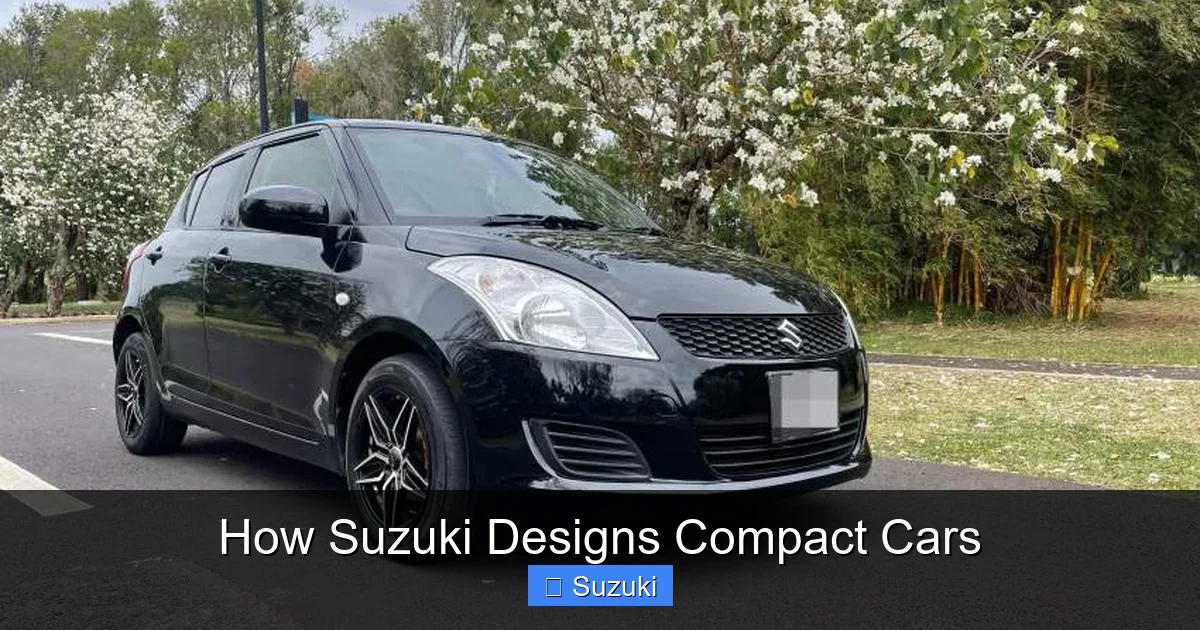
How Suzuki Designs Compact Cars

Contents

Trunk Organizer

Car Floor Mats (Universal)

Car Fog Light Bulb
Car Neck Pillow
Suzuki’s approach to designing compact cars focuses on maximizing space, fuel efficiency, and driver comfort without sacrificing style. By combining Japanese engineering precision with real-world usability, Suzuki creates vehicles that are perfect for city driving and long journeys alike.
When you think of compact cars, you might picture tiny vehicles that sacrifice comfort for size—but Suzuki flips that idea on its head. For decades, this Japanese automaker has been redefining what it means to build a small car that doesn’t feel small. Whether you’re navigating narrow city streets, squeezing into tight parking spots, or planning a weekend road trip, Suzuki’s compact models—like the Swift, Ignis, and Baleno—are engineered to make every mile enjoyable, efficient, and stress-free.
What sets Suzuki apart isn’t just the size of their cars, but how they think about space, function, and everyday usability. Instead of shrinking down a larger vehicle, Suzuki starts from the ground up with a philosophy centered on “small on the outside, big on the inside.” This mindset drives every decision, from the placement of the wheels to the shape of the dashboard. The result? Cars that feel surprisingly spacious, handle like a dream, and come packed with features you’d expect in much larger—and more expensive—vehicles.
But Suzuki’s design process isn’t just about clever tricks or gimmicks. It’s rooted in decades of research, real-world testing, and a deep understanding of how people actually use their cars. From bustling Tokyo streets to rural villages in India, Suzuki engineers observe drivers in their natural habitats, gathering insights that shape everything from seat height to gearshift placement. This human-centered approach ensures that every Suzuki compact car is not just functional, but genuinely enjoyable to drive.
Key Takeaways
- Space Optimization: Suzuki uses smart packaging to make small cars feel surprisingly roomy, with clever storage and flexible seating.
- Fuel Efficiency Focus: Lightweight materials and efficient engines help Suzuki compact cars deliver excellent mileage.
- Safety First: Even in small models, Suzuki integrates advanced safety tech like dual sensor brake support and lane departure warnings.
- Global Design Philosophy: Suzuki designs with diverse markets in mind, adapting features for urban, rural, and international needs.
- Affordability Meets Quality: Suzuki balances cost-effectiveness with reliable build quality, making compact cars accessible without compromise.
- Eco-Friendly Innovation: Hybrid and mild-hybrid options reflect Suzuki’s commitment to sustainable mobility.
- User-Centric Interiors: Dashboards, controls, and infotainment are designed for ease of use, even in tight spaces.
📑 Table of Contents
Philosophy Behind Suzuki’s Compact Car Design
At the heart of Suzuki’s success in the compact car segment is a clear and consistent design philosophy: “Small but Mighty.” This isn’t just a marketing slogan—it’s a guiding principle that influences every stage of development. Suzuki believes that small cars shouldn’t mean small experiences. Instead, they should offer big value, big efficiency, and big fun, all wrapped in a compact package.
One of the core tenets of this philosophy is packaging efficiency. Suzuki engineers treat interior space like precious real estate. Every inch is analyzed and optimized. For example, by positioning the wheels at the very corners of the vehicle, Suzuki creates a longer wheelbase without increasing the overall length. This not only improves stability but also opens up more legroom and cargo space. It’s a simple change with a big impact—something Suzuki calls “maximum interior, minimum exterior.”
Another key element is lightweight construction. Suzuki uses high-tensile steel and aluminum in strategic areas to reduce weight without compromising strength. Lighter cars use less fuel, accelerate faster, and handle better—especially important in stop-and-go city traffic. But Suzuki doesn’t stop there. They also focus on reducing mechanical complexity. For instance, the use of a compact engine layout allows for more cabin space and easier maintenance.
Suzuki also embraces what they call “real-world engineering.” Unlike some brands that design cars in isolation, Suzuki’s teams spend time in the markets where their cars will be sold. They ride with taxi drivers in Delhi, observe school drop-offs in London, and test prototypes on mountain roads in the Alps. This hands-on research helps them understand real challenges—like potholed roads, extreme weather, or the need to carry unexpected cargo—and design solutions that actually work.
Human-Centered Design Approach
Suzuki’s design process is deeply rooted in empathy. Engineers and designers don’t just ask, “What’s the smallest car we can build?” They ask, “What does the driver need to feel comfortable, safe, and in control?” This human-centered approach shows up in subtle but meaningful ways.
For example, the seating position in Suzuki compact cars is carefully calibrated. Seats are positioned higher than in many competitors, giving drivers a better view of the road—a feature especially appreciated by shorter drivers or those new to driving. The steering wheel and pedals are placed for natural, relaxed posture, reducing fatigue on long drives. Even the gearshift is designed for smooth, intuitive movement, whether you’re driving a manual or automatic.
Storage is another area where Suzuki excels. Instead of just adding cup holders, they think about how people actually use their cars. The Ignis, for instance, features a dual-level glove box—one section for documents, another for snacks or small gadgets. The Swift has door pockets deep enough to hold a 1.5-liter water bottle, and the rear seats fold flat in a 60:40 split, creating a seamless cargo floor. These aren’t flashy features, but they make daily life easier.
Global Adaptability and Market-Specific Design
Suzuki doesn’t design one car for the whole world. Instead, they adapt their compact models to suit local needs. This flexibility is a major reason why Suzuki is so popular in markets like India, Southeast Asia, and Eastern Europe—regions where compact cars are essential but conditions vary widely.
In India, for example, Suzuki designs cars with higher ground clearance to handle rough roads and monsoon flooding. The suspension is tuned for comfort over potholes, and the engines are optimized for lower-octane fuel. In contrast, European models emphasize fuel efficiency and emissions compliance, often featuring mild-hybrid systems.
Even within regions, Suzuki tailors features. In Japan, where parking is tight and streets are narrow, the Alto and Wagon R are designed with ultra-compact dimensions and tight turning circles. In Africa, where long distances and unpaved roads are common, models like the Jimny (a compact SUV) are built with rugged durability and off-road capability.
This adaptability extends to safety standards. While all Suzuki compact cars meet global safety benchmarks, they often include region-specific enhancements. In markets with high pedestrian traffic, for example, Suzuki adds pedestrian detection systems. In colder climates, heated seats and mirrors are standard.
Engineering for Efficiency and Performance

Visual guide about How Suzuki Designs Compact Cars
Image source: astervender.mu
Efficiency is a cornerstone of Suzuki’s compact car design. But for Suzuki, efficiency isn’t just about fuel economy—it’s about making the most of every drop of fuel, every watt of electricity, and every square inch of space. This holistic approach ensures that their cars are not only economical to run but also fun to drive.
One of the most significant innovations in Suzuki’s engineering toolkit is the Boosterjet engine technology. These small-displacement turbocharged engines deliver the power of a larger engine while using less fuel. For example, the 1.0-liter Boosterjet engine in the Suzuki Swift produces 111 horsepower—comparable to many 1.6-liter naturally aspirated engines—but with significantly better fuel economy. This means drivers get responsive acceleration without the guilt of high fuel bills.
Suzuki also embraces mild-hybrid systems, especially in markets like Europe and India. The SHVS (Smart Hybrid Vehicle by Suzuki) system uses a small electric motor to assist the engine during acceleration and recapture energy during braking. This not only improves fuel efficiency by up to 15% but also reduces emissions. And because it’s a mild hybrid (not a full electric vehicle), it doesn’t require charging infrastructure, making it ideal for areas with limited EV support.
Transmission technology is another area where Suzuki shines. Many of their compact cars come with either a smooth-shifting 5-speed manual or a responsive CVT (Continuously Variable Transmission). The CVT, in particular, is tuned for efficiency and driving comfort, seamlessly adjusting ratios to keep the engine in its most efficient range. For drivers who prefer more control, Suzuki also offers automated manual transmissions (AMT) in models like the Alto and Celerio—providing automatic convenience with manual-like fuel economy.
Lightweight Materials and Aerodynamics
Reducing weight is one of the most effective ways to improve fuel efficiency, and Suzuki takes this seriously. Their engineers use a mix of high-strength steel, aluminum, and composite materials to keep the car light without sacrificing safety or durability.
For instance, the Suzuki Swift uses a lightweight platform called the “HEARTECT” architecture. This structure is designed to be rigid where it needs to be (for crash protection) and lightweight where possible (for efficiency). The result is a car that’s 7% lighter than its predecessor, yet stronger and safer.
Aerodynamics also play a key role. Suzuki’s design team uses wind tunnels and computer simulations to fine-tune the shape of their cars. Even small details—like the angle of the windshield, the design of the side mirrors, and the underbody panels—are optimized to reduce drag. The Swift, for example, has a drag coefficient of just 0.32, which is impressive for a compact hatchback. This means less wind resistance, better fuel economy, and a quieter ride at highway speeds.
Real-World Testing and Durability
Suzuki doesn’t rely solely on lab tests. Their engineers put prototypes through grueling real-world trials in extreme conditions—from the deserts of Australia to the snowy mountains of Scandinavia. These tests ensure that every component, from the suspension to the air conditioning, performs reliably in the environments where the cars will actually be used.
For example, Suzuki tests its compact cars on unpaved roads in India to ensure the suspension can handle constant bumps and potholes. In Japan, they simulate decades of wear and tear in just a few months using accelerated durability testing. This commitment to real-world performance means Suzuki cars are known for their reliability and longevity—even in tough conditions.
Safety Innovations in Compact Cars

Visual guide about How Suzuki Designs Compact Cars
Image source: astervender.mu
Safety is non-negotiable for Suzuki, even in their smallest models. While compact cars often face skepticism about crash protection, Suzuki has consistently raised the bar with advanced safety features and robust construction.
All Suzuki compact cars are built on platforms designed to absorb and disperse crash energy. The HEARTECT architecture, for example, uses a network of reinforced beams to protect the passenger cabin in the event of a collision. This structure has earned top marks in global crash tests, including five-star ratings from Euro NCAP and high scores from India’s Bharat NCAP.
But Suzuki doesn’t stop at passive safety. They’ve also integrated a suite of active safety technologies to help drivers avoid accidents in the first place. Features like Dual Sensor Brake Support (DSBS) use radar and cameras to detect potential collisions and automatically apply the brakes if the driver doesn’t react in time. Lane Departure Warning alerts drivers if they unintentionally drift out of their lane, while Adaptive Cruise Control maintains a safe distance from the car ahead—even in stop-and-go traffic.
In newer models, Suzuki has added advanced driver assistance systems (ADAS) like blind-spot monitoring, rear cross-traffic alert, and traffic sign recognition. These features, once reserved for luxury cars, are now available in compact models like the Vitara and S-Cross, making safe driving more accessible.
Child and Family Safety Features
Suzuki understands that many compact car buyers are families. That’s why they’ve designed their interiors with child safety in mind. Rear doors feature child safety locks, and ISOFIX anchor points make it easy to securely install child seats. The rear seats are also designed to accommodate multiple car seats side by side—a rare feature in small cars.
Additionally, Suzuki includes features like rearview cameras and parking sensors as standard on most models, helping parents maneuver safely in tight spaces. Some models even offer a 360-degree camera system, giving a bird’s-eye view of the car—perfect for navigating crowded school zones or narrow driveways.
Interior Design and User Experience
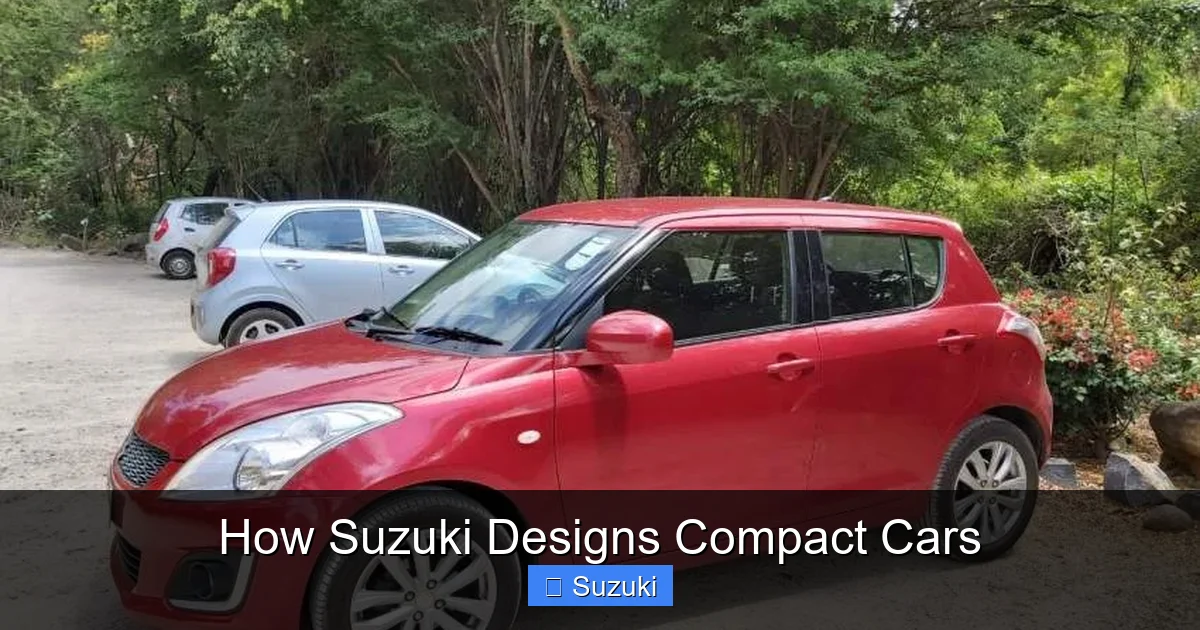
Visual guide about How Suzuki Designs Compact Cars
Image source: astervender.mu
Step inside a Suzuki compact car, and you’ll notice something surprising: it doesn’t feel small. Thanks to thoughtful design and smart use of materials, the cabins are airy, modern, and surprisingly spacious.
Suzuki uses a “horizontal dashboard layout” to create a sense of width. By stretching the dashboard across the front of the car and minimizing visual clutter, they make the cabin feel larger than it is. Soft-touch materials, contrasting trim, and ambient lighting add a premium feel, even in base models.
The infotainment system is another highlight. Most Suzuki compact cars come with a 7-inch touchscreen that supports Apple CarPlay and Android Auto. The interface is intuitive, with large icons and voice control options. Steering wheel-mounted controls allow drivers to adjust volume, answer calls, or change tracks without taking their hands off the wheel.
Ergonomics and Comfort
Comfort is key, especially on long drives. Suzuki’s seats are designed with ergonomic support in mind, featuring adjustable lumbar support and ample cushioning. The driving position is optimized for visibility and control, with all major controls within easy reach.
Climate control is another area where Suzuki excels. Even in base models, you’ll find efficient air conditioning systems that cool the cabin quickly. In higher trims, dual-zone climate control allows the driver and front passenger to set their own temperatures—a rare feature in compact cars.
Storage and Practicality
Suzuki cars are packed with clever storage solutions. The center console has a deep bin for phones and wallets, while the door pockets are designed to hold bottles, maps, or snacks. Some models even feature a hidden compartment under the passenger seat—perfect for storing valuables out of sight.
The rear cargo area is equally well thought out. With the rear seats up, you get enough space for groceries or weekend bags. Fold the seats down, and you unlock a flat, versatile load floor that can handle larger items like suitcases, camping gear, or even a small bicycle.
Sustainability and Future-Forward Design
As the world shifts toward greener transportation, Suzuki is leading the charge in sustainable compact car design. Their commitment to the environment goes beyond just fuel efficiency—it’s woven into every aspect of their engineering and manufacturing process.
One of the most exciting developments is Suzuki’s expansion of hybrid and electric options. While they haven’t launched a full EV yet, their mild-hybrid SHVS system is a stepping stone toward electrification. It reduces emissions, improves efficiency, and prepares drivers for a future with more electric vehicles.
Suzuki is also exploring alternative fuels and materials. They’ve experimented with bio-based plastics for interior components and are investing in recycling programs to reduce waste. Their factories are designed to minimize energy use and water consumption, aligning with global sustainability goals.
Looking ahead, Suzuki is working on next-generation compact platforms that will support full electrification. These future models will retain the brand’s signature space efficiency and affordability while offering zero-emission driving.
Community and Environmental Impact
Suzuki’s sustainability efforts extend beyond the car itself. They partner with local communities to promote eco-driving habits and support clean transportation initiatives. In India, for example, they’ve launched programs to train drivers on fuel-efficient techniques, reducing emissions across entire fleets.
They also design cars with end-of-life recycling in mind. Over 90% of a Suzuki vehicle can be recycled, and the company works with suppliers to ensure materials are responsibly sourced.
Conclusion
Suzuki’s approach to designing compact cars is a masterclass in balancing innovation, practicality, and affordability. By focusing on real-world needs, human-centered design, and sustainable engineering, they’ve created vehicles that punch well above their weight.
Whether you’re a city dweller looking for a nimble commuter car, a family needing a safe and spacious ride, or an eco-conscious driver seeking efficiency, Suzuki offers a compact car that fits your lifestyle. Their commitment to making great design accessible—without cutting corners on safety, comfort, or performance—is what keeps them at the forefront of the compact car market.
As the automotive world evolves, Suzuki continues to adapt, proving that small cars can have a big impact.
Frequently Asked Questions
What makes Suzuki compact cars different from other small cars?
Suzuki focuses on maximizing interior space, fuel efficiency, and real-world usability. Their “small on the outside, big on the inside” philosophy ensures comfort and practicality without sacrificing performance.
Are Suzuki compact cars safe?
Yes. Suzuki integrates advanced safety features like Dual Sensor Brake Support, lane departure warning, and robust crash structures. Many models have earned top safety ratings globally.
Do Suzuki compact cars come with hybrid options?
Yes. Suzuki offers mild-hybrid SHVS technology in several models, improving fuel efficiency and reducing emissions without requiring charging.
Can Suzuki compact cars handle long road trips?
Absolutely. With comfortable seating, efficient engines, and modern infotainment, Suzuki compact cars are designed for both city driving and long-distance travel.
Are Suzuki compact cars affordable to maintain?
Yes. Suzuki vehicles are known for reliability and low running costs. Parts are widely available, and many models have long service intervals.
Does Suzuki design cars for specific regions?
Yes. Suzuki adapts features like ground clearance, suspension, and fuel systems to suit local driving conditions in markets like India, Europe, and Africa.


