
When Suzuki Began Motorcycles

Suzuki began motorcycles in 1952 with the launch of the Power Free, a modest two-stroke bike that marked the start of a legendary journey. What began as a humble experiment quickly evolved into a global powerhouse, shaping motorcycle culture and engineering excellence for decades.
Few brands have shaped the motorcycle world as deeply as Suzuki. When Suzuki began motorcycles in 1952, few could have predicted the global impact this once-modest Japanese company would have. What started as a practical solution to postwar transportation needs blossomed into a legacy of innovation, speed, and reliability. From humble beginnings in a small factory to dominating racetracks and highways worldwide, Suzuki’s journey is one of resilience, vision, and relentless improvement.
The story of Suzuki motorcycles doesn’t begin with engines or exhaust notes—it starts with thread. The company was founded in 1909 by Michio Suzuki as a loom manufacturer, producing textile machinery that helped modernize Japan’s silk industry. For over four decades, Suzuki focused on weaving, earning a reputation for precision and durability. But by the late 1940s, the market for traditional looms began to shrink. The world was changing, and so was Japan. After World War II, the country faced massive economic challenges, including a shortage of personal transportation. People needed affordable, efficient ways to get around, and bicycles were common—but motorized options were rare and expensive.
That’s when Michio Suzuki made a bold decision: to pivot from looms to motorized vehicles. He saw an opportunity to serve the public good while securing his company’s future. In 1952, Suzuki introduced its first motorized bicycle—the Power Free. It wasn’t a full-fledged motorcycle by today’s standards, but it was a revolutionary step. The Power Free featured a 36cc two-stroke engine that could be mounted on a standard bicycle frame. Riders could pedal manually or engage the engine with a twist-grip throttle. It was simple, affordable, and incredibly practical. This innovation marked the official moment when Suzuki began motorcycles—a turning point that would redefine the brand and inspire generations of riders.
Key Takeaways
- Suzuki began motorcycles in 1952 with the Power Free, a lightweight two-stroke bike designed for post-war Japan.
- The company originally made looms before shifting to motorized vehicles due to changing market demands.
- Early models focused on affordability and reliability, helping rebuild transportation in postwar Japan.
- Suzuki’s first four-stroke engine arrived in 1955 with the Colleda, showcasing early engineering ambition.
- The brand expanded globally in the 1960s, introducing sport bikes like the T20 that won international acclaim.
- Innovation and racing success cemented Suzuki’s reputation as a leader in motorcycle performance and design.
- Today, Suzuki continues to honor its roots while advancing electric and hybrid motorcycle technology.
📑 Table of Contents
The Origins of Suzuki: From Looms to Motors
To truly understand when Suzuki began motorcycles, we must first look back at the company’s roots. Suzuki’s founding in 1909 was rooted in innovation and craftsmanship. Michio Suzuki, a young entrepreneur with a passion for engineering, started Suzuki Loom Works in Hamamatsu, Japan. His goal was to create high-quality, efficient looms that could help Japanese silk producers compete globally. By the 1920s, Suzuki looms were widely used across Asia, praised for their reliability and advanced mechanisms.
For over 40 years, the company thrived in the textile industry. But the 1940s brought seismic shifts. World War II disrupted global trade, and Japan’s economy was in ruins. The demand for luxury goods like silk plummeted, and Suzuki’s loom business faced an uncertain future. Michio Suzuki, ever the forward-thinker, recognized that the world was moving toward mechanization and personal mobility. He believed that motorized vehicles would become essential to Japan’s recovery.
In 1947, Suzuki began experimenting with small engines. The first prototypes were attached to bicycles, creating what were then called “motorized bicycles” or “mopeds.” These early models were crude but functional, using simple two-stroke engines that could be started by pedaling. They were ideal for a population struggling with fuel shortages and limited income. The public responded enthusiastically. People needed affordable transportation, and Suzuki’s motorized bikes offered a lifeline.
By 1952, Suzuki had refined its design and launched the Power Free. This model was more than just a prototype—it was a production-ready vehicle that could be mass-produced and sold nationwide. The Power Free featured a 36cc engine, a chain drive, and a twist-grip throttle. It could reach speeds of up to 30 km/h (about 19 mph), which was impressive for the time. Most importantly, it was priced within reach of the average Japanese worker.
This shift from looms to motorcycles wasn’t just a business decision—it was a cultural one. Suzuki was stepping into a new era, embracing change and innovation. The company’s engineering expertise, honed through decades of precision manufacturing, translated seamlessly into vehicle production. Suzuki’s attention to detail, quality control, and commitment to improvement became hallmarks of its motorcycles.
The Power Free: Suzuki’s First Motorcycle
Visual guide about When Suzuki Began Motorcycles
Image source: russellsmotorcycles.files.wordpress.com
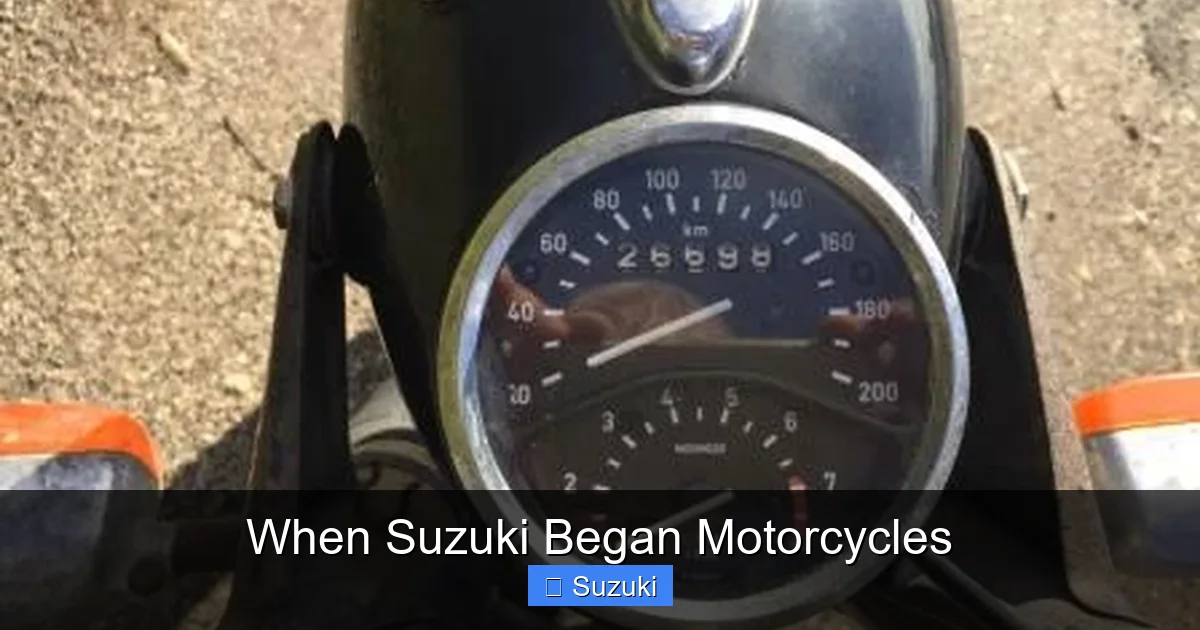
When Suzuki began motorcycles, the Power Free was the spark that ignited the flame. Launched in October 1952, this modest machine laid the foundation for everything that followed. It wasn’t flashy or powerful by modern standards, but it was revolutionary in context. Japan in the early 1950s was rebuilding, and transportation was a major challenge. Cars were a luxury, and public transit was limited in rural areas. The Power Free offered a practical, affordable solution.
The design was simple but effective. The 36cc two-stroke engine was mounted above the front wheel, connected to the rear wheel via a chain drive. Riders could start the engine by pedaling, much like a moped, or use a kick starter. The twist-grip throttle allowed for smooth acceleration, and the bike could be ridden in full motor mode or switched to pedal-only for fuel savings. This dual functionality made it incredibly versatile.
One of the Power Free’s most innovative features was its “free engine” mechanism. When the engine was disengaged, the bike could be pedaled like a regular bicycle, reducing wear and saving fuel. This was especially important in a country where gasoline was still scarce and expensive. The engine also had a clutch that could be disengaged by releasing the throttle, allowing the bike to coast freely—hence the name “Power Free.”
The response was immediate and overwhelming. Suzuki couldn’t keep up with demand. Workers, students, and small business owners embraced the Power Free as a reliable way to commute, deliver goods, or simply get around. It became a symbol of Japan’s postwar recovery—a testament to ingenuity and resilience.
Suzuki didn’t stop there. In 1953, the company introduced the Diamond Free, an improved version with a 60cc engine and better suspension. This model offered more power and comfort, appealing to a broader audience. By 1954, Suzuki had sold over 100,000 units, a staggering number for a new product in a recovering economy.
These early successes proved that Suzuki had made the right move. The company had successfully transitioned from looms to motorcycles, and the public had embraced its vision. The Power Free wasn’t just a product—it was a promise: that Suzuki would continue to innovate, adapt, and serve the needs of everyday people.
Early Innovations and the Move to Four-Stroke Engines
Visual guide about When Suzuki Began Motorcycles
Image source: russellsmotorcycles.files.wordpress.com
As Suzuki gained momentum, the company began pushing the boundaries of motorcycle engineering. The early 1950s were a time of rapid experimentation, and Suzuki was at the forefront. While the Power Free and Diamond Free were successful, they were still two-stroke engines—simple, reliable, but limited in power and efficiency. Suzuki knew that to compete with larger manufacturers like Honda and Yamaha, it needed to innovate.
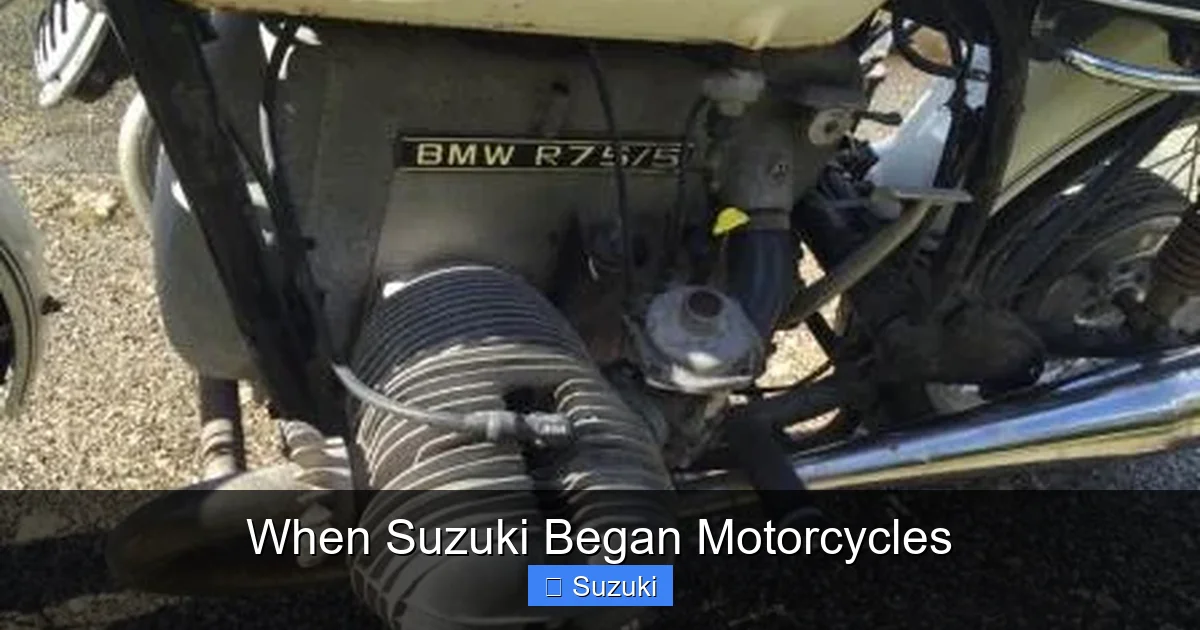
In 1955, Suzuki made a bold leap: it introduced its first four-stroke engine with the Colleda. This was a major milestone. Four-stroke engines were more complex, but they offered better fuel efficiency, smoother operation, and greater durability. The Colleda featured a 90cc four-stroke engine, a three-speed transmission, and a more robust frame. It was designed for both city commuting and light touring, appealing to riders who wanted more than just basic transportation.
The Colleda was more than just a technical upgrade—it was a statement. Suzuki was no longer content to be a maker of simple motorized bicycles. It wanted to build real motorcycles, capable of competing on performance and design. The Colleda’s engine produced around 5 horsepower, which was modest but respectable for the time. It could reach speeds of up to 70 km/h (about 43 mph), making it suitable for longer trips.
Suzuki also focused on improving rider comfort. The Colleda featured a sprung saddle, telescopic front forks, and a rear suspension system—features that were uncommon in budget motorcycles of the era. These enhancements made the ride smoother and more enjoyable, especially on Japan’s often rough roads.
The Colleda was well-received, but it was just the beginning. Suzuki continued to refine its four-stroke technology, introducing larger engines and more advanced features in the late 1950s. The Colleda ST, launched in 1956, featured a 125cc engine and a four-speed gearbox, offering even better performance. These models helped establish Suzuki as a serious player in the motorcycle market.
One of the key lessons from this period was the importance of balancing innovation with practicality. Suzuki didn’t chase speed or power for its own sake. Instead, it focused on creating motorcycles that were reliable, affordable, and easy to maintain. This approach resonated with riders, especially in rural areas where mechanics were scarce and spare parts were hard to find.
Global Expansion and the Rise of Sport Bikes
Visual guide about When Suzuki Began Motorcycles
Image source: s1.cdn.autoevolution.com
By the 1960s, Suzuki had firmly established itself as a major motorcycle manufacturer in Japan. But the company had bigger ambitions. It wanted to compete on the global stage, and that meant building motorcycles that could appeal to international riders. This led to a new era of innovation—one defined by speed, style, and performance.
One of the most iconic models of this period was the Suzuki T20, launched in 1966. Also known as the “Super Six,” the T20 was a 250cc two-stroke twin that quickly gained a reputation for speed and agility. It featured a six-speed gearbox, which was rare for a bike of its size, and could reach speeds of over 100 mph. The T20 was a favorite among young riders and racers, and it helped establish Suzuki as a leader in sport bike design.
The T20 wasn’t just fast—it was reliable. Suzuki’s two-stroke engines were known for their simplicity and durability, making them ideal for both street riding and competition. The bike’s lightweight frame and responsive handling made it a joy to ride, especially on winding roads or racetracks.
Suzuki also made a name for itself in motorcycle racing. In 1962, the company entered its first Grand Prix race, and by the late 1960s, it was a regular competitor in the 250cc and 350cc classes. Riders like Hugh Anderson and Mitsuaki Katayama brought Suzuki multiple world championships, proving that the brand could compete with the best.
This racing success had a ripple effect. It boosted Suzuki’s reputation, attracted new customers, and inspired innovation. The lessons learned on the track were applied to production models, making Suzuki motorcycles faster, safer, and more advanced.
Legacy and Modern Innovations
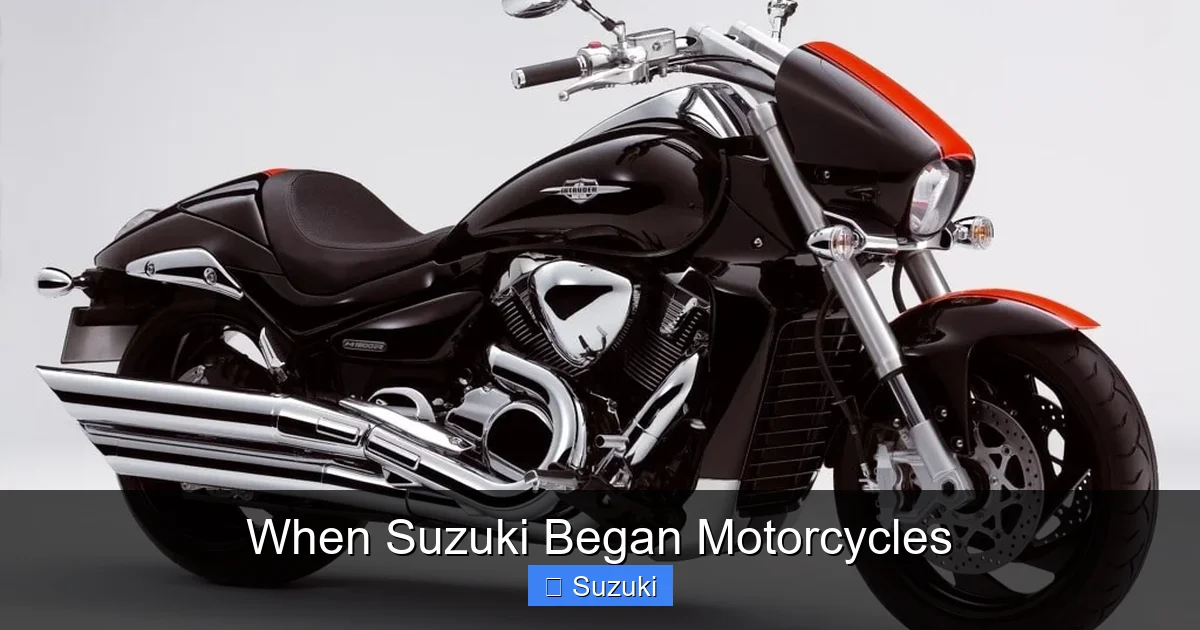
Today, Suzuki continues to build on its legacy. While the company has expanded into cars, marine engines, and power equipment, motorcycles remain a core part of its identity. Modern Suzuki bikes, like the GSX-R series and the V-Strom adventure line, reflect the brand’s commitment to performance, reliability, and innovation.
Suzuki is also exploring the future of motorcycling. The company has invested in electric and hybrid technology, developing prototypes that combine traditional engineering with sustainable design. While still in development, these models show that Suzuki is ready to lead the next chapter of motorcycle evolution.
Conclusion
When Suzuki began motorcycles in 1952, it started with a simple idea: to help people move forward. From the Power Free to the latest GSX-R1000, Suzuki has stayed true to that mission. Its journey is a testament to innovation, resilience, and the power of vision. Whether you’re a racer, a commuter, or a weekend rider, Suzuki’s legacy is part of your ride.
Frequently Asked Questions
When did Suzuki start making motorcycles?
Suzuki began motorcycles in 1952 with the launch of the Power Free, a 36cc motorized bicycle. This marked the company’s official entry into the motorcycle industry.
What did Suzuki make before motorcycles?
Before motorcycles, Suzuki manufactured textile looms. Founded in 1909, the company specialized in high-quality weaving machines for Japan’s silk industry.
What was Suzuki’s first motorcycle?
Suzuki’s first motorcycle was the Power Free, introduced in 1952. It featured a two-stroke engine and could be ridden with or without motor assistance.
Did Suzuki make four-stroke engines early on?
Yes, Suzuki introduced its first four-stroke engine in 1955 with the Colleda. This was a major step in the company’s evolution toward more advanced motorcycles.
What made Suzuki motorcycles popular in the 1960s?
In the 1960s, Suzuki gained popularity with sport bikes like the T20, known for speed, reliability, and racing success. These models helped establish Suzuki globally.
Is Suzuki still making motorcycles today?
Yes, Suzuki continues to produce motorcycles, including sport bikes, cruisers, and adventure models. The brand is also exploring electric and hybrid technology.
