How Often Should You Change Your Windshield Wipers on a Toyota

Contents
- 1 Key Takeaways
- 2 📑 Table of Contents
- 3 Why Your Toyota’s Windshield Wipers Are Non-Negotiable for Safety
- 4 The Golden Rule: How Often Is “Often”?
- 5 The Tell-Tale Signs: It’s Not Just About Miles
- 6 What’s the Difference? Understanding Wiper Blade Types for Your Toyota
- 7 Model-Specific Considerations for Toyota Owners
- 8 How to Change Your Toyota’s Wiper Blades: A Simple DIY Guide
- 9 Proactive Maintenance: Extending the Life of Your Wipers
- 10 Conclusion: Clarity is a Choice You Make Every Six Months
- 11 Frequently Asked Questions

Steering Wheel Cover

Car Wax Polish

Car Roof Rack Cross Bars

Multipurpose Lubricant Spray
Windshield wipers on a Toyota typically need replacement every 6 to 12 months, but this varies based on climate, usage, and blade type. Look for streaking, skipping, or squeaking as key signs they’re failing. Regular inspection, especially before rainy seasons, is crucial for maintaining clear visibility and safe driving conditions.
Key Takeaways
- General Rule: Plan on changing your Toyota’s wiper blades every 6-12 months as part of routine maintenance.
- Climate Matters: Harsh sun, extreme cold, and frequent rain/snow drastically shorten wiper lifespan, often requiring changes twice a year.
- Listen & Look: Squeaking, streaking, skipping, or visible rubber damage are clear, immediate signals to replace your wipers.
- Type Influences Longevity: Silicone blades last longer (up to 18 months) than standard rubber ones, but all degrade with UV and ozone exposure.
- Seasonal Swap: Consider dedicated winter blades with durable rubber boots in snowy climates for better ice-shedding performance.
- DIY is Simple: Most Toyota models use easy-to-replace hook-style or pin-style wiper connectors; the job takes minutes with no tools.
- Don’t Forget the Rear: If your Toyota has a rear wiper (like many SUVs and wagons), inspect and replace it on the same schedule as the front.
📑 Table of Contents
- Why Your Toyota’s Windshield Wipers Are Non-Negotiable for Safety
- The Golden Rule: How Often Is “Often”?
- The Tell-Tale Signs: It’s Not Just About Miles
- What’s the Difference? Understanding Wiper Blade Types for Your Toyota
- Model-Specific Considerations for Toyota Owners
- How to Change Your Toyota’s Wiper Blades: A Simple DIY Guide
- Proactive Maintenance: Extending the Life of Your Wipers
- Conclusion: Clarity is a Choice You Make Every Six Months
Why Your Toyota’s Windshield Wipers Are Non-Negotiable for Safety
Let’s talk about one of the most overlooked, yet critically important, safety components in your Toyota: the windshield wipers. They’re not just for rain. They clear snow, sleet, road grime, pollen, and bug guts. When they fail, your visibility drops from crystal clear to dangerously compromised in seconds. A streaky smear or a skipped patch isn’t just annoying—it’s a hazard. Think about it: during a sudden downpour on the highway, your wipers are your only defense against a white wall of water. If they’re not up to the task, you’re gambling with your safety, your passengers’ safety, and everyone else on the road. This isn’t about premium detailing; it’s about fundamental, responsible vehicle ownership. Keeping a clear windshield is as essential as having good tires or working brakes.
For Toyota owners, there’s a common misconception that because your vehicle is reliable, all its parts last forever. That’s simply not true. Consumables like wiper blades are designed to wear out. The constant flexing, the scraping against glass, the bombardment of UV rays from the sun, and the chemical assault from washer fluid all break down the rubber or silicone edge over time. It’s a slow, inevitable process. The good news? Monitoring and replacing them is one of the easiest, cheapest, and fastest maintenance tasks you can do. You don’t need a lift or a mechanic’s certificate. You just need to know what to look for and when to act.
The Golden Rule: How Often Is “Often”?
So, what’s the magic number? If you want a simple, one-size-fits-all answer, it’s this: inspect your wipers every 3 months and plan on replacing them at least once a year. However, that’s the baseline for ideal conditions in a temperate climate. The more realistic and widely accepted industry standard is a 6 to 12-month replacement interval. But don’t treat this as a strict calendar date. Think of it as a warning light on your maintenance schedule. Your actual timeline depends entirely on your environment and driving habits.
Visual guide about How Often Should You Change Your Windshield Wipers on a Toyota
Image source: wikihow.com
How Climate Dictates Your Wiper Lifespan
Where you live is the single biggest factor. A Toyota Camry in sunny, dry Arizona faces a different challenge than a Toyota RAV4 in snowy, salty Minnesota.
- Sun & Heat (Southwest, Florida): Intense ultraviolet (UV) radiation is a silent killer of wiper rubber. It dries it out, causes cracking, and makes it hard and brittle. In these regions, expect to change your wipers at least twice a year—once before the brutal summer and again before the (potentially rainy) winter.
- Cold, Snow, & Ice (Northeast, Midwest): The combination of freezing temperatures, ice scraping, and road salt is brutal. The rubber can freeze to the glass, and when you turn the wipers on, you can tear the edge. Salt and grime also embed in the rubber, acting like sandpaper on your windshield. Here, a 6-month cycle is very common, especially if you use your wipers frequently in winter storms.
- Heavy Rain & Humidity (Southeast, Pacific Northwest): Frequent use is the primary wear factor. If you’re running your wipers multiple times a week for hours on end during long rainy seasons, the flexing action wears the blades down faster. Plan for the 6-9 month mark.
- Dusty/Dry Areas: While you might not use them as often, wind-driven dust and sand can abrade the rubber edge. It’s less about usage and more about environmental abrasion.
For a real-world example, a friend with a Toyota Tacoma who lives in Colorado (sunny, but with snowy winters and dusty trails) changes his front wipers every spring and every fall. He calls them his “seasonal tires for visibility.” It’s a smart approach.
The Tell-Tale Signs: It’s Not Just About Miles
You don’t have to wait for a calendar reminder. Your wipers will give you clear, physical signs when they’re on their last legs. Catching these early prevents that moment of sheer panic when a storm hits and your wipers make everything worse. Make a habit of checking them every time you fill up your gas tank.

Visual guide about How Often Should You Change Your Windshield Wipers on a Toyota
Image source: i.ytimg.com
The Five S’s of Wiper Failure
Memorize these symptoms. If you experience one or more, it’s time for new blades:
- Streaking: After a swipe, thin lines of water or soap residue remain on the glass. This means the rubber edge is no longer smooth and is dragging material instead of wiping it away.
- Skipping or Juddering: The wiper blade doesn’t glide smoothly. It stutters, skips, or vibrates across the glass. This is often caused by the rubber hardening and losing its flexibility to conform to the windshield’s curve.
- Squeaking or Squealing: A high-pitched noise with every pass. This is the sound of a hard, worn blade rubbing against glass instead of the quiet *swish* of a healthy one. It’s annoying and a dead giveaway.
- Visible Damage: This is the easiest check. Look at the rubber squeegee. Is it cracked, split, chunked out, or missing pieces? Are the metal arms showing through? Are the wiper frames bent or corroded? Any physical degradation means the blade is compromised.
- Ineffective Clearing: The ultimate test. Even when you spray washer fluid, the blade leaves a hazy film or large unwiped areas, especially at the edges of the wipe pattern. Your view is not being cleared adequately.
Pro Tip: Lift the wiper arm away from the glass and run your fingertip along the entire length of the rubber edge. It should feel smooth and consistent. If you feel any nicks, gaps, or roughness, that’s the exact spot that’s causing your streaking.
What’s the Difference? Understanding Wiper Blade Types for Your Toyota
Not all wiper blades are created equal, and your Toyota’s original equipment (OE) or a direct replacement comes in a few main styles. Understanding the differences helps you choose the right one for your needs and budget.

Visual guide about How Often Should You Change Your Windshield Wipers on a Toyota
Image source: napacarcare.com
1. Standard Frame-Style Blades
This is the classic design: a metal frame with multiple pressure points that holds a replaceable rubber refill. They are the most affordable upfront. The downside is that the frame can ice up in winter, and snow can pack into the skeletal structure, reducing contact with the glass. They are fine for mild climates but less ideal for harsh winters.
2. Beam-Style (Bracketless) Blades
This is what most modern Toyotas come with from the factory. It’s a single, sleek piece of molded plastic or metal with the rubber element integrated. There are no external frames to collect ice and snow. They have a more uniform pressure across the blade and are generally more aerodynamic and quieter. They are the current standard for a reason and work well in all seasons.
3. Winter/Beam Hybrid Blades
These are beam blades with a crucial addition: a rubber boot or sleeve that covers the entire metal structure and hinge points. This prevents ice and snow from bonding to the blade, ensuring it can flex freely even in a blizzard. If you live where it snows, these are a top-tier upgrade. They are more expensive but offer a major performance and convenience benefit in winter.
4. Silicone vs. Rubber
The edge material matters. Traditional natural or synthetic rubber is common and effective but degrades faster with UV. Silicone blades are more resistant to ozone and UV damage, so they last significantly longer—often 12-18 months. They also repel water slightly better due to their hydrophobic nature. If you hate changing wipers or live in a sunny area, the extra cost for silicone is often justified.
Important Note: Always check your Toyota’s owner’s manual for the correct wiper size (e.g., 26″ driver, 16″ passenger). Using the wrong size can leave gaps in coverage. You can also find the correct size on the existing blade itself or at any auto parts store using your vehicle’s make, model, and year.
Model-Specific Considerations for Toyota Owners
While the 6-12 month rule is universal, there are a few Toyota-specific nuances to be aware of.
The “Hidden” Rear Wiper
Many Toyota models—especially SUVs like the RAV4, Highlander, and 4Runner, as well as wagons like the Corolla Cross and Venza—have a rear windshield wiper. This little blade gets absolutely forgotten. It faces the same elements and is just as important for visibility when reversing or during rain. Inspect it every time you do your front wipers and replace it on the same schedule. It’s often a different, smaller size, so have that part number handy.
All-Weather vs. Winter Blades
If your Toyota is a year-round workhorse in a snowy state, don’t use cheap, old-style frame blades in winter. Invest in a good pair of winter or all-weather beam blades with the protective boot. The difference in performance during an ice storm is night and day. They won’t freeze to the glass as easily and will actually move snow and ice, not just push it around.
Windshield Washer Fluid is Part of the System
Wipers don’t work in a vacuum. Old, dirty, or low washer fluid can grind grit into your new blades the moment you install them. Make it a habit to top off your washer fluid with a quality, de-icing formula in winter and a bug-removing formula in summer. For more on related fluid maintenance, understanding how often to change antifreeze in a Toyota is another key part of seasonal preparedness.
Connector Types: Know Your Setup
Most modern Toyotas (2010s and newer) use a simple “hook” or “pin” connector that you can release by pressing a tab. However, some older models or specific trims might have a “straight arm” or proprietary connector. Before you buy, confirm the connector type on your old blade or consult a parts catalog. This is the only potential hiccup in a DIY replacement, and it’s easily avoided with a quick check.
How to Change Your Toyota’s Wiper Blades: A Simple DIY Guide
You’ve decided it’s time. Great! Replacing wiper blades is a 5-minute job you can absolutely do yourself. It saves you the labor cost at a shop and gives you a sense of accomplishment. Here’s a universal process that works for the vast majority of Toyotas.
Step-by-Step for Hook-Style Connectors (Most Common)
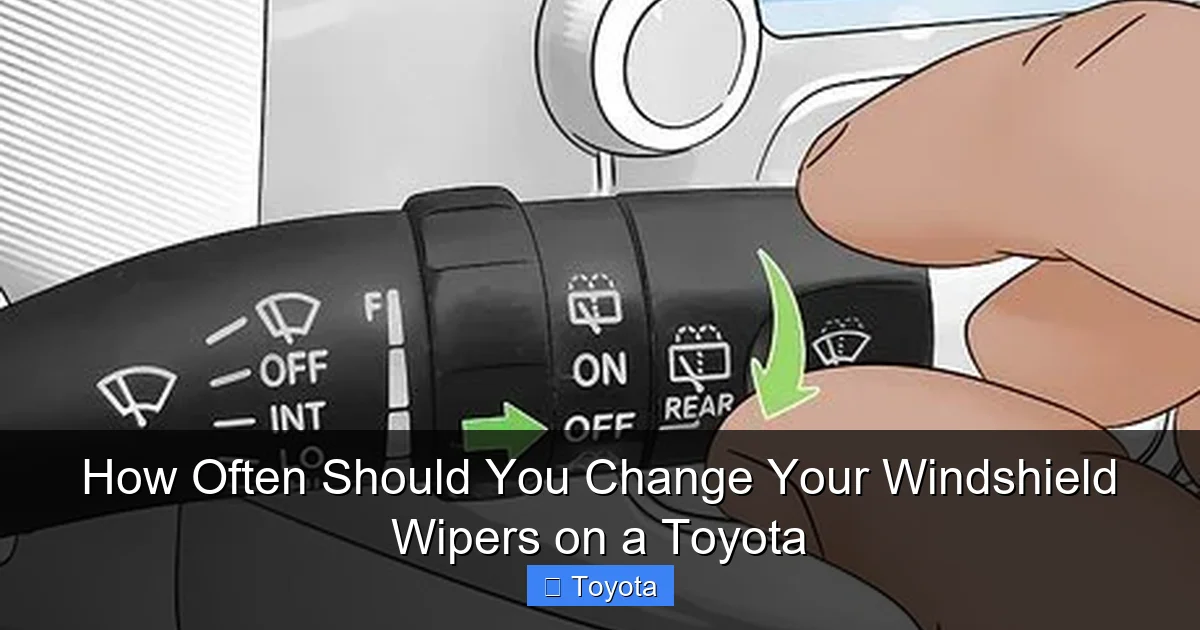
- Lift the wiper arm: Gently pull the entire wiper arm away from the windshield until it locks in a perpendicular position. Some arms have a clip; others just hold. Be careful—the spring tension can snap it back and crack your windshield if it slips.
- Remove the old blade: Locate the connector tab (usually a small plastic button or lever) where the blade meets the arm. Press or slide the tab, then pull the blade downward (away from the arm) to disengage it from the hook.
- Attach the new blade: Take your new blade and align the connector with the hook on the wiper arm. Slide it firmly onto the hook until you hear/feel a definite click. Give it a gentle tug to ensure it’s locked.
- Lower the arm: Gently lower the wiper arm back onto the windshield. Repeat for the other side.
- Test: Turn on the wipers with a wet windshield. Watch for smooth, streak-free motion. Listen for noise. If it squeaks, the blade might not be seated fully, or you might have a defective blade.
Critical Safety Tip: Never let the wiper arm (without the blade attached) swing back and hit the windshield. The metal arm is hard and can easily chip or crack the glass. Always hold it or lower it carefully with your hand until the new blade is securely attached.
When to Seek Professional Help
DIY is easy, but there are exceptions. If your wiper arms themselves are bent, corroded, or the pivot points are stiff and don’t move freely, you may need a professional to replace the entire arm assembly. Also, if you have a very old or rare Toyota with a complex connector you can’t figure out, a quick video search for your specific model (e.g., “2005 Toyota Sequoia wiper replacement”) will almost always yield a perfect tutorial. For those who prefer to leave it to the experts, this is a quick, inexpensive service at any lube shop or dealership.
Proactive Maintenance: Extending the Life of Your Wipers
You can’t stop wear forever, but you can slow it down and get the most out of every set. A little care goes a long way.
- Clean Your Windshield Regularly: A clean glass is a less abrasive surface. grit and sand on the glass sandpaper your blades. Wash your windshield whenever you wash your car. Use a dedicated glass cleaner for best results.
- Lift Wipers Off the Glass in Extreme Conditions: During a heavy ice storm or when you know your car will sit for a long time in baking sun, gently lift the wiper arms away from the glass and prop them up with a piece of cardboard or a pool noodle (there are even commercial wiper rest props). This prevents the rubber from taking a permanent “set” against the glass and reduces UV exposure.
- Use Quality Washer Fluid: Cheap, watery fluid can freeze and damage blades. In winter, use a de-icing fluid with a low freeze point. In summer, use a fluid with bug-removing agents. Don’t just use water.
- Don’t Run Wipers on a Dry Windshield: This is the fastest way to destroy a new set. The friction generates heat and grinds any tiny particles directly into the rubber edge. Always have washer fluid active when using wipers on a dusty or dry day.
- Inspect Them Monthly: Make it a 30-second part of your routine. Look, feel, and listen. Catching a small nick or early hardening lets you replace them on your own schedule, not during a downpour.
Integrating this simple check into your broader Toyota maintenance routine is smart. Just as you track transmission fluid intervals for your Highlander or oil changes for your Camry, add wiper inspection to your quarterly checklist.
Conclusion: Clarity is a Choice You Make Every Six Months
Ultimately, the question “how often” has a clear answer: frequently enough that you never have to question your visibility. For most Toyota drivers, that means a proactive swap twice a year—once in the spring for pollen and summer sun, and once in the fall for winter’s onslaught. If you live in a gentler climate, once a year may suffice, but you must still inspect them regularly. Don’t wait for the streaking to become unbearable or for that first big storm to expose their failure. Windshield wipers are a consumable safety item, pure and simple. They are the barrier between you and the world outside your windshield. Investing $30-$60 and 10 minutes of your time twice a year isn’t an expense; it’s a small price for a huge, non-negotiable return in safety and peace of mind. Your Toyota is built for reliability and adventure. Don’t let a pair of worn-out wipers be the weak link that undermines it all. Stay ahead of the wear, listen to the signs, and keep your view perfectly clear.
Frequently Asked Questions
Can I just replace the rubber refill instead of the whole blade?
Yes, for traditional frame-style blades, you can often buy just the rubber refill strip. However, for modern beam-style blades (common on newer Toyotas), the rubber is usually not user-replaceable. It’s more practical and often similarly priced to just buy the complete new blade assembly. For simplicity and guaranteed performance, full blade replacement is the standard recommendation.
Do I need special wipers for a Toyota with a rain-sensing wiper system?
No. Rain-sensing wipers use a sensor on the windshield, not a special blade. Any correctly sized standard or beam blade will work perfectly with the system. The sensor detects water, and the wiper motor and control module handle the speed. Just ensure the new blade doesn’t have any metal parts that could interfere with the sensor’s field of view, which standard blades do not.
Why do my new wipers still squeak after I install them?
>A few reasons: 1) The windshield might be dirty. Clean it thoroughly with glass cleaner. 2) They might not be fully seated or locked onto the arm. 3) Some new blades have a protective coating that wears off after a few uses. 4) You may have installed the wrong size, causing improper contact. 5) The wiper arm spring tension could be weak, a separate issue. Test on a wet windshield first.
Should I use petroleum jelly or other treatments on my wiper blades?
No. While old tricks like rubbing a bit of petroleum jelly on the rubber were meant to soften it, modern rubber and silicone formulations don’t need it. It can actually attract dust and grime, creating a messy film on your windshield. The best treatment is simply a clean windshield and timely replacement.
What’s the difference between OEM and aftermarket wiper blades?
OEM (Original Equipment Manufacturer) blades are the exact ones your Toyota came with from the factory. Aftermarket blades are made by other companies (like Bosch, Rain-X, ANCO). Quality aftermarket blades are often excellent and can even be an upgrade (e.g., silicone or winter-specific). For most people, a reputable aftermarket brand in the correct size is a perfect, cost-effective choice. OEM ensures a perfect fit but isn’t always a performance upgrade.
My rear wiper on my Toyota RAV4 is really small and weirdly shaped. Is it hard to replace?
It can feel fiddly due to the size and access, but the principle is identical to the front wipers. The connector is usually the same hook or pin style. The key is to gently maneuver the small arm and blade. It’s often easier to do with the tailgate open for better access. Just take your time, and if you get frustrated, a quick YouTube search for “2023 RAV4 rear wiper replacement” will show you exactly how it’s done in 60 seconds.