
How Often Should You Change Transmission Fluid in a Toyota Highlander?

Regular transmission fluid changes are essential for keeping your Toyota Highlander running smoothly. Depending on driving habits and model year, most experts recommend changing the fluid every 30,000 to 60,000 miles. Sticking to this schedule helps prevent costly repairs and extends your vehicle’s life.
Key Takeaways
- Standard Interval: Most Toyota Highlanders require a transmission fluid change every 30,000 to 60,000 miles under normal driving conditions.
- Severe Driving Conditions: If you frequently tow, drive in stop-and-go traffic, or live in extreme temperatures, consider changing the fluid every 15,000 to 30,000 miles.
- Check Your Owner’s Manual: Always refer to your specific model year’s maintenance schedule for the most accurate recommendations.
- Use the Right Fluid: Toyota Highlanders typically require Toyota Genuine ATF WS (World Standard) fluid—using the wrong type can damage the transmission.
- Look for Warning Signs: Slipping gears, delayed shifting, or a burning smell may indicate it’s time for a fluid change—even before the recommended interval.
- DIY vs. Professional Service: While some owners can perform a drain-and-fill, a full flush is best left to professionals with the right equipment.
- Long-Term Benefits: Regular fluid changes improve shifting performance, reduce wear, and can extend transmission life by tens of thousands of miles.
📑 Table of Contents
- How Often Should You Change Transmission Fluid in a Toyota Highlander?
- Understanding Your Toyota Highlander’s Transmission System
- Recommended Transmission Fluid Change Intervals
- Signs It’s Time for a Transmission Fluid Change
- DIY vs. Professional Transmission Fluid Change
- Long-Term Benefits of Regular Fluid Changes
- Tips for Maintaining Your Highlander’s Transmission
- Conclusion
How Often Should You Change Transmission Fluid in a Toyota Highlander?
Owning a Toyota Highlander means enjoying one of the most reliable and family-friendly SUVs on the road. Known for its smooth ride, spacious interior, and impressive fuel efficiency, the Highlander has earned its reputation as a go-to vehicle for daily commutes, weekend getaways, and long road trips. But like any well-engineered machine, it needs regular maintenance to keep performing at its best—and one of the most overlooked yet critical aspects of that care is transmission fluid.
Transmission fluid does far more than just lubricate moving parts. It cools the transmission, helps transfer power from the engine to the wheels, and protects internal components from wear and corrosion. Over time, this fluid breaks down, collects debris, and loses its effectiveness. When that happens, your Highlander might start to shift roughly, hesitate when accelerating, or even develop serious mechanical issues. So, how often should you change transmission fluid in a Toyota Highlander? The answer isn’t one-size-fits-all—it depends on your driving habits, model year, and operating conditions. But with the right guidance, you can keep your Highlander’s transmission running smoothly for years to come.
Understanding Your Toyota Highlander’s Transmission System
Before diving into maintenance schedules, it’s helpful to understand how your Highlander’s transmission works. Most modern Toyota Highlanders come equipped with an automatic transmission—specifically, a 6-speed or 8-speed automatic, depending on the model year and trim level. These transmissions are electronically controlled and designed for efficiency and durability. However, they rely heavily on clean, high-quality transmission fluid to function properly.

Visual guide about How Often Should You Change Transmission Fluid in a Toyota Highlander?
Image source: thecarhow.com
Types of Transmission Fluid Used in Toyota Highlanders
Toyota specifies the use of Toyota Genuine ATF WS (World Standard) fluid for most Highlander models. This fluid is specially formulated to meet the precise requirements of Toyota’s automatic transmissions. It has a unique viscosity and additive package that ensures smooth shifting, optimal clutch engagement, and long-term protection against wear and oxidation.
Using the wrong type of fluid—such as generic Dexron or Mercon—can lead to poor performance, slipping gears, or even transmission failure. Even if a substitute fluid claims compatibility, it’s always safest to stick with the manufacturer’s recommendation. You can find Toyota ATF WS at dealerships, authorized service centers, or reputable auto parts stores.
How Transmission Fluid Works
Think of transmission fluid as the lifeblood of your vehicle’s transmission. It circulates through the torque converter, valve body, and clutch packs, providing hydraulic pressure that enables gear changes. It also absorbs heat generated during operation, preventing overheating. Over time, the fluid degrades due to heat, friction, and contamination from metal particles and sludge. When this happens, it can’t protect the transmission as effectively, leading to increased wear and potential damage.
Regular fluid changes help maintain the right chemical balance, remove contaminants, and restore the fluid’s ability to lubricate and cool. This is especially important in high-mileage vehicles or those subjected to demanding driving conditions.
Recommended Transmission Fluid Change Intervals
So, how often should you change transmission fluid in a Toyota Highlander? The general rule of thumb is every 30,000 to 60,000 miles under normal driving conditions. However, this can vary significantly based on your specific situation.

Visual guide about How Often Should You Change Transmission Fluid in a Toyota Highlander?
Image source: thecarhow.com
Standard Driving Conditions
If you primarily use your Highlander for highway driving, short errands, and light city traffic, you’re likely in the “normal” category. In this case, Toyota recommends a transmission fluid change every 60,000 miles for most recent models (2014 and newer). Some older models may suggest intervals as low as 30,000 miles, so always check your owner’s manual.
For example, a 2020 Toyota Highlander driven mostly on highways with occasional weekend trips would fall into this category. Following the 60,000-mile interval should keep the transmission in excellent condition.
Severe Driving Conditions
But what if your driving isn’t so “normal”? Toyota defines severe driving conditions as situations that put extra stress on your vehicle. These include:
- Frequent towing or hauling heavy loads
- Driving in stop-and-go traffic
- Extreme temperatures (hot summers or cold winters)
- Dusty or muddy environments
- Short trips where the engine doesn’t fully warm up
If you regularly tow a trailer, commute in heavy traffic, or live in a region with harsh weather, you should consider changing the transmission fluid every 15,000 to 30,000 miles. This more frequent schedule helps prevent overheating and fluid breakdown, which are common in demanding conditions.
For instance, a Highlander used to tow a camper every weekend during summer months would benefit from a fluid change every 20,000 miles. The added strain generates more heat, which accelerates fluid degradation.
Model Year Considerations
It’s also important to note that recommendations can vary by model year. Older Highlanders (pre-2014) often had shorter recommended intervals, sometimes as low as 30,000 miles. Newer models, especially those with advanced transmissions and sealed units, may go longer between changes—but that doesn’t mean you should skip them.
Always consult your owner’s manual or use Toyota’s online maintenance scheduler to find the exact interval for your vehicle. You can enter your VIN on Toyota’s official website to get personalized recommendations.
Signs It’s Time for a Transmission Fluid Change
Even if you’re following the recommended schedule, it’s wise to watch for signs that your transmission fluid needs attention sooner. Early detection can prevent major problems down the road.
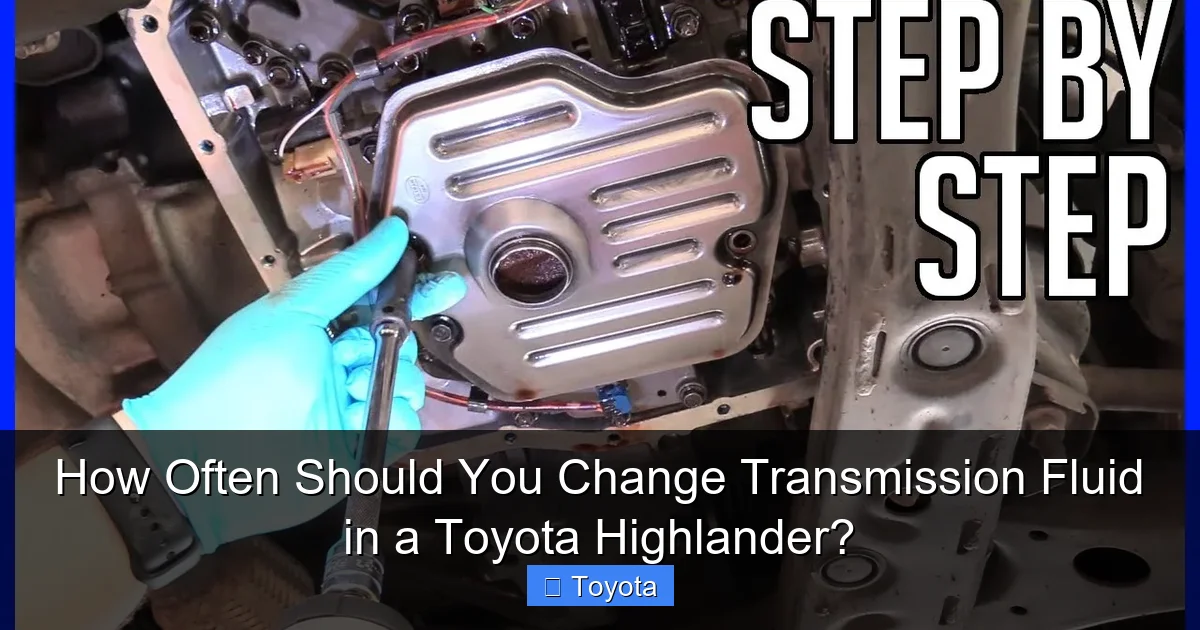
Visual guide about How Often Should You Change Transmission Fluid in a Toyota Highlander?
Image source: i.ytimg.com
Rough or Delayed Shifting
One of the most common symptoms of old or low transmission fluid is rough shifting. You might notice jerking when accelerating, hesitation between gears, or a delay when shifting from park to drive. These issues occur because the fluid can’t build enough pressure to engage the clutches smoothly.
For example, if your Highlander used to shift seamlessly but now feels “sluggish” or “jumpy,” it could be a sign the fluid is contaminated or low.
Transmission Slipping
Transmission slipping happens when the engine revs but the vehicle doesn’t accelerate as expected. You might hear the engine working harder without a corresponding increase in speed. This is a serious warning sign and should be addressed immediately—it could indicate low fluid levels, worn clutches, or degraded fluid.
Burning Smell
If you notice a burnt odor coming from under the hood, especially after driving, it could mean the transmission fluid is overheating. Overheated fluid loses its lubricating properties and starts to break down, producing a distinct burning smell. This often happens in vehicles driven in extreme heat or under heavy load.
Fluid Leaks
Check under your Highlander regularly for red or brown fluid spots. Transmission fluid is typically red when new and turns darker over time. If you see puddles or drips, you may have a leak in the transmission pan, seals, or cooler lines. Low fluid levels can lead to overheating and damage, so leaks should be repaired promptly.
Dashboard Warning Lights
Some newer Highlander models are equipped with a transmission temperature warning light or check engine light that can indicate fluid issues. If a warning light comes on, have your vehicle inspected by a professional as soon as possible.
DIY vs. Professional Transmission Fluid Change
Now that you know when to change the fluid, the next question is: should you do it yourself or take it to a mechanic?
Can You Change Transmission Fluid Yourself?
Yes, it’s possible to perform a basic drain-and-fill on your Highlander if you’re comfortable working under the vehicle. This involves removing the transmission pan, draining the old fluid, replacing the filter (if applicable), and refilling with new fluid. However, this method only replaces about 30–50% of the total fluid, as much remains in the torque converter and cooler lines.
To do it yourself, you’ll need:
- A jack and jack stands (or a lift)
- A drain pan
- A new transmission filter (if your model has one)
- A new pan gasket
- Toyota Genuine ATF WS fluid (typically 3–5 quarts for a drain-and-fill)
- A funnel and fluid pump
Always consult your owner’s manual or a repair guide for your specific model year. Some Highlanders have sealed transmissions with no drain plug, making DIY changes more difficult.
Why a Professional Flush Is Better
For the most thorough cleaning, a professional transmission flush is recommended. This process uses a machine to circulate new fluid through the entire system, replacing nearly 100% of the old fluid—including what’s trapped in the cooler lines and torque converter.
A flush is especially beneficial if your fluid is dark, smells burnt, or hasn’t been changed in over 60,000 miles. It helps remove sludge and metal particles that a simple drain can’t reach.
Most dealerships and reputable transmission shops offer this service. While it costs more than a DIY job (typically $150–$300), it provides peace of mind and better long-term protection.
Cost Considerations
The cost of a transmission fluid change varies depending on the method and location. A basic drain-and-fill at a dealership might cost $100–$200, while a full flush can run $200–$350. Independent shops may charge less, but make sure they use the correct Toyota ATF WS fluid.
While it may seem expensive, consider this: a full transmission rebuild can cost $3,000 or more. Regular fluid changes are a small investment compared to major repairs.
Long-Term Benefits of Regular Fluid Changes
Changing your transmission fluid on schedule isn’t just about avoiding problems—it’s about maximizing your Highlander’s performance and lifespan.
Improved Shifting Performance
Fresh fluid ensures smooth, responsive gear changes. You’ll notice quicker acceleration, quieter operation, and a more enjoyable driving experience. Over time, clean fluid reduces wear on clutches and bands, helping your transmission last longer.
Extended Transmission Life
A well-maintained transmission can easily last 200,000 miles or more. In contrast, neglected transmissions often fail prematurely due to overheating and contamination. Regular fluid changes are one of the simplest ways to protect this critical component.
Better Fuel Efficiency
While the effect is subtle, clean transmission fluid can improve fuel economy by reducing internal friction and allowing the engine to operate more efficiently. Over thousands of miles, this can add up to real savings at the pump.
Peace of Mind
Knowing your Highlander is properly maintained gives you confidence on the road. Whether you’re driving across town or across the country, you can trust that your vehicle will perform reliably.
Tips for Maintaining Your Highlander’s Transmission
Beyond fluid changes, there are other steps you can take to keep your transmission in top shape.
Check Fluid Levels Regularly
Even if you’re not due for a change, check the transmission fluid level every few months. Most Highlanders have a dipstick (usually near the engine), though some newer models require a scan tool to check levels. Make sure the engine is warm and the vehicle is on level ground when checking.
Avoid Overloading
Exceeding your Highlander’s towing or payload capacity puts extra strain on the transmission. Always stay within the manufacturer’s limits, and use a weight distribution hitch when towing heavy loads.
Use the Correct Gear
Avoid “neutral coasting” or shifting into park while the vehicle is moving. Always come to a complete stop before shifting into reverse or park. These habits reduce stress on the transmission.
Warm Up in Cold Weather
In cold climates, allow your Highlander to idle for a minute or two before driving. This gives the transmission fluid time to warm up and flow properly, reducing wear during startup.
Schedule Regular Inspections
Include transmission checks in your routine maintenance visits. A technician can spot early signs of wear, leaks, or fluid degradation before they become serious issues.
Conclusion
So, how often should you change transmission fluid in a Toyota Highlander? The answer depends on your driving habits, model year, and operating conditions—but a good starting point is every 30,000 to 60,000 miles. For severe driving, consider changing it every 15,000 to 30,000 miles. Always use Toyota Genuine ATF WS fluid and consult your owner’s manual for precise recommendations.
Regular transmission fluid changes are one of the most effective ways to protect your Highlander’s performance, reliability, and resale value. Whether you choose to do it yourself or visit a professional, staying on top of this simple maintenance task can save you thousands in repairs and keep your SUV running smoothly for years to come. Don’t wait for warning signs—be proactive, and your Highlander will thank you with every smooth, quiet shift.
Frequently Asked Questions
Can I use any transmission fluid in my Toyota Highlander?
No, you should only use Toyota Genuine ATF WS (World Standard) fluid. Other fluids may not meet Toyota’s specifications and could damage the transmission.
What happens if I don’t change the transmission fluid?
Over time, old fluid can cause overheating, slipping gears, rough shifting, and eventually transmission failure. Regular changes prevent these issues.
Is a transmission flush necessary?
A flush is not required every time, but it’s recommended if the fluid is dark or hasn’t been changed in over 60,000 miles. It removes more contaminants than a simple drain.
Can I check the transmission fluid myself?
Yes, most Highlanders have a dipstick. Check the fluid when the engine is warm and the vehicle is on level ground. Look for a pink or red color and a clean smell.
How much does a transmission fluid change cost?
A basic drain-and-fill costs $100–$200, while a full flush ranges from $200–$350, depending on the shop and location.
Does towing affect how often I need to change the fluid?
Yes, towing increases heat and stress on the transmission. If you tow regularly, change the fluid every 15,000 to 30,000 miles to prevent damage.