
How Much Is Tire Pressure Sensor

Understanding how much is a tire pressure sensor helps you budget for safe, efficient driving. Prices range from $20 to $200 per sensor depending on type, vehicle, and installation needs. This guide breaks down costs, types, and money-saving tips so you can make informed decisions.
If you’ve ever seen that little yellow warning light shaped like a horseshoe with an exclamation point on your dashboard, you’ve met your tire pressure monitoring system (TPMS). It’s not just a nag—it’s a vital safety feature designed to alert you when one or more of your tires is significantly underinflated. But what happens when that light won’t go away, even after you’ve checked and filled your tires? Chances are, one of your tire pressure sensors has failed. And now you’re wondering: how much is a tire pressure sensor?
You’re not alone. Thousands of drivers face this question every year, especially as vehicles age and sensor batteries wear out. The good news? Replacing a tire pressure sensor isn’t usually a bank-breaking expense—but it’s not free, either. Costs can vary widely based on your car’s make and model, whether you go OEM or aftermarket, and whether you DIY or pay a mechanic. In this guide, we’ll walk you through everything you need to know about tire pressure sensor pricing, from average costs to hidden fees and smart money-saving tips.
Whether you’re driving a compact sedan, a rugged SUV, or a high-end luxury vehicle, understanding how much is a tire pressure sensor—and what factors influence that price—can save you time, stress, and money. We’ll break down the types of sensors, explain installation costs, compare OEM vs. aftermarket options, and even show you how to replace one yourself if you’re feeling handy. By the end, you’ll know exactly what to expect when that TPMS light comes on for good.
Key Takeaways
- Cost Range: A single tire pressure sensor typically costs between $20 and $200, with most drivers paying $50–$100 per sensor.
- Type Matters: Direct sensors (built into the valve stem) are more accurate but pricier than indirect systems that use wheel speed data.
- Installation Fees: Professional installation adds $15–$50 per tire, though some shops include it with tire service.
- Vehicle-Specific Pricing: Luxury and import vehicles often require OEM sensors, which can double or triple the cost.
- DIY Savings: With basic tools and knowledge, you can replace sensors yourself and save on labor—just ensure proper programming.
- Battery Life: Most sensors last 5–10 years; if your TPMS light stays on, the battery may be dead, not the sensor itself.
- Legal Requirement: Since 2008, all new cars in the U.S. must have TPMS—keeping it functional ensures safety and compliance.
📑 Table of Contents
- What Is a Tire Pressure Sensor and Why Does It Matter?
- Average Cost of a Tire Pressure Sensor
- Installation Costs: What to Expect at the Shop
- OEM vs. Aftermarket: Which Should You Choose?
- Signs Your Tire Pressure Sensor Needs Replacement
- Tips to Save Money on Tire Pressure Sensor Replacement
- Conclusion: Is It Worth the Cost?
What Is a Tire Pressure Sensor and Why Does It Matter?
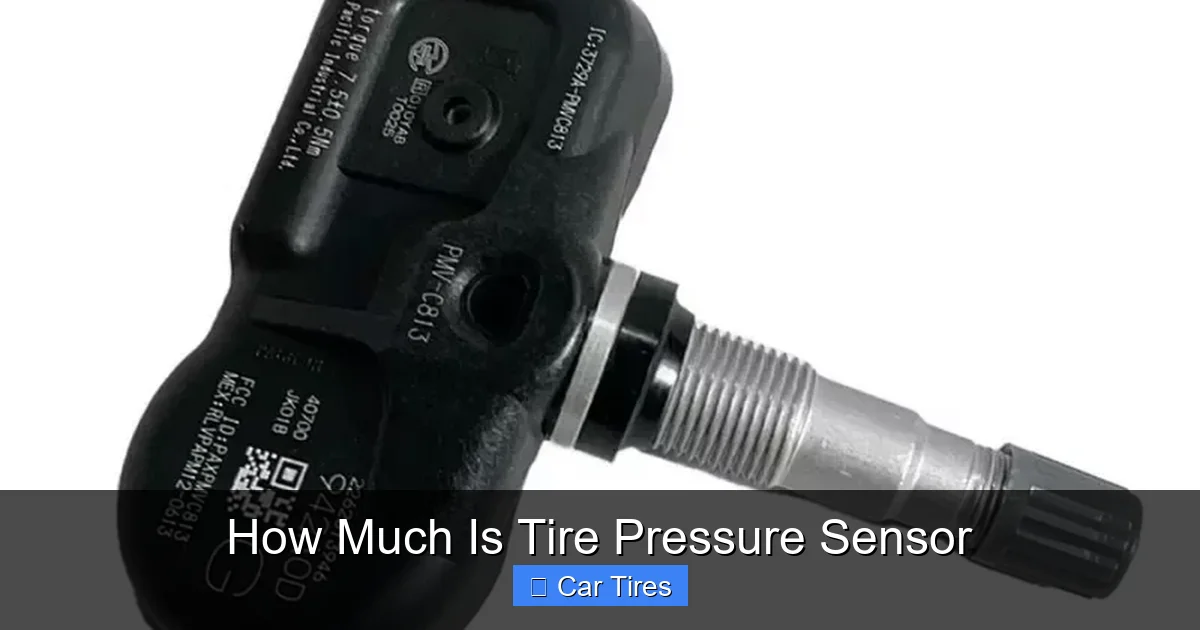
Before we dive into pricing, let’s make sure we’re on the same page about what a tire pressure sensor actually does. A tire pressure sensor is a small electronic device mounted inside your tire (usually on the valve stem) that monitors the air pressure in real time. When pressure drops below a safe threshold—typically 25% below the recommended level—the sensor sends a signal to your car’s computer, which then triggers the TPMS warning light on your dashboard.
There are two main types of TPMS: direct and indirect.
Direct TPMS
Direct systems use physical sensors inside each tire to measure pressure accurately. These sensors transmit data wirelessly to your vehicle’s onboard computer. Because they provide precise readings, direct TPMS is the standard in most modern vehicles. Each sensor includes a battery, a pressure gauge, and a radio transmitter. Over time, the battery dies—usually after 5 to 10 years—and the sensor must be replaced.
Indirect TPMS
Indirect systems don’t use physical sensors. Instead, they rely on your car’s anti-lock braking system (ABS) to monitor wheel speed. Underinflated tires have a smaller diameter and spin faster than properly inflated ones. The system detects this difference and triggers the warning light. While indirect TPMS is cheaper to maintain (no sensors to replace), it’s less accurate and can’t tell you the exact pressure in each tire.
Most cars made after 2008 use direct TPMS because it’s more reliable and required by law in the U.S. under the Transportation Recall Enhancement, Accountability and Documentation (TREAD) Act. This law was passed after the Firestone tire recalls in the late 1990s, which were linked to underinflated tires and fatal rollovers. Today, TPMS isn’t just a convenience—it’s a critical safety feature.
So why does this matter for your wallet? Because direct TPMS means you have four (or five, if you have a full-size spare) physical sensors that can fail. And when they do, you’ll need to replace them. That’s where the question “how much is a tire pressure sensor?” becomes very real.
Average Cost of a Tire Pressure Sensor
Visual guide about How Much Is Tire Pressure Sensor
Image source: inrorwxhpqkllj5p.ldycdn.com
Now for the million-dollar question: how much is a tire pressure sensor? The short answer is: it depends. But on average, you can expect to pay between $20 and $200 per sensor. Most drivers end up in the $50–$100 range per sensor, especially if they’re buying aftermarket or refurbished units.
Let’s break that down.
Aftermarket Sensors: $20–$60 Each
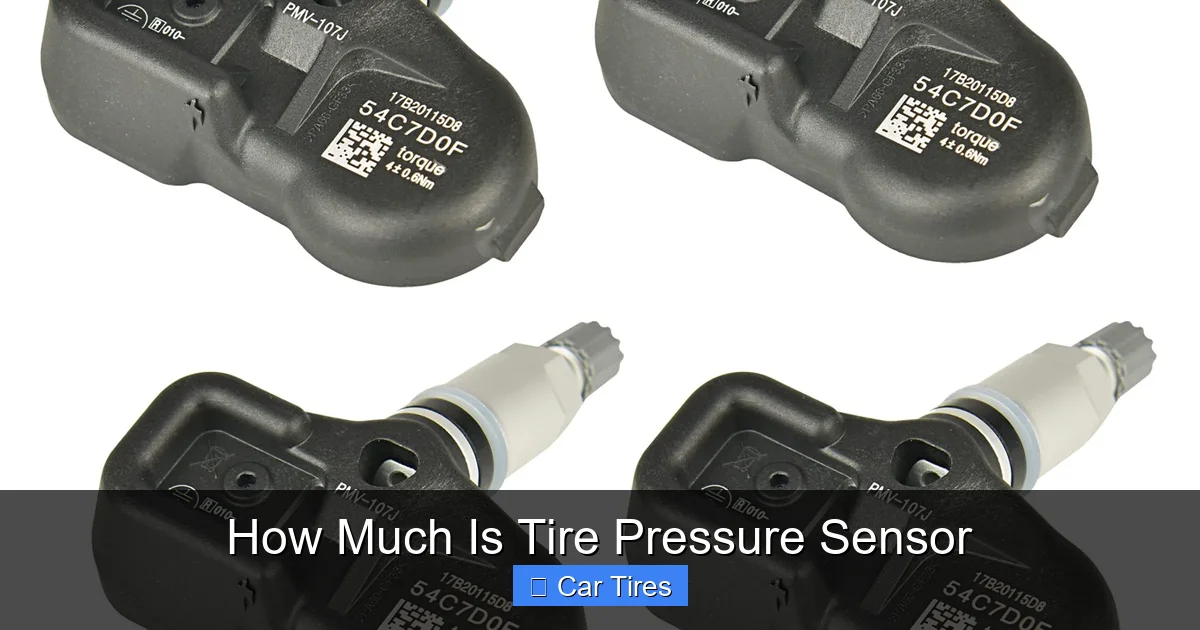
Aftermarket sensors are made by third-party companies and designed to work with multiple vehicle brands. They’re often compatible with dozens of makes and models, making them a popular choice for repair shops and DIYers. Brands like Denso, Standard Motor Products, and Autel offer reliable aftermarket sensors at a fraction of the OEM price.
For example, a Denso TPMS sensor for a Honda Civic might cost around $35, while a similar unit for a Toyota Camry could be $40. These sensors are pre-programmed or programmable, meaning they can be synced to your vehicle with the right tool. The downside? Compatibility can be tricky. Always double-check fitment before buying.
OEM Sensors: $80–$200+ Each
OEM (Original Equipment Manufacturer) sensors are made by the same company that supplied your car’s original parts. If you drive a BMW, Mercedes, or Audi, you’ll likely need an OEM sensor to ensure full compatibility and functionality. These sensors are plug-and-play, meaning they’re pre-programmed for your specific vehicle and usually require no additional setup.
But that convenience comes at a cost. An OEM sensor for a Ford F-150 might run $90, while one for a Lexus RX could be $150 or more. Luxury brands often charge a premium, and some models require specialized tools to program the sensor—even if it’s OEM.
Refurbished or Rebuilt Sensors: $30–$70 Each
If you’re on a tight budget, refurbished sensors are a middle-ground option. These are used sensors that have been tested, cleaned, and had their batteries replaced. They’re often sold with a warranty and can work just as well as new ones—if you get them from a reputable seller.
However, be cautious. Some refurbished sensors may have hidden issues or shorter lifespans. Always buy from a trusted source and check reviews before purchasing.
Cost by Vehicle Type
Your car’s make and model play a big role in pricing. Here’s a quick look at average sensor costs by category:
– Economy Cars (e.g., Honda Civic, Toyota Corolla): $30–$60 per sensor
– Mid-Range SUVs (e.g., Honda CR-V, Ford Escape): $40–$80 per sensor
– Pickup Trucks (e.g., Ford F-150, Chevrolet Silverado): $50–$100 per sensor
– Luxury Vehicles (e.g., BMW, Mercedes, Audi): $100–$200+ per sensor
As you can see, luxury and import vehicles tend to be the most expensive. That’s because they often use proprietary systems and require specialized programming tools.
Installation Costs: What to Expect at the Shop

Visual guide about How Much Is Tire Pressure Sensor
Image source: mrtirerack.com
So you’ve bought your sensor—now what? Unless you’re planning to install it yourself, you’ll need to pay for labor. And that’s where costs can add up quickly.
Professional Installation Fees
Most tire shops and mechanics charge between $15 and $50 per tire for TPMS sensor installation. This includes removing the tire, replacing the sensor, reinstalling the tire, and programming the new sensor to your vehicle.
Here’s a typical breakdown:
– Tire Removal & Installation: $10–$20 per tire
– Sensor Programming: $10–$30 per sensor
– Total per Tire: $20–$50
Some shops bundle these services. For example, if you’re getting new tires, they might include sensor replacement in the package for a flat fee of $100–$200 for all four wheels. Always ask about package deals—they can save you money.
Why Programming Matters
Modern TPMS sensors don’t just screw into the valve stem. They need to “talk” to your car’s computer. That means each sensor must be programmed with a unique ID so the system knows which tire is which (front left, rear right, etc.).
Some sensors are pre-programmed for specific vehicles, while others require a TPMS programming tool. If your shop doesn’t have the right tool, they may not be able to complete the job—or they might charge extra to outsource the programming.
DIY Installation: Can You Do It Yourself?
Yes—and it’s easier than you might think. If you’re comfortable removing tires and have basic tools, you can replace a TPMS sensor at home. Here’s what you’ll need:
– A tire iron or impact wrench
– A TPMS sensor programming tool (around $50–$150, or rentable)
– A new sensor (make sure it’s compatible)
– A tire pressure gauge
The process involves:
1. Removing the tire from the wheel
2. Deflating the tire completely
3. Breaking the bead and removing the old sensor
4. Installing the new sensor
5. Reinstalling the tire and inflating it
6. Programming the sensor using the tool
Total time: 30–60 minutes per tire.
Total cost: Just the price of the sensor and tool (if you don’t already own one).
The biggest hurdle is programming. Some sensors are “cloneable,” meaning you can copy the ID from the old sensor. Others require a scan tool to register with your car. Check your vehicle’s manual or search online for your make and model to see what’s needed.
OEM vs. Aftermarket: Which Should You Choose?
Visual guide about How Much Is Tire Pressure Sensor
Image source: m.media-amazon.com
One of the biggest decisions you’ll make is whether to go with an OEM or aftermarket sensor. Both have pros and cons, and the right choice depends on your budget, vehicle, and long-term plans.
OEM Sensors: Pros and Cons
Pros:
– Guaranteed compatibility with your vehicle
– Pre-programmed—no extra setup needed
– Often come with a warranty from the dealer
– Higher resale value if you sell your car
Cons:
– Significantly more expensive
– May require a dealer visit for programming
– Limited availability for older models
If you drive a luxury vehicle or plan to keep your car for many years, OEM might be worth the investment. But for most drivers, the cost difference is hard to justify.
Aftermarket Sensors: Pros and Cons
Pros:
– Much cheaper—often 30–50% less than OEM
– Widely available online and at auto parts stores
– Many are programmable and compatible with multiple vehicles
– Good quality from reputable brands
Cons:
– Compatibility can be hit or miss
– May require programming tools
– Warranty varies by brand
Aftermarket sensors are a great choice for budget-conscious drivers, especially if you’re replacing multiple sensors. Just make sure to buy from a trusted brand and double-check fitment.
Real-World Example: 2015 Honda Accord
Let’s say you own a 2015 Honda Accord and one of your TPMS sensors has failed. Here’s how the costs compare:
– OEM Sensor (from Honda dealer): $120 + $40 installation = $160
– Aftermarket Sensor (Denso): $45 + $30 installation = $75
– DIY with Aftermarket Sensor: $45 + $0 labor = $45
That’s a savings of $115 just by choosing aftermarket and doing it yourself. Over four tires, you could save nearly $500.
Signs Your Tire Pressure Sensor Needs Replacement
How do you know if your sensor is bad? The TPMS light is the most obvious sign, but it’s not the only one. Here are common symptoms:
TPMS Light Stays On
If the light comes on and doesn’t go off after you’ve checked and inflated your tires, the sensor may be faulty. Use a tire pressure gauge to verify the actual pressure. If it’s correct, the sensor is likely the issue.
Intermittent or Flashing Light
A flashing TPMS light often indicates a system malfunction, such as a dead sensor battery or communication error. This usually means the sensor needs replacement.
Inaccurate Readings
Some vehicles display individual tire pressures on the dashboard. If one tire consistently shows “0” or an unrealistic number, the sensor may be broken.
Sensor Won’t Program
If you’re replacing a sensor and it won’t sync with your car, the sensor itself may be defective—even if it’s new.
Battery Life
Most TPMS sensors have a battery life of 5–10 years. If your car is older than 7 years and the light comes on, the battery is likely dead. Replacing the sensor is the only fix—batteries aren’t replaceable.
Tips to Save Money on Tire Pressure Sensor Replacement
Replacing a TPMS sensor doesn’t have to break the bank. With a little planning, you can keep costs low without sacrificing safety or quality.
1. Replace All Sensors at Once
If one sensor has failed, the others are likely close behind—especially if your car is over 7 years old. Replacing all four (or five) at once can save on labor costs and prevent future surprises.
2. Shop Around
Prices vary widely between dealers, independent shops, and online retailers. Get quotes from at least three places before deciding. Online retailers like Amazon, RockAuto, and CarID often have the best prices.
3. Look for Promotions
Many tire shops offer seasonal promotions or discounts on TPMS service. For example, some stores include free sensor programming with tire purchases. Sign up for email alerts to stay informed.
4. Consider a TPMS Reset Tool
If you plan to work on your car regularly, investing in a TPMS reset tool (around $50–$150) can pay for itself quickly. These tools let you program sensors, reset the system, and even diagnose issues.
5. Check Your Warranty
Some new cars come with a TPMS warranty that covers sensor replacement for a certain period or mileage. Check your owner’s manual or contact your dealer to see if you’re covered.
6. Don’t Ignore the Light
Ignoring a TPMS warning can lead to underinflated tires, which increase wear, reduce fuel efficiency, and raise the risk of a blowout. Addressing the issue early is always cheaper than dealing with a flat tire or accident.
Conclusion: Is It Worth the Cost?
So, how much is a tire pressure sensor? On average, between $20 and $200 per sensor, with most drivers paying $50–$100. Add installation, and the total can range from $70 to $250 per tire. While that might seem steep, it’s a small price to pay for safety, fuel efficiency, and peace of mind.
TPMS sensors are more than just gadgets—they’re essential components that help prevent accidents, extend tire life, and keep your car running smoothly. Whether you choose OEM or aftermarket, professional installation or DIY, the key is to act quickly when the light comes on.
By understanding the costs, knowing your options, and planning ahead, you can keep your TPMS system in top shape without overspending. And the next time someone asks, “How much is a tire pressure sensor?” you’ll have the answer—and the confidence to make the right choice.
Frequently Asked Questions
How much is a tire pressure sensor for a Honda Civic?
A tire pressure sensor for a Honda Civic typically costs between $30 and $60 for an aftermarket unit, or $80–$120 for OEM. Installation adds $20–$50 per tire if done professionally.
Can I drive with a faulty TPMS sensor?
Yes, you can drive with a faulty sensor, but it’s not recommended. You won’t receive low-pressure warnings, increasing the risk of underinflated tires, poor handling, and blowouts.
How long do tire pressure sensors last?
Most TPMS sensors last 5 to 10 years, depending on battery life and environmental conditions. If your car is over 7 years old and the light comes on, the sensor may need replacement.
Do I need to replace all four sensors at once?
No, but it’s often wise. If one has failed, the others are likely nearing the end of their lifespan. Replacing all at once saves on future labor costs.
Can I replace a TPMS sensor myself?
Yes, if you have basic tools and a programming device. The process involves removing the tire, swapping the sensor, and programming it to your vehicle.
Why is my TPMS light on after replacing the sensor?
This could mean the sensor wasn’t programmed correctly, the tire pressure is still low, or there’s a system error. Recheck pressure and use a TPMS tool to reset the system.