
How Much Is a 2000 Ford F-150 Worth?

The value of a 2000 Ford F-150 ranges widely, from about $1,500 for a high-mileage, rough-condition truck to over $5,000 for a pristine, low-mileage model with desirable features. Its final price depends heavily on its specific configuration, engine, drivetrain, and, most critically, its overall mechanical and cosmetic condition. Understanding these factors is key to getting a fair deal whether you’re buying or selling.
Key Takeaways
- Condition is King: A running, rust-free truck with a solid interior commands a premium over a project vehicle needing engine or bodywork.
- Engine & Drivetrain Matter: The 5.4L V8 and 4×4 models typically hold value better than the 4.2L V6 and 2WD versions.
- Trim Level Impacts Price: XLT and Eddie Bauer trims with more factory options sell for significantly more than the base XL.
- Mileage is a Major Factor: Trucks with under 150,000 miles are in the sweet spot; high-mileage examples (250k+) see a sharp price drop.
- Market Demand is Steady: The 10th-gen F-150 remains a popular, affordable used truck, keeping values stable compared to many sedans of the same era.
- Location Influences Price: Prices can be 15-20% higher in regions where trucks are essential (rural, southern states) versus urban areas.
- Do Your Homework: Always check multiple pricing guides (NADA, KBB) and recent local sales (Facebook Marketplace, Craigslist) before setting a price.
[FEATURED_IMAGE_PLACEHOLDER]
📑 Table of Contents
- Unlocking the Value of an Icon: Your 2000 Ford F-150 Pricing Guide
- The Core Value Drivers: What Makes One 2000 F-150 Worth More Than Another?
- Condition: The Ultimate Value Decider
- Current Market Realities: What Are People Actually Paying?
- How to Determine YOUR Truck’s Exact Worth: A Practical Checklist
- Buying vs. Selling: Actionable Tips for Both Sides
- The Long Game: Ownership Costs and Residual Value
- Final Thoughts: Is a 2000 Ford F-150 a Good Value?
Unlocking the Value of an Icon: Your 2000 Ford F-150 Pricing Guide
So, you’re looking at a 2000 Ford F-150. Maybe it’s the trusty workhorse you’ve had for years and you’re wondering what it’s worth. Or perhaps you’re shopping for a reliable, affordable used truck and this generation—the tenth of its kind—has caught your eye. You’ve come to the right place. Figuring out “how much is a 2000 Ford F-150 worth?” isn’t as simple as one number. It’s a puzzle with many pieces: engine size, cab style, drivetrain, condition, and even where you live. This guide will walk you through every single piece. We’ll break down the pricing ranges you can realistically expect, highlight the most valuable configurations, and give you the tools to determine an accurate value for any specific truck you’re considering. Let’s dive in and demystify the worth of this classic American pickup.
The Core Value Drivers: What Makes One 2000 F-150 Worth More Than Another?
Not all 2000 F-150s are created equal. Ford offered a dizzying array of options that year, and each choice impacted the truck’s final sticker price and, subsequently, its used value today. To understand the value spectrum, you need to look at the fundamental specifications.
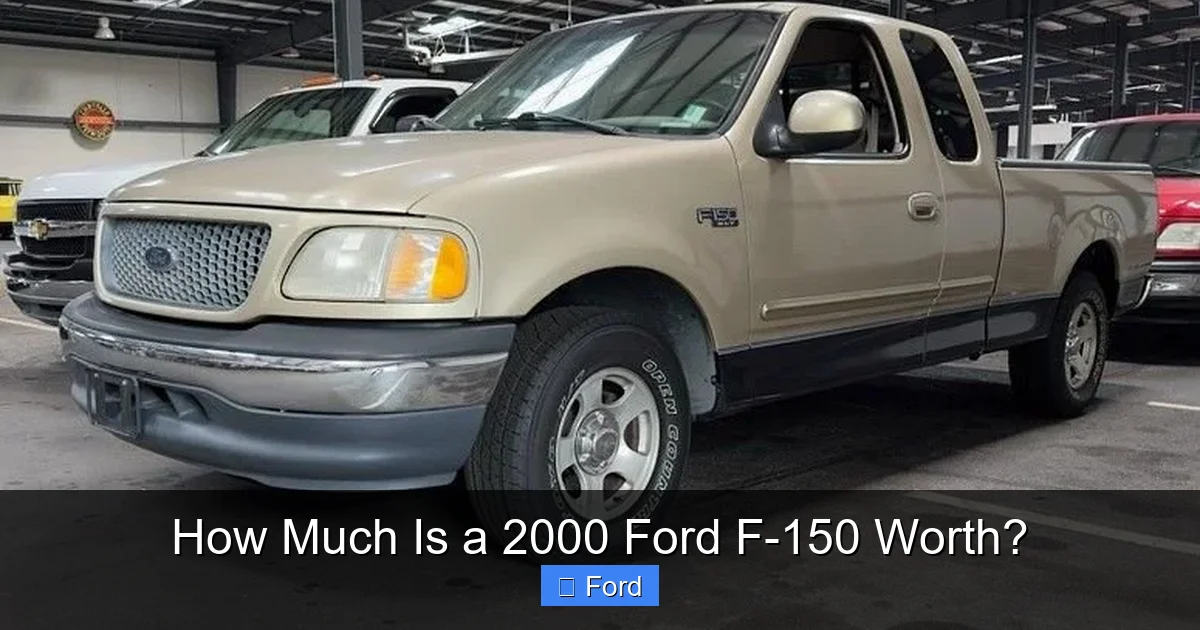
Visual guide about How Much Is a 2000 Ford F-150 Worth?
Image source: cdn.dealeraccelerate.com
Engine: The Heart of the Matter
For 2000, the F-150 primarily came with two gas engine options. The base was a 4.2L V6 (205 hp), capable but unspectacular. The upgrade was the legendary 5.4L Triton V8 (260 hp), a torquey, durable engine beloved by owners. Unsurprisingly, the V8 commands a consistent premium. You can typically expect a $500 to $1,500 difference in value between a comparable V6 and V8 model, all else being equal. The V8’s reputation for longevity and power makes it the preferred choice for most buyers, directly boosting its market price. When comparing trucks, the engine is the first checkbox to assess.
Drivetrain: 2WD vs. 4WD
This is a huge differentiator. Two-wheel-drive models are more common and less expensive to purchase and maintain. Four-wheel-drive adds significant utility and, crucially, desirability. A 4×4 F-150 will almost always be worth $1,000 to $2,500 more than its 2WD sibling with the same engine, cab, and trim. The premium is even higher in regions with harsh winters or for buyers who need off-road or towing capability. The presence of a functional, well-maintained 4×4 system is a major value booster.
Cab and Bed Configurations
Ford offered Regular Cab (2-door), SuperCab (2+2 doors, small rear jump seats), and SuperCrew (4 full doors) configurations in 2000. The SuperCrew was the newest and most desirable cab style, offering genuine rear passenger space. It carries the highest price premium. The SuperCab is a popular middle ground. The Regular Cab is the most basic and typically the least valuable. Bed length also plays a role: the 6.5-foot bed is standard, while the 8-foot bed (on Regular and SuperCabs) is preferred by some for work but can slightly reduce cab space. Generally, more passenger space equals more value.
Trim Levels: From Work Truck to Luxo-Rig
The trim level tells the story of the truck’s original intentions and features. Here’s the typical hierarchy from lowest to highest value:
- XL: The workhorse. Basic vinyl seats, minimal creature comforts. Lowest starting value.
- XLT: The sweet spot for most buyers. Adds cloth seats, air conditioning, AM/FM cassette, and more. This is the most common and sought-after trim, holding value very well.
- Eddie Bauer: The top-of-the-line for 2000. Unique two-tone paint, leather seats, premium audio, and all the bells and whistles. These are rare and command a significant premium, often rivaling or exceeding the value of a lower-trim 4×4.
- FX4: A special off-road package (available on 4×4 SuperCabs/Crews). It included skid plates, off-road tires, and a limited-slip rear differential. Highly desirable for enthusiasts, adding $500-$1,000+ to value.
An XLT or Eddie Bauer in good condition will almost always be worth more than a base XL, even if the XL has a 4×4 system.
Condition: The Ultimate Value Decider
You can have the perfect 5.4L V8, 4×4, Eddie Bauer SuperCrew, but if it’s a rusted-out, non-running basket case, its value plummets. Condition overrides almost everything else. We can break condition down into a few critical areas.
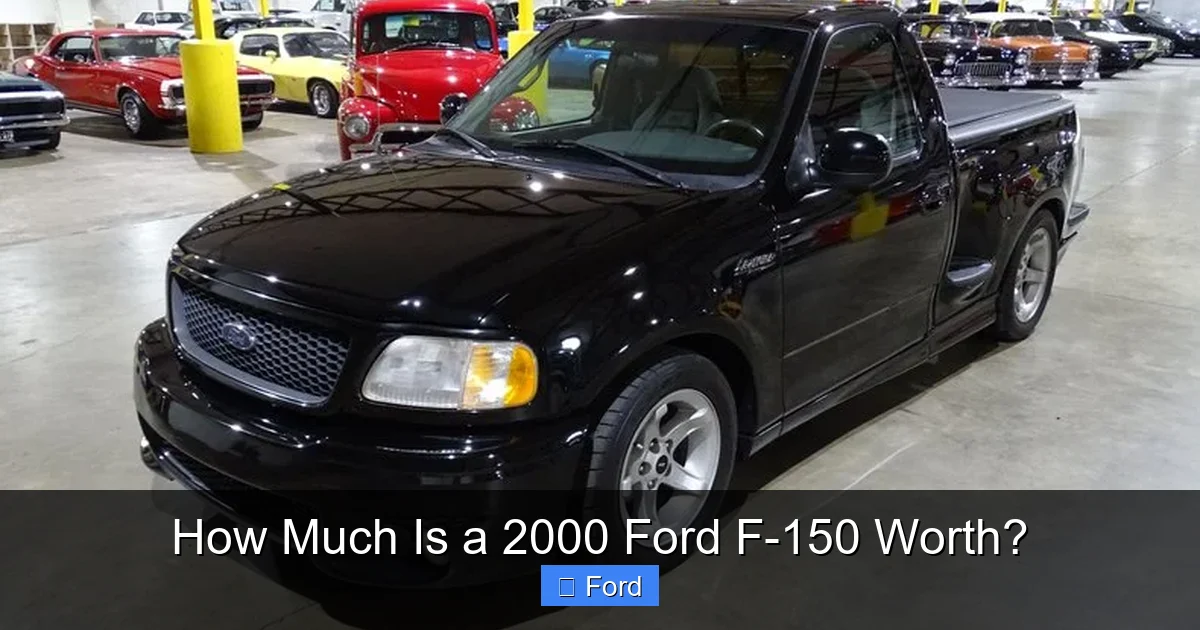
Visual guide about How Much Is a 2000 Ford F-150 Worth?
Image source: cdn.dealeraccelerate.com
Mechanical Health: Can It Move?
This is non-negotiable. A truck that starts, runs, drives, and stops safely has a baseline value. A non-running truck is a parts truck or a project, and its value drops by 50% or more immediately. Key components to check: the engine (no knocks, smoke, leaks), transmission (smooth shifts, no slipping), transfer case (engages 4WD properly), and axles/differentials. Major mechanical failures can cost thousands to repair, so buyers heavily discount trucks with known issues. For a 24-year-old vehicle, a comprehensive service history is a huge plus and adds tangible value.
Body and Rust: The Silent Value Killer
Rust is public enemy number one for these trucks, especially in the “rust belt” states. Check the frame rails, cab corners, rocker panels, and rear wheel arches. Surface rust is manageable, but rot through the frame or critical body panels is a serious structural and safety issue that drastically reduces value. A completely rust-free truck in a region like Arizona or Texas can fetch a national premium. Minor dents and scratches affect value less than rust, but a clean, straight body with original paint (or a high-quality repaint) is always preferable.
Interior and Electronics
The interior tells a story of care. Is the driver’s seat worn to the foam? Is the dashboard cracked? Do all the gauges, lights, windows, locks, and the HVAC system work? A complete, functional, and clean interior is worth hundreds, if not thousands, more than one with torn seats, a broken AC, or missing panels. The infamous “spider web” crack in the 4.6L/5.4L intake manifold is a known issue; if it hasn’t been repaired, it’s a $1,000+ repair that will be factored into the price.
Current Market Realities: What Are People Actually Paying?
Pricing guides like Kelley Blue Book (KBB) and NADA are excellent starting points, but they are estimates. The real value is what a willing buyer pays a willing seller in your specific area right now. Let’s build a realistic price matrix based on national averages and trends.
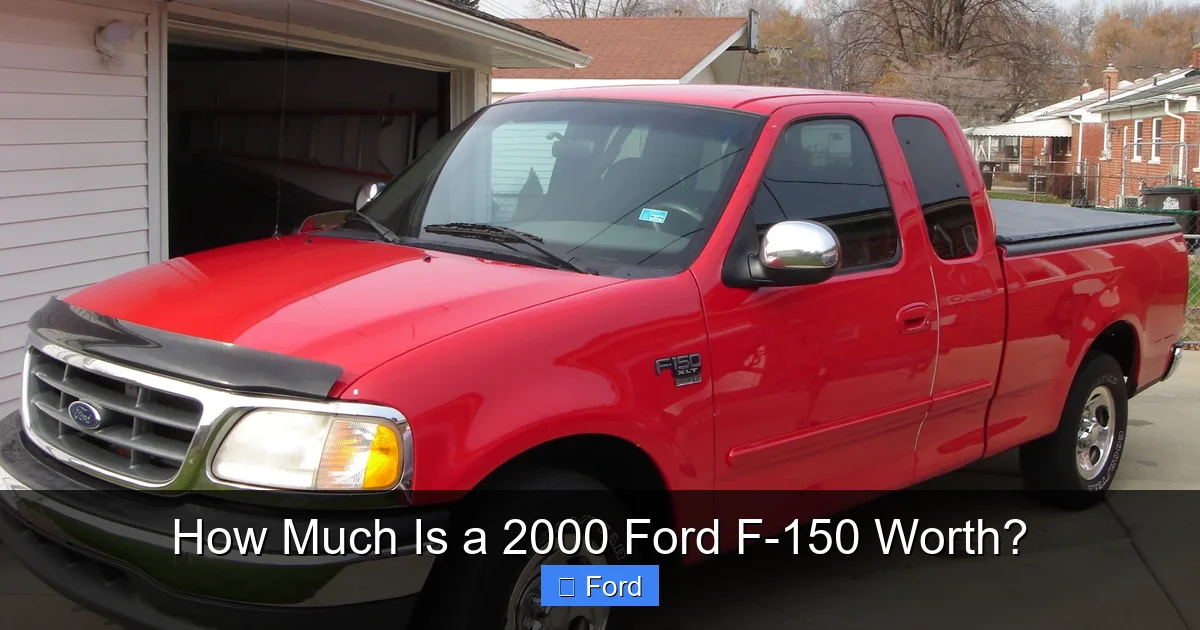
Visual guide about How Much Is a 2000 Ford F-150 Worth?
Image source: static.cargurus.com
Baseline Pricing Ranges (As of Late 2023/Early 2024)
Remember, these are broad strokes. A pristine local truck can sell for more than a rough one from a distant state.
- Project/Rough Condition (Non-Running, Major Rust): $500 – $1,500. These are for parts or dedicated restorers.
- Fair Condition (Running, Significant Issues/Rust): $1,500 – $2,500. Needs work but is a solid foundation.
- Good Condition (Running/Driving Well, Average Wear, Some Rust): $2,500 – $4,000. The most common “daily driver” price range. A decent XLT or XL 4×2 in this condition lives here.
- Very Good Condition (Clean, Well-Maintained, Low Rust, All Systems OK): $4,000 – $6,000. This is where you find the nicer XLT 4x4s and Eddie Bauers with 150k-200k miles.
- Excellent Condition (Low Mileage, Immaculate, Rust-Free, Full Service History): $6,000 – $8,000+. These are the unicorns. A sub-100k mile, garage-kept, 5.4L V8 4×4 SuperCrew Eddie Bauer can approach or exceed this.
Regional Price Variations
If you’re in Texas, Oklahoma, or the rural Midwest, a clean 4×4 F-150 is a necessity, and prices reflect that. In a major coastal city, the same truck might sit longer and sell for 10-20% less. Always search for sold listings on platforms like Facebook Marketplace in your zip code and neighboring areas to get the most accurate local price. This is more valuable than any national guide.
How to Determine YOUR Truck’s Exact Worth: A Practical Checklist
Whether you’re buying or selling, you need an objective assessment. Here’s a step-by-step process.
1. Start with the VIN and Online Appraisals
Find your Vehicle Identification Number (on the driver’s door jamb or dashboard). Plug it into KBB, NADA Guides, and Edmunds. This will give you a solid baseline based on the truck’s exact original configuration (engine, trim, etc.). Use the “Private Party” value for selling or buying from an individual. Adjust this baseline up or down based on your findings from the next steps.
2. Honestly Grade the Condition
Be brutally honest. Use the condition categories above. Does it have a “check engine” light? How much tread is on the tires? Is the bed dented or is the liner intact? Take high-quality, well-lit photos from every angle. Transparency here builds trust and leads to a faster, fairer sale.
3. Research Local “Sold” Listings, Not Just “For Sale”
This is the most critical step. On Facebook Marketplace, Craigslist, and even eBay Motors (filter for “Sold Items”), search for your exact year, make, model, engine, and trim in your state. See what similar trucks actually sold for, not just what their sellers are asking. An asking price is often 10-20% higher than a final sale price. This data is gold.
4. Factor in Recent Repairs and Upgrades
Have you just replaced the timing chains (a known expensive repair on the 5.4L), installed new tires, or put in a new transmission? Keep all receipts. These major, documented repairs add concrete value because they represent a $2,000+ expense the new owner won’t have. Similarly, aftermarket upgrades (like a nice tonneau cover or off-road tires) can add a small amount, but they are rarely worth their full installation cost.
Buying vs. Selling: Actionable Tips for Both Sides
Armed with knowledge, you can now navigate the market effectively.
For Buyers: How to Get the Best Deal
Your goal is to find a truck where the price reflects its true condition, not its emotional appeal.
- Never Pay the Asking Price: Start your offer 10-15% below the private-party KBB value for its condition, then negotiate from there.
- Pre-Purchase Inspection is Non-Negotiable: Spend $100-$200 on a mechanic’s inspection before you buy. It will reveal hidden issues (frame rot, transmission slippage) that can save you thousands or give you leverage to negotiate the price down.
- Target the “Good” Condition Trucks: The best value is often found in a well-maintained “Good” condition truck from a private owner who has kept all service records. Avoid the cheapest truck; it’s usually the most expensive in the long run.
- Consider a Higher-Trim, Higher-Mileage Truck: Sometimes, a 200,000-mile Eddie Bauer is a better buy than a 120,000-mile base XL. The higher initial build quality and better maintenance history of the premium trim can outweigh the mileage penalty.
For Sellers: How to Maximize Your Sale Price
You want to present your truck in the best possible light to justify your asking price.
- Clean It Thoroughly: Inside and out. A professional detail ($100-$200) can increase perceived value by $500+. Remove all personal items.
- Gather ALL Documentation: Service records, receipts for major repairs, original window sticker (if you have it), and the title. A documented history is your single biggest selling point.
- Fix the Small Stuff: Replace a cracked headlight, fix a window that doesn’t roll up, top off all fluids. These minor, cheap fixes eliminate buyer objections and keep your price firm.
- Price It Competitively from Day One: Check those local “sold” listings. Pricing it 5% below the market average will generate multiple inquiries and likely lead to a quick sale at or near your asking price. Overpricing it will cause it to sit and become “stale,” forcing you to drop the price later.
The Long Game: Ownership Costs and Residual Value
Buying a 2000 F-150 for $3,000 is one thing. Owning it for the next five years is another. Factor in these costs to understand its true worth to you.
Fuel Economy and Running Costs
Let’s be real: fuel economy is not this truck’s strong suit. The 5.4L V8 4×4 averages 14-16 MPG combined. The 4.2L V6 might eke out 17-18 MPG. At current gas prices, budget $200-$300 a month for fuel if you drive 1,000 miles. Insurance is typically affordable for a vehicle of this age. Maintenance is where you must be vigilant. The 5.4L has the aforementioned intake manifold issue. The 4R70W transmission is robust but can fail after 200k miles. Budget at least $1,000-$1,500 annually for maintenance and repairs on a well-used example. A well-cared-for truck will cost less to own than a neglected one.
How Does it Stack Up Against the Competition?
In the year 2000, the F-150’s main competitors were the Chevrolet Silverado 1500 and Dodge Ram 1500. The F-150 generally had an edge in ride comfort and interior design. From a value perspective today, all three hold similar ground in the used market. What about other vehicles from that year? For a similar price, you could buy a reliable sedan like a 2000 Nissan Maxima or a 2000 Toyota 4Runner. The Maxima offers far better fuel economy and comfort for families. The 4Runner, like the F-150, is a legendary SUV with exceptional off-road capability and durability, often holding value slightly better due to its cult following. Your choice depends entirely on need: the F-150 is the undisputed king of utility and towing capacity for the price.
Final Thoughts: Is a 2000 Ford F-150 a Good Value?
Absolutely, for the right person. The 2000 Ford F-150 represents a peak of affordability in the used truck market. You can get a capable, spacious, and repairable full-size pickup for less than the down payment on a new economy car. Its value proposition is simple: raw utility and American truck DNA for a minimal investment. However, that value evaporates quickly if you buy a neglected example. The $1,500 truck that needs a $3,000 transmission is a terrible deal. The $4,500 truck with a clean history and a new timing chain set is a brilliant one. Your job as a buyer or seller is to discern the difference. By focusing on the core drivers—engine, drivetrain, trim, and above all, condition—and by researching your local market with precision, you can confidently determine what any 2000 F-150 is truly worth. It remains one of the most honest, no-nonsense work vehicles you can buy for under $5,000, provided you go in with your eyes wide open.
Frequently Asked Questions
What is the most desirable 2000 Ford F-150 configuration for resale value?
The most desirable combination for resale is a 5.4L V8 engine, 4×4 drivetrain, SuperCrew cab, in an XLT or Eddie Bauer trim, with under 150,000 miles and minimal rust. This setup appeals to the broadest range of buyers who need space, power, and capability.
How much should I pay for a 2000 F-150 with over 200,000 miles?
For a truck with over 200,000 miles, the price should reflect the high likelihood of upcoming major maintenance. Expect to pay between $1,500 and $3,000, depending entirely on condition. A well-maintained, rust-free example with a documented service history can be worth the higher end, but only if you have a budget for repairs.
Is the 4.2L V6 engine in the 2000 F-150 reliable?
Yes, the 4.2L V6 is a very reliable, low-stress engine known for longevity, often surpassing 250,000 miles with basic maintenance. Its main drawback is lack of power, especially when loaded or for passing. It’s a good, economical choice for a light-duty truck user.
What are the most common problems I should look for?
Key areas to inspect are: rust on the frame and cab corners; the intake manifold for cracks (5.4L V8 only); transmission shifting quality (watch for slipping); any check engine lights (have codes read); and the operation of 4WD (if equipped). Also, test all electrical components like windows and locks.
How does the value of a 2000 F-150 compare to a 2007 F-150?
A 2007 F-150 is from the next generation and will be significantly more valuable, often by $3,000-$5,000 or more for comparable condition. The 2007+ models have more modern features, better fuel economy, and a more refined ride. You can learn more about the 2007 model’s value here.
Should I buy a 2000 F-150 for daily driving?
It depends on your priorities. It’s an affordable daily driver with great visibility and space. However, consider the poor fuel economy compared to modern vehicles, potential for costly repairs, and lack of modern safety features (like stability control). For a low-mileage, well-maintained example used for occasional work or as a second vehicle, it’s excellent. As a high-mileage, primary daily driver, the ownership costs can add up quickly.