
How to Fix Ford F150 Rear Sliding Window

Frustrated with a stuck, slow, or leaky Ford F150 rear sliding window? This guide breaks down the most common issues, from track jams to motor failures, and provides clear, actionable DIY repair steps. With basic tools and safety precautions, many fixes are manageable at home, potentially saving you hundreds. However, complex electrical faults or glass damage often require a professional’s touch to avoid costly mistakes.
Key Takeaways
- Diagnose First: Identify if the problem is mechanical (dirty tracks, worn rollers) or electrical (faulty motor, bad switch) before buying parts.
- Lubrication is Critical: Regular application of silicone spray to the window tracks prevents sticking and ensures smooth operation.
- Safety First: Always disconnect the vehicle’s battery before working on any electrical components like the window motor or switch.
- Screen Removal is Often Step One: Most repairs require taking out the window screen; learn the proper technique to avoid damage.
- Motor Replacement is a Common Fix: A failed motor is a frequent culprit; replacing it is a moderate DIY task with the right guidance.
- Seal Integrity Prevents Leaks: Inspect and maintain the rubber seals around the glass to keep water and dust out of your cab.
- Know Your Limits: Glass breakage, severe track damage, or complex wiring issues are best left to professional auto glass or mechanic shops.
📑 Table of Contents
Understanding Your Ford F150 Rear Sliding Window
That rear sliding window on your Ford F150 is a fantastic feature. It lets fresh air circulate through the cab without the wind noise of a fully open rear window. But when it starts to stick, grind, or leak, that convenience turns into a major annoyance. The good news is that many common problems with the Ford F150 rear sliding window are fixable by a competent DIYer with some patience and the right tools. This guide will walk you through everything you need to know, from how the system works to diagnosing the issue and performing the repair yourself.
How the Sliding Window Mechanism Works
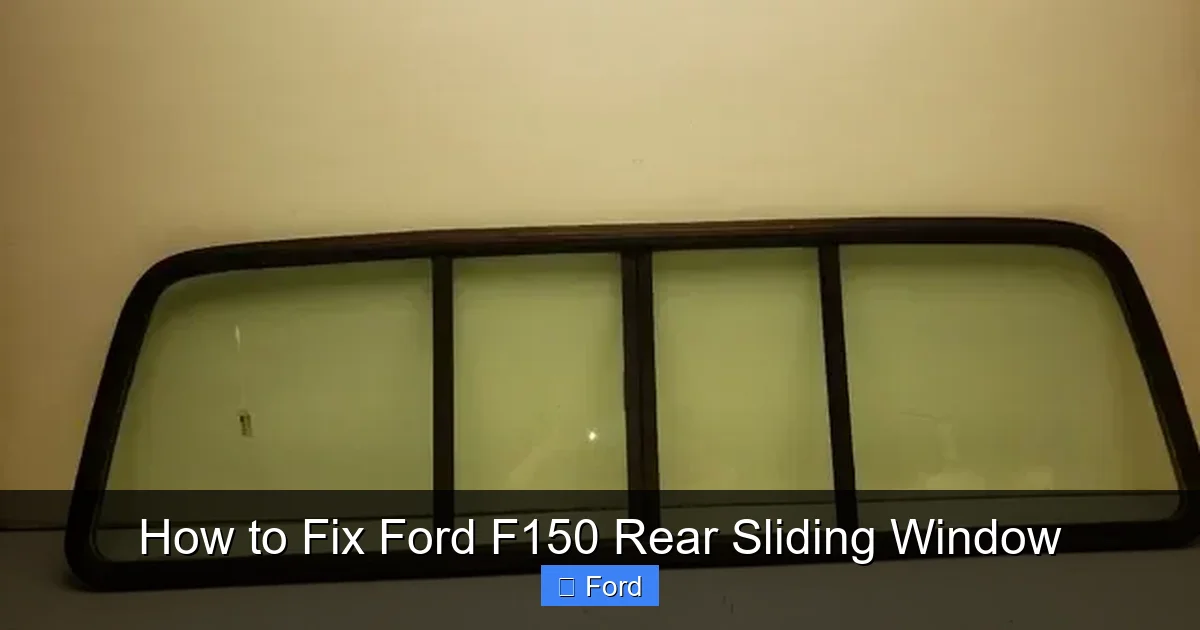
Your F150’s rear sliding window isn’t just a pane of glass in a track. It’s a coordinated system of several key parts. The glass itself sits in a sturdy frame. This frame has wheels or rollers at the bottom that glide along a metal track, which is bolted to the truck’s body. A small electric motor, usually located on one side of the window assembly, drives a regulator arm that pushes or pulls the window. This motor is controlled by a simple switch on the driver’s door panel or, in some models, a dedicated switch on the rear window itself. Finally, a flexible rubber seal surrounds the entire window frame, pressing against the truck body when closed to create a weathertight barrier. Understanding this layout helps you pinpoint where things go wrong.
Most Common Issues With Ford F150 Sliding Windows
Over years of use, dirt, grime, and wear take their toll. Here are the most frequent complaints we hear from F150 owners:
- Window Stuck or Won’t Move: This is the number one issue. It’s almost always caused by debris in the track, dried-out and dirty rollers, or a seized motor.
- Window Moves Very Slowly or Grinds: A sign of severely worn rollers, a binding track, or a motor that’s starting to fail.
- Excessive Noise (Squeaking, Grinding, Rattling): Typically indicates a lack of lubrication on the rollers/track or a loose/worn component in the regulator assembly.
- Water Leaks: Water finds its way inside during rain or car washes. The culprit is almost always cracked, shrunk, or misaligned weatherstripping seals.
- Condensation Between Glass Layers: If your window is a double-pane unit (common on newer models), this means the seal has failed and the insulating gas has escaped. This usually requires full glass replacement.
- Switch Failure: The window doesn’t respond at all to the switch, but you might hear the motor try to work. The switch itself can wear out or get corroded.
Diagnosing the Problem Before You Start
You can’t fix what you don’t understand. A proper diagnosis saves you from buying the wrong part and taking apart things you don’t need to. Start with the simplest checks and work your way to the more complex.
Visual guide about How to Fix Ford F150 Rear Sliding Window
Image source: fordmasterx.com
Symptom Checklist
- No movement, no sound: Likely an electrical issue—bad switch, blown fuse, broken wire, or a completely dead motor.
- No movement, but you hear a hum or click: The motor is trying to turn but can’t. This points to a mechanical bind—jammed track, broken regulator, or window off its track.
- Slow, jerky movement with noise: Dirty track and rollers, or a weak/dying motor.
- Leaks only when driving in rain: Pressure forces water past a compromised seal. Check the seal’s condition and how the window sits in the frame.
- Leaks when parked/washing: Could be a clogged drain channel (some models have them) or a major seal failure.
Essential Tools for Diagnosis and Repair
Gather these before you start to make the job smooth:
- Basic Hand Tools: A set of socket wrenches (usually 7mm, 8mm, 10mm), flathead and Phillips screwdrivers.
- Trim Removal Tools: Plastic pry tools are crucial to remove interior door panels and trim pieces without scratching paint or breaking plastic clips.
- Flashlight/Work Light: You’ll be looking into dark cavities.
- Multimeter: For testing electrical circuits to the switch and motor.
- Silicone-Based Lubricant: For tracks and rollers. Never use WD-40 as a long-term lubricant; it attracts dirt. Use a dedicated dry Teflon or silicone spray.
- Clean Rags and Glass Cleaner: For cleaning tracks and glass.
- Gloves and Safety Glasses: Always protect your hands and eyes.
Step-by-Step Repair Guide for Common Issues
Let’s get into the actual fixes. Always disconnect the black negative battery cable from the battery before starting any work on the window system. This prevents accidental short circuits.
Visual guide about How to Fix Ford F150 Rear Sliding Window
Image source: carglassadvisor.com
Fixing a Stuck or Slow Sliding Window (The Most Common Fix)
This is the best-case scenario and often solves the problem without any part replacement.
- Remove the Interior Trim Panel: Carefully pry off the door’s interior handle covers and any screws hidden under them. Then, using your trim tools, gently pop the plastic retaining clips around the perimeter of the door panel. Lift the panel up and off once all clips are free. Disconnect any wiring harnesses for the door lock and switch.
- Access the Window Mechanism: With the panel off, you’ll see the window motor and the track assembly. You may need to remove a small plastic splash shield for better access.
- Clean the Track Thoroughly: Use a rag and a stiff brush (an old toothbrush works) to scrub out all the old grease, dirt, and grit from the metal track. This is the most important step. Get it bone clean.
- Lubricate the Track and Rollers: Apply a light coat of silicone spray to the clean track. Then, find the small wheels/rollers on the bottom of the window frame. Use a cotton swab or small brush to work lubricant into the roller bearings if accessible.
- Test Before Reassembly: Reconnect the battery briefly and operate the window. It should move much more smoothly. If it’s still binding, the rollers may be worn out or the track is bent.
- Reassemble: Disconnect the battery again, reinstall the trim panel, and reconnect the battery.
Replacing a Faulty Window Motor
If cleaning doesn’t help and the motor makes no sound or just clicks, it’s likely dead.
- Access the Motor: Following the steps above to remove the door panel, locate the window motor. It’s usually bolted to the door frame with 2-3 bolts.
- Disconnect the Electrical Connector: Press the tab and pull the connector off the motor.
- Unbolt and Remove: Remove the bolts holding the motor. Carefully maneuver the motor out. It may be connected to the regulator arm with a clip or bolt.
- Install the New Motor: Position the new motor. If it comes with a new regulator arm, you may need to transfer the old one or install the new assembly. Bolt it in place securely.
- Reconnect and Test: Plug in the electrical connector. Reconnect the battery and test the window. Ensure it travels the full range smoothly and doesn’t bind.
Pro Tip: When buying a replacement motor, ensure it matches your exact F150 year and cab configuration. You can often find quality aftermarket or OEM remanufactured units.
Repairing or Replacing the Window Switch
A failed switch is a simple, inexpensive fix. If the window works from the driver’s door switch but not the rear switch (if equipped), the rear switch is bad. If it doesn’t work from either, the driver’s switch or the motor is suspect.
- Remove the Switch Panel: On the driver’s door, the switch panel is usually held by clips. Gently pry it up from the front or bottom. Some models have a small screw hidden under a trim cap.
- Disconnect and Remove: Lift the panel slightly and disconnect the wiring harness on the back. The switch module will come free.
- Test the Switch (Optional): You can test for continuity with a multimeter across the terminals for the window function while pressing the button. If there’s no connection, it’s bad.
- Install New Switch: If you’re replacing just the switch, it may pop out of the plastic holder. Snap the new one in. Otherwise, replace the entire module.
- Reconnect and Test: Plug the harness back in, snap the panel into the door, and test.
For those dealing with electrical issues, our guide on how to roll up a window with a broken switch offers valuable troubleshooting techniques for window circuits that apply across many vehicle makes.
Addressing Window Leaks and Seal Issues
Water inside the cab is a serious problem that can lead to mold and electrical issues.
- Identify the Leak Source: Dry the area thoroughly. Have an assistant spray water over the window area with a hose while you sit inside. Use a bright light to find where water enters.
- Inspect the Seal: Carefully peel back the rubber seal (it’s usually clipped in) and check for cracks, gaps, or areas where it’s pulled away from the glass or frame. Also, check where the seal meets the truck body.
- Clean and Prep: Clean the seal and the mating surfaces with alcohol to remove old adhesive and dirt.
- Apply Sealant: For small gaps or cracks, use a high-quality automotive window and weatherstrip sealant (like 3M Super Weatherstrip Adhesive). Apply a thin, continuous bead.
- Reinstall or Replace: If the seal is cracked or brittle, it must be replaced. You can often buy the seal separately. Press it firmly back into its channel, ensuring it’s seated evenly all around.
Removing and Reinstalling the Window Glass (Advanced)
Warning: This is a delicate, high-risk job. The glass is heavy and can break easily. If you’re not confident, stop here and call a professional. A broken window will cost far more than a labor charge.
If you must proceed, the general steps are: remove the interior trim to access the bolts holding the window frame to the regulator, carefully unbolt the frame from the regulator (support the glass!), then lift the glass out. Reinstallation is the reverse, but you must ensure the glass is perfectly seated in the frame and the regulator is correctly aligned before tightening bolts. Improper installation can cause binding or leaks.
For specific instructions on handling window components, our article on how to remove a screen from a sliding window details the careful disassembly process common to many sliding window systems.
When to Call a Professional
DIY is great, but some jobs have a high failure cost. Here’s when to put down the tools:
Visual guide about How to Fix Ford F150 Rear Sliding Window
Image source: i2.wp.com
Signs That Require Expert Help
- Broken or Cracked Glass: This is dangerous and requires special tools, adhesives, and training. Auto glass shops can replace the pane or the entire assembly safely and often with a warranty.
- Severely Bent or Damaged Track: If the metal track is twisted, it usually needs to be replaced, which involves more extensive disassembly.
- Regulator Mechanism Failure: If the internal gears or arms of the regulator are broken, replacing the whole assembly is needed. This can be tricky to align correctly.
- Complex Electrical Diagnostics: If you’ve checked the switch and motor and still have no power, there may be a broken wire in the door harness (a common failure point where the door opens and closes) or a faulty body control module. Tracing these circuits is for experts.
Finding a Qualified Auto Glass or Mechanic
Look for shops with good reviews and specific experience with Ford trucks or window repairs. An auto glass specialist is best for any glass or seal work. A general mechanic or Ford dealer can handle motor, regulator, and electrical issues. Always get an estimate upfront.
Preventive Maintenance to Extend Window Life
An ounce of prevention is worth a pound of cure. A little routine care keeps your sliding window operating smoothly for years.
Regular Cleaning and Lubrication Schedule
Twice a year, especially before winter and after spring, do the following:
- Remove the window screen (if equipped) for easy access to the track.
- Vacuum out the track with a crevice tool to remove loose debris.
- Scrub the track and visible rollers with a brush and mild cleaner.
- Wipe everything dry.
- Apply a silicone spray lubricant to the track. Operate the window several times to work it in. Wipe away any excess.
- Do not use grease or oil; they attract dirt and create an abrasive paste that wears parts faster.
Inspecting Seals and Weatherstripping
During your cleaning, run your fingers along the rubber seals. Look for:
- Cracks or splits.
- Areas that are hard, brittle, or shrunken.
- Sections that don’t lay flat against the glass or body.
Address small issues with sealant. Replace entire seal sections if they’re significantly degraded. Keeping the seals supple with a UV-protectant spray (like 303 Aerospace Protectant) once a year can significantly extend their life.
Cost Considerations: DIY vs. Professional Repair
Understanding the potential costs helps you decide if a DIY project is worth your time and effort.
Typical Parts Costs
- Window Motor: $80 – $250 for an aftermarket or remanufactured unit. OEM can be $300+.
- Window Switch: $20 – $100 for a replacement switch or control module.
- Track/Roller Kit: $30 – $100 if individual rollers or the entire track needs replacement.
- Weatherstrip Seal: $40 – $150 for the full perimeter seal, depending on the model.
- Glass Pane (if double-pane): $200 – $500+ for the glass unit alone.
Labor Savings and Potential Risks
Professional labor rates for this kind of work typically range from $85 to $130 per hour. A simple motor or switch replacement might take 1-2 hours, so you could save $170-$260 in labor by doing it yourself. However, the risk of breaking the expensive glass or misaligning components could turn a $150 DIY job into a $1,000 professional repair. Be honest about your skill level. For straightforward lubrication or switch replacement, DIY is a great win. For anything involving glass removal or major regulator work, the professional cost is often money well spent for the guarantee and safety.
Conclusion
Your Ford F150’s rear sliding window is a valuable feature that doesn’t have to become a source of frustration. By understanding its basic mechanics, you can accurately diagnose whether the issue is a simple lack of lubrication, a failed electrical component, or a deteriorating seal. Many of the most common problems—sticking, slow movement, and switch failure—are well within the scope of a dedicated DIYer with basic tools. Remember the golden rules: always disconnect the battery first, work slowly and methodically, and use proper trim tools to avoid damage. If at any point you feel unsure, especially when dealing with the glass itself or complex wiring, don’t hesitate to seek professional help. A small investment in a specialist can prevent a much larger bill. With regular maintenance—a good cleaning and silicone spray twice a year—you can keep that window sliding smoothly for the life of your truck.
FAQs
Why is my Ford F150 rear sliding window stuck and won’t move?
The most common cause is a buildup of dirt and dried lubricant in the metal track, which jams the rollers. A thorough cleaning and fresh silicone spray often fixes this. If that doesn’t work, the window motor may have failed.
How much does it cost to replace a Ford F150 sliding window motor?
The motor itself typically costs between $80 and $250 for an aftermarket part. If you replace it yourself, that’s the only cost. Having a shop do it will add 1-2 hours of labor, bringing the total to around $200-$500 depending on your location and shop rates.
Can I fix a leaky sliding window seal myself?
Yes, for minor leaks caused by dried-out or slightly misaligned seals. You can often clean the seal and apply a bead of automotive weatherstrip adhesive to reseal it. If the rubber is cracked or brittle, the seal will need to be replaced, which is a more involved but still possible DIY job.
What’s that grinding noise when I operate my sliding window?
A grinding or screeching noise almost always means the rollers or the track are dry and dirty, or the rollers are worn out. Start by removing the interior panel and thoroughly cleaning/lubricating the track. If the noise persists, inspect the rollers for flat spots or breakage and consider replacing them.
My window goes down but won’t come back up. What’s wrong?
This classic symptom usually points to a failing window motor. The motor may have enough strength to move the window in one direction (often down, as gravity assists) but not the other. Replacing the motor is the typical solution. Before replacing, check for any obstructions in the track that might be binding the window only on the up stroke.
Is it safe to remove the sliding window glass myself?
We do not recommend this for beginners. The glass is heavy, fragile, and improperly handling it can cause serious injury or a complete breakage, leading to a very expensive replacement. The bolts that hold the glass to the regulator must be loosened in a specific sequence while supporting the glass. This job is best left to professional auto glass technicians who have the proper tools and experience.
Frequently Asked Questions
What is How to Fix Ford F150 Rear Sliding Window?
How to Fix Ford F150 Rear Sliding Window is an important topic with many practical applications.