
How Many Miles Will a Dodge V10 Engine Last

The Dodge V10 engine, especially in the Ram 2500/3500 and Viper, is built for durability and can last 200,000 to 300,000 miles—or more—with proper care. Regular maintenance, quality oil, and attentive driving habits are key to unlocking its full potential.
Key Takeaways
- Typical lifespan: A well-maintained Dodge V10 engine can last 200,000 to 300,000 miles, with some reaching 350,000+ miles.
- Maintenance is critical: Oil changes every 3,000–5,000 miles, timely belt and hose replacements, and coolant flushes extend engine life.
- Driving habits matter: Avoiding excessive towing, hard acceleration, and short trips helps preserve engine health.
- Common issues to watch: Valve train noise, oil leaks, and EGR cooler failures can occur but are manageable with early detection.
- Use quality parts and fluids: Stick to OEM or high-quality aftermarket components and synthetic oil for best results.
- Regular inspections: Listen for unusual noises, monitor oil consumption, and check for leaks to catch problems early.
- Engine rebuilds are possible: Many high-mileage V10s are successfully rebuilt, offering another 150,000+ miles of reliable service.
📑 Table of Contents
How Many Miles Will a Dodge V10 Engine Last?
If you’re driving a Dodge Ram 2500 or 3500 with the legendary V10 engine—or lucky enough to own a Dodge Viper—you’re behind the wheel of one of the most robust powerplants ever built by Chrysler. Known for its deep growl, impressive torque, and industrial-strength design, the Dodge V10 has earned a reputation for longevity. But just how many miles will a Dodge V10 engine last?
The short answer? With proper care, a Dodge V10 can easily surpass 200,000 miles, and many owners report hitting 300,000 miles or more. Some well-maintained examples have even cracked the 350,000-mile mark. That’s not just impressive—it’s a testament to the engine’s overbuilt design and rugged engineering.
But don’t let that number fool you into thinking the V10 is maintenance-free. Like any high-performance engine, it demands attention, quality parts, and smart driving habits. Whether you’re using your V10 for heavy towing, daily commuting, or weekend drag racing, understanding what it takes to keep it running strong is essential.
In this guide, we’ll dive deep into the factors that influence the lifespan of a Dodge V10 engine, from maintenance routines to common issues and real-world examples. We’ll also share practical tips to help you get the most miles out of your V10—whether you’re driving a Ram truck or a Viper.
Understanding the Dodge V10 Engine
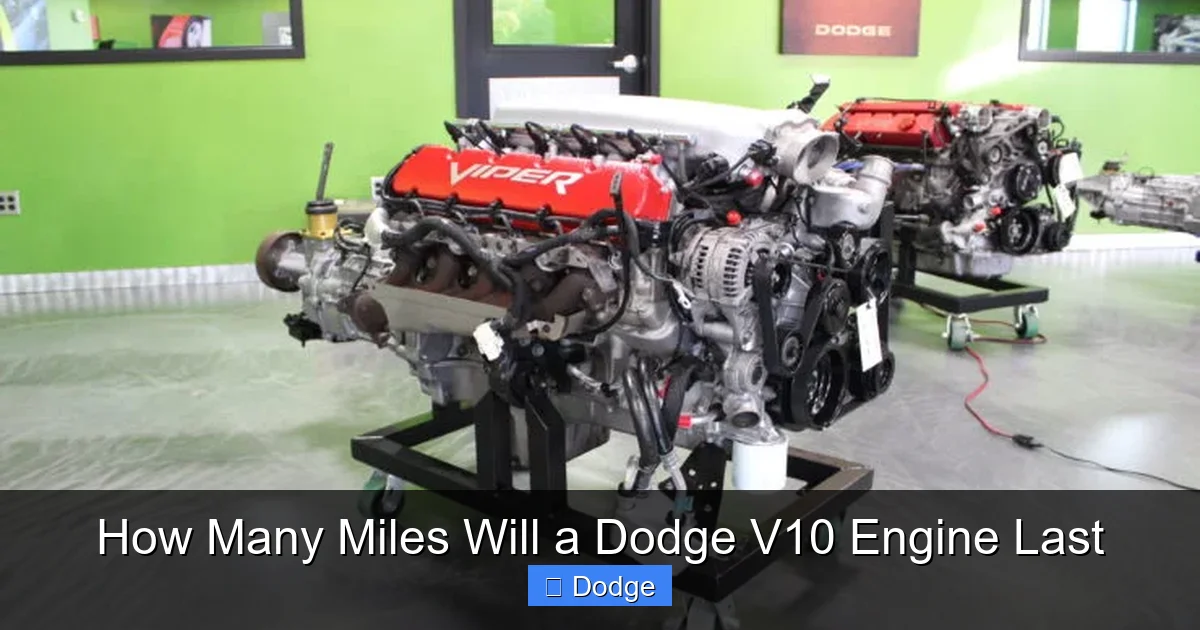
Visual guide about How Many Miles Will a Dodge V10 Engine Last
Image source: silodrome.com
Before we talk about longevity, let’s get familiar with the engine itself. The Dodge V10 was introduced in the mid-1990s and has been used in two main applications: the Dodge Ram 2500/3500 heavy-duty trucks and the Dodge Viper sports car.
Origins and Design
The Dodge V10, officially known as the 8.0L Magnum V10, was first launched in 1996 for the Ram 2500 and 3500 trucks. It was designed as a heavy-duty alternative to the V8, offering more torque and towing capacity. Built on the same platform as the Magnum V8, the V10 shares many components but features a longer block and ten cylinders for increased displacement and power.
In the Ram trucks, the V10 produces around 305–315 horsepower and a whopping 450–460 lb-ft of torque—numbers that were impressive for the late ’90s and early 2000s. This made it a favorite among contractors, farmers, and anyone needing serious hauling power.
The same basic engine was also used in the Dodge Viper, where it was tuned for performance rather than utility. In the Viper, the V10 produced anywhere from 400 to over 600 horsepower, depending on the model year and generation. Despite the different applications, the core architecture remains the same: cast-iron block, aluminum heads, and a pushrod valvetrain.
Why the V10 Is Built to Last
Several design features contribute to the V10’s durability:
– **Overbuilt Components:** The engine was designed with heavy-duty use in mind. The block, crankshaft, and connecting rods are thicker and stronger than those in typical V8s.
– **Simple Valvetrain:** The pushrod design has fewer moving parts than overhead cam engines, reducing the chance of failure.
– **Robust Cooling System:** The V10 runs hot, especially under load, but Dodge equipped it with a large radiator and efficient cooling system to manage heat.
– **Forged Internals (in some models):** Later Viper versions used forged pistons and connecting rods, further increasing strength.
These features make the V10 less prone to catastrophic failure and more forgiving of occasional neglect—though we don’t recommend testing that theory.
Real-World Mileage Examples
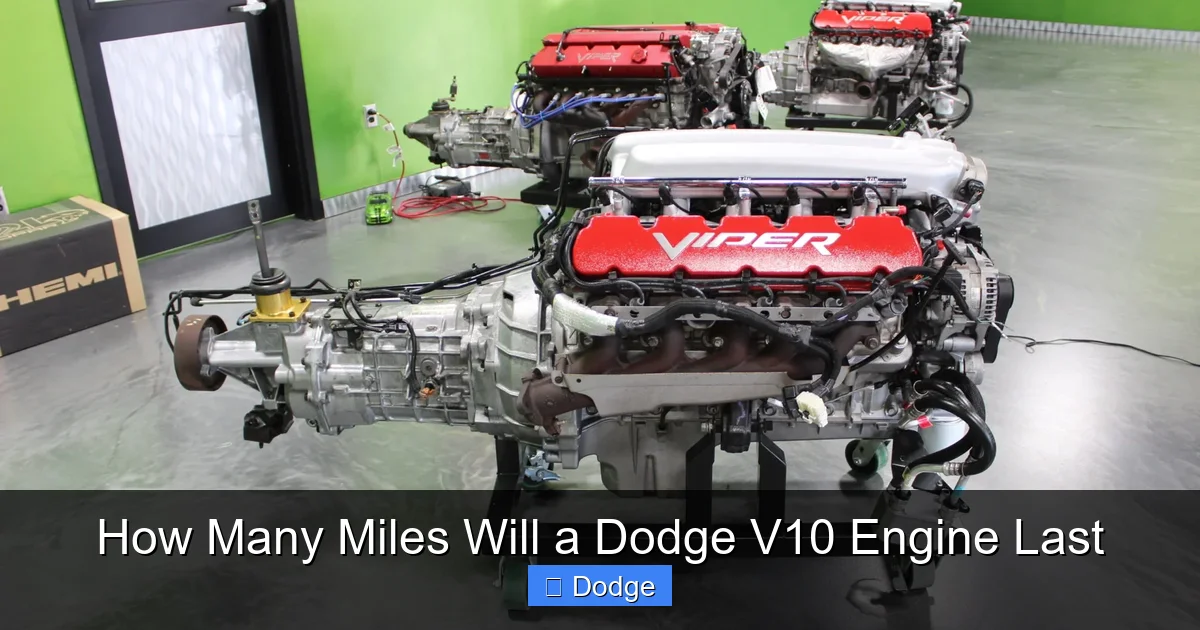
Visual guide about How Many Miles Will a Dodge V10 Engine Last
Image source: silodrome.com
Let’s look at some real-world examples to understand just how long these engines can last.
High-Mileage Ram Trucks
Many Dodge Ram 2500 and 3500 owners report driving their V10-powered trucks well beyond 250,000 miles. Online forums like DodgeTrucks.com and RamForum.com are filled with stories of owners hitting 300,000 miles with only routine maintenance.
One owner on RamForum shared that his 2001 Ram 3500 with the V10 reached 327,000 miles before needing a top-end rebuild. He attributed the longevity to regular oil changes, using synthetic oil, and avoiding excessive towing in extreme heat.
Another user mentioned driving his 1999 Ram 2500 to 285,000 miles with no major engine work—just oil changes, spark plugs, and belt replacements. He did note that the engine started using a quart of oil every 1,000 miles around the 250,000-mile mark, which is common as piston rings wear.
Viper Owners and Performance Use
The Viper’s V10 is subjected to much harsher conditions—high RPMs, track use, and aggressive driving. Yet even here, longevity is impressive.
A Viper owner on ViperAlley.com reported driving his 2003 Viper SRT-10 to 180,000 miles with only minor issues. He followed a strict maintenance schedule, used high-quality synthetic oil, and avoided prolonged high-RPM runs. He did replace the valve springs at 120,000 miles due to wear, but the engine remained strong.
Another example comes from a track-day enthusiast who rebuilt his Viper’s V10 at 150,000 miles not because it failed, but to upgrade internals for higher horsepower. The original engine had no major failures—just normal wear from performance use.
Fleet and Commercial Use
Some V10 engines have been used in commercial applications, such as utility trucks and delivery vehicles. One fleet manager reported that several of his 2000–2002 Ram 3500s with V10s averaged 275,000 miles before retirement. These trucks were maintained on strict schedules, with oil changes every 3,000 miles and inspections every 10,000.
These real-world examples show that the Dodge V10 is capable of exceptional longevity—especially when treated with care.
Factors That Affect Engine Longevity
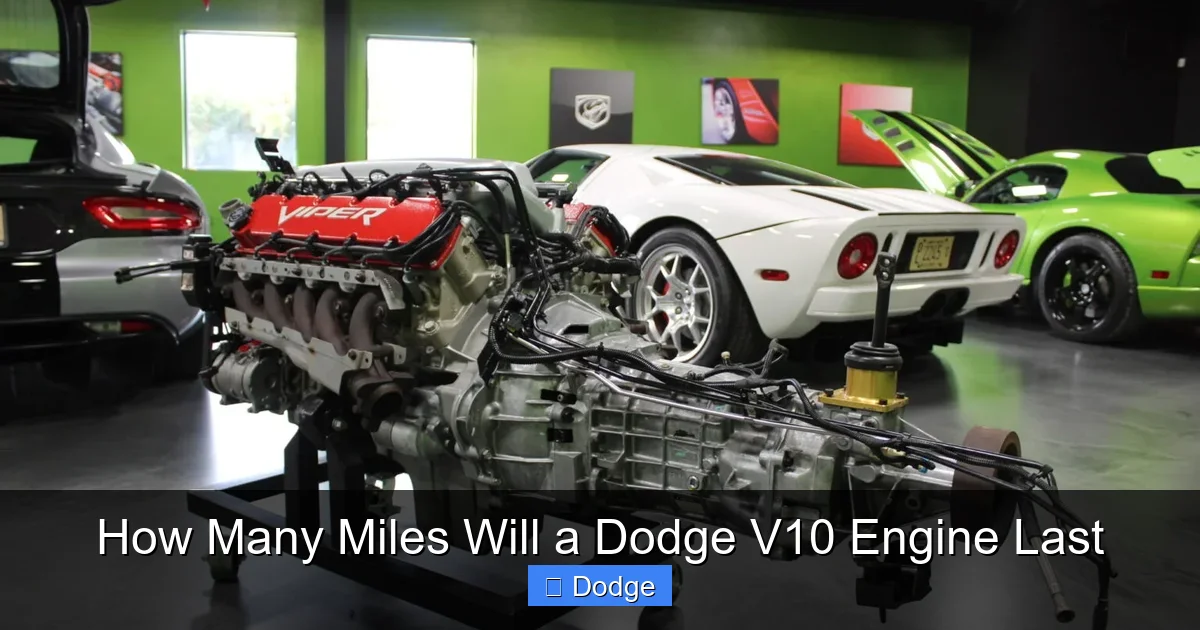
Visual guide about How Many Miles Will a Dodge V10 Engine Last
Image source: silodrome.com
While the V10 is built tough, several factors can shorten or extend its lifespan. Let’s break them down.
Maintenance Routine
Regular maintenance is the single biggest factor in how many miles your V10 will last. Skipping oil changes, ignoring warning lights, or using cheap fluids will accelerate wear.
– **Oil Changes:** The V10 should have its oil changed every 3,000 to 5,000 miles, especially if used for towing or in hot climates. Use high-quality synthetic oil (like Mobil 1 or Royal Purple) and a good filter.
– **Spark Plugs:** Replace spark plugs every 30,000 to 50,000 miles. The V10 uses 10 plugs, so it’s a bit more involved, but critical for performance.
– **Belts and Hoses:** Inspect serpentine belts and coolant hoses every 30,000 miles. Replace them if cracked or worn.
– **Coolant:** Flush the coolant every 50,000 to 100,000 miles. The V10 runs hot, and old coolant can lead to corrosion and overheating.
Driving Habits
How you drive has a huge impact on engine life.
– **Towing and Hauling:** The V10 is designed for heavy loads, but excessive towing—especially in hot weather or uphill—can overheat the engine. Use a transmission cooler and avoid overloading.
– **Short Trips:** Frequent short trips don’t allow the engine to reach optimal operating temperature, leading to moisture buildup and sludge. Try to take longer drives occasionally.
– **Hard Acceleration:** While the V10 loves to roar, constant hard launches and high-RPM driving increase wear. Drive smoothly when possible.
Environmental Conditions
Climate and driving environment matter.
– **Hot Climates:** High temperatures increase engine stress. Ensure your cooling system is in top shape and consider an aftermarket radiator if you live in a hot area.
– **Cold Climates:** Cold starts are hard on any engine. Use a block heater in winter and let the engine warm up gently.
– **Dusty or Dirty Areas:** If you drive on dirt roads, change the air filter more often to prevent dirt from entering the engine.
Quality of Parts and Fluids
Using cheap or incorrect parts can shorten engine life.
– **Oil:** Stick to synthetic oil with the correct viscosity (usually 5W-30 or 10W-30). Avoid off-brand oils.
– **Filters:** Use OEM or high-quality aftermarket filters (like Wix or K&N).
– **Coolant:** Use the correct Mopar coolant mix. Mixing coolants can cause corrosion.
Common Issues and How to Prevent Them
Even the best engines have weak points. Here are common V10 issues and how to avoid them.
Valve Train Noise
Many V10 owners report a “ticking” or “clattering” noise from the valve train. This is often due to worn lifters or pushrods.
– **Cause:** Over time, the hydraulic lifters can lose pressure or wear out, especially if oil changes are delayed.
– **Fix:** Replace lifters and pushrods. Use high-quality parts and ensure proper oil pressure.
– **Prevention:** Change oil regularly and use synthetic oil to keep lifters lubricated.
Oil Leaks
The V10 is prone to oil leaks, especially around the valve covers, oil pan, and rear main seal.
– **Cause:** Gaskets and seals degrade over time, especially with heat cycles.
– **Fix:** Replace leaking gaskets. Use OEM gaskets and torque them properly.
– **Prevention:** Inspect for leaks during oil changes. Don’t overtighten bolts.
EGR Cooler Failure (Ram Trucks)
In Ram trucks with the V10, the EGR (Exhaust Gas Recirculation) cooler can fail, leading to coolant leaks and overheating.
– **Cause:** The EGR cooler is subjected to extreme heat and can crack.
– **Fix:** Replace the EGR cooler. Some owners delete the EGR system entirely (check local laws).
– **Prevention:** Monitor coolant levels and watch for white smoke or sweet smell from the exhaust.
Overheating
The V10 runs hot, especially under load.
– **Cause:** Low coolant, faulty thermostat, clogged radiator, or failing water pump.
– **Fix:** Check coolant level, replace thermostat, flush radiator, and inspect water pump.
– **Prevention:** Maintain cooling system and avoid overloading in hot weather.
Excessive Oil Consumption
As the engine ages, it may start using more oil.
– **Cause:** Worn piston rings or valve seals.
– **Fix:** Top off oil regularly. Consider a top-end rebuild if consumption is severe.
– **Prevention:** Use high-quality oil and change it often to reduce wear.
Tips to Maximize Your V10’s Lifespan
Want to get the most miles out of your Dodge V10? Follow these practical tips.
Stick to a Maintenance Schedule
Create a maintenance log and stick to it. Here’s a basic schedule:
– Every 3,000–5,000 miles: Oil and filter change
– Every 15,000 miles: Air filter, fuel filter, inspect belts and hoses
– Every 30,000 miles: Spark plugs, PCV valve
– Every 50,000 miles: Coolant flush, inspect suspension
– Every 100,000 miles: Timing chain inspection (if applicable), transmission service
Use Synthetic Oil
Synthetic oil flows better in cold weather and resists breakdown in high heat. It’s especially important for the V10, which runs hot and has tight tolerances.
Warm Up the Engine
Let the engine idle for 30–60 seconds in cold weather before driving. This allows oil to circulate and reduces wear.
Avoid Overloading
The V10 can tow up to 12,000+ pounds, but don’t make it a habit. Overloading increases stress on the engine, transmission, and drivetrain.
Listen to Your Engine
Unusual noises, smells, or performance changes are warning signs. Address them early to avoid costly repairs.
Consider a Rebuild
If your V10 is high-mileage but still running, a rebuild can give it a new life. A quality rebuild with new pistons, rings, bearings, and gaskets can add 150,000+ miles.
Conclusion
So, how many miles will a Dodge V10 engine last? The answer is clear: with proper care, it can last 200,000 to 300,000 miles—and often much more. Whether you’re driving a Ram truck or a Viper, this engine is built to endure.
The key to longevity is consistent maintenance, quality parts, and smart driving habits. Don’t skip oil changes, ignore leaks, or push the engine too hard without preparation. Treat your V10 right, and it will reward you with decades of reliable service.
And if you’re shopping for a used V10-powered vehicle, don’t be scared off by high mileage. A well-documented maintenance history is more important than the odometer reading. Many of these engines are just getting warmed up at 200,000 miles.
In the end, the Dodge V10 isn’t just an engine—it’s a legend. And with the right care, it can keep roaring for hundreds of thousands of miles.
Frequently Asked Questions
How many miles can a Dodge V10 engine last?
A well-maintained Dodge V10 engine can last 200,000 to 300,000 miles, with some examples reaching 350,000 miles or more. Longevity depends on maintenance, driving habits, and environmental conditions.
What oil should I use in a Dodge V10?
Use high-quality synthetic oil, such as 5W-30 or 10W-30, depending on climate. Brands like Mobil 1, Royal Purple, or Amsoil are recommended for optimal protection.
Is the Dodge V10 reliable?
Yes, the Dodge V10 is known for its reliability and durability, especially in Ram trucks. It’s overbuilt and designed for heavy-duty use, making it one of the most dependable engines of its era.
What are common problems with the Dodge V10?
Common issues include valve train noise, oil leaks, EGR cooler failure (in trucks), and excessive oil consumption. Most can be prevented with regular maintenance.
Can a Dodge V10 be rebuilt?
Absolutely. Many high-mileage V10 engines are successfully rebuilt with new pistons, rings, bearings, and gaskets, extending their life by 150,000 miles or more.
Is the V10 good for towing?
Yes, the Dodge V10 is excellent for towing, with up to 12,000+ pounds of capacity in Ram trucks. Just avoid overloading and ensure the cooling system is in good condition.