How Many Honda Civics Were Made

Contents
- 1 Key Takeaways
- 2 📑 Table of Contents
- 3 The Genesis and Meteoric Rise (1972-1980s)
- 4 Production by the Millions: The Modern Era (1990s-Present)
- 5 The Global Assembly Line: Where Civics Are Made
- 6 Why So Many? The Alchemy of Civic Success
- 7 Context and Comparison: How Does 27+ Million Stack Up?
- 8 The Future: Electrification and the Next Chapter
- 9 Conclusion: More Than a Number
- 10 Frequently Asked Questions

Car Interior LED Light

Diesel Fuel Additive

Trunk Organizer

Engine Flush Cleaner
Over 27 million Honda Civics have been produced worldwide since its 1972 debut, making it one of the best-selling cars of all time. This iconic compact has been built across multiple continents for over five decades, with annual production often exceeding 500,000 units. Its combination of reliability, efficiency, and value is the key driver behind these monumental production figures.
Have you ever been stuck in traffic, looked around, and realized you’re surrounded by Honda Civics? You’re not imagining things. The Honda Civic is more than just a car; it’s a global institution. From student commuters to family sedans and tuner culture icons, the Civic’s footprint on roads worldwide is undeniable. But just how many of these ubiquitous vehicles have rolled off assembly lines? The answer is a number so large it’s almost difficult to comprehend. We’re talking about a production legacy that spans five decades, multiple continents, and over 27 million units. This article dives deep into the staggering production history of the Honda Civic, exploring not just the “how many” but the “why” behind one of the most successful automobiles ever made.
Understanding Civic production isn’t just a trivia exercise. It’s a window into automotive manufacturing strategy, global economics, and consumer behavior. High production volume allows Honda to optimize costs, ensure parts availability for decades, and maintain a strong resale value—factors that directly benefit every Civic owner and buyer. Whether you’re a current owner curious about your car’s heritage, a potential buyer assessing the model’s longevity, or an auto enthusiast fascinated by industrial scale, this comprehensive breakdown will answer your questions and then some.
Key Takeaways
- Total Production: An estimated 27+ million Honda Civics have been manufactured globally from 1972 through 2023.
- Annual Volume: At its peak, Honda produced over 800,000 Civics in a single year, consistently ranking it among the world’s top-selling vehicles.
- Generational Impact: The 6th generation (1996-2000) and 8th generation (2006-2011) are historically the highest-produced individual generations.
- Global Footprint: Civics have been assembled in at least 16 countries, including Japan, the USA, Canada, the UK, Brazil, and China.
- Market Dominance: It has been the best-selling car in the United States for numerous years and a top-seller in over 60 countries.
- Reliability = Longevity: The model’s famed durability, with many engines and transmissions lasting well beyond 200,000 miles, fuels sustained demand and thus high production volumes.
📑 Table of Contents
- The Genesis and Meteoric Rise (1972-1980s)
- Production by the Millions: The Modern Era (1990s-Present)
- The Global Assembly Line: Where Civics Are Made
- Why So Many? The Alchemy of Civic Success
- Context and Comparison: How Does 27+ Million Stack Up?
- The Future: Electrification and the Next Chapter
- Conclusion: More Than a Number
The Genesis and Meteoric Rise (1972-1980s)
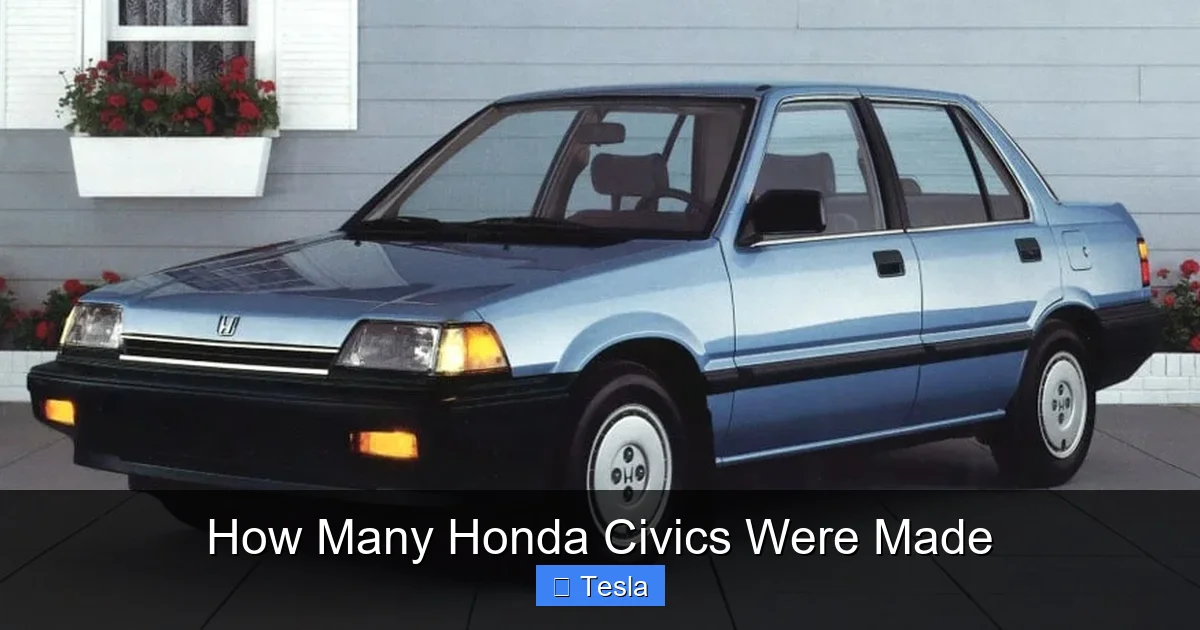
To appreciate the production numbers, we must start at the beginning. The Honda Civic was born from necessity. In the early 1970s, the oil crisis was reshaping the automotive world. Consumers desperately wanted fuel-efficient, reliable, and affordable transportation. Honda, already a respected motorcycle and small-engine manufacturer, answered with the first-generation Civic in 1972. It was revolutionary for its time: a front-wheel-drive, transversely mounted engine design that maximized interior space in a tiny package.
First Generation (1972-1979): Laying the Foundation
The original Civic (code-named SB) was a modest success, but its real impact came with the introduction of the CVCC (Compound Vortex Controlled Combustion) engine in the 1975 model year. This innovative engine met stringent U.S. emissions standards without needing a catalytic converter, a massive selling point. Production for this first generation, across various body styles (sedan, hatchback, wagon), is estimated at approximately 1.8 million units. While small by today’s standards, this proved the concept and established Honda’s reputation for engineering brilliance.
Second and Third Generations (1979-1987): Going Global
The second generation (1979) saw the Civic grow slightly and become more refined. But it was the third generation (1984) that truly exploded in popularity. This gen introduced the iconic “double-wishbone” suspension and the sporty Si (Sport injected) trim. The design was more aerodynamic, and the lineup expanded to include the popular CRX coupe. Production soared. For the entire 1980s decade, Honda likely produced well over 5 million Civics. The car was no longer just an economy model; it was a desirable, fun-to-drive global commodity. Honda began expanding its manufacturing footprint outside Japan, with plants in the U.S. (Ohio, starting 1982) and Canada ramping up production to meet local demand and avoid import tariffs.
Production by the Millions: The Modern Era (1990s-Present)
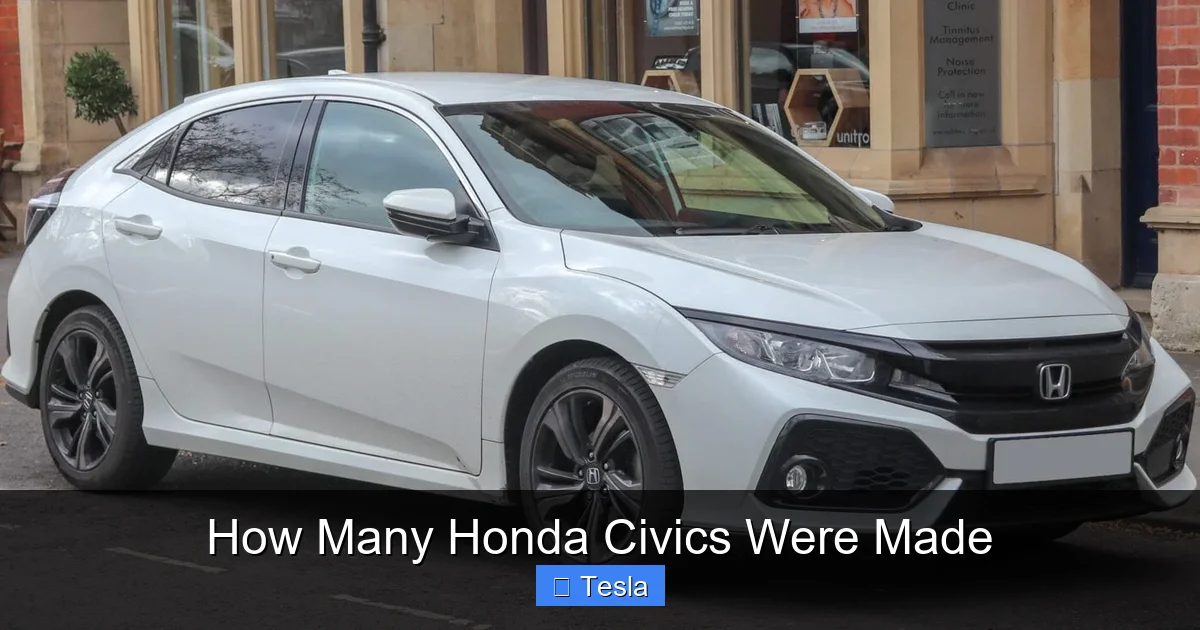
The 1990s and 2000s represent the Civic’s absolute peak in terms of annual production volume and total units built. This era saw the model become the default choice for a generation of drivers and solidify its status as a worldwide best-seller.

Visual guide about How Many Honda Civics Were Made
Image source: oldest.org
The 6th Generation (1996-2000): A Peak Year
Often cited by industry analysts as the highest-produced single generation, the sixth-gen Civic was a masterclass in hitting a market sweet spot. It offered a clean, modern design, excellent fuel economy, and a range from basic to the high-performance Type R (in Japan and Europe). With production spanning multiple plants in Japan, the U.S., Brazil, and Thailand, estimates suggest over 3 million units of this generation alone were built. The U.S. market alone accounted for a massive share, with the sedan and coupe dominating rental fleets and suburban driveways.
The 8th Generation (2006-2011): Redefining the Compact
After a controversial (but still popular) seventh generation, the eighth-gen Civic returned to a more sophisticated, upscale feel with a higher-quality interior. It was also larger, blurring the lines between compact and midsize. This generation’s broad appeal, combined with the booming pre-2008 economy, led to another production surge. Honda’s U.S. plants in Greensburg, Indiana, and East Liberty, Ohio, were running at full capacity. Global production for this generation is conservatively estimated at another 3 million+ units.
Consistent High-Volume Output
It’s not just about peaks. The Civic’s genius is in its consistency. From the early 2000s through the late 2010s, annual global production consistently hovered between 500,000 and 800,000 units. To put that in perspective, that’s often more than the total annual production of entire brands like Porsche or Ferrari. In many calendar years, the Civic was either the #1 or #2 best-selling car in the United States, frequently battling the Toyota Corolla for the top spot globally. This relentless production schedule is a testament to its unwavering demand.
The Global Assembly Line: Where Civics Are Made
The “how many” is inextricably linked to the “where.” Honda’s global manufacturing strategy for the Civic is a case study in localization. Building the car in or near its major markets reduces shipping costs, avoids import taxes, and allows for regional specification tweaks.
Visual guide about How Many Honda Civics Were Made
Image source: oldest.org
North American Powerhouse
The United States and Canada are the largest markets for the Civic and also major production centers. Key plants include:
- Greensburg, Indiana (HMIN): The primary U.S. production site for the current 11th-generation Civic sedan and previously the 10th-gen. It’s one of Honda’s largest auto plants worldwide.
- East Liberty, Ohio (HMA): Historically a Civic plant (7th, 8th, 9th gens), it now focuses on other models but was a critical contributor to the high-production 2000s and 2010s.
- Alliston, Ontario (HCM): Honda of Canada Manufacturing has produced Civics for decades, serving the Canadian market and exporting.
These North American plants alone have produced tens of millions of Civics.
International Hubs
The network extends far beyond North America:
- Japan: The original home. Plants in Suzuka and others built the first Civics and continue to produce certain variants (like the Type R) for global export.
- United Kingdom (Swindon): This massive plant produced Civics for the European market from the 1990s until its closure in 2021. It was a cornerstone of Honda’s European strategy.
- Asia-Pacific: Plants in Thailand, Indonesia, Malaysia, China, and Taiwan serve booming regional markets with locally-spec’d models.
- Latin America: Brazil (Sumaré) and Argentina have long been production centers for Civics tailored to South American tastes and regulations.
This distributed model means a “Civic” in Brazil might have a different engine or feature set than one in Ohio, but they all count toward the monumental global total.
Why So Many? The Alchemy of Civic Success
The production numbers didn’t happen by accident. The Civic’s success is a perfect storm of factors that Honda meticulously cultivated.

Visual guide about How Many Honda Civics Were Made
Image source: carpursuits.com
Unmatched Reliability and Low Cost of Ownership
For decades, the Civic has topped reliability surveys from J.D. Power, Consumer Reports, and others. Its simple, efficient engines (like the legendary D-series and later the K-series) are famously robust. This reputation means buyers trust it will last for 200,000+ miles with proper maintenance. That long-term value proposition drives fleet sales (rental car companies, corporate fleets) and used-car demand, which in turn justifies high initial production volumes. Speaking of maintenance, the Civic’s straightforward design keeps repair costs low. For instance, routine tasks like an oil change use a standard amount of oil—you can easily look up how many quarts your specific Civic takes online—and common parts like air filters and wipers are inexpensive and ubiquitous. This ecosystem of affordability is a direct result of its massive production scale.
Versatility and Broad Appeal
Honda didn’t just make one Civic. They made a *family* of Civics. Over the years, the lineup has included:
- Economy sedans and coupes
- Sporty Si models
- High-performance, limited-production Type Rs
- Practical hatchbacks and wagons
- Even a Civic-based del Sol convertible
This “something for everyone” approach means the Civic isn’t competing in just one niche; it’s competing across multiple segments simultaneously, dramatically expanding its potential market and production runs.
Cultural and Motorsport Influence
The Civic’s image was turbocharged by its dominance in touring car racing and its adoption by the aftermarket tuner scene, especially the 1990s Integra and Civic Si. This “cool factor” created a halo effect, driving sales of even the most basic models. Young buyers wanted a Civic because it was a blank canvas for modification. This cultural penetration created a self-sustaining demand cycle that few other economy cars have ever achieved.
Context and Comparison: How Does 27+ Million Stack Up?
Twenty-seven million is an abstract number. Let’s put it in context with other automotive giants.
Against the Toyota Corolla
The Civic’s eternal rival is the Toyota Corolla, the only car widely believed to have sold more units (over 50 million across all nameplates). However, it’s crucial to note that “Corolla” production includes many models sold under different names (like the Sprinter) and spans a longer period (first produced in 1966 vs. Civic’s 1972 start). When comparing apples to apples—modern compact sedans—the Civic is arguably the most successful single nameplate in its class for the last 30 years. The scale of both, however, is mind-boggling. For perspective, the total population of Australia is about 26 million.
Against Performance and Luxury Icons
Compare the Civic’s numbers to beloved sports cars. The Toyota Supra, a legendary performance machine, had total production across all generations estimated at around 1.2 million units. The entire Porsche 911 lineage has produced about 1.2 million cars. The Civic has outsold these icons by a factor of more than 20 to 1. This isn’t a knock on the Supra or 911; it highlights the Civic’s unique position as a high-volume, mass-market product versus a specialized, low-volume one. Even a high-volume luxury brand like BMW sold its 10 millionth car in 2016—a milestone Honda likely passed for the Civic alone in the early 2000s.
The Fleet Factor
A significant, often overlooked contributor to Civic production numbers is the rental car and corporate fleet industry. The Civic’s low purchase price, excellent fuel economy, and legendary reliability make it a favorite for fleets. A single large rental company can order tens of thousands of Civics at a time, all at once, which creates massive, predictable production runs that manufacturers love. This fleet sales channel is a key reason for its consistently high annual totals, especially in the 1990s and 2000s.
The Future: Electrification and the Next Chapter
What does the future hold for Civic production numbers? The answer lies in electrification. The 11th-generation Civic (2022+) is primarily a gasoline-powered model, but Honda has announced the Civic will be the first model line to be fully electrified in North America, with hybrid and potentially fully electric variants becoming standard. This transition will impact production in several ways.
Hybrid Production and New Platforms
The current hybrid Civic is built on the same assembly lines as its gasoline counterpart, leveraging existing high-volume infrastructure. As hybrid demand grows, the proportion of hybrids on those lines will increase. A fully electric Civic, likely built on a dedicated EV platform, might initially have lower production volumes due to new tooling and battery supply constraints. However, Honda’s commitment and the model’s importance suggest it will aim for similarly high volumes once the EV transition matures.
Sustaining the Legacy
Even as the powertrain changes, the core Civic formula—efficient, reliable, spacious, and affordable transportation—remains. The production legacy is not just about internal combustion engines; it’s about a nameplate that has earned immense consumer trust. That trust will be the foundation for whatever comes next. While the 27+ million figure may stand as the final tally for the pure gasoline/diesel era, the Civic’s production story is far from over. It is transitioning from being the world’s best-selling gas compact to potentially becoming its best-selling electrified compact.
Conclusion: More Than a Number
So, how many Honda Civics were made? The best available data points to a figure exceeding 27 million units as of 2023, with production continuing daily. This number represents a staggering achievement in industrial manufacturing and a testament to a product that consistently met the evolving needs of hundreds of millions of people. It’s a story of engineering pragmatism meeting market demand, of a car that started as an oil-crisis solution and became a cultural touchstone.
For you, the driver, this production history has real-world implications. That massive volume means your Civic’s parts are plentiful and cheap. It means mechanics know it inside and out. It means your car holds its value better than many less-produced peers. And it means you’re part of a vast, global community of owners. The next time you see another Civic on the road, remember—you’re not just seeing a common car. You’re seeing one chapter in the story of the most-produced single-nameplate car in modern automotive history. That’s a legacy worth appreciating, whether your Civic is a 1975 CVCC or a 2024 hybrid. Its production numbers are a direct reflection of its unparalleled success as a tool for everyday life, built for the world, by the world.
Frequently Asked Questions
What is the exact total number of Honda Civics ever made?
Honda has not released an official, precise cumulative total. Industry estimates and annual production data suggest over 27 million Civics have been produced globally since 1972. This makes it one of the best-selling car nameplates in history.
Which generation of Honda Civic was produced in the highest numbers?
Most analysts point to the sixth generation (1996-2000) as the single highest-produced generation, with estimates exceeding 3 million units. The eighth generation (2006-2011) is a close second. These gens benefited from peak production capacity and exceptionally high North American demand.
How many Honda Civics are made each year on average?
In its modern peak years (roughly 2000-2017), annual global Civic production consistently ranged from 500,000 to over 800,000 units. In recent years, with market shifts and plant closures (like Swindon, UK), the annual average is likely between 400,000 and 600,000, still an enormous volume.
In how many countries are Honda Civics manufactured?
Civics have been assembled in at least 16 countries throughout their history. Major current production sites include the United States, Canada, Japan, Thailand, and China. Historically, significant production also occurred in the United Kingdom, Brazil, and several other Asian and Latin American nations.
What was the best single sales year for the Honda Civic?
The Civic’s best single sales year in the United States—its largest market—was 2017, with over 377,000 units sold. Globally, production peaked around the mid-2000s, with Honda likely producing well over 700,000 Civics in a single calendar year during that period.
Why has the Honda Civic been produced in such high volumes for so long?
Three key factors: unmatched reliability that builds long-term trust, a versatile lineup that appeals to economy buyers, families, and enthusiasts, and a global manufacturing strategy that builds cars close to their markets. This combination creates relentless, predictable demand that justifies massive, sustained production runs.