How Many Catalytic Converters Does a Nissan Versa Have?

Contents
- 1 Key Takeaways
- 2 📑 Table of Contents
- 3 What Is a Catalytic Converter and Why Does It Matter?
- 4 How Many Catalytic Converters Does a Nissan Versa Have?
- 5 Location and Design of the Catalytic Converter in the Nissan Versa
- 6 Replacement Costs and What to Expect
- 7 Legal and Environmental Considerations
- 8 Tips for Maintaining Your Nissan Versa’s Catalytic Converter
- 9 Conclusion
- 10 Frequently Asked Questions



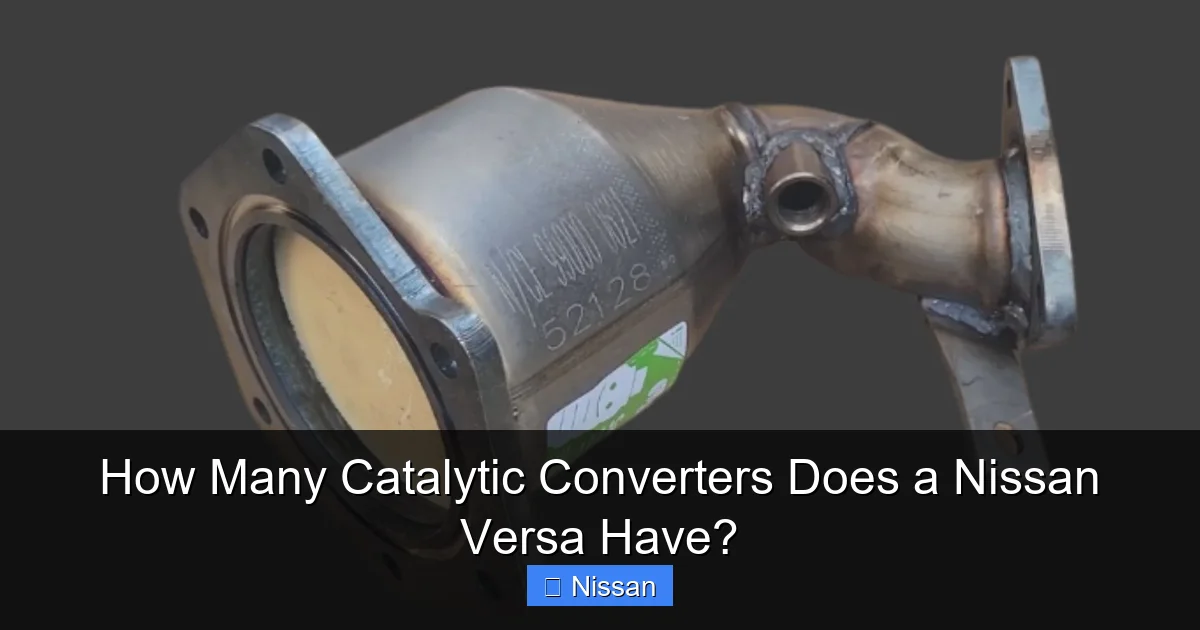
The Nissan Versa typically has one catalytic converter, though some models with dual exhaust systems may feature two. Understanding your Versa’s setup helps with maintenance, emissions testing, and repair costs. This guide breaks down everything you need to know.
If you’re a Nissan Versa owner—or thinking about becoming one—you’ve probably wondered about the inner workings of your car’s emissions system. One component that often raises questions is the catalytic converter. It’s not something you see every day, but it plays a crucial role in keeping your car eco-friendly and street-legal. So, how many catalytic converters does a Nissan Versa have?
The short answer? Most Nissan Versa models come equipped with just one catalytic converter. But as with many things in the automotive world, there are exceptions. Depending on the year, engine type, and trim level, some Versa variants might have a slightly different setup. Understanding this difference isn’t just about satisfying curiosity—it can impact everything from maintenance schedules to repair costs and emissions compliance.
In this comprehensive guide, we’ll dive deep into the world of catalytic converters in the Nissan Versa. We’ll explore why these devices matter, how they work, where they’re located, and what happens when they fail. Whether you’re troubleshooting a check engine light or planning a long-term ownership strategy, this article will give you the knowledge you need to stay informed and in control.
Key Takeaways
- Most Nissan Versa models have one catalytic converter: The majority of Versa trims and engine configurations use a single catalytic converter located in the exhaust system.
- Dual catalytic converters are rare but possible: Some high-performance or special edition models with dual exhaust setups may include two converters, though this is uncommon in the standard Versa lineup.
- Location matters for diagnosis and repair: The catalytic converter is usually found under the vehicle, between the engine and the muffler, making it accessible but vulnerable to damage.
- Emissions compliance depends on converter function: A failing catalytic converter can cause your Versa to fail emissions tests and trigger the check engine light.
- Replacement costs vary by model and labor: Expect to pay between $800 and $2,500 for a new catalytic converter, depending on the year, engine size, and whether it’s OEM or aftermarket.
- Regular maintenance helps prolong converter life: Avoiding engine misfires, using quality fuel, and addressing check engine lights promptly can prevent premature failure.
- Tampering with catalytic converters is illegal: Removing or disabling the converter violates federal and state emissions laws, even if the car runs fine.
📑 Table of Contents
- What Is a Catalytic Converter and Why Does It Matter?
- How Many Catalytic Converters Does a Nissan Versa Have?
- Location and Design of the Catalytic Converter in the Nissan Versa
- Replacement Costs and What to Expect
- Legal and Environmental Considerations
- Tips for Maintaining Your Nissan Versa’s Catalytic Converter
- Conclusion
What Is a Catalytic Converter and Why Does It Matter?
Before we get into the specifics of the Nissan Versa, let’s take a step back and understand what a catalytic converter actually does. Think of it as your car’s personal pollution filter. Every time your engine burns fuel, it produces exhaust gases—some of which are harmful to the environment and human health. These include carbon monoxide, nitrogen oxides, and unburned hydrocarbons.
The catalytic converter’s job is to convert these toxic gases into less harmful substances before they exit the tailpipe. It does this through a series of chemical reactions facilitated by precious metals like platinum, palladium, and rhodium coated on a ceramic honeycomb structure inside the unit. The result? Cleaner emissions that meet federal and state environmental standards.
For Nissan Versa owners, this means the catalytic converter isn’t just a piece of hardware—it’s a legal requirement. In most U.S. states, vehicles must pass emissions testing to be registered and driven legally. A malfunctioning or missing catalytic converter will almost certainly cause your car to fail this test. Plus, modern vehicles like the Versa are equipped with onboard diagnostics (OBD-II) systems that monitor the converter’s efficiency. If something’s off, the check engine light will come on, and you’ll get a trouble code like P0420 (“Catalyst System Efficiency Below Threshold”).
How the Catalytic Converter Works
The catalytic converter operates in two main stages. First, the reduction catalyst uses platinum and rhodium to break down nitrogen oxides into nitrogen and oxygen. Then, the oxidation catalyst uses platinum and palladium to convert carbon monoxide and unburned hydrocarbons into carbon dioxide and water vapor. This two-step process happens at high temperatures—typically between 600°F and 1,000°F—which is why the converter is placed close to the engine in the exhaust manifold or downpipe.
In the Nissan Versa, this process is essential for maintaining fuel efficiency and reducing environmental impact. The Versa is known for its affordability and fuel economy, and a properly functioning catalytic converter helps ensure that every drop of gas is used efficiently without producing excessive pollution.
Why the Number of Catalytic Converters Matters
Now, you might be wondering: why does it matter how many catalytic converters a car has? After all, as long as the emissions are clean, does the count really make a difference?
The answer is yes—especially when it comes to diagnostics, repairs, and resale value. If your Versa has one converter and it fails, you’ll know exactly what needs replacing. But if it has two—say, one for each exhaust bank on a V6 or turbocharged engine—you’ll need to identify which one is faulty. This can complicate troubleshooting and increase labor costs.
Moreover, some high-performance or luxury vehicles use multiple converters to handle higher exhaust volumes or to meet stricter emissions standards. While the Nissan Versa isn’t typically in that category, understanding the possibility helps you stay informed, especially if you’re looking at a used model with modifications or a special trim.
How Many Catalytic Converters Does a Nissan Versa Have?
Visual guide about How Many Catalytic Converters Does a Nissan Versa Have?
Image source: rxmechanic.com
Let’s get to the heart of the matter: how many catalytic converters does a Nissan Versa have?
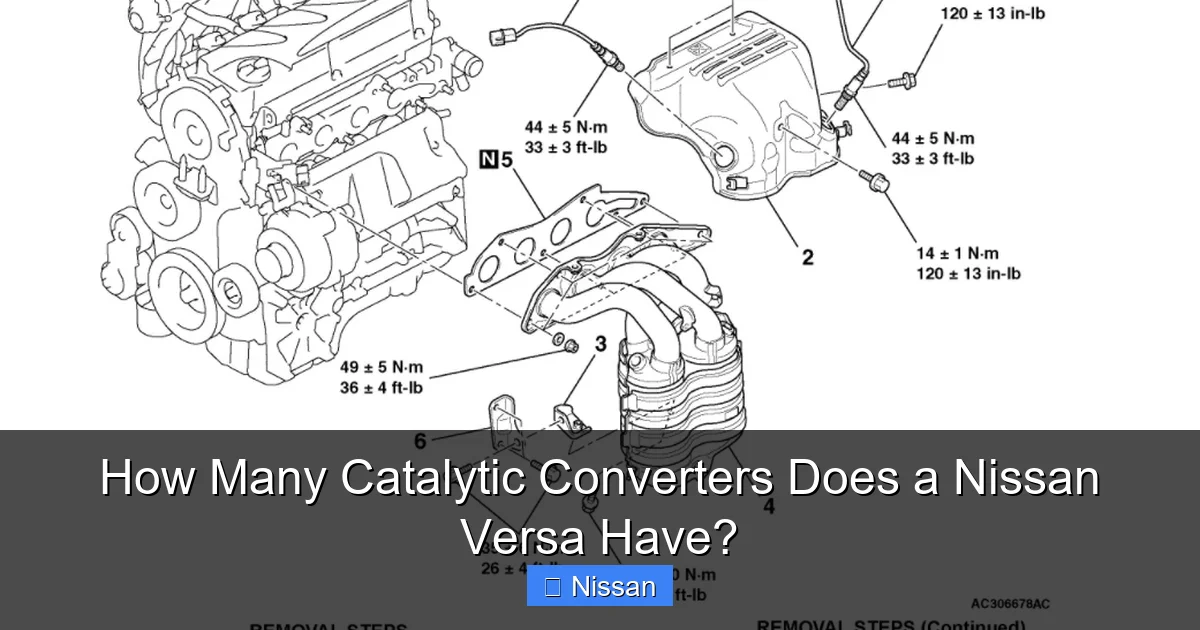
The vast majority of Nissan Versa models—spanning from the early 2000s to the current generation—are equipped with a single catalytic converter. This converter is typically located in the exhaust system, either integrated into the exhaust manifold (known as a “manifold converter”) or positioned shortly after the engine in the downpipe.
For example, the 2020 Nissan Versa with the 1.6L inline-4 engine uses one catalytic converter mounted close to the engine block. This design helps the converter reach operating temperature quickly, which improves efficiency and reduces cold-start emissions. The same holds true for earlier models like the 2012–2019 Versa, which also feature a single converter setup.
Are There Any Exceptions?
While one catalytic converter is the standard, there are rare cases where a Nissan Versa might have two. These exceptions usually occur in models with dual exhaust systems or modified engines. For instance, if a Versa has been retrofitted with a performance exhaust or a turbocharger, the installer might add a second converter to handle increased exhaust flow or to comply with emissions regulations in certain states.
However, it’s important to note that factory-installed dual catalytic converters are extremely uncommon in the Versa lineup. Unlike larger vehicles such as trucks or SUVs—which may have V6 or V8 engines with dual exhaust banks—the Versa’s compact inline-4 engine doesn’t require or typically support multiple converters.
That said, if you’re buying a used Versa and notice two converters, it’s worth investigating. It could indicate aftermarket modifications, which might affect emissions compliance or warranty coverage. Always ask for documentation and consider having the vehicle inspected by a trusted mechanic.
How to Confirm the Number on Your Versa
If you’re unsure how many catalytic converters your Nissan Versa has, there are a few ways to check:
1. **Consult the owner’s manual:** The manual often includes a diagram of the exhaust system and emissions components.
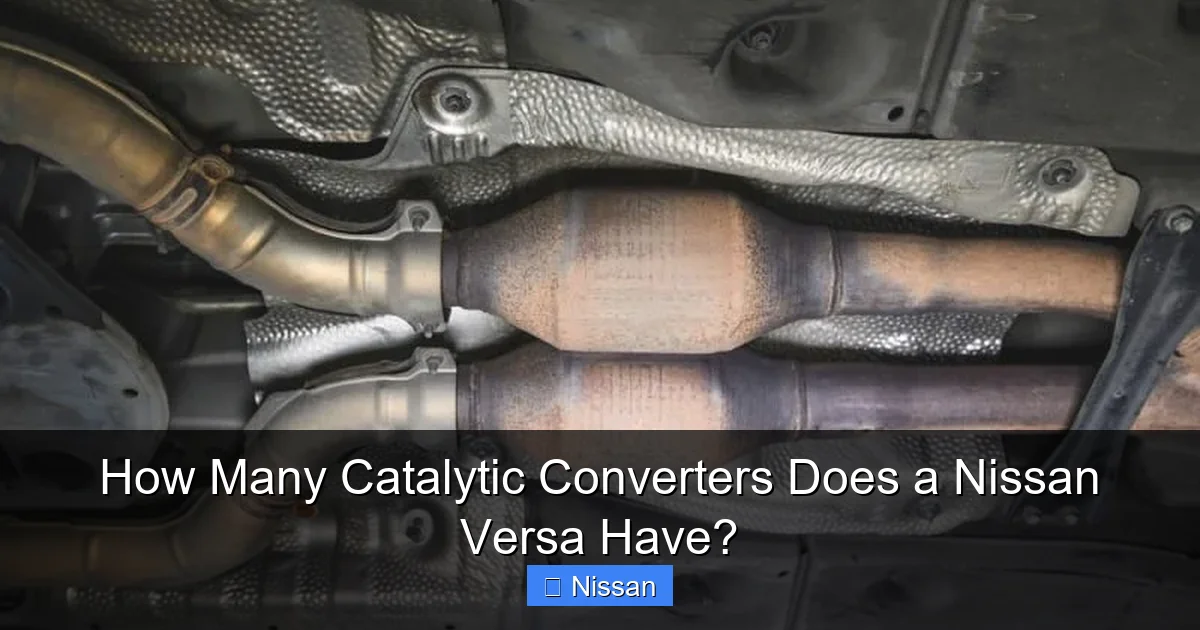
2. **Look under the car:** With the vehicle safely lifted (using jack stands, not just a jack), you can visually inspect the exhaust system. The catalytic converter is usually a bulbous, metallic component between the engine and the muffler.
3. **Use an OBD-II scanner:** If your check engine light is on, a scan tool can tell you which catalyst bank is malfunctioning. Most Versa models only have Bank 1, confirming a single converter.
4. **Ask a mechanic:** A professional inspection can confirm the setup and identify any modifications.
Location and Design of the Catalytic Converter in the Nissan Versa
Visual guide about How Many Catalytic Converters Does a Nissan Versa Have?
Image source: rxmechanic.com
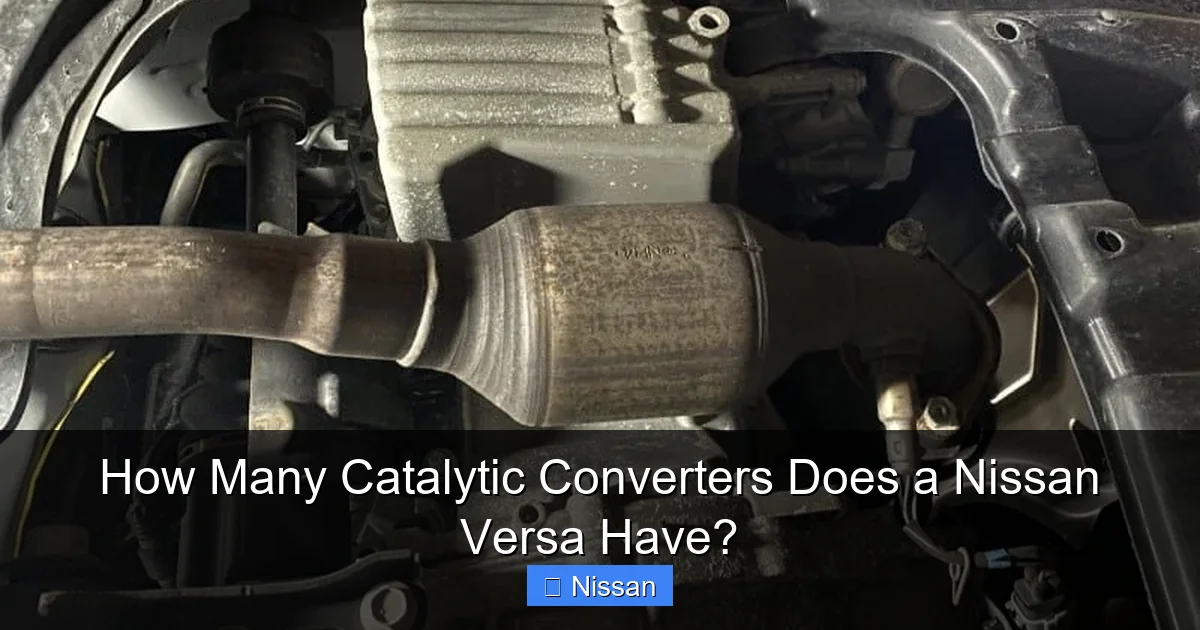
Knowing where the catalytic converter is located in your Nissan Versa can help you spot issues early and understand repair procedures. In most Versa models, the converter is positioned close to the engine, either as part of the exhaust manifold or in the front section of the exhaust pipe.
Close-Coupled Design for Efficiency
Many modern Nissan Versa models use a “close-coupled” catalytic converter, meaning it’s mounted directly to the exhaust manifold. This design allows the converter to heat up quickly after the engine starts, which is critical for reducing emissions during the first few minutes of driving—when most pollution occurs.
For example, the 2021 Nissan Versa 1.6L engine features a close-coupled converter that reaches operating temperature in under two minutes. This not only helps the car pass emissions tests but also improves overall fuel efficiency by ensuring the engine runs smoothly from the start.
Accessibility for Maintenance and Repair
While the converter’s location near the engine is great for performance, it can make access tricky during repairs. Mechanics often need to raise the vehicle and remove heat shields or other components to reach the converter. This is one reason why labor costs can add up during replacement.
Additionally, because the converter is exposed under the car, it’s vulnerable to damage from road debris, speed bumps, or corrosion—especially in areas with harsh winters and road salt. Regular inspections can help catch issues like cracks, rattling noises, or rust before they lead to bigger problems.
Signs of a Failing Catalytic Converter
Even with proper maintenance, catalytic converters don’t last forever. Most are designed to last 100,000 to 150,000 miles, but factors like engine misfires, oil leaks, or poor fuel quality can shorten their lifespan.
Common signs of a failing converter in your Nissan Versa include:
– **Check engine light:** Often accompanied by a P0420 code.
– **Reduced engine performance:** Sluggish acceleration or difficulty starting.
– **Rotten egg smell:** A sulfur-like odor from the exhaust.
– **Excessive heat under the car:** The converter may glow red-hot if clogged.
– **Failed emissions test:** High levels of CO or hydrocarbons.
If you notice any of these symptoms, it’s important to address them quickly. Driving with a clogged converter can damage the engine and lead to costly repairs.
Replacement Costs and What to Expect
Visual guide about How Many Catalytic Converters Does a Nissan Versa Have?
Image source: i2.wp.com
Replacing a catalytic converter is one of the more expensive repairs a Nissan Versa owner might face. Costs vary widely based on the model year, engine size, location, and whether you choose an OEM (original equipment manufacturer) or aftermarket part.
Average Replacement Costs
For a standard Nissan Versa with a single catalytic converter, you can expect to pay:
– **Parts:** $500 to $1,500 for an OEM converter; $300 to $800 for a high-quality aftermarket unit.
– **Labor:** $150 to $300, depending on shop rates and accessibility.
– **Total:** $800 to $2,500.
Keep in mind that OEM converters are more expensive but often come with better warranties and guaranteed compatibility. Aftermarket options can save money but may not last as long or meet strict emissions standards in certain states like California.
Factors That Influence Cost
Several factors can affect the final price:
– **Model year:** Newer Versa models (2020+) may have more complex converters with higher precious metal content.
– **Engine size:** The 1.6L engine is standard, but earlier models with 1.8L engines may have different setups.
– **Location:** Converters mounted in the manifold are harder to replace than those in the downpipe.
– **State regulations:** California and other states with strict emissions laws may require CARB-compliant converters, which are more expensive.
DIY vs. Professional Installation
While some car enthusiasts attempt to replace the catalytic converter themselves, it’s generally not recommended unless you have advanced mechanical skills and the right tools. The process involves lifting the car, removing exhaust components, and often using a torch or saw to cut out the old converter. Additionally, improper installation can lead to leaks, noise, or emissions failures.
For most Versa owners, it’s safer and more reliable to have the job done by a certified mechanic or exhaust specialist.
Legal and Environmental Considerations
The catalytic converter isn’t just a mechanical component—it’s a legal and environmental necessity. Tampering with or removing it can result in serious consequences.
Federal and State Laws
Under the Clean Air Act, it’s illegal to remove or disable a catalytic converter on any vehicle registered in the United States. This applies even if the car is used only for off-road purposes. Violators can face fines of up to $2,500 per violation, and in some states, the vehicle may be impounded.
States like California, New York, and Colorado have even stricter regulations and require vehicles to pass biennial smog checks. A missing or non-functional converter will cause an automatic failure.
Environmental Impact
Catalytic converters play a vital role in reducing air pollution. According to the Environmental Protection Agency (EPA), a properly functioning converter can reduce harmful emissions by up to 90%. For a compact, fuel-efficient car like the Nissan Versa, this means cleaner air and a smaller carbon footprint.
By maintaining your converter and addressing issues promptly, you’re not only protecting your car—you’re also contributing to a healthier environment.
Tips for Maintaining Your Nissan Versa’s Catalytic Converter
Prevention is always better than repair. Here are some practical tips to help extend the life of your catalytic converter and avoid costly replacements:
Use Quality Fuel
Always fill up with reputable gasoline that meets Top Tier standards. These fuels contain fewer contaminants and detergents that can clog the converter over time. Avoid cheap or off-brand gas stations, especially if they’re known for poor quality.
Address Engine Problems Promptly
Engine misfires, rich fuel mixtures, or oil burning can send unburned fuel into the exhaust system, overheating and damaging the converter. If your check engine light comes on, don’t ignore it—get it diagnosed as soon as possible.
Avoid Short Trips When Possible
Frequent short trips prevent the converter from reaching optimal operating temperature, leading to buildup and reduced efficiency. If you mostly drive short distances, try to take occasional longer drives to “burn off” deposits.
Regular Maintenance
Follow your Nissan Versa’s recommended maintenance schedule, including spark plug replacements, oxygen sensor checks, and exhaust system inspections. A well-maintained engine puts less stress on the catalytic converter.
Protect from Physical Damage
Be mindful of low-hanging exhaust components when driving over speed bumps, potholes, or rough terrain. A dented or cracked converter can’t function properly and may need replacement.
Conclusion
So, how many catalytic converters does a Nissan Versa have? In most cases, the answer is one—a single, efficient unit designed to keep emissions low and your car running smoothly. While dual converters are possible in rare or modified setups, the standard Versa relies on a well-engineered single converter to meet environmental standards and deliver reliable performance.
Understanding your Versa’s catalytic converter setup empowers you to make informed decisions about maintenance, repairs, and emissions compliance. Whether you’re troubleshooting a check engine light or planning long-term ownership, knowing what’s under your car can save you time, money, and stress.
Remember: the catalytic converter is more than just a metal box under your car. It’s a critical component that protects the environment, keeps your car legal, and ensures optimal engine performance. Treat it well, and it will serve you reliably for hundreds of thousands of miles.
Frequently Asked Questions
How many catalytic converters does a 2020 Nissan Versa have?
The 2020 Nissan Versa has one catalytic converter. It’s typically mounted close to the engine in the exhaust manifold to improve efficiency and reduce cold-start emissions.
Can a Nissan Versa have two catalytic converters?
While rare, a Nissan Versa could have two catalytic converters if it has a dual exhaust system or aftermarket modifications. However, factory models almost always come with just one.
What happens if the catalytic converter fails in a Nissan Versa?
A failing converter can cause reduced engine performance, poor fuel economy, a check engine light, and emissions test failure. It may also produce a sulfur smell or excessive heat under the car.
Is it legal to remove the catalytic converter on a Nissan Versa?
No, removing or disabling the catalytic converter is illegal under federal law and violates emissions regulations in all 50 states. Doing so can result in fines and registration issues.
How long does a Nissan Versa catalytic converter last?
Most catalytic converters last between 100,000 and 150,000 miles. With proper maintenance, some can last even longer, but engine problems can shorten their lifespan.
Can I replace the catalytic converter myself on a Nissan Versa?
While possible, DIY replacement is not recommended due to the complexity, safety risks, and need for specialized tools. It’s best left to certified mechanics.