
How Many Catalytic Converters Are on a Hyundai Sonata?

The number of catalytic converters in a Hyundai Sonata depends on its model year and engine type. Most modern Sonatas (2011-present) are equipped with two catalytic converters as part of a dual-catalyst exhaust system. Earlier models, particularly some pre-2006 versions, may have only one. Knowing your specific configuration is crucial for repairs, emissions testing, and understanding theft risks.
Ever heard a strange rattling sound from under your car? Or maybe your check engine light is on with a P0420 code? If you drive a Hyundai Sonata, your catalytic converter might be the culprit. But here’s a question that stumps even some mechanics: how many catalytic converters does a Hyundai Sonata actually have? The answer isn’t as simple as “one” or “two.” It’s a story of evolving emissions laws, engine design, and even global market differences. Let’s pop the hood—and the undercarriage—to get the full picture.
Think of your car’s catalytic converter as its environmental cleanup crew. This vital component sits in your exhaust system and uses chemical reactions to transform harmful pollutants like carbon monoxide, hydrocarbons, and nitrogen oxides into less harmful gases before they exit your tailpipe. Without it, your car would be a smog machine. For a popular, globally-sold sedan like the Hyundai Sonata, the design of this cleanup crew has changed over the years to keep up with ever-tightening government regulations. So, to give you a straight answer: most Hyundai Sonatas from the last decade have two catalytic converters, but some earlier models have one. Now, let’s break down why.
Key Takeaways
- Typical Modern Configuration: Hyundai Sonatas from the 2011 model year onward almost universally use a two-catalytic converter setup (front and rear) to meet stringent emissions standards.
- Older Models May Have One: Some Sonatas from the late 1990s to mid-2000s, particularly with base 4-cylinder engines, were fitted with a single, larger catalytic converter.
- Engine Type Matters: V6-powered Sonatas, like the 3.3L and 3.8L engines from certain years, often have a more complex exhaust with two converters, similar to their 4-cylinder counterparts in the same era.
- Location is Consistent: In dual-catalyst systems, one converter is located near the engine manifold (primary/upstream), and the second is further down the exhaust pipe, under the car (secondary/downstream).
- Replacement is Expensive: Due to precious metal content, replacing a catalytic converter on a Sonata is costly, often ranging from $1,000 to $2,500+ per converter, depending on the year and whether you use OEM or aftermarket parts.
- Theft is a Major Concern: The high value of the precious metals inside makes catalytic converters a prime target for theft. Sonatas, being common sedans, are frequently targeted, especially older models with more valuable converter designs.
- Check Your Specific VIN: The absolute surefire way to know is to look under your Sonata or consult a dealership/repair manual using your Vehicle Identification Number (VIN), as there can be exceptions based on market and emissions regulations.
📑 Table of Contents
- The Core Reason: Emissions Standards Dictate Design
- Generation-by-Generation Breakdown for the Hyundai Sonata
- How to Physically Identify and Locate Them on Your Sonata
- The High Cost of Replacement: Why Knowing Your Count is Critical
- The Scrap Theft Epidemic: A Major Risk for Sonata Owners
- Maintenance, Inspection, and Aftermarket Options
- Conclusion: Knowledge is Power (and Saves Money)
The Core Reason: Emissions Standards Dictate Design
To understand the “how many,” you first need to understand the “why.” The number of catalytic converters is rarely about arbitrary design choices. It’s a direct response to the emissions standards a car must meet in the region it’s sold. The United States, for example, has had progressively stricter standards (Tier 1, LEV, ULEV, SULEV) since the 1970s. Europe follows its own Euro standards. To efficiently scrub exhaust gases to these low levels, engineers use different strategies.
Single vs. Dual Catalyst Systems
A single, large catalytic converter can handle the job for older, less stringent standards. It’s a simpler, cheaper design. However, as standards tightened, engineers realized that a single converter struggling to clean a high volume of exhaust from a more powerful engine wasn’t as efficient. Enter the dual-catalyst system. This uses two smaller converters in series.
- The Primary (or Front/Upstream) Converter: Located close to the engine, often right after the exhaust manifold. It operates at high temperature quickly after startup, handling the bulk of the harmful pollutants when the engine is cold and running rich.
- The Secondary (or Rear/Downstream) Converter: Located further down the exhaust pipe, usually under the car’s midsection or near the muffler. It acts as a “polishing” stage, cleaning up any remaining pollutants the first converter missed and ensuring the exhaust stays clean during varied driving conditions.
This two-stage system is more effective and allows automakers to meet the toughest standards. This is the primary reason your newer Sonata likely has two.
Generation-by-Generation Breakdown for the Hyundai Sonata
Now for the specifics. The Hyundai Sonata has seen eight distinct generations since its 1985 debut. The catalytic converter count changed most notably during the transition to the sixth generation (2011-2014). Let’s walk through the timeline.
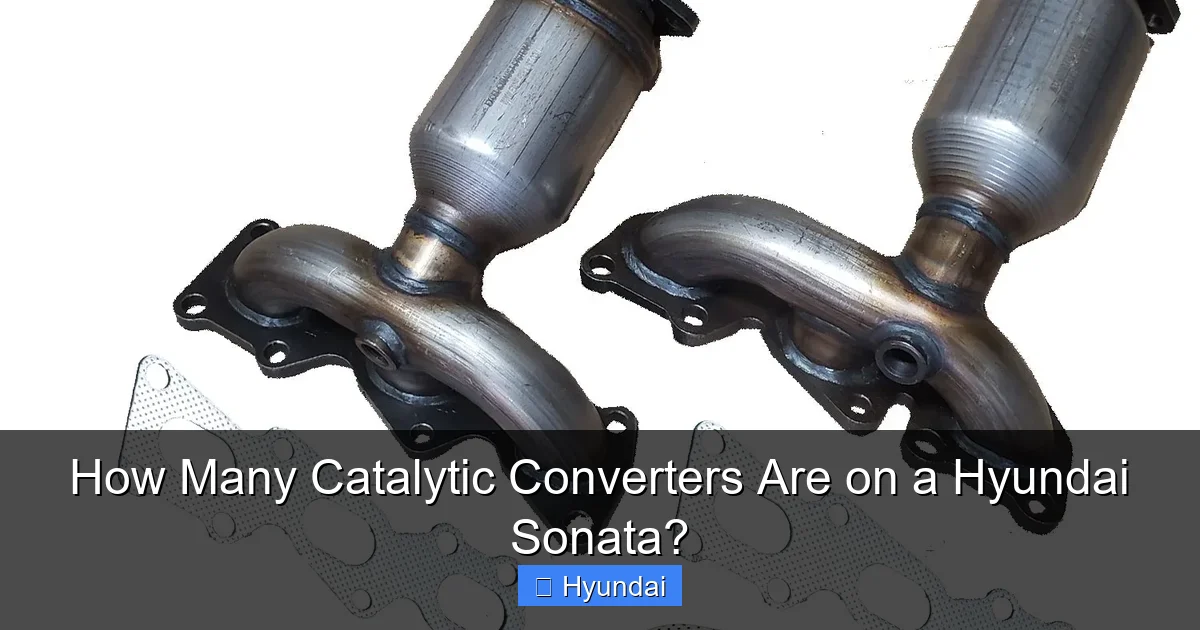
Visual guide about How Many Catalytic Converters Are on a Hyundai Sonata?
Image source: cdn.shopify.com
Generations Y1 to Y5 (1985-2010): The Era of the Single Converter
For most of its early life, the Sonata was a competent mid-size sedan competing with the Ford Taurus and Toyota Camry. Emissions standards were manageable with a single, robust converter.
- Y1-Y3 (1985-1993): These early models universally used a single catalytic converter. Engine options were modest 4-cylinders and a V6.
- Y4 (1998-2001) & Y5 (2002-2005): This period saw the rise of the 2.4L and 2.7L 4-cylinder engines, and the 3.5L V6. For the U.S. market, the vast majority of these Sonatas were equipped with one main catalytic converter. Some specific V6 models or those sold in California (which has stricter CARB emissions rules) might have featured a dual system, but it was the exception, not the rule. If you own a Sonata from this era, you almost certainly have one converter. This is a key fact for owners dealing with catalytic converter scrap value, as these older, larger units often contain more precious metals.
- 2006-2010 (Facelifted Y5 & Early Y6): This is a transition period. The 2006-2010 Sonata (still based on the Y5 platform) began moving to dual converters in many markets to prepare for the upcoming 2011 standards. Your 2009 or 2010 Sonata might have two. The only way to be 100% sure is to look.
Generations Y6 to Y8 (2011-Present): The Standard Becomes Two
With the launch of the sixth-generation Sonata in 2011, Hyundai completely redesigned the sedan. A key part of that redesign was the exhaust system to meet the then-new LEV II/ULEV standards.
- Sixth Gen (2011-2014): All U.S.-spec Sonatas from this generation, whether powered by the 2.4L 4-cylinder or the 2.0T turbocharged 4-cylinder, feature a two-catalytic converter system. The V6 option was discontinued after 2010.
- Seventh Gen (2015-2019): This generation continued the dual-catalyst setup across all engines (2.4L, 1.6T, 2.0T). The system became even more integrated with the engine management software.
- Eighth Gen (2020-Present): The current Sonata, with its futuristic styling and available hybrid powertrain, also uses two converters on its gasoline models. The hybrid system adds complexity but still follows the dual-catalyst principle for the gasoline engine portion.
Important Note on Hybrids: The Hyundai Sonata Hybrid has a unique exhaust system. It still uses catalytic converters, but their placement and number are optimized for the hybrid system’s frequent engine stop/start cycles. While it generally follows a dual-catalyst design, it’s best to verify for the specific model year.
How to Physically Identify and Locate Them on Your Sonata
Okay, theory is good, but you want to know what’s on your car. You can find out with a simple visual inspection. Safety first: make sure the car is cool, parked on level ground, and securely supported if you plan to go under it.
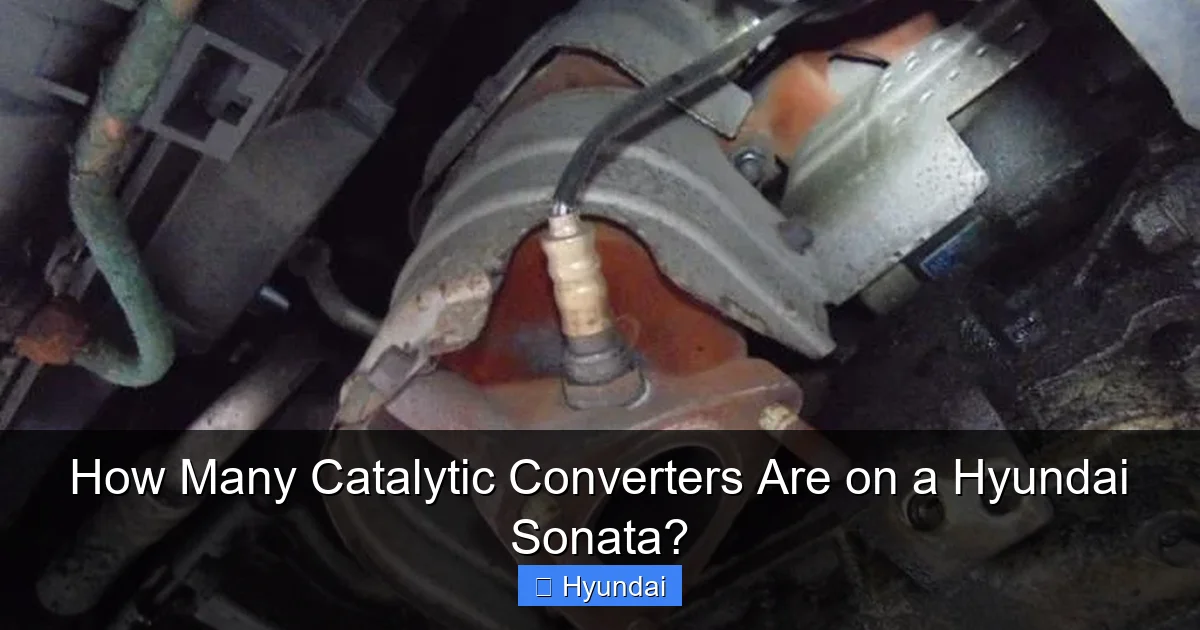
Visual guide about How Many Catalytic Converters Are on a Hyundai Sonata?
Image source: cdn.proxyparts.com
Step-by-Step Visual Guide
Grab a flashlight and crawl under the rear of your Sonata. Follow the large exhaust pipe from the engine toward the back.
- Find the Exhaust Manifold: Look up toward the engine. You’ll see the exhaust manifold bolted to the cylinder head. The very first section of pipe coming off it is the front pipe or downpipe.
- Spot the First Converter (Primary): On modern Sonatas (2011+), within 12-24 inches of the manifold, you will see a large, bulbous, metallic canister. This is your primary catalytic converter. It’s often wrapped in a heat shield. On older single-converter Sonatas (pre-2011), this is likely the only converter you’ll find, and it will be located in this same general area.
- Trace the Pipe Back: Follow the exhaust pipe from this first canister back toward the muffler.
- Spot the Second Converter (Secondary): On a dual-catalyst Sonata, you will find a second, similarly sized (sometimes slightly smaller) metallic canister further down the pipe. It’s typically located under the driver/passenger compartment or just ahead of the muffler. This is your secondary catalytic converter.
- Confirm: If you see two distinct converter cans along the exhaust path, you have two. If you only see one, and it’s relatively close to the engine, you have the single-converter setup.
Using VIN and Online Resources
If you don’t want to get dirty, use your VIN. The 17-digit VIN contains a wealth of information. You can:
- Contact a Hyundai dealership’s parts department. Give them your VIN and they can tell you the exact OEM exhaust part numbers.
- Use reputable online parts catalogs (like Hyundai’s own parts website or RockAuto). Enter your VIN or exact year/make/model/engine, and look up the “exhaust system” or “catalytic converter” category. If two separate converters are listed as options, you have two.
- Search for your specific year/engine combination in Sonata forums. Enthusiasts there have already done the legwork and can post pictures of their exhausts.
The High Cost of Replacement: Why Knowing Your Count is Critical
Catalytic converters are expensive because they contain precious metals—platinum, palladium, and rhodium—that act as catalysts. These metals are valuable on the open market, which drives the cost of the part. If your Sonata’s converter(s) fail (they can clog or the catalyst can degrade), you’re facing a significant repair bill. Knowing whether you have one or two is the first step in getting an accurate quote.
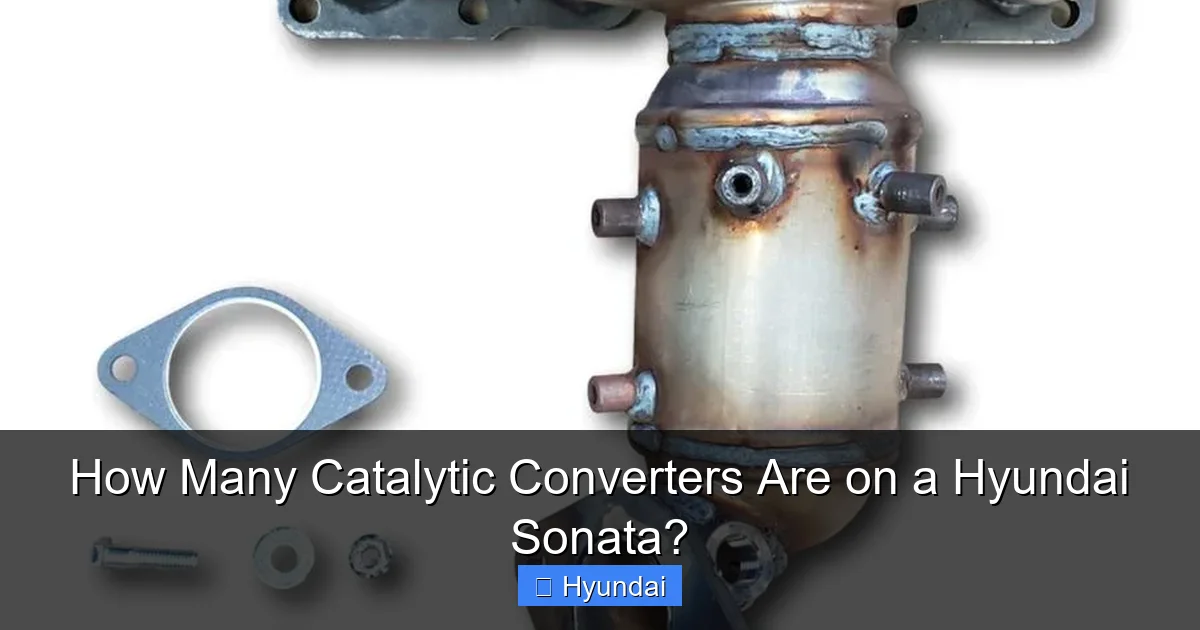
Visual guide about How Many Catalytic Converters Are on a Hyundai Sonata?
Image source: thecarhow.com
Cost Factors and Ranges
For a 2015-2019 Hyundai Sonata (2.4L engine), a replacement estimate looks like this:
- Parts Cost: An OEM (Original Equipment Manufacturer) catalytic converter from Hyundai can cost between $1,200 and $1,800 each. High-quality aftermarket replacements might run $800 to $1,400 each.
- Labor Cost: Replacing a converter is not a simple bolt-on job. It often involves cutting out the old one (if it’s welded) and welding in the new one, or dealing with rusty, seized bolts. Labor can easily add $300 to $600 per converter, sometimes more.
- Total Estimate: For a dual-converter system, you’re looking at a total bill of $2,200 to $4,000+ for both, depending on parts choice and labor rates in your area. For an older single-converter model, the total might be $1,000 to $2,500.
Pro Tip: Always get multiple quotes. Some independent exhaust shops may offer a less expensive, high-quality aftermarket converter and skilled welding. Also, check if your state has a catalytic converter warranty (some mandate 8 years/80,000 miles).
What Causes Failure?
Converters don’t usually just wear out. Common causes of failure in a Sonata include:
- Engine Misfires: Unburned fuel entering the exhaust can overheat and melt the converter’s internal substrate.
- Oil or Antifreeze Contamination: Burning oil or a leaking head gasket can coat the catalyst, rendering it useless.
- Physical Damage: Hitting a curb or road debris can crack the ceramic honeycomb inside.
- Age and Mileage: Eventually, the catalyst materials can degrade, though this is less common on modern, well-built units.
If your Sonata is throwing a P0420 (Catalyst System Efficiency Below Threshold) code, it’s time to diagnose the root cause before simply replacing the converter. The engine’s health is directly tied to the converter’s lifespan.
The Scrap Theft Epidemic: A Major Risk for Sonata Owners
This is a critical, real-world reason to know about your Sonata’s catalytic converters. Because they contain valuable metals, they are a prime target for thieves who steal them to sell to scrapyards. The crime is quick—sometimes under two minutes with a saw—and leaves you with a loud, illegal car and a huge repair bill.
Why Your Sonata is a Target
Thieves are opportunistic and strategic. They target:
- Common Vehicles: The Hyundai Sonata is one of the best-selling sedans in America. Its ubiquity means parts are in high demand, and it’s a familiar, easy target.
- Cars with Easily Accessible Converters: Many Sonatas, especially the 2011-2019 models, have their catalytic converters located relatively exposed under the passenger compartment, making them easy to access from the side with a saw.
- Older Models with Higher Precious Metal Load: Interestingly, some older converters (like those from the early 2000s) used more platinum-group metals to meet standards, making them surprisingly valuable for scrap. A 2004 Sonata’s single converter might be worth more in scrap than a 2018’s dual unit.
Protection and What to Do If It Happens
You can install catalytic converter anti-theft plates or cages. Some Sonata owners have had them welded in place. Park in well-lit, busy areas. If the worst happens:
- Do Not Drive It: A missing converter makes your car extremely loud and dangerous to drive. Exhaust fumes can enter the cabin.
- File a Police Report: Get a report number for your insurance.
- Get an Immediate Repair Quote: Contact multiple shops. Explain it was theft; some shops work with insurance adjusters frequently on these.
- Check Your Insurance: Comprehensive coverage typically covers theft. You’ll pay your deductible.
Theft is so prevalent that it has affected the resale value of affected Sonatas and even the availability of used converters.
Maintenance, Inspection, and Aftermarket Options
For most Sonata owners, the catalytic converter is a “set it and forget it” part—until there’s a problem. But proactive care can extend its life.
Routine Checks During Service
When you have your Sonata on a lift for an oil change or other service, ask the mechanic to quickly glance at the converter(s). They should look for:
- Physical Damage: Dents, cracks, or rust holes in the外壳 (shell).
- Heat Discoloration: A blue or purple tint on the metal can indicate excessive heat from an engine misfire.
- Rattling: If you hear a loose rattle from under the car (and it’s not the heat shield), the internal ceramic substrate may be broken.
Addressing engine performance issues—like that persistent misfire code or a service engine soon light—immediately is the best way to protect your converter.
Aftermarket vs. OEM: The Great Debate
If you need a replacement, you’ll face this choice.
- OEM (Hyundai) Parts: Guaranteed to fit perfectly, meet all emissions regulations, and often come with a longer warranty (e.g., 8 years/80,000 miles for emissions parts). They are the most expensive.
- Aftermarket Parts: Companies like MagnaFlow, Bosal, and AP offer direct-fit replacements. Quality varies widely. Look for ones that are CARB Executive Order (EO) certified for California and 49-state legal. Cheap, non-compliant converters will fail emissions tests and can hurt performance. They are usually less expensive but may have a shorter lifespan.
Never install a “test pipe” or straight pipe to remove the converter. It’s illegal in all 50 states, will trigger a check engine light, and will cause your Sonata to fail emissions inspection. It also harms the environment.
Conclusion: Knowledge is Power (and Saves Money)
So, how many catalytic converters are in a Hyundai Sonata? For the vast majority of drivers on the road today—those with 2011 or newer models—the answer is two. They work in tandem, one right after the other, to keep your Sonata’s emissions clean. If you have an older model from the 2000s or earlier, you likely have one larger converter. This knowledge isn’t just trivia. It’s essential information for accurate repair estimates, understanding theft risks, and performing basic maintenance checks.
Your catalytic converter is a silent workhorse and a significant investment. Treat it well by maintaining your engine’s health. Be aware of the theft risk in your area. And if the dreaded check engine light comes on with a catalyst-related code, don’t ignore it. Diagnose the problem correctly—sometimes a faulty oxygen sensor can throw the same code—to avoid a costly and unnecessary replacement. When in doubt, use your VIN to get the definitive answer for your specific Sonata. A well-informed owner is a car’s best friend.
Frequently Asked Questions
Can I drive my Hyundai Sonata with a bad catalytic converter?
You can drive it for a short time, but it’s not recommended. A severely clogged converter will restrict exhaust flow, causing poor performance, overheating, and potential engine damage. A rattling converter could break apart and cause further damage. You should diagnose and repair the issue promptly.
How much does it cost to replace a catalytic converter on a Hyundai Sonata?
For a modern Sonata with two converters, the total cost for both can range from $2,200 to over $4,000 for parts and labor if using OEM parts. A single converter on an older model might cost $1,000 to $2,500. Prices vary dramatically by location, shop, and parts choice.
Will removing my catalytic converter make my Sonata faster?
No. While removing it reduces backflow slightly, modern engine computers are tuned for the factory exhaust setup. Removing the converter will trigger a check engine light, cause your car to run in a reduced-power “limp mode,” and fail emissions tests. Any perceived power gain is minimal and illegal.
Do all Hyundai Sonata Hybrids have two catalytic converters?
Yes, the gasoline engine in Sonata Hybrid models uses a dual-catalyst exhaust system to meet emissions standards, similar to the non-hybrid models. The system is sometimes packaged differently due to the hybrid battery and electric motor layout, but the principle remains the same.
What’s the difference between a primary and secondary catalytic converter?
The primary (upstream) converter is closest to the engine and handles the bulk of pollutant conversion when the engine is cold. The secondary (downstream) converter polishes the exhaust and ensures the system stays efficient during all driving conditions. Both are necessary for modern emissions compliance.
How can I tell if my Sonata’s catalytic converter was stolen?
The symptoms are unmistakable. Your car will sound like a loud, raw, open exhaust—much louder than normal and with a distinct “rumble” or “growl” from under the car. You’ll likely see a large, gaping hole in the mid-section of your exhaust pipe where the converter was cut out. You should not drive the vehicle.
