
How Long Is a Car Battery Warranty

Most car battery warranties range from 12 to 60 months, depending on the brand and type. Understanding warranty terms, including free replacement periods and pro-rated coverage, helps you get the most value and avoid unexpected costs.
Key Takeaways
- Warranty lengths vary widely: Basic warranties often last 12–24 months, while premium batteries may offer up to 60 months of coverage.
- Free replacement vs. pro-rated: Some warranties offer a full free replacement within a set period, while others provide partial credit toward a new battery after that.
- Brand matters: Top brands like Optima, Interstate, and DieHard often provide longer and more comprehensive warranties than generic or store-brand options.
- Proper maintenance extends life: Keeping terminals clean, securing the battery, and avoiding deep discharges can help you stay within warranty conditions.
- Warranty isn’t transferable in most cases: If you sell your car, the new owner typically can’t claim the remaining warranty unless specified otherwise.
- Check the fine print: Warranties often exclude damage from accidents, improper installation, or extreme weather unless specified.
- Document everything: Keep your receipt and register your battery online when required to ensure smooth warranty claims.
📑 Table of Contents
- How Long Is a Car Battery Warranty?
- Understanding Car Battery Warranty Basics
- Average Car Battery Warranty Lengths by Brand
- Types of Car Battery Warranties: Free Replacement vs. Pro-Rated
- Factors That Affect Your Car Battery Warranty
- How to Maximize Your Car Battery Warranty
- Filing a Car Battery Warranty Claim
- Conclusion
How Long Is a Car Battery Warranty?
If you’ve ever been stranded with a dead car battery on a cold winter morning, you know how important it is to have a reliable power source under the hood. But what happens when that battery fails—especially if it’s still relatively new? That’s where your car battery warranty comes in. Understanding how long a car battery warranty lasts, what it covers, and how to make the most of it can save you time, money, and a whole lot of frustration.
Car battery warranties aren’t one-size-fits-all. They vary significantly based on the manufacturer, battery type, and where you purchase it. Some basic models come with a simple 12-month guarantee, while high-performance or deep-cycle batteries might offer up to five years of protection. But it’s not just about the length—it’s about what that warranty actually includes. Many warranties have two phases: a free replacement period and a pro-rated period. During the first phase, if your battery fails, you get a brand-new one at no cost. After that, you might receive a credit toward a new battery based on how much life was left.
Knowing the ins and outs of your battery’s warranty helps you make smarter decisions when buying, maintaining, and replacing your car’s power source. Whether you’re shopping for a new battery or trying to file a claim, this guide will walk you through everything you need to know.
Understanding Car Battery Warranty Basics
Visual guide about How Long Is a Car Battery Warranty
Image source: batterytools.net
Before diving into specific timeframes, it’s important to understand what a car battery warranty actually is. At its core, a warranty is a promise from the manufacturer or retailer that the battery will perform as expected for a certain period. If it fails prematurely due to defects in materials or workmanship, the company will repair or replace it—usually at no extra cost to you.
But not all warranties are created equal. Most fall into one of two categories: **full replacement warranties** and **pro-rated warranties**. A full replacement warranty means that if your battery dies within a specified time (say, 24 months), you can get a new one for free. After that period, the warranty often shifts to a pro-rated model. For example, if you have a 60-month warranty and your battery fails at month 40, you might get a refund or credit for 20/60 (or one-third) of the battery’s original price.
It’s also crucial to note that warranties typically only cover manufacturing defects—not damage caused by misuse, accidents, or normal wear and tear. For instance, if you leave your headlights on overnight and drain the battery completely, that’s usually not covered. Similarly, if the battery leaks due to improper installation, the warranty may be void.
Another key point is that most car battery warranties are **non-transferable**. That means if you sell your car, the new owner can’t take advantage of the remaining warranty unless the manufacturer explicitly allows it (which is rare). So if you’re buying a used car, don’t assume the battery is still under warranty—always ask for documentation.
What’s Typically Covered?
Most warranties cover failures due to internal defects, such as broken plates, faulty separators, or defective seals. These issues usually cause the battery to lose charge quickly, fail to start the engine, or not hold a charge at all. If a technician confirms the failure is due to a manufacturing flaw, you’re likely eligible for a replacement.
However, warranties rarely cover:
– Physical damage (dents, cracks, leaks from impact)
– Corrosion caused by environmental factors
– Failure due to extreme temperatures (unless the battery is specifically rated for such conditions)
– Improper installation or maintenance
– Use in applications beyond the battery’s design (e.g., using a standard car battery in a marine or RV setting)
What’s Not Covered?
Understanding exclusions is just as important as knowing what’s included. For example, if your battery dies because you left the radio on for three days straight, that’s considered user error—not a defect. Similarly, if your alternator fails and overcharges the battery, causing it to swell or leak, the damage is typically attributed to the charging system, not the battery itself.
Extreme weather can also complicate things. While some batteries are built to handle cold climates (like those with a high cold cranking amp rating), most warranties won’t cover failure due to prolonged exposure to sub-zero temperatures unless the battery was specifically marketed for such use.
Average Car Battery Warranty Lengths by Brand

Visual guide about How Long Is a Car Battery Warranty
Image source: energydmmanagement.com
Now that you know the basics, let’s look at how long a car battery warranty typically lasts across different brands and price points. Keep in mind that these are general guidelines—always check the specific product details before purchasing.
Budget and Store-Brand Batteries (12–24 Months)
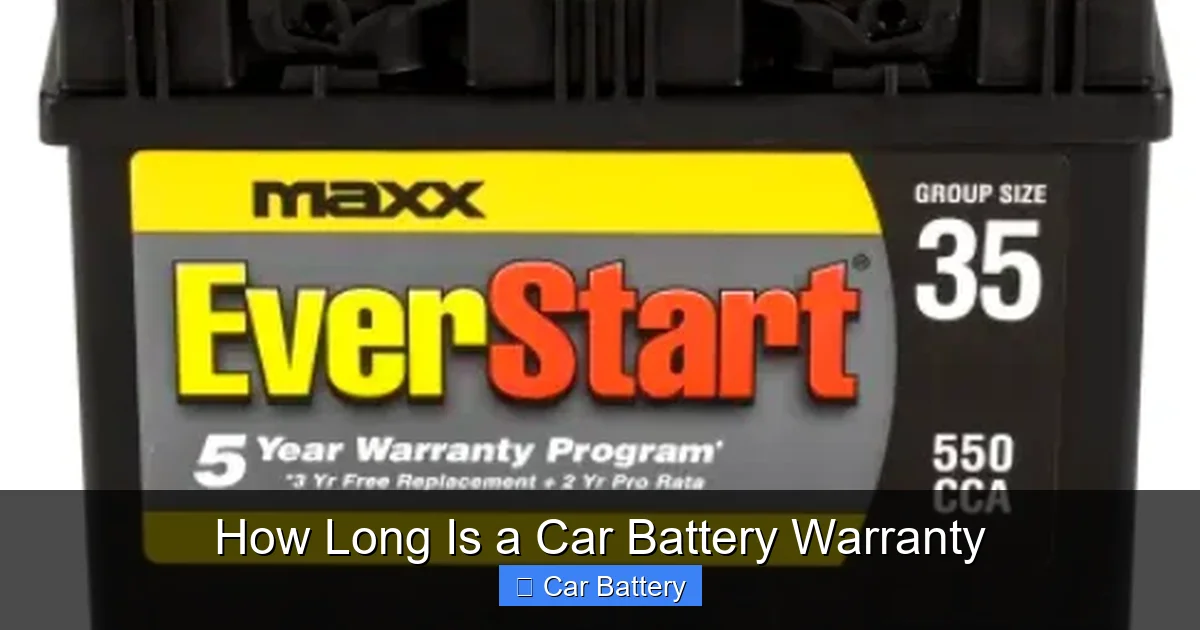
If you’re looking for a low-cost replacement, you might turn to store-brand batteries like those sold at Walmart, AutoZone, or O’Reilly Auto Parts. These typically come with warranties ranging from **12 to 24 months**. For example, a standard EverStart battery from Walmart often includes a 12-month free replacement warranty, with an additional 12 months of pro-rated coverage.
While these batteries are affordable and widely available, their shorter warranties reflect their lower price and expected lifespan. They’re fine for basic vehicles with minimal electrical demands, but they may not last as long in extreme climates or high-use situations (like frequent short trips or heavy accessory use).
Mid-Range Batteries (36–48 Months)
Mid-tier brands like **Interstate**, **ACDelco**, and **Duralast** offer warranties between **36 and 48 months**. Interstate, for instance, often provides a 36-month free replacement warranty on their standard batteries, with pro-rated coverage extending up to 60 months in some cases.
These batteries are a good balance of price and performance. They’re built with better materials and more robust construction than budget options, making them suitable for most daily drivers. If you live in a moderate climate and maintain your vehicle well, a mid-range battery with a 3–4 year warranty should serve you reliably.
Premium and High-Performance Batteries (48–60+ Months)
For those who want the best, premium brands like **Optima**, **DieHard**, and **XS Power** offer some of the longest warranties in the industry—often **48 to 60 months or more**. Optima RedTop and YellowTop batteries, for example, come with a 36-month free replacement warranty and up to 60 months of pro-rated coverage.
These batteries are designed for high-demand applications: vehicles with aftermarket electronics, performance cars, RVs, boats, and off-road vehicles. They use advanced technologies like spiral-wound cells (Optima) or absorbed glass mat (AGM) construction, which provide better vibration resistance, faster recharge times, and longer cycle life.
Because of their superior build quality, premium batteries are less likely to fail prematurely—but if they do, the extended warranty gives you peace of mind. Just remember: these batteries come at a higher price point, so weigh the cost against your vehicle’s needs.
Specialty and Deep-Cycle Batteries (Varies Widely)
If you’re using a battery for something other than starting your car—like powering a trolling motor, RV house systems, or a solar setup—you’ll likely need a deep-cycle battery. These have different warranty structures.
For example, **Renogy** and **Battle Born** lithium deep-cycle batteries often come with **10-year warranties**, though the terms vary. Some offer full replacement for the first few years, then pro-rated coverage. Others guarantee a certain number of charge cycles (e.g., 2,000–5,000 cycles) before performance drops below 80%.
These warranties reflect the longer expected lifespan of lithium batteries compared to traditional lead-acid ones. However, they’re also more sensitive to improper charging, so following the manufacturer’s guidelines is critical to maintaining warranty coverage.
Types of Car Battery Warranties: Free Replacement vs. Pro-Rated
Visual guide about How Long Is a Car Battery Warranty
Image source: images.squarespace-cdn.com
Not all warranties are structured the same way. Understanding the difference between free replacement and pro-rated warranties can help you choose the right battery and manage your expectations.
Free Replacement Warranty
This is the most straightforward type. If your battery fails within the specified period—say, 24 or 36 months—you can return it to the retailer or authorized dealer and receive a brand-new battery at no cost. No questions asked (as long as the failure is due to a defect).
For example, if you buy a DieHard Gold battery with a 36-month free replacement warranty and it dies at 18 months, you simply bring it back with your receipt, and they’ll swap it out. This is ideal for people who want hassle-free coverage without worrying about depreciation.
Pro-Rated Warranty
After the free replacement period ends, many warranties switch to a pro-rated model. This means you receive a credit toward a new battery based on how much time is left on the warranty.
Let’s say you have a 60-month pro-rated warranty and your battery fails at month 50. The manufacturer might calculate the value like this:
(60 – 50) / 60 = 10/60 = 1/6 of the original price.
So if the battery cost $180, you’d get a $30 credit toward a new one.
Pro-rated warranties are common with premium batteries and reflect the fact that batteries lose value over time. While not as generous as free replacements, they still offer some protection and can save you money if your battery fails near the end of its expected life.
Hybrid Warranty Structures
Many modern warranties combine both models. For instance, a battery might offer:
– 36 months of free replacement
– 24 additional months of pro-rated coverage (total: 60 months)
This gives you the best of both worlds: full protection early on, and partial coverage later. Always read the warranty terms carefully to understand how the phases work and what documentation is required.
Factors That Affect Your Car Battery Warranty
Even with a long warranty, your battery’s lifespan depends on several factors. Some are within your control, while others are environmental. Knowing these can help you avoid voiding your warranty and extend your battery’s life.
Climate and Weather
Extreme temperatures—both hot and cold—can shorten a battery’s life. Cold weather reduces a battery’s ability to deliver power, while heat accelerates chemical reactions that degrade internal components.
Most warranties don’t cover failure due to “normal” climate effects, but some premium batteries are designed for extreme conditions. For example, Optima offers cold-weather-specific models with enhanced cranking power. If you live in a region with harsh winters or scorching summers, investing in a climate-appropriate battery can help you stay within warranty terms.
Driving Habits
Frequent short trips don’t allow the alternator enough time to fully recharge the battery. Over time, this leads to a condition called “sulfation,” where lead sulfate crystals build up on the plates, reducing capacity.
If your battery fails due to chronic undercharging, the warranty may be denied—even if it’s still within the coverage period. To avoid this, try to take longer drives occasionally or use a battery maintainer if your car sits for extended periods.
Electrical Load
Modern cars come packed with electronics: infotainment systems, heated seats, dash cams, and more. These draw power even when the engine is off. If you regularly use accessories without the engine running, you risk draining the battery beyond its recovery point.
Warranties typically don’t cover damage from excessive parasitic drain. To protect your battery, avoid leaving devices plugged in overnight and consider installing a battery disconnect switch if your car will be stored.
Installation and Maintenance
Improper installation is a common reason for warranty denial. If the battery isn’t securely mounted, the terminals aren’t tightened correctly, or the wrong type is installed, it can lead to vibration damage, short circuits, or poor connections.
Always have your battery installed by a certified technician or follow the manufacturer’s instructions precisely. Keep the terminals clean and free of corrosion, and check the hold-down clamp regularly.
Battery Age
Even if a battery hasn’t failed, most warranties have a maximum age limit—usually 5 to 7 years from the manufacture date. Batteries degrade over time, regardless of use. If yours is more than 5 years old, it may not be eligible for replacement, even if it’s still under warranty.
Check the date code on the battery (usually a letter for the month and a number for the year, like “C3” for March 2023). If it’s close to the expiration, consider replacing it proactively.
How to Maximize Your Car Battery Warranty
Getting the most out of your warranty isn’t just about buying a long-covered battery—it’s about how you use and maintain it. Here are some practical tips to help you stay protected and extend your battery’s life.
Register Your Battery
Many manufacturers require you to register your battery online or by mail to activate the warranty. This creates a record of purchase and helps streamline claims. Skipping this step could leave you unprotected.
For example, Interstate Batteries offers an online registration portal where you enter the battery’s serial number and purchase details. Once registered, you’ll receive warranty confirmation and reminders.
Keep Your Receipt
Your proof of purchase is essential for any warranty claim. Without a receipt, retailers may refuse to honor the warranty—even if the battery is clearly defective. Store your receipt in a safe place, or take a photo and save it digitally.
Some retailers, like AutoZone, keep purchase records in their system if you use a loyalty card. But it’s still wise to keep your own copy.
Follow Maintenance Guidelines
Read the manufacturer’s care instructions and follow them closely. This includes:
– Cleaning terminals with a baking soda and water solution
– Ensuring the battery is securely mounted
– Checking for signs of swelling, leaks, or corrosion
– Testing voltage regularly (a healthy battery should read 12.6V or higher when fully charged)
Regular maintenance not only extends battery life but also demonstrates that you’ve used the product responsibly—important if you need to file a claim.
Use a Battery Tender for Storage
If you have a classic car, motorcycle, or seasonal vehicle that sits for months, use a smart battery maintainer (also called a trickle charger). These devices keep the battery at an optimal charge without overcharging, preventing sulfation and extending life.
Many warranties require proof that the battery was properly maintained during storage. A maintainer helps meet that requirement.
Know When to Replace
Even with a great warranty, it’s smart to replace your battery before it fails. Most batteries last 3–5 years, and performance declines gradually. Signs it’s time for a replacement include:
– Slow engine crank
– Dim headlights
– Check engine or battery warning light
– Swollen case or leaking fluid
Replacing a battery proactively avoids being stranded and ensures you get full value from your warranty period.
Filing a Car Battery Warranty Claim
If your battery fails and you believe it’s covered, here’s how to file a claim successfully.
Step 1: Confirm the Failure
First, have the battery tested at an auto parts store or repair shop. Most offer free testing. They’ll check voltage, load capacity, and overall health. If the test shows the battery is defective (not just discharged), you’re likely eligible for a replacement.
Step 2: Gather Documentation
You’ll need:
– Proof of purchase (receipt or invoice)
– Battery serial number and date code
– Warranty registration confirmation (if applicable)
– Test results from a certified technician
Step 3: Contact the Retailer or Manufacturer
Return to the store where you bought the battery, or contact the manufacturer directly. Bring all documentation and the failed battery. Most retailers will process the claim on the spot.
If the claim is approved, you’ll receive a new battery or a pro-rated credit. If denied, ask for a written explanation. Common reasons for denial include:
– Damage from misuse
– Expired warranty
– Lack of maintenance
– Incorrect installation
Step 4: Keep Records
After the replacement, save all paperwork. You may need it if the new battery fails or if you sell the car.
Conclusion
So, how long is a car battery warranty? The answer depends on the brand, type, and price point—but most range from 12 to 60 months. While a longer warranty is appealing, it’s not the only factor to consider. Understanding the terms, coverage types, and maintenance requirements is just as important.
A good warranty gives you confidence that your investment is protected. But real value comes from choosing the right battery for your vehicle and driving habits, maintaining it properly, and knowing how to file a claim when needed. Whether you’re buying a budget replacement or a high-performance AGM battery, take the time to read the fine print and keep your records organized.
By doing so, you’ll not only avoid unexpected breakdowns but also get the most out of your car battery—and its warranty.
Frequently Asked Questions
How long is a typical car battery warranty?
Most car battery warranties last between 12 and 60 months. Basic models often have 12–24 months, while premium batteries may offer up to 5 years of coverage.
Does a car battery warranty cover all types of failure?
No, warranties typically only cover defects in materials or workmanship. They don’t cover damage from misuse, accidents, extreme weather, or improper installation.
Can I transfer my car battery warranty to a new owner?
Most warranties are non-transferable, meaning they don’t apply if you sell your car. Always check the manufacturer’s policy, as some may allow limited transfers.
What is a pro-rated battery warranty?
A pro-rated warranty provides a partial refund or credit toward a new battery based on how much time is left. For example, if your battery fails near the end of the warranty, you get a smaller credit.
How can I make my car battery last longer?
Keep terminals clean, avoid deep discharges, drive regularly, and use a maintainer if the car sits unused. Proper care helps you stay within warranty terms and extends battery life.
Do I need to register my car battery for the warranty?
Many manufacturers require registration to activate the warranty. Check the product instructions and register online or by mail to ensure full coverage.
