How Long Does It Take Hyundai to Replace an Engine?

Contents
- 1 Key Takeaways
- 2 📑 Table of Contents
- 3 Understanding the Hyundai Engine Replacement Timeline
- 4 The Core Labor Time: How Many “Shop Hours”?
- 5 The Real-World Calendar: From Drop-Off to Pickup
- 6 Critical Factors That Stretch the Timeline
- 7 How Hyundai’s Warranty Impacts the Process
- 8 Practical Tips to Minimize Your Downtime
- 9 Conclusion: Patience and Preparation Are Key
- 10 Frequently Asked Questions

Steering Wheel Cover

LED Emergency Road Flares

Battery Terminal Cleaner

Car Seat Cover (Universal Fit)
Replacing a Hyundai engine typically takes 8 to 15+ hours of labor at a professional shop, but the total calendar time from diagnosis to pickup can span 1 to 3 weeks. The exact duration depends on engine type (e.g., 4-cylinder vs. V6), parts availability, shop workload, and whether it’s a warranty or customer-pay job. A straightforward swap on a common model might be done in a few days, while complex repairs or part delays can extend the process significantly. Always get a detailed estimate and timeline from your certified Hyundai technician.
Key Takeaways
- Labor Hours vs. Calendar Time: The actual mechanical work takes 8-15+ shop hours, but you’ll likely wait 1-3 weeks total for parts, scheduling, and completion.
- Engine Type Matters: Simpler 4-cylinder engines (like in a Hyundai Elantra) are faster to replace than complex V6 or turbocharged engines found in the Santa Fe or Sonata N Line.
- Parts Availability is Key: A new OEM engine from Hyundai’s distribution network can take days to weeks to arrive, drastically impacting the timeline. Used or remanufactured engines may be available sooner.
- Warranty Jobs Move Differently: If covered under Hyundai’s 10-year/100,000-mile powertrain warranty, the process is streamlined through the dealer, but approval and part shipping still add time.
- Shop Workload is a Variable: A busy independent shop or dealership service department will have a longer backlog than a slower period, affecting when your car even enters the bay.
- Diagnostics Come First: The “replacement” clock doesn’t start until after a full diagnostic confirms an engine replacement is necessary, not a repair—this initial step can take a day or more.
- DIY is Not Realistic: This is not a weekend project. Engine replacement requires specialized lifts, tools, and expertise. Attempting it yourself will take far longer and risks severe damage.
[FEATURED_IMAGE_PLACEHOLDER]
📑 Table of Contents
- Understanding the Hyundai Engine Replacement Timeline
- The Core Labor Time: How Many “Shop Hours”?
- The Real-World Calendar: From Drop-Off to Pickup
- Critical Factors That Stretch the Timeline
- How Hyundai’s Warranty Impacts the Process
- Practical Tips to Minimize Your Downtime
- Conclusion: Patience and Preparation Are Key
Understanding the Hyundai Engine Replacement Timeline
So, you’re facing the daunting prospect of an engine replacement in your Hyundai. Your first question is likely the most pressing one: how long is this going to take? It’s a major repair, and your life is scheduled around your car. The answer isn’t a simple number. Saying “two weeks” is helpful but vague. The real answer is a spectrum, and understanding what pushes a job to the short or long end of that spectrum is crucial for managing your expectations and planning.
Think of it like building a custom house. The actual framing (the labor) might take a month, but you must wait for the architect’s plans (diagnostics), permits (parts ordering), and the contractor’s schedule (shop backlog). At Hyundai, the process is similar. The “replace engine” procedure itself is a defined sequence of steps with an estimated labor time, but the journey from the moment you drop off the car to the moment you drive it off the lot is filled with variables. Let’s break down every phase so you know exactly what to expect.
The Core Labor Time: How Many “Shop Hours”?
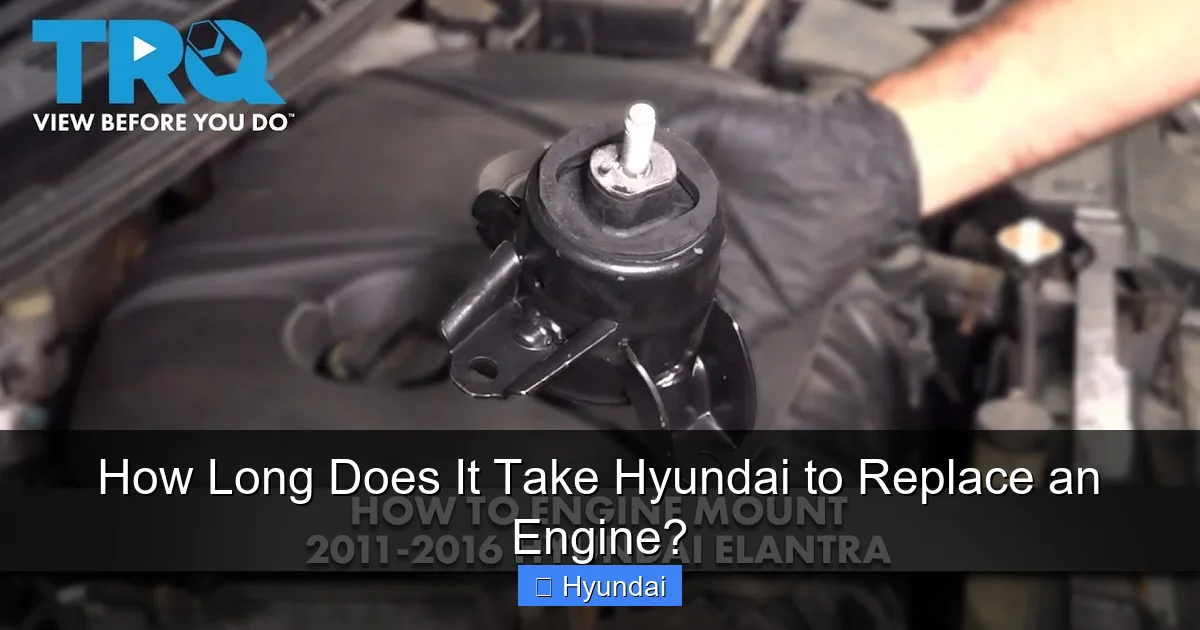
When a mechanic gives you a labor estimate, they’re quoting “book time.” This is the standardized time a professional, with all tools and parts ready, should take to complete the job. For Hyundai engine replacements, this book time varies significantly by model and engine.
Visual guide about How Long Does It Take Hyundai to Replace an Engine?
Image source: i.ytimg.com
Typical Labor Hour Ranges
- 4-Cylinder Engines (e.g., Hyundai Elantra, Kia Forte): These are generally the most straightforward. Expect a labor time of 8 to 12 hours. The engine bay is more accessible, and there are fewer components to disconnect compared to larger engines.
- V6 Engines (e.g., Hyundai Santa Fe, Kia Sorento): The larger footprint and additional components (like a second cylinder head, more complex exhaust) increase complexity. Labor times typically range from 12 to 18 hours.
- Turbocharged Engines (e.g., Hyundai Sonata N Line, Elantra N): Turbo systems add intercoolers, additional plumbing, and high-pressure fuel systems. These jobs can take 14 to 20+ hours due to the extra care and components involved.
Remember, these are *ideal* shop hours for a skilled technician working in a well-equipped bay. They do not include the time spent on diagnostics, parts waiting, or vehicle disassembly/reassembly for other discovered issues.
The Real-World Calendar: From Drop-Off to Pickup
This is the timeline you care about. Let’s walk through the sequential steps and their typical durations.
Visual guide about How Long Does It Take Hyundai to Replace an Engine?
Image source: i.ytimg.com
Step 1: Diagnosis & Approval (1-3 Days)
Before any wrench is turned, the problem must be confirmed. A technician will perform a series of tests: checking for codes, performing a compression test, possibly a leak-down test, and a visual inspection. This confirms a catastrophic internal engine failure requiring a full replacement, not a repair like a head gasket or timing chain. Once confirmed, the service advisor writes an estimate for your approval. This step can be same-day or take a couple of days if the shop is busy or the failure is complex to diagnose.
Step 2: Parts Sourcing & Ordering (2 Days – 3+ Weeks)
This is the most unpredictable and lengthy phase. The time here depends entirely on what kind of replacement engine you and your Hyundai dealer/shop choose:
- New OEM Engine: Ordered through Hyundai’s national parts network. For common models, it might arrive in 3-7 business days. For less common or newer models, it could take 2-4 weeks as it ships from Korea or a central distribution hub.
- Hyundai Remanufactured Engine: Often a faster option. Hyundai-certified remanufactured engines are rebuilt to spec and usually sit in regional warehouses. Expect a lead time of 1-5 business days.
- Used Engine: Sourced from a salvage yard. This can be the quickest route (sometimes same-day to 3 days) but carries significant risk regarding unknown wear and lack of warranty. Many reputable shops avoid this for core engine replacements.
- Aftermarket New Engine: Availability varies by supplier. It could be a week or several weeks.
Pro Tip: Always ask your shop: “What is the guaranteed arrival date for the specific part number you’re ordering?” Get it in writing on the estimate.
Step 3: The Actual Replacement (1-3 Work Days)
Once the engine arrives and the vehicle is scheduled in a bay, the physical work begins. A crew will:
- Lift the car and support the subframe/transmission.
- Disconnect all wiring, hoses, lines, and accessories.
- Unbolt the transmission and remove it (on most front-wheel-drive Hyundais).
- Unbolt the engine from the mounts and lift it out.
- Install the new engine, reinstall the transmission, and reconnect everything.
- Refill all fluids (oil, coolant, transmission fluid).
- Perform extensive initial checks and a road test.
For a straightforward 4-cylinder job in a shop running two shifts, this could be completed in 1.5 to 2 calendar days. A complex V6 or turbo job, or one in a shop with slower throughput, might take 2 to 3 full days in the bay.
Step 4: Final Inspection & Quality Control (0.5 – 1 Day)
A good shop won’t just hand you the keys after the road test. They’ll perform a final inspection, check for leaks, verify all codes are cleared, and may even do a post-repair scan with the Hyundai diagnostic computer. This adds a half-day to a full day to the schedule but is essential for peace of mind.
Critical Factors That Stretch the Timeline
Why do some replacements take 10 days while others take 35? Here are the primary culprits for delays.
Visual guide about How Long Does It Take Hyundai to Replace an Engine?
Image source: i.ytimg.com
1. The “While We’re In There” Syndrome
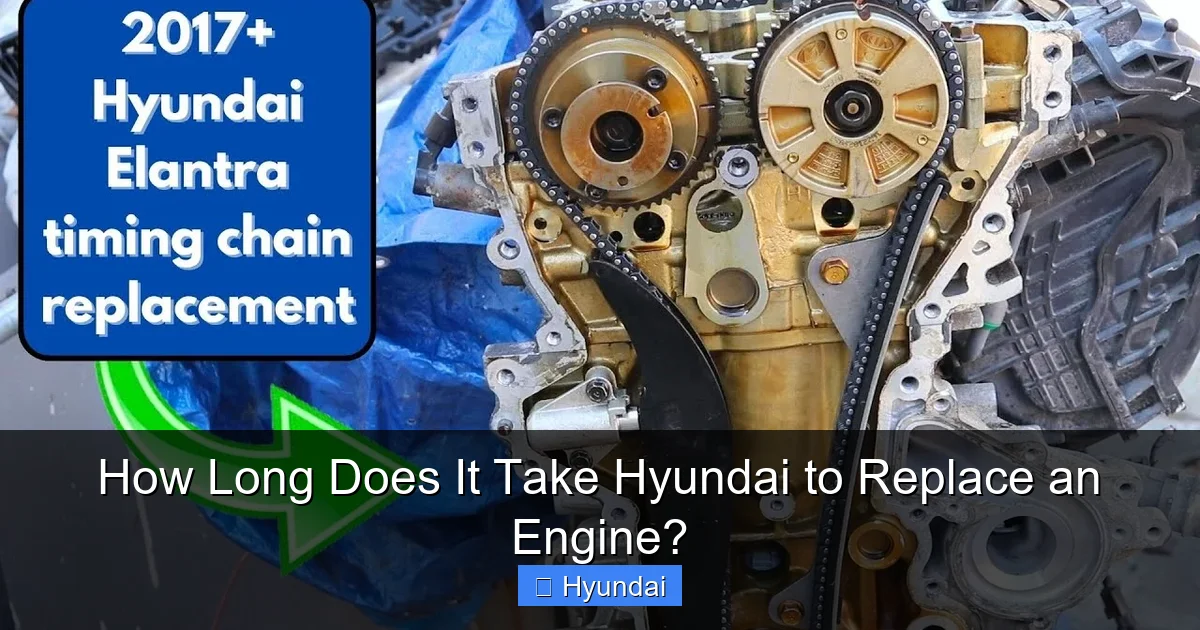
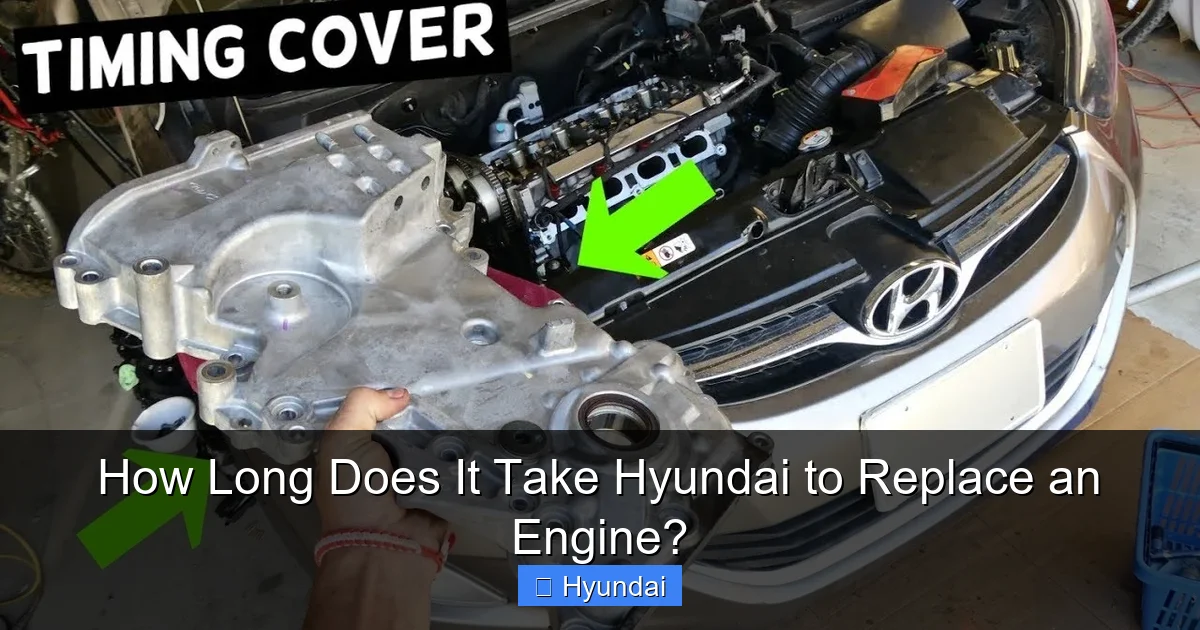
When the engine is out, it’s the perfect (and often necessary) time to replace age-related parts that share labor with the engine. This includes the timing belt/chain, water pump, thermostat, motor mounts, and transmission fluid/filter. A reputable shop will strongly recommend these items. While it adds cost, it prevents another major repair in 20,000 miles. However, it absolutely adds 1-2 additional shop hours per component and requires ordering more parts, extending the parts-wait phase.
2. Shop Backlog & Scheduling
A popular, well-reviewed independent shop or a busy Hyundai dealership service department can have a 1-2 week backlog just to get your car into a bay after parts arrive. Smaller shops or those in less dense areas may have more availability. Always ask: “What is your current estimated start date once parts are on hand?”
3. Warranty vs. Customer-Pay Processes
If your engine failure is covered by Hyundai’s powertrain warranty, the process involves Hyundai Motor America’s approval. While usually smooth, it adds a layer of administration. The dealer orders the engine as a warranty claim, which can sometimes have different (and occasionally longer) shipping channels than customer-pay parts. Communication is key; your service advisor will manage this.
4. Unforeseen Damage or Complications
Once the old engine is out, a technician might discover collateral damage. A broken motor mount that wasn’t initially apparent, a damaged oil pan, or a transmission that needs resealing. These are not part of the original estimate and require new parts and additional labor, adding 4-10 hours and more days to the timeline.
How Hyundai’s Warranty Impacts the Process
Hyundai’s industry-leading 10-year/100,000-mile powertrain warranty is a major selling point. If your engine failure is within these limits and not excluded (e.g., from lack of maintenance, abuse, or an accident), you’re in a good position.
The process is typically handled entirely through an authorized Hyundai dealer. You pay a deductible (if applicable in your state) and the warranty covers the engine and necessary related parts. The timeline, however, is not magically shortened. The dealer still must diagnose, get warranty approval from Hyundai, order the specific warranty part, and perform the labor. The main difference is you are not shopping for the best price on parts and labor; the warranty dictates the parts source (OEM) and labor rate. The total calendar time can still be 1-3 weeks, depending on the factors above. Always maintain meticulous service records to support a warranty claim.
Practical Tips to Minimize Your Downtime
You can’t magically make parts arrive faster, but you can be a savvy customer to keep the project moving.
1. Get Multiple Detailed Estimates
Don’t just go with the first shop. Get at least two written estimates from reputable Hyundai specialists (either dealer or independent). The estimate should break down: labor hours & rate, part cost (new/reman), and a list of recommended additional services (belt, fluid, etc.). Compare the total and the parts sources. A shop using Hyundai remanufactured engines with a solid warranty might be faster than one ordering a new OEM engine from across the country.
2. Ask the Right Questions Upfront
When you get the estimate, ask these questions directly:
- “What is the guaranteed arrival date for the engine you’re ordering?”
- “What is your current shop backlog? When can you start the work after parts arrive?”
- “Do you provide a loaner car or rental car reimbursement?” (Many dealers do for warranty jobs; independents vary).
- “What warranty do you offer on the labor and the engine itself?” (A good shop will warranty their work for at least 12 months/12,000 miles).
- “If you find additional damage during the swap, what is the process for contacting me for approval before proceeding?”
3. Consider a Loaner or Rental Car
This is a major inconvenience. If the timeline is 2+ weeks, you need wheels. Ask the shop about their loaner policy. Dealerships almost always have loaners for service customers. Independent shops may have a few or offer a discount with a local rental agency. Factor this cost into your overall budget if not provided.
4. Be Responsive
When the shop calls with an update or an approval request for additional work, answer promptly. A day of waiting for your “yes” adds a day to the schedule. Designate one person as the contact to avoid miscommunication.
Conclusion: Patience and Preparation Are Key
Replacing the heart of your Hyundai is a significant undertaking. While the physical act of swapping the engine might take a dedicated technician just a couple of days, the real-world journey from a sputtering car to a reliably running one usually spans one to three weeks. This timeline is a dance between parts logistics, shop capacity, and the simple complexity of your specific vehicle.
The single best thing you can do is establish clear, written communication with your chosen repair facility from the start. Understand their parts sourcing, get a firm parts ETA, and know their scheduling reality. For warranty-covered repairs, lean on your Hyundai dealer to guide you through the process. By being an informed and engaged customer, you transform a stressful, opaque process into a manageable project with a clear endpoint. Your Hyundai will be back on the road, and you’ll have a new engine with a fresh warranty, ready for many more miles of reliable service.
Frequently Asked Questions
Does Hyundai warranty cover engine replacement?
Yes, if the failure is due to a defect in materials or workmanship and your vehicle is within the 10-year/100,000-mile powertrain warranty period. You must have followed the recommended maintenance schedule. Normal wear, abuse, or accident damage are not covered.
Will I get a loaner car during the engine replacement?
Most Hyundai dealerships provide a loaner vehicle for warranty repairs. Independent shops may or may not offer this service. It’s crucial to ask about their loaner policy or rental car reimbursement when you get the initial estimate.
What can cause the engine replacement to take longer than expected?
The most common delays are slow parts shipping, a high shop backlog, and unforeseen damage discovered after the old engine is removed (like a broken mount or damaged transmission seal). Always ask the shop about their process for getting approval for additional work and parts.
Is it better to use a new, remanufactured, or used Hyundai engine?
For a primary replacement, a Hyundai remanufactured engine is often the best balance of cost, availability, and reliability, coming with a strong warranty. A brand-new OEM engine is the most expensive and may have the longest wait. A used engine is risky and typically not recommended for a full replacement due to unknown history and minimal warranty.
Can lack of oil changes cause an engine to fail and need replacement?
Absolutely. Failing to perform regular oil changes is the #1 cause of premature engine wear and catastrophic failure. Low or dirty oil leads to excessive friction, overheating, and bearing destruction. If your engine fails due to poor maintenance, it will almost certainly not be covered by warranty.
What should I check on the car when I pick it up after an engine replacement?
Do a thorough walk-around for any new scratches or dents. Start the engine and listen for any unusual noises (knocks, ticks, whines). Check all fluid levels (oil, coolant). Verify the check engine light is off. Take it for a test drive, listening and feeling for smooth acceleration, proper shifting, and no vibrations. Ensure the service advisor has reset the maintenance reminder system.