
How to Clear the Flat Tire Warning on Infiniti Q50

The flat tire warning light on your Infiniti Q50 indicates a loss in tire pressure, not necessarily a flat. To clear it, you must first correct the pressure in all four tires to the manufacturer’s specifications (usually 32-33 PSI). Once pressures are correct, the system typically resets automatically after driving a few miles. If it persists, you can manually reset it via the vehicle’s settings menu. Never ignore this warning, as proper tire pressure is critical for safety, handling, and fuel economy.
Key Takeaways
- The warning means low pressure: The “flat tire” or TPMS light signifies one or more tires are below the recommended pressure, not always a puncture.
- Fix the pressure first: You must inflate tires to the exact PSI listed on the driver’s door jamb sticker (typically 32-33 PSI for Q50) before the light will reset.
- Automatic reset is common: After correcting pressures and driving for 5-15 minutes at speeds above 25 mph, the Q50’s system often resets itself automatically.
- Manual reset via menu: If the light stays on, use the steering wheel controls to access the “Tire Pressure” menu and select “Set Pressure” or “Initialize” to manually reset.
- Spare tire matters: If your Q50 has a compact spare, it may have a different pressure requirement and can trigger the light if not properly inflated.
- Sensor issues are possible: A persistent light after correct inflation may indicate a faulty Tire Pressure Monitoring Sensor (TPMS) that needs professional diagnosis.
- Seasonal changes affect pressure: Temperature drops of 10°F can lower tire pressure by about 1 PSI, so check and adjust pressures regularly, especially in fall/winter.
📑 Table of Contents
- Understanding Your Infiniti Q50’s Tire Pressure Monitoring System (TPMS)
- Step 1: The Non-Negotiable First Step – Check and Correct All Tire Pressures
- Step 2: The Automatic Reset – Simply Drive
- Step 3: The Manual Reset – Using the Q50’s Vehicle Information Display
- What to Do If the Light Persists After a Reset
- Tire Pressure Specifications and Best Practices for the Infiniti Q50
- Safety First: When to Seek Professional Help Immediately
- Conclusion: A Simple Process Rooted in Proactive Care
Understanding Your Infiniti Q50’s Tire Pressure Monitoring System (TPMS)
That little yellow exclamation mark inside a tire on your dashboard isn’t just being annoying. It’s your Infiniti Q50’s Tire Pressure Monitoring System (TPMS) talking to you. This safety feature is mandated by law and is your first line of defense against the dangers of under-inflated tires. Unlike older cars where you had to physically check each tire with a gauge, your Q50 constantly monitors the air pressure inside each tire (and sometimes the spare) using electronic sensors mounted on the valve stems.
When the system detects that pressure in any tire has dropped 25% or more below the recommended level, it triggers that warning light. It’s crucial to understand that this light is a status indicator, not a diagnostic tool. It tells you something is wrong with the pressure, but it doesn’t tell you why. The cause could be a simple slow leak from a nail, a damaged valve stem, a cracked wheel, or just the natural pressure loss that occurs over time (about 1 PSI per month). In colder weather, the air inside the tire contracts, which also lowers pressure and can activate the light. This is why you often see the warning come on during a sudden cold snap.
Before we dive into clearing the light, we must address the core principle: you cannot and should not simply “turn off” the warning without first addressing the underlying cause. Resetting the light with under-inflated tires is like silencing a smoke alarm while a fire burns—extremely dangerous. Under-inflated tires lead to poor handling, increased stopping distances, uneven and premature tire wear, higher rolling resistance (killing your fuel economy), and a greater risk of a blowout. So, step one is always to check and adjust the tire pressures.
What Does the “Flat Tire” Warning Actually Look Like?
On the Infiniti Q50, the TPMS warning is typically a yellow icon that looks like a cross-section of a tire with an exclamation point in the center. It will illuminate on your instrument cluster when you start the car and should go out after a few seconds as the system performs a self-check. If it stays on or comes on while driving, that’s your signal to pull over safely and check your tires at the earliest opportunity. Some model years may also display a message in the vehicle information screen (between the speedometer and tachometer) that says “TIRE PRESSURE LOW” or provides specific tire locations.
Step 1: The Non-Negotiable First Step – Check and Correct All Tire Pressures
This is the most important step in the entire process. Resetting the light without doing this is pointless and unsafe. You need an accurate tire pressure gauge. The little pencil-style gauges at gas stations are often inaccurate. A good digital or dial gauge from an auto parts store is a worthwhile investment.
Visual guide about How to Clear the Flat Tire Warning on Infiniti Q50
Image source: vehiclefreak.com
Finding the Correct Pressure: Do not use the number on the tire’s sidewall. That is the maximum pressure the tire can hold. The correct pressure for your specific Q50 is found on a yellow and white sticker located on the driver’s side door jamb, when you open the door. It will list pressures for the front and rear tires, as they can sometimes differ, especially on sport or AWD models. For most Infiniti Q50 models, the standard recommendation is 32 PSI (pounds per square inch) for all four tires when they are “cold.” “Cold” means the car has been parked for at least three hours or driven less than a mile. Driving heats the tires and air inside, giving a falsely high reading.
The Procedure:
- Remove the valve stem cap from each tire (front left, front right, rear left, rear right, and the spare if it’s a full-size or monitored compact spare).
- Press your gauge firmly onto the valve stem. You’ll hear a brief hiss of air. Read the pressure.
- Compare to the door jamb sticker. Add air if it’s low, let air out if it’s high.
- Inflate at a gas station air pump or using your own portable compressor. Add air in short bursts, checking frequently with your gauge.
- Don’t forget the spare! A severely under-inflated spare tire can also trigger the warning. Check its pressure (it’s often 60 PSI for a compact spare) and fill it if needed.
- Replace all valve stem caps securely. They keep dirt and moisture out.
Once all tires are at the exact specified cold pressure, replace the valve caps. Now, you’re ready to attempt a reset.
Step 2: The Automatic Reset – Simply Drive
In the vast majority of cases, your Infiniti Q50’s TPMS is designed to reset itself automatically once it senses that all tires are back within the acceptable pressure range. The system needs to verify the new pressure readings over a short drive cycle.
Visual guide about How to Clear the Flat Tire Warning on Infiniti Q50
Image source: vehiclefreak.com
What to do: After inflating your tires to the correct PSI, simply drive your Q50 normally. The system typically requires you to drive at speeds above 25 mph for about 5 to 15 minutes. During this time, the sensors continuously transmit their pressure data to the vehicle’s computer. Once the computer confirms that all four (or five, including the spare) sensors report pressures within the target range for a sustained period, it will automatically turn off the warning light.
Patience is key. The light may not go out immediately after you start driving. It might stay on for several miles. Keep an eye on it. If it goes out, you’re done! If it persists after 20-30 minutes of mixed driving (city and highway), then you’ll need to perform a manual reset. This persistence could also mean you have a slow leak that is allowing pressure to drop again, so you should re-check all tire pressures after your drive to ensure they are still holding.
Step 3: The Manual Reset – Using the Q50’s Vehicle Information Display
If the light refuses to extinguish after a proper drive cycle with correct pressures, it’s time to manually initialize the TPMS system. This process tells the car’s computer, “Hey, the tires are now at the correct pressure, please acknowledge it and stop warning me.” The method varies slightly by model year and trim level (Base, Premium, Sport), but the general process is the same and uses the buttons on your steering wheel.
Visual guide about How to Clear the Flat Tire Warning on Infiniti Q50
Image source: brakeexperts.com
General Steps for Most Q50 Models (2014-2023):
- Ensure the ignition is ON. You don’t need to start the engine, but the car must be powered on (press the start button without touching the brake pedal, or turn the key to “ON”).
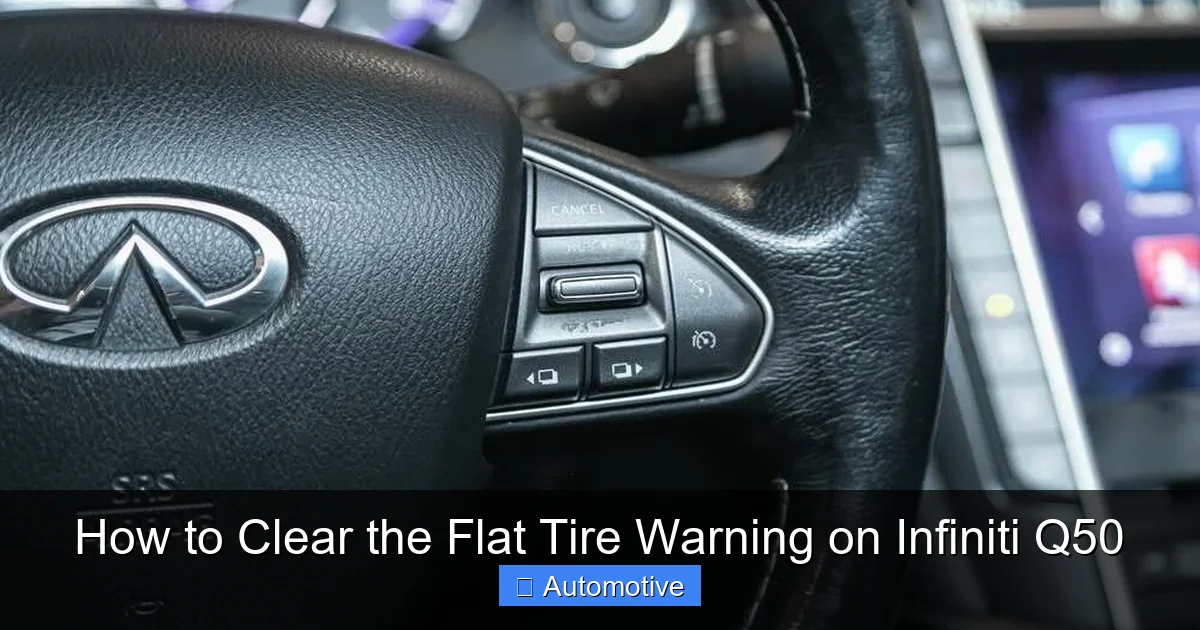
- Locate the control buttons on the left side of your steering wheel. You’re looking for a button with a square or rectangular icon that represents a screen or display, often labeled “INFO” or with a small “i”. There will also be a toggle switch or up/down arrows (often the same as the volume control) and a “ENTER” or “SET” button.
- Navigate to the “Tire Pressure” menu. Press the “INFO” or display button repeatedly until you see a menu option for “TIRE PRESSURE,” “TPMS,” or “TIRE MONITOR.” Use the arrow/toggle switch to highlight it and press “ENTER” or “SET” to select it.
- Find the “Set Pressure” or “Initialize” option. Inside the tire pressure menu, you should see the current pressures for each wheel (if your system is direct-reading). Scroll through the options until you find “SET PRESSURE,” “INITIALIZE,” or “REGISTER.” This is the command to reset the warning.
- Execute the reset. Select “SET PRESSURE” or “INITIALIZE.” The display may ask you to confirm or show a message like “SET PRESSURE?” or “INITIALIZING…”. Press “ENTER” or “SET” again to confirm.
- Wait for confirmation. The screen should then display a message such as “TPMS INITIALIZATION COMPLETE” or simply return to the main menu. The warning light on the dash should extinguish within a few minutes of driving.
Important Note: On some Q50 models, particularly those with the Premium or Sport package, the tire pressure information might be accessed through the central infotainment screen via the “Vehicle Settings” or “Service & Maintenance” menu using the console knob or touchscreen. Consult your owner’s manual for the exact path for your specific year and trim. If you cannot find the option, your model year might require the reset to be performed by a dealer using a specialized scan tool, though this is rare for a simple pressure reset.
What to Do If the Light Persists After a Reset
So you’ve inflated the tires perfectly, driven for 20 minutes, and manually reset the system, but that stubborn light is still on. Now what? This indicates a problem beyond simple low pressure. The TPMS system has detected a fault. The most common culprits are:
- A Faulty or Dead TPMS Sensor: The battery inside each sensor lasts about 7-10 years. If one dies, it stops transmitting data, and the system flags a fault. The light will usually stay on solid, not blink.
- Damaged Sensor or Valve Stem: Hitting a pothole or curb can damage the sensitive sensor or its valve stem, causing a leak or communication failure.
- Sensor Replacement Needed: If you recently had a tire changed or rotated and the sensor was damaged, or if it’s just reached the end of its life, it needs replacement. Sensors are not typically DIY for most people as they require special tools to mount and program to the vehicle.
- Spare Tire Sensor Issue: If your spare is a full-size wheel with a sensor, and that sensor is faulty or its battery is dead, it can cause a persistent warning.
- System Communication Error: Rarely, there can be a glitch in the vehicle’s main computer (BCM) that receives the sensor signals.
Your Action Plan:
- Re-check pressures. Use your own gauge to verify all five tires (including spare) are exactly at spec. A slow leak could be draining pressure again.
- Inspect tires visually. Look for nails, screws, sidewall damage, or bulges. Check the valve stems for cracks or leaks (spray with soapy water; bubbles indicate a leak).
- Visit a professional. Take your Q50 to a reputable tire shop (like Discount Tire, Tire Kingdom, or your Infiniti dealer). They have a TPMS diagnostic tool that can read each sensor’s individual ID, battery life, and pressure. They can identify which sensor is faulty. They also have the tools to replace and reprogram new sensors to your vehicle’s system. This is not a job you can easily do at home without expensive, specialized equipment.
For more complex reset procedures on other Nissan/Infiniti platforms, you might find guides on how to clear the tire maintenance light on a Nissan helpful, as the underlying technology is very similar across the alliance.
Tire Pressure Specifications and Best Practices for the Infiniti Q50
Knowing the right number is half the battle. For the Infiniti Q50, the standard recommended cold tire pressure is 32 PSI for all four wheels. However, this can vary. Always, always, always check the sticker on your driver’s door jamb. Some performance or AWD models may specify 33 PSI, or have slightly different front/rear recommendations for optimal balance. Your owner’s manual will also have this information.
Best Practices for Maintenance:
- Check Monthly and Before Long Trips: Make it a habit. Temperature changes, permeation, and small leaks cause gradual pressure loss.
- Use a Quality Gauge. Trust your own gauge over gas station pumps.
- Check When Cold. For an accurate reading, tires must be cold. If you’ve driven more than a mile, the reading will be higher. Add 1-2 PSI to the cold reading if you must check hot tires, but always adjust to the cold spec when possible.
- Don’t Overfill. Over-inflation is just as bad as under-inflation. It causes a harsh ride, uneven center tread wear, and reduced traction. Never exceed the maximum pressure on the tire sidewall.
- Rotate Tires Regularly. Follow the schedule in your owner’s manual (often every 5,000-7,500 miles). This promotes even wear. During rotation, the tire shop will often check and adjust pressures and can inspect the TPMS sensors.
- Replace Sensors with Tires. TPMS sensors have a finite life. When you buy new tires, it’s highly recommended to replace the sensors (or at least the valve stem/seal kit) to ensure years of reliable service. The cost is a small addition to a tire purchase.
Understanding your car’s specific needs is part of being a responsible owner. While the Q50’s system is straightforward, other vehicles have different interfaces. For example, resetting a Honda Civic’s tire pressure light involves a different button sequence, but the fundamental principle of correcting pressure first remains identical across all brands.
Safety First: When to Seek Professional Help Immediately
While a TPMS light is often just a pressure issue, there are scenarios where you must stop driving and get help:
- If the light is FLASHING. A flashing TPMS light (usually for 30-60 seconds after startup and then staying solid) often indicates a sensor communication failure or system fault, not just low pressure. This needs diagnosis.
- If you feel a vibration, thumping, or pulling to one side. This could mean a tire is severely under-inflated or has a major defect like a separated belt. Driving on it is dangerous.
- If you see obvious tire damage. A sidewall bubble, large cut, or a nail/screw in the tread that is deflating the tire rapidly.
- If the light comes on after hitting a pothole or curb. You may have bent a wheel or damaged a sensor.
- If you’ve corrected the pressure and reset the system, but the light returns within a day or two. You have a fast leak. Do not keep refilling and driving. Have the tire professionally inspected and repaired or replaced.
Your safety and the safety of others on the road depend on your tires being in good condition and properly inflated. The TPMS is a brilliant warning system, but it is not a substitute for regular manual checks. Think of it as a backup alarm.
Conclusion: A Simple Process Rooted in Proactive Care
Clearing the flat tire warning on your Infiniti Q50 is a simple two-part dance: Fix the problem, then reset the system. The vast majority of the time, the “problem” is simply low air pressure due to temperature changes or natural leakage. By keeping a good gauge in your trunk and checking pressures monthly, you can often prevent the light from ever coming on. When it does, inflate to the precise PSI on your door jamb sticker, drive for 10-15 minutes, and the light should vanish on its own. If it doesn’t, a quick manual reset via the steering wheel controls usually does the trick.
Persistent warnings are your car’s way of saying something more serious is amiss—a faulty sensor, a slow leak you can’t see, or a damaged valve stem. In these cases, investing in a professional diagnosis is not just about turning off a light; it’s about ensuring your luxury sedan performs as intended, with optimal grip, braking, and efficiency. Treat your TPMS not as an annoyance, but as the invaluable safety guardian it was designed to be. A few minutes of your time each month is a small price to pay for the confidence and security of knowing your Q50 is firmly planted on the road.
Frequently Asked Questions
Will the flat tire warning light go away on its own after I add air?
Yes, usually. After correcting all tire pressures to the manufacturer’s specification, drive your Q50 above 25 mph for 5-15 minutes. The TPMS will automatically detect the correct pressures and turn off the light. No manual reset is typically needed if the pressures are correct.
Can I just reset the light without adding air to the tires?
Absolutely not. Resetting the light without fixing the low pressure is dangerous and defeats the purpose of the safety system. The warning is alerting you to a hazardous condition. You must inflate the tires to the correct PSI first, as found on the driver’s door jamb sticker.
What if the light comes back on after I’ve reset it?
This indicates a persistent problem. You likely have a slow leak from a nail or puncture, a damaged valve stem, or a faulty TPMS sensor. Re-check all tire pressures (including the spare) to see if one is losing air. You will need a professional tire shop to diagnose the source, repair the tire, and/or replace the sensor.
Does the spare tire affect the TPMS warning?
Yes, if your Q50 has a compact spare tire that is equipped with a TPMS sensor (many are), and that spare is significantly under-inflated, it can trigger the warning light. Always check the spare’s pressure when investigating a TPMS alert. The required pressure is usually much higher (e.g., 60 PSI) and is listed on the spare tire itself or in your owner’s manual.
Why is my TPMS light flashing instead of staying solid?
A flashing TPMS light, especially when you start the car, usually indicates a system communication fault or a dead battery in one of the sensors, rather than just low pressure. This requires professional diagnosis with a scan tool to identify which sensor is not communicating with the vehicle’s computer.
Can extreme weather cause the light to come on?
Yes. For every 10°F drop in outside temperature, tire pressure decreases by about 1 PSI. A cold winter morning can easily trigger the light if your tires were set to the correct pressure in warmer weather. The solution is to add air to bring them back to the specified cold inflation pressure. The light should go off after driving and warming the tires slightly.
