
How Does a Spare Tire Go On

Knowing how a spare tire goes on is a vital skill every driver should have. This guide walks you through the entire process—from safety prep to securing the spare—so you’re never stuck unprepared on the roadside.
Key Takeaways
- Safety comes first: Always pull over to a safe, flat area and turn on hazard lights before changing a tire.
- Gather the right tools: You’ll need a jack, lug wrench, spare tire, and wheel wedges—most cars come with these.
- Loosen lug nuts before lifting: Break the nuts loose while the tire is still on the ground to prevent the wheel from spinning.
- Use the jack correctly: Place it on the vehicle’s designated jack point to avoid damage or injury.
- Mount the spare properly: Align the wheel with the studs, hand-tighten lug nuts in a star pattern, then lower the car and fully tighten.
- Check spare tire pressure regularly: A flat spare is useless—inspect it every few months.
- Know your spare type: Donut spares are temporary and have speed/distance limits; full-size spares can be used long-term.
📑 Table of Contents
Why Knowing How a Spare Tire Goes On Matters
Imagine you’re driving down a quiet country road, the sun is setting, and suddenly—thump, thump, thump. Your car starts to wobble. You pull over and discover a flat tire. Now what? If you don’t know how a spare tire goes on, you could be stranded for hours waiting for help. But with the right knowledge and tools, you can be back on the road in under 30 minutes.
Flat tires happen to everyone—whether it’s from a nail in the road, a pothole, or just wear and tear. According to the American Automobile Association (AAA), tire-related issues are one of the top reasons for roadside assistance calls. Yet, many drivers feel nervous or unsure when it comes to changing a tire themselves. The good news? It’s simpler than it looks. With a little practice and the right steps, you can handle a flat tire like a pro.
This guide will walk you through every step of how a spare tire goes on—safely, efficiently, and confidently. Whether you’re a new driver or just need a refresher, we’ll cover everything from preparation to final checks. By the end, you’ll know exactly what to do when that dreaded flat strikes.
What You’ll Need: Tools and Equipment
Visual guide about How Does a Spare Tire Go On
Image source: i.ytimg.com
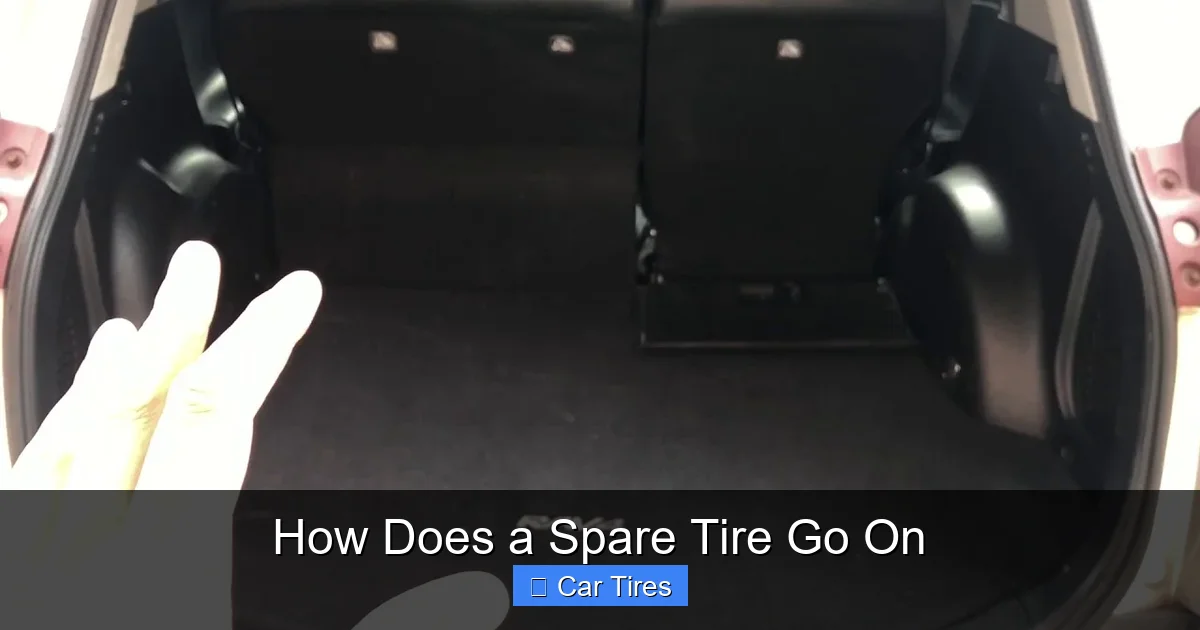
Before you even think about jacking up your car, make sure you have the right tools. Most vehicles come equipped with a basic tire-changing kit, but it’s smart to double-check. Here’s what you’ll need:
Spare Tire
This is the most obvious item, but it’s also the most important. Your spare tire should be in good condition, properly inflated, and compatible with your vehicle. There are two main types: compact temporary spares (often called “donuts”) and full-size spares. Donut spares are smaller, lighter, and designed for short-term use—usually no more than 50 miles and under 50 mph. Full-size spares match your regular tires and can be used indefinitely, though they take up more space.
Car Jack
The jack lifts your vehicle off the ground so you can remove the flat tire. Most cars come with a scissor jack or hydraulic jack stored in the trunk. Make sure it’s in working order and rated for your vehicle’s weight. Never use a jack that’s damaged or unstable.
Lug Wrench
This L-shaped or cross-shaped tool is used to loosen and tighten the lug nuts that hold the wheel in place. Some wrenches come with a built-in socket for different nut sizes. If yours is missing or broken, you may need to buy a replacement—don’t wait until you’re stranded.
Wheel Wedges or Blocks
These prevent your car from rolling while it’s lifted. You can use wooden blocks, bricks, or even large rocks—anything sturdy that fits snugly against the tires on the opposite end of the car. For example, if you’re changing a front tire, place the wedges behind the rear tires.
Owner’s Manual
Your car’s manual contains specific instructions for jacking points, torque specs, and spare tire limits. It’s a goldmine of information and should be your go-to reference. Keep it in the glove box for easy access.
Optional but Helpful Tools
– Gloves: Protect your hands from dirt, grease, and sharp edges.
– Flashlight: Essential if you’re changing a tire at night.
– Tire Pressure Gauge: To check the spare’s inflation before installing.
– Torque Wrench: For precise tightening of lug nuts (recommended for full-size spares).
– Reflective Triangles or Flares: Increase visibility to other drivers.
Having these tools ready means you won’t waste time searching when you’re stressed. Consider storing them in a small toolbox in your trunk so everything stays organized.
Step-by-Step: How a Spare Tire Goes On
Visual guide about How Does a Spare Tire Go On
Image source: twotwentyone.net
Now that you’re prepared, let’s walk through the actual process of how a spare tire goes on. Follow these steps carefully, and you’ll be back on the road in no time.
Step 1: Find a Safe Location
As soon as you notice a flat, slow down and look for a safe place to pull over. Avoid soft shoulders, hills, or curves. Ideally, find a flat, level surface like a parking lot or wide shoulder. Turn on your hazard lights to alert other drivers.
Once stopped, engage the parking brake and put the car in “Park” (for automatics) or first gear (for manuals). This prevents the car from rolling.
Step 2: Secure the Vehicle
Place wheel wedges or blocks against the tires opposite the flat. For example, if the flat is on the front passenger side, place wedges behind the rear driver-side tire. This adds an extra layer of safety.
Step 3: Remove the Hubcap (If Applicable)
Some wheels have a hubcap covering the lug nuts. If yours does, use the flat end of the lug wrench or a screwdriver to pry it off. Set it aside in a safe place so it doesn’t get lost.
Step 4: Loosen the Lug Nuts
This is a crucial step—do it before lifting the car. Use the lug wrench to turn the nuts counterclockwise. They may be tight, so you might need to use your foot or body weight. Loosen them about a half-turn each, but don’t remove them yet. Loosening them while the tire is on the ground prevents the wheel from spinning.
Pro tip: If a nut is stuck, spray it with WD-40 or a similar lubricant and wait a few minutes before trying again.
Step 5: Position the Jack
Refer to your owner’s manual to find the correct jack point near the flat tire. Never jack the car on plastic body panels, suspension parts, or the oil pan—these can crack or collapse. The jack point is usually a reinforced metal section along the frame.
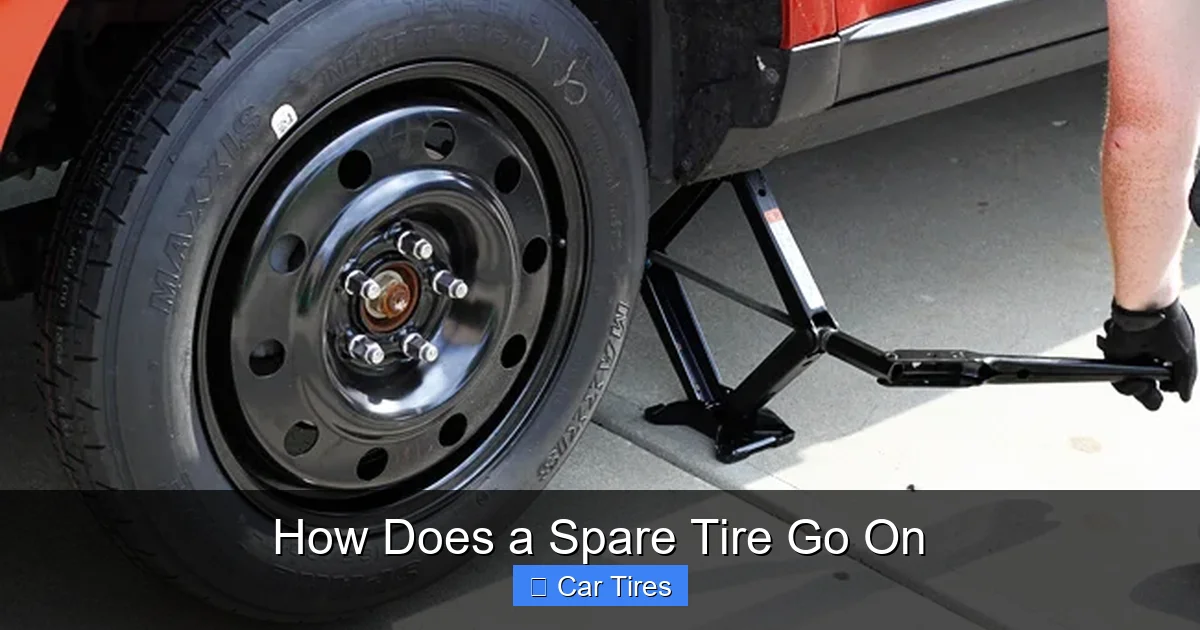
Place the jack securely under the vehicle and begin pumping or turning it to lift the car. Lift just high enough for the flat tire to clear the ground—usually 2 to 3 inches.
Step 6: Remove the Flat Tire
Once the car is lifted, fully unscrew the loosened lug nuts and place them in a small container or on a cloth so they don’t roll away. Then, gently pull the flat tire straight off the wheel studs. It may be heavy, so use both hands and keep your back straight.
Step 7: Mount the Spare Tire
This is the moment of truth—how the spare tire goes on. Line up the holes in the spare with the wheel studs on the hub. Push the spare onto the studs until it’s snug against the brake rotor.
Step 8: Hand-Tighten the Lug Nuts
Screw the lug nuts back on by hand, turning them clockwise. Tighten them as much as you can using just your fingers. Then, use the lug wrench to tighten them further in a star pattern—this ensures even pressure. Imagine the nuts are at the 12, 3, 6, and 9 o’clock positions. Tighten the 12 o’clock nut first, then the 6 o’clock, then 3, then 9. Repeat until all are snug.
Step 9: Lower the Car
Slowly turn the jack handle to lower the vehicle until the spare tire touches the ground but doesn’t bear the full weight yet. At this point, use the lug wrench to fully tighten the lug nuts in the star pattern. Apply steady pressure—don’t over-tighten, but make sure they’re secure.
Then, lower the car completely and remove the jack.
Step 10: Final Tightening and Cleanup
Once the car is on the ground, give the lug nuts one final tighten with the wrench. Replace the hubcap if you removed one. Stow the flat tire, jack, wrench, and other tools back in your trunk.
Safety Tips and Common Mistakes to Avoid
Visual guide about How Does a Spare Tire Go On
Image source: yourbmwblog.com
Changing a tire might seem straightforward, but small mistakes can lead to big problems. Here’s how to stay safe and avoid common pitfalls.
Never Jack on Uneven or Soft Ground
If you’re on gravel, mud, or a slope, the jack can slip or sink. Always look for solid, level pavement. If you’re stuck, use a piece of plywood or a flat rock under the jack for stability.
Don’t Skip the Wheel Wedges
It only takes a second for a car to roll. Wheel wedges are a simple but lifesaving precaution.
Avoid Over-Tightening Lug Nuts
Too much force can strip the threads or warp the brake rotor. Use a torque wrench if possible—most lug nuts should be tightened to 80–100 ft-lbs, but check your manual.
Don’t Drive on a Donut Spare Long-Term
Temporary spares are not built for speed or distance. Driving over 50 mph or more than 50 miles can damage the tire or your vehicle. Replace it with a full-size tire as soon as possible.
Check Spare Tire Pressure Monthly
A spare tire can lose air over time. Make it a habit to check the pressure every few months, especially before long trips.
Practice at Home
The best time to learn how a spare tire goes on is not during an emergency. Practice in your driveway on a calm day. You’ll build confidence and discover any missing tools beforehand.
Types of Spare Tires: What You Need to Know
Not all spare tires are created equal. Understanding the differences can help you make the right choice and use your spare safely.
Compact Temporary Spare (Donut)
These are the most common spares. They’re small, lightweight, and take up minimal space. However, they have significant limitations:
– Speed limit: Usually 50 mph
– Distance limit: Typically 50–70 miles
– Not suitable for all-wheel drive (AWD) vehicles
– May affect handling and braking
Because of these limits, donut spares are meant as a temporary fix—get to a repair shop ASAP.
Full-Size Spare
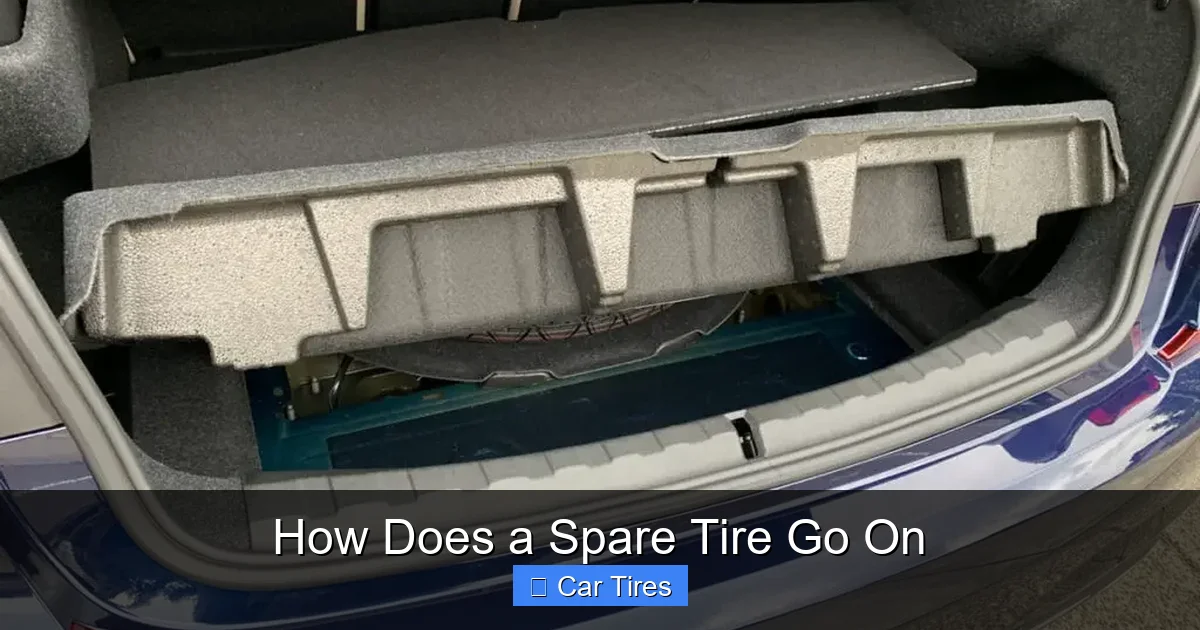
A full-size spare matches your regular tires in size and performance. It can be used indefinitely and driven at normal speeds. However, it takes up more trunk space and adds weight. Some SUVs and trucks come with full-size spares mounted under the vehicle or on a rear door.
Run-Flat Tires
Some modern cars don’t have a spare tire at all. Instead, they use run-flat tires that can be driven for a short distance (usually 50 miles) after a puncture. While convenient, run-flats can be expensive to replace and may not work with all tire shops.
Tire Repair Kits
Another alternative is a tire sealant and inflator kit. These plug small punctures and reinflate the tire temporarily. They’re lightweight and easy to use, but they don’t work for large tears or sidewall damage.
When to Call for Help
While changing a tire is a valuable skill, there are times when it’s better to call a professional.
Unsafe Conditions
If you’re on a busy highway, in the rain, or at night with poor visibility, it may be too dangerous to change the tire yourself. Call roadside assistance instead.
Physical Limitations
If you have back problems, arthritis, or other health issues, lifting a tire and using a jack can be risky. Don’t push yourself—safety comes first.
Missing or Damaged Tools
If your jack is broken, the spare is flat, or you don’t have a lug wrench, attempting a DIY change could make things worse. Call for help.
All-Wheel Drive (AWD) or Four-Wheel Drive (4WD) Vehicles
On AWD/4WD vehicles, using a donut spare can damage the drivetrain if the tires aren’t the same size. Some manufacturers recommend against using temporary spares altogether. Check your manual or call a tow truck.
Multiple Flat Tires
If more than one tire is flat, you likely need a tow. Most cars only carry one spare.
Maintaining Your Spare Tire
A spare tire is only useful if it’s ready when you need it. Regular maintenance ensures it’s in good condition.
Check Tire Pressure
Use a tire pressure gauge to check the spare every 1–2 months. The recommended pressure is usually listed on the tire sidewall or in the manual. Underinflated spares can fail when you need them most.
Inspect for Damage
Look for cracks, bulges, or dry rot—especially on older spares. These signs indicate the tire may not hold air or could blow out.
Rotate the Spare (If Full-Size)
If you have a full-size spare, include it in your tire rotation schedule. This ensures even wear and extends the life of all your tires.
Keep It Clean and Dry
Store the spare in a clean, dry area. If it’s mounted under the car, check for rust or debris that could affect performance.
Conclusion
Knowing how a spare tire goes on isn’t just about fixing a flat—it’s about peace of mind. With the right tools, knowledge, and preparation, you can handle a tire emergency confidently and safely. Remember: safety first, follow the steps, and don’t rush. Practice at home, maintain your spare, and always know your limits.
Whether you’re driving across town or on a cross-country road trip, being prepared means you’re never truly stranded. So the next time you hear that familiar thump, you’ll know exactly what to do. Stay safe, stay ready, and keep rolling.
Frequently Asked Questions
Can I drive long distances on a spare tire?
No, especially if it’s a donut spare. Most temporary spares are limited to 50 miles and 50 mph. Full-size spares can be used longer, but it’s still best to replace the flat as soon as possible.
How tight should lug nuts be when installing a spare tire?
Lug nuts should be tightened securely, but not over-tightened. Use a torque wrench if possible—typically 80–100 ft-lbs. Tighten in a star pattern for even pressure.
What if my spare tire is also flat?
Check the pressure and inflate it if possible. If it’s damaged or won’t hold air, you’ll need roadside assistance or a tow to a repair shop.
Do all cars come with a spare tire?
No. Some newer models use run-flat tires or tire repair kits instead. Check your owner’s manual or trunk to see what your vehicle includes.
Can I use a spare tire on an all-wheel drive vehicle?
It depends. Many AWD vehicles require all four tires to be the same size. Using a donut spare can damage the drivetrain. Consult your manual or call a professional.
How often should I check my spare tire?
Check the spare tire pressure and condition every 1–2 months, especially before long trips. A flat spare is useless in an emergency.
