
Harley-davidson Oil Filter Chart

Using the correct Harley-Davidson oil filter is non-negotiable for engine longevity. A precise oil filter chart, cross-referenced by your exact model and year, eliminates guesswork and prevents costly damage. Always prioritize OEM-specified filters or high-quality aftermarket equivalents that meet Harley’s stringent specifications for fit, flow, and filtration.
Key Takeaways
- Correct Fit is Critical: An improper filter can cause leaks, poor oil flow, or even internal engine damage. The chart provides the exact part number for your specific Harley model and engine type.
- OEM vs. Aftermarket: Harley-Davidson (MOCO) filters are guaranteed to meet specs. High-quality aftermarket brands (like K&N, Purolator, WIX) often list direct Harley replacements—always verify using the chart.
- Model & Year Specificity: Filters differ between Twin Cam, Milwaukee-Eight, Sportster, and Revolution engines, and often change mid-generation. Never assume a filter from a similar model fits yours.
- Chart as a Cross-Reference Tool: Use the chart to match part numbers from any reputable vendor. It’s your single source of truth against incompatible parts.
- Installation Matters: Even the right filter can fail if installed incorrectly. Always hand-tighten plus a specified quarter-turn, and never reuse old gaskets.
- Part of a System: The oil filter works with the correct oil type and capacity. Check your Harley-Davidson Fluid Capacity Chart for complete specifications.
- Regular Replacement: Change the filter with every oil change (typically every 5,000 miles or annually). A clogged filter starves your engine of vital lubrication.
📑 Table of Contents
- Why Your Harley’s Oil Filter Is More Than Just a Can
- Decoding the Harley-Davidson Oil Filter Chart
- Model-Specific Considerations: It’s Not One-Size-Fits-All
- OEM vs. Aftermarket: What the Chart Doesn’t Always Tell You
- Installation Best Practices: The Right Filter, Installed Wrong, Is a Wrong Filter
- Maintenance Schedule & Holistic Fluid Care
- Conclusion: Your Harley-Davidson Oil Filter Chart Is Your Maintenance Co-Pilot
Why Your Harley’s Oil Filter Is More Than Just a Can
Let’s talk about the heart of your Harley-Davidson. That massive, thumping engine isn’t just a piece of metal—it’s a precision instrument of American engineering. And like any high-performance machine, it’s utterly dependent on clean, free-flowing oil. The oil filter is the unsung hero here, the kidney for your V-twin. It’s constantly scrubbing millions of microscopic metal particles, soot, and other contaminants from the oil, preventing them from sandblasting your bearings, cam lobes, and cylinder walls.
Harley engines, particularly the air-cooled big-twins, operate under extreme stress and heat. They turn at high RPMs and often run for long periods. This isn’t a gentle commute; it’s a workout. A failing or incorrect oil filter can restrict flow, causing oil starvation and catastrophic failure. Conversely, a filter with too much media can also restrict flow. It’s a Goldilocks scenario—it must be just right. This is where the legendary, and often confusing, Harley-Davidson oil filter chart becomes your bible. It’s the map that ensures you get the “just right” filter for your specific ride.
The High-Stakes Environment of a Harley Engine
To understand why the chart is so vital, picture this: your Twin Cam or Milwaukee-Eight engine is a complex assembly of gears, chains, and sliding surfaces. The primary drive (which houses your clutch and primary chain) and the transmission are lubricated by the same oil in most models. That oil gets bombarded with debris from the chain drive, clutch fibers, and normal wear. The filter’s job is to catch this debris without choking the system.
A filter with the wrong internal media or a faulty anti-drainback valve can allow oil to drain out of the filter when the engine is off. On a hot Harley, this means a critical few seconds of dry startup on the next crank—seconds that can cause immense wear. The specifications on the chart aren’t arbitrary; they ensure the filter’s bypass valve pressure, media efficiency, and construction meet Harley’s engineering requirements for your engine’s unique demands.
Decoding the Harley-Davidson Oil Filter Chart
So, you’ve found one of these charts. It might be a PDF from Harley, a laminated shop guide, or a webpage from a parts vendor. It usually looks like a simple table, but every column is packed with crucial data. Misreading it is easy and leads to buying the wrong part. Let’s break it down.
Visual guide about Harley-davidson Oil Filter Chart
Image source: motorbikeinsider.com
Typical Columns and What They Mean
You’ll typically see columns for:
- Model Year: Often the starting point, but beware—mid-year changes happen. A 2017 model might use a different filter than a 2018, even if they look identical.
- Model Family: This is key. It will list FLHT, FLTR, FXBB, XL883N, etc. This groups bikes by platform (Touring, Softail, Sportster).
- Engine Type/Displacement: It might specify “Twin Cam 103,” “Milwaukee-Eight 114,” or “Iron 883.” This is a critical differentiator. A filter for a Twin Cam 96 is not the same as one for a Milwaukee-Eight 107, even on the same bike model year.
- Harley Part Number: The sacred code. This is the MOCO number, like 63793-07A or HP-2360. This is the definitive identifier. If your vendor lists this number, you have the correct filter.
- Aftermarket交叉 Reference Numbers: Good charts will list equivalent numbers from brands like K&N (HP series), Purolator (PL series), WIX, or Hiflows. This is incredibly useful for shopping.
- Thread Size & Gasket ID: Sometimes listed. The thread is almost always 3/4″-16 for modern Harleys, but the gasket diameter (often 2.5″ or 2.75″) is what seals it. A filter with the wrong gasket will leak.
A Practical Example: Navigating the Chart
Let’s say you own a 2016 Harley-Davidson Street Glide (FLHX). You go to the chart. You find the 2016 row, look under Model for FLHX/FLHXS. The engine type is Twin Cam 103. The Harley part number listed is 63793-07A. Now, when you shop at an online retailer, you don’t search “2016 Street Glide filter.” You search for the part number 63793-07A or its equivalents (e.g., K&N HP-1001 or Purolator PL14612). This method is foolproof. The chart cuts through marketing noise and model name confusion.
This is where linking to other model-specific guides becomes helpful. While you’re focused on your oil filter, a comprehensive maintenance routine also involves knowing your Harley-Davidson fluid capacity chart for the correct oil volume and type. One wrong spec in the system can undermine the other.
Model-Specific Considerations: It’s Not One-Size-Fits-All
This is the most common pitfall. A Harley owner thinks, “My friend has a 2015 Road King, and I have a 2015 Electra Glide, we can use the same filter.” Not necessarily. The chart exists because Harley’s engineering changed over the years. Here’s a simplified breakdown of major families and their typical filter evolution.
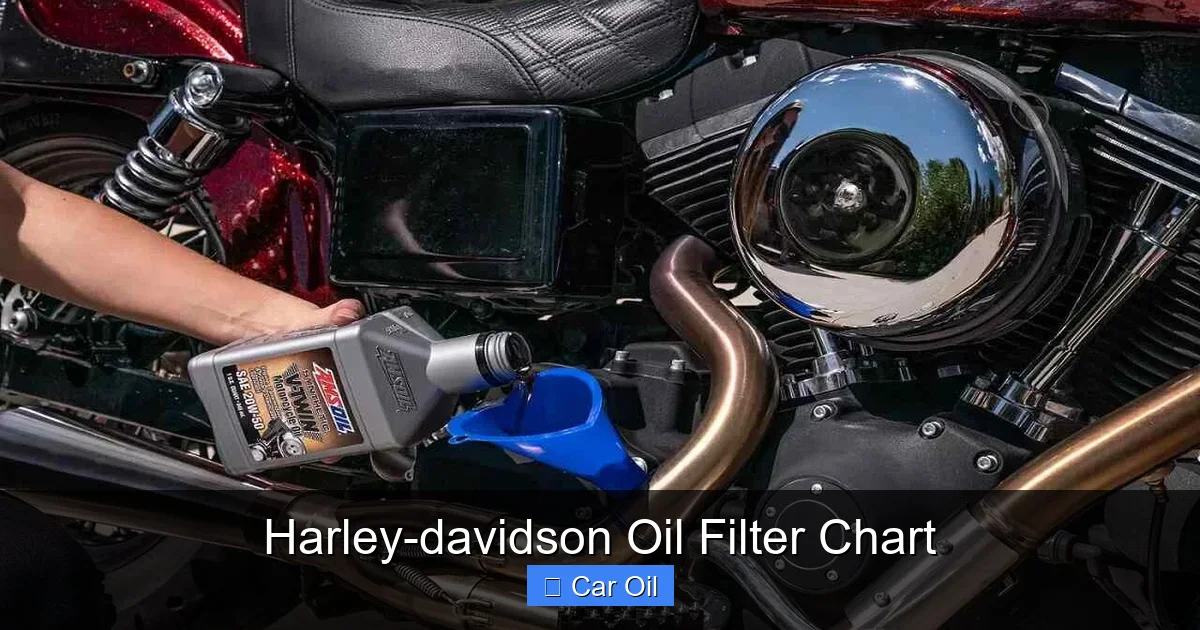
Visual guide about Harley-davidson Oil Filter Chart
Image source: motorbikeinsider.com
The Twin Cam Era (1999-2016)
The venerable Twin Cam 88/96/103 powered millions of bikes. For most of this run, the filter part number was HP-2360 (or MOCO 63793-97A/63793-07A for later revisions). This is a very common filter. However, the key change was in the gasket diameter. Earlier filters (pre-~2000) used a smaller gasket. The chart will specify if a particular year/model needs the updated gasket size. Using the old-style filter on a newer case can cause leaks.
The Milwaukee-Eight Revolution (2017-Present)
With the new engine came a new filter requirement. Most Milwaukee-Eight models (Touring, Softail) use a different filter, commonly part number 63793-18 or its aftermarket equivalents. It’s often physically longer. The chart clearly separates these from the Twin Cam entries. A 2016 Twin Cam filter will not fit a 2017 Milwaukee-Eight engine—the mounting stud is different, and the flow rate is calibrated for the new engine’s demands.
Sportster & Revolution Models
Sportsters (XL models) have their own lineage. The Evolution engine (Evolution 883/1200) used a shorter filter, often HP-2361 or similar. The newer Revolution engines (like in the Sportster S) are a completely different animal with their own unique filter specification. Never assume across these platforms.
Even within a model year, a CVO model with a larger displacement engine (e.g., 117ci) might use the same filter as the standard 114ci model, but it’s not a guarantee. The chart is your final arbiter.
OEM vs. Aftermarket: What the Chart Doesn’t Always Tell You
The chart gives you the part number. It doesn’t tell you the story behind the filter. This is where your knowledge as an owner becomes crucial.
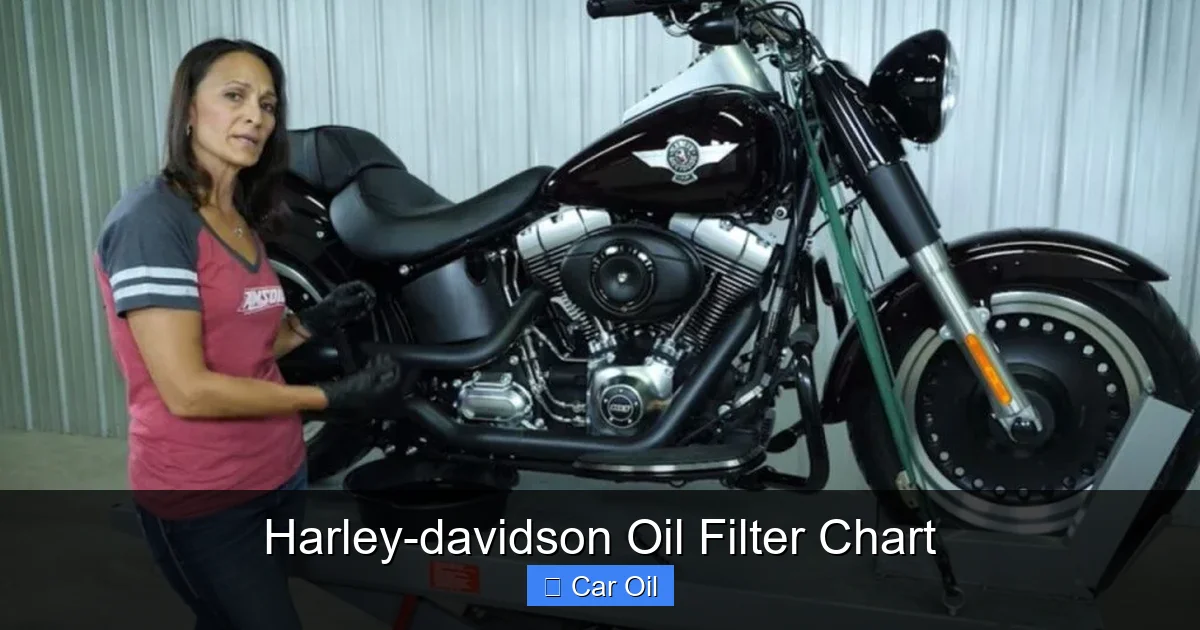
Visual guide about Harley-davidson Oil Filter Chart
Image source: motorbikeinsider.com
The Case for Genuine Harley-Davidson (MOCO) Filters
There’s no ambiguity. You buy the part number from a Harley dealer, and it’s the exact filter that passed Harley’s validation testing. The media, the anti-drainback valve, the bypass valve spring rate—it’s all as specified for your engine. For peace of mind, especially on a new bike under warranty, this is the simplest path. You know it’s right.
The Aftermarket Landscape: Quality Varies Wildly
This is where the “cross-reference” part of the chart shines. Brands like K&N (their HP series is excellent), WIX, Purolator PureOne, and Hiflows produce filters that meet or exceed OEM specs. They often use superior media (like their own synthetic blends) and may even offer better flow characteristics. However, the market is flooded with generic, no-name filters that simply have the correct thread and gasket size but use cheap, inefficient media that can restrict flow or shed particles.
How to Shop Smart: Use the chart to get the exact MOCO part number. Then, search for that number plus “equivalent” or “replacement.” Reputable vendors will list the aftermarket brands that directly cross-reference. Avoid listings that say “fits Harley” without a specific part number match. A filter that “fits” the threads might have the wrong internal design.
For those deeply invested in their bike’s performance, exploring high-performance filters is common. But for daily riders, a quality OE-spec filter from a trusted brand is more than sufficient. Remember, your Harley’s primary system lubrication is also critical. If you’re changing your oil, it’s a great time to check your primary oil level—another vital fluid often overlooked.
Installation Best Practices: The Right Filter, Installed Wrong, Is a Wrong Filter
You’ve got the correct filter from the chart in your hands. Don’t mess it up now. Improper installation is a leading cause of filter failure.
The Golden Rule: Hand-Tighten, Then a Quarter-Turn
This is the universal rule for spin-on filters on Harleys (and most vehicles). Screw the filter on by hand until the gasket contacts the mounting surface. Then, using a filter wrench, turn it an additional 3/4 to 1 full turn. Do NOT use a torque wrench for this unless your service manual explicitly gives a torque spec (rare for spin-ons). Overtightening can strip the case or warp the gasket. undertightening causes leaks. The “quarter-turn” (or three-quarter) rule is based on the gasket’s designed compression.
Always Replace the Gasket & Prime the System
The filter comes with a new rubber gasket. Never reuse the old one. Before installation, dip the new gasket in clean oil. This lubricates it, ensures a good seal, and prevents it from sticking to the case. Also, before starting the engine after a change, fill the new filter with fresh oil (if it’s a design that can hold oil upright). This prevents a dry-start condition where the engine runs without oil pressure for a few seconds while the filter fills. For cartridges (used on some older models), the process is different—consult your manual.
Check for Leaks and Pressure
After installation and filling the crankcase with the correct oil (per your fluid capacity chart), start the engine. Let it idle and watch the filter base for any drips. After a minute, shut it off and check again. A small weep can turn into a major loss. Also, verify oil pressure on your gauge. No pressure? Shut it down immediately—something is wrong (wrong filter, improper installation, or internal issue).
Maintenance Schedule & Holistic Fluid Care
The oil filter doesn’t exist in a vacuum. It’s part of a lubrication ecosystem. The chart tells you what filter to use; your maintenance schedule tells you when.
When to Change: The Basics
For normal riding, change the oil and filter every 5,000 miles or once a year, whichever comes first. For severe service (lots of short trips, extreme heat, dusty conditions, or heavy loads), shorten this interval. The filter should be changed with every oil change—it’s a package deal. A “drain and fill” without a filter change is incomplete and leaves contaminated oil circulating.
It’s All Connected: Primary and Transmission Fluid
On most Harley models (except some CVOs and newer designs with separate systems), the engine oil also lubricates the primary drive and transmission. This means the quality of your engine oil and filter directly impacts the life of your clutch and transmission gears. Contaminated oil can cause clutch slippage and gear wear. Therefore, your maintenance routine should include checking the primary oil level (using a dipstick or sight glass) and, at specified intervals, changing the primary/transmission fluid if your model requires it (some do, some share the engine oil).
This interconnectedness is why Harley owners often use comprehensive guides. While you’re focused on the oil filter, you might also be planning a drive belt inspection. A quick reference for Harley drive belt size can save you a headache during routine checks. A well-maintained bike is a sum of all these correctly serviced parts.
Conclusion: Your Harley-Davidson Oil Filter Chart Is Your Maintenance Co-Pilot
Owning a Harley-Davidson is about passion, freedom, and mechanical pride. That pride extends to knowing your machine intimately. The Harley-Davidson oil filter chart is more than a parts list; it’s a fundamental tool for responsible ownership. It translates decades of engineering into a simple lookup that protects your investment.
Never guess. Never assume. When in doubt, consult the official chart from Harley-Davidson’s technical resources or a trusted vendor that provides detailed cross-references. Pair the correct filter with the correct oil, installed correctly, on the proper interval, and your V-twin will reward you with years of reliable, soul-stirring rides. It’s the simplest, most effective form of preventive maintenance you can perform. Respect the chart, and your engine will thank you on every open road.
Frequently Asked Questions
Can I use a car oil filter on my Harley-Davidson?
No. Car filters are designed for different pressure ranges, flow rates, and mounting specifications. They may have the wrong thread size, gasket diameter, or internal construction, leading to leaks, poor lubrication, or engine damage. Always use a filter specifically listed for your Harley model and year.
How often should I change my Harley-Davidson oil filter?
You should change the oil filter with every oil change. For most Harley models under normal riding conditions, this is every 5,000 miles or once a year. If you ride in severe conditions (very hot, dusty, or mostly short trips), consider changing it more frequently, such as every 3,000-4,000 miles.
What happens if I install the wrong oil filter?
The consequences can range from minor leaks to catastrophic engine failure. A filter with the wrong gasket size will leak. A filter with incorrect internal media or valve settings can restrict oil flow, causing low pressure and bearing wear. A filter that doesn’t seal properly can lead to a complete loss of oil pressure. Always verify fit using the official chart.
Are aftermarket oil filters safe for my Harley?
Yes, if they are high-quality brands that provide a direct cross-reference to the Harley part number (like K&N HP series, Purolator PL series, or WIX). These brands engineer their filters to meet or exceed OEM specifications. Avoid generic, no-name filters that simply claim to “fit” without a specific part number match.
Where can I find the official Harley-Davidson oil filter chart?
The most authoritative source is your Harley-Davidson owner’s manual or the official Harley-Davidson parts catalog (often available online through dealers). Reputable aftermarket parts websites (like J&P Cycles, RevZilla, or Dennis Kirk) also provide detailed, model-specific cross-reference charts that are highly reliable.
My Harley is a 2012 Twin Cam, but the chart lists two different filters for that year. Why?
Harley often makes mid-year production changes. A 2012 model built in early 2011 might have a different engine component (like a different oil pump or case) than one built in late 2012. The chart will sometimes break down filters by specific VIN ranges or build dates. When in doubt, use your VIN to check with a Harley dealer or look for the chart that specifies the exact production date range.