
Good Voltage for Car Battery

Good voltage for car battery typically ranges between 12.6 and 12.8 volts when the engine is off, and 13.7 to 14.7 volts when running. This ensures your vehicle starts reliably and electronics function properly. Understanding these numbers helps prevent breakdowns and extends battery life.
You’re running late for work, you hop in your car, turn the key—and nothing happens. Or worse, you get a slow, grinding crank that leaves you stranded in the driveway. Sound familiar? More often than not, the culprit isn’t bad luck—it’s a weak or dying car battery. But how do you know if your battery is truly healthy? The answer lies in one simple number: voltage.
Understanding what constitutes good voltage for car battery performance is essential for every driver. It’s not just about whether your car starts today—it’s about preventing future headaches, avoiding roadside emergencies, and getting the most life out of your battery. Voltage tells you how much electrical potential your battery holds. Think of it like the “fuel level” for your car’s electrical system. Too low, and your starter motor won’t have enough power to turn the engine. Too high (rare, but possible), and you risk damaging sensitive electronics.
In this guide, we’ll break down everything you need to know about car battery voltage—what’s normal, what’s not, how to test it yourself, and why it matters more than you might think. Whether you’re a seasoned gearhead or a casual driver who just wants peace of mind, this information will help you stay ahead of battery trouble.
Key Takeaways
- Ideal resting voltage: A fully charged car battery should read 12.6 to 12.8 volts when the engine is off for at least an hour.
- Charging voltage while running: With the engine on, expect 13.7 to 14.7 volts—this shows the alternator is charging the battery correctly.
- Low voltage warning signs: Voltage below 12.4 volts indicates a weak or discharged battery; below 12.0 volts may prevent starting.
- Testing is simple: Use a multimeter or voltmeter to check voltage—no special tools or expertise required.
- Temperature affects readings: Cold weather can lower voltage output, so winter checks are especially important.
- Regular maintenance matters: Clean terminals, secure connections, and periodic voltage checks help avoid unexpected failures.
- Replace when needed: If voltage consistently drops below 12.4 volts even after charging, it’s likely time for a new battery.
📑 Table of Contents
What Is Car Battery Voltage and Why Does It Matter?
At its core, voltage is a measure of electrical pressure—the force that pushes electrons through a circuit. In a car battery, that pressure determines how well your vehicle can start, run accessories, and power critical systems like fuel injection, ignition, and onboard computers.
Most modern cars use a 12-volt electrical system. That doesn’t mean the battery always outputs exactly 12 volts—far from it. The actual voltage fluctuates depending on whether the engine is off, idling, or running at higher RPMs. A healthy battery maintains a stable voltage within a specific range under different conditions. When it strays outside that range, problems begin to appear.
For example, if your battery voltage drops too low, your headlights may dim, your radio might reset, or your engine could struggle to turn over. On the flip side, if the charging system pushes voltage too high (say, above 15 volts), it can overcharge the battery, leading to corrosion, electrolyte loss, and premature failure. So, monitoring voltage isn’t just about diagnosing a dead battery—it’s about ensuring your entire electrical system operates safely and efficiently.
How Voltage Relates to Battery State of Charge
Voltage is one of the most reliable indicators of a battery’s state of charge (SoC). Unlike fuel gauges in gas tanks, batteries don’t have a built-in display—but voltage gives us a close approximation. Here’s a quick reference:
- 12.6–12.8 volts: Fully charged (100% SoC)
- 12.4 volts: About 75% charged
- 12.2 volts: Around 50% charged
- 12.0 volts or below: Less than 25% charged—likely won’t start the car
These numbers assume the battery has been at rest (engine off) for at least one hour. Why? Because when you start your car, the battery delivers a surge of power, which temporarily lowers voltage. If you test immediately after driving, you’ll get a false reading due to surface charge—a temporary voltage boost that fades quickly.
Let’s say you jump-start your car in the morning and test the battery right away. You might see 12.7 volts, which looks great—but that could just be surface charge masking a deeply discharged cell. Only after resting can you trust the reading.
Normal Voltage Ranges: Engine Off vs. Engine On
One of the biggest misconceptions about car battery voltage is expecting the same number whether the engine is running or not. In reality, there are two key scenarios to consider: resting voltage (engine off) and charging voltage (engine on).
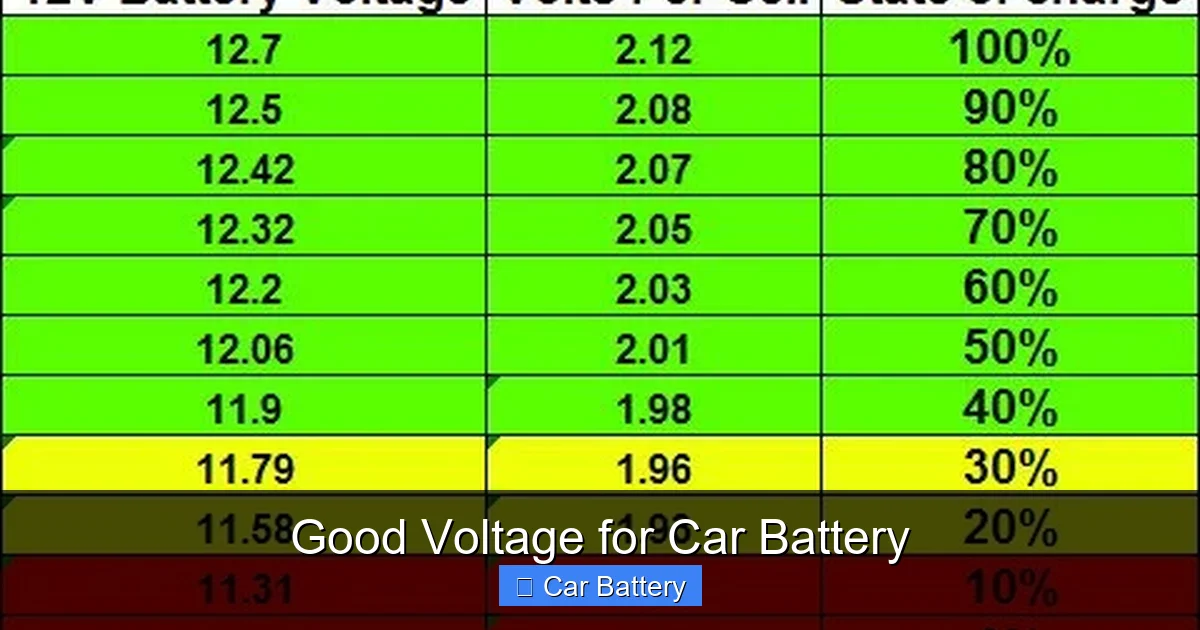
Visual guide about Good Voltage for Car Battery
Image source: carbatteryworld.com
Resting Voltage (Engine Off)
When your car sits undisturbed for several hours—or ideally overnight—the battery settles into its true state of charge. This is when you get the most accurate reading of its health.
A good voltage for car battery in this state is between 12.6 and 12.8 volts. This indicates a full charge and a healthy battery. If you measure 12.4 volts, your battery is about 75% charged—still functional, but not optimal. At 12.2 volts, you’re halfway drained, and below 12.0 volts, you’re in dangerous territory. Most vehicles won’t start reliably below this threshold.
For example, imagine you park your car Friday evening and don’t drive again until Monday morning. If you test the battery Sunday night and get 12.3 volts, that’s a red flag. Even without use, a healthy battery should lose only about 0.1 volts per month due to natural self-discharge. A drop of 0.3–0.5 volts suggests parasitic drain (something drawing power when it shouldn’t) or an aging battery.
Charging Voltage (Engine Running)
Once you start the engine, the alternator takes over, generating electricity to power the car’s systems and recharge the battery. During this phase, voltage should rise significantly.
A good voltage for car battery while the engine is running is between 13.7 and 14.7 volts. This range confirms the alternator is working properly and delivering enough current to maintain the battery. If the voltage stays near 12.8 volts with the engine running, the alternator isn’t charging—meaning your battery will drain quickly once you turn off the car.
Conversely, if voltage climbs above 15 volts, the voltage regulator (part of the alternator) may be faulty, overcharging the battery. This can cause bubbling, swelling, or even explosion in extreme cases.
Let’s say you’re driving on the highway and notice your dashboard warning lights flicker. You pull over and test the battery with the engine running—you get 15.2 volts. That’s a clear sign of overcharging. Continuing to drive could damage your battery, lights, or ECU (engine control unit).
How to Test Your Car Battery Voltage
The good news? Testing your car battery voltage is quick, easy, and requires minimal tools. You don’t need to be a mechanic—just a basic multimeter (also called a voltmeter) and a few minutes of your time.
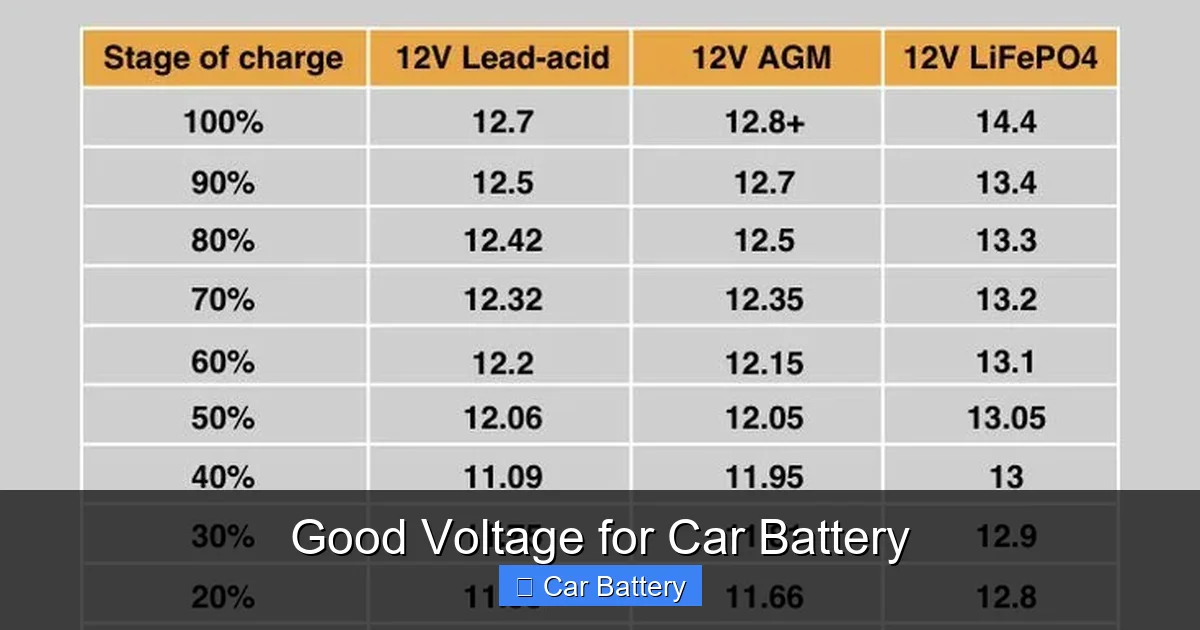
Visual guide about Good Voltage for Car Battery
Image source: carawareness.com
Step-by-Step Voltage Test
- Turn off the engine and all accessories: Make sure headlights, radio, AC, and interior lights are off. Wait at least 1 hour (preferably 2–3) for the battery to rest.
- Set up your multimeter: Turn the dial to DC voltage (usually marked “V” with a straight line). Choose a range higher than 20 volts (e.g., 20V or 200V).
- Connect the probes: Touch the red probe to the positive terminal (+) and the black probe to the negative terminal (−). Ensure good contact—clean any corrosion first.
- Read the display: The number shown is your battery’s resting voltage.
- Start the engine and retest: With the engine running at idle, check the voltage again. It should now be between 13.7 and 14.7 volts.
Many auto parts stores also offer free battery testing. While convenient, these tests often include load testing (simulating starter demand), which gives a more complete picture than voltage alone. Still, a simple voltage check at home is a great first step.
Tips for Accurate Readings
- Clean the terminals: Corrosion (white or green powder) can interfere with readings. Use a wire brush and baking soda solution to clean them.
- Avoid testing in extreme temperatures: Cold weather slows chemical reactions in the battery, lowering voltage. Hot weather can cause false high readings due to increased activity.
- Use a digital multimeter: Analog meters are less precise. Digital models are affordable (often under $20) and widely available.
- Test regularly: Check voltage every 3–6 months, especially before winter or long trips.
Pro tip: Keep a log of your readings. Tracking voltage over time helps you spot trends—like a gradual decline that signals an aging battery—before it leaves you stranded.
Factors That Affect Car Battery Voltage
Battery voltage isn’t static. It’s influenced by several factors, some within your control and others not. Understanding these helps you interpret readings correctly and take preventive action.
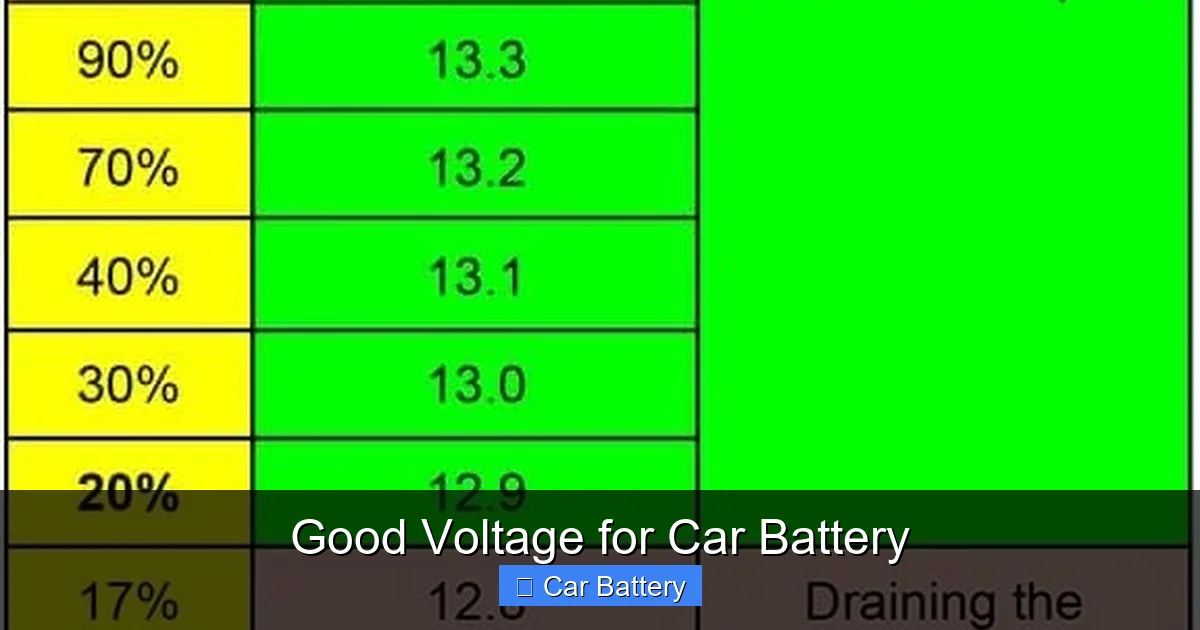
Visual guide about Good Voltage for Car Battery
Image source: i.pinimg.com
Temperature
Extreme cold is a battery’s worst enemy. At 32°F (0°C), a fully charged battery may only deliver 60% of its cranking power. At 0°F (−18°C), that drops to 40%. This is why winter is peak season for battery failures.
Conversely, high heat accelerates chemical reactions inside the battery, increasing self-discharge and corrosion. Batteries in hot climates often fail sooner—sometimes in just 2–3 years.
Voltage readings can also be skewed by temperature. A cold battery might read 12.4 volts but actually be healthier than it appears. That’s why some advanced testers apply temperature compensation. For most drivers, though, knowing that cold = lower performance is enough.
Age and Usage Patterns
Car batteries typically last 3–5 years. As they age, internal plates degrade, reducing capacity and voltage stability. A 4-year-old battery might hold a full charge but struggle under load.
Short trips are another hidden killer. If you only drive 5–10 minutes at a time, the alternator doesn’t have enough time to fully recharge the battery. Over time, this leads to chronic undercharging and sulfation—a buildup of lead sulfate crystals that permanently reduces capacity.
For example, city drivers who make frequent short stops may need to replace their battery sooner than highway commuters who drive longer distances regularly.
Parasitic Drain
Even when your car is off, small amounts of power are used by clocks, alarms, and onboard computers. This is normal. But if something draws too much—like a faulty glove box light or aftermarket stereo—it can drain the battery overnight.
A parasitic drain of more than 50 milliamps (0.05 amps) is considered excessive. Over time, this can drop voltage below 12.0 volts, making starting difficult or impossible.
Signs of parasitic drain include a dead battery after sitting for a day, dim lights, or slow cranking. A mechanic can perform a draw test to pinpoint the source.
When to Replace Your Car Battery
No battery lasts forever. Even with perfect care, chemical wear eventually takes its toll. But how do you know when it’s time to replace yours?
Voltage is a key indicator—but not the only one. Combine voltage readings with these warning signs:
- Slow engine crank: The engine turns over sluggishly, especially on cold mornings.
- Check Engine or Battery Light: illuminated on the dashboard.
- Swollen or bloated battery case: Caused by overcharging or extreme heat.
- Corrosion buildup: Excessive white or blue crust on terminals.
- Old age: If your battery is over 4 years old, consider proactive replacement.
If your resting voltage consistently reads below 12.4 volts—even after a full night’s rest—it’s likely time for a new battery. Don’t wait for a complete failure. Replacing a battery before it dies saves you from being stranded and often costs less than emergency roadside assistance.
Most auto parts stores offer free installation with purchase, and many batteries come with warranties of 3–5 years. Look for reputable brands like Optima, Interstate, DieHard, or ACDelco.
Tips to Maintain Good Battery Voltage
Prevention is always better than repair. With a few simple habits, you can keep your battery in top shape and avoid voltage-related issues.
Regular Maintenance
Clean battery terminals every 6 months using a mixture of baking soda and water. Scrub with a wire brush, rinse with clean water, and dry thoroughly. Apply a thin layer of dielectric grease to prevent future corrosion.
Check that the battery is securely mounted. Vibration can damage internal components and shorten lifespan.
Drive Regularly
If you don’t drive often, consider using a battery maintainer (also called a trickle charger). These devices provide a low, steady charge to keep the battery topped up without overcharging. They’re ideal for classic cars, RVs, or seasonal vehicles.
Avoid Short Trips
Whenever possible, combine errands into one longer trip. This gives the alternator time to recharge the battery fully. If you must make short trips frequently, consider installing a smart charger or driving for 20–30 minutes once a week.
Turn Off Accessories
Before starting the car, turn off headlights, radio, and climate control. This reduces the initial load on the battery and helps it deliver maximum cranking power.
Monitor in Extreme Weather
In winter, park in a garage if possible. In summer, avoid leaving the car in direct sunlight for extended periods. Both extremes stress the battery.
By following these tips, you’ll not only maintain good voltage for car battery performance but also extend its overall lifespan—saving you money and hassle in the long run.
Conclusion
Understanding what constitutes good voltage for car battery health is one of the simplest yet most powerful ways to protect your vehicle. A few volts might seem insignificant, but they make the difference between a smooth start and a frustrating breakdown.
Remember: 12.6–12.8 volts at rest means your battery is fully charged and ready to go. 13.7–14.7 volts while running confirms your charging system is working. Test regularly, maintain clean connections, and replace your battery before it fails. With these practices, you’ll enjoy reliable starts, fewer surprises, and a car that’s always ready when you are.
Don’t wait for the dreaded click of a dead battery. Take control today—grab a multimeter, check your voltage, and drive with confidence.
Frequently Asked Questions
What voltage is too low for a car battery?
A car battery voltage below 12.0 volts when the engine is off is considered critically low and may prevent your car from starting. At 12.4 volts or lower, the battery is partially discharged and should be recharged or tested further.
Can a car battery have good voltage but still be bad?
Yes. A battery might show 12.6 volts at rest but fail under load (e.g., when starting the engine). This indicates internal damage or sulfation. Always combine voltage tests with a load test for accurate diagnosis.
How often should I check my car battery voltage?
Check your battery voltage every 3–6 months, or before long trips and winter seasons. More frequent checks are wise if your battery is over 3 years old or you notice performance issues.
Does idling charge a car battery?
Idling can slowly recharge a battery, but it’s inefficient. The alternator produces less power at low RPMs. For a full recharge, drive at highway speeds for 20–30 minutes or use a battery charger.
What causes high voltage in a car battery?
High voltage (above 15 volts) while the engine is running usually indicates a faulty voltage regulator or alternator. This can overcharge the battery, leading to damage or failure.
Can cold weather drain a car battery?
Yes. Cold temperatures reduce a battery’s chemical efficiency, lowering its cranking power. Additionally, winter demands (like heated seats and defrosters) increase electrical load, accelerating discharge.
