
Garage Moisture and Car Cover: How to Stop Condensation and Protect Your Car

Quick Answer
Garage moisture can become trapped between a car and its cover, leading to condensation, musty smells, mildew, surface corrosion, and prolonged dampness. The safest approach is to cover only a clean, completely dry vehicle and use a breathable indoor car cover that lets moisture vapor escape.
What to check first
- Dry the car: Never cover paint, glass, wheels, or trim while they are still wet.
- Check the garage: Look for damp floors, roof leaks, poor ventilation, or water entering beneath the garage door.
- Use breathable fabric: Avoid materials that prevent trapped moisture from evaporating.
- Dry the cover: A damp cover should be completely dried before it goes back onto the vehicle.
- Improve airflow: Ventilation or a dehumidifier can help when the garage regularly feels humid.
Simple rule
- If either the vehicle or the cover feels damp, let both dry before covering the car.
Garage storage protects a car from rain and sun, but it doesn’t automatically eliminate moisture. I’ve seen vehicles come out from beneath indoor covers with damp windows and clammy paint because the garage itself stayed humid.
The good news is that most garage moisture and car cover problems are preventable. You mainly need to control where the moisture comes from, give it somewhere to escape, and stop covering a wet vehicle.
In This Guide
Why Does Moisture Form Under a Car Cover in a Garage?
Moisture forms when damp air or a wet surface becomes trapped around the vehicle. Temperature changes can then encourage water vapor to condense onto cooler metal, glass, trim, and cover material.
Condensation is liquid water that forms when moisture in the air reaches a surface cool enough for the vapor to turn into droplets. A car cover doesn’t create that water, but the wrong cover can slow its escape.
- A wet vehicle: Rainwater or wash water remains in mirrors, seams, wheel arches, trim, and body gaps.
- A damp concrete floor: Concrete can stay noticeably damp after rain, washing, flooding, or groundwater intrusion.
- Poor ventilation: A closed garage can hold humid air for long periods.
- Rapid temperature changes: A cold car entering warmer humid air can develop condensation.
- A wet cover: Folding or installing a cover before it dries introduces moisture directly around the car.
- Water leaks: Roof, wall, window, plumbing, and garage-door leaks can keep humidity elevated.
A common mistake is covering a car immediately after washing it because the visible paint looks dry. Water often remains inside mirror housings, door seams, badges, weatherstripping, wheel openings, and the fuel-door area.
That trapped water slowly escapes after the cover is installed. If airflow is poor, the moisture can stay beneath the fabric much longer than expected.
I’ve found the simplest test is also the most useful. Run a clean microfiber towel around panel gaps and mirror edges before covering the car.
- If the towel stays dry, the car is probably ready.
- If it picks up water, give the vehicle more drying time.
- If the garage floor looks dark or damp, deal with that source before long-term storage.
Section Takeaway: Moisture under a garage car cover usually comes from the vehicle, the cover, humid garage air, or the building itself. Find the moisture source before blaming the cover.
Can Moisture Under a Car Cover Damage Your Car?
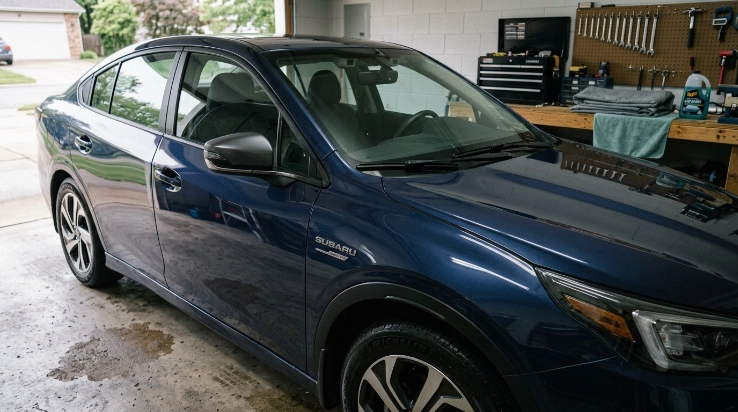
Yes, prolonged moisture can contribute to several storage problems. The risk rises when the car remains damp for days rather than drying normally.
One damp morning isn’t usually a disaster. Persistent moisture is the bigger concern.
| What You Notice | Likely Cause | Best First Action |
|---|---|---|
| Water droplets under cover | Condensation or vehicle covered wet | Remove cover and dry both surfaces |
| Musty odor | Persistent dampness or mildew | Dry cover and improve garage airflow |
| Frequent fogged glass | High garage humidity | Ventilate or dehumidify the space |
| Rust-colored spots on bare hardware | Repeated moisture exposure | Dry vehicle and inspect affected areas |
| Damp cover after removal | Cover absorbed or trapped moisture | Air-dry before storing or reinstalling |
Can trapped moisture cause rust?
Repeated dampness can encourage corrosion on exposed metal parts. Areas with damaged paint, chips, fasteners, brake components, and untreated metal deserve particular attention.
This matters during long storage because parked vehicles still require care. Consumer Reports’ guidance for cars that aren’t driven much also notes that long periods of inactivity can introduce maintenance concerns, including rusted brake components.
Can moisture damage paint?
Modern automotive paint is designed to tolerate normal moisture exposure. Problems become more likely when contamination, dirt, or damp material stays pressed against the finish.
A dirty cover can make things worse. Moisture combined with grit creates exactly the environment I try to avoid on any stored vehicle.
- Wash the car before longer storage.
- Remove loose dirt before installing the cover.
- Keep the inside surface of the cover clean.
- Inspect paint chips before storing the vehicle for months.
What about mildew and odors?
A damp cover can develop a stale or musty smell. Fabric stored while wet is especially vulnerable to odor and mildew problems.
Never roll up a wet cover and throw it into the trunk. Dry it fully according to the manufacturer’s care instructions.
Section Takeaway: Occasional condensation is a warning sign, while persistent dampness is the real problem. Drying the car and correcting garage humidity early can prevent larger storage issues.
Which Car Cover Is Best for a Damp Garage?
A breathable indoor cover is usually the better choice for a garage where humidity is a concern. Breathability allows heat and moisture vapor beneath the cover to escape more easily.
That doesn’t mean the thinnest fabric is automatically best. You still want softness, dust protection, correct fit, and a clean inner surface.
| Cover Type | Garage Moisture Performance | Best Use |
|---|---|---|
| Breathable indoor cover | Allows moisture vapor to escape | Dry or moderately humid garages |
| Soft multi-layer indoor cover | Good when designed with breathable layers | Dust and light contact protection |
| Weather-resistant outdoor cover | Varies by fabric construction | Garages exposed to wind-driven rain or open sides |
| Non-breathable plastic sheet | Can severely limit evaporation | Generally avoid directly over vehicle paint |
Don’t confuse water resistance with moisture management. A fabric can resist outside water while still being designed to let water vapor escape.
Covercraft describes its indoor multi-layer fabric as breathable so heat and moisture vapor can leave the space beneath the cover. That characteristic matters more to me in a humid garage than marketing claims centered only on thickness.
Does fit matter indoors?
Yes. A properly fitted cover stays positioned better and reduces unnecessary fabric movement against the finish.
Too much loose material can drag against dirty paint during installation or removal. An excessively tight cover may also be awkward around mirrors, spoilers, antennas, and trim.
- Choose a cover sized for your vehicle.
- Keep the inner surface clean.
- Install it on clean paint.
- Lift rather than drag the cover across the body.
How Do You Stop Condensation Under a Garage Car Cover?
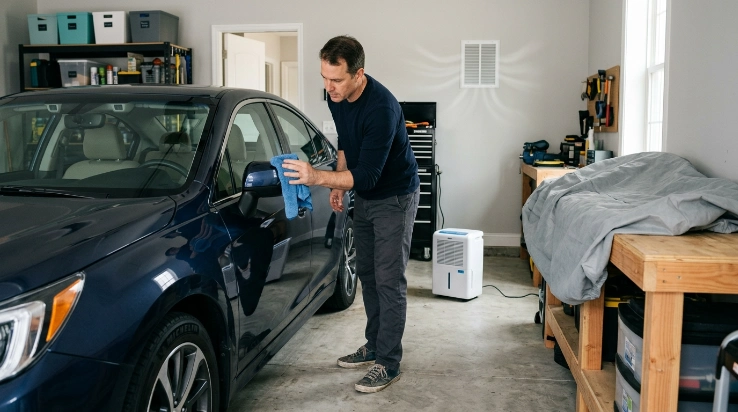
The most reliable fix is to reduce moisture before the cover goes on. Then improve the garage environment so remaining water vapor can escape.
I use the same process whether I’m storing a daily driver for a week or parking a weekend car for a season.
- Start with a clean car. Dirt beneath a cover can hold moisture and scratch paint during movement.
- Dry every hidden area. Check mirrors, door handles, seams, weatherstripping, wheels, and panel gaps.
- Let hot components cool. Don’t immediately wrap a vehicle that has just finished a long drive.
- Check the garage floor. Look for damp concrete, standing water, or leaks.
- Install a clean, dry cover. Never reuse one that still feels damp from washing or previous condensation.
- Improve ventilation. Use safe natural airflow or mechanical ventilation where appropriate.
- Control persistent humidity. A correctly sized dehumidifier can help in enclosed garages with recurring dampness.
Should you use a dehumidifier?
A dehumidifier can help when humidity remains high because of climate, damp masonry, poor ventilation, or seasonal weather. It treats the garage environment rather than trying to solve everything with the cover.
Follow the dehumidifier manufacturer’s placement, drainage, and electrical instructions. Don’t run extension cords or electrical equipment in wet areas unless the setup is specifically rated and installed for that environment.
Mechanic Alert: If water is entering near electrical wiring, outlets, a vehicle charger, or permanent garage circuits, have a qualified electrician or appropriate professional inspect the source rather than attempting electrical repairs yourself.
Should you leave part of the cover open?
Normally, a breathable cover should be used as designed rather than intentionally leaving half the vehicle exposed. Fixing excessive garage humidity is more effective than trying to improvise ventilation under the fabric.
If condensation appears repeatedly, remove the cover and let everything dry. Don’t keep putting it back over damp paint while hoping the problem disappears.
How often should you check a covered car?
For a vehicle stored for weeks or months, I like periodic visual checks instead of covering it and forgetting it. Look under the cover for moisture, leaks, pests, tire problems, or unexpected dirt.
Routine maintenance still matters during storage. Kelley Blue Book’s car maintenance resources provide a useful broader reference for keeping a vehicle in serviceable condition.
Section Takeaway: The cover should be the final layer of protection, not the moisture-control system. Start with a dry vehicle and manage humidity inside the garage itself.
How Should You Cover a Car for Long-Term Garage Storage?
Long-term storage requires more preparation because small moisture problems have more time to develop. As of 2026, the basic approach hasn’t changed: clean, dry, inspect, cover, and periodically recheck the vehicle.
Don’t treat a car cover as permission to ignore the car for six months. Storage still affects batteries, tires, brakes, fluids, seals, pests, and other components.
- Wash and dry the exterior: Remove dirt, road film, bird droppings, and other contamination.
- Clean the wheels: Brake dust and moisture can remain around wheel surfaces and hardware.
- Dry the garage: Correct active water intrusion before storing the car.
- Inspect the cover: Look for dirt, dampness, damaged lining, or debris inside it.
- Check tire pressure: Use the vehicle manufacturer’s recommended cold pressure.
- Follow battery guidance: Use the vehicle manual and compatible equipment if maintaining the battery during storage.
- Check periodically: Look for condensation, pests, leaks, or unusual odors.
For general upkeep, I also follow the vehicle’s owner’s manual rather than relying on generic mileage rules. Consumer Reports’ maintenance and repair guide emphasizes ongoing maintenance as part of keeping a vehicle reliable over time.
What should you do if you find moisture during storage?
Remove the cover instead of leaving the vehicle wrapped while wet. Dry the paint and cover separately before deciding whether the car is ready to be covered again.
Then identify why the moisture appeared. Repeated condensation usually tells you the garage environment or your storage routine needs attention.
- Remove and spread out the cover.
- Dry the vehicle completely.
- Check the garage for leaks or damp flooring.
- Improve ventilation or humidity control.
- Inspect exposed metal for early corrosion.
- Reinstall the cover only after everything is dry.
I’ve had better results treating moisture as a garage problem first and a cover problem second. Even a high-quality breathable cover can’t compensate for standing water or constant high humidity.
Section Takeaway: Long-term car storage works best when the garage, vehicle, and cover are all dry before storage begins. Periodic checks catch condensation before it becomes a persistent problem.
Frequently Asked Questions
Should I use a car cover inside a garage?
Yes, an indoor car cover can protect against dust, accidental light contact, and garage debris. Use a clean, breathable cover on a completely dry vehicle, especially if the garage sometimes becomes humid.
Why is my car wet underneath the cover?
The car may have been covered while damp, or humid air may be condensing on cooler vehicle surfaces. A wet garage floor, poor ventilation, temperature changes, or a damp cover can also contribute.
Can a car cover trap condensation?
A cover with poor breathability can slow moisture evaporation. Breathable cover materials are designed to allow moisture vapor and heat to escape more readily, but the vehicle should still be dry before covering.
Should I cover my car immediately after washing it?
No. Dry the paint, glass, wheels, mirrors, trim, door openings, and body seams first. Hidden wash water can continue draining after the visible panels appear dry.
Will a dehumidifier protect a car in a garage?
A dehumidifier can reduce persistent garage humidity when correctly sized and operated. It is most useful when the building regularly stays damp, but leaks and standing water should still be repaired at their source.
Can I use a plastic tarp instead of a car cover?
I wouldn’t use an ordinary plastic tarp directly against automotive paint for long-term storage. It may provide poor breathability, can trap moisture, and may have a rougher surface than a purpose-made automotive cover.
What humidity level should I keep my garage at?
There isn’t one universal automotive humidity target for every garage, climate, and vehicle. Instead of chasing a single number, focus on preventing visible condensation, damp surfaces, mildew, and persistent moisture around the car.
The main lesson is simple: never trap avoidable moisture beneath your car cover. Start with a dry car, use breathable material, and correct leaks or excessive garage humidity at the source.
If you repeatedly find condensation despite changing your storage routine, remove the cover until you’ve identified the moisture source. Protecting a car from dust isn’t worth keeping its surfaces continuously damp.
