
Does the Jeep Renegade Have a Spare Tire?

The answer isn’t a simple yes or no. Whether your Jeep Renegade has a spare tire depends heavily on the specific model year and trim level. Most newer Renegades come equipped with a compact temporary spare tire (often called a “doughnut” or “space-saver”), but some higher-trim models or certain package configurations may omit it entirely, replacing it with a tire sealant and inflator kit. The only way to be 100% certain is to check your specific vehicle’s documentation or physically inspect the storage area.
Key Takeaways
- It varies by year and trim: There is no universal rule; base models often include a spare, while some higher trims or special packages may not.
- Temporary spare is most common: When present, it’s typically a small, lightweight “T-type” or “Temporary Use” spare, not a full-size matching wheel.
- Sealant/Inflator kits are the alternative: Many modern vehicles, including some Renegades, replace the spare with a bottle of sealant and an electric air pump for temporary fixes.
- Always check your specific vehicle: The owner’s manual is the definitive source. Physically looking under the cargo floor is the quickest real-world check.
- Aftermarket options exist: If your Renegade didn’t come with a spare, you can often purchase and install an aftermarket full-size or temporary spare and mounting hardware.
- Spare tire pressure matters: If your Renegade has a spare, it must be properly inflated (often 60 PSI) and checked regularly, as it can lose pressure over time.
- Driving on a temporary spare is limited: These spares are for emergency use only, typically with speed and distance restrictions (often 50 mph / 70 km and 70 miles).
[FEATURED_IMAGE_PLACEHOLDER]
📑 Table of Contents
- Introduction: The Great Spare Tire Mystery
- Understanding Modern Spare Tire Configurations
- A Model Year and Trim Level Breakdown
- The Temporary Spare: What to Expect If You Have One
- Sealant and Inflator Kits: The New Normal
- What To Do If Your Renegade Has No Spare or Kit
- Practical Tips and Final Recommendations
- Conclusion: Knowledge is Your Best Backup
Introduction: The Great Spare Tire Mystery
So, you’re looking at a Jeep Renegade, or maybe you already own one. It’s a fantastic little crossover that blends Jeep heritage with urban practicality. But then a simple, crucial question pops into your head: “Does the Jeep Renegade have a spare tire?” It’s one of those foundational questions about a vehicle’s emergency preparedness. You want to know that if you get a flat on a backroad or a busy highway, you have a plan.
The short answer is… it’s complicated. Unlike the old days when every car rolled off the assembly line with a full-size spare in the trunk, modern automotive manufacturing is all about weight savings, cost reduction, and maximizing cargo space. The Jeep Renegade, being a product of this era, follows a varied script. Some come with a classic doughnut spare. Some come with a sealant kit. And some, particularly in recent years, might not come with either in the traditional sense, relying instead on run-flat tires or roadside assistance packages. Let’s pop the hood, kick the tires, and get to the absolute bottom of this.
Understanding Modern Spare Tire Configurations
Before we dive into Renegade specifics, it helps to understand the landscape. The automotive industry has largely moved away from the full-size, matching spare tire. Here are the three primary configurations you’ll encounter today:
Visual guide about Does the Jeep Renegade Have a Spare Tire?
Image source: images.squarespace-cdn.com
1. The Compact Temporary Spare (The Doughnut)
This is the most common “spare” you’ll find today. It’s a small, lightweight wheel with a narrow tire. It’s not meant to replace your regular tire permanently. Its job is to get you to a safe location or a tire shop, usually within 50-70 miles and at speeds under 50 mph. It saves significant weight and space but comes with major usage limitations.
2. The Tire Sealant and Inflator Kit
This is a small canister of liquid sealant and a portable electric air pump. You plug the pump into your car’s 12V outlet, attach the hose to the valve stem, and inject the sealant. It temporarily plugs small punctures (like from nails or screws) in the tire’s tread area, allowing you to drive slowly to a repair shop. It’s useless for sidewall damage or large cuts. This kit is often stored in a bag under the cargo floor.
3. The Full-Size Matching Spare
This is becoming a true rarity, especially in compact SUVs like the Renegade. It’s a complete wheel and tire identical to your four mounted ones. It allows for normal driving until you can get the flat repaired. It takes up the most space and adds the most weight. You’ll typically find this only on some top-tier trims, special packages, or on vehicles specifically aimed at serious off-road use where a recovery spare is expected.
Pro Tip: If you’re in the market for a Renegade, always ask the dealer specifically, “What is included in the emergency tire kit?” Don’t assume. You can also look for a spare tire well under the cargo floor mat.
A Model Year and Trim Level Breakdown
Now, for the Renegade-specific intel. Stellantis (Fiat Chrysler Automobiles) has not been consistent across all years and trims. Here’s a general guide, but remember, your specific VIN is the final authority.
Visual guide about Does the Jeep Renegade Have a Spare Tire?
Image source: images.squarespace-cdn.com
Early Model Years (2015-2018)
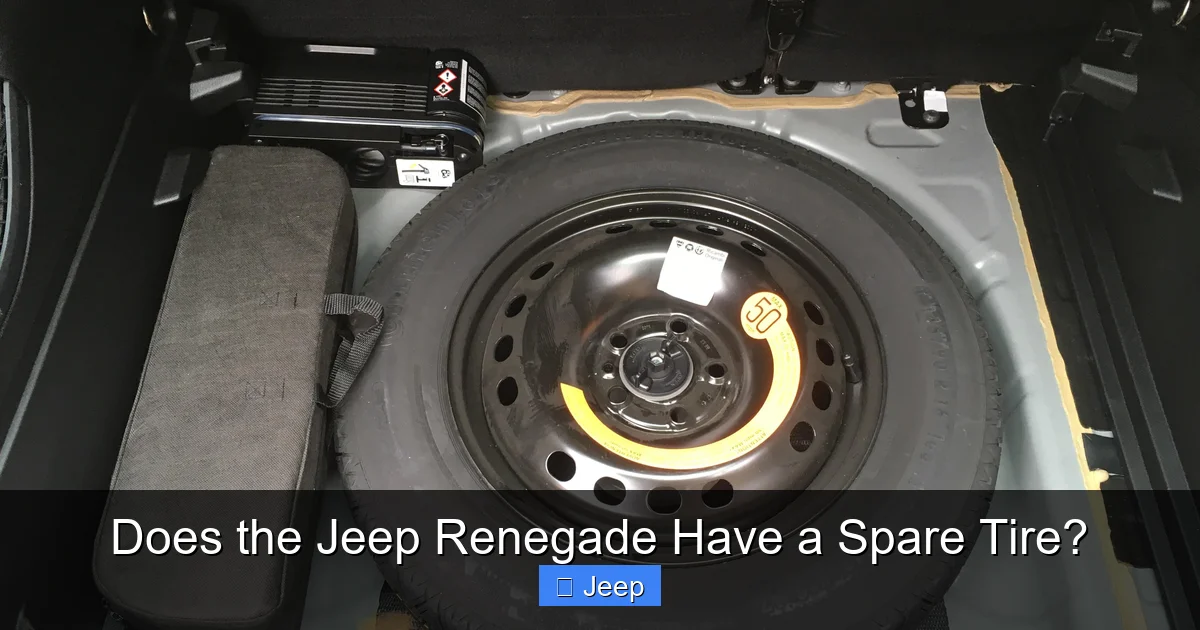
During these initial years, the inclusion of a spare tire was more common, especially on base and mid-level trims like Sport and Latitude. Many of these models came with a compact temporary spare stored in a recessed well under the cargo floor. However, even then, some higher trims like the Limited or certain special edition packages began to offer the sealant/ inflator kit instead to save cost and weight. It was a mixed bag even back then.
Recent Model Years (2019-Present)
The trend shifted more decisively toward the sealant/ inflator kit as the standard “emergency kit” for many trims, particularly from 2020 onward. This aligns with an industry-wide push to eliminate the spare to meet stricter Corporate Average Fuel Economy (CAFE) standards by reducing vehicle weight. For the 2023 and 2024 models, your likelihood of finding a compact temporary spare is lower unless you have a specific off-road oriented package. The standard is increasingly the sealant can and compressor. To understand this industry shift better, you can read about the broader trend in our article, Does Every Car Come With A Spare Tire?.
Trim Level Dependence
Your Renegade’s trim is a huge factor. Historically:
- Sport & Latitude: More frequently included the compact temporary spare.
- Limited & Trailhawk: This is where it gets tricky. The Trailhawk, being the off-road-focused model, was *more likely* to include a spare, sometimes even a full-size one on certain special packages, to aid in remote area recovery. The Limited, as a premium urban crossover, often switched to the space-saving sealant kit.
Always verify with your window sticker (Monroney label) or by inspecting the vehicle. The location is almost always under the removable cargo floor panel. You’ll either see a doughnut in a well or a small bag with a canister and pump.
The Temporary Spare: What to Expect If You Have One
If your Renegade does have a spare, it’s almost certainly a “Temporary Use” or “T-type” tire. Let’s talk about what that means for you.
Visual guide about Does the Jeep Renegade Have a Spare Tire?
Image source: i.redd.it
Identification and Location
Look for the words “Temporary Use Only,” “T-Type,” or a maximum speed and distance limit (e.g., “MAX 50 MPH”) molded into the tire’s sidewall. It will be significantly narrower than your standard all-season tires. In the Renegade, you access it by lifting the rigid cargo floor panel. Underneath, you’ll find a plastic well. The spare tire sits face-down in it, with the valve stem pointing up. There is usually a long, threaded rod and wingnut that secures it in place. Removing it involves unscrewing the wingnut, lifting the spare out, and then retrieving the jack and lug wrench, which are typically stored alongside it in the well.
Critical Usage Limitations
This is not a regular tire. You must obey the rules:
- Speed: Do not exceed 50 mph (80 km/h). The tire is not designed for high-speed stability.
- Distance: Drive only as far as necessary to reach a tire repair shop—generally no more than 70 miles (113 km). It has very little tread and is not built for longevity.
- Driving Dynamics: Your handling, braking, and stability will be noticeably different, especially in wet conditions. Drive with extra caution, avoid sudden maneuvers, and do not use it on the front axle if your vehicle is front-wheel drive (it can affect steering).
- TPMS Warning: Your Tire Pressure Monitoring System light will likely stay on because the spare has no sensor. You’ll need to reset the TPMS system after the regular tire is remounted and repaired. If your spare has a sensor (rare on temporary spares), it will need to be relearned by the vehicle’s computer.
Knowing how to safely install it is crucial. If you’ve never done it, practice in your driveway. The process involves using the vehicle’s supplied jack to lift the car, breaking the lug nuts’ torque (while the car is on the ground), removing the flat, mounting the spare, hand-tightening the lugs, lowering the car, and then torqueing the lugs in a star pattern to the manufacturer’s specification (found in your owner’s manual). For a visual guide on the general process, our article How Does A Spare Tire Go On? walks through the steps, which are similar across most vehicles.
Sealant and Inflator Kits: The New Normal
If you don’t find a doughnut, you almost certainly have a sealant kit. It’s usually a small, square plastic bottle with a built-in or attached electric air pump and hose. Think of it as a temporary patch, not a spare.
How It Works (And Its Major Caveats)
The process is simple: you attach the hose to the valve stem, plug the pump into the 12V outlet, and press the button. The sealant is forced into the tire, coating the inner liner and plugging the hole. You then drive slowly (as directed, usually 10-20 mph) for a few minutes to distribute the sealant and allow it to set. After that, you reinflate the tire to the correct pressure using the pump.
BUT, and this is a big but: This is an emergency measure to get you to a tire shop. It is not a permanent fix. The sealant is messy, can damage the tire’s internal sensors (TPMS), and makes a proper, lasting repair more difficult for the technician. The tire will need to be professionally cleaned out and repaired (if possible) or replaced. Also, the sealant has a limited shelf life and can expire, so you should check the expiration date on the canister annually as part of your routine maintenance. Speaking of maintenance, if you’re doing regular checks on your Renegade, you’ll also want to be on top of fluid levels. Our guide on How Much Oil Does A Jeep Renegade Take? is a great resource for those kinds of specifics.
Limitations of Sealant Kits
They cannot fix:
- Sidewall punctures or damage.
- Large cuts or gashes.
- Bead leaks (where the tire meets the rim).
- A completely flat tire with a total loss of pressure (you often need *some* air to get the sealant to circulate).
If the puncture is too large or in the wrong place, the kit is useless, and you’ll need a tow.
What To Do If Your Renegade Has No Spare or Kit
This is a frustrating but increasingly common scenario, especially on base models from the last few years. What are your options?
Option 1: Check the Trunk/ Cargo Area Again
Sometimes it’s hidden. Look under the floor, in side compartments, or behind trim panels. Some models store the sealant kit in a small bag in the glove compartment or under a seat. The owner’s manual will tell you exactly where it’s supposed to be.
Option 2: The “Run-Flat” Tire Possibility
Does your Renegade have run-flat tires? They have stiff, reinforced sidewalls that allow you to drive for a limited distance (usually 50 miles) at reduced speed (usually 50 mph) after a puncture, without any spare or sealant. Check your tire’s sidewall for the letters “RFT” or “RunFlat” or symbols like a circle with “RSC” (RunFlat System Component). Run-flats are expensive, often provide a harsher ride, and are not repairable in many cases after being driven on while flat. They are rare on Renegades but possible on some Limited trims.
Option 3: Roadside Assistance
Your Jeep likely came with a complimentary period of roadside assistance (like FCA’s “Jeep Wave” or similar). This often includes towing to the nearest dealer or tire shop. Know your coverage period and phone number. This is a great backup, but it’s not a quick fix for a minor puncture on a lonely road.
Option 4: The Aftermarket Solution
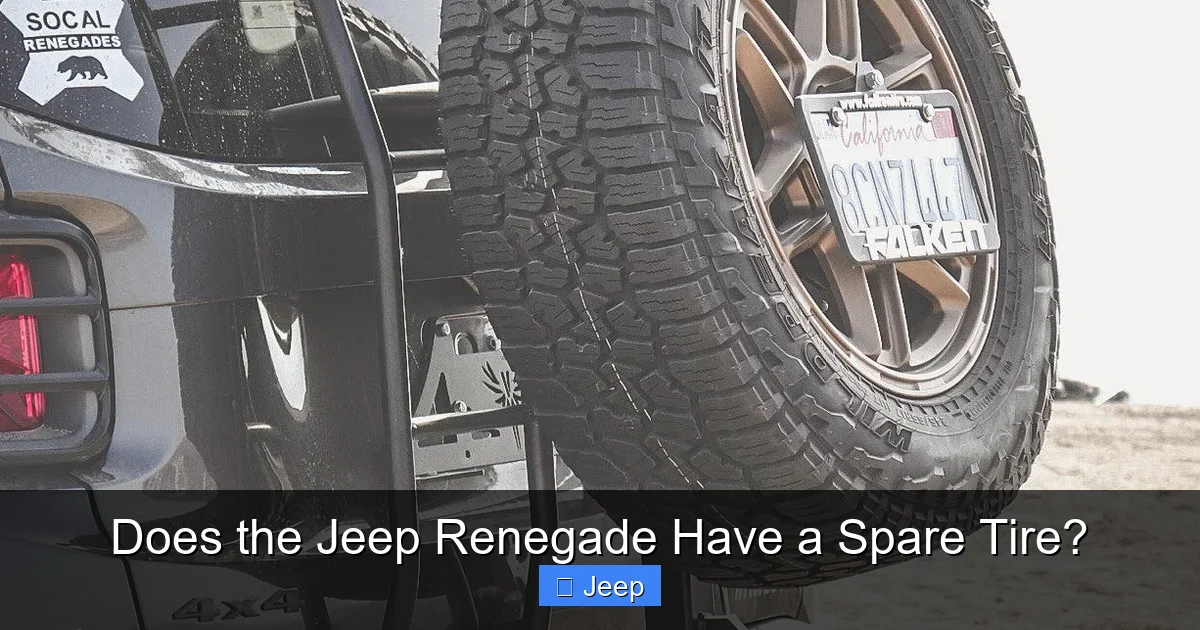
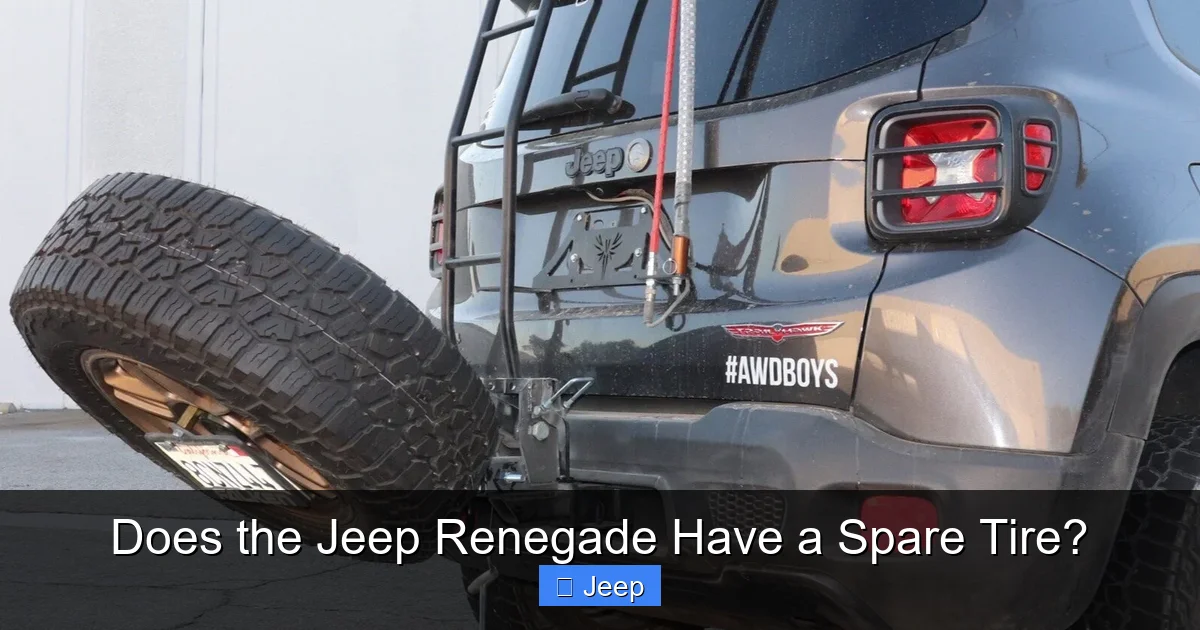
This is the proactive owner’s answer. If your vehicle didn’t come with a spare, you can often purchase an aftermarket solution. You can buy a compact temporary spare tire (make sure it’s the correct size for your Renegade—usually listed in the owner’s manual or on the driver’s door jamb sticker), a compatible wheel (steel is cheapest), and sometimes a mounting bracket if the factory spare tire well is empty. You’ll also need to buy a jack and lug wrench if they weren’t included. This adds cost and weight, but it provides true peace of mind. For some, the security of having a physical spare is worth the investment and slight MPG penalty.
Practical Tips and Final Recommendations
So, what should you, as a Renegade owner or buyer, actually do?
Step 1: Confirm Your Current Equipment
Right now, go check. Lift the cargo floor. What’s there? A doughnut? A bag with a canister? Nothing? Consult your owner’s manual’s “In Case of Emergency” or “Tires” section. It will explicitly state what is included and how to use it.
Step 2: If You Have a Sealant Kit, Service It
Check the expiration date on the sealant canister. If it’s expired, replace it. These kits are relatively inexpensive and sold at auto parts stores, Jeep dealers, and online. Also, ensure the electric air pump works by testing it. Keep the instructions in the vehicle.
Step 3: If You Have a Temporary Spare, Maintain It
Check its air pressure at least twice a year. It should be inflated to the pressure indicated on the tire’s sidewall, which is almost always 60 PSI (414 kPa). It will lose air faster than a normal tire. Also, inspect it for cracks or damage, as it sits in a hot, dry environment.
Step 4: Consider Your Needs and Driving Habits
Do you frequently drive on remote roads, in areas with poor cell service, or long distances from a tire shop? If so, an aftermarket spare is a smart investment. Are you mostly an urban commuter with good roadside assistance coverage? The factory kit might suffice. Think about your personal risk tolerance.
Step 5: Be Prepared Regardless
Keep a basic emergency kit in your Renegade: a flashlight, reflective triangles or flares, gloves, and a rain poncho. Know how to change a tire, even if you have to call for help. A portable jump starter is also a great addition. Being prepared is about more than just the spare tire.
Conclusion: Knowledge is Your Best Backup
So, does the Jeep Renegade have a spare tire? The definitive answer lives in your specific vehicle’s configuration. The era of the universal, full-size spare is long gone, replaced by a patchwork of temporary spares, sealant kits, and run-flat technology designed to meet corporate goals and save space. For the Renegade, the most likely scenario for a model from the last five years is a tire sealant and inflator kit, especially on base and mid-level trims. A compact temporary spare is possible, particularly on older models or certain off-road-oriented packages.
The real takeaway is this: don’t guess. Open your cargo floor, read your owner’s manual, and know exactly what your emergency equipment is and how to use it. That knowledge is the true spare tire—a mental tool that will get you out of a jam far more reliably than an unmaintained, unknown piece of equipment. Whether you choose to stick with what Jeep provided or upgrade to an aftermarket spare, the choice should be an informed one, based on your individual needs and the reality of what’s in your vehicle right now. Stay safe out there, and happy (and prepared) trails.
Frequently Asked Questions
Where is the spare tire located in a Jeep Renegade?
If equipped, the spare tire is stored in a recessed well underneath the removable rigid cargo floor panel. You lift the floor panel to access it. The jack and lug wrench are typically stored in the same well alongside the spare.
Do all Jeep Renegade models come with a spare tire?
No. Not all Jeep Renegades come with a spare tire. While many base and mid-trim models from earlier years included a compact temporary spare, many newer models, especially from 2020 onward, often come with a tire sealant and inflator kit instead, or sometimes nothing at all depending on the specific package. The only way to know for sure is to check your specific vehicle.
What should I do if my Jeep Renegade only has a sealant kit?
If you have a puncture, use the sealant kit only for small holes in the tire’s tread area. Follow the instructions precisely: attach the hose, inject the sealant, drive slowly to distribute it, and then reinflate. Remember, this is a temporary fix to get you to a professional tire shop. The tire will need to be properly cleaned, repaired, or replaced soon after, as the sealant can damage TPMS sensors.
Can I install an aftermarket spare tire in my Jeep Renegade if it didn’t come with one?
Yes, in many cases you can. You would need to purchase the correct size compact temporary spare tire, a compatible steel wheel, and sometimes a mounting bracket if the factory spare tire well is empty. You’ll also need a jack and lug wrench. It’s best to consult with a tire shop or Jeep parts specialist to ensure compatibility with your specific model year and trim.
How often should I check the pressure in my Jeep Renegade’s spare tire?
You should check the air pressure in your spare tire (if you have one) at least twice a year, ideally when you check your other tires. Temporary spares typically require 60 PSI (414 kPa). They lose air faster than regular tires and can become dangerously under-inflated if neglected for long periods.
What size spare tire does a Jeep Renegade use?
When equipped with a temporary spare, the Jeep Renegade typically uses a size like T125/70R16 or T135/70R16, depending on the model year and wheel size. The exact size is listed in your owner’s manual and on a placard on the driver’s side door jamb. It is critical to use the manufacturer-specified size to ensure safe handling and fitment.
