Does Tesla Use Micro-inverters?

Contents
- 1 Key Takeaways
- 2 📑 Table of Contents
- 3 Introduction: The Big Question About Tesla Solar
- 4 How Solar Inverters Actually Work: The Heart of Your System
- 5 Tesla’s Solar Strategy: A Philosophy of Integration
- 6 Micro-Inverters vs. String Inverters with Optimizers: The Tech Showdown
- 7 Why Tesla Absolutely Avoids Micro-Inverters: The Core Reasons
- 8 Practical Considerations for the Homeowner: What This Means For You
- 9 Conclusion: It’s About the System, Not Just the Inverter
- 10 Frequently Asked Questions

Reflective Stickers

Car MP3 Player

Car Cleaning Brush Set
Car Body Cover
Wondering if Tesla uses micro-inverters? The short answer is no. Tesla’s solar products, including the Solar Roof and traditional panels, rely on string inverters paired with power optimizers for a streamlined, cost-effective system. This design choice prioritizes integration, reliability, and aesthetics over the modular benefits of micro-inverters.
Key Takeaways
- No Micro-Inverters: Tesla does not use micro-inverters in any current solar product, opting instead for string inverters with power optimizers.
- Optimization Strategy: They use panel-level power optimizers (like those from SolarEdge) to maximize output per panel while keeping the inverter central.
- Primary Reasons: Cost savings, system simplicity, enhanced reliability, and seamless aesthetic integration—especially with the Solar Roof—drive this decision.
- Micro-Inverter Trade-offs: Micro-inverters offer superior shade tolerance and individual panel monitoring but at a higher cost and with more potential failure points.
- Best Fit Conditions: Tesla’s approach excels on large, unshaded roofs; complex roofs with heavy shading may benefit more from micro-inverters.
- Ecosystem Integration: The design allows flawless compatibility with Tesla Powerwall batteries and the Tesla app for unified home energy management.
- Simplified Ownership: Fewer components mean easier installation, maintenance, and troubleshooting for homeowners.
📑 Table of Contents
- Introduction: The Big Question About Tesla Solar
- How Solar Inverters Actually Work: The Heart of Your System
- Tesla’s Solar Strategy: A Philosophy of Integration
- Micro-Inverters vs. String Inverters with Optimizers: The Tech Showdown
- Why Tesla Absolutely Avoids Micro-Inverters: The Core Reasons
- Practical Considerations for the Homeowner: What This Means For You
- Conclusion: It’s About the System, Not Just the Inverter
Introduction: The Big Question About Tesla Solar
So, you’re thinking about going solar with Tesla. Maybe you’re drawn to the sleek, integrated look of the Solar Roof, or perhaps you’re considering their more traditional solar panels. As you research, one term keeps popping up: micro-inverters. Everyone in the solar world seems to either love them or be curious about them. You might be asking yourself: Does Tesla use micro-inverters? It’s a fantastic question, and the answer gets to the heart of Tesla’s entire philosophy about home energy.
Here’s the direct answer: No, Tesla does not use micro-inverters in any of its current residential solar offerings. Instead, they have taken a different technical path. Understanding why they made this choice is crucial for any homeowner evaluating a Tesla solar system. It’s not about one technology being universally “better” than the other; it’s about what works best for Tesla’s specific goals of integration, cost, and user experience. This article will break down exactly what Tesla uses, why they avoid micro-inverters, and what it means for you as a potential customer. We’ll keep it simple and practical, no engineering degree required.
How Solar Inverters Actually Work: The Heart of Your System
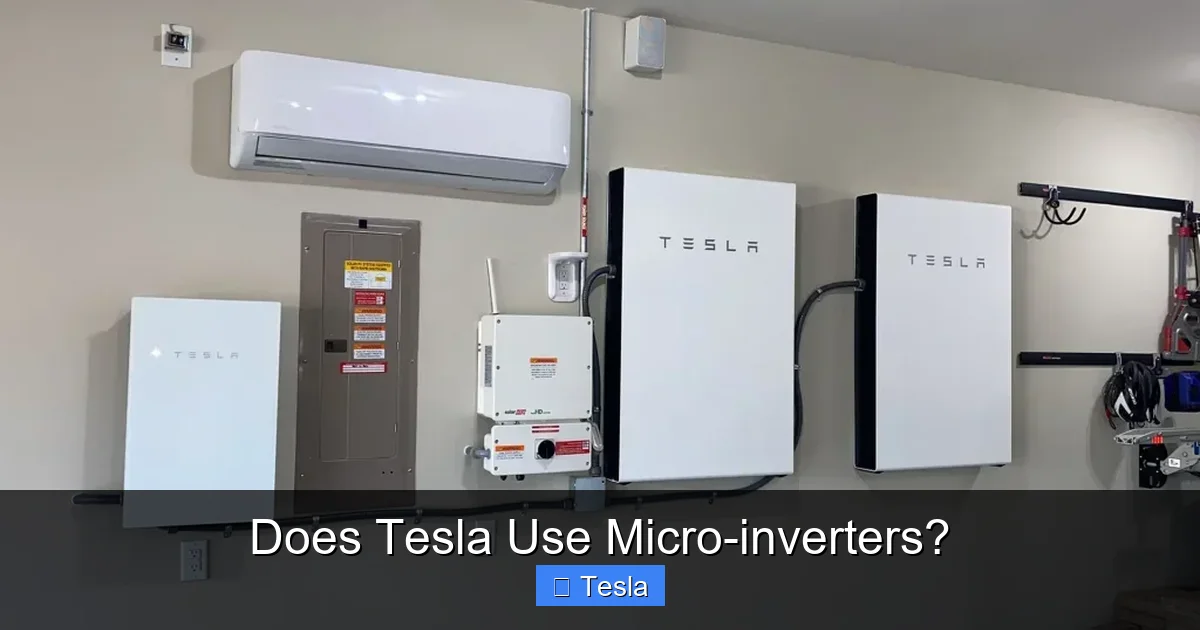
Before we dive into Tesla’s choice, we need a quick refresher on what an inverter does. Your solar panels generate direct current (DC) electricity. But your home appliances, lights, and the grid run on alternating current (AC). The inverter’s job is to perform this critical conversion. Think of it as the translator between your panels and your house. The type of inverter you use shapes your entire system’s performance, cost, and layout.
Visual guide about Does Tesla Use Micro-inverters?
Image source: 8msolar.com
The Three Main Types of Solar Inverters
There are three primary architectures for solar inverters on the market today:
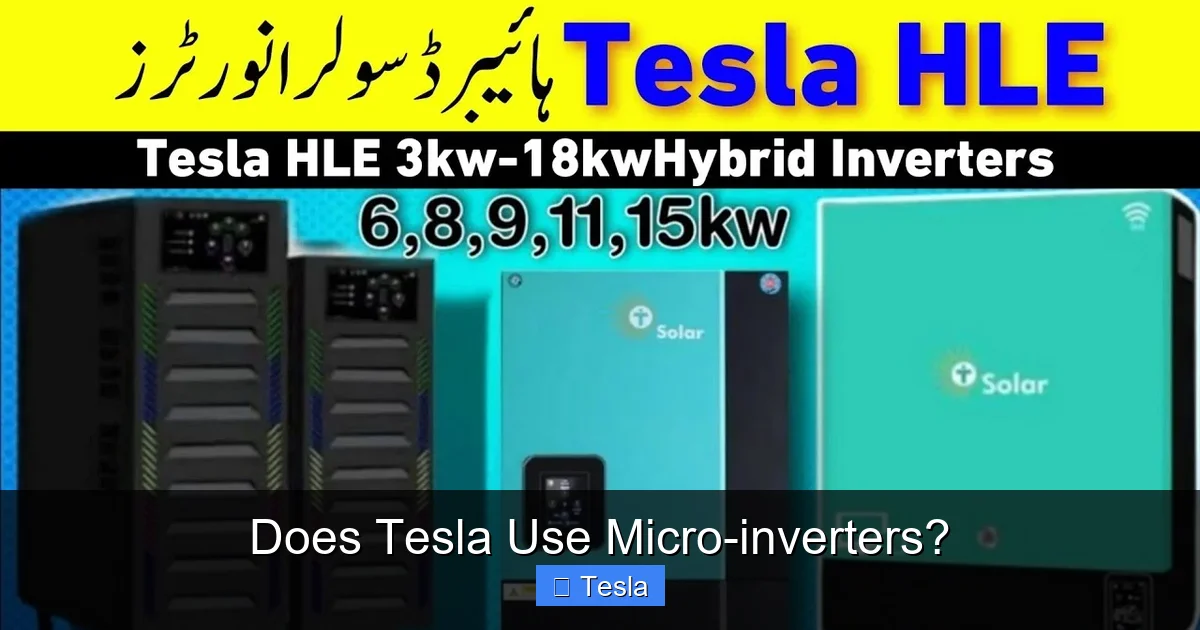
- Micro-Inverters: A tiny inverter is attached to the back of each individual solar panel. It converts DC to AC right at the source. This means every panel operates at its own maximum power point, independent of the others.
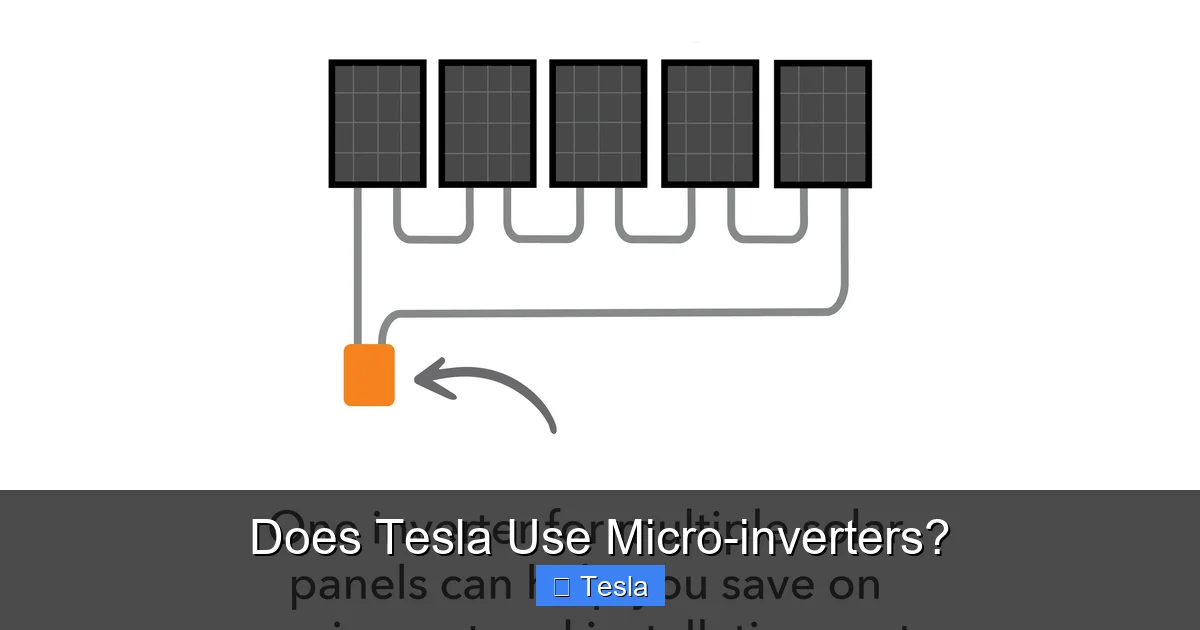
- String Inverters (Central Inverters): This is the traditional, cost-effective approach. Panels are wired together in series to form a “string.” A single, larger inverter (usually mounted on a wall) converts the combined DC output from the entire string to AC. The big drawback? If one panel is shaded or underperforming, it can drag down the output of every panel on that string.
- String Inverters with Power Optimizers: This is a hybrid solution. Panels are still wired in strings to a central inverter, but each panel has a small “power optimizer” module attached to it. The optimizer conditions the DC power from its panel (maximizing its output) before sending it down the string. The central inverter then does the final DC-to-AC conversion. This gives you panel-level optimization without the cost and complexity of a micro-inverter on every panel.
Tesla’s Solar Strategy: A Philosophy of Integration
To understand Tesla’s inverter choice, you have to look at their bigger picture. Tesla isn’t just selling you a box of solar panels. They are selling a complete, integrated home energy ecosystem. This includes solar generation, battery storage (Powerwall), vehicle charging (Wall Connector), and a smart app to control it all. Every component is designed to work together seamlessly.
Visual guide about Does Tesla Use Micro-inverters?
Image source: images.squarespace-cdn.com
From SolarCity to Tesla Energy: The Evolution
Tesla’s journey in solar began with the acquisition of SolarCity in 2016. That company had its own installer network and used a mix of equipment. As Tesla took full control, it began standardizing on a specific technology stack to achieve its goals of vertical integration, quality control, and simplified logistics. They wanted a system they could design, install, monitor, and support with minimal variation.
Current Tesla Solar Products: The Two Main Tracks
Today, Tesla offers two main solar products for homes:
- Tesla Solar Roof: This is their flagship product—a roof made of tempered glass tiles that contain solar cells. It’s a building-integrated photovoltaics (BIPV) system where the solar is the roof itself. Aesthetics and seamless integration are its primary selling points.
- Tesla Solar Panels: These are more traditional, low-profile black panels mounted on an existing roof. They offer a simpler, often more cost-effective entry point into solar.
Here’s the critical commonality: both of these product lines use the exact same core inverter technology. Whether you get a full roof replacement or a panel add-on, your system will be built around a central string inverter paired with panel-level power optimizers.
Micro-Inverters vs. String Inverters with Optimizers: The Tech Showdown
Now let’s compare the two competing architectures directly, since this is the core of your question.
Visual guide about Does Tesla Use Micro-inverters?
Image source: teslarati.com
Micro-Inverters: The Modular Maverick
Companies like Enphase have made micro-inverters incredibly popular, especially for complex roofs. Their strengths are clear:
- True Panel-Level Optimization: Every panel works at its max, regardless of what its neighbors are doing. This is a huge advantage on roofs with multiple orientations, tilts, or significant shading from chimneys, trees, or neighboring structures.
- Granular Monitoring: You can see the performance of each individual panel in your app. If one fails, you know exactly which one.
- No Single Point of Failure: If one micro-inverter fails, only that panel goes offline. The rest of the system keeps producing.
- Scalability: It’s very easy to add a few panels later, as you’re just adding more self-contained units.
The downsides are equally important:
- Higher Cost: You’re buying an inverter for every panel. The hardware cost per watt is significantly higher than a central inverter system.
- More Components, More Potential Failures: While the failure of one unit is isolated, you have many more electronic devices on your roof exposed to weather. The cumulative failure rate can be higher.
- Complex Replacement: Replacing a failed micro-inverter means getting on the roof to swap out a component under each panel.
- Heat & Warranty: They operate at high temperatures on the roof, which can stress the electronics. Warranties are typically 25 years, but long-term field data is still being gathered compared to string inverters.
String Inverters with Power Optimizers: The Balanced Hybrid
This is the architecture Tesla uses, and it’s most famously associated with SolarEdge. It aims to give you the best of both worlds.
- Panel-Level Optimization: Like micro-inverters, the power optimizer on each panel ensures it operates at its maximum power point, mitigating shade and mismatch losses across the string.
- Lower Cost: You have one central inverter (which is cheaper per watt) and one small, cheaper optimizer per panel. The total system cost is usually lower than a full micro-inverter setup.
- Single Point for Conversion: The high-stress, heat-sensitive DC-to-AC conversion happens in one location—usually a cool, shaded, and easily accessible spot on your wall. This central inverter is generally more robust and easier to service.
- String-Level Monitoring: You see performance at the string or optimizer level, not always per individual panel (though newer systems offer more granularity).
The trade-offs:
- Inverter is a Single Point of Failure: If the central inverter fails, your entire system goes down until it’s repaired or replaced.
- Strings Still Exist: While optimizers mitigate shade issues, panels are still wired in strings. Very heavy, consistent shading across an entire string can still impact performance, though much less severely than with a plain string inverter.
- Less Granular Data: Troubleshooting a underperforming panel can require a bit more legwork than with per-panel micro-inverter data.
Why Tesla Absolutely Avoids Micro-Inverters: The Core Reasons
Given the clear advantages of micro-inverters for complex sites, why would a cutting-edge tech company like Tesla steadfastly refuse to use them? The answer lies in Tesla’s unique business and product model.
1. Uncompromising Aesthetics (Especially for the Solar Roof)
This is arguably the biggest reason. The Tesla Solar Roof is a masterpiece of design integration. The solar-active tiles are flush with the standard inert tiles, creating a uniform, beautiful roofline. Adding a bulky micro-inverter to the back of every single tile would be physically impossible and would completely ruin the sleek, low-profile design. The power optimizer, by contrast, is a small, flat module that can be discreetly integrated under the tile or panel, with only a single, central inverter needing to be placed on the side of the house. For Tesla, the visual perfection of the Solar Roof is non-negotiable, and that dictates the electronics underneath.
2. Cost, Scale, and Simplicity
Tesla is a mass-production company. They thrive on standardization, volume purchasing, and simplified logistics. Procuring, stocking, installing, and supporting one central inverter model (or a few models for different system sizes) is vastly more efficient than managing dozens or hundreds of micro-inverters per installation. This reduces inventory costs, training complexity, and potential for installation errors. The lower hardware cost of the string + optimizer system also helps Tesla hit their aggressive price-per-watt targets, making solar more accessible. Simplicity in the field means faster installs and fewer things that can go wrong, which is good for customer satisfaction and Tesla’s bottom line.
3. Reliability and Service Model
Consider Tesla’s service philosophy. Their goal is to build systems that “just work” and are easy to diagnose and fix. A single, central inverter located on an exterior wall is easy for a technician to access, test, and replace. It’s a known, standardized component. Having hundreds of micro-inverters on a hot roof creates a logistical nightmare for service. The failure rate per unit might be low, but with so many units, the probability that some unit will fail over 25 years is higher. Tesla’s model consolidates the risk and the service task into one primary component. Their central inverters also come with robust warranties (typically 12-25 years, depending on the model), and replacement is a straightforward process.
4. Seamless Integration with the Tesla Energy Ecosystem
Tesla isn’t just selling solar; they’re selling a complete energy system. The communication between the solar array, the Powerwall battery, and the Tesla Wall Connector for car charging needs to be flawless. Using a standardized, centrally-managed inverter platform (like the SolarEdge inverter, which Tesla has historically used and may have custom versions of) makes this integration much cleaner from a software and communication protocol standpoint. The system can be managed as a single, intelligent unit through the Tesla app, optimizing when to generate, store, or consume power. A fleet of independent micro-inverters, while smart, presents a more complex integration challenge for a unified ecosystem.
5. The “Good Enough” Optimization for Most Roofs
Let’s be honest: a huge majority of residential solar installations are on relatively simple, unshaded roofs. For a large, south-facing (in the Northern Hemisphere) roof with minimal shading, the performance difference between a good string+optimizer system and a micro-inverter system is often negligible—maybe 1-2% annually. For Tesla, targeting the mass market means optimizing for the common case. They accept a small theoretical efficiency penalty on the most complex roofs (where they may even steer customers away from solar or recommend a different design) to gain massive advantages in cost, aesthetics, and simplicity for the vast majority of their customers. Their design tools and sales process are built around identifying if your roof is suitable for their optimized string approach.
Practical Considerations for the Homeowner: What This Means For You
So Tesla uses string inverters with power optimizers. What does that mean when you’re getting a quote and planning your installation?
Installation Process and Timeline
The physical installation is generally faster than a micro-inverter system because there are fewer components to mount and connect on the roof itself. The electrician focuses on running the string wires to a single, central inverter location. However, the design and engineering phase is crucial. Tesla’s designers must carefully plan your “strings” to minimize the impact of any shade. They use sophisticated software (like their own design tool) to model the sun’s path on your specific roof throughout the year. Be prepared for them to be very direct if your roof has shading issues they can’t adequately mitigate—they might recommend fewer panels, a different layout, or in some cases, that solar isn’t a good fit. This upfront honesty is part of their model. You might also need electrical upgrades, similar to those required for a home EV charger installation—something we’ve detailed the costs for elsewhere.
Maintenance and Monitoring: The Tesla App Experience
Day-to-day, you’ll use the Tesla app. It provides a clean, real-time view of your solar production, home consumption, and Powerwall status. Because you have power optimizers, you’ll get monitoring at the optimizer/string level. You might see a group of 4-8 panels underperforming as a single “string,” which tells you there’s an issue in that area (like shading or a dirty panel) rather than pinpointing one exact tile. For most people, this level of data is perfectly sufficient. The central inverter will have its own status lights and app notifications. If it fails, Tesla’s warranty service will dispatch a technician to swap the unit, which is a relatively quick process compared to diagnosing and replacing a specific micro-inverter on a roof.
Expanding Your System Years Later
Want to add more solar in 5 years? With a micro-inverter system, it’s theoretically easier because you’re just adding more independent units. With Tesla’s string+optimizer system, expansion is possible but has constraints. You need to have a compatible central inverter with spare capacity or capacity for an additional string, and you need physical space on your roof for a new string of panels that matches the electrical characteristics of your existing setup. It’s not impossible, but it requires more forethought and coordination with Tesla during the initial design. They can design your system with future expansion in mind if you communicate that goal upfront.
Is Tesla’s Approach Right For Your Roof?
Ask yourself these questions:
- Is my roof largely unshaded? If yes, Tesla’s system will perform exceptionally well and is likely the most cost-effective and aesthetically pleasing option.
- Do I have a complex roof? Multiple faces, steep pitches, lots of chimneys or vent pipes? Tesla’s design software is good, but extreme complexity might lead to lower overall efficiency or a recommendation against solar.
- Is upfront cost a major factor? The string+optimizer system is typically less expensive than a micro-inverter system of the same size.
- Do I want the Solar Roof’s look? This is the ultimate decider. The Solar Roof requires this technology due to physical constraints. If you want that integrated tile look, this is your only path.
- Am I all about per-panel data? If you’re a data enthusiast who wants to monitor the output of panel #37 on the west gable, you’ll find micro-inverters more satisfying.
For the vast majority of homeowners with good, sunny roofs, Tesla’s approach offers a fantastic blend of performance, value, and beauty. The slight theoretical edge of micro-inverters in complex shading scenarios often doesn’t translate to a meaningful real-world difference for a well-designed Tesla system on a suitable roof.
Conclusion: It’s About the System, Not Just the Inverter
So, does Tesla use micro-inverters? definitively, no. They have bet on a different architecture: the string inverter paired with panel-level power optimizers. This isn’t a technical oversight; it’s a deliberate strategic choice that aligns perfectly with Tesla’s brand pillars of sleek design, integrated ecosystems, and cost-effective scaling. They prioritize a clean, simple, and beautiful installation that works brilliantly for the common case, while accepting that a small percentage of highly complex, shaded roofs might be better served by a competitor’s micro-inverter solution.
When you get a Tesla solar quote, you’re not just buying hardware. You’re buying into a vision of a simplified, managed home energy system. The inverter choice is a foundational piece of that vision. The best thing you can do is get a custom design from Tesla. Their software will instantly model your roof’s potential and show you the expected production. If they propose a system, it means your roof passes their criteria for a successful, high-yielding installation with their chosen technology. Trust the model, ask questions about the design strings, and you’ll end up with a system that’s both powerful and perfectly at home on your roof.
Frequently Asked Questions
Does Tesla use micro-inverters on their Solar Roof?
No. The Tesla Solar Roof uses a central string inverter located on the exterior of your home, paired with small power optimizers attached to each solar tile. The physical design of the integrated tiles would not accommodate a micro-inverter on every tile.
Can I add more Tesla solar panels to my existing system later?
Yes, expansion is possible, but it depends on your original system design. You need available capacity in your central inverter and space on your roof for a new string of panels that matches your setup. It’s important to discuss future expansion goals with Tesla during the initial design phase.
What happens if my Tesla solar inverter fails?
The central inverter is covered under warranty (typically 12-25 years). If it fails, you contact Tesla support, and they will dispatch a technician to diagnose and replace the unit. Since it’s a single, accessible component, this is usually a straightforward repair, unlike replacing multiple failed micro-inverters on a roof.
Is a Tesla solar system with optimizers as good as one with micro-inverters?
For roofs with minimal shading, the real-world performance difference is very small. Tesla’s system with optimizers provides excellent panel-level optimization. However, for roofs with heavy, consistent shading on multiple panels throughout the day, a micro-inverter system might extract a few more percentage points of energy. The best way to know is to compare the specific production estimates for your roof from both design approaches.
Why does Tesla’s choice matter for my home’s aesthetics?
It matters immensely, especially for the Solar Roof. The entire point of the Solar Roof is that the solar cells are hidden within normal-looking roof tiles. Using a central inverter and tiny optimizers allows for this seamless look. A system with micro-inverters would require a visible box on the back of every single tile, which is impossible with Tesla’s tile design and would ruin the aesthetic even for standard panels.
Does Tesla’s solar system work well with their Powerwall battery?
Yes, absolutely. The string inverter with optimizer architecture is specifically designed for seamless integration with Tesla’s Powerwall and the Tesla app. This creates a unified system where the battery can intelligently charge from solar, provide backup power, and optimize your energy usage based on time-of-use rates, all managed in one place.