Does Tesla Have Two Charging Ports?

Contents
- 1 Key Takeaways
- 2 📑 Table of Contents
- 3 The Straight Answer: One Port to Rule Them All
- 4 A History of Proprietary Power and Industry Standardization
- 5 How a Tesla Charges at Different Stations: Adapters in Action
- 6 Comparing Tesla to “Dual-Port” EVs: What’s the Real Difference?
- 7 Practical Implications for Owners: Travel, Home Charging, and the Road Ahead
- 8 Debunking Myths and Addressing Common Confusions
- 9 Conclusion: Simplicity as a Superior Feature
- 10 Frequently Asked Questions

Car Body Cover

Car Storage Net

Magnetic Car Phone Mount

Car LED Headlight Bulb
No, Tesla vehicles do not come with two separate charging ports. They feature a single, proprietary NACS (North American Charging Standard) port that handles all AC and DC charging. This unified design simplifies the charging experience, supports the vast Tesla Supercharger network, and, with adapters, allows access to third-party CCS stations. While other EVs often have separate ports for AC (J1772) and DC (CCS) charging, Tesla’s integrated approach is a key part of its ecosystem.
It’s a question that pops up a lot in EV forums and dealership conversations: “Does Tesla have two charging ports?” The answer, in short, is no. But the simplicity of that answer belies a fascinating story about engineering philosophy, industry standards battles, and what it truly means to own a Tesla. If you’re coming from a background with traditional gas cars—or even from other electric vehicles—the idea of a single port doing everything might seem odd. After all, many non-Tesla EVs clearly have two different holes: one for your everyday Level 1 or Level 2 home charger (the J1772 port) and a distinct, often larger, port for DC fast charging (the CCS Combo port). So why doesn’t Tesla follow suit? Let’s plug in and explore the complete picture.
Key Takeaways
- Single Port Design: All Tesla vehicles use one integrated NACS port for both slow (AC) and fast (DC) charging, unlike many EVs with separate ports.
- Proprietary to Standard: Tesla’s port was once proprietary but is now the North American Charging Standard (NACS), adopted by nearly all major automakers.
- Supercharger Exclusive: The port provides direct, seamless access to Tesla’s extensive, reliable Supercharger network without needing an adapter.
- Adapter Flexibility: With official or third-party adapters, a Tesla can physically connect to CCS Combo and J1772 stations, though software and payment may differ.
- No Factory Dual Ports: Tesla has never manufactured a vehicle with two distinct, permanent charging ports from the factory.
- Efficiency & Cost: The single-port design reduces manufacturing complexity, vehicle weight, and potential failure points compared to a dual-port system.
- Future-Proof: As NACS becomes universal in North America, Tesla owners will have the most native, plug-and-play experience at any public charger.
📑 Table of Contents
- The Straight Answer: One Port to Rule Them All
- A History of Proprietary Power and Industry Standardization
- How a Tesla Charges at Different Stations: Adapters in Action
- Comparing Tesla to “Dual-Port” EVs: What’s the Real Difference?
- Practical Implications for Owners: Travel, Home Charging, and the Road Ahead
- Debunking Myths and Addressing Common Confusions
- Conclusion: Simplicity as a Superior Feature
The Straight Answer: One Port to Rule Them All
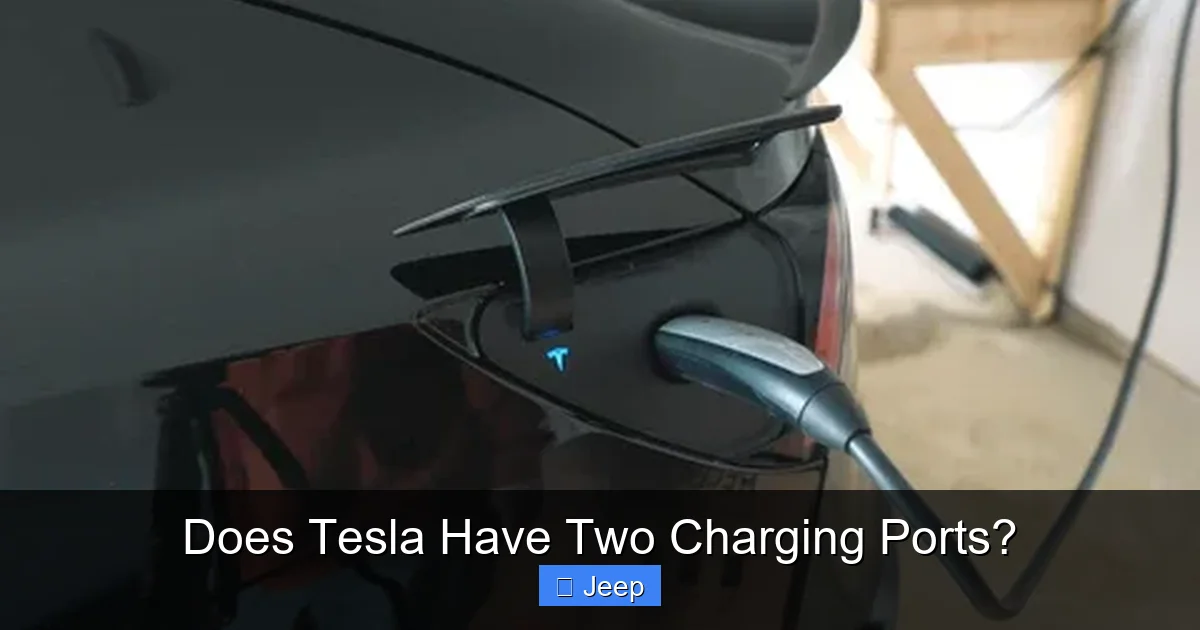
Every Tesla model—from the Model S and Model X to the Model 3 and Model Y—is equipped with a single, integrated charging port. This port is the now-famous (or infamous, depending on your timeline) Tesla connector. Physically, it’s a slim, elegant, rectangular plug that locks into the vehicle with a simple push and a button release. Electrically and digitally, it’s a powerhouse. This one port is responsible for accepting the alternating current (AC) from your home wall connector or public J1772 station (at up to 48 amps for most models) and, when connected to a Supercharger or compatible DC fast charger via an adapter, it also handles the direct current (DC) that bypasses the car’s onboard charger for ultra-rapid replenishment.
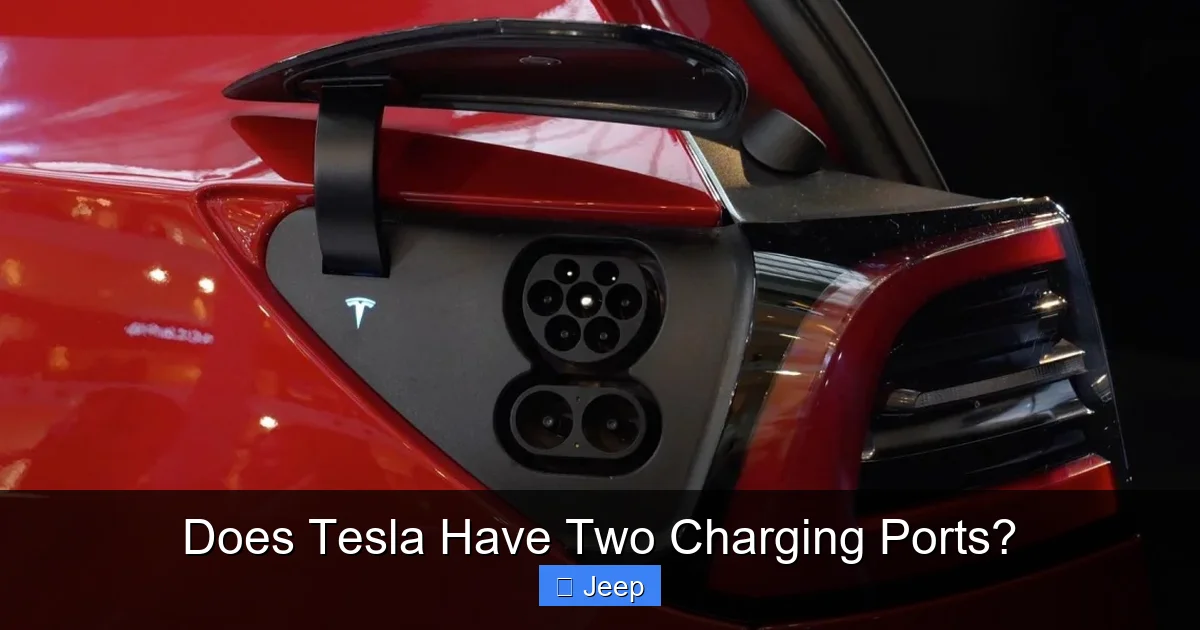
This is a fundamentally different architecture than the “dual-port” system common on vehicles from brands like Ford, Chevrolet, Nissan, and Hyundai. Those cars typically have a J1772 port for AC charging and a separate CCS Combo port for DC fast charging. The CCS port is essentially a J1772 port with two large DC pins added below it, but it’s a separate physical inlet on the car. Tesla’s integration means less clutter on the rear quarter panel (or front for some models), one less potential seal or latch to fail, and a simpler user experience: you only ever need to learn one connector.
The Engineering Logic Behind a Single Port
From an engineering standpoint, Tesla’s choice makes perfect sense. Why duplicate hardware, wiring, and sealing systems when one robust connector can handle both functions? The NACS (North American Charging Standard) connector is designed with high-current DC pins built into the same interface as the AC pins. The communication protocols within the port and the vehicle’s charging system automatically detect the type of power source—AC or DC—and route it appropriately. When you plug a NACS connector into a Supercharger V2 or V3 post, a digital handshake occurs, and the vehicle knows to expect high-voltage DC directly. When you plug it into a home charger, it knows to use the onboard charger to convert AC to DC for the battery.
This consolidation reduces manufacturing costs, vehicle weight, and complexity. It also means Tesla owners never have to guess which port to use; there’s only one. For a company focused on vertical integration and a seamless user experience, this was a logical, elegant solution from the start.
A History of Proprietary Power and Industry Standardization
To understand the current landscape, we need a quick history lesson. When Tesla launched the Model S in 2012, it introduced its proprietary connector. At the time, the SAE J1772 standard for AC charging and the emerging CCS standard for DC fast charging were already being adopted by other automakers. Tesla could have used those, but it had different goals. It was building its own Supercharger network from scratch and wanted a connector that was smaller, easier to handle, and could carry more current for faster charging than the early CCS designs. Its proprietary connector fit the bill perfectly and allowed Tesla to control the entire charging experience—hardware, network, and software integration—without being beholden to an evolving industry standard.

Visual guide about Does Tesla Have Two Charging Ports?
Image source: thecooldown.com
For years, this created a bifurcated ecosystem. Tesla owners enjoyed a vast, reliable, and fast Supercharger network with a simple plug. Non-Tesla EV owners relied on a patchwork of third-party networks using J1772/CCS, which were often less reliable, slower, or required multiple accounts. Tesla offered a J1772 adapter for its cars to use public AC stations, and later a CCS Combo adapter for DC fast charging, but these were accessories, not a native port.
The tide turned dramatically in late 2022. Tesla made the stunning decision to open its connector design and make it the North American Charging Standard (NACS). It published the specification and invited other automakers and charging network operators to adopt it. The industry, seeing the superior design and the sheer number of Teslas on the road, rapidly agreed. Ford, General Motors, Rivian, Lucid, Nissan, and virtually every other major brand announced they would switch to NACS ports for their 2025 model year vehicles and beyond. The “proprietary” plug is on the fast track to becoming the universal standard in North America. So, Tesla’s single-port design isn’t just a quirk; it’s now the blueprint everyone is following.
How a Tesla Charges at Different Stations: Adapters in Action
Since Tesla cars have only the NACS port, how do they use the myriad of other charging stations out there? The answer is adapters. Tesla provides or sells adapters that bridge the physical gap between its NACS port and other connector types.

Visual guide about Does Tesla Have Two Charging Ports?
Image source: motortrend.com
For AC Charging (Level 1 & 2):
Every Tesla comes with a standard J1772 adapter that screws onto the mobile connector cable. This allows you to plug your Tesla’s NACS port into any public J1772 station or a 14-50 or 10-30 outlet (with the appropriate adapter for the outlet itself). This covers the vast majority of non-Tesla public AC stations and many RV parks. The charging speed is determined by the station’s power output and the car’s onboard charger limits, not the adapter. For instance, if you’re using a 220V outlet setup at home with the correct adapter, you can get very fast Level 2 charging. An important note: using an adapter does not reduce charging speed; it’s a passive electrical connection.
For DC Fast Charging (CCS Combo):
To access third-party DC fast charging networks like Electrify America, EVgo, or ChargePoint, Tesla owners need the CCS Combo adapter. Tesla sells an official, high-quality adapter that fits onto the NACS port and provides the two large DC pins required. Once connected, the car communicates with the CCS charger and negotiates the DC power transfer, just like a native CCS vehicle would. The experience is nearly identical to using a Supercharger, though you may need to use the charging network’s app or card for payment and authentication instead of it being automatic via the Tesla account. The existence of this adapter proves that Tesla’s single-port architecture is capable of handling the full spectrum of charging standards with the right physical bridge.
It’s crucial to understand that the adapter is just a physical and electrical bridge. The intelligence and negotiation happen inside the Tesla. This is different from some older EVs that might have limited compatibility even with an adapter. A Tesla with the CCS adapter will typically charge at the full speed the station and the car can negotiate, making it a very flexible vehicle.
Comparing Tesla to “Dual-Port” EVs: What’s the Real Difference?
Let’s contrast Tesla’s single NACS port with the dual-port system (J1772 + CCS) found on many other electric vehicles.
Visual guide about Does Tesla Have Two Charging Ports?
Image source: soyacincau.com
The Non-Tesla EV Owner’s Reality: You have two ports. One (J1772) is for your home charger, public Level 2 stations, and any destination charging. The other (CCS) is specifically for high-speed DC fast charging. You never use the CCS port for AC charging, and you never use the J1772 port for DC charging. The ports are physically distinct. This system works fine and is the current industry standard (for now).
The Tesla Owner’s Reality: You have one port. You use it for everything. At home, you plug your NACS cable into your Tesla Wall Connector or mobile connector. At a public J1772 station, you use your J1772 adapter. At a Supercharger, you plug in directly. At an Electrify America station, you use your CCS adapter. There’s no mental overhead about “which port do I use?” It’s always the same one.
So, is one system objectively better? In terms of user simplicity and future-proofing, Tesla’s single-port approach has a clear advantage, especially now that NACS is becoming universal. For the current non-Tesla EV owner, having two ports means they walk up to a charger and the correct port is physically obvious—the CCS port is usually larger and often in a different location. There’s no adapter needed for their own car to use the most common public DC fast chargers. However, they cannot use a Tesla Supercharger without a (currently not widely available or supported) adapter from Tesla.
Ultimately, the “two-port” system on other EVs is a legacy of the pre-NACS era. As those brands switch to NACS for 2025+, they will also adopt a single-port design, making the comparison moot in a few years. The industry is converging on Tesla’s original architecture.
Practical Implications for Owners: Travel, Home Charging, and the Road Ahead
Understanding that your Tesla has one port has direct, practical consequences for how you live with and use the car.
Road Trips and Public Charging:
Your primary fast-charging tool is the native Tesla Supercharger network. Plug in, and your car and the charger authenticate automatically via your Tesla account—no app, no card, no fuss. This is the gold standard for convenience. For the times when a Supercharger isn’t on your route or is full, your CCS Combo adapter opens up thousands of additional fast chargers from other networks. You’ll need their app or membership card, but the charging speed and experience are comparable. You never need to hunt for a specific “other” port on your car; you just select the correct adapter for the station’s cable.
This flexibility is a huge advantage. A Ford Mustang Mach-E or a Nissan Leaf (which, by the way, you can read more about in our piece on whether the Nissan Leaf has a heat pump) is limited to CCS for fast charging and cannot use a Supercharger at all. The Tesla owner has both worlds, albeit with a small adapter in the trunk for the non-Tesla DC networks.
Home Charging Setup:
Home charging is simple. You install a Tesla Wall Connector (recommended for speed and integration) or use the mobile connector with a suitable outlet (like a 14-50). Both come with a native NACS plug that goes directly into your car’s single port. There’s no need for a J1772 adapter at home unless you’re using a third-party J1772 charging station, which is less common for dedicated home installations. The setup is clean and straightforward.
If you move or want to charge at an RV park or a friend’s house with a different outlet, you might need an adapter for the outlet type (e.g., 10-30, 6-50), but the car-side connection remains the same NACS plug. This consistency is a major perk.
The Future is NACS (and One Port):
As other automakers phase in NACS ports starting in 2024/2025, the adapter ecosystem for Tesla owners will gradually become less necessary for DC fast charging. You’ll be able to pull up to a new Ford, GM, or Rivian public charger and plug your Tesla directly into their native NACS cable with no adapter. For AC charging, the J1772 adapter will likely remain useful for older stations for many years. The single-port Tesla is already positioned as the most future-proof EV on the market regarding charging infrastructure compatibility.
Debunking Myths and Addressing Common Confusions
Let’s clear up some frequent points of confusion that lead people to ask if Teslas have two ports.
Myth 1: “I saw a Tesla with two holes!” What you likely saw was a Tesla with its single NACS port, and perhaps a separate, smaller port nearby for something else. This could be the charge port door release (a manual button or sensor), the fog light or camera washer nozzle, or even a tow hitch cover. The actual high-voltage charging inlet is always one unified unit.
Myth 2: “Don’t you need a separate port for Supercharging?” No. Supercharging uses the exact same physical NACS port as home charging. The magic is in the communication protocol. The Supercharger cable supplies DC power directly, and the car’s software knows how to accept it through the same pins used for AC communication.
Myth 3: “What about the CHAdeMO adapter?” CHAdeMO is an older, separate DC fast-charging standard (used by Nissan Leaf and Mitsubishi i-MiEV, for example). Tesla did produce a CHAdeMO adapter for its NACS port. However, CHAdeMO is being phased out in North America in favor of CCS and now NACS. The CHAdeMO adapter is becoming a niche product for the few remaining CHAdeMO stations. Its existence further proves that one versatile port can support multiple standards with a simple adapter.
Myth 4: “Is a single port less capable?” Absolutely not. The NACS connector is mechanically and electrically rated for extremely high currents (up to 650 amps for current Superchargers, with future potential for more). A dual-port system on other cars splits the capacity between two connectors. Tesla’s single port is designed from the ground up to handle the highest power levels available, and it does so with fewer parts.
Conclusion: Simplicity as a Superior Feature
So, does Tesla have two charging ports? The definitive answer is no. It has one exceptionally well-designed, future-proof, and versatile port. This design choice was a bold bet in 2012, prioritizing a seamless, integrated experience with its own network over compatibility with the fragmented standards of the time. That bet has paid off handsomely, leading to the industry’s wholesale adoption of Tesla’s connector as the North American standard.
For the Tesla owner, this means unparalleled convenience on the road, simplicity at home, and confidence that their vehicle is aligned with the charging infrastructure of tomorrow. The need for adapters is a temporary bridge, and for DC fast charging, that bridge is already being dismantled as new NACS-equipped chargers roll out. While other EVs are playing catch-up with a second physical port they will eventually phase out, Tesla owners are enjoying the cleaner, more elegant reality of a single, universal inlet. It’s not just that Tesla doesn’t have two ports; it’s that having only one is a strategic advantage that benefits the driver every single time they plug in.
Frequently Asked Questions
Why doesn’t Tesla have a separate CCS port like other EVs?
Tesla’s single NACS port is designed to handle both AC and DC charging natively. A separate CCS port is redundant for Tesla’s system. The NACS connector includes the necessary DC pins, and the car’s software detects the power source type. Adding a second, permanent CCS port would increase cost, weight, and complexity without providing any functional benefit that the existing port, with an adapter, cannot already achieve.
Can I use a Tesla Supercharger with a non-Tesla EV that has a CCS port?
Not yet in North America. Tesla Superchargers are currently equipped with NACS cables that are physically incompatible with CCS ports. However, Tesla has announced the development of a “Magic Dock” adapter system for some Supercharger locations that will allow CCS vehicles to charge, but this rollout is limited and not yet widespread. For now, Superchargers remain a Tesla-exclusive network.
Do I need an adapter to use public J1772 stations with my Tesla?
Yes, but it’s simple and included. Every Tesla comes with a small J1772 adapter that screws onto the end of the mobile connector cable. This lets you plug your Tesla’s NACS port into any standard J1772 station for Level 1 or Level 2 AC charging. The adapter is passive and does not limit the charging speed; it’s determined by the station and your car’s onboard charger.
Will my Tesla’s single port wear out faster than having two separate ports?
Unlikely. The NACS connector is built for high-cycle use and is rated for thousands of insertion cycles. Having one port means all charging wear is concentrated there, but the design is robust. A dual-port system distributes wear between two inlets, but each is used less frequently. In practice, there’s no evidence that Tesla’s single port fails at a higher rate than the separate ports on other EVs. It’s a matter of design philosophy, not inherent weakness.
What happens if my Tesla’s only charging port gets damaged?
This is a valid concern, as it represents a single point of failure. If the NACS inlet is physically damaged (e.g., from a forced plug, collision, or environmental issue), the vehicle will be unable to charge at any station until it is repaired. This would require a service visit to a Tesla Service Center. This is a trade-off for the simplicity and space savings of a single-port design. Comprehensive insurance and careful plugging technique are recommended.
Is the Tesla NACS port the same as the new ports coming on Ford and GM vehicles?
Yes, physically and electrically. Starting with the 2024/2025 model years, Ford, GM, Rivian, and others are installing native NACS ports on their new vehicles. These will be identical to Tesla’s port. This means a future Tesla owner will be able to plug directly into a native NACS cable on a GM or Ford-branded public charger without any adapter, and vice versa. This standardization is the ultimate validation of Tesla’s single-port design.