
Difference Between a Wheel and a Tire

Many drivers confuse wheels and tires, but they’re two distinct parts that work together to support your vehicle. While the wheel is the metal rim that attaches to the axle, the tire is the rubber outer layer that grips the road. Understanding their roles helps you maintain your car better and make smarter replacement choices.
Key Takeaways
- Wheels are metal rims that mount onto the vehicle’s axle and hold the tire in place.
- Tires are rubber coverings that wrap around the wheel, providing traction, cushioning, and road contact.
- Wheels affect handling and performance through size, material, and design, while tires influence grip, comfort, and fuel efficiency.
- You can replace tires without changing wheels, but damaged wheels often require full replacement.
- Proper maintenance of both is essential for safety, ride quality, and long-term vehicle health.
- Tire pressure and wheel alignment are two critical maintenance tasks that impact each other.
- Upgrading wheels or tires can enhance your car’s look, performance, or comfort—but compatibility matters.
📑 Table of Contents
Understanding the Basics: What Is a Wheel?
When you look at a car, the shiny or matte circular part you see—often with spokes or a sleek design—is the wheel. But what exactly is a wheel, and what does it do? Simply put, the wheel is the metal (usually steel or aluminum alloy) rim that attaches directly to the vehicle’s axle. It serves as the structural foundation for the tire, holding it securely in place and enabling smooth rotation as the car moves.
Wheels come in various sizes, styles, and materials, each affecting how your car handles, accelerates, and even how it looks. For example, a 16-inch steel wheel is common on economy cars, while high-performance vehicles often feature 18- or 20-inch alloy wheels for better heat dissipation and reduced weight. The design of the wheel—whether it’s a simple five-spoke pattern or a complex multi-piece forged style—can also influence airflow to the brakes, helping prevent overheating during spirited driving.
But here’s the key point: the wheel doesn’t touch the road. That’s where the tire comes in. The wheel is like the skeleton of the system, providing shape and support, while the tire is the muscle and skin—flexible, responsive, and in direct contact with the pavement. Without a properly functioning wheel, even the best tire can’t perform. A bent or cracked wheel can cause vibrations, uneven tire wear, or even a blowout, making it a critical safety component.
Types of Wheels: Steel vs. Alloy
Not all wheels are created equal. The two most common types are steel and alloy wheels, each with distinct advantages and trade-offs.
Steel wheels are typically found on base-model vehicles and are known for their durability and affordability. They’re heavier than alloy wheels, which can slightly reduce fuel efficiency and handling responsiveness, but they’re also more resistant to bending from potholes or curbs. This makes them a popular choice for winter driving, where salt and rough roads can take a toll on more delicate materials.
Alloy wheels, on the other hand, are made from a mix of aluminum and other metals. They’re lighter, which improves acceleration, braking, and overall handling. They also dissipate heat better, which is crucial for high-performance driving or frequent braking. Plus, they offer a wide range of aesthetic options—from polished chrome to matte black finishes—allowing drivers to customize their vehicle’s look. However, alloy wheels are more expensive and can be more prone to cracking under extreme impact.
Wheel Components: Breaking It Down
A wheel isn’t just a flat disc—it’s made up of several key parts that work together:
– Center bore: The hole in the center that fits over the hub of the axle. A proper fit ensures the wheel is centered correctly.
– Stud holes: These are the openings where lug nuts or bolts secure the wheel to the hub.
– Spokes or design elements: These provide structural support and contribute to the wheel’s appearance.
– Barrel: The outer edge of the wheel that the tire beads seat against, creating an airtight seal.
– Valve stem hole: A small opening where the tire’s valve stem is inserted to inflate the tire.
Each of these components plays a role in how the wheel functions. For instance, if the center bore is too large, the wheel may wobble unless hub-centric rings are used. Similarly, damaged stud holes can prevent proper tightening, leading to unsafe driving conditions.
What Is a Tire? The Rubber That Meets the Road
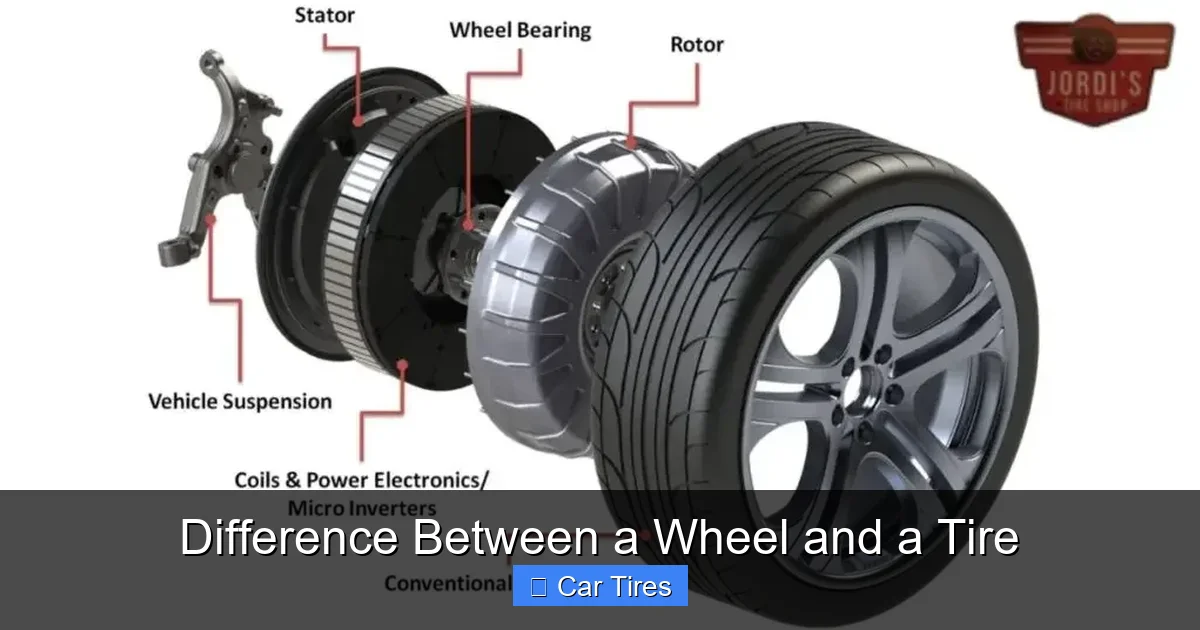
Visual guide about Difference Between a Wheel and a Tire
Image source: jordistireshop.com
Now let’s talk about the tire—the part of your car that actually touches the ground. A tire is a circular, flexible rubber casing filled with compressed air (or sometimes nitrogen). It wraps around the wheel and provides the necessary grip, cushioning, and stability for safe driving. Without tires, your car would be a metal box sliding uncontrollably on pavement.
Tires are engineered with incredible precision. They’re made from layers of rubber, fabric, steel belts, and other materials, each serving a specific purpose. The outer layer, called the tread, is designed with grooves and patterns to channel water, snow, or mud away from the contact patch—the area of the tire that touches the road. This helps prevent hydroplaning and improves traction in wet conditions.
But tires do more than just grip the road. They absorb shocks from bumps and potholes, making your ride smoother and protecting your suspension system. They also play a major role in fuel efficiency. Underinflated tires increase rolling resistance, which means your engine has to work harder and burn more fuel. That’s why checking tire pressure regularly is one of the simplest yet most effective maintenance tasks you can do.
Tire Construction: How Tires Are Made
Modern tires are marvels of engineering. Here’s a quick look at how they’re built:
– Tread: The outermost layer that contacts the road. It’s made from a durable rubber compound designed to resist wear and provide grip.
– Sidewall: The side of the tire between the tread and the bead. It protects the internal structure and displays important info like size and load rating.
– Belts: Steel or fabric layers beneath the tread that add strength and help the tire maintain its shape at high speeds.
– Carcass (or body plies): Layers of fabric that give the tire its structure and flexibility.
– Beads: Thick wire loops at the inner edge of the tire that lock onto the wheel rim, creating a tight seal.
Different types of tires—like all-season, summer, winter, or performance tires—use varying rubber compounds and tread designs to suit specific driving conditions. For example, winter tires are made with softer rubber that stays flexible in cold temperatures, while performance tires have stickier compounds for better cornering grip.
Tire Sizes and Ratings: Decoding the Sidewall
If you’ve ever looked at the side of a tire, you’ve probably seen a string of numbers and letters like “P215/65R16 98H.” This code tells you everything you need to know about the tire’s size, type, and capabilities.
– P: Stands for “P-metric,” indicating it’s a passenger vehicle tire (as opposed to LT for light truck).
– 215: The width of the tire in millimeters from sidewall to sidewall.
– 65: The aspect ratio—the height of the sidewall as a percentage of the width (65% of 215mm).
– R: Radial construction, the most common type today.
– 16: The diameter of the wheel (in inches) the tire is designed to fit.
– 98: Load index—how much weight the tire can support.
– H: Speed rating—the maximum speed the tire can safely sustain (H = up to 130 mph).
Understanding these numbers helps you choose the right tires for your vehicle and driving needs. Installing the wrong size can affect speedometer accuracy, handling, and even safety.
How Wheels and Tires Work Together
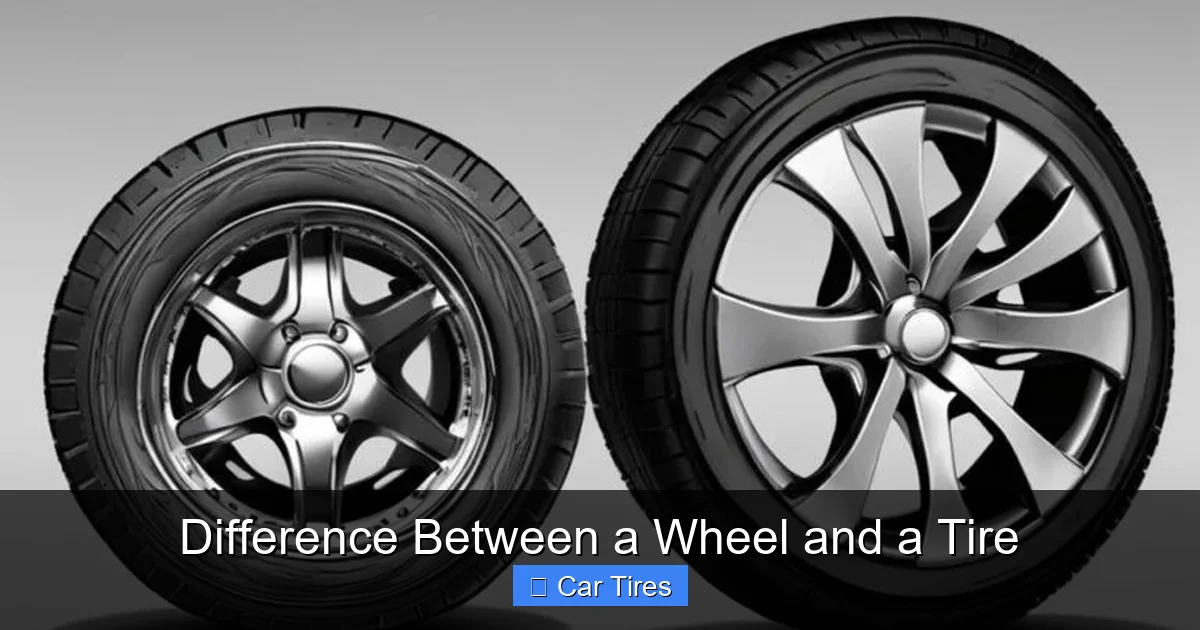
Visual guide about Difference Between a Wheel and a Tire
Image source: tagvault.org
Now that we’ve covered each component separately, let’s explore how wheels and tires work as a team. Think of them like a lock and key—the wheel is the lock, and the tire is the key. They must fit perfectly to function correctly.
When a tire is mounted onto a wheel, the inner edges (called beads) are pressed into the wheel’s bead seats. This creates an airtight seal, allowing the tire to hold air pressure. The tire then expands slightly, conforming to the wheel’s shape and forming a secure bond. Once inflated, the tire supports the vehicle’s weight, absorbs road impacts, and transfers power from the engine to the road.
But it’s not just about physical fit. The interaction between wheel and tire affects everything from ride comfort to fuel economy. For example, a larger wheel with a lower-profile tire (shorter sidewall) may improve handling and give a sportier look, but it can also make the ride harsher because there’s less cushioning between the wheel and the road. Conversely, a smaller wheel with a taller tire offers a smoother ride but may feel less responsive during sharp turns.
Balancing and Alignment: The Hidden Heroes
Even the best wheel and tire combo can cause problems if not properly balanced and aligned.
Wheel balancing ensures that weight is evenly distributed around the tire and wheel assembly. If one side is heavier, it can cause vibrations at certain speeds—usually felt in the steering wheel at 50–70 mph. Mechanics use small weights attached to the wheel to correct imbalances.
Alignment, on the other hand, refers to the angles of the wheels relative to each other and the road. Proper alignment ensures that tires wear evenly and the car drives straight without pulling to one side. Misalignment can result from hitting potholes, curbs, or worn suspension parts. Signs include uneven tire wear, a crooked steering wheel when driving straight, or the car drifting to one side.
Both balancing and alignment are essential maintenance tasks that should be checked regularly—especially after installing new tires or wheels.
Mounting and Installation: Getting It Right
Installing tires on wheels isn’t as simple as slipping them on. It requires specialized equipment and expertise. The process involves:
1. Cleaning the wheel and inspecting for damage.
2. Lubing the tire beads to help them slide into place.
3. Using a tire machine to press the tire onto the wheel.
4. Inflating the tire to seat the beads properly.
5. Checking for leaks and ensuring proper pressure.
Improper mounting can lead to air leaks, bead damage, or even tire separation at high speeds. That’s why it’s always best to have tires mounted by a professional technician.
Common Misconceptions About Wheels and Tires
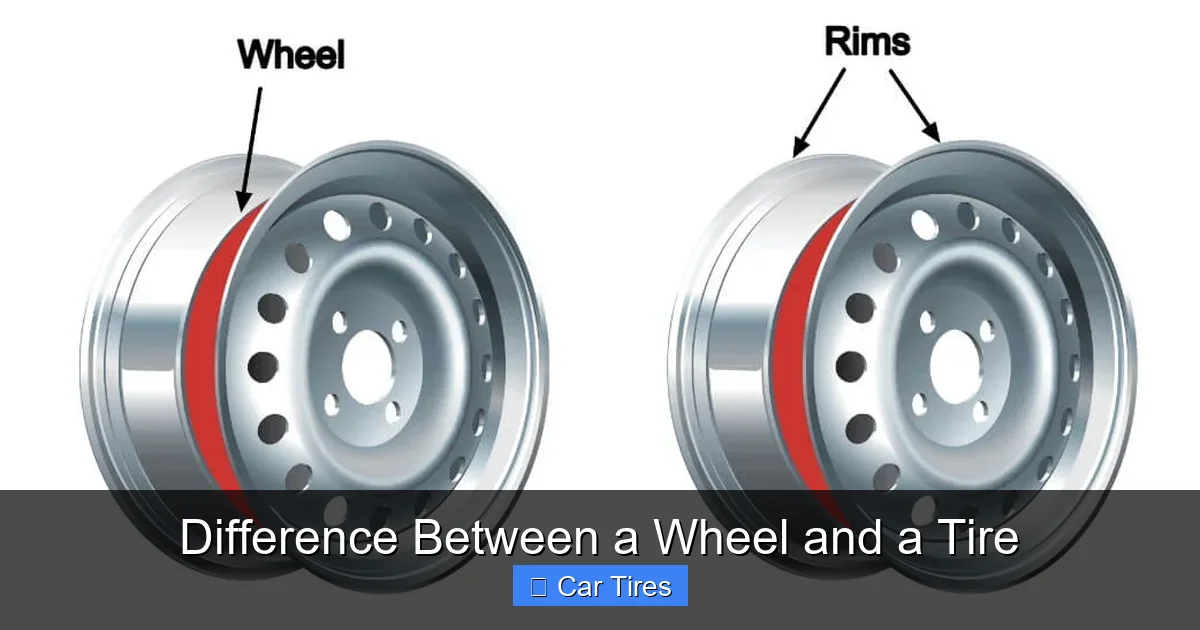
Visual guide about Difference Between a Wheel and a Tire
Image source: alltirechains.com
Despite their importance, wheels and tires are often misunderstood. Let’s clear up some common myths.
Myth 1: “Wheels and Tires Are the Same Thing”
This is the biggest misconception. As we’ve established, wheels and tires are separate components. You can replace one without the other. For example, when your tires wear out, you typically just buy new tires and have them mounted on your existing wheels—unless the wheels are damaged.
Myth 2: “Bigger Wheels Always Mean Better Performance”
While larger wheels can improve handling and aesthetics, they’re not always better. Upsizing too much can reduce ride comfort, increase road noise, and even strain your suspension. Plus, larger wheels are heavier, which can hurt fuel economy and acceleration.
Myth 3: “All Tires Are the Same Once They Fit”
Just because a tire fits your wheel doesn’t mean it’s the right choice. Tires vary widely in tread life, wet traction, noise levels, and performance. A cheap tire might save money upfront but wear out quickly or perform poorly in rain or snow.
Myth 4: “You Can Ignore Minor Wheel Damage”
A small bend or scratch might seem harmless, but even minor wheel damage can cause vibrations, air leaks, or uneven tire wear. It’s always worth having a professional inspect any impact damage.
Myth 5: “Tire Pressure Doesn’t Matter Much”
Incorrect tire pressure is one of the most common—and dangerous—maintenance oversights. Underinflated tires overheat, wear unevenly, and increase the risk of blowouts. Overinflated tires reduce traction and make the ride harsh. Check your tire pressure at least once a month.
Maintenance Tips for Wheels and Tires
Taking care of your wheels and tires doesn’t have to be complicated. A few simple habits can extend their life and keep you safe on the road.
Regular Inspections
Make it a habit to visually inspect your tires and wheels every time you fill up gas. Look for:
– Cracks, bulges, or cuts in the tire sidewall.
– Uneven tread wear (a sign of alignment or inflation issues).
– Bent or corroded wheels.
– Missing or loose lug nuts.
Catching problems early can prevent costly repairs or accidents.
Rotate Your Tires
Tires wear differently depending on their position. Front tires typically wear faster due to steering and braking forces. Rotating them every 5,000 to 7,000 miles ensures even wear and extends tire life.
Check Tire Pressure Monthly
Use a reliable tire pressure gauge to check pressure when tires are cold (before driving). Refer to your vehicle’s owner manual or the sticker on the driver’s door jamb for the correct PSI. Don’t rely on the pressure listed on the tire sidewall—that’s the maximum, not the recommended pressure.
Clean Your Wheels
Brake dust and road grime can build up on wheels, leading to corrosion over time. Use a mild cleaner and a soft brush to clean them regularly. Avoid harsh chemicals that can damage finishes.
Store Tires Properly
If you switch between summer and winter tires, store the off-season set in a cool, dry place away from sunlight. Keep them upright or stacked neatly to prevent deformation.
Upgrading Wheels and Tires: What to Consider
Many car enthusiasts love upgrading their wheels and tires for better performance or style. But before you make the leap, consider these factors:
Compatibility
Not all wheels and tires are compatible with your vehicle. Check your owner’s manual or consult a tire professional to ensure the new setup fits properly and doesn’t interfere with suspension or brake components.
Performance vs. Comfort
Larger wheels with low-profile tires may look great, but they often sacrifice ride comfort. If you drive on rough roads, a slightly smaller wheel with a taller tire might be a better choice.
Load and Speed Ratings
Never install tires with a lower load or speed rating than recommended. Doing so can compromise safety, especially under heavy loads or high speeds.
Cost and Warranty
High-performance tires and custom wheels can be expensive. Factor in installation, balancing, and potential alignment costs. Also, check if your warranty covers damage from aftermarket parts.
Seasonal Needs
If you live in an area with snow or heavy rain, consider dedicated winter or all-season tires. They offer better traction and safety in challenging conditions.
Conclusion: Why Knowing the Difference Matters
Understanding the difference between a wheel and a tire isn’t just trivia—it’s essential knowledge for any driver. These two components work in harmony to keep your car moving safely and efficiently. The wheel provides the structure and connection to the vehicle, while the tire delivers grip, comfort, and protection.
By knowing how they function individually and together, you can make smarter decisions about maintenance, repairs, and upgrades. Whether you’re checking tire pressure, rotating tires, or considering a new set of rims, this knowledge empowers you to take better care of your vehicle.
Remember: a well-maintained wheel and tire system improves safety, extends component life, and enhances your driving experience. So next time you’re at the gas station, take a moment to look at your wheels and tires. Appreciate the engineering, the design, and the vital role they play in every mile you drive.
Frequently Asked Questions
Can I replace just the tire without changing the wheel?
Yes, in most cases you can replace just the tire. As long as your wheel is in good condition and the correct size, a new tire can be mounted onto it by a professional.
What happens if I put the wrong size tire on my wheel?
Installing the wrong size tire can affect speedometer accuracy, handling, and safety. It may also cause the tire to rub against suspension parts or fail to seat properly on the wheel.
How often should I check my tire pressure?
Check your tire pressure at least once a month and before long trips. Tires naturally lose air over time, and underinflation can lead to poor fuel economy and increased wear.
Can I drive with a bent wheel?
It’s not recommended. A bent wheel can cause vibrations, uneven tire wear, and even a blowout. Have it inspected and repaired or replaced as soon as possible.
Do alloy wheels require special care?
Yes, alloy wheels are more prone to corrosion and damage from brake dust. Clean them regularly with a mild cleaner and avoid harsh chemicals to maintain their finish.
Why do my tires wear unevenly?
Uneven tire wear is often caused by improper inflation, misalignment, or worn suspension parts. A professional inspection can identify the root cause and recommend fixes.
