
Car Battery Smells Like Rotten Eggs

If your car battery smells like rotten eggs, it’s likely due to sulfuric gas released from overcharging or internal damage. This strong odor isn’t just unpleasant—it can signal serious safety risks like battery swelling or explosion. Act quickly by inspecting the battery, checking the charging system, and replacing it if needed to avoid hazards.
Key Takeaways
- Hydrogen sulfide gas causes the rotten egg smell: This gas is produced when sulfuric acid in the battery breaks down, especially during overcharging or overheating.
- Overcharging is a common culprit: A faulty voltage regulator or alternator can overcharge the battery, leading to excessive gas buildup and that sulfur stench.
- Damaged or old batteries emit odors: Cracks, leaks, or a battery past its 3–5 year lifespan may release gases and fluids that smell like rotten eggs.
- Ignoring the smell can be dangerous: Hydrogen sulfide is flammable and toxic in high concentrations—ventilate the area and avoid sparks or flames.
- Regular maintenance prevents issues: Check battery terminals, fluid levels (if applicable), and charging system performance to catch problems early.
- Replace the battery if necessary: If cleaning and inspection don’t resolve the issue, a new battery is often the safest and most effective solution.
- Professional diagnosis is recommended: If you’re unsure about the cause, have a mechanic test the battery and charging system to prevent further damage.
📑 Table of Contents
Why Does My Car Battery Smell Like Rotten Eggs?
You’re about to start your car on a chilly morning when you catch a whiff of something foul—like old eggs left in the sun. You sniff around and realize the smell is coming from under the hood. Your first thought might be, “Did something die in my engine?” But more likely, your car battery is the source of that sulfur-like stench.
That unmistakable rotten egg smell is actually a sign of hydrogen sulfide gas, which is produced when sulfuric acid inside the battery breaks down. While car batteries are sealed and designed to contain these chemicals, certain conditions can cause them to vent gas—especially when something goes wrong. This odor isn’t just unpleasant; it’s a red flag that your battery or charging system may be in trouble.
Understanding why your car battery smells like rotten eggs is the first step toward fixing the problem and keeping yourself safe. In this guide, we’ll walk you through the common causes, what you can do about it, and how to prevent it from happening again. Whether you’re a seasoned DIYer or just trying to keep your daily driver running smoothly, this information could save you time, money, and even prevent a dangerous situation.
What Causes the Rotten Egg Smell in Car Batteries?
Visual guide about Car Battery Smells Like Rotten Eggs
Image source: batterymanguide.com
The sulfuric smell coming from your car battery is almost always linked to hydrogen sulfide gas (H₂S). This gas forms when sulfuric acid—used in lead-acid batteries—undergoes chemical changes, especially under stress. Let’s break down the most common reasons this happens.
Overcharging the Battery
One of the top reasons your car battery smells like rotten eggs is overcharging. This occurs when the alternator or voltage regulator sends too much electrical current to the battery. Modern vehicles rely on the alternator to recharge the battery while the engine runs, but if the voltage regulator fails, it can push voltage beyond safe levels—often above 14.4 volts.
When a battery is overcharged, the excess energy causes the electrolyte (a mix of sulfuric acid and water) to break down rapidly. This process, called electrolysis, splits water into hydrogen and oxygen gases. But it also accelerates the release of sulfur compounds, including hydrogen sulfide, which gives off that rotten egg odor.
For example, if your dashboard warning lights flicker, your headlights dim and brighten unexpectedly, or your battery feels hot to the touch, overcharging might be the issue. A simple voltage test with a multimeter can confirm this—anything consistently above 14.7 volts while the engine is running suggests a problem.
Battery Overheating
Heat is another major factor. Car batteries are designed to operate within a specific temperature range. When they get too hot—whether from extreme weather, poor ventilation under the hood, or prolonged high electrical demand—the internal components can degrade faster.
Overheating speeds up chemical reactions inside the battery. The sulfuric acid breaks down more quickly, releasing gases that include hydrogen sulfide. You might notice the smell more on hot summer days or after long drives, especially if your engine bay doesn’t have good airflow.
A swollen battery case is a telltale sign of overheating. If the plastic housing looks bloated or warped, the internal pressure has built up from gas accumulation. This is dangerous—swollen batteries are at risk of leaking or even exploding.
Old or Damaged Batteries
Like any component, car batteries have a lifespan—typically 3 to 5 years. As they age, the internal plates corrode, the electrolyte evaporates, and the overall efficiency drops. An old battery is more prone to sulfation, a process where sulfate crystals build up on the lead plates. This not only reduces performance but can also lead to gas buildup.
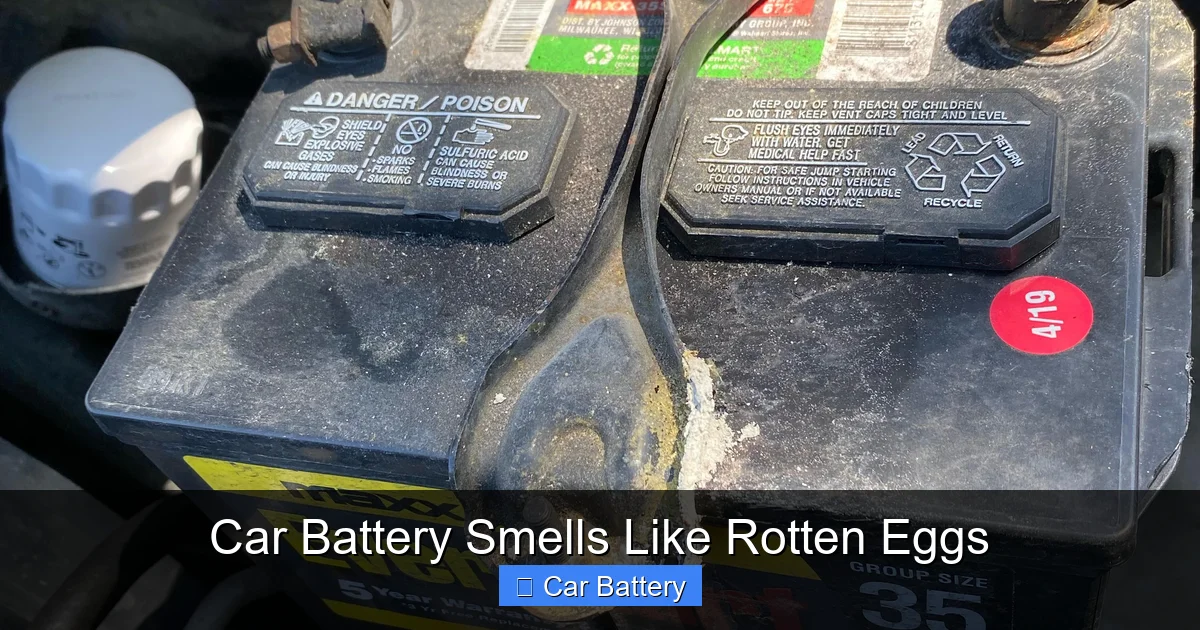
Physical damage is another concern. A cracked case, loose terminals, or a punctured cell can allow gases and acid to escape. Even a small leak can produce a strong rotten egg smell, especially in enclosed spaces like a garage.
If your battery is more than four years old and you’re noticing performance issues—like slow cranking or frequent jump-starts—it’s probably time for a replacement. Don’t wait for the smell to get worse.
Deep Discharge and Sulfation
Leaving your headlights on overnight or frequently making short trips without giving the battery time to recharge can lead to deep discharge. When a battery is deeply discharged, especially repeatedly, sulfate crystals form on the lead plates. This is called sulfation.
While sulfation itself doesn’t always cause a smell, it weakens the battery and makes it more susceptible to overheating and gas release during recharging. If you try to recharge a sulfated battery too quickly or with too much current, the risk of hydrogen sulfide production increases.
Faulty Charging System Components
Sometimes the problem isn’t the battery itself, but the system that charges it. The alternator, voltage regulator, and even the battery cables play a role in maintaining proper voltage. A failing alternator might not charge the battery correctly, while corroded or loose cables can cause voltage spikes.
For instance, if your alternator belt is loose or worn, it may slip and cause inconsistent charging. This can lead to undercharging followed by bursts of overcharging—both of which stress the battery and increase the chance of gas release.
Is the Rotten Egg Smell Dangerous?
Visual guide about Car Battery Smells Like Rotten Eggs
Image source: i.redd.it
Yes—ignoring a car battery that smells like rotten eggs can be hazardous. While the occasional whiff might not be immediately dangerous, prolonged exposure or high concentrations of hydrogen sulfide gas pose real risks.
Health Risks of Hydrogen Sulfide
Hydrogen sulfide is a toxic gas. At low levels, it causes irritation to the eyes, nose, and throat. You might experience headaches, dizziness, or nausea. At higher concentrations, it can affect the nervous system, leading to fatigue, loss of appetite, or even respiratory issues.
The good news? In most car battery scenarios, the gas is released in small amounts and quickly dissipates—especially if you’re outside or in a well-ventilated area. But if you’re working in a closed garage with poor airflow, the concentration can build up quickly.
Never ignore the smell if you’re in an enclosed space. Open the garage door, step outside, and avoid creating sparks or flames—hydrogen sulfide is flammable.
Risk of Battery Explosion or Leak
A battery emitting gas is under pressure. If the vent caps are blocked or the case is damaged, that pressure has nowhere to go. This can lead to a rupture or explosion, spraying corrosive acid and shrapnel.
Even without an explosion, a leaking battery can damage surrounding components. Sulfuric acid eats through metal, rubber, and paint. It can corrode wiring, fuse boxes, and even the battery tray. Over time, this can lead to electrical failures or fire hazards.
Fire and Electrical Hazards
Hydrogen gas, which is also released during overcharging, is highly flammable. A single spark from a loose connection, a dropped tool, or even static electricity can ignite it. That’s why it’s critical to avoid smoking, using lighters, or creating sparks near a smelly battery.
Additionally, a compromised battery can cause electrical shorts. If acid leaks onto the terminals or nearby wiring, it can create unintended pathways for current, leading to blown fuses, damaged electronics, or even a fire.
How to Diagnose the Problem
Visual guide about Car Battery Smells Like Rotten Eggs
Image source: autotechiq.com
If your car battery smells like rotten eggs, don’t panic—but do act quickly. Here’s how to figure out what’s going on and whether you can fix it yourself.
Step 1: Safety First
Before you pop the hood, make sure the engine is off and the car is in a well-ventilated area. Wear safety goggles and gloves—battery acid can cause severe burns. Keep children and pets away.
Step 2: Inspect the Battery
Look for visible signs of damage:
– Is the case swollen or cracked?
– Are there white or blue crusty deposits around the terminals (signs of corrosion)?
– Is there any fluid leaking?
If you see leaks or cracks, do not touch the battery. Acid can eat through skin and clothing. Move the vehicle to a safe location and call a professional.
Step 3: Check the Voltage
Use a multimeter to test the battery voltage:
– With the engine off, a healthy battery should read 12.4 to 12.7 volts.
– With the engine running, it should be between 13.7 and 14.7 volts.
If the voltage is consistently above 14.7 volts while running, the alternator or voltage regulator may be overcharging the battery.
Step 4: Smell and Listen
Sometimes, you can hear a hissing sound near the battery—this is gas escaping from the vent caps. If you hear this, back away immediately. The smell combined with hissing is a strong indicator of overpressure.
Step 5: Test the Charging System
If the battery voltage seems off, have the alternator and voltage regulator tested. Many auto parts stores offer free charging system checks. They’ll hook up a diagnostic tool and tell you if the alternator is producing too much or too little voltage.
Step 6: Consider the Battery’s Age
Check the manufacture date on the battery label. Most batteries have a code like “A123” where the letter represents the month (A=January, B=February, etc.) and the number is the year. If it’s more than 4 years old, it’s likely nearing the end of its life.
How to Fix a Car Battery That Smells Like Rotten Eggs
Once you’ve diagnosed the issue, here’s what you can do to resolve it—safely and effectively.
Option 1: Clean the Battery (If Safe)
If the battery isn’t leaking or swollen, you can clean the terminals to remove corrosion. Mix a tablespoon of baking soda with a cup of water, dip an old toothbrush in the solution, and scrub the terminals. Rinse with water and dry thoroughly. Apply a thin layer of petroleum jelly to prevent future corrosion.
Never pour water directly onto the battery—only clean the terminals and exterior.
Option 2: Recharge Properly
If the battery was deeply discharged, use a smart charger to recharge it slowly. Avoid fast chargers, which can overheat the battery and worsen the problem. A smart charger will monitor voltage and stop when the battery is full.
Option 3: Replace the Voltage Regulator or Alternator
If testing shows overcharging, the issue is likely the alternator or voltage regulator. These parts can often be replaced without swapping the entire alternator. A mechanic can diagnose and fix this—usually in under an hour.
Option 4: Replace the Battery
If the battery is old, damaged, or swollen, replacement is the best option. Don’t try to “fix” a compromised battery—it’s not worth the risk. When installing a new one, make sure the terminals are tight and clean, and the hold-down clamp is secure.
Option 5: Improve Ventilation
Ensure the battery compartment has adequate airflow. Remove any debris or insulation blocking vents. In hot climates, consider a battery heat shield to reduce under-hood temperatures.
Preventing Future Odors and Battery Problems
An ounce of prevention is worth a pound of cure—especially when it comes to car batteries. Here’s how to keep your battery healthy and odor-free.
Regular Maintenance Checks
Inspect your battery every 6 months:
– Look for corrosion, cracks, or swelling.
– Check terminal tightness.
– Clean terminals if needed.
Monitor Charging System Performance
Pay attention to warning signs:
– Dimming headlights
– Slow engine cranking
– Dashboard warning lights (like the battery or check engine light)
These can indicate alternator or battery issues before they become serious.
Avoid Deep Discharges
Don’t leave lights, radios, or accessories on when the engine is off. If you don’t drive often, consider a battery maintainer or trickle charger to keep it topped up.
Drive Regularly
Short trips don’t give the alternator enough time to recharge the battery. Aim for longer drives (20+ minutes) a few times a week to maintain charge.
Replace Batteries Proactively
Don’t wait for failure. Replace your battery every 4–5 years, or sooner if you live in extreme temperatures. Cold weather reduces battery efficiency, while heat accelerates degradation.
Use Quality Parts
When replacing the battery or alternator, choose reputable brands. Cheap components may fail sooner and cause more problems.
When to Call a Professional
While some battery issues can be handled at home, others require expert help. Call a mechanic if:
– The battery is leaking or swollen
– You smell gas and hear hissing
– The alternator or voltage regulator needs replacement
– You’re unsure about electrical diagnostics
A professional can perform a load test, check the entire charging system, and ensure everything is installed correctly. It’s a small cost compared to the risks of DIY mistakes.
Conclusion
A car battery that smells like rotten eggs is more than just a nuisance—it’s a warning sign. Whether it’s overcharging, overheating, or an aging battery, the sulfur-like odor points to conditions that can damage your vehicle or put you in danger. By understanding the causes and taking quick action, you can protect yourself, your car, and your wallet.
Start by inspecting the battery, testing the voltage, and checking for damage. Clean terminals if safe, but don’t hesitate to replace the battery or charging components if needed. Regular maintenance and proactive care will keep your battery running smoothly and odor-free for years to come.
Remember: when in doubt, consult a professional. Your safety is worth more than a DIY fix. Keep your car’s heart—the battery—healthy, and it will keep you moving forward.
Frequently Asked Questions
Why does my car battery smell like sulfur?
The sulfur or rotten egg smell comes from hydrogen sulfide gas, which forms when sulfuric acid in the battery breaks down. This usually happens during overcharging, overheating, or when the battery is old or damaged.
Can a car battery explode if it smells like rotten eggs?
Yes, if the battery is swollen, leaking, or emitting gas under pressure, it can rupture or explode. The hydrogen gas released is flammable, and sparks can ignite it. Always handle with care and ventilate the area.
How do I stop my car battery from smelling?
First, identify the cause—check for overcharging, damage, or age. Clean terminals, replace faulty parts, or install a new battery. Ensure proper ventilation and avoid deep discharges to prevent future odors.
Is it safe to drive with a battery that smells like rotten eggs?
It’s not recommended. The smell indicates a potential hazard like gas buildup or acid leaks. Drive only if necessary and have the battery inspected immediately to avoid safety risks.
Can a bad alternator cause a rotten egg smell?
Yes, a faulty alternator or voltage regulator can overcharge the battery, leading to excessive gas production and that sulfur odor. Have the charging system tested to confirm.
How often should I replace my car battery?
Most car batteries last 3 to 5 years. Replace sooner if you notice slow cranking, frequent jump-starts, or signs of damage. Extreme temperatures can shorten lifespan.
