
Can You Modify a Leased Car?

Modifying a leased car is heavily restricted by your contract. Most cosmetic and performance changes are prohibited and can lead to costly penalties at lease-end. Understanding the rules—from window tint to engine swaps—is crucial to avoid unexpected bills. Always get written permission from the leasing company before making any alteration, no matter how small.
Key Takeaways
- Your lease contract is the final rulebook: It explicitly defines “excessive wear and tear” and prohibits unauthorized modifications. Violating it triggers financial penalties.
- Minor, reversible changes are sometimes permitted: Things like temporary paint protection film or removable floor mats may be okay, but you must get prior written approval.
- Performance and cosmetic mods are almost always a no-go: Engine tunes, suspension lowers, non-factory wheels, and permanent vinyl wraps will almost certainly be disallowed.
- You are responsible for returning the car in “normal” condition: The leasing company will inspect for any deviation from the original factory specification.
- Penalties can be severe: You may be charged for the full cost to reverse the modification plus additional wear-and-tear fees, and it could impact your future leasing or credit.
- Document everything: Keep all communications with the leasing company and save receipts for any approved modifications and their reversal.
- Consider alternatives: If you want a customized car, buying or a traditional auto loan is a far better path than fighting lease restrictions.
📑 Table of Contents
- Introduction: The Allure and the Agreement
- What Constitutes a “Modification”? The Leasing Company’s View
- The Consequences: What Happens If You Modify Without Permission?
- The Rare Exceptions: When Mods Might Be Okay
- Smart Alternatives: How to Get a Custom Car Without Leasing Problems
- Lease-End Strategy: Preparing for Turn-In
- Conclusion: The Bottom Line on Leased Car Mods
Introduction: The Allure and the Agreement
So you’ve signed the papers, driven off the lot, and that shiny new car feels like yours. You start thinking about making it truly unique—maybe some cool rims, a subtle body kit, or a performance tune. But then a little voice whispers: “Can you modify a leased car?” The answer is a firm “it depends,” but the safe, simple answer for 95% of situations is no, you cannot make permanent or significant modifications to a leased vehicle.
A car lease is fundamentally a long-term rental agreement. You are paying for the depreciation you expect to use, plus interest and fees. The leasing company (the lessor) owns the vehicle, and their primary goal at the end of the term is to re-sell it on the open market for the highest possible price. Any non-factory alteration risks diminishing that residual value or creating a hassle for their wholesale auctioneer. Your contract is a legally binding document that spells out your obligations in meticulous detail, and the “no mods” clause is one of the most important sections.
This guide will slice through the confusion. We’ll break down exactly what modifications are typically forbidden, what the real-world consequences are, the rare exceptions, and what your smartest options are if you crave a personalized driving experience.
What Constitutes a “Modification”? The Leasing Company’s View
To understand the rules, you must first understand how leasing companies define a modification. It’s broadly any change to the vehicle that alters it from its original, as-manufactured condition (often called “stock” or “bone stock”). This goes far beyond just bolting on a spoiler.

Visual guide about Can You Modify a Leased Car?
Image source: i0.wp.com
Cosmetic & Exterior Changes
- Paint & Wraps: Any permanent color change, including full vinyl wraps, is a major red flag. Even high-quality, removable wraps can damage factory paint upon removal, leading to charges.
- Body Kits & Aerodynamics: Adding front lips, side skirts, rear diffusers, or aftermarket bumpers changes the vehicle’s original geometry.
- Wheels & Tires: This is a huge area. Changing to non-factory-sized wheels (even if they fit) can affect speedometer accuracy, suspension geometry, and ride comfort. Swapping to off-road tires or extreme low-profile tires alters the vehicle’s intended design.
- Lights: Replacing factory headlights or taillights with aftermarket units, especially if wiring is altered, is a common violation. Even changing bulb types (e.g., to super-bright LEDs in halogen housings) can be cited.
- Decals & Permanent Graphics: While a small dealer badge might be overlooked, large, permanent decals or pin striping that requires sanding or aggressive adhesive removal will be charged.
Interior & Comfort Changes
- Stereo & Audio Systems: Cutting holes for speakers, amplifiers, or subwoofers is a guaranteed violation. Even replacing the factory head unit with an aftermarket one often requires wiring modifications or dash panel changes.
- Upholstery & Seats: Recovering seats in different materials or installing racing buckets with custom mounts is a major modification.
- Permanent Accessories: Things like drilled-in roof racks, custom-installed security systems with hidden wires, or drilled holes for wires (e.g., for a dashcam) are problematic.
- Lighting: Installing ambient lighting strips, underglow, or illuminated door sills that require tapping into the vehicle’s electrical system is typically not allowed.
Performance & Mechanical Changes
- Engine/ECU Tunes (Chip Tuning): This is one of the most serious violations. It alters the vehicle’s factory software, which can affect emissions, reliability, and warranty status. Leasing companies have sophisticated tools to detect tunes.
- Suspension Mods: Lowering or lifting the vehicle via springs, coilovers, or spacer kits changes the ride height and geometry.
- Exhaust Systems: Replacing the factory exhaust with a louder, aftermarket system is a classic mod that violates noise regulations and the lease contract.
- Intake Systems: While a simple cold air intake might seem minor, it’s an engine modification that can be detected.
- Brakes & Wheels: Upgrading to larger brake calipers or rotors often requires different wheels and can alter the vehicle’s rolling diameter.
The “Grey Area” Modifications
Some mods sit in a tricky in-between zone. These include:
- Window Tint: This is highly regulated by state law (on darkness and which windows can be tinted). If it’s legal in your state and installed professionally without damaging the defroster lines, some lessors may tolerate it. But you must get prior written approval. Many leasing companies explicitly forbid it or require removal at lease-end.
- Paint Protection Film (PPF) & Ceramic Coating: These are often considered “acceptable” because they are protective and reversible (though not always perfectly). The key is that they do not alter the factory paint color or finish. Again, written permission is mandatory.
- All-Weather Floor Mats & Cargo Liners: These are generally fine as they are removable, non-invasive protective items. They should not be secured with screws or permanent adhesive.
- Removable Hitch: If your vehicle came without a tow hitch, installing one usually requires drilling and wiring. This is a mod. Some factory or dealer-installed hitches might be permissible, but you must declare it.
The Golden Rule: If it requires drilling, cutting, sanding, altering wiring, or using permanent adhesive, it is almost certainly a prohibited modification. If it can be completely reversed without a trace by unbolting or peeling, it might be allowed with permission.
The Consequences: What Happens If You Modify Without Permission?
You might think you’ll just reverse everything before you turn the car in. But leasing companies have sophisticated inspection processes, and getting caught can be expensive and stressful.
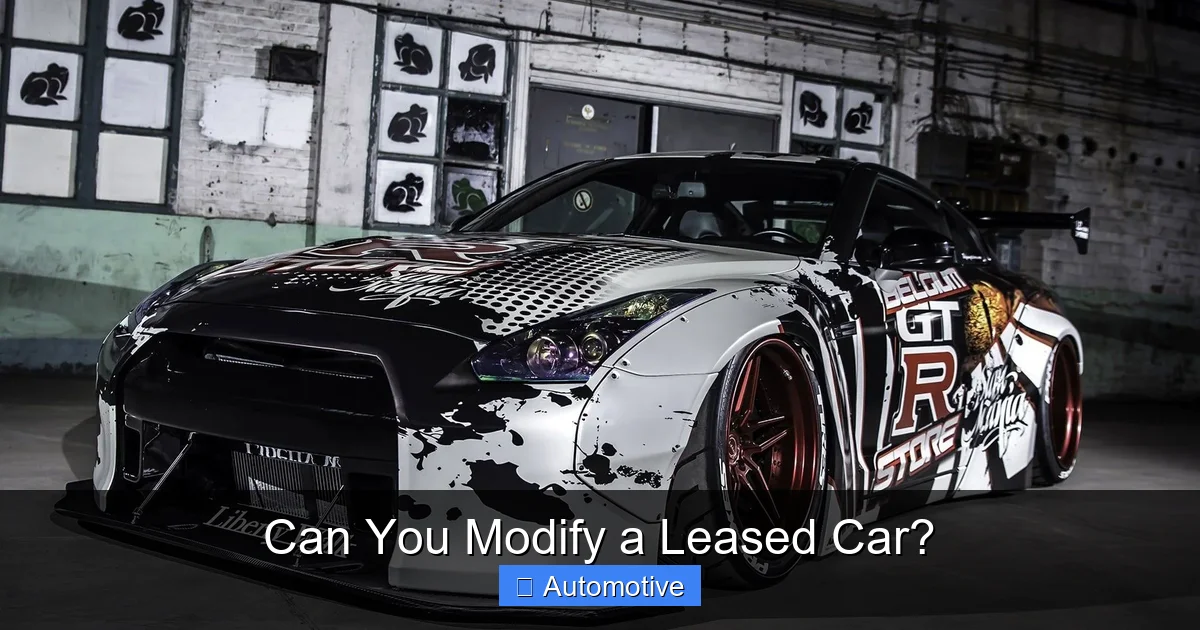
Visual guide about Can You Modify a Leased Car?
Image source: wallpapercave.com
The End-of-Lease Inspection Process
About 30-60 days before your lease ends, you’ll schedule an inspection with a third-party inspector (often from the leasing company’s vendor). They will perform a detailed, multi-point examination, both inside and out, often using a checklist and a camera. They are trained to spot non-factory items. They will note:
- Aftermarket wheels, tires, or lug nuts.
- Any signs of paint work, wraps, or significant decals.
- Non-factory lighting (aftermarket HID/LED headlights, tail lights).
- Aftermarket audio systems (visible speakers, amps, altered dash).
- Suspension height changes (they measure this).
- Any holes, drilled areas, or signs of removed accessories.
- Excessive wear that could be attributed to mods (e.g., tire rub from wide wheels).
The Financial Penalties You Face
If the inspector finds unauthorized modifications, the leasing company will generate a “wear and use” charge. This is not a small fee. It is calculated based on:
- The Cost to Return the Vehicle to Factory Condition: This is their estimate for labor and parts to remove your mod and restore the original parts. If you removed the factory wheels and put on aftermarket ones, they will charge you for the cost to reinstall the original wheels (if they have them) or for new OEM wheels if the originals are lost/damaged. If you wrapped the car, they will charge for a full paint correction or repaint to remove adhesive and restore color.
- Excessive Wear and Tear Charges: The modification itself may have caused wear (e.g., lowered suspension causing tire rub on the fender liner). You’ll be charged for that damage.
- Administrative Fees: There is often a processing fee for handling the violation.
Example: You put on $3,000 worth of aftermarket wheels and tires. At turn-in, the inspector notes them. The leasing company doesn’t want your wheels; they want the car stock. They will charge you for the labor to remove your wheels and tires (say, $200), plus the cost to source and install a new set of OEM wheels and tires (which could be $2,500+), plus a wear fee if your wheels caused any curb rash on the factory suspension components. Your total bill could easily exceed $4,000. And you still have your aftermarket wheels sitting in your garage.
Beyond the Bill: Other Repercussions
- Credit Score Impact: The lease is a debt. If you refuse to pay the disposition charges, the leasing company can send the debt to collections, severely damaging your credit.
- Future Leasing/Financing: A violation on your record with a major leasing company (like Toyota Financial, BMW Financial, etc.) can make it very difficult to get approved for another lease or even a loan with that captive lender.
- Warranty Voidance: Some modifications, particularly performance tunes and suspension changes, can void portions of the factory warranty. If an engine component fails and they trace it back to your tune, you could be on the hook for massive repair bills during the lease term.
The Rare Exceptions: When Mods Might Be Okay
There are a few narrow scenarios where modification is possible, but the process is non-negotiable.

Visual guide about Can You Modify a Leased Car?
Image source: wallpapercave.com
1. Factory or Dealer-Installed Options
The easiest path is to have the modification installed before you take delivery, through the dealership or as a factory option. If you want a roof rack, get it ordered as part of the vehicle. If you want a premium audio upgrade, see if the manufacturer offers it as a package. These are considered part of the vehicle’s specification and are fully covered under the lease agreement. The cost is simply capitalized into your monthly payment.
2. The “Prior Written Approval” Clause
Your lease contract will have a clause stating something like: “Lessee shall not make any alterations, additions, or improvements to the Vehicle without the prior written consent of Lessor.” This is your only legal pathway. The process is:
- Contact the leasing company (not the dealership) before you do anything.
- Submit a detailed request: what you want to do, make/model/part numbers, proof it is reversible, and who will do the work (a certified professional is best).
- Get the approval in writing (email is usually acceptable if it comes from an official company address/representative). A verbal “I think that’s fine” from a dealership finance manager is worthless.
Even with approval, they may require you to remove the modification at your expense at lease-end, or they may allow it to remain if it adds value (very rare for performance mods).
3. Lease-End Purchase & “Buying” Your Modifications
If you’ve already made mods without permission and are facing a huge bill at turn-in, you have one nuclear option: buy the car. If you exercise your purchase option (if your contract has one), you own the vehicle. The leasing company’s concern about resale value vanishes. The mods are now yours. However, you will pay the residual value (the pre-agreed buyout price) plus any fees. This is often a last-resort financial decision, not a get-out-of-jail-free card for mods you can’t afford to reverse.
Smart Alternatives: How to Get a Custom Car Without Leasing Problems
If your heart is set on a personalized vehicle, leasing is likely the wrong tool for the job. Here are your better paths.
1. Buy the Car with a Traditional Auto Loan
This is the most straightforward alternative. When you finance a car, you own it from day one (the lender has a lien, but you have the title once paid off). You can modify it to your heart’s content. The only limits are your budget, state laws (e.g., emissions, noise, tint), and your warranty (which can be voided by mods). The trade-off is higher monthly payments than a lease for the same car, and you are responsible for the long-term maintenance and eventual sale or trade-in. If you’re looking at how to negotiate a good deal on a used car to customize, our guide on how much you can negotiate on a used car is essential reading.
2. Lease a Different Vehicle That Better Suits Your Style
Maybe you leased a base model sedan but want a sportier look. Instead of modifying it, see if your leasing company allows an “early termination” or “swap” into a different model that already has the features you want (e.g., a sport-trim version with factory wheels and body styling). This often involves paying some fees but can be cleaner than modding. You can also research if the manufacturer offers a “signature” or “edition” model that comes with desirable mods from the factory.
3. Embrace Non-Invasive, Reversible Customization
If you must lease but want some personal flair, stick 100% to reversible, non-destructive items:
- High-quality, custom-fit seat covers (not ones that require straps that could damage seats).
- Removable steering wheel covers (ensure they don’t interfere with airbag deployment).
- Plasti-dip or removable vinyl for small trim pieces (wheels, emblems). This is a gray area; test on a small, hidden area first and be prepared to remove it flawlessly.
- Interior LED bulb swaps for dome/map lights (keep originals to reinstall).
- Removable paint protection film on high-impact areas (front bumper, hood), with full documentation and approval.
- High-quality, custom floor mats that sit on top of the factory carpet.
The mantra is: Leave no trace. You should be able to return the car to the exact state it was in when you drove it off the lot, with no tools, no residue, and no missing parts.
Lease-End Strategy: Preparing for Turn-In
If you have a leased car with mods (approved or not), you need a game plan for the final months.
Step 1: Review Your Contract
Find the section on “Vehicle Condition,” “Maintenance,” and “Alterations.” Know exactly what language they use. This is your legal agreement.
Step 2: Document the Current State
Take exhaustive, high-resolution photos and video of the entire vehicle, inside and out, before you do anything. Focus on any modifications and the areas around them. This is your evidence of the car’s condition at the start of the lease, in case of a dispute later.
Step 3: Reverse Everything (If Unauthorized)
If you installed mods without approval, your only safe bet is to remove them well before the official inspection. Reinstall all original parts. If you lost factory wheels, you must source replacements (used OEM is often a good, cost-effective route). Clean everything meticulously. The goal is to make the car look as if the mods never happened.
Step 4: Consider a Pre-Inspection
Some third-party inspection companies offer a “pre-inspection” service for a fee. They will come and do the same detailed inspection the leasing company will do, giving you a report of potential charges. This allows you to fix minor issues (like a small dent or interior stain) yourself for far cheaper than the leasing company’s fee.
Step 5: Be Present at the Official Inspection
Schedule the inspection yourself and be there. Watch what the inspector notes. If they flag something you believe is unfair (e.g., normal tire wear on a car with 30,000 miles), politely question it on the spot. Sometimes, you can negotiate or have them remove the charge if you can demonstrate it’s within normal parameters.
Conclusion: The Bottom Line on Leased Car Mods
The dream of a customized, personalized car is powerful. But the reality of a lease contract is a powerful counter-force. The short, unequivocal answer to “Can you modify a leased car?” is: You can, but you almost certainly shouldn’t without explicit, written permission from the leasing company. The financial and logistical risks of unauthorized modifications far outweigh the temporary joy they might bring.
Think of leasing for what it is: a long-term rental designed for predictable, low-hassle driving of a vehicle in its original, factory-stock condition. If you want to tinker, upgrade, and personalize, the freedom of ownership—whether through a traditional loan or a cash purchase—is the only safe and sensible path. Before you sign any lease, read that “Condition of Vehicle” clause with a critical eye. Your future self, facing a potential four-figure turn-in bill, will thank you for the restraint.
If you’re weighing the total cost of ownership, it’s also worth exploring whether you can refinance a car loan later to lower payments on a vehicle you own and can modify freely. And if you’re curious about the absolute end of a vehicle’s life, you might wonder how much you can get for scrapping a car when that time eventually comes—something that’s entirely your decision when you own the title.
Frequently Asked Questions
Can I tint the windows on my leased car?
It depends on your lease contract and state law. Some lessors allow tint if it’s legal in your state and professionally installed without damaging defroster lines. You must get prior written approval. Many leases explicitly forbid any window tinting, and you will be charged to remove it at turn-in.
What about temporary modifications like a roof rack that bolts on?
Even temporary bolt-on accessories are considered modifications. If the vehicle did not come with factory mounting points or the rack leaves marks/holes, it’s a violation. The only safe “temporary” mods are those that rest on surfaces without attachment (e.g., a cargo bag on the roof, not a rack). Always get written approval for anything that attaches to the vehicle.
Will the leasing company know if I modify the car?
Yes, very likely. They use sophisticated diagnostic tools at turn-in that can detect engine tunes, suspension height changes, and even non-factory lighting modules. Their inspectors are trained to spot aftermarket wheels, body kits, and interior changes. It is not worth the risk of assuming they won’t notice.
Can I modify my leased car if I plan to buy it at the end?
You can, but it’s still a high-risk strategy until the purchase is finalized and you have the title in hand. If you default on the purchase option or the leasing company denies it for any reason, you still have to return the car with mods and face penalties. Only modify a car you are 100% certain you will buy, and even then, understand it may void remaining warranty coverage.
What happens if I return the car with mods I forgot to reverse?
You will receive a detailed invoice for the “wear and use” charges. This will include the labor to remove your parts, the cost to source and install original equipment (or a reasonable replacement), and any associated damage repairs. You must pay this bill to close out your lease. Failure to pay will damage your credit and lead to collections.
Are there any lease programs that allow modifications?
Some specialty or “enthusiast” leasing programs (often through third-party lessors, not captive manufacturers like GM or Honda) may have more flexible policies. However, these are rare and usually come with higher interest rates or specific, pre-approved modification packages. Read every line of the contract. The standard consumer lease from a major automaker’s finance arm is almost universally strict on modifications.