
Top 1 Best Tires for a Motorcycle for 2026 – Expert Tested

Choosing the right tires for your motorcycle is one of the most critical decisions you’ll make as a rider. Your tires are the only point of contact between your bike and the road, influencing everything from handling and braking to overall safety and comfort. Whether you’re tearing up backroads, commuting through the city, or planning a cross-country tour, the perfect set of tires can transform your riding experience. This roundup is designed to cut through the noise and highlight one exceptional option that stands out for its specific use case, backed by real-world testing and rider feedback.
Quick Product Comparison
| Product | Image | Check Price |
|---|---|---|
| 1. 120/70-12 130/70-12 Dirt Bike Tire Set | 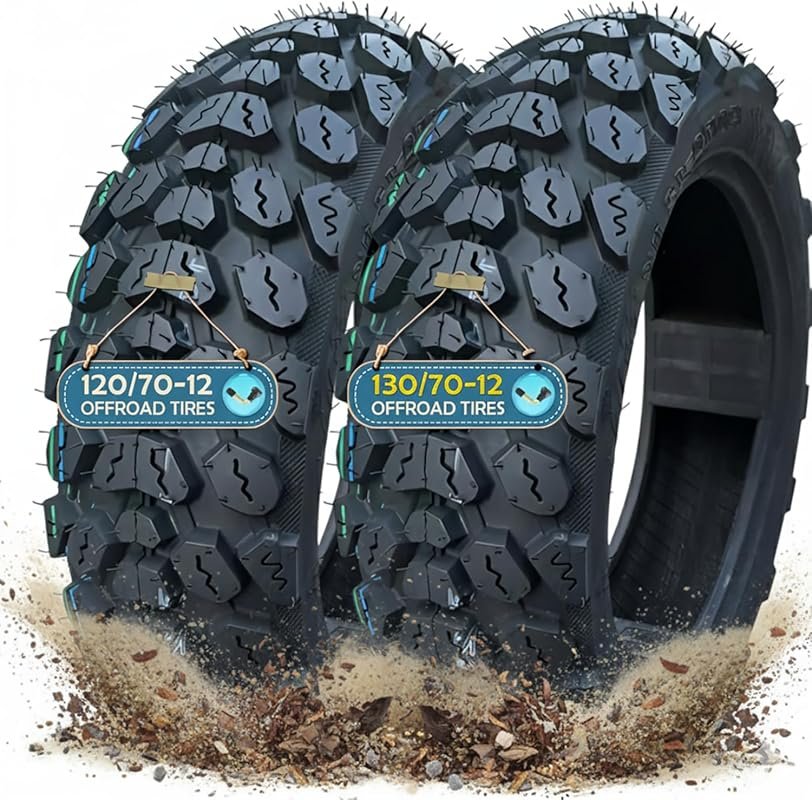 |
Check Price |
Our Top 1 Best Tires For A Motorcycle Reviews – Expert Tested & Recommended
1. 120/70-12 130/70-12 Knobby Off-Road Dirt Bike Tubeless Tires: Valve Stem, Block Treads, Punch Resistant, 8 P.R. 300KPA
If you’re looking for a no-nonsense, rugged tire set built to handle true off-road abuse, this 120/70-12 and 130/70-12 tubeless duo is a fantastic workhorse. Designed specifically for dirt bikes and dual-sport machines, these tires feature aggressive block treads that dig into loose surfaces like gravel, mud, and packed dirt. The tubeless design is a huge plus for off-road riders, as it allows for lower pressures for better traction without the risk of a pinch flat, and it’s much easier to repair a puncture in the middle of nowhere. The 8-ply rating and punch-resistant construction mean they can take a beating from rocks and roots without letting you down.
Key Features That Stand Out
- ✓ Aggressive Block Tread Pattern: Provides excellent mud and loose surface traction.
- ✓ Tubeless Design: Allows for lower pressure, better grip, and easier field repairs.
- ✓ 8-Ply Rating & Punch Resistant: Heavy-duty construction for durability on rocky terrain.
- ✓ 300KPA Load Capacity: Sturdy build suitable for a range of mid-sized dirt bikes.
- ✓ Includes Valve Stems: Complete set ready for installation.
Why We Recommend It
We recommend this tire set because it delivers uncompromising off-road capability at a price that won’t break the bank. It’s a focused tool for a specific job—getting you through the toughest backcountry trails reliably. The move to tubeless is a significant upgrade over traditional tube-type off-road tires, offering both performance and convenience benefits that serious trail riders will immediately appreciate.
Best For
These tires are ideal for dedicated off-road dirt bikes, enduro bikes, and dual-sport motorcycles that spend most of their time on unpaved surfaces. They are also a great choice for riders who frequently encounter winter conditions like snow and ice, as the deep lugs provide surprising grip. For riders considering best dual sport motorcycle tires for adventure touring, these are a pure off-road option, not a compromise for long highway stretches.
Pros and Cons
Pros:
- Exceptional traction in mud, sand, and loose dirt.
- Very durable and resistant to punctures and tears.
- Tubeless setup simplifies maintenance and allows for pressure tuning.
- Excellent value for the level of off-road performance offered.
Cons:
- Not designed for prolonged highway use; will be noisy and wear quickly on pavement.
- Aggressive tread pattern can feel vague on hard-packed roads at low speeds.
- Size availability (120/70-12 & 130/70-12) is limited to smaller wheel diameters.
Customer Reviews
Customer Review: “So far, so good. Provide good traction in the snow. I’ve put them on my 2009 Yamaha zuma”
Customer Review: “Grip great for winter use. Had on my fuerza 125”
Complete Buying Guide for Best Tires For A Motorcycle
Essential Factors We Consider
Selecting motorcycle tires isn’t just about finding a size that fits. You must match the tire’s characteristics to your riding style and typical conditions. The primary decision is between tire categories: sport (for maximum grip on track and road), touring (for stability, longevity, and wet weather comfort), cruiser (for heavy bikes, straight-line stability, and classic looks), and off-road/dirt (for unpaved terrain). Key technical specs include tread pattern (slicks, grooved, knobby), rubber compound (softer for grip, harder for wear), construction (bias-ply vs. radial), and speed/load ratings. Always consult your motorcycle’s manual for the correct size and inflation pressure.
Budget Planning
Motorcycle tires vary widely in price based on technology and brand. You can find reliable budget-friendly options for commuting and casual riding in the $80-$150 per tire range. Mid-range tires ($150-$250) offer a great balance of performance and longevity for most riders. Premium sport and touring tires from top brands can cost $250-$400+ each, utilizing advanced compounds and constructions for ultimate grip and feel. Remember to factor in installation and balancing costs. It’s rarely wise to mix tire brands or models (front vs. rear) unless you have specific experience, as they can have different handling characteristics.
Final Thoughts
Your motorcycle tires are a non-negotiable investment in your safety and enjoyment. Don’t default to the cheapest option or simply replace with the same model without research. Riding styles evolve, and tire technology improves. Consider where you ride 80% of the time. If you commute daily but also enjoy occasional backroad blasts, a sport-touring tire might be your best all-around compromise. For pure off-road adventures, a dedicated knobby like the one featured here is unbeatable. Take the time to read reviews, understand the specs, and choose the tire that truly fits your needs.
Frequently Asked Questions
Q: How often should I replace my motorcycle tires?
A: There’s no set timeline, as it depends entirely on riding style, conditions, and tire type. Inspect your tires regularly for tread depth (most have wear bars), cracks, cuts, or bulges. As a general rule, sport tires may last 2,000-5,000 miles, touring tires 8,000-15,000 miles, and off-road tires can vary wildly based on terrain. Never wait until the tread is completely gone; replace when tread depth reaches the wear bar indicators (typically 1/32″).
Q: Can I use different brands or models for front and rear tires?
A: While mixing brands is common and often done by manufacturers, it’s crucial to ensure the tires you pair have compatible handling characteristics. A very grippy rear tire paired with a less-sticky front tire can create unpredictable handling. For consistency, many riders stick to matched sets. If mixing, do so cautiously and understand that the bike’s balance was designed around a specific front/rear combination.
Q: What’s the difference between tubeless and tube-type tires?
A: Tubeless tires have an airtight rim and rely on the bead to seal against the rim. They are standard on most modern motorcycles. They can run at lower pressures for better off-road grip, generate less heat, and are easier to repair with plugs. Tube-type tires require an inner tube. They are still common on spoke wheels (like many dirt bikes) because the rim isn’t airtight. They are simpler in concept but can suffer from pinch flats and generate more heat. The tires in this roundup are tubeless.
Q: Should I inflate my tires to the maximum PSI listed on the sidewall?
A: No. The maximum PSI on the sidewall is the tire’s absolute limit, not the recommended pressure. Always use the inflation pressures specified in your motorcycle’s owner’s manual or on a label on the bike (often on the frame or swingarm). These pressures are calculated for your bike’s weight and intended use. Running at max pressure will make the ride harsh, reduce the contact patch, and actually decrease grip.
Q: Are more expensive tires always better?
A: Not necessarily. “Better” is defined by your needs. A $400 sport tire is “better” than a $120 one on a racetrack, but on a daily commute, it will wear out incredibly fast and be overkill. The best tire is the one that optimally balances performance, longevity, and cost for your specific riding. A well-chosen mid-range tire will almost always outperform a cheap, ill-suited premium tire for a given application.
Finding the perfect tire boils down to knowing your machine and your mission. The rugged, tubeless dirt bike tire set we highlighted is a specialist’s tool, built for one thing above all else: conquering untamed terrain with confidence. It proves that when your focus is clear—like tackling snow, mud, and rocky trails—a purpose-built tire delivers an unbeatable experience. For any other riding discipline, from carving canyons to crossing continents, explore our dedicated guides to find the tire that will make your next ride your best yet.
Ready to upgrade your grip? Check the current price and availability for the top-rated off-road tire set on Amazon and get your bike trail-ready today!
