
Can You Jump a Car with a Completely Dead Battery

Yes, you can jump a car with a completely dead battery—but it depends on the cause of the failure and how you do it. While a total power loss doesn’t automatically mean the battery is beyond help, improper jumping can damage electronics or pose safety risks. With the right tools, knowledge, and precautions, most dead batteries can be revived temporarily to get you back on the road.
Key Takeaways
- Yes, a completely dead battery can often be jump-started: Even if your car won’t turn over or lights are off, a jump start may work if the battery isn’t internally damaged.
- Safety first—follow proper jump-starting procedure: Connect cables in the correct order (positive to positive, negative to ground), and avoid sparks near the battery.
- Use a compatible power source: A running car, portable jump starter, or battery charger can provide the needed surge—just ensure voltage and amperage match your vehicle.
- Not all dead batteries are equal: A battery that’s simply discharged may revive, but one with sulfation, cracks, or internal failure won’t hold a charge.
- Drive time matters after a jump: After starting, drive for at least 20–30 minutes to allow the alternator to recharge the battery fully.
- Repeated dead batteries signal deeper issues: If your battery dies often, test the charging system, alternator, and parasitic drains.
- Prevention beats recovery: Maintain your battery, clean terminals, and use a trickle charger during long storage periods.
📑 Table of Contents
Can You Jump a Car with a Completely Dead Battery?
Picture this: You’re running late for work, you hop in your car, turn the key—and nothing. No click, no crank, not even dashboard lights. Your heart sinks. Is your battery completely dead? And more importantly, can you jump a car with a completely dead battery?
The short answer? Yes—most of the time. But it’s not always that simple. A “completely dead” battery doesn’t necessarily mean it’s broken beyond repair. In many cases, it’s just deeply discharged, and a jump start can bring it back to life long enough to get your engine running and recharge it via the alternator.
However, jumping a car isn’t just about slapping on some cables and hoping for the best. There are risks—electrical damage, fire, or even explosion—if you don’t follow the right steps. And if the battery is truly dead due to internal failure, jumping won’t help and could make things worse.
In this guide, we’ll walk you through everything you need to know: what causes a dead battery, how to safely jump-start your car, when it’s safe (and unsafe) to do so, and how to prevent future breakdowns. Whether you’re a seasoned driver or a new car owner, this information could save you time, money, and a lot of stress.
Let’s get started.
What Does “Completely Dead Battery” Really Mean?
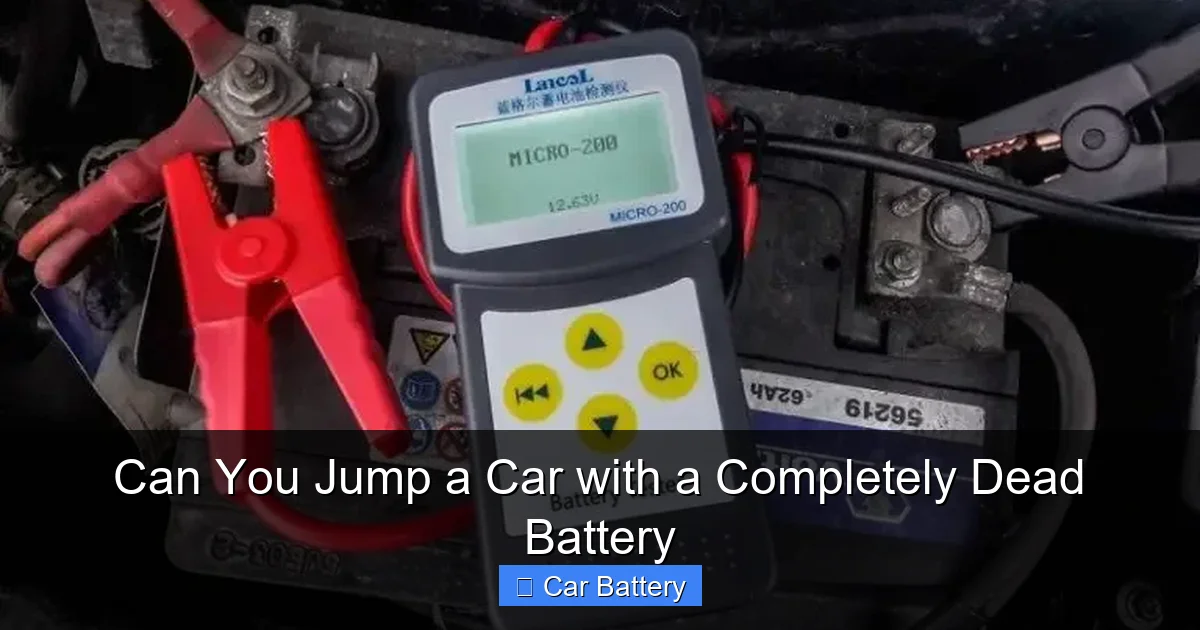
Visual guide about Can You Jump a Car with a Completely Dead Battery
Image source: vehiclejack.com
When people say their battery is “completely dead,” they usually mean the car won’t start—no lights, no sound, no response. But technically, a battery is considered “dead” when it can no longer deliver enough voltage to crank the engine. Most car batteries operate at 12.6 volts when fully charged. When that drops below 12 volts, starting becomes difficult. Below 11.9 volts, the car likely won’t start at all.
But here’s the thing: a battery can be “dead” in two very different ways:
1. Discharged (Temporarily Dead)
This is the most common scenario. Your battery has lost its charge due to leaving lights on, a faulty alternator, extreme cold, or simply age. The chemistry inside still works—it just needs a jump to get going again. Think of it like a phone battery at 0%: plug it in, and it can recharge.
For example, if you accidentally left your headlights on overnight, your battery may be deeply discharged. But with a jump start, it can often recover fully after a drive.
2. Failed (Permanently Dead)
This is when the battery is physically damaged. Sulfation (a buildup of lead sulfate crystals), internal short circuits, cracked cases, or worn-out plates prevent the battery from holding a charge—even with a jump. In this case, no amount of jumping will help. The battery needs replacement.
Signs of a failed battery include:
– Swollen or bloated casing
– A rotten egg smell (sulfur gas)
– Leaking fluid
– Age over 5 years (most batteries last 3–5 years)
So before you grab the jumper cables, it’s important to assess whether your battery is just discharged or truly dead. If it’s the latter, jumping won’t help—and could be dangerous.
How to Safely Jump-Start a Car with a Dead Battery
Jumping a car isn’t rocket science, but it does require attention to detail. One wrong move can damage your car’s electronics, blow a fuse, or even cause a battery explosion. Follow these steps carefully.
What You’ll Need
– Jumper cables (heavy-duty, at least 10 feet long)
– A working vehicle (or a portable jump starter)
– Safety gloves and glasses (optional but recommended)
– A clean, dry workspace
Step-by-Step Jump-Start Procedure
1. Park the Vehicles Safely
Position the working car close to the dead one—close enough for the cables to reach, but not touching. Turn off both engines and set the parking brakes. Remove keys or disable ignition systems.
2. Identify the Battery Terminals
Open both hoods and locate the batteries. The positive terminal is usually marked with a “+” and covered with a red cap. The negative terminal has a “–” and is often black or bare metal.
3. Connect the Jumper Cables in the Correct Order
This is critical. Follow this sequence exactly:
– Red clamp to dead battery’s positive terminal (+)
– Red clamp to good battery’s positive terminal (+)
– Black clamp to good battery’s negative terminal (–)
– Black clamp to an unpainted metal surface on the dead car (not the battery!)
(Use a bolt, bracket, or engine block—this grounds the circuit and reduces spark risk near the battery.)
4. Start the Working Car
Let it run for 3–5 minutes to charge the dead battery slightly.
5. Try Starting the Dead Car
Turn the key. If it starts, great! If not, wait another 5 minutes and try again. Don’t crank for more than 10 seconds at a time.
6. Disconnect in Reverse Order
Once the dead car is running:
– Remove the black clamp from the grounded metal
– Remove the black clamp from the good battery
– Remove the red clamp from the good battery
– Remove the red clamp from the dead battery
7. Keep the Engine Running
Drive the jumped car for at least 20–30 minutes to allow the alternator to recharge the battery. Avoid turning it off immediately.
Important Safety Tips
– Never let the clamps touch each other while connected to a battery.
– Avoid smoking or open flames—batteries emit flammable hydrogen gas.
– Don’t jump a frozen battery—it can explode. Warm it first.
– If the battery is leaking, swollen, or smells bad, don’t jump it. Call a professional.
Alternative Jump-Start Methods
Not everyone has another car nearby. Luckily, there are other ways to jump a dead battery.
Portable Jump Starters
These compact, battery-powered devices are a game-changer. They store enough power to jump-start most cars and don’t require another vehicle. Just connect the clamps (following the same order), press the button, and start your car.
Pros:
– No second car needed
– Safe and easy to use
– Often include USB ports, flashlights, and air compressors
Cons:
– Need to be recharged regularly
– May not work on very large engines (e.g., diesel trucks)
Popular brands like NOCO, Jump-N-Carry, and Tacklife offer reliable models under $100.
Battery Chargers (Trickle Chargers)
If you have time, a battery charger is the safest way to revive a dead battery. It slowly replenishes the charge without the surge of a jump start.
Best for:
– Long-term storage
– Preventing deep discharge
– Reviving batteries over several hours
Just plug it in, connect to the battery, and let it work. Some smart chargers even diagnose battery health.
Push-Starting (Manual Transmission Only)
If you drive a manual car and are on a hill or have help, you can push-start it. This method uses the car’s momentum to turn the engine over.
Steps:
1. Turn the key to “on” (not start).
2. Press the clutch and shift to second gear.
3. Get the car moving (push or roll down a hill).
4. Release the clutch quickly—the engine should turn over.
5. Once running, press the clutch and shift to neutral.
Note: This won’t work on automatics or cars with electronic fuel injection issues.
When Jumping Won’t Work (And What to Do Instead)
Despite your best efforts, sometimes a jump start fails. Here’s why—and what to do next.
The Battery Is Internally Damaged
If the battery is old, cracked, or sulfated, it can’t hold a charge. Jumping might start the car briefly, but it’ll die again once the engine stops. In this case, replacement is the only fix.
Tip: Most auto parts stores offer free battery testing. Take your battery in to check its health.
The Alternator Is Faulty
The alternator charges the battery while the engine runs. If it’s broken, the battery will drain quickly—even after a jump. Symptoms include dim lights, warning lights on the dash, or the car dying shortly after starting.
Solution: Have the charging system tested. Replacing an alternator costs $300–$800 but is cheaper than replacing batteries repeatedly.
Parasitic Drain
Something in your car is drawing power even when it’s off—like a stuck glove box light, faulty alarm, or aftermarket device. This can kill a battery overnight.
How to check: Use a multimeter to measure current draw. If it’s over 50 milliamps, there’s a drain. A mechanic can help trace it.
Extreme Cold Weather
Cold reduces a battery’s power output. A battery that works in summer may fail in winter—even if it’s not “dead.”
Prevention: Use a battery blanket or park in a garage. Consider a cold-cranking amp (CCA) rated battery for winter climates.
Electrical System Damage
If your car has been in an accident or flooded, wiring or the ECU (engine control unit) may be damaged. Jumping won’t fix this.
Solution: Have a professional inspect the electrical system.
How to Prevent a Dead Battery in the Future
The best way to deal with a dead battery is to avoid it altogether. Here are practical tips to keep your battery healthy.
1. Turn Off Accessories When the Engine Is Off
Leaving lights, radios, or phone chargers on drains the battery. Make it a habit to check before walking away.
2. Drive Regularly
Short trips don’t give the alternator enough time to recharge the battery. Aim for at least 20 minutes of driving a few times a week.
3. Clean Battery Terminals
Corrosion (white or green crust) on terminals blocks power flow. Clean with a mix of baking soda and water, then apply dielectric grease.
4. Use a Trickle Charger for Long Storage
If you won’t drive your car for weeks (e.g., vacation, winter storage), use a smart trickle charger to maintain the charge.
5. Test Your Battery Annually
Most batteries last 3–5 years. Get it tested every year after the 3-year mark. Many shops do this for free.
6. Watch for Warning Signs
Slow cranking, dim lights, or a battery warning light mean trouble is coming. Don’t wait for a full breakdown.
7. Park in a Garage in Winter
Cold kills batteries. A garage keeps the battery warmer and extends its life.
Conclusion
So, can you jump a car with a completely dead battery? The answer is usually yes—if the battery is just discharged and not internally damaged. With the right tools and technique, a jump start can get you back on the road in minutes.
But jumping isn’t a cure-all. If your battery dies repeatedly, it’s a sign of a deeper issue—like a bad alternator, parasitic drain, or a battery at the end of its life. In those cases, jumping is just a temporary fix.
The key is preparation. Keep jumper cables or a portable jump starter in your car. Know how to use them safely. And take care of your battery with regular maintenance.
A dead battery doesn’t have to leave you stranded. With knowledge and the right approach, you can handle it like a pro—and maybe even help someone else in need.
Stay safe, stay charged, and keep rolling.
Frequently Asked Questions
Can you jump a car with a completely dead battery?
Yes, in most cases you can jump a car with a completely dead battery if it’s just deeply discharged. However, if the battery is internally damaged, cracked, or sulfated, jumping won’t work and the battery will need replacement.
Is it safe to jump a car with no power at all?
It can be safe if done correctly, but avoid jumping if the battery is swollen, leaking, or smells like sulfur. Always connect cables in the right order and ground the negative clamp away from the battery to reduce spark risk.
How long should you drive after jumping a car?
Drive for at least 20–30 minutes after a jump start to allow the alternator to recharge the battery. Short trips may not provide enough charge, especially in cold weather.
Can a portable jump starter revive a dead battery?
Yes, portable jump starters are effective for most cars and trucks. They’re especially useful when no other vehicle is available. Just make sure the device is fully charged and compatible with your engine size.
Why won’t my car start even after a jump?
If the car still won’t start after a proper jump, the issue may be a faulty alternator, parasitic drain, bad starter, or a completely failed battery. Have a mechanic diagnose the problem.
How often should I replace my car battery?
Most car batteries last 3–5 years. Test yours annually after the 3-year mark. Replace it if it shows signs of weakness, such as slow cranking or frequent jumps.