
Breathable Car Cover Problems: Causes, Risks, and Fixes

Quick Answer
Breathable car covers can still cause problems when they fit poorly, go onto a wet or dirty vehicle, stay damp for long periods, or move repeatedly in the wind. Breathability helps moisture escape, but it does not make a cover immune to condensation, water intrusion, dirt transfer, mildew, or paint rubbing. For broader vehicle-care guidance, I also use Consumer Reports automotive resources as a reference point.
Common breathable cover problems
- Condensation: Humid air can still leave moisture between the cover and vehicle.
- Wind rubbing: Loose fabric can repeatedly move across dusty paint.
- Water intrusion: Breathable material is not automatically waterproof during prolonged rain.
- Dirt transfer: Dust or grit inside the cover can contact the clear coat.
- Mildew odors: Folding or storing the cover damp can encourage musty smells and staining.
- Poor fit: A cover that is too large or too small can create rubbing, tension, or exposed areas.
Best first check
- Remove the cover, dry both surfaces, inspect the lining for grit, and check whether the fit allows excessive movement.
I like breathable car covers because they solve a real problem: a vehicle needs protection without being sealed inside a damp fabric shell.
Still, “breathable” gets treated like a guarantee. It isn’t, and I’ve found that installation, weather, cleanliness, and fit matter just as much as the material label.
This guide explains the main breathable car cover problems I would check in 2026. I’ll also show you when the cover is still usable and when replacing it makes more sense.
In This Guide
- What Does a Breathable Car Cover Actually Do?
- What Problems Can a Breathable Car Cover Cause?
- Why Is There Moisture Under a Breathable Car Cover?
- Can a Breathable Cover Scratch or Damage Paint?
- Breathable vs. Waterproof Car Covers: What Changes?
- How Do You Prevent Breathable Cover Problems?
- Frequently Asked Questions
What Does a Breathable Car Cover Actually Do?
A breathable car cover allows water vapor and humid air to move through its material more easily than a completely sealed barrier. Its purpose is to protect the vehicle while helping trapped moisture dry.
That distinction matters. Breathability describes vapor movement, not perfect protection against rain, dirt, wind, or scratches.
A breathable car cover is a fabric vehicle cover designed to permit some moisture vapor and airflow through the material while shielding the vehicle from environmental contamination.
Breathability does not mean the car stays dry automatically
Imagine washing your car and immediately placing a breathable cover over it. Water remains around mirrors, badges, door handles, trim, and body seams.
The cover may help that moisture escape eventually. It cannot make a wet vehicle instantly dry.
- Vehicle moisture: Water already on the car must evaporate.
- Ground moisture: A damp driveway can raise humidity around the vehicle.
- Weather: High humidity slows evaporation.
- Cover condition: Dirt, age, coatings, and fabric deterioration can affect performance.
- Air movement: A tightly enclosed storage area may dry more slowly.
Indoor and outdoor needs are different
For a clean garage, I care most about softness, dust protection, breathability, and correct fit. Heavy weather protection is less important there.
Outdoor storage is tougher. Rain resistance, wind security, ultraviolet exposure, debris, and changing temperatures all become part of the decision.
Section Takeaway: Breathability helps moisture escape, but it does not eliminate moisture. The cover still needs the right environment, fit, and installation.
What Problems Can a Breathable Car Cover Cause?
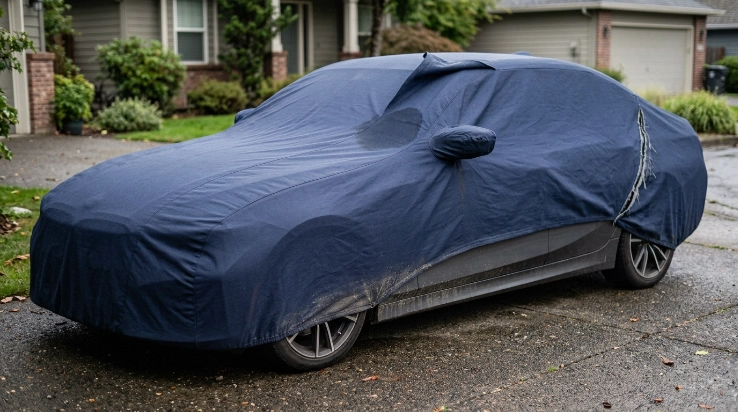
The most common breathable car cover problems involve condensation, dirt, wind movement, water penetration, and incorrect sizing. These problems often overlap.
I start troubleshooting by looking at what the cover and vehicle are doing together rather than blaming the fabric immediately.
| What You Notice | Likely Cause | First Check |
|---|---|---|
| Water droplets underneath | Condensation, wet vehicle, or water intrusion | Dry the car and cover completely |
| Fine marks on paint | Dirt plus fabric movement | Inspect lining and cover fit |
| Cover balloons in wind | Loose fit or weak fastening | Check straps, hem, and sizing |
| Musty smell | Cover stored or used while damp | Clean and air-dry it fully |
| Rain gets through | Material is breathable but not sufficiently water-resistant | Confirm intended indoor/outdoor use |
| Torn seams | Age, tension, or wind stress | Inspect all high-stress points |
Too much fabric can become a problem
A universal cover may technically fit several vehicles. That often means one car ends up with extra material around its roof, doors, or bumpers.
Wind catches those loose areas. The fabric can then move repeatedly against the same body panels.
A cover can also be too tight
Going smaller is not automatically safer. Tight fabric can pull hard against mirrors, spoilers, antennas, bumpers, and sharp trim.
- Look for stretched seams.
- Check whether mirror pockets line up.
- Watch for tension around spoilers.
- Make sure the hem reaches its intended position.
- Never force the fabric over an accessory.
Section Takeaway: Most breathable-cover trouble comes from moisture, contamination, movement, or fit. Diagnose those four areas first.
Why Is There Moisture Under a Breathable Car Cover?
Moisture can appear under a breathable car cover because breathability only helps vapor escape after moisture enters or develops. Condensation, a recently washed vehicle, wet fabric, humid air, and rain intrusion can all be involved.
This is the problem I take most seriously during long-term storage.
Condensation can happen without a leak
Air contains water vapor. When temperature conditions change around the car, that vapor can condense onto cooler surfaces.
This means droplets beneath a cover do not automatically prove rain passed through it.
NHTSA-hosted manufacturer technical bulletins have documented paint discoloration associated with moisture trapped beneath vehicle protection materials. That is enough reason for me not to ignore persistent dampness.
Never cover a wet vehicle for extended storage
After washing, I check more than the hood and roof. Water likes hiding in places you cannot see from a few feet away.
- Mirror housings
- Door handles
- Weather stripping
- Badges and emblems
- Fuel-door edges
- Trunk or hatch seams
- Grilles and exterior trim
Let those areas drain and dry before covering the vehicle. Do the same with the cover itself.
What should you do when you find condensation?
- Remove the cover from the vehicle.
- Inspect the roof, hood, trunk, glass, and lower panels.
- Check the cover’s inner surface for wet areas.
- Allow the vehicle to dry completely.
- Air-dry the cover before reinstalling it.
- Check the storage area for persistent humidity or standing water.
- Confirm the cover is designed for your environment.
Don’t repeatedly reinstall a damp cover and hope the problem stops. Find out where the moisture is coming from first.
Section Takeaway: A breathable cover helps drying, but it cannot compensate for a wet car, soaked fabric, repeated condensation, or a damp storage environment.
Can a Breathable Cover Scratch or Damage Paint?
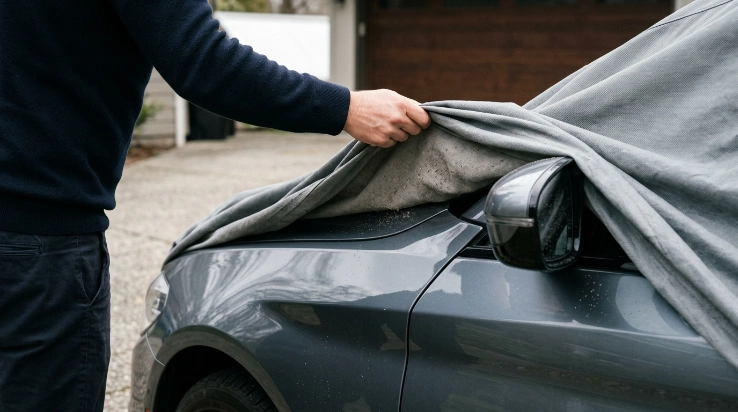
Yes, a breathable cover can contribute to paint marks when dirt becomes trapped between the cover and vehicle and the fabric moves. Breathability itself is not what scratches the paint.
Think of contamination plus movement as the bigger risk.
Dirt under the cover matters
I never like putting any cover onto a visibly dusty car. Small particles can remain between the clear coat and fabric.
If wind or handling moves the cover, those particles may rub across the finish.
- Wash first: Start with a clean vehicle when practical.
- Clean the lining: Do not reinstall a gritty cover.
- Keep it off the ground: Pavement can load the inside surface with sand.
- Control movement: Secure a loose outdoor cover correctly.
- Lift during removal: Avoid dragging fabric unnecessarily across dirty panels.
Watch high-contact areas
I pay extra attention to mirror caps, roof edges, fender peaks, spoiler corners, bumpers, and other places where fabric pressure is concentrated.
Those areas often reveal a fit or movement problem first.
Existing paint damage changes the situation
Peeling clear coat, loose paint, fresh bodywork, damaged trim, or exposed metal deserves extra care. A cover cannot stabilize a failing finish.
Mechanic Alert: If you find peeling paint, exposed metal, corrosion, significant scratching, or damaged exterior trim, have a qualified body or repair professional inspect it before continuing to use the cover.
For general ownership and maintenance information, Kelley Blue Book’s car-advice section provides broader vehicle-care guidance.
Section Takeaway: Cleanliness and movement matter more than the word “breathable.” A clean, secure cover is far safer than a dirty cover flapping against the paint.
Breathable vs. Waterproof Car Covers: What Changes?
A breathable cover prioritizes vapor release, while a highly water-resistant cover prioritizes keeping exterior water from passing inward. Good outdoor covers often try to balance both characteristics.
There is no single material characteristic that solves every storage problem.
| Cover Characteristic | Main Advantage | Possible Tradeoff |
|---|---|---|
| Highly breathable | Helps trapped vapor escape | May not resist prolonged rain as strongly |
| Highly water-resistant | Better protection from outside moisture | Drying behavior depends on construction |
| Soft indoor cover | Dust and contact protection | May offer little serious weather protection |
| Heavy outdoor cover | More substantial environmental barrier | Bulk and fit become more important |
Match the cover to where the car lives
A clean sedan inside an enclosed garage has different needs from an SUV parked outside through rain and wind.
- Enclosed garage: Prioritize softness, dust control, fit, and breathability.
- Open carport: Add secure fastening and protection from wind-driven rain.
- Outdoor driveway: Prioritize weather resistance, UV durability, fit, and wind control.
- Long-term storage: Make regular moisture inspections part of the routine.
No fabric cover turns an outdoor parking space into a climate-controlled garage. Treat it as one protective layer.
The National Highway Traffic Safety Administration is also a useful source when checking manufacturer communications and vehicle safety information.
How Do You Prevent Breathable Cover Problems?
The best prevention is simple: cover a clean, dry vehicle with a clean, dry, correctly sized cover and keep unnecessary movement under control.
That routine solves more problems than obsessing over marketing labels.
Use this pre-cover checklist
- Check the vehicle: Remove obvious dirt, grit, leaves, and bird residue.
- Dry the body: Pay attention to mirrors, trim, seals, and badges.
- Inspect the cover: Look for dirt, dampness, tears, rough spots, and failing seams.
- Confirm orientation: Avoid dragging the cover around while finding the front.
- Install gently: Spread and lower the cover rather than pulling it hard across panels.
- Secure it correctly: Use the intended straps or fastening system outdoors.
- Recheck after weather: Inspect beneath the cover after strong wind or prolonged rain.
Do not store the cover wet
This mistake is easy to make when rain starts as you uncover the car. Folding the cover while damp traps moisture between its layers.
Instead, give it enough airflow to dry. Follow its manufacturer’s specific cleaning and drying instructions.
Inspect the cover as it ages
Breathability does not matter much if the rest of the cover is falling apart. I replace a cover when its structural problems are no longer minor.
- Elastic no longer grips correctly.
- Seams keep separating.
- Fabric has thin or brittle areas.
- The inner surface feels rough or contaminated.
- Straps or buckles repeatedly fail.
- Water behavior has changed noticeably.
- The cover no longer fits securely.
If you are researching broader vehicle ownership topics, Edmunds car-maintenance resources are another useful starting point.
My simple test before trusting a cover
I grab the fabric around the roof and door area after installation. I want it to follow the vehicle without huge loose folds or extreme tension.
Then I inspect it again after the first windy or rainy period. That real-world check tells me more than the packaging does.
Section Takeaway: Start clean, start dry, use the right size, control wind movement, and inspect underneath periodically. Those habits prevent most breathable car cover problems.
Frequently Asked Questions
Can condensation form under a breathable car cover?
Yes. A breathable cover can help water vapor escape, but condensation may still form when temperature and humidity conditions change. A wet car, damp cover, humid storage area, or wet ground can make the problem worse.
Should I put a breathable cover on a wet car?
I would not cover a wet vehicle for extended storage. Let the paint, mirrors, trim, seals, and hidden water pockets dry first. The cover should also be dry before installation.
Are breathable car covers waterproof?
Not necessarily. Breathability and water resistance describe different characteristics. Some outdoor covers balance both, while lighter breathable covers may be intended mainly for indoor dust protection.
Why does my car feel damp under the cover?
The moisture could come from condensation, a recently washed vehicle, a damp cover, humid air, wet ground, or rain penetration. Remove the cover and dry both surfaces before trying to identify the source.
Can a breathable car cover scratch paint?
The material itself is not automatically harmful. The greater risk comes from dirt or grit trapped between the cover and paint, especially when loose fabric moves repeatedly in the wind.
How tight should a breathable car cover be?
It should follow the vehicle’s shape without large loose folds or excessive stretching. The fabric should not pull aggressively against mirrors, antennas, spoilers, or trim, and an outdoor cover should remain controlled in wind.
How often should I check under a covered car?
Check more often when the vehicle is outdoors, during changing weather, or in humid conditions. I would also inspect after prolonged rain, strong wind, or any situation where the cover may have shifted or become saturated.
If a breathable car cover keeps leaving your vehicle damp, dirty, or marked, don’t keep using it unchanged. Remove it, identify whether the problem is moisture, contamination, fit, movement, or material deterioration, and correct that issue first.
A good cover should reduce your maintenance headaches. If it creates new ones, changing your installation routine or choosing a better-matched cover is usually the smarter move.
