
Bolt Size for Car Battery

The correct bolt size for a car battery is typically M6 or M8, depending on the vehicle make and model, ensuring a secure and safe connection. Using the wrong size can lead to loose terminals, electrical issues, or even safety hazards, so always consult your owner’s manual or a trusted mechanic. Double-checking specifications before installation prevents damage and ensures reliable battery performance.
Key Takeaways
- Check your vehicle manual for the exact bolt size before purchasing replacements.
- Most car batteries use M6 or M8 bolts—verify yours to avoid incorrect installations.
- Use a socket wrench for secure tightening without damaging battery terminals.
- Replace corroded bolts immediately to ensure reliable electrical connections.
- Apply anti-seize compound to threads to prevent future corrosion and ease removal.
- Never overtighten bolts—snug is sufficient to avoid terminal damage.
📑 Table of Contents
- Bolt Size for Car Battery: Why It Matters and How to Get It Right
- Understanding Car Battery Terminals and Their Role
- Common Bolt Sizes for Car Batteries
- How to Identify the Right Bolt Size for Your Vehicle
- Tools and Materials You’ll Need
- Battery Bolt Size Reference Table
- Common Mistakes and How to Avoid Them
- Final Thoughts: Small Bolt, Big Impact
Bolt Size for Car Battery: Why It Matters and How to Get It Right
Imagine this: You’re stranded on the side of the road, your car won’t start, and you pop the hood to find your battery loose—literally rattling around because the terminals aren’t secured properly. You’ve got a wrench in your hand, but you’re not sure which size bolt fits your battery terminals. Frustrating, right? That’s exactly why knowing the bolt size for car battery connections is more important than most drivers realize.
It might seem like a tiny detail—just a small metal fastener—but the right bolt size ensures your battery stays securely connected, prevents dangerous electrical arcing, and helps your vehicle start reliably every time. Whether you’re replacing a corroded terminal, upgrading your battery, or doing routine maintenance, getting the bolt size right is a critical step. And yet, it’s one that’s often overlooked until something goes wrong.
Understanding Car Battery Terminals and Their Role
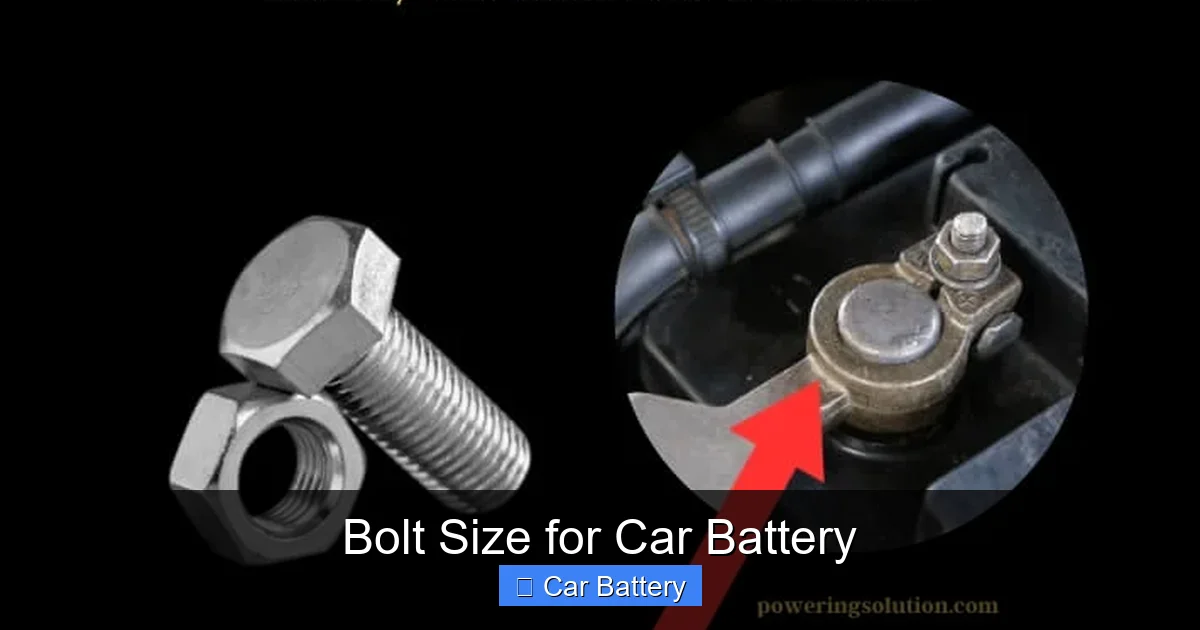
Before we dive into bolt sizes, let’s take a quick look at what’s actually happening at the battery terminals. Your car battery has two main terminals: the positive (usually marked with a “+” and a red cover) and the negative (marked with a “–” and often black or bare metal). These terminals are where the battery connects to the vehicle’s electrical system via heavy-gauge cables.
Visual guide about Bolt Size for Car Battery
Image source: poweringsolution.com
Types of Battery Terminals
There are several common types of battery terminals used in modern vehicles, and each can influence the bolt size you’ll need:
- SAE Terminals: The most common type in North American vehicles. They feature a tapered post design and typically use a hex bolt or nut to secure the cable.
- Side-Post Terminals: Found on many GM vehicles, these have a threaded hole on the side of the terminal where a bolt screws in horizontally.
- Top-Post Terminals: Similar to SAE but often used in European and Asian cars. They may use a bolt that threads directly into the terminal or a nut on a stud.
- Lug Terminals: Common in older or heavy-duty vehicles, these use a flat connector with a hole for a bolt or stud.
Each of these designs requires a specific bolt size and type. For example, a side-post terminal on a Chevrolet Silverado uses a completely different bolt than a top-post terminal on a Toyota Camry. That’s why it’s essential to identify your terminal type before shopping for hardware.
Why Terminal Security Matters
A loose battery connection might not seem like a big deal, but it can cause a cascade of problems. Even a slightly wobbly terminal can lead to:
- Intermittent starting issues
- Voltage drops that affect electronics
- Corrosion buildup due to poor contact
- Sparking or arcing, which can be a fire hazard
I once helped a friend troubleshoot a car that kept losing power to the dashboard. After hours of testing fuses and sensors, we finally noticed the negative terminal was barely tightened. A quick wrench adjustment with the correct bolt size, and the problem vanished. It’s amazing how such a small part can have such a big impact.
Common Bolt Sizes for Car Batteries
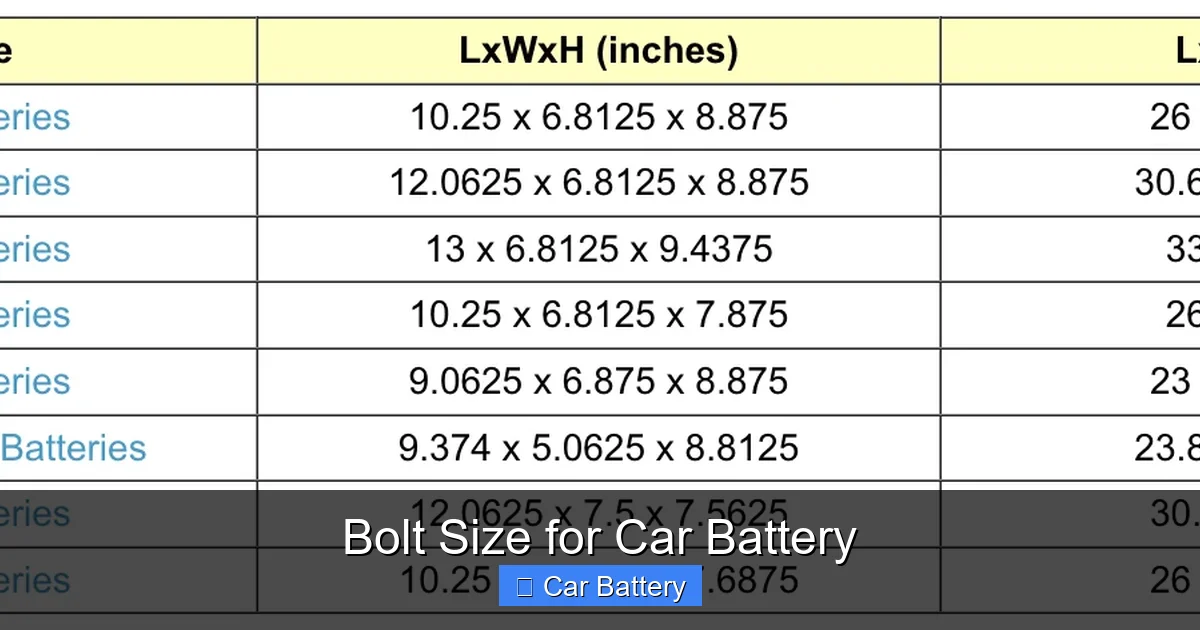
Now let’s get to the heart of the matter: what are the actual bolt sizes for car battery terminals? While there’s no single universal size, a few standard measurements cover the vast majority of vehicles on the road today.
Visual guide about Bolt Size for Car Battery
Image source: ebaymotorsblog.com
Most Frequently Used Bolt Sizes
Here are the most common bolt sizes you’ll encounter:
- 5/16-inch (8mm): This is the most common size for top-post and SAE terminals, especially in American and Asian vehicles. It’s used for both positive and negative terminals on many models.
- 3/8-inch (10mm): Often found on larger vehicles like trucks, SUVs, and diesel engines. These require a bit more torque and are common on side-post terminals.
- M6 (6mm): Frequently used in European cars like BMW, Mercedes, and Volkswagen. These are metric bolts and may require a socket wrench instead of a standard wrench.
- M8 (8mm): Used in heavier-duty applications or aftermarket battery setups. You’ll see these in performance vehicles or dual-battery systems.
It’s worth noting that some vehicles use a combination of sizes. For example, a Ford F-150 might use a 5/16-inch bolt on the positive terminal and a 3/8-inch on the negative. Always check both terminals before purchasing hardware.
Thread Pitch and Bolt Length
Size isn’t just about diameter—thread pitch and length matter too. Thread pitch refers to how fine or coarse the threads are. For example, a 5/16-inch bolt might have 18 threads per inch (UNC) or 24 threads per inch (UNF). Using the wrong pitch can strip the threads or fail to tighten properly.
Bolt length is equally important. A bolt that’s too short won’t reach the nut or threaded hole. One that’s too long might bottom out before clamping the cable securely. Most standard battery bolts are between 1/2 inch and 3/4 inch in length, but always measure your existing hardware or check your vehicle’s service manual.
Metric vs. Imperial: Knowing the Difference
One common source of confusion is whether your car uses metric or imperial (SAE) bolts. Older American cars almost always use imperial measurements (like 5/16-inch), while most European and many modern Asian vehicles use metric (like M6 or M8).
If you’re unsure, here’s a quick trick: try fitting a 5/16-inch wrench on the bolt. If it fits snugly, it’s likely imperial. If not, try an 8mm wrench—that’s the metric equivalent. Keep both sizes handy when working on different vehicles.
How to Identify the Right Bolt Size for Your Vehicle
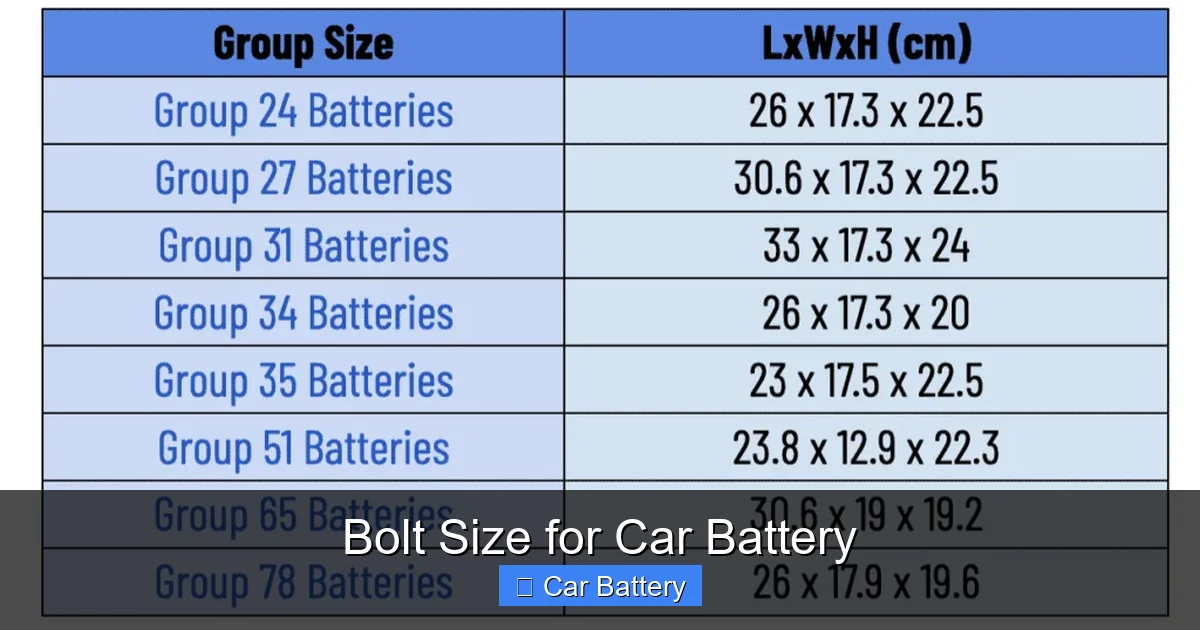
Even with a list of common sizes, finding the exact bolt size for car battery on your specific vehicle can still be tricky. Here’s a step-by-step guide to make it easier.
Visual guide about Bolt Size for Car Battery
Image source: carbatteryworld.com
Step 1: Inspect the Existing Hardware
The easiest way to determine the correct bolt size is to look at what’s already there. Remove the cable from the terminal (always disconnect the negative first for safety) and examine the bolt or nut. Use a wrench or socket to see which size fits perfectly. If the bolt is corroded or damaged, take it to an auto parts store—they can often match it for you.
Step 2: Check the Battery Label or Manual
Many batteries have a label that includes terminal type and hardware specifications. Look for terms like “SAE,” “M6,” or “5/16-18 UNC.” If your battery is original, the vehicle owner’s manual or service guide may also list the correct bolt size.
Step 3: Use a Thread Gauge or Caliper
If you’re replacing a missing or stripped bolt, a thread gauge can help identify both diameter and pitch. Alternatively, digital calipers are inexpensive and highly accurate. Measure the diameter of the threaded hole or the bolt itself, then compare it to standard sizes.
Step 4: Consult Online Resources or Forums
Vehicle-specific forums like those for Honda, Ford, or BMW owners often have threads discussing battery maintenance. A quick search for “battery terminal bolt size [your make and model]” can yield helpful answers from other drivers who’ve been there.
Practical Example: 2015 Honda Civic
Let’s say you own a 2015 Honda Civic and need to replace the battery terminal bolt. The Civic uses a top-post terminal with an M6 bolt (6mm diameter, 1.0mm pitch). The bolt is typically 12mm long. If you buy a generic 5/16-inch bolt, it won’t fit—even though 5/16 is close to 8mm, it’s not the same as 6mm. Using the wrong size could damage the terminal or result in a loose connection.
On the other hand, a 2018 Ford F-150 uses a side-post terminal with a 3/8-inch bolt. That’s significantly larger and requires a different wrench. Mixing these up is a common mistake, especially for DIYers working on multiple vehicles.
Tools and Materials You’ll Need
Once you’ve identified the correct bolt size for car battery, you’ll need the right tools to get the job done safely and effectively.
Essential Tools
- Wrench or socket set: Make sure you have both metric and imperial sizes. A 10mm socket is common for M6 bolts, while a 5/16-inch wrench fits many SAE terminals.
- Torque wrench: Over-tightening can strip threads or crack the terminal. A torque wrench ensures you apply the correct force—usually between 5 and 10 ft-lbs for most battery bolts.
- Wire brush or terminal cleaner: Use this to clean corrosion from the terminal and cable end before reassembly.
- Battery terminal protector spray: Helps prevent future corrosion and improves conductivity.
- Safety gear: Gloves and safety glasses are a must—battery acid and sparks are real hazards.
Choosing the Right Bolt Material
Not all bolts are created equal. Here’s what to look for:
- Stainless steel: Resistant to corrosion and ideal for harsh environments. Slightly more expensive but lasts longer.
- Zinc-plated steel: Common and affordable, but can rust over time, especially in humid or salty climates.
- Brass or copper: Excellent conductivity, but softer and more prone to stripping. Best for low-torque applications.
Avoid using galvanized or painted bolts—they can flake off and cause poor connections. Also, never use aluminum bolts, as they can corrode quickly when in contact with lead battery terminals.
Tips for Installation
When installing a new bolt:
- Always disconnect the negative terminal first, then the positive.
- Clean both the terminal and cable end thoroughly.
- Apply a small amount of dielectric grease to prevent corrosion.
- Tighten to the manufacturer’s recommended torque—don’t overtighten.
- Reconnect the positive terminal first, then the negative.
I learned the hard way that skipping the cleaning step leads to recurring issues. A friend once told me, “A clean connection is a happy connection.” Now I always spend a few extra minutes scrubbing with a wire brush—it makes a huge difference.
Battery Bolt Size Reference Table
To make things easier, here’s a quick-reference table of common vehicles and their typical bolt sizes for car battery terminals. Keep in mind that variations can occur based on model year and trim level, so always double-check.
| Vehicle Make/Model | Terminal Type | Bolt Size | Notes |
|---|---|---|---|
| Ford F-150 (2015–2020) | Side-post | 3/8-inch (10mm) | Negative terminal only; positive may vary |
| Chevrolet Silverado (2014–2019) | Side-post | 3/8-inch (10mm) | Common on GM trucks and SUVs |
| Toyota Camry (2012–2020) | Top-post | 5/16-inch (8mm) | Uses hex nut on stud |
| Honda Civic (2010–2015) | Top-post | M6 (6mm) | Metric bolt; 12mm length typical |
| BMW 3 Series (F30, 2012–2019) | Top-post | M8 (8mm) | Often uses a flanged bolt |
| Volkswagen Jetta (2011–2018) | Top-post | M6 (6mm) | Similar to other VW Group vehicles |
| Nissan Altima (2013–2018) | Top-post | 5/16-inch (8mm) | Uses hex bolt directly into terminal |
This table is a helpful starting point, but always verify with your specific vehicle. When in doubt, take a photo of the terminal and show it to a parts specialist.
Common Mistakes and How to Avoid Them
Even experienced DIYers can make mistakes when dealing with battery hardware. Here are some common pitfalls and how to steer clear of them.
Using the Wrong Size Bolt
This is the most obvious error, but it happens more often than you’d think. A bolt that’s too small won’t tighten properly; one that’s too large won’t fit at all. Always double-check the size before purchasing or installing.
Over-Tightening the Bolt
It’s tempting to crank down on the bolt to make sure it’s secure, but over-tightening can strip the threads or crack the terminal. Use a torque wrench and follow the manufacturer’s specs. Most battery bolts only need 5–10 ft-lbs of torque—about the force you’d use to tighten a spark plug.
Ignoring Corrosion
Corrosion buildup can make it hard to remove old bolts and can lead to poor connections even with new hardware. Always clean the terminal and cable end before reassembly. A mixture of baking soda and water can neutralize acid residue.
Mixing Materials
Avoid using dissimilar metals. For example, don’t pair a steel bolt with a copper cable clamp unless it’s designed to do so. Galvanic corrosion can occur, leading to premature failure.
Forgetting Safety Precautions
Battery work involves electricity and corrosive chemicals. Always:
- Wear gloves and eye protection
- Disconnect the negative terminal first
- Keep metal tools away from both terminals at the same time
- Work in a well-ventilated area
A friend once shorted a battery by accidentally touching a wrench across both terminals. The spark was intense, and the wrench got hot enough to burn his hand. It was a scary reminder that even a 12-volt battery can pack a punch.
Final Thoughts: Small Bolt, Big Impact
It’s easy to overlook the humble bolt that holds your car battery in place. But as we’ve seen, the bolt size for car battery connections plays a vital role in your vehicle’s reliability, safety, and performance. Whether you’re driving a compact sedan or a heavy-duty truck, using the correct bolt ensures a secure, corrosion-resistant connection that keeps your car starting smoothly season after season.
From identifying terminal types to choosing the right tools and avoiding common mistakes, this guide should give you the confidence to tackle battery maintenance like a pro. Remember: it’s not just about tightening a bolt—it’s about maintaining the lifeline of your vehicle’s electrical system.
So next time you pop the hood, take a moment to check those terminals. Are they clean? Are they tight? Is the bolt the right size? A little attention now can save you from a lot of headaches down the road. And who knows—you might just become the go-to person in your family for car advice.
Frequently Asked Questions
What is the standard bolt size for a car battery?
The most common bolt size for a car battery is M6 (6mm), though some vehicles may use M8 (8mm) depending on the make and model. It’s best to check your vehicle’s manual or measure the existing bolts to confirm the correct size.
How do I determine the correct bolt size for my car battery?
You can determine the bolt size by measuring the diameter of the existing terminal bolts or checking your vehicle’s owner’s manual. Using a caliper or thread gauge ensures accuracy when identifying the correct bolt size for a car battery.
Can I use any bolt size for my car battery terminals?
No, using the wrong bolt size can lead to loose connections or damage to the battery terminals. Always use the manufacturer-recommended bolt size to ensure a secure and safe connection.
Are car battery terminal bolts universal?
While many car batteries use standard M6 or M8 bolts, they are not entirely universal across all vehicles. Some European or Asian models may have unique specifications, so it’s important to verify the bolt size for your specific car.
What tools do I need to replace a car battery bolt?
You’ll typically need a wrench or socket set that matches the bolt size for a car battery, such as a 10mm or 13mm socket for M6 or M8 bolts. A torque wrench is also recommended to avoid over-tightening.
Where can I buy replacement bolts for a car battery?
Replacement bolts for car batteries are available at auto parts stores, hardware stores, or online retailers like Amazon and eBay. Be sure to specify your vehicle’s make and model to get the correct bolt size.
