
Best Tire Pressure for Winter

Proper tire pressure is critical in winter—cold temperatures cause air to contract, leading to underinflated tires. Maintaining the manufacturer-recommended pressure ensures better grip, handling, and fuel economy during snowy and icy conditions.
Key Takeaways
- Check tire pressure monthly in winter: Cold weather reduces tire pressure by about 1 PSI for every 10°F drop in temperature.
- Use the manufacturer’s recommended PSI: Found on the driver’s door jamb or owner’s manual—not the max pressure listed on the tire sidewall.
- Don’t overinflate for snow: Slightly higher pressure doesn’t improve traction; it can reduce the tire’s contact patch and grip.
- Invest in a quality digital gauge: Analog gauges are less accurate, especially in freezing conditions.
- Check pressure when tires are cold: Driving heats tires and increases pressure readings—always measure before driving or after a 3+ hour rest.
- Consider winter tires with proper inflation: They’re designed for cold weather and perform best at correct pressure.
- Monitor TPMS warnings: Your car’s Tire Pressure Monitoring System alerts you to low pressure—don’t ignore it.
📑 Table of Contents
- Why Tire Pressure Matters More in Winter
- What Is the Best Tire Pressure for Winter?
- How to Check and Maintain Winter Tire Pressure
- The Role of Winter Tires and Proper Inflation
- Common Winter Tire Pressure Mistakes to Avoid
- Advanced Tips for Winter Tire Pressure Management
- Conclusion: Stay Safe, Stay Inflated
Why Tire Pressure Matters More in Winter
Winter driving brings unique challenges—snow-covered roads, black ice, freezing rain, and plummeting temperatures. While many drivers focus on snow tires or all-wheel drive, one of the most overlooked yet critical factors is tire pressure. Cold weather has a direct impact on the air inside your tires, and even a small drop in pressure can significantly affect your vehicle’s performance, safety, and fuel efficiency.
When temperatures drop, the air molecules inside your tires move more slowly and take up less space. This causes tire pressure to decrease—typically by about 1 PSI (pound per square inch) for every 10°F (5.6°C) drop in ambient temperature. So, if it’s 70°F one day and drops to 20°F the next, your tires could lose around 5 PSI. That might not sound like much, but underinflated tires are a leading cause of winter accidents due to reduced traction, longer braking distances, and increased risk of hydroplaning or blowouts.
The Science Behind Cold Weather and Tire Pressure
Air is a gas, and like all gases, it contracts when cooled. This principle, known as Charles’s Law, explains why your tire pressure drops in winter. Even if your tires were perfectly inflated at the start of fall, they’re likely underinflated by the time winter hits. For example, if your car recommends 32 PSI and you filled them up at 50°F, they could read as low as 27 PSI when the temperature hits 10°F. That’s a 5 PSI deficit—enough to trigger your Tire Pressure Monitoring System (TPMS) and compromise handling.
Underinflated tires also flex more at the sidewalls, generating excess heat. In summer, this might just reduce fuel economy. But in winter, when roads are slick, that extra flexing can lead to tread separation or blowouts, especially at highway speeds. Additionally, a softer tire has a larger contact patch, which might sound good for grip—but only up to a point. Too much flex reduces responsiveness and increases rolling resistance, making your car feel sluggish and less safe.
What Is the Best Tire Pressure for Winter?

Visual guide about Best Tire Pressure for Winter
Image source: offroadrimfinancing.com
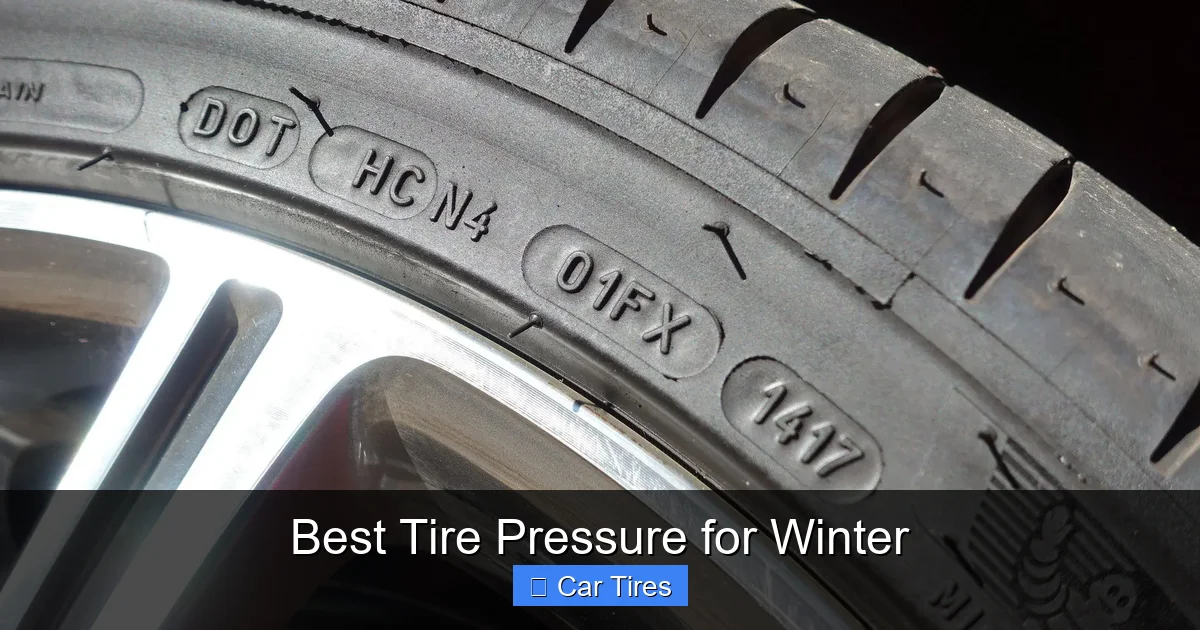
The short answer? Stick to the manufacturer’s recommended tire pressure—no more, no less. This number is not the same as the maximum pressure stamped on the tire’s sidewall. That max PSI is the tire’s limit under ideal conditions, not what your car needs. Instead, look for the label on your driver’s side door jamb, inside the fuel filler door, or in your owner’s manual. It will list the correct front and rear PSI for your specific vehicle, often with different values for normal driving versus heavy loads.
For most passenger cars, the recommended winter tire pressure ranges between 30 and 35 PSI. SUVs and trucks may require 35 to 45 PSI, depending on size and load. Always use the “cold” pressure setting—meaning the tires haven’t been driven for at least three hours. This ensures an accurate reading, as driving heats the air inside the tires and increases pressure by 3–5 PSI temporarily.
Should You Increase Tire Pressure in Winter?
A common myth is that inflating tires slightly above the recommended PSI improves winter traction. While it might seem logical—firmer tires cutting through snow—it’s actually counterproductive. Overinflated tires have a smaller contact patch with the road, reducing grip on snow and ice. They also ride harsher, transmit more vibration, and are more prone to punctures from potholes or debris.
In fact, some winter driving experts recommend keeping tire pressure exactly at the manufacturer’s spec—or even slightly lower (within safe limits) for deep snow. A slightly softer tire can conform better to uneven surfaces, improving traction. However, never go below 10% of the recommended PSI, as this increases the risk of tire damage and poor handling.
Example: Adjusting for a Winter Road Trip
Imagine you’re driving from Denver to Aspen in January. The temperature drops from 40°F at departure to 10°F at your destination. Your SUV calls for 36 PSI. If you filled the tires in Denver, they might read 31 PSI upon arrival—well below optimal. By checking and adjusting pressure at a cold start in Aspen, you restore proper inflation, ensuring better braking, cornering, and stability on mountain roads.
How to Check and Maintain Winter Tire Pressure
Visual guide about Best Tire Pressure for Winter
Image source: i0.wp.com
Maintaining correct tire pressure in winter isn’t complicated, but it does require consistency. Here’s a step-by-step guide to help you stay on top of it:
Step 1: Use a Reliable Tire Pressure Gauge
Not all gauges are created equal. Analog (dial) gauges can be inaccurate, especially in cold weather when the needle may stick. A digital tire pressure gauge is your best bet—it’s precise, easy to read, and often includes a backlight for early morning or nighttime checks. Look for one with a resolution of 0.1 or 0.5 PSI for maximum accuracy.
Step 2: Check When Tires Are Cold
Always measure tire pressure before driving or after the car has been parked for at least three hours. Even a short 10-minute drive can heat the tires and inflate the reading by 2–3 PSI, giving you a false sense of security. If you’ve driven recently, wait or adjust your expectations—knowing the reading is artificially high.
Step 3: Check All Four Tires (Plus the Spare)
Don’t skip any tire. Uneven pressure can cause handling issues, especially in slippery conditions. And yes—check the spare! A flat spare is useless in an emergency, and cold weather affects it just like the others.
Step 4: Add Air Gradually
Use a portable air compressor or visit a gas station with an air pump. Add air in small increments, checking frequently. Overfilling is easy to do, and you can’t “un-pump” air without releasing it manually. Most modern compressors have digital displays, making it simple to hit your target PSI.
Step 5: Recheck After a Few Days
After adjusting pressure, recheck your tires in a couple of days. Sometimes, tires lose a little air after being refilled, especially if the valve stem is old or damaged. This is also a good time to inspect for visible damage, cracks, or embedded objects.
The Role of Winter Tires and Proper Inflation
Visual guide about Best Tire Pressure for Winter
Image source: continental-tires.com
While all-season tires are fine for mild winters, dedicated winter tires (also called snow tires) are the gold standard for cold-weather performance. Made from softer rubber compounds that stay flexible in freezing temps, they provide superior grip on snow and ice. But even the best winter tires won’t perform well if they’re underinflated.
Why Winter Tires Need Correct Pressure
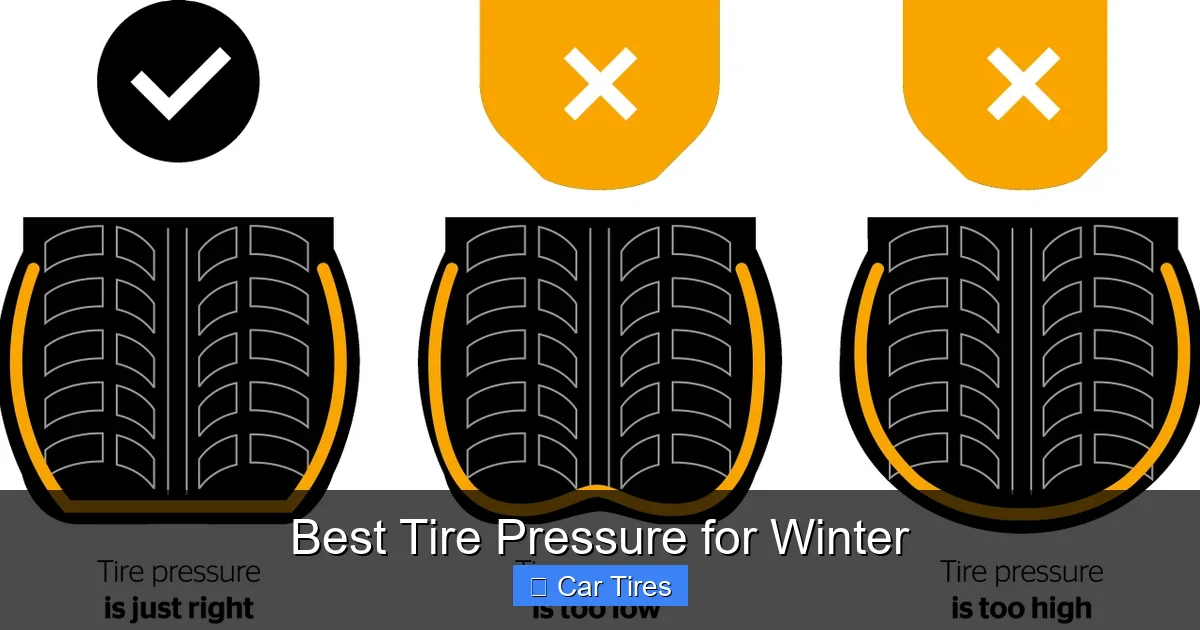
Winter tires are engineered to flex and bite into snow, but that only works if they’re properly inflated. Too little pressure, and the tread blocks can’t maintain consistent contact with the road. Too much, and the center of the tread wears faster, reducing traction. The sweet spot is the manufacturer’s recommended PSI—adjusted for cold conditions.
Winter Tire Pressure vs. All-Season Tires
Some drivers wonder if winter tires require different pressure than all-season tires. The answer is no—unless specified by the tire manufacturer. Most winter tires use the same pressure as all-season tires for the same vehicle. However, always check the tire’s sidewall and your owner’s manual. Some high-performance winter tires may have unique recommendations.
Tip: Store Winter Tires Properly
If you swap tires seasonally, store your winter tires in a cool, dry place away from direct sunlight. Keep them inflated to the recommended PSI to prevent flat spots. Use tire covers or bags to protect them from dust and moisture.
Common Winter Tire Pressure Mistakes to Avoid
Even experienced drivers make errors when it comes to winter tire pressure. Here are the most common pitfalls—and how to avoid them:
Mistake 1: Relying Solely on TPMS
Your car’s Tire Pressure Monitoring System (TPMS) is helpful, but it’s not a substitute for manual checks. TPMS typically only alerts you when pressure drops 25% below recommended levels—far too low for optimal performance. By then, your tires may already be unsafe. Check pressure monthly, even if the light isn’t on.
Mistake 2: Filling Tires Indoors and Expecting Accuracy
If you fill your tires in a warm garage and immediately drive out into freezing temperatures, the pressure will drop quickly. Always check and adjust pressure outdoors, in the same environment where you’ll be driving.
Mistake 3: Ignoring Temperature Swings
Winter weather is unpredictable. A sunny day might hit 40°F, followed by a cold snap dropping to 10°F overnight. These swings can cause significant pressure changes. Make it a habit to check your tires every two weeks during winter, or after major temperature shifts.
Mistake 4: Using the Max PSI on the Sidewall
The number on the tire sidewall (e.g., “Max 44 PSI”) is the tire’s maximum safe pressure—not what your car needs. Using this number can lead to overinflation, poor ride quality, and reduced traction. Always follow the vehicle manufacturer’s recommendation.
Mistake 5: Forgetting the Spare Tire
A flat spare won’t help if you get a blowout on a remote winter road. Include the spare in your monthly checks. Many modern cars have compact “donut” spares with higher recommended pressures (often 60 PSI)—don’t assume it’s the same as your regular tires.
Advanced Tips for Winter Tire Pressure Management
For drivers who want to go the extra mile, here are some advanced strategies to optimize tire pressure in winter:
Use Nitrogen Instead of Regular Air
Nitrogen molecules are larger than oxygen molecules, so they leak more slowly through tire rubber. This means nitrogen-filled tires maintain pressure longer, especially in fluctuating temperatures. Many tire shops offer nitrogen fills for a small fee. While not essential, it’s a good option for drivers in extreme climates.
Invest in a Smart Tire Pressure Monitor
These wireless sensors attach to your valve stems and send real-time pressure and temperature data to your smartphone. Some models even alert you if a tire is losing air rapidly—perfect for long winter trips or remote driving. Popular brands include TireMinder and Staun.
Adjust for Load and Altitude
If you’re carrying heavy cargo or driving at high altitudes, tire pressure needs may change. Check your owner’s manual for load-adjusted PSI recommendations. At higher elevations, atmospheric pressure is lower, but tire pressure should still be set to the manufacturer’s spec—don’t compensate for altitude.
Consider Tire Pressure for Different Winter Conditions
– **Deep snow:** Slightly lower pressure (within 10% of recommended) can improve flotation and grip.
– **Ice:** Stick to exact recommended PSI for maximum tread contact.
– **Wet snow or slush:** Proper inflation helps prevent hydroplaning by maintaining tread pattern integrity.
Conclusion: Stay Safe, Stay Inflated
Winter driving demands extra attention to detail, and tire pressure is one of the simplest yet most impactful factors you can control. Cold weather naturally reduces pressure, and even a small drop can compromise safety, handling, and fuel efficiency. By checking your tires monthly, using a quality gauge, and sticking to the manufacturer’s recommended PSI, you’ll ensure your vehicle performs at its best—no matter how low the thermometer drops.
Remember, the best tire pressure for winter isn’t a guess or a myth—it’s a number you can find on your door jamb. Don’t overinflate for snow, don’t ignore TPMS warnings, and always check when tires are cold. Pair proper inflation with quality winter tires, and you’ll have the confidence to tackle icy roads, mountain passes, and snowy commutes with peace of mind.
Your tires are the only part of your car that touches the road. Treat them right this winter, and they’ll return the favor with reliable, safe performance when you need it most.
Frequently Asked Questions
Should I inflate my tires more in winter for better traction?
No, overinflating tires reduces the contact patch with the road, which can decrease traction on snow and ice. Stick to the manufacturer’s recommended PSI for optimal grip and safety.
How often should I check tire pressure in winter?
Check your tire pressure at least once a month during winter, or more often if temperatures fluctuate significantly. Cold weather can cause pressure to drop quickly.
Can I use the max PSI listed on the tire sidewall?
No, the max PSI is the tire’s limit, not the ideal pressure for your vehicle. Always use the PSI recommended by your car’s manufacturer, found on the door jamb or in the owner’s manual.
Do winter tires need different pressure than all-season tires?
Generally, no—winter tires use the same recommended pressure as all-season tires for the same vehicle. However, always check the tire manufacturer’s guidelines to be sure.
Why does my TPMS light come on in cold weather?
The TPMS light often activates in winter because cold temperatures cause tire pressure to drop. Check and adjust your tire pressure when the tires are cold to resolve the issue.
Is it okay to slightly underinflate tires for deep snow?
Slightly lower pressure (within 10% of recommended) can improve flotation in deep snow, but don’t go too low. Underinflation increases the risk of tire damage and poor handling.