
10 Best Leather Car Seat Cleaner: Top Products and Expert Buying Guide

Leather car seats look great but need regular care to stay soft and stain-free. A good leather car seat cleaner removes dirt, oils, and spills without drying or cracking the leather. We focus on products made for automotive leather because they balance cleaning power with gentle conditioning.
The main things to watch for are the cleaner’s pH, whether it contains harsh solvents, and if it includes a conditioner or protectant. pH-balanced, non-alkaline formulas that avoid bleach or strong acids will clean without harming dyes or finishes, and added conditioners help prevent drying and cracking. We tested a range of cleaners to find ones that clean well, are safe on common leather types, and leave seats supple and protected.
Best Leather Car Seat Cleaners
Below is our full list of the best leather car seat cleaners. We tested options for cleaning power, leather safety, and ease of use to find products that keep seats looking like new. Use our picks to choose a cleaner that fits your needs and budget.
Griot’s Garage Leather 3‑in‑1 Spray

We recommend this if you want a single spray that cleans, conditions, and helps protect leather without extra steps.
Pros
- Cleans and conditions in one quick spray-and-wipe.
- Leaves leather feeling soft thanks to feeder oils and beeswax.
- Adds sun protection to slow fading and cracking.
Cons
- Scent may be strong for some users.
- Not safe for suede surfaces.
- Bottle spray can overspray on nearby plastics.
We used this on our car seats and liked how quickly grime lifted with just a soft wipe. The leather felt noticeably softer after the first application, not greasy, and the finish stayed natural rather than shiny.
Applying it to older seats smoothed dry patches. The scent is true leather and a bit strong at first, so we aired the car after cleaning. It handled vinyl and coated leather equally well.
This spray worked best when we applied with a soft sponge and finished with a microfiber towel. For delicate or unfinished leathers, test a small area first. Overall, it saves time and keeps seats supple when used regularly.
Chemical Guys Leather Kit

We recommend this kit if you want a simple two-step cleaner and conditioner that safely cleans and softens most leather types.
Pros
- Cleans well without harsh residue.
- Conditioner restores softness and reduces stiffness.
- Works on car seats, furniture, and accessories.
Cons
- Scent may be strong for some users.
- Takes a little elbow grease on heavy grime.
- Sealed or delicate leathers still need a patch test.
We tested this kit on our car seats and a leather couch. The cleaner lifted dirt and body oils without stripping color. It foamed lightly and rinsed off clean, which made the seats look noticeably fresher.
Applying the conditioner felt smooth and non-greasy. After letting it soak in, the leather felt softer and less tight than before. It left a mild sheen but did not make surfaces slippery.
For scuffs and deep stains we needed to repeat steps and use a soft brush. We also did a small patch test on a hidden area first to be safe. Overall, this kit is easy to use and gives reliable, professional-feeling results for routine leather care.
CarGuys Super Cleaner (18 oz)
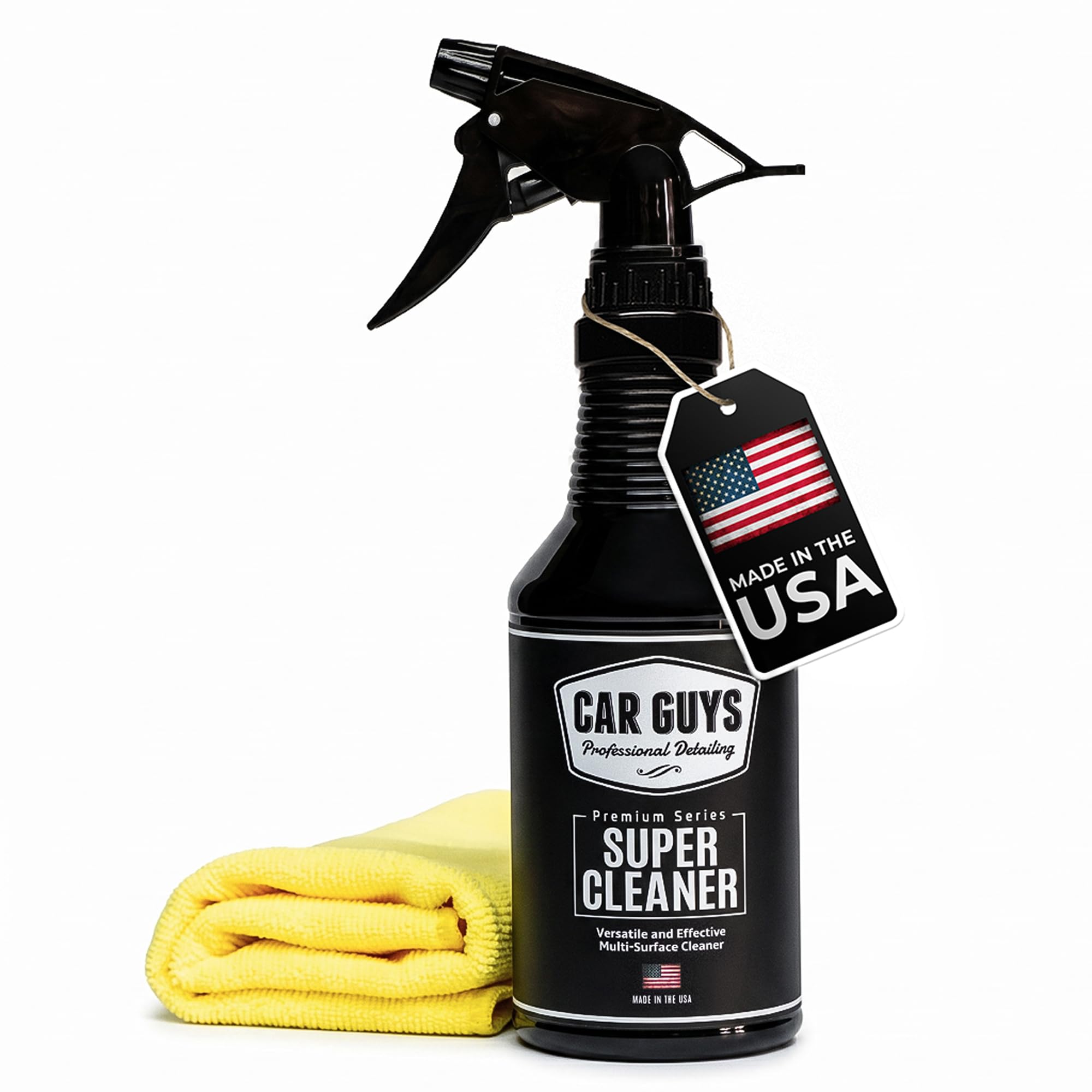
We recommend this if you want one bottle that cleans leather, fabric, and trim with minimal effort and no greasy residue.
Pros
- Cuts through set-in dirt and grease with light scrubbing.
- Works on leather plus carpets and vinyl, so one product covers many jobs.
- Leaves surfaces feeling clean without a sticky finish.
Cons
- Stronger scent than some mild cleaners.
- You still need a microfiber and elbow grease for heavy stains.
- Not a dedicated conditioner for long-term leather care.
We used this on a few cars and were impressed at how fast it removed spilled coffee rings and passenger grime. A quick spray, a little agitation with the included towel, and most stains lifted on the first pass.
Leather came away looking clean and not slimy. We liked that dashboards and plastic trim didn’t get a greasy film afterward.
Tougher, set-in stains needed a couple of passes, and the smell stood out at first, but it faded quickly. For regular cleaning and spot fixes, it saved us time over juggling multiple cleaners.
Overall, this is a solid all-in-one cleaner for interior maintenance when you want efficiency and a clean finish.
Chemical Guys Leather Quick Detailer

We recommend this for routine leather touch-ups because it cleans, conditions, and leaves a light protective finish without a greasy feel.
Pros
- Cleans and softens in one quick pass
- Safe on many leather types, including faux leather
- Nice leather scent and easy spray bottle
Cons
- Not for deep grime or heavy stains
- Light protection—needs reapplication over time
- Spray nozzle can mist too widely on small areas
We used the spray on our car seats and leather armrests. It removed body oil and dust with minimal effort, and the leather felt softer right away. The scent is mild and pleasant, not overpowering.
Application was simple: spray on a microfiber cloth, wipe, and buff. That method kept product from pooling and avoided any slick residue. For quick maintenance between deep cleans, this made seats look fresher fast.
On tougher stains it fell short. We needed a stronger cleaner for ground-in dirt or ink. Also, the protection it adds is light—expect to reapply regularly, especially in sun-exposed cars.
Overall, this is a solid pick for regular upkeep and quick refreshes. We kept a bottle in the trunk for touch-ups and found it saves time compared with heavier conditioners.
Weiman Leather Cleaner & Conditioner
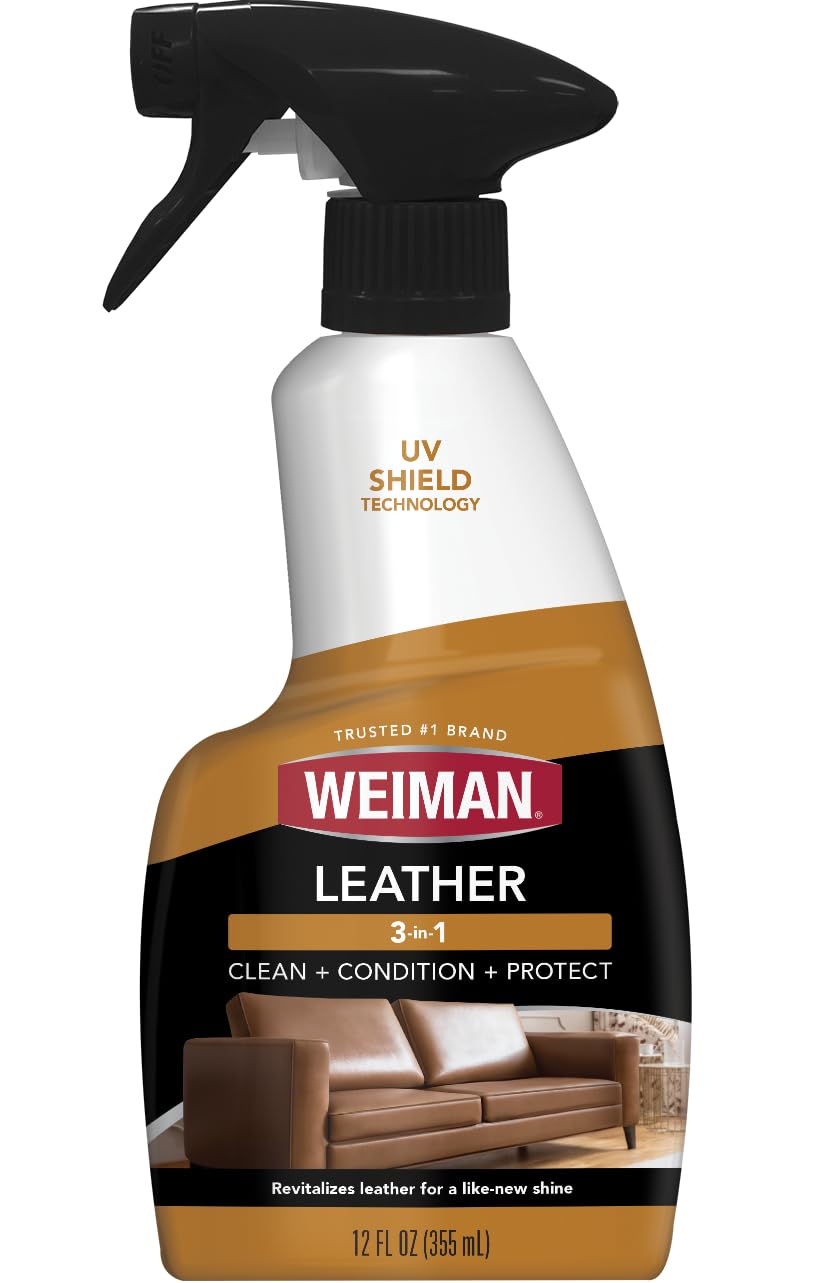
We recommend this if you want an easy spray that cleans, conditions, and adds UV protection in one step.
Pros
- Cleans and softens leather in one pass.
- Leaves no greasy residue.
- Adds sun protection to help prevent cracking.
Cons
- Spray nozzle can spatter if you’re too close.
- Scent is mild citrus, not fully fragrance-free.
- Not ideal for unfinished or delicate vintage leather.
We used this on our car seats and some leather bags and liked how quickly it cut through dirt without leaving a film. The leather felt softer afterwards and the seats looked less dull right away.
Application felt simple: spray onto a cloth, wipe in gentle circles, then buff. It dried fast and didn’t leave a slippery feel, which saved time when we needed the car back in service.
After a few weeks of sun exposure, treated areas looked a touch more protected than untreated spots. We’d still test a hidden patch on very old or porous leather before wide use.
Armor All Beeswax Leather Spray
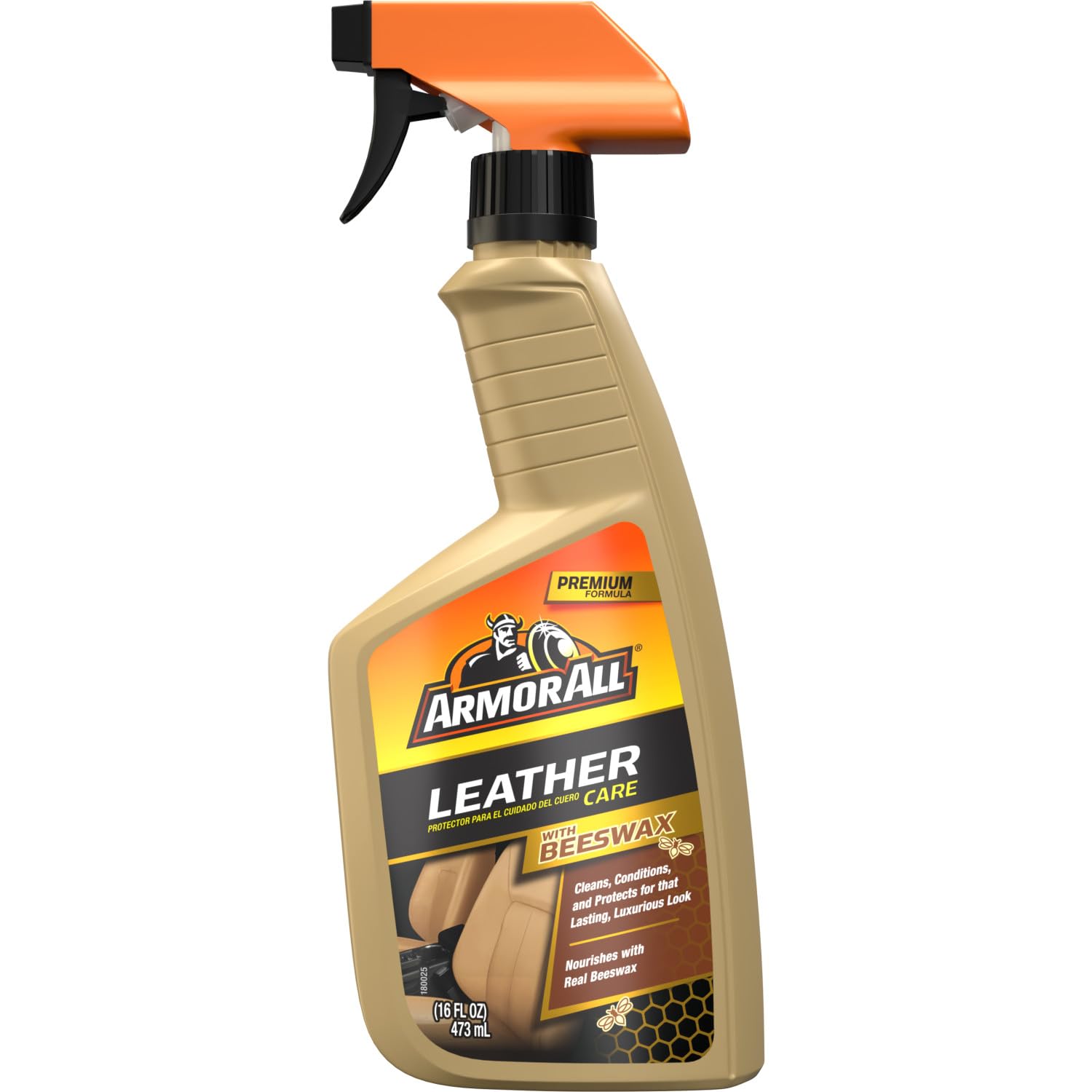
We recommend this if you want an easy spray that cleans, conditions, and helps protect leather without a lot of fuss.
Pros
- Cleans and conditions in one pass.
- Leaves leather feeling soft and not greasy.
- Easy spray bottle for quick touch-ups.
Cons
- Scent may be strong for some users.
- Not ideal for heavily soiled or neglected leather.
- Needs microfiber cloths to avoid streaks.
We used this spray on our car seats and liked how fast it lifted light dirt and restored a soft look. The nozzle makes it simple to cover a wider area, so a quick weekend tidy takes minutes.
Application felt smooth and the leather had a pleasant, slightly waxy finish afterward. It did not leave a slick surface, and seats sat comfortably without feeling sticky.
We noticed the smell is noticeable right after use but fades within an hour. For older, cracked leather, expect modest results; this is best for regular care rather than deep repair.
Overall, this product is a solid pick for routine maintenance and quick refreshes. Try it on a small hidden area first to confirm you like the finish.
VentRight Perforated Leather Cleaner & Conditioner
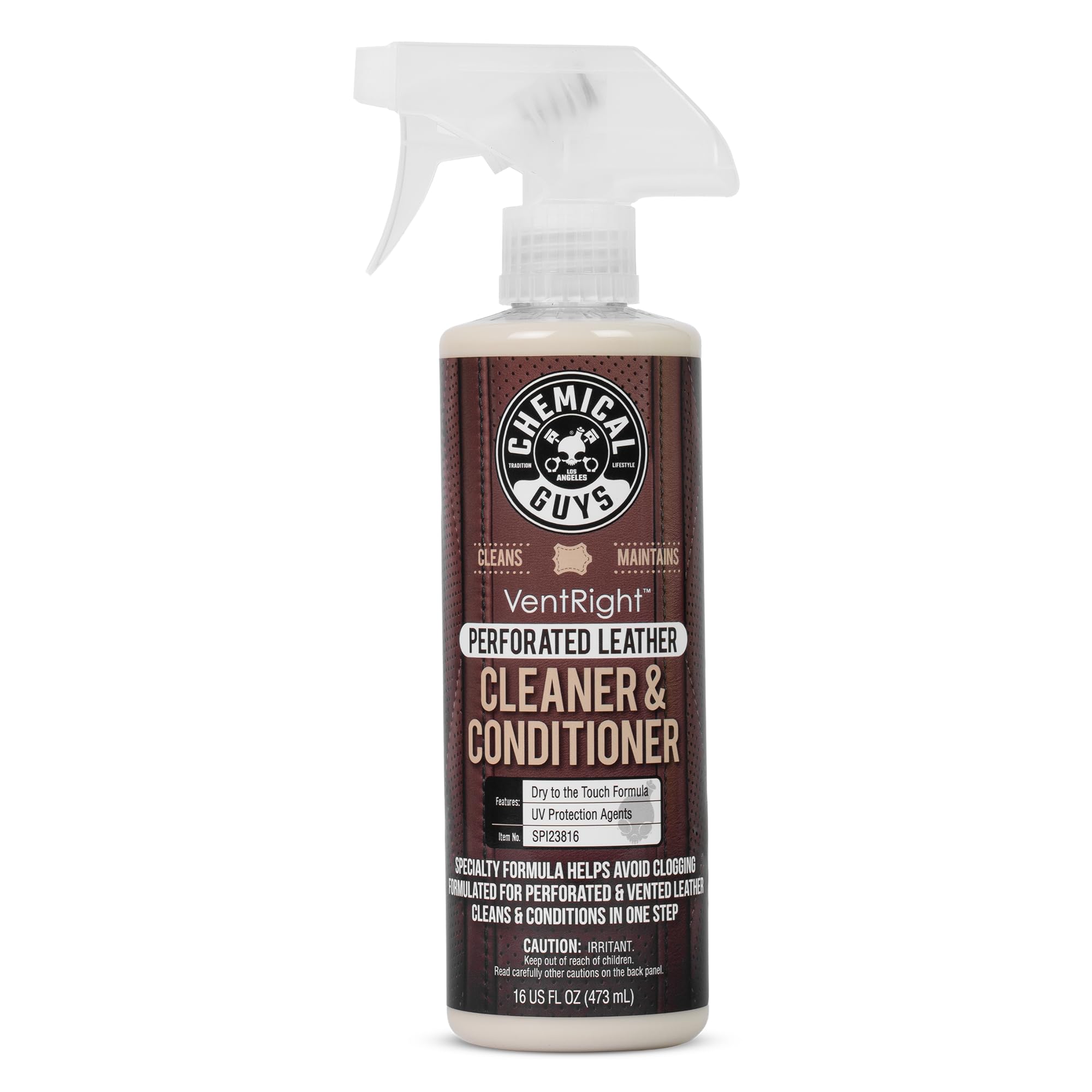
We recommend this product if you want a cleaner that actually reaches dirt lodged in perforated leather and prepares seats well for conditioning.
Pros
- Penetrates tiny perforations to lift hidden grime.
- Cleans without leaving a heavy, shiny finish.
- Combines cleaning and light conditioning in one step.
Cons
- Spray can be thin—needs careful application to avoid overspray.
- Works best with a follow-up conditioner for full softness.
- Price is higher than basic leather cleaners.
We used this on ventilated seats and found the fluid really moved through the micro-channels. It pulled out oils and debris that a regular cleaner missed and left the leather feeling cleaner without a glossy residue.
Application required a soft brush and microfiber towel to guide the solution through perforations. The spray’s flow helps reach under the surface, but we had to be careful not to soak seams or electronics near vents.
After cleaning, the seats looked more even and the texture felt restored. We still followed with a Chemical Guys conditioner to bring back full suppleness and long-term protection.
Chemical Guys Sprayable Leather Cleaner & Conditioner
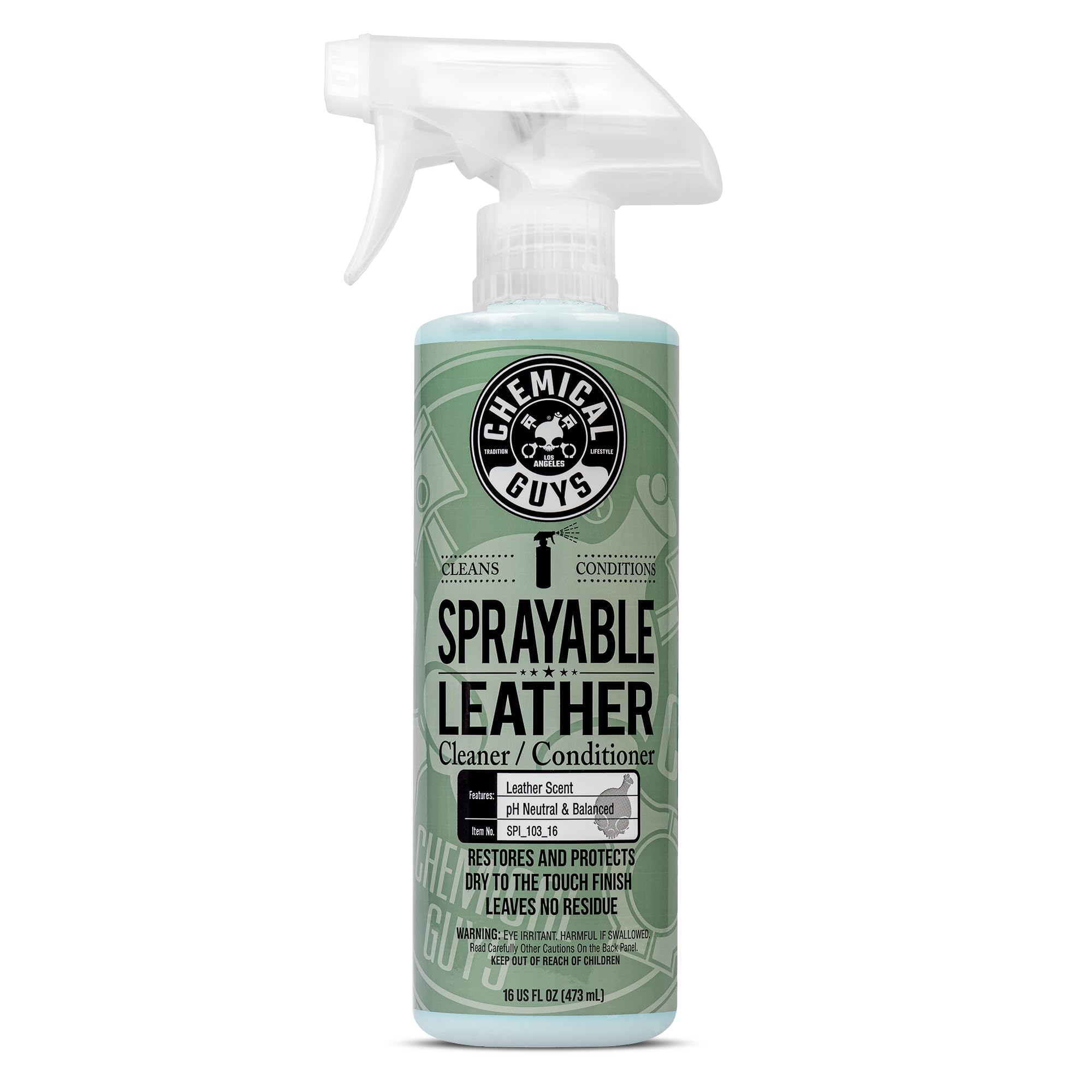
We recommend this if you want a quick one-step spray that cleans, softens, and protects most leather and vinyl surfaces.
Pros
- Cleans and conditions in one quick pass.
- Feels gentle — didn’t strip color or dry seats.
- Works on many surfaces: leather, faux leather, vinyl.
Cons
- Light scent may not suit everyone.
- Needs a microfiber or applicator to avoid streaks.
- Not a deep-restoration product for badly cracked leather.
We used this in a few cars and on a leather chair. Spray application made touch-ups fast, and the spray lifted daily grime and body oils without that tight, dry feeling you get from harsh cleaners.
After wiping, seats looked refreshed and felt softer. The finish stayed natural — not shiny — which I liked for a factory look.
For heavier stains or old, brittle leather, it didn’t fix deep damage. Still, as a routine cleaner and conditioner, it saved time and kept interiors feeling supple.
Chemical Guys Leather Kit
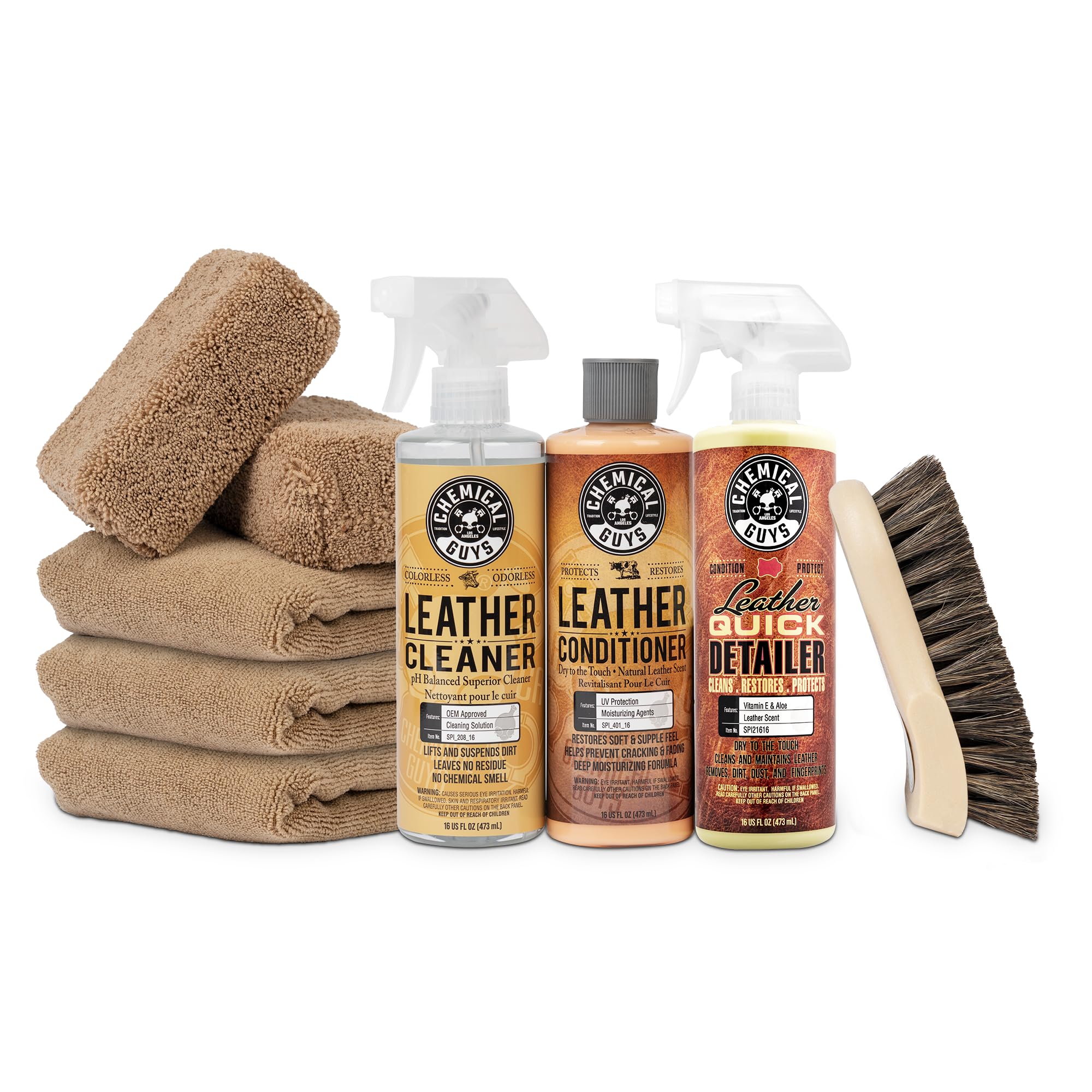
We recommend this kit if you want an all-in-one leather cleaner and conditioner that actually cleans, softens, and protects without leaving a greasy feel.
Pros
- Cleans and conditions in two easy steps.
- Includes brushes, applicators, and microfiber towels for a complete job.
- Safe on many leather types without harsh chemicals.
Cons
- Takes time to work into heavily soiled seats.
- Conditioner can leave a slight sheen on some dark leathers.
- Not cheap compared with single-bottle cleaners.
We used this kit on our car seats and a leather couch. The cleaner lifted body oils and everyday grime without fading the color. It felt gentle and smelled mild, not chemical-heavy.
Applying the conditioner restored softness and reduced the stiff, dry feel on older seats. The finish looked natural on most surfaces, though a few dark panels showed a light shine until fully absorbed.
The included horsehair brush and microfiber pads made the job faster and neater. We scrubbed creases and seams with the brush, then wiped off residue with the towels for a tidy finish.
Overall, the kit gave professional-feeling results at home. It’s a good pick if you want gear, cleaner, and conditioner that work together and last through multiple uses.
Leather Honey Leather Cleaner
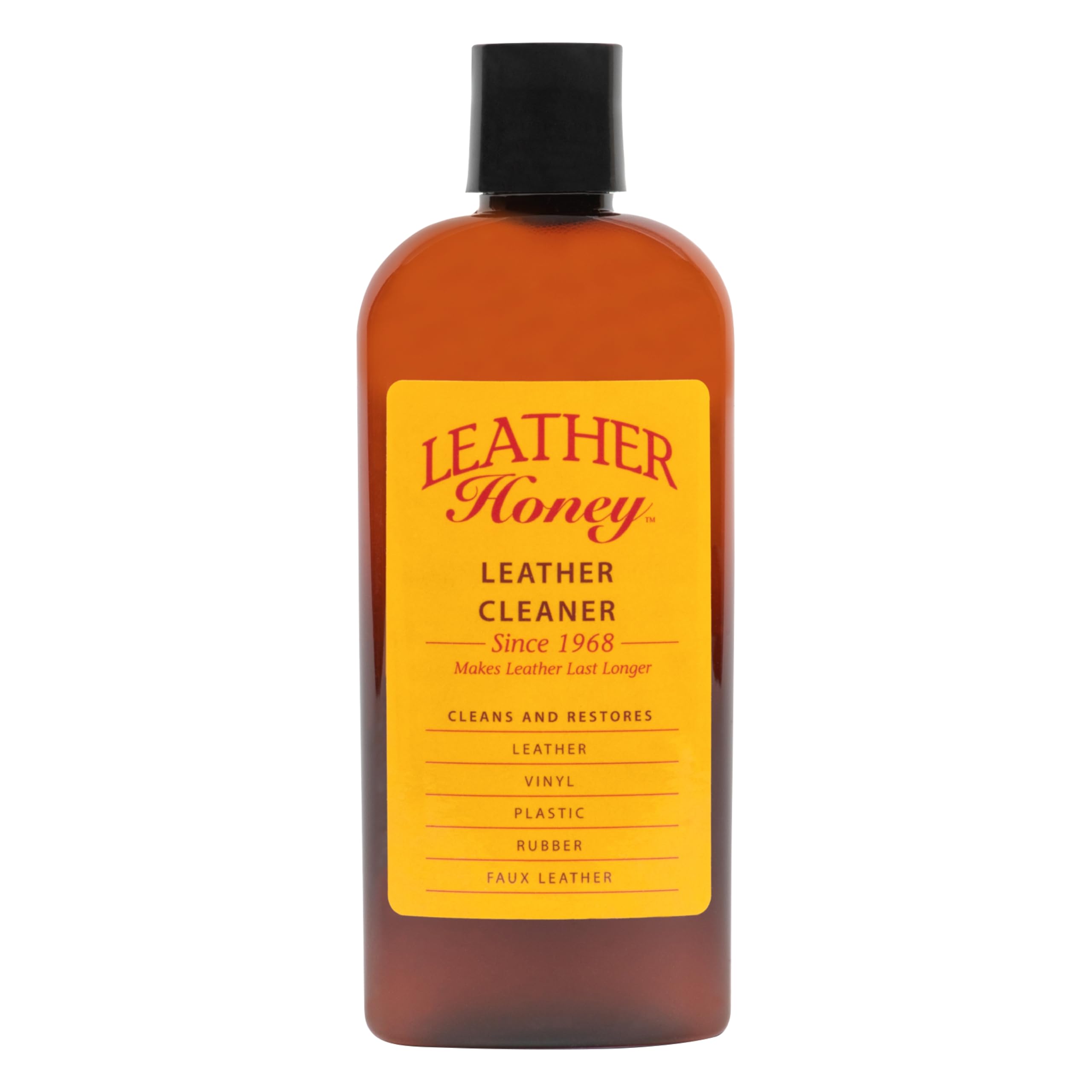
We recommend this cleaner if you want a gentle, reliable product that removes grime without harming leather.
Pros
- Cleans well without strong smell
- Feels safe on hands and seats
- Works on many leather types, even white
Cons
- Not for suede or very delicate finishes
- You need a clean cloth for best results
- Small bottle if you have many seats
We used this on a few car seats and found it cut through sweat and body oil faster than plain soap. It didn’t leave a sticky film, and the seats looked cleaner without changing the color.
Application felt simple. We wiped a small area with a lint-free cloth, let it dry, and the leather stayed supple. No harsh chemical smell bothered us while we worked.
For stubborn spots we repeated the process and saw improvement, though some deep stains needed more time. The product felt safe to use around kids and pets because it’s non-toxic and unscented.
Overall, this is a practical choice for regular leather care. Try a spot test first, and bring extra cloths if you plan to clean the whole interior.
Buying Guide
We focus on safe cleaners that protect leather and keep seats soft. Look for pH-balanced formulas labeled safe for automotive leather. These reduce the risk of drying or cracking.
We check for gentle cleaning power and stain-lift ability. A good cleaner removes dirt and oils without heavy scrubbing. Avoid harsh solvents and bleach.
We want conditioners or cleaners with added conditioning agents. Leather needs moisture to stay supple. Products that combine cleaning and conditioning save time.
We examine ease of use and application method. Foams and sprays are fast for large areas. Wipes can work for quick spot cleaning.
We consider scent and residue. Mild or low-odor formulas are best inside a car. Also pick products that leave minimal sticky residue.
We review compatibility with leather types and finishes. Some cleaners suit protected or coated leather while others work on natural aniline leather. Check product labels and test first in an unseen spot.
We value safety and certifications. Look for products with clear ingredient lists and claims you can verify. Also check for non-flammable or low-VOC notes if you sit in the car soon after cleaning.
We think about tools to use with the cleaner. Soft microfiber cloths and soft brushes help lift dirt without damage. Avoid abrasive pads and high-pressure sprays.
Editor’s Choice
We picked a leather cleaner that balances cleaning power, leather safety, and ease of use. It removes dirt and light stains without drying or cracking leather when used as directed.
We like products with a gentle cleaner plus a conditioner. That combo cleans and restores suppleness in one step. It saves time and reduces the chance of over-treating the leather.
Key reasons we chose it:
- Safe for most leather types — works on finished automotive leather.
- pH-balanced formula — cleaner but not harsh.
- Includes conditioner — helps prevent drying and fading.
- Easy applicator — spray or pump with a soft microfiber cloth.
How we test: we apply to a small, hidden area first, then treat seat panels. We note color change, residue, and feel after drying. We also check manufacturer guidance to avoid warranty issues.
Practical tips:
- Test before full use.
- Use a soft cloth and light pressure.
- Avoid excessive water or steam.
This choice fits most drivers who want a reliable, simple product for routine care. It’s not the cheapest option, but it reduces risk of damage and lengthens the leather’s usable life.
Conclusion
We chose cleaners that protect leather without damaging it. Our picks remove dirt, restore softness, and help prevent cracking when used correctly.
We recommend testing any product on a hidden spot first. This lets us check colorfastness and avoid surprises.
For daily care, we suggest gentle wipes or diluted cleaner. For deeper cleaning, use a dedicated leather cleaner and follow with a conditioner.
We value products with clear instructions and simple ingredients. Avoid harsh detergents, ammonia, or bleach that can strip oils and fade leather.
Quick checklist:
- Use a soft brush or cloth for dirt.
- Test in an inconspicuous area.
- Follow cleaner instructions exactly.
- Condition after cleaning to maintain suppleness.
We believe regular, gentle care extends the life of leather seats and keeps them comfortable. Choose a cleaner that matches your leather type and cleaning needs.
FAQS
What cleaner should we use for leather seats?
We recommend a pH-balanced leather cleaner made for automotive use. Test any product on a hidden spot first to check colorfastness.
How often should we clean leather seats?
Clean lightly every 1–3 months and deep-clean every 6–12 months depending on use. More frequent care prevents grime buildup and cracking.
Can we use household cleaners or vinegar?
No. Household cleaners and vinegar can dry and damage leather. Use products made for leather or a mild soap solution designed for leather care.
How do we apply cleaner safely?
Work on small sections with a soft cloth or brush. Wipe off residue and let the leather air dry. Avoid soaking the leather.
Do we need to condition after cleaning?
Yes. Conditioning restores oils and flexibility. Apply a thin, even layer and buff gently.
Will cleaners change leather color or finish?
Some can. Always patch-test first and follow manufacturer instructions. For dyed or exotic leather, consult a pro.
How do we remove stains like ink or grease?
Act quickly. Blot spills, don’t rub. Use a cleaner made for that stain type or seek professional help for tough stains.
Can we use a leather protector?
We recommend a protector after cleaning and conditioning. It adds a barrier against spills and UV damage.
