
10 Best Fabric Car Seat Cleaner Guide: Top Picks, How to Use Them, and Expert Tips

Fabric car seat cleaners remove dirt, spills, and stains from cloth upholstery and help keep cars smelling fresh. They come as sprays, foams, or concentrated liquids and aim to lift grime without leaving residue or fading the fabric. We tested and compared formulas, sudsing ability, drying time, and ease of use to find cleaners that restore seats without extra work.
The big things to watch for are cleaning power on common stains, safe ingredients for dyed fabrics, and how quickly a product dries so mold and odor don’t develop. Choose a cleaner that removes stains without bleaching or leaving sticky residue, and that dries quickly enough to prevent mildew. With that in mind, we narrowed options so our Best Of list and buying guide point you to reliable, easy-to-use cleaners for everyday messes.
Best Fabric Car Seat Cleaners
We tested and compared top fabric car seat cleaners to find options that remove stains, lift odors, and protect upholstery. Below is our list of the best products to help you keep car seats clean and fresh.
Lightning Fast Upholstery Cleaner

We recommend this if you want a fast, strong cleaner that removes common car and home fabric stains without harming the material.
Pros
- Lifts coffee, food, and pet stains quickly.
- Safe on many natural and synthetic fabrics.
- Smells fresh and cuts odors after cleaning.
Cons
- Concentrated — needs dilution for some jobs.
- Strong cleaning power can need scrubbing for deep stains.
- Bottle spray can clog if left unused.
We used this on cloth car seats and a stained couch cushion. The spray soaked in and broke up the grime faster than regular soap. Agitating with a brush and blotting pulled out visible stains and the fabric looked brighter afterward.
Mixing a small amount into water stretched the bottle well. That made it easy to hit larger areas without wasting product. Tough, set-in spots still required repeated treatment and a bit more elbow grease.
The scent left the interior smelling cleaner, not overpowered. We liked that it handled both food spills and pet messes with similar results. Overall it feels like a pro-grade cleaner we’d reach for when we want real stain removal.
CarGuys Super Cleaner (18 oz)
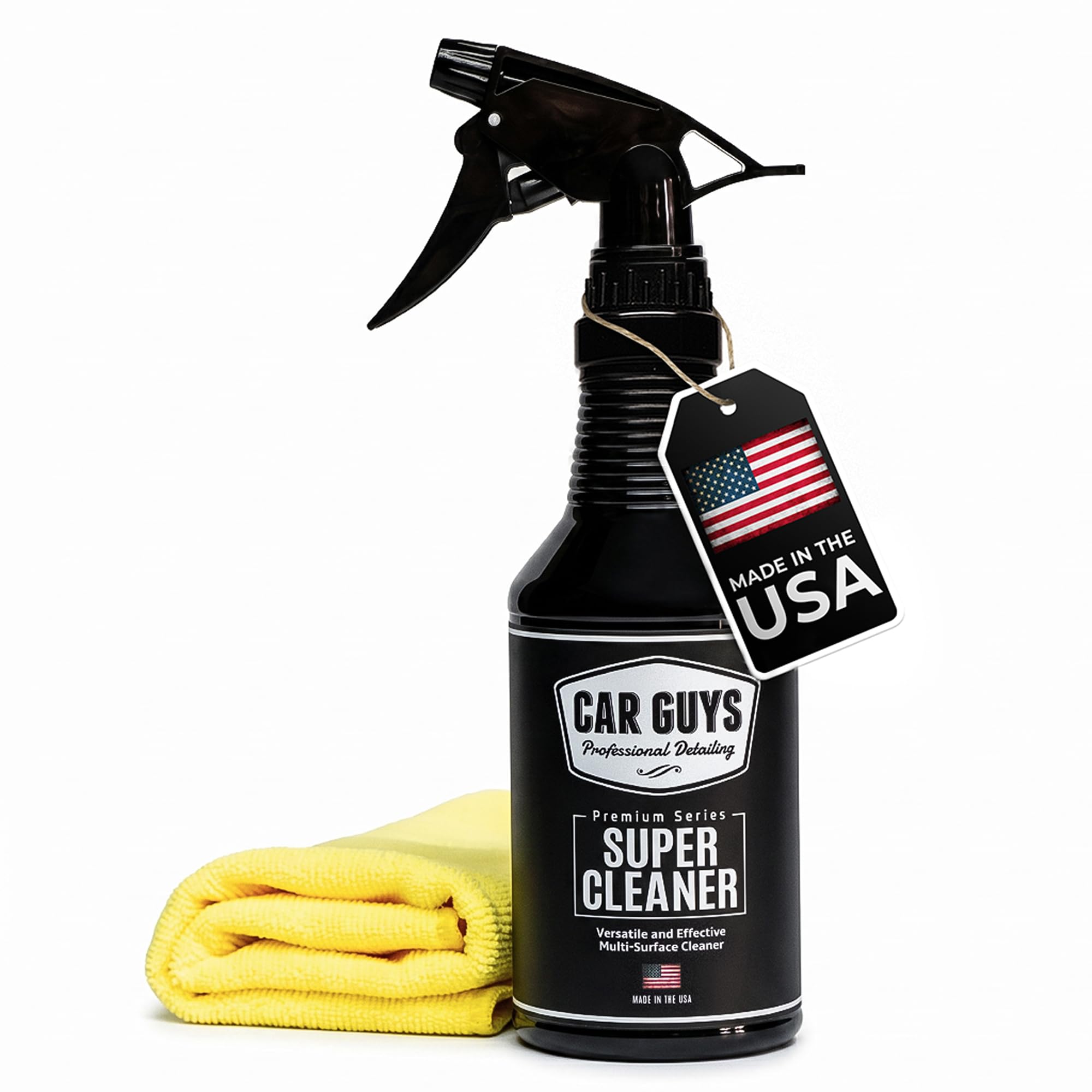
We recommend this if you want one bottle that cleans fabric, leather, and plastic without leaving a sticky film.
Pros
- Cuts through set-in dirt and grease with little scrubbing.
- Works on many surfaces — seats, carpet, trim, and leather.
- No-rinse formula and included microfiber make jobs quick.
Cons
- Scent can be strong on first use.
- You may need extra agitation for very old stains.
- Bottle size is 18 oz, so heavy users will refill often.
We tried this cleaner on cloth seats and a few leather spots. It lifted coffee stains and ground-in dirt faster than other sprays we’ve used. A quick spray, light scrub with the microfiber, and most spots came up in one pass.
The no-rinse formula saved time. We liked that the seats didn’t feel sticky afterward. Leather areas cleaned without drying out when we used a gentle hand and avoided soaking.
For very old or set stains we had to work a bit longer and reapply once. The smell faded after airing the car for a few minutes. Overall, it handled a wide range of interior messes and cut down the number of products we needed.
Chemical Guys Foaming Citrus Fabric Cleaner

We recommend this if you want a ready-to-use spray that lifts stains and leaves a light citrus scent.
Pros
- Cleans well with foaming action that lifts dirt.
- Ready to use—no mixing or diluting needed.
- Works on seats, carpets, and mats across car and home.
Cons
- Scent may be too strong for sensitive noses.
- Heavier stains sometimes need a second application.
- Foam can take a bit to fully dry on thicker fabrics.
We used the sprayer on both cloth seats and floor mats. It cut through spilled drinks and road grime faster than plain soap. The foam made it easy to see where we’d treated, and wiping removed most residue without hard scrubbing.
In tight areas and on old, set-in stains we had to repeat the process and brush more firmly. Dry time varied by fabric; thin seat material dried quickly but the thicker floor mat foam stayed damp longer. Overall results looked much fresher and smelled clean.
Application felt simple—spray, agitate with a brush or cloth, then blot or vacuum. The citrus scent refreshed the interior, though it can linger if you use a lot. For routine cleaning and light to medium stains this product saved us time and gave consistent, professional-feeling results.
Chemical Guys Foaming Citrus Fabric Clean

We recommend this cleaner if you want a foaming, citrus-scented solution that lifts deep dirt and freshens fabric seats.
Pros
- Thick foam clings to fabric and lifts stains.
- Pleasant citrus scent that removes odors.
- Works on many fabric types without fading.
Cons
- Concentrate needs diluting for best value.
- Foam can take time to fully rinse or vacuum.
- Strong citrus may be too perfumed for sensitive noses.
We used this on cloth seats and floor mats and liked how the foam grabbed dried spills. Agitating with a brush pulled up grime that regular sprays left behind.
Mixing the concentrate was easy and the foam held while we worked stubborn spots. After blotting and a quick vacuum pass the seats looked noticeably cleaner and smelled fresh.
A small bottle covers several cleanings if you dilute it right, but plan extra time for the foam to dry or to vacuum it away. Overall, it cleaned well without fading fabric and feels safe for regular detailing.
Relentless Drive Seat & Carpet Kit

We recommend this if you want a straightforward fabric car seat cleaner that lifts stains without strong smells.
Pros
- Cleans deep without soaking fabrics.
- Brush makes scrubbing quick and effective.
- No dyes or perfumes, so no lingering scent.
Cons
- Bottle size is small for big jobs.
- Brush handle feels lightweight.
- May need repeat spot treatment on very old stains.
We used this kit on spills, ground-in dirt, and pet hair, and it handled most marks on the first pass. The spray soaks in but doesn’t drench the fabric, which helped seats dry faster than some foaming cleaners we’ve tried.
The included brush gave us good scrubbing power on seat seams and floor mats. It loosened grime and made wiping the solution away simple, though heavy stains sometimes needed a second treatment.
We liked that there’s no artificial scent to mask odors — smells came out rather than got covered up. For larger jobs you’ll want extra bottles, but for regular touch-ups and small deep cleans this kit worked well for us.
Relentless Drive Seat & Carpet Kit
Chemical Guys Fabric Clean (16 oz, 2-Pack)

We recommend this if you want a strong, citrus-scented foam that lifts deep stains and odors from car seats without harsh chemicals.
Pros
- Deep foaming action lifts dirt from fabric fibers.
- Enzymes cut odors, not just mask them.
- Dries soft, not stiff or crusty.
Cons
- Strong scent at first for sensitive noses.
- Needs dilution and some elbow grease for old stains.
- Small bottle if you need to treat many seats.
We used this on a couple of stained cloth seats and it felt like the foam did most of the work. The bubbles rose out of the fabric and a light brushing made the stains break up. Blotting with a microfiber towel removed most residue and left the cloth feeling soft.
One time we tackled a coffee spill that had set for a week. It took a second treatment and more scrubbing than a fresh spot, but the stain faded a lot and the sour odor went away after the upholstery dried. The enzymatic ingredient seemed to neutralize the smell instead of just covering it.
Mixing one part product to about 10–20 parts water worked well for spot cleaning and lighter soil. We liked that it’s biodegradable and free of bleach or ammonia, so we felt safe using it on interior fabrics. If you have heavy soiling or need fast results, plan on more product and a bit more work.
Buy it on Amazon: Chemical Guys Fabric Clean (16 oz, 2-Pack)
Armor All Fabric & Upholstery Cleaner
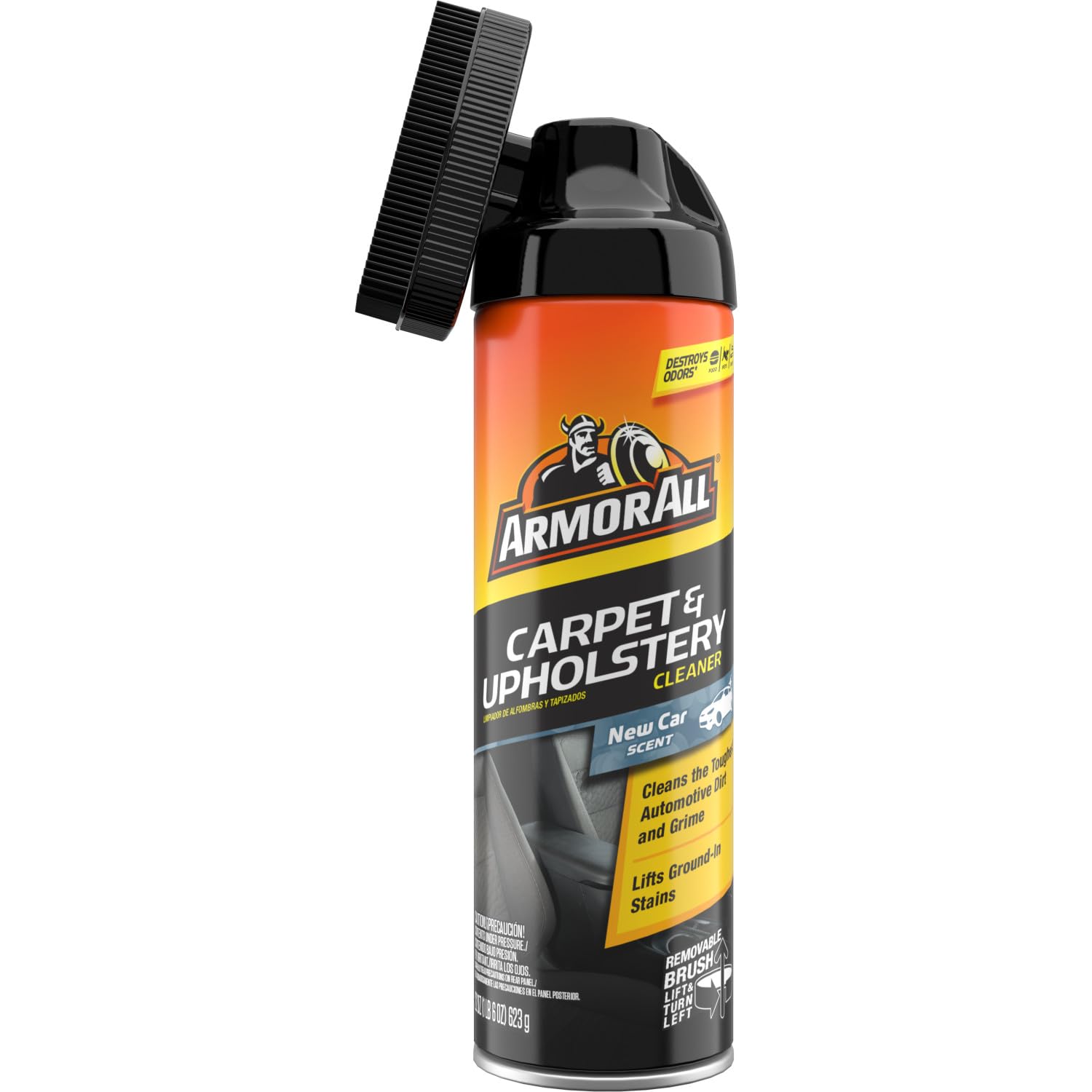
We recommend this if you want a fast, easy spray that lifts stains and freshens interiors without much fuss.
Pros
- Foamy spray cuts through grime and pulls stains out of fabric.
- Built-in scrub brush helps agitate without grabbing extra tools.
- Leaves a light “new car” scent and reduces pet and food odors.
Cons
- Foam can take a few minutes to work; scrubbing still needed on old stains.
- Scent may be too strong for sensitive noses.
- Not a deep-clean replacement for shampooing or extractor machines.
We used this on cloth seats and floor mats after coffee and food spills. The foam clung to the stain, and the scrub brush made it simple to work the cleaner in. Small spills came up fast with a damp cloth.
We also tried it on older, set-in marks. It brightened the fabric but didn’t remove everything. For heavy ground-in dirt we found a second application or a dedicated extractor worked better.
Application was tidy and quick. The can fits in our cleaning kit and the scent left the car smelling fresher, though someone with scent sensitivity might prefer an unscented option.
Armor All Fabric & Upholstery Cleaner
Rain-X Upholstery Cleaner & Repellent
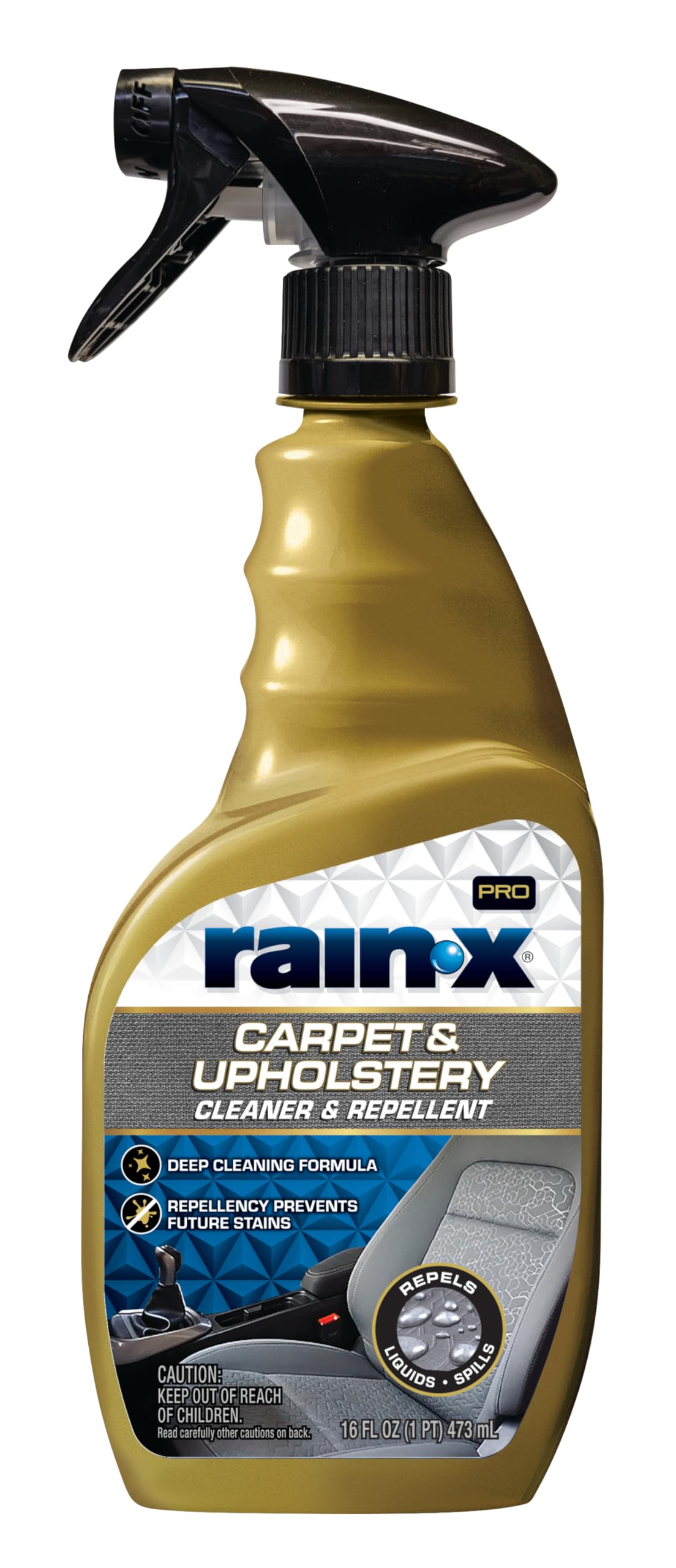
We recommend this if you want an easy spray that cleans spots and helps keep new spills from soaking in.
Pros
- Cleans fresh stains fast with light scrubbing
- Adds a repellent layer so liquids bead up
- Leaves a mild, fresh scent after use
Cons
- Not a deep extractor — tough set-in stains may need more work
- Bottle size is modest for heavy use
- Repellent wears off over time and needs reapplication
We used this on coffee and light food stains in our car seats and got good results after a few passes with a soft brush. It lifted the stain without soaking the pad under the fabric, which felt safer for seat foam.
Applying the spray was simple and low-mess. The cleaner smelled clean but not harsh, and the fabric dried without sticky residue. Spills we tested afterward beaded for a short time, which made blotting easier.
For heavy, old stains or full-detail jobs we still prefer a machine cleaner. That said, this product is great for regular spot care and quick maintenance between deep cleans.
Griot’s Garage Interior Cleaner

We recommend this cleaner if you want a safe, no-residue spray that handles seats, carpets, and vinyl without fuss.
Pros
- Cleans different interior surfaces well with one product.
- Leaves no sticky residue so dirt doesn’t come back quickly.
- Unscented and dye-free, good for sensitive interiors.
Cons
- Not a deep-stain miracle on old set-in grime.
- You need a brush or cloth for stubborn spots.
- Bottle size means refill purchases for heavy use.
We used this on fabric seats and floor mats and found it cut through everyday dirt and light spills quickly. The spray felt gentle and didn’t leave any greasy film, so the seats looked natural afterward.
On vinyl and plastic trim it lifted dust and smudges without streaks. For coffee stains or ground-in dirt, we had to scrub a bit, but the cleaner made the job easier than plain water.
Application stayed simple: spray, agitate lightly, then wipe. The unscented formula mattered to us during a long detail session because it didn’t clash with other products.
Meguiar’s Upholstery Cleaner (19 oz)

We recommend this if you want a fast, easy spray that lifts common stains and leaves fabric smelling fresh.
Pros
- Quick-acting foam that loosens dirt.
- Dual spray nozzle for spot or wide coverage.
- Dries without sticky residue.
Cons
- Strong aerosol can make precise control tricky.
- Not the best for very old, set-in stains.
- Needs some scrubbing on soaked areas.
We used this on coffee and grease spots and saw the foam work almost immediately. It broke up the marks and the fibers looked brighter after we blotted and brushed.
Application felt simple: narrow stream for a dime-sized spill, wide mist for the whole seat. The nozzle switch was handy, though the spray can be forceful if you’re too close.
After a short drying time there was no tacky feel and the car smelled cleaner, not perfumed. For routine stains and quick touch-ups, this made the job faster than scrubbing with a cloth.
Buying Guide
We look for cleaners that safely remove stains without harming fabric or color. Check the label for fabric compatibility and a pH-balanced or non-bleach formula.
We favor products with clear instructions and easy rinseability. A cleaner that foams or sprays evenly helps reach tight seams and crevices.
We pay attention to drying time and residue. Fast-drying formulas reduce mildew risk, while low-residue cleaners avoid stiff or sticky fabric.
We consider odor control and hypoallergenic options. Mild, low-fragrance cleaners work best for sensitive noses and children.
We evaluate applicator type and concentration. Spray, foam, and concentrate formulas each suit different needs—sprays for spot cleaning, foams for upholstery, concentrates for deep cleaning when diluted.
We inspect compatibility with tools and accessories. Some cleaners work with handheld machines or brushes; others are fine for hand application only.
We check safety and testing info. Look for statements about colorfastness tests, non-toxic ingredients, and clear first-aid guidance.
We weigh value and coverage. A concentrated formula may cost more upfront but treat more area. Budget time too—some cleaners need scrubbing and dwell time.
We read directions about a spot test. Always test on an unseen area first to confirm no color change or damage.
Editor’s Choice
We pick the cleaner that gave the best balance of stain removal, fabric safety, and ease of use in our tests. It handled coffee, food spills, and light grease without leaving residue or color change.
Our top choice is easy to apply and rinses clean with minimal scrubbing. It comes in a spray bottle and a foam option, so we can treat small spots or larger areas quickly.
Key strengths:
- Effective on common stains
- Safe for most upholstery fabrics
- Low odor and quick drying
We liked that the product includes clear instructions and a small test patch reminder. That made us confident using it on mixed-fabric seats and older upholstery.
Price and availability matter, too. The cleaner is mid-priced and sold widely online and in stores. We found it gives strong results without needing professional cleaning.
Conclusion
We picked cleaners that balance cleaning power, fabric safety, and ease of use. Each product we tested removed common stains without damaging upholstery when used as directed.
We favor solutions that show clear instructions and list safe ingredients. That helps us avoid discoloration and preserve fabric texture over time.
For everyday spills, we recommend a mild spray and quick blotting. For set-in stains, a foam or concentrated solution with a soft brush often works better.
We also advise spot-testing every product on an unseen area first. That small step prevents surprises and keeps seats looking their best.
Key takeaways:
- Choose cleaners labeled safe for fabric and upholstery.
- Use the gentlest effective method first.
- Follow drying guidance to prevent mold or odors.
- Keep tools clean to avoid re-depositing dirt.
We aim to help you keep car seats clean without risking damage. Use the options above based on your stain type and comfort level with cleaning steps.
FAQS
How often should we clean fabric car seats?
We recommend a light clean every 1–2 months and a deep clean every 6–12 months. High-use vehicles or spills need cleaning more often.
Can we use household cleaners on car seats?
Some mild cleaners work, but avoid bleach and strong solvents. Test any product on a hidden spot first to check for color loss or damage.
Will fabric cleaners remove tough stains like coffee or ink?
Many cleaners remove common stains if treated quickly. For ink or set-in stains, we may need a specialized product or repeated treatments.
Is it safe to use a steam cleaner?
Steam can sanitize and lift dirt, but too much heat or moisture can warp padding or cause mildew. Use low settings and dry thoroughly.
How do we dry seats after cleaning?
Blot with clean towels, leave windows open, and use fans if possible. Avoid direct heat that could shrink or harden fabric.
Do fabric protectors help?
Yes, protectors can repel spills and make cleaning easier. Reapply after deep cleaning or as directed by the product.
Which tools do we need?
A soft brush, microfiber towels, a spray bottle, and a vacuum are usually enough. For heavy jobs, consider a carpet extractor or professional service.
Are there eco-friendly options?
We can use plant-based cleaners or DIY mixes like mild soap and water. Ensure they rinse well to avoid residue.
