
10 Best Car Seat for Airplane Travel: Top-Rated, FAA-Approved Picks for Safe Flying

Air travel with young children is easier when you bring a car seat that fits airplane seats and keeps your child secure and comfortable. Car seats for airplane travel range from lightweight harness-only seats to full convertible seats that latch into airplane belts. They let parents avoid holding a child for a whole flight and often provide better protection and a familiar place for naps.
When picking a travel car seat, look first at FAA approval, weight, size, ease of installation on an airplane seat, and how it handles on and off the plane. FAA approval and correct fit to the aircraft seat are the most important things to check before buying a car seat for airplane travel. We tested and compared popular models to find seats that are safe, compact, and simple to use so you can pick the best option for your trips.
Best Car Seats for Airplane Travel
We tested and reviewed car seats that meet FAA rules, are easy to install on planes, and keep kids safe and comfortable. Below is our list of the best car seats for airplane travel to help you pick the right one for your needs.
Graco Contender Slim (West Point)

We recommend this seat for parents who need a slim, aircraft-certified convertible car seat that’s easy to move between cars and grows with the child.
Pros
- Lightweight and slim — fits well in tight back seats and airplane aisles.
- FAA certified — gives a safer option for flying with a harnessed seat.
- One-motion headrest and harness adjust — saves time when your child grows.
Cons
- Only two recline positions — can be picky about level on some vehicle seats.
- Not the lightest on the market — still feels solid compared with infant-only travel seats.
- Cup holder is removable but can be awkward to stow for plane boarding.
We took this seat on a short family trip and used it both in the car and on the plane. Installing with the LATCH felt straightforward, and the level indicator helped when the vehicle seat was steep. On the flight, the slim profile made it easier to move down the aisle and fit into the aircraft seat without crowding our neighbor.
Adjusting the harness and headrest in one motion saved time during a busy travel day. The fabric cleaned up well after a snack spill, and the cup holder came off for the tray table. We noticed the seat is bulkier than some travel-only options, but its convertible design means we won’t need a second seat as our child grows.
For families who want a single seat that works for driving and flying, this felt like a practical choice that balances safety, ease of use, and space-saving design.
Ellaris 3-in-1 Convertible Car Seat

We recommend this seat if you want a slim, travel-ready convertible car seat that grows with your child and installs easily.
Pros
- Slim design fits tighter airplane and car seats.
- Easy hook-style LATCH made installation quick.
- Removable, machine-washable pad and cup holders simplified travel messes.
Cons
- Heavier than infant seats, so carrying it through airports felt tiring.
- No built-in carry handle, which made boarding less convenient.
- Padding felt a bit firm for newborn naps on long flights.
We used the Ellaris on a recent trip and liked how it slipped into a plane seat without crowding the aisle neighbor. The narrow shell gave us room for a second passenger behind, and the harness adjusted smoothly as our toddler grew.
Installing with the hook-style LATCH took only a few minutes and stayed tight during taxi and takeoff. The cup holders clipped on and off easily, and the cover washed well in our machine after snacks.
Carrying it through the terminal proved the least fun part; it’s sturdier and heavier than a rear-facing infant carrier. Still, for families wanting one seat that works from baby through toddler and fits airplane seats, this model balanced safety, space, and clean-up well.
WAYB Pico

We recommend the WAYB Pico if you want a very light, foldable car seat that fits overhead bins and makes airport travel easier.
Pros
- Extremely light and easy to carry.
- Folds compactly to fit overhead storage.
- Feels well-made with breathable fabric.
Cons
- Forward-facing only, so not for infants.
- Pricey compared with basic travel seats.
- Some fitting steps take practice in tight airplane rows.
We used the Pico on a recent trip and appreciated how little it weighed. Lugging it through the terminal felt effortless, and the carry bag kept it tidy between flights.
Installing the seat on the plane took a few minutes to get right in a cramped row. Once tightened, the 5-point harness felt secure and our child stayed comfortable even on a long flight.
The fold-and-go design really helped when we needed to stow it in the overhead bin. The frame and mesh cover felt premium, and the seat stayed cool against our child’s back.
If you need a seat that meets FAA rules and is easy to move through airports, this one proved handy for our travel routine. Check it out on Amazon: WAYB Pico Travel Car Seat.
RideSafer Gen 5 (XS) — Travel Vest
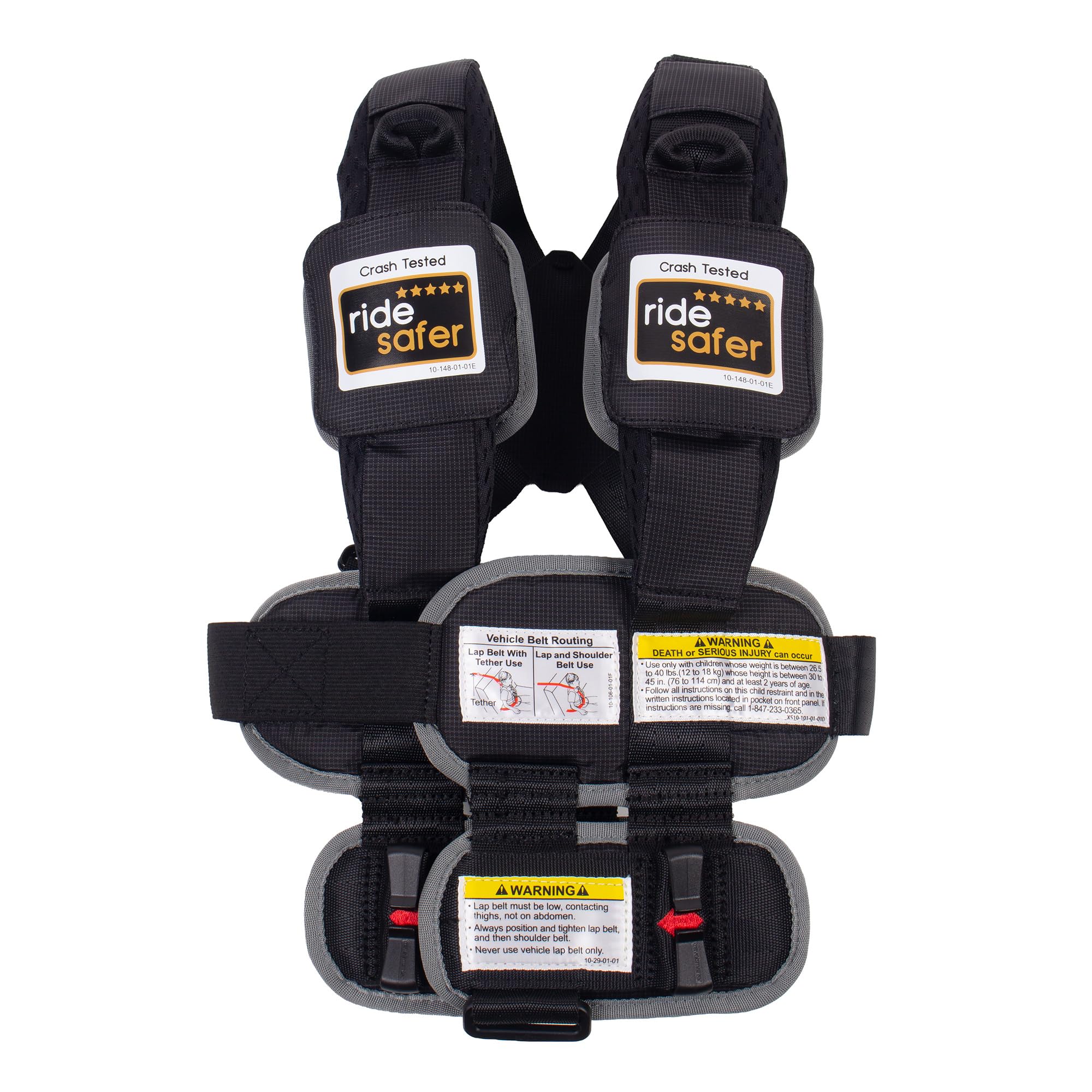
We recommend this vest when you need the lightest, most portable restraint for short trips and frequent travel.
Pros
- Very light and folds small for easy carry.
- Simple to put on and remove in tight airplane seats.
- Helps seat belt fit small children better in cars and rideshares.
Cons
- Not FAA approved for use on airplanes.
- Requires a vehicle tether or correct belt routing in some cars.
- Less padding and side impact structure than traditional seats.
We used this vest on several trips and liked how easy it was to pack. It barely takes space in our carry-on and slips into a stroller bag. Putting it on felt quick compared with hauling a full car seat through the airport.
On the road, it made the adult seat belt sit lower on our child so the belt did not cross the neck. The tether option gave extra security when the vehicle had an anchor. We noticed kids moved more freely than in bulky boosters.
We avoided using it on a plane since it is not FAA approved. For car trips and taxis, it worked well for short rides and multi-child rows. If you want full crash protection for long drives, a conventional car seat offers more padding and structure.
Hiccapop UberBoost
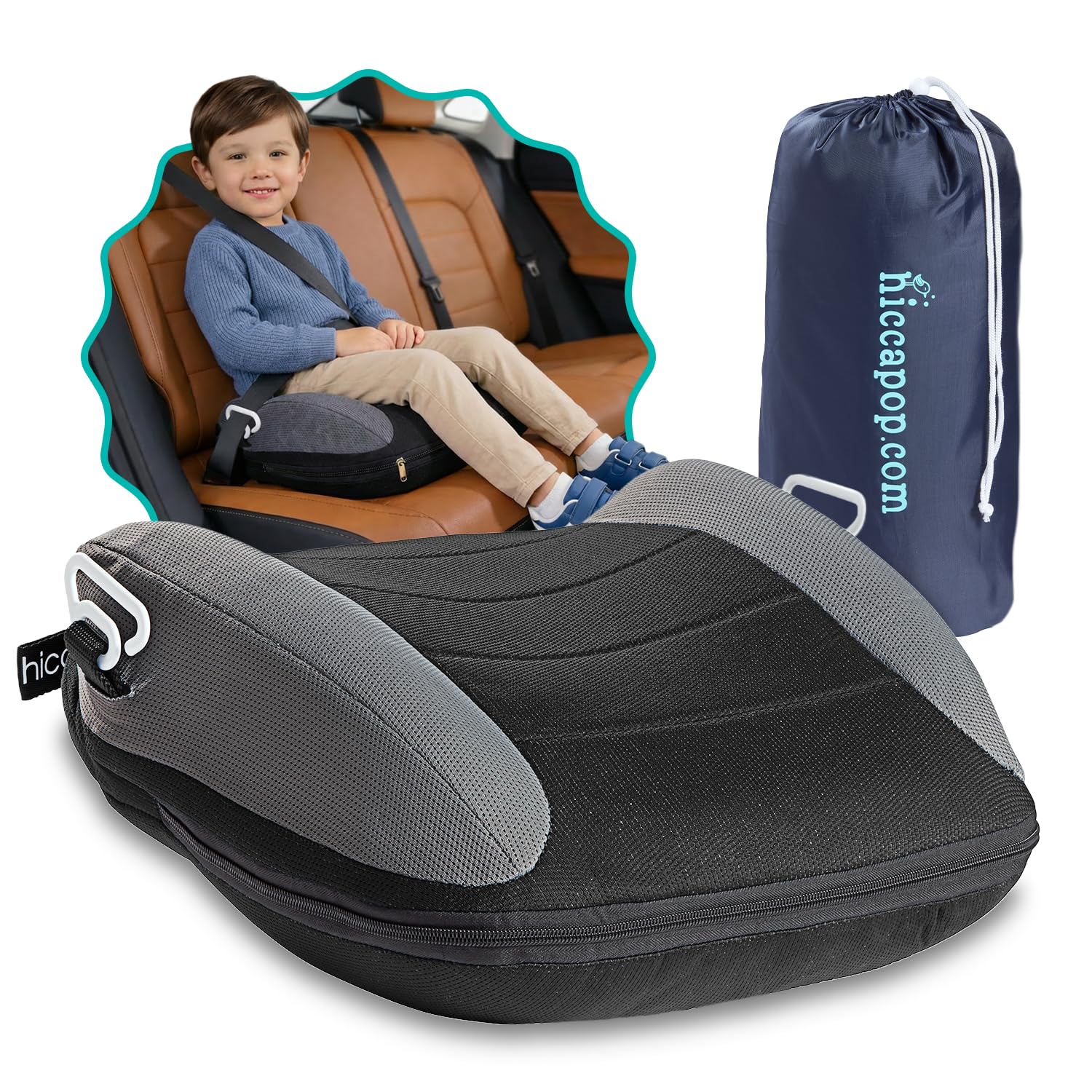
We recommend this if you want a very packable booster for short trips and rental cars because it packs small and inflates fast.
Pros
- Packs tiny and inflates in seconds.
- Light to carry and fits tight car spaces.
- Keeps the belt positioned across the lap.
Cons
- Not a harnessed car seat for infants or toddlers.
- Less solid feeling than a molded booster.
- Can be awkward to fit on very soft seats.
We used the UberBoost on a weekend trip and were impressed by how quickly it inflated with only a few breaths. It rolled down to the size of a water bottle and fit easily in our carry-on.
Installation felt straightforward in taxis and rental cars. The non-skid bottom helped it stay put on leather seats, and the belt guides made the lap belt sit where it should.
Ride comfort surprised us — the cushion is soft and kept our kid happy on a 90-minute drive. Still, it does not have a back or a harness, so it’s best for older kids who meet booster rules.
For short journeys and travel where space matters, this gave us real convenience. If you need a firm, full-featured car seat for daily use or long road trips, we would choose a traditional booster instead.
BubbleBum Inflatable Booster
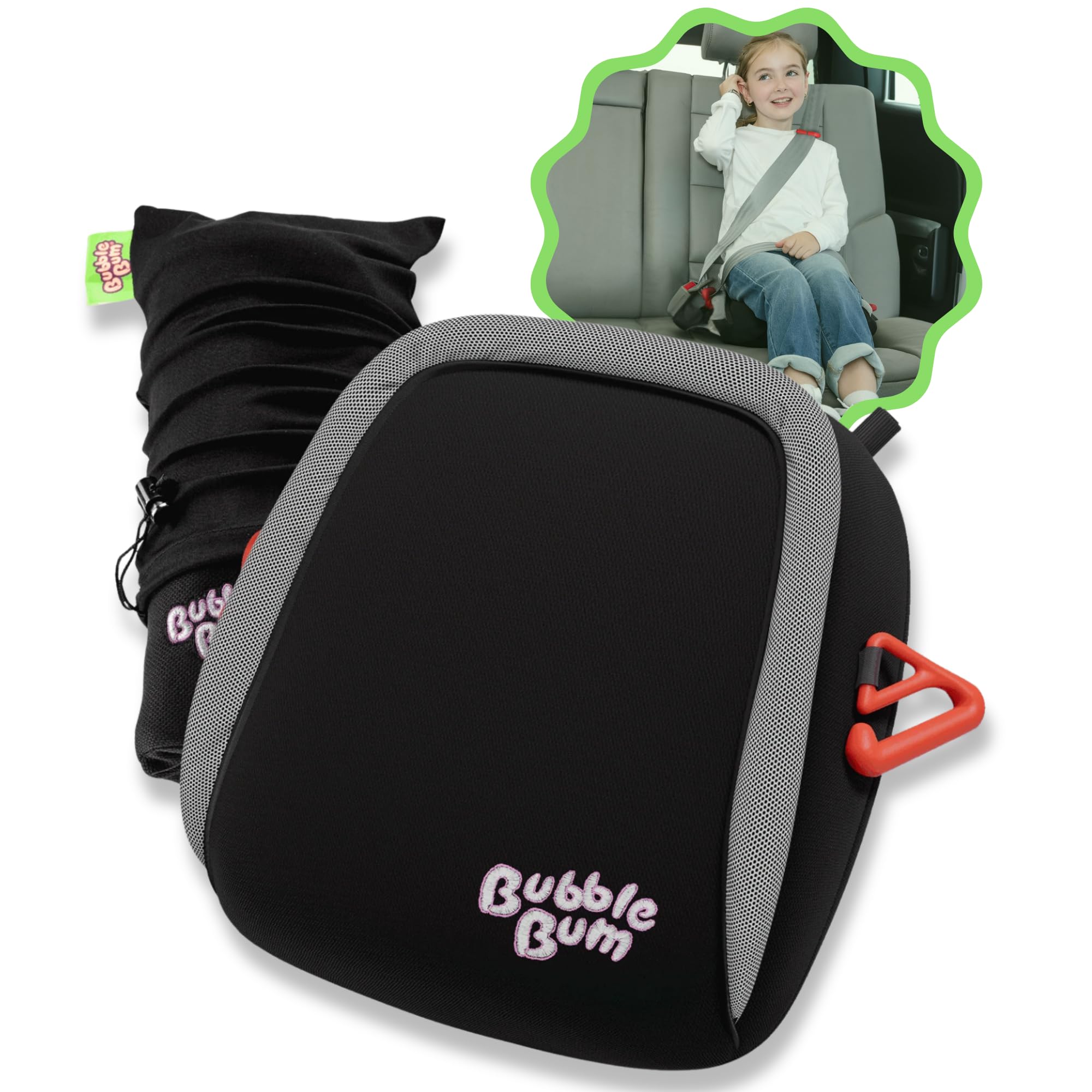
We recommend this if you need a truly portable booster for flights, rentals, and rideshares because it packs small, meets safety tests, and fits three across.
Pros
- Packs down tiny for easy travel.
- Independently crash tested and meets standards.
- Soft, cushioned ride that kids find comfortable.
Cons
- Not as sturdy as a rigid booster.
- Needs inflation and care to avoid punctures.
- Backless design gives less support on long car rides.
We used the BubbleBum on a recent trip and kept it in our carry-on. It slipped into a backpack and into a rental car without fuss. The low weight meant no heavy bag to haul through terminals.
Installing on a plane and in a taxi felt simple since it relies on the vehicle seat belt. Our child sat more comfortably than on plastic boosters, and fussing dropped on medium-length drives. The slim shape let us seat three kids across a small back row when needed.
We did notice the seat can feel less reassuring than a molded booster if your child leans a lot. Inflate carefully and watch for sharp edges in car seats or luggage. For families who value space and travel ease, this is a solid, practical pick.
mifold Hifold Booster

We recommend this booster when you want a very compact, highly adjustable travel seat that still gives a good belt fit for older kids.
Pros
- Extremely compact and easy to fold for planes and short trips
- Very adjustable so the seatbelt fits well as kids grow
- Lightweight and easy to carry between cars or through an airport
Cons
- Narrow padding can feel firm on long flights
- Takes practice to fine-tune the many adjustments
- Not usable in Australia or Taiwan due to regulations
We used this seat for a week of flights and road travel. Folding it down and slipping it into a carry bag made moving through airports painless. The strap and small size meant we could keep our hands free.
Adjusting the head and side panels felt precise. Once set, the seatbelt sat across the child’s shoulder and lap much better than a flat booster. We appreciated how the seat grew with our kid as they stretched up during the trip.
On the downside, the foam is firm on long rides and our child sometimes shifted to get more comfortable. Learning all 243 fit settings took a little time, so expect a short setup session before your trip.
Diono Radian 3R (Gray Slate)

We recommend this seat if you want a long-lasting, slim convertible car seat that works on planes and fits three across most cars.
Pros
- Slim design fits three across without crowding.
- Strong steel frame gives a solid, safe feel.
- Folds for travel and is FAA approved.
Cons
- Heavier to carry than lightweight travel seats.
- Folding takes a bit of practice.
- Bulky base can be awkward in tight airplane aisles.
We used the Radian on a recent family trip and found it reassuringly sturdy. The steel frame feels like it will take real wear and tear, and the harness adjusts smoothly as the child grows. Installing with SuperLATCH was straightforward in our car and felt secure.
On the plane, the folding feature helped get the seat through the gate and into the overhead bin when needed. It is heavier than simple airline-only seats, so plan to carry it or gate-check it rather than lug it through the airport for long periods.
The slim profile really makes a difference when sitting three across. Passengers had room and the child sat comfortably without crowding. Cleaning the cover was simple after a snack spill. Overall, the Radian 3R feels built to last and works well for families who travel often and want one seat from baby to booster.
Graco SnugRide Lite LX

We recommend this seat if you want a very light, easy-to-carry infant car seat that installs solidly and works well for short flights and everyday travel.
Pros
- Very light to carry between gate, car, and stroller.
- Easy to install with clear level indicator and LATCH or seat belt.
- Feels snug and secure for small babies with extra head and body support.
Cons
- Can feel tight as baby grows taller near the 32″ limit.
- No-frills canopy and padding are basic compared with premium models.
- Longer hauls may show the lightweight padding sooner than sturdier seats.
We flew with this Graco seat and found it truly easy to lug through the airport. At just over seven pounds, we could carry baby and the seat without straining. The one-step stroller click and secure base made transitions smooth when moving between car and stroller.
Installation felt confident thanks to the four-position base and the clear level indicator. We used both LATCH and the vehicle belt on different trips and got a snug fit each time. The ProtectPlus engineering gave us extra peace of mind during road and air travel.
Comfort for our infant was good on short trips because the two-piece head and body inserts kept their head from flopping. Longer drives made us notice the thinner padding compared with bulkier seats, but the seat still worked well for most travel needs.
We appreciated the simple canopy and lightweight design for quick outings and flights. If you plan frequent long trips or need maximum padding as baby grows, consider a heavier-duty model, but for travel and everyday use this Graco seat served us very well.
mifold Comfort Grab-and-go Booster

We recommend this when you need a tiny, easy-to-carry booster that makes seat belts fit our child without lifting them up.
Pros
- Packs into a backpack or glove box for true travel ease.
- Low weight and compact size made airport and car transitions simple.
- The cushion and belt guide improved comfort and belt position for us.
Cons
- Backless design offers less head support on long flights.
- Small seat area felt narrow for bigger kids on long rides.
- Some kids fidgeted because it sits low compared to regular boosters.
We used this mifold on a recent trip and liked how fast it was to grab and go. It folded into our carry bag and hardly took up space, so passing through airport security felt easier.
The seat makes the adult belt sit correctly across the hips and shoulder. Setting it up took seconds and required no tools, which helped when we had to switch cars between family members.
On a few longer drives the lack of a high back showed. Our taller child needed more neck support, so we added a travel pillow. Still, for quick flights, carpooling, and rideshares, the compact size and secure belt fit made it our go-to travel booster.
Buying Guide
We focus on safety, fit, and ease of use when picking a car seat for airplane travel. Safety rules and airline policies vary, so check them before you fly.
We look at size and weight first. A lightweight, slim model fits better in airplane seats and in overhead bins. Measure the airplane seat width and compare it to the car seat dimensions.
We check certification and installation options. Make sure the seat is FAA-approved and has a clear way to install with a seat belt or tether. LATCH usually isn’t available on planes, so a simple belt route matters.
We evaluate comfort and harness design. Padded head support and easy-to-adjust harnesses keep children calm on long flights. Removable covers that are machine-washable help with spills.
We value portability and carry options. A seat with a travel bag, straps, or a built-in handle makes boarding easier. Balance portability with sturdiness; very light seats can still be secure.
We pay attention to age and weight limits. Match the seat to the child’s current size, not their future growth. Some seats convert between modes; that can extend useful life.
We consider extras that matter to us. Look for clear instruction labels, FAA approval markings, and visible belt paths. Simple designs reduce installation errors and speed up boarding.
| Feature | Why it matters |
|---|---|
| FAA approval | Required for use on airplanes |
| Size & weight | Affects fit and carry ease |
| Harness/comfort | Keeps child safe and calm |
| Installation clarity | Reduces mistakes |
| Washable fabric | Easier cleanup |
Editor’s Choice
We pick the CARES Harness as our top pick for most airplane trips. It is lightweight, easy to carry, and approved for use on planes by the FAA. The harness fits children from 22 to 44 pounds, so it covers the common airplane age and weight range.
We like its simple design because it installs quickly and uses the plane seat belt. That means no bulky car seat base or extra straps. Flight attendants and parents often find it less of a hassle during boarding and deplaning.
Key strengths:
- Portability: folds flat and fits in overhead bins.
- Approval: FAA-approved for airplane use.
- Ease of use: one-piece harness, fast to buckle.
Limitations are clear and factual. It does not replace a full car seat for car travel. It offers less side-impact protection than a traditional five-point car seat. For parents who need both car and air travel safety, a convertible seat that is FAA-approved may be better.
We recommend the CARES Harness when you want a light, plane-focused option that makes travel easier while staying within safety rules. Consider a full car seat if you plan to use it often in a car and want more crash protection.
Conclusion
We chose seats that balance safety, size, and ease of use for air travel. Our top picks work well for different ages and plane types, so you can pick what fits your child and trip.
We recommend checking airline policies and the car seat manual before you fly. We also suggest practicing installation at home so you feel confident at the gate.
If you want one simple choice, go with a FAA-approved convertible or harnessed car seat that fits your child’s weight and height. For tight spaces, consider a lightweight, compact option or an FAA-approved booster only for older, larger children.
We included a quick checklist to help you decide:
- Child’s age, weight, height
- FAA approval and airline rules
- Seat size and plane fit
- Ease of install and carry
We stand by these guidelines to keep travel smoother and safer. We encourage testing the fit and packing what helps you move through the airport with less stress.
FAQS
Do we need a car seat on a plane?
We recommend using a car seat for infants and toddlers when possible. It adds restraint and comfort, especially on longer flights.
Will the car seat fit on the airplane seat?
Most seats fit on standard aircraft seats, but not all. Check the car seat width and airline seat dimensions before travel.
How do we install a car seat on a plane?
Use the aircraft seat belt to secure the car seat per the manufacturer’s instructions. We avoid using LATCH or lower anchors on planes; they don’t apply in-flight.
Can we use an FAA-approved car seat?
Yes. Look for a label that says the seat is certified for aircraft use. That ensures it meets U.S. safety rules for cabin use.
What about lap infants?
We can keep a lap infant without a car seat, but a car seat gives better protection. Many airlines don’t require a separate ticket for infants, but rules vary.
How do we handle car seats at the gate?
We usually gate-check heavy seats to avoid lugging them through the terminal. Keep a lightweight or inflatable seat for cabin use if you want in-seat restraint.
Do airlines charge extra?
Most airlines don’t charge for a car seat, but checked baggage rules differ. Confirm with your carrier before you fly.
Can we use travel vests instead of car seats?
Travel vests can be useful, but they don’t replace a full car seat. We choose vests only when car seats are impractical or banned by the airline.
