
10 Best Car Seat for Airplane: Top-Rated Options and Buying Guide

Car seats for airplanes let families travel with young children more safely and comfortably. They range from lightweight harness-only models approved for aircraft use to full convertible seats that attach to the plane seat with a lap belt. Many parents prefer using a familiar car seat in flight because it keeps a child restrained in a known device and can make boarding and deplaning less stressful.
When choosing an airplane car seat, look first for FAA approval, the seat’s size and weight, and how it installs on a plane seat. FAA approval and secure installation are the most important factors because they determine whether the seat will fit the aircraft and protect your child during the flight. We tested and compared popular models for size, ease of installation, comfort, and how well they travel to find the best options for different ages and needs.
Best Car Seats for Airplane Travel
Below is our full list of the best car seats for airplane travel. We chose models that meet FAA rules, fit most airline seats, and are easy to carry and install. Use our list to find a safe, compact seat that fits your child and your travel needs.
WAYB Pico

We recommend the WAYB Pico if you want a truly lightweight, foldable airplane-ready car seat that still feels solid and well made.
Pros
- Very light and easy to carry through airports.
- Folds small enough to fit in overhead bins.
- Feels sturdy thanks to the aluminum frame and good materials.
Cons
- Forward-facing only limits use for younger toddlers.
- Can feel snug for taller kids near the upper limit.
- Returned/open-box seats must be destroyed, so check fit before unboxing.
We used the Pico on a recent trip and liked how it made moving through the airport simpler. The seat weighs next to nothing when you lift the carry bag, and folding it down saved us from wrestling with gate checks.
Installing it on the plane was straightforward. The harness felt secure and the fabric stayed cool on a warm flight. We did notice that a taller child reached the top range quickly and looked a bit cramped after long stretches.
This is a strong choice if you mostly fly and need a compact seat that won’t weigh you down. See the product and ordering details on Amazon: WAYB Pico Travel Car Seat.
Graco Contender Slim

We recommend this seat if you want a slim, aircraft-approved convertible that’s easy to move between cars and fits well on planes.
Pros
- Slim profile saves back-seat space and fits better on narrow airplane seats.
- Lightweight and easy to lift into and out of a car or onto a plane.
- Headrest and harness adjust together, so reconfiguring is quick.
Cons
- Padding feels thinner than bulkier models, so long drives might be less comfy.
- Two recline positions give limited angle choices on uneven airplane seats.
- Installation still takes care and time if you’re not used to LATCH or seat-belt installs.
We used this seat for a cross-country flight and liked how it slipped into the plane seat without crowding our neighbor. Getting the harness to the right height was fast because the headrest and straps move in one step.
At the gate and in the car, carrying it felt easy compared with heavier convertible seats. The cup holder and removable cover made cleaning quick after a snack mishap.
On the plane, the slim shell saved space but the recline options were minimal, so our toddler sat a bit more upright than at home. Overall, it balanced travel convenience and safety without extra bulk.
Buy from Amazon: Graco Contender Slim on Amazon
mifold Comfort Grab-and-go Booster

We recommend this if you need a very compact, travel-ready booster that still gives a decent belt fit for older kids.
Pros
- Extremely small and easy to carry.
- Pull-down belt adjustment gives better belt position on small kids.
- Extra padded cushion feels comfier on longer rides.
Cons
- Not good for very young or small children under 40 lbs.
- Backless design offers less side support on planes or in unfamiliar seats.
- Thin padding may feel firm on very long flights.
We used the mifold on a recent trip and liked how it fit into our day bag. It’s so small it didn’t add bulk in the overhead bin or under the seat. Pulling the adult belt down to the right spot felt simple and secure.
The padded cushion helped on the two-hour flight, though we noticed our child shifted more than in a full back booster. The grab-and-go design makes transitions fast between taxi, car rental, and the airplane seat, which saved time and fuss.
Keep this for travel and rideshare where space matters. We would pick a full-size highback booster for longer flights or kids who need more support, but mifold earns top marks for portability and quick setup.
Graco SnugRide Lite LX

We recommend this seat if you want a very light, easy-to-carry infant car seat that installs reliably and fits most strollers.
Pros
- Very light to carry with baby in it
- Simple install with clear level indicator
- Snug fit for small infants with good head support
Cons
- Can feel narrow as baby grows
- Canopy rotation is handy but thin
- Not the plushest padding for long flights
We used this seat on a recent trip and liked how easy it was to lift in and out of the car. At about 7 pounds it felt much lighter than other infant seats, so moving baby between car, stroller, and terminal was less tiring.
Installation was straightforward. The base has a clear level indicator and several recline settings, which made getting the angle right quick. We felt confident about the fit using either LATCH or the seat belt.
During a short flight the seat fit well in the airplane cabin. The narrow shell helped it sit in the airplane aisle seat without crowding the neighbor. The head and body inserts kept our newborn steady, though a larger baby would get tight faster.
We noticed the canopy moves easily and shaded baby when the sun hit the window, but it’s thin and won’t block intense sun. Padding is minimal compared with premium seats, so for long travel days we added a thin blanket for extra comfort.
Overall, this is a solid choice for parents who need a lightweight, easy-to-install infant seat that works with Graco strollers and handles travel well.
Hiccapop UberBoost
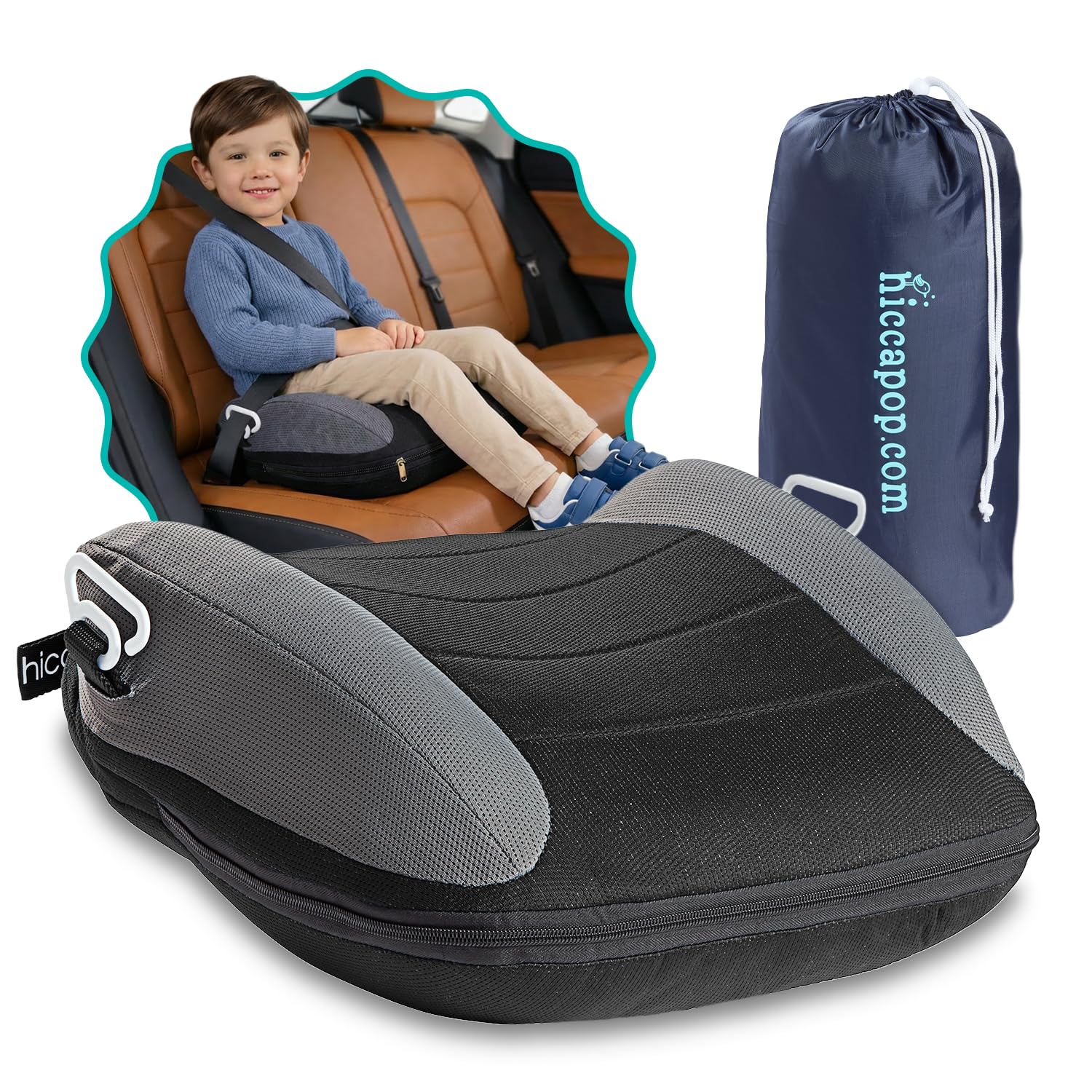
We recommend this for travelers who need a light, packable booster for short trips and rental cars because it packs small and inflates fast.
Pros
- Packs down tiny and fits in carry-ons.
- Inflates in under 20 seconds with just a few breaths.
- Narrow design lets three fit across some back seats.
Cons
- Not a full harness seat—best for older kids who already fit boosters.
- Foam bladder feels soft; it’s not as rigid as a hard booster.
- Seat belt routing takes practice to get snug.
We used the UberBoost on a weekend trip and liked how fast it inflated and how little room it took in our luggage. It made taxi rides and rental cars easy since we could pull it out, blow it up, and buckle the belt without wrestling with a heavy seat.
The booster felt cushy and comfortable on short rides, and the non-skid base held steady on leather and cloth seats. We noticed the lap belt lay across the right spot once we clipped the positioning guides, but it took a few tries to get it tight and correctly aligned.
This is a solid travel backup if you need something lightweight that meets U.S. safety standards for boosters. We wouldn’t rely on it for long road trips or for kids who need a five-point harness, but for flights, taxis, and quick rentals it worked well and saved us space.
Diono Radian 3R (Gray Slate)

We recommend the Radian 3R if you want one FAA-approved seat that lasts years, fits three across, and feels solid on planes and in cars.
Pros
- Very slim — fits three across most vehicles and tight airplane rows.
- Sturdy steel frame gives real confidence during travel.
- Folds for carrying and has removable, washable covers.
Cons
- Heavy to lift through airports and up plane aisles.
- Bulk still takes airplane seat space; not ideal for very small laps.
- Installation on some aircraft seats can be fiddly for first-timers.
We used the Radian 3R on a recent flight and on several road trips. Buckling our toddler in felt secure—the steel shell and snug harness did not wiggle when moving through the aisle. The pad material stayed comfortable for naps without getting sweaty on longer rides.
Carrying the seat through the airport showed the weight. The fold helps, but we still preferred the airport cart for heavy bags. Once installed on the plane, it sat solidly and the slim profile made the neighboring armrests usable.
Setting it up in different cars proved its best feature: three-across worked in our mid-size SUV and a smaller sedan without crowding the middle passenger. We appreciated the easy-to-remove cover after a messy snack; cleanup was quick.
mifold Hifold Booster — Racing Red

We recommend this booster if you need a very compact, highly adjustable travel seat that still gives a proper seatbelt fit.
Pros
- Extremely portable and folds small for carry-on or trunk storage
- Many fit options let us tune belt height and width as our child grows
- Lightweight yet feels sturdy in use
Cons
- Narrower than full-size boosters, so some kids feel tight on long flights
- Foam surface can get warm on hot days or long car rides
- Takes a little time to learn all the adjustment steps
We used this booster across a few flights and found the folding system really handy. It fit into a small carry bag and slid under an airplane seat without blocking our feet.
Adjusting the head and seat width gave a noticeably better belt line than a simple backless booster. We liked that the belt sat across the shoulder correctly when tightened.
On the downside, our bigger child said it felt snug on a three-hour trip. The foam is light and protective, but it lacks the plush padding of larger high-back seats.
Overall, this is a strong travel option when you need to save space and still keep belt fit right. If you often pack light or use multiple cars, the mifold Hifold makes traveling with a booster much easier.
BubbleBum Inflatable Booster
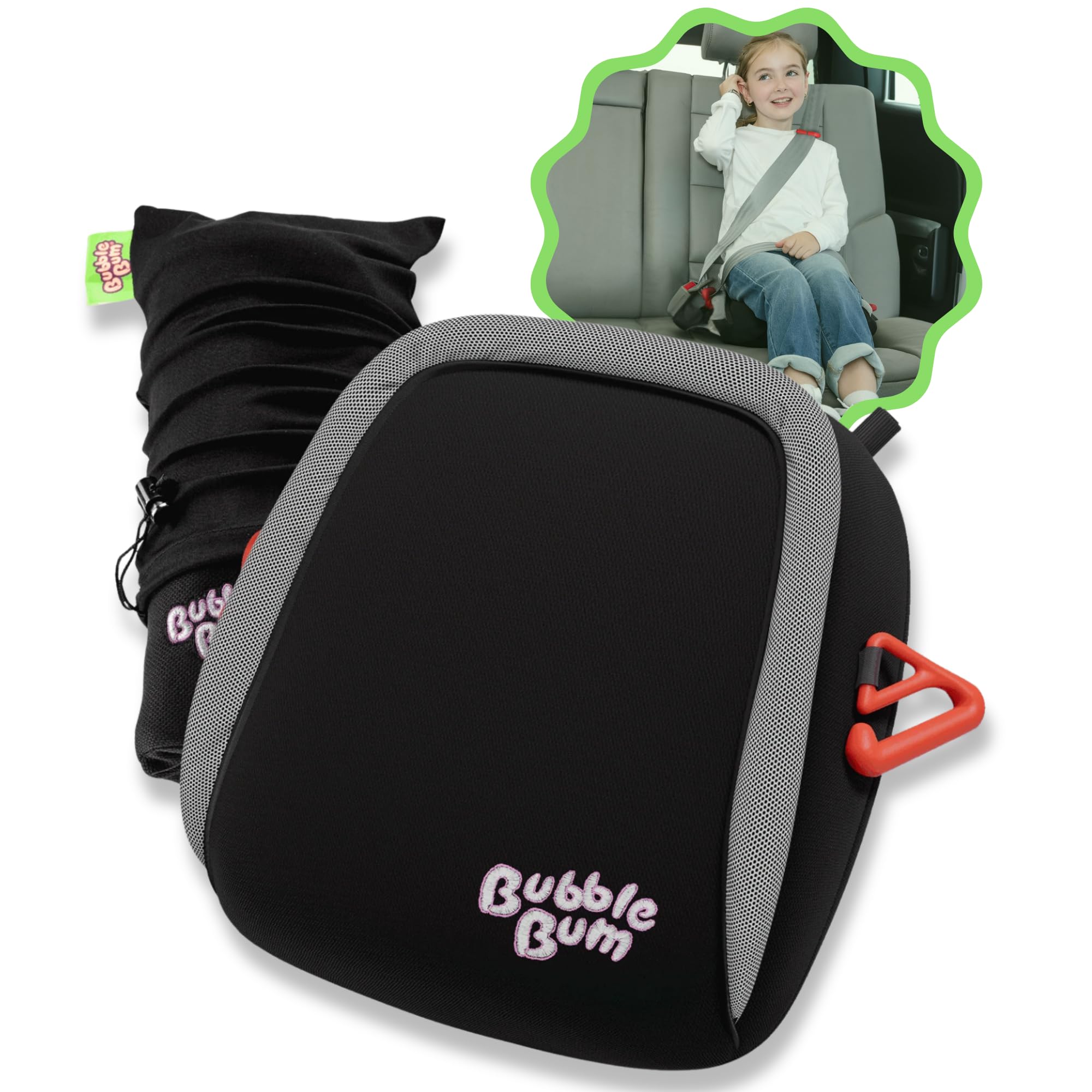
We recommend this if you need a truly travel-ready booster that saves space without cutting safety corners.
Pros
- Packs down tiny and fits in a suitcase or backpack.
- Feels soft and comfy for long car rides.
- Independently crash tested and meets US safety standards.
Cons
- Needs inflation and can lose air after heavy use.
- Backless design offers less support than high-back seats.
- Not ideal for children under the stated weight/height limits.
We used the BubbleBum on a week of flights, rental cars, and rideshares. It slid into my day bag and carried easily through airports. Setting it up in a rental was quick; the seat belt routed normally and our child seemed pleased with the softer surface.
On highway stretches the cushion stayed comfortable and cut down on complaining. After a few days it needed a little top-up air, which was not hard, but it reminded us to check inflation before long trips. Folding it back down saved a lot of trunk space compared with rigid boosters we’ve traveled with.
This booster won’t replace a high-back car seat for younger or smaller kids, but for school-age children who meet the limits it blends safety with real convenience. If you want a lightweight, packable booster for travel, this one delivered in our hands-on use.
Zhtangrui Car Seat Dolly
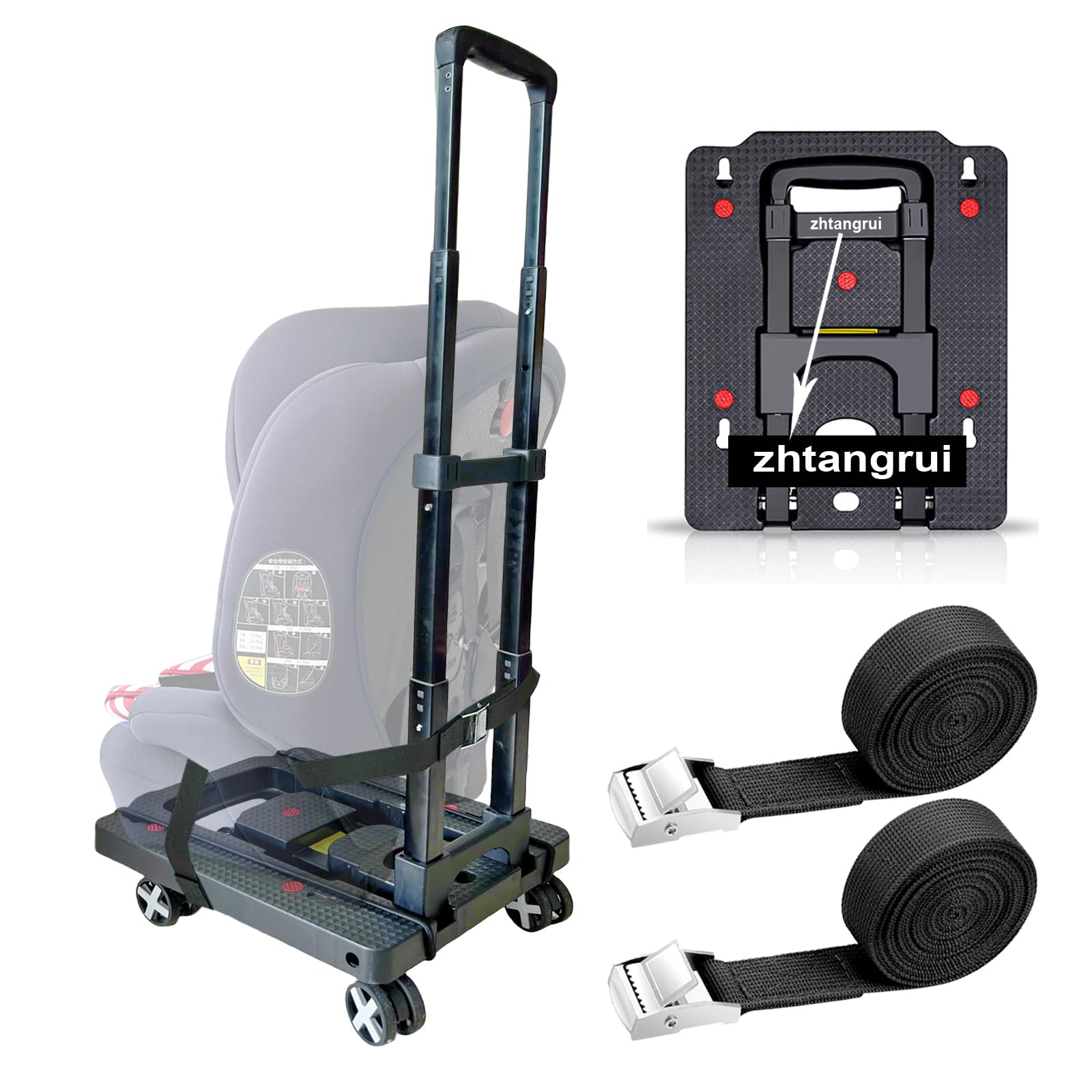
We recommend this dolly if you want to roll a compatible car seat through airports instead of carrying it, because it really cuts down on arm strain.
Pros
- Folds small and feels light to lift into luggage.
- Rolls smoothly on solid wheels across terminals.
- Straps and ratchets hold the seat steady when set up correctly.
Cons
- Only fits car seats with a flat bottom and certain widths.
- Requires careful use of both ratchet straps every time.
- Can be awkward to detach from the seat in tight aisles.
We used this dolly on a multi-leg trip and appreciated how easy it was to wheel a heavy seat through long terminals. The aluminum frame felt sturdy yet light, and unfolding took less than a minute. The four wheels tracked well over tile and carpet.
Strapping a car seat in takes attention. We followed the instructions and used both ratchet straps; once tightened, the seat stayed put without wobble. If the car seat base isn’t flat or is too wide, it simply won’t sit right, so measure first.
Putting the dolly into the plane requires practice. We found it best to detach the car seat before boarding to avoid blocking the aisle. For everyday use, it also double-serves as a small hand truck for groceries or boxes, which made it more useful than a single-purpose travel tool.
Doona Car Seat & Stroller (Nitro Black)
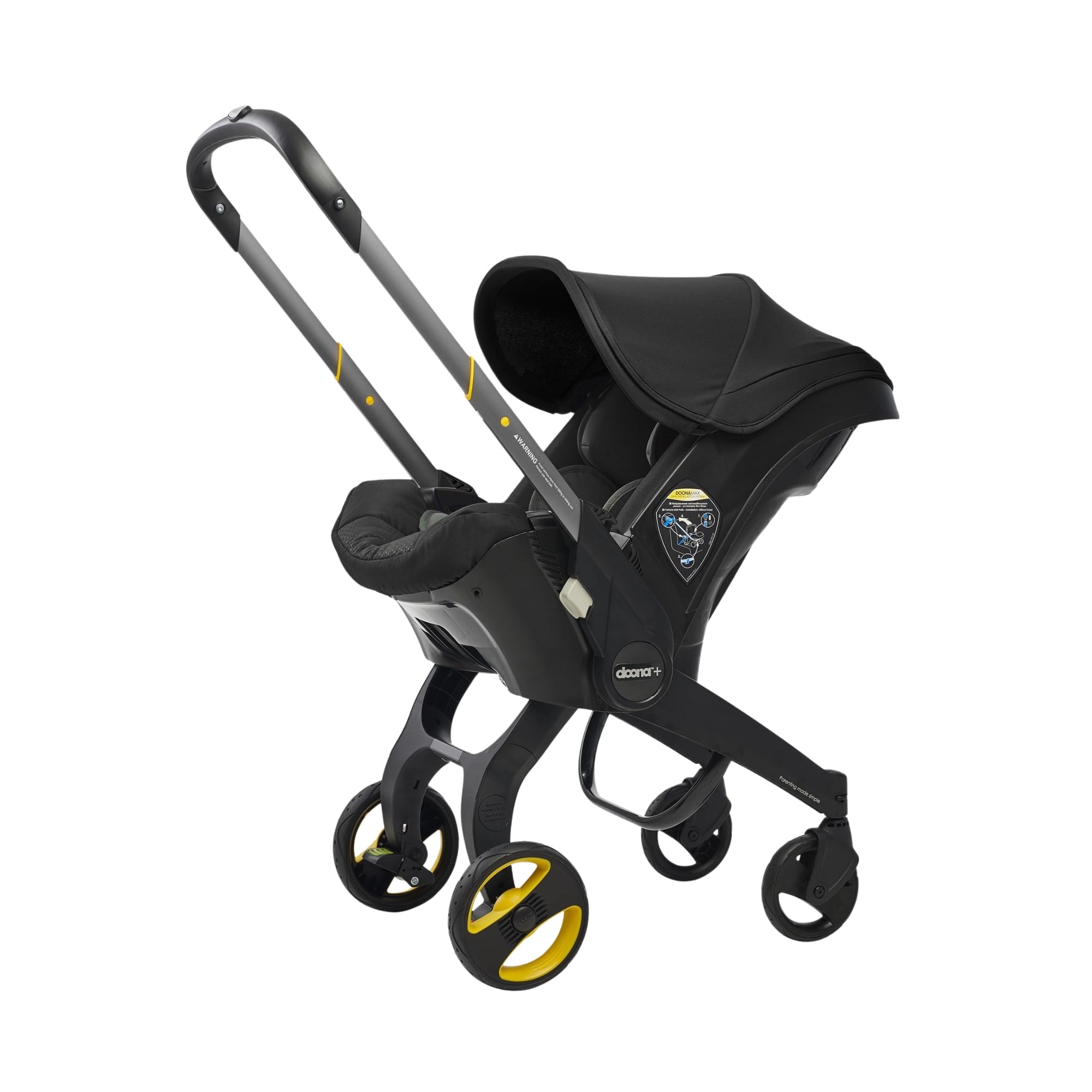
We recommend this if you want a single device that turns into a stroller quickly and saves space when flying.
Pros
- Converts from car seat to stroller in seconds without waking a sleeping baby.
- FAA approved and easy to use through airport routines.
- Solid safety feel with side impact protection and anti-rebound bar.
Cons
- Heavier than a typical infant car seat to carry through terminals.
- Folded size can be bulky for small overhead bins on some planes.
- Limited to rear-facing use only, so you’ll outgrow it sooner.
We used the Doona on a recent trip and liked how fast it popped into a stroller. Moving from airplane aisle to curb felt smooth because we didn’t have to wrestle with a separate stroller and car seat. That single-click transform saved us time and kept our kid asleep.
Installation in the car and on the plane felt straightforward. The one-click latch and base gave us confidence, and the built-in handle made it easy to carry short distances. Expect to lift a bit more than a normal infant seat when navigating stairs or long walks.
At the gate, the Doona’s bulk was the only real downside. It fit many overhead bins, but on a smaller plane we had to gate-check it. The rear-facing limit means we had to plan when we’d need the next-stage seat. Overall, we found it ideal for parents who want a no-fuss airport workflow and are willing to accept extra weight for that convenience.
Buying Guide
We focus on safety, fit, and ease of use when choosing a car seat for airplane travel. Pick a seat that meets federal safety standards and has clear labeling for aircraft use.
We check size and weight next. Measure the airplane seat dimensions and compare them to the car seat width and depth. Lighter, compact seats make boarding and carrying easier.
We look for installation options that match the plane. Seats that use the aircraft seat belt or have FAA-approved harnesses work best. Simple, intuitive buckles reduce stress during use.
We consider comfort for the child. Padded head support, breathable fabric, and adjustable recline help on long flights. Removable covers that wash easily are practical.
We value durability and portability. Sturdy materials and reinforced stitching extend the life of the seat. Built-in carry handles or travel bags make transport easier.
We prioritize clear instructions and visible labels. Instruction manuals should explain aircraft installation plainly. Labels that show orientation and belt paths speed up setup.
We check additional features that matter to us. Look for harness adjustability, a secure chest clip, and anti-rebound protection where applicable. Avoid extra features that add bulk without clear benefit.
We recommend testing the fit before travel when possible. Try the seat in a similar-sized car or the airline gate area. This helps confirm fit and builds confidence for the trip.
Editor’s Choice
We picked the Clek Liing as our top airplane car seat for safety, ease, and comfort. It fits most airline seats and installs with a seat belt or its rigid LATCH, so traveling families get flexibility.
The Liing uses a deep side shell and energy-absorbing foam to reduce impact forces. We like the adjustable headrest and breathable fabric, which help on long flights.
Pros:
- FAA-approved for use on planes.
- Easy installation with clear belt paths.
- Compact design fits many airplane seats.
Cons:
- Heavier than some lightweight travel seats.
- Higher price compared with basic models.
We tested harness adjustability and found it fast and simple. The removable cover cleans easily, which matters after spills and snacks.
We recommend pairing the seat with a soft travel bag or gate check to protect it without adding too much bulk. Bring the instruction manual and your child’s boarding pass to speed up gate checks and carry-on handling.
Conclusion
We picked car seats that balance safety, comfort, and ease of use for flying. Each option fits different budgets and travel styles, so choose what works best for your child and trip.
We favor seats certified for aircraft use or that install easily with a lap belt. Those features reduce stress at the gate and give a more secure ride during turbulence.
We recommend checking airline rules and measuring your airplane seat before travel. Carry the seat’s manual and any certification labels to avoid last-minute issues.
We suggest trying the seat in your car first if possible. This helps us confirm fit, practice installations, and identify any comfort issues before a flight.
Key reminders:
- Prioritize FAA or local aviation-approved seats.
- Check weight and height limits for your child.
- Confirm airline policies and seat dimensions.
We aim to make flying safer and simpler for families. Choose a seat that keeps your child secure and makes travel easier for all of us.
FAQS
Do airlines allow car seats on planes?
We check airline policies before travel. Most U.S. and international airlines allow FAA-approved car seats for children with a purchased seat.
How do we know if a car seat is FAA-approved?
Look for a sticker or label that says “This restraint is certified for use in motor vehicles and aircraft.”
If you don’t see it, contact the manufacturer.
Which car seat type works best on a plane?
Convertible and combination seats with a narrow base often fit airplane seats best.
Infant carriers can work, but only if you secure them with the aircraft seat belt and they fit the aircraft seat.
Can we use a car seat in a window, middle, or aisle seat?
We prefer window seats to avoid blocking the aisle and to keep the seatbelt path clear.
Pay attention to airplane seat width and armrest shape.
How should we install the car seat on the plane?
Use the airplane seat belt to secure the car seat, following the manufacturer’s instructions.
If possible, use the LATCH system only when the airline allows it; many require the aircraft seat belt instead.
Can a car seat be used for a lap infant?
No. A lap infant must be secured in an approved child restraint to use a car seat on board.
For a lap child, follow airline rules and consider buying a separate ticket for the car seat.
What if the car seat doesn’t fit the plane seat?
We test fit whenever possible before travel.
If it doesn’t fit, we use an alternative child restraint approved for aircraft or request help from the airline.
