
What Is Lci on Bmw E90?

The LCI (Life Cycle Impulse) on a BMW E90 refers to the significant mid-life facelift and update package BMW introduced for the 2009 model year. These changes encompassed revised exterior styling, upgraded interior materials and technology, and subtle mechanical refinements. Recognizing an LCI E90 is crucial for used car buyers seeking the most polished and feature-rich version of this iconic 3 Series.
Key Takeaways
- LCI Stands for Life Cycle Impulse: It’s BMW’s term for a major mid-life update to a vehicle model, not a full redesign, meant to keep it competitive and fresh.
- E90 LCI Occurred for 2009-2012 Model Years: The update arrived in September 2008 for the 2009 model year, affecting all E90 sedan, E91 wagon, E92 coupe, and E93 convertible variants.
- Visual Changes Were Most Noticeable: The LCI brought new headlights, bumpers, tail lights, and side markers, creating a more aggressive and modern look compared to the pre-2009 models.
- Interior Upgrades Focused on Quality and Tech: BMW improved materials, redesigned the iDrive controller, added more standard features, and refined switchgear for a more premium feel.
- Mechanical Changes Were Evolutionary: Updates included engine tuning for efficiency and power, suspension tweaks, and the introduction of technologies like electric power steering on some models.
- Identification is Key: You can spot an LCI by its distinctive headlight shape, tail light design, and by checking the vehicle’s production date or VIN for a build date after September 2008.
- LCI Models Are Generally More Desirable: For the used E90 market, LCI versions often command a slight premium due to their updated styling, improved interior, and resolved early-production quirks.
📑 Table of Contents
- What Does “LCI” Mean on a BMW E90?
- The Timeline: When Did the E90 LCI Arrive?
- Spot the Difference: Exterior Styling Changes
- Cabin Upgrades: A More Premium Experience
- Under the Skin: Mechanical and Engineering Updates
- How to Identify an LCI E90: A Buyer’s Checklist
- Ownership: Should You Buy an LCI E90?
- Conclusion: The LCI’s Legacy on the E90
What Does “LCI” Mean on a BMW E90?
If you’ve been browsing listings for a used BMW 3 Series from the E90 generation (produced from 2006 to 2013), you’ve undoubtedly come across the term “LCI.” It’s a crucial piece of jargon that significantly impacts a car’s value, features, and even its driving character. But what does LCI actually mean, and why is it so important for the E90?
LCI is BMW’s internal acronym for Life Cycle Impulse. Think of it as a comprehensive mid-life makeover. Car manufacturers design a vehicle to last about 5-7 years before a complete, ground-up redesign. To keep the model competitive and appealing halfway through its life, they inject it with a major update. This isn’t just a new paint color or wheel option; an LCI typically involves significant changes to the exterior styling, interior design, technology, and sometimes the powertrain or chassis. For the E90, the LCI represents the single biggest evolution of the model, separating the early “pre-LCI” cars (2006-2008) from the refined “LCI” models (2009-2012). Understanding this split is the first step in becoming an informed E90 buyer or enthusiast.
The Philosophy Behind a Life Cycle Impulse
Why not just design it perfectly the first time? The automotive industry moves incredibly fast. A car launched in 2006 would be competing against 2009 models from rivals that have newer technology, more efficient engines, and fresher styling. An LCI allows BMW to incorporate years of customer feedback, technological advancements, and changing design trends without the immense cost of an all-new platform. It’s a strategic refresh to extend the model’s relevance, boost sales, and address any early production issues. For the E90, which is widely regarded as one of the best-driving 3 Series ever, the LCI was about sharpening an already excellent recipe.
The Timeline: When Did the E90 LCI Arrive?
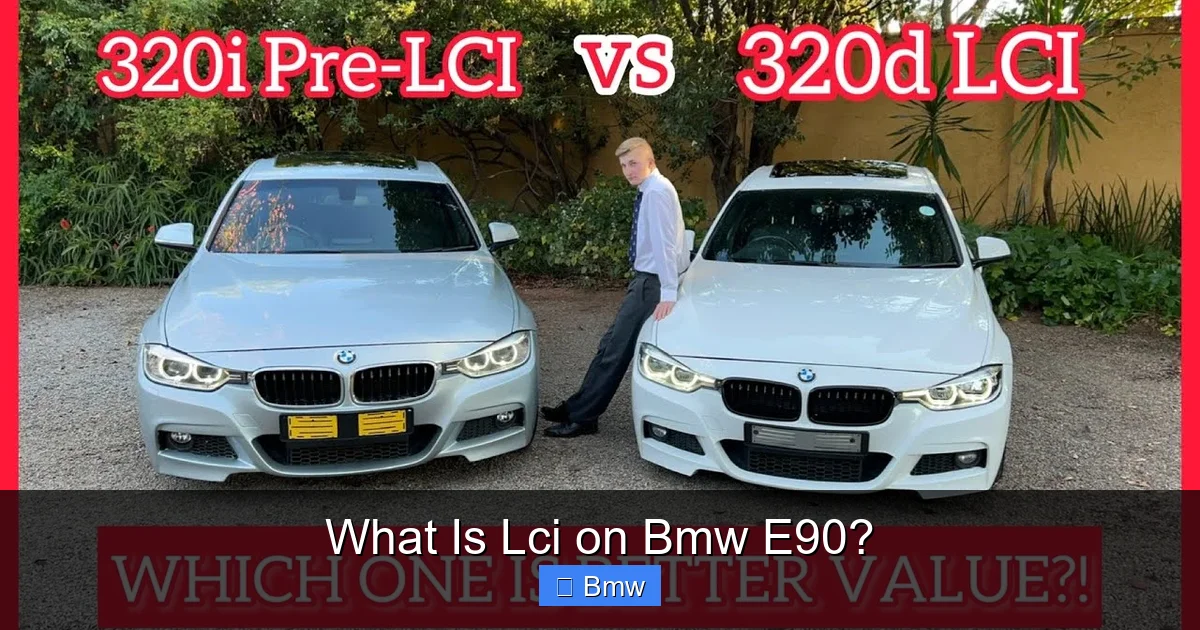
The BMW E90 LCI was officially introduced in September 2008 as 2009 model year vehicles. This means any E90 sedan, E91 wagon, E92 coupe, or E93 convertible with a production date after that month is an LCI model. The update rolled out globally, but there can be minor market-specific variations in features or lighting regulations. The LCI models then continued in production until the end of the E90’s life cycle in early 2012 (for the 2012 model year in North America), when they were replaced by the new F30 generation 3 Series.
Visual guide about What Is Lci on Bmw E90?
Image source: i.ytimg.com
Model Year Breakdown
It’s critical to understand that the model year does not always align with the calendar year of production. A “2009 model year” BMW could have been built in late 2008. Here’s the simple rule: If your E90 was built in or after September 2008, it is an LCI. This generally covers:
- 2009 Model Year: First full year of LCI production.
- 2010 Model Year: Continued LCI with minor updates.
- 2011 Model Year: Further refinements, often with more standard tech.
- 2012 Model Year: Final year for the E90, essentially a carry-over LCI with perhaps some last-minute option package changes.
Pre-LCI models are 2006, 2007, and early 2008 (built before September 2008). The transition period in late 2008 can have some overlap, but the visual and VIN cues are clear.
Spot the Difference: Exterior Styling Changes
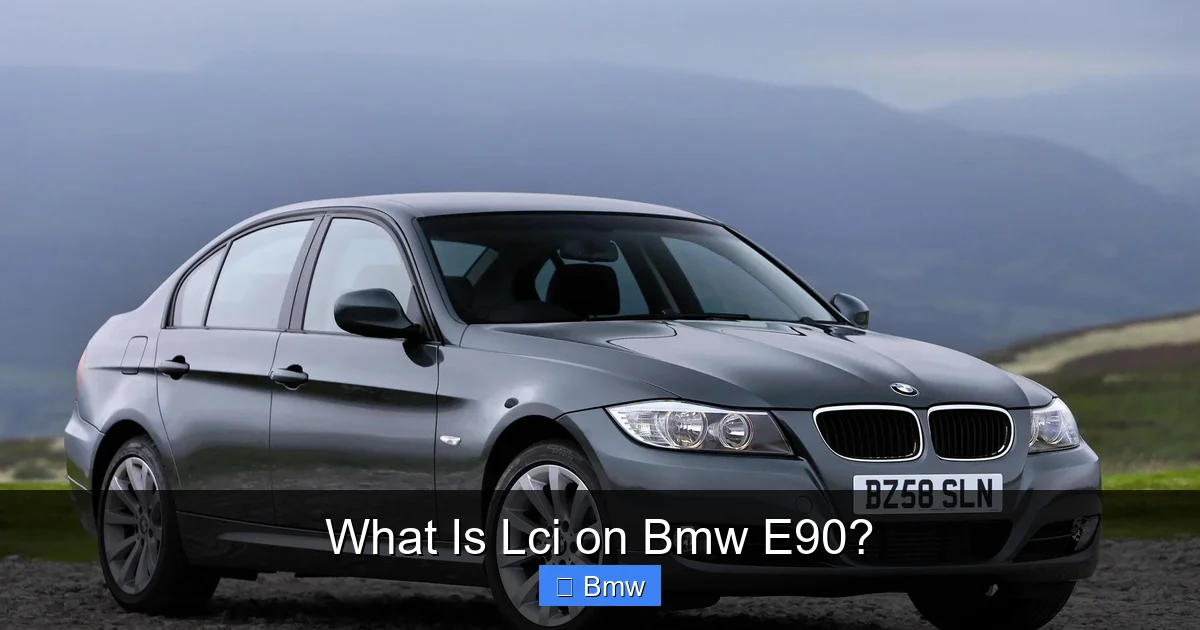
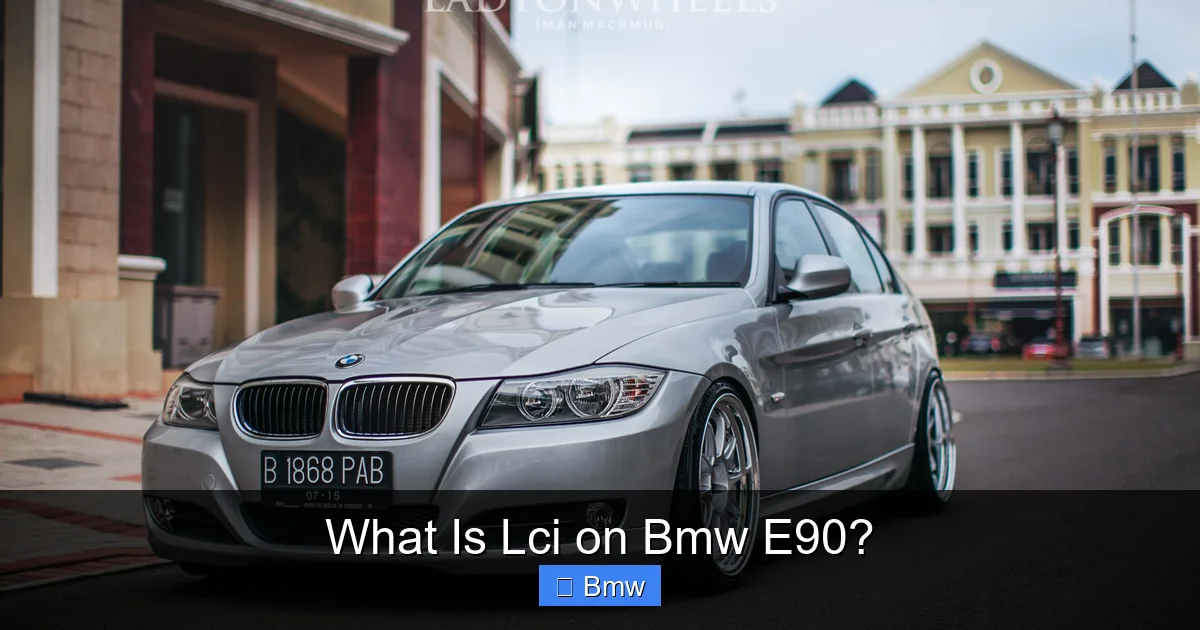
The most immediate and dramatic changes from the LCI are on the outside. BMW’s designers sharpened the E90’s lines, giving it a more athletic and cohesive appearance. If you place a pre-LCI and LCI E90 side-by-side, the differences are striking.
Visual guide about What Is Lci on Bmw E90?
Image source: topcarspecs.com
Front End: A More Aggressive Gaze
The headlights are the biggest giveaway. Pre-LCI E90s have a more rounded, softer headlight shape with a distinctive “bent” lower corner. The LCI headlights are more angular and modern, with a cleaner, sharper profile. The inner corner is less pronounced. Within the headlights, the LCI also saw the introduction of optional LED halo daytime running lights (often called “angel eyes”), which became a signature BMW look. The lower bumper was redesigned too. The pre-LCI has a more complex, busy grille and air dam design, while the LCI version is cleaner, with larger central and side intakes and a more sculpted look, especially on M Sport packages. The kidney grille slats also became slightly more vertical on the LCI.
Rear End: Refined and Modern
The tail lights underwent a complete redesign. Pre-LCI tail lights have a clear, simple design with a horizontal red section and a smaller amber section below. The LCI tail lights are much more intricate, featuring a layered, three-dimensional design with a prominent “L” shape that wraps around the side of the car. They are widely considered a major improvement in aesthetics. The rear bumper was also subtly updated, often with a more integrated diffuser-like element on M Sport cars and cleaner overall lines.
Side Profile and Details
Changes here are more subtle but present. The side marker lights on the front fenders changed from orange/red to a clear/white lens on the LCI. The side skirts were often reshaped. Wheel designs were all-new for the LCI, with many pre-LCI wheels becoming obsolete. The most famous LCI wheel is the “379” style, but numerous other designs were introduced. The door handles were slightly revised for a better grip.
Cabin Upgrades: A More Premium Experience
Step inside an LCI E90, and the improvements in material quality, ergonomics, and technology become immediately apparent. BMW clearly listened to criticisms about the pre-LCI’s sometimes cheap-feeling plastics and dated tech interface.
Visual guide about What Is Lci on Bmw E90?
Image source: topcarspecs.com
Dashboard and Centre Console
The entire dashboard layout was refined. The pre-LCI has a more dated, layered plastic look. The LCI introduced softer-touch materials, better-grain wood or aluminum trim, and a more cohesive design. The air vents were reshaped and given a more metallic finish. The most significant change is the iDrive controller. The pre-LCI uses a large, round knob with a flat top and basic buttons. The LCI controller is more ergonomic, with a flatter, broader profile and a tactile “click” feel that makes menu navigation easier. The buttons around the controller and on the centre console were also redesigned with better labels and backlighting.
Infotainment and Connectivity
The LCI brought the iDrive system from the then-current 7 Series (F01), which was a massive leap. It featured a higher-resolution screen (though still small by today’s standards), faster processing, and a more intuitive menu structure. Crucially, USB connectivity became available (often as an option) for the first time on the E90, allowing for iPod/iPhone integration and music playback from flash drives. Bluetooth audio streaming (A2DP) also became possible, though often requiring a later retrofit or specific option code. Pre-LCI cars lack native USB and have a more primitive Bluetooth system that is phone-only.
Materials and Trim
BMW addressed the “hard plastic” complaints. The LCI featured more soft-touch surfaces on the door panels and dashboard upper sections. The quality of the leather (if equipped) and cloth was improved. Brushed aluminum or “Fineline” wood trim became more common, replacing some of the glossier, less premium-looking woods from the pre-LCI era. Overall, the cabin feels more substantial and less rental-car cheap.
Under the Skin: Mechanical and Engineering Updates
While the visual and interior changes are obvious, the LCI also included a host of less visible but important engineering tweaks. These were evolutionary, not revolutionary, aimed at refining the E90’s already excellent driving dynamics and improving efficiency.
Engine and Drivetrain
The core engine architectures (N46 4-cylinder, N52 6-cylinder) remained largely the same, but BMW tuned them for meeting stricter emissions standards (Euro 5) and often extracting a few extra horsepower and torques. For example, the 328i’s N52 engine saw a small power bump. The biggest change was the introduction of Electric Power Steering (EPS) on some 4-cylinder and later 6-cylinder models in certain markets. This replaced the traditional hydraulic power steering. It improved fuel efficiency (by reducing engine parasitic loss) but was a controversial change among purists who felt it reduced steering feel. The automatic transmission (ZF 6HP) received software updates for smoother shifts, and the manual transmission got a slightly different final drive ratio in some cases.
Suspension and Chassis
The LCI saw minor revisions to the suspension tuning, spring rates, and damper valving. The goal was to further sharpen handling while slightly improving ride comfort over rough surfaces—a difficult balancing act. The front subframe and some bushings were strengthened to improve rigidity. These changes are subtle to the average driver but were appreciated by enthusiasts on track. The LCI also incorporated lessons learned from the M3 (E90) development, sharing some chassis components and know-how.
Efficiency and Emissions
A major driver for the LCI was the impending Euro 5 emissions standards. BMW implemented a host of changes collectively marketed as EfficientDynamics. This included the start-stop system (more seamless in the LCI), brake energy regeneration, and more efficient alternator management. These features became standard or widely available on LCI models, significantly improving real-world fuel economy compared to pre-LCI equivalents. You can learn more about BMW’s broader efficiency technologies, including driving modes like Eco Pro mode, which debuted on later models but shares the same philosophy of maximizing efficiency.
How to Identify an LCI E90: A Buyer’s Checklist
When looking at a used E90, correctly identifying whether it’s an LCI or pre-LCI is non-negotiable. It affects the car’s value, feature set, and even its long-term reliability. Here’s how to be sure.
The Visual Inspection (Easiest Method)
Walk around the car with a pre-LCI reference photo (easily found online). Check in this order:
- Headlights: Are they angular and sharp (LCI) or more rounded with a “bent” lower corner (pre-LCI)? Look for the optional LED halo rings; if present, it’s definitely an LCI or later.
- Tail Lights: Are they complex, 3D units with a prominent “L” shape (LCI) or simpler, flatter units (pre-LCI)?
- Side Markers: Check the front fender turn signal repeater. Clear/white lens = LCI. Orange/red lens = pre-LCI.
- Bumpers: Compare the front grille and air dam shape. The LCI’s are cleaner and more aggressive. The rear bumper on LCI M Sports has a more defined diffuser look.
- Door Handles: LCI handles have a slightly different, more ergonomic shape.
VIN Decoding (The Definitive Method)
The Vehicle Identification Number holds the production date. The 10th character of a BMW VIN is the model year. However, the production date is more important. You can use a free online BMW VIN decoder (like those on BimmerPost or RealOEM) to input the full 17-digit VIN. It will tell you the exact production date. Any date after August 31, 2008, is an LCI. If the decoder shows a production date of September 2008 or later, you have an LCI. This is the most reliable method.
Documentation and Option Codes
The car’s original window sticker (if available) or a BMW service/order printout will list the production date. Additionally, certain option codes are exclusive to or more common on LCIs. For example, the code for LED headlights (5AC) was only available on LCI and later models. However, the visual and VIN check is faster and foolproof.
Ownership: Should You Buy an LCI E90?
For the vast majority of used E90 shoppers, the LCI is the preferred choice. The updates directly address the most common criticisms of the early cars and add desirable modern features.
Pros of an LCI Model
- Better Interior: The upgraded materials and iDrive system make the daily driving experience much more pleasant.
- More Modern Styling: The sharper exterior design has aged better and looks more distinctive.
- Improved Features: USB ports, better Bluetooth, and often more standard convenience features.
- Refined Mechanics: Subtle chassis and engine tweaks improve the already great driving dynamics.
- Generally Fewer “First-Year” Issues: While all E90s are robust, the pre-LCI had some early electrical gremlins and material faults that were largely ironed out by the LCI production run.
Cons and Considerations
- Slight Price Premium: LCI models typically sell for $1,000-$3,000 more than comparable pre-LCI models, reflecting their higher demand and better equipment.
- Electric Power Steering (EPS): Some driving purists prefer the hydraulic steering of pre-LCI models for its slightly more organic feedback. The difference is subtle but noticeable to keen drivers.
- Parts Interchangeability: While many parts are shared, body panels (front/rear bumpers, fenders, headlights, tail lights) are not interchangeable between pre-LCI and LCI. This is important for repairs.
The Verdict
Unless you are on an extremely tight budget and find a exceptional pre-LCI deal, the LCI is almost always the smarter buy. The benefits in interior quality, technology, and styling significantly outweigh the minor cost increase. You are getting a more complete, refined, and satisfying version of a classic car. For an enthusiast, the LCI represents the final and best evolution of the E90 before the switch to the F30 generation.
Conclusion: The LCI’s Legacy on the E90
The Life Cycle Impulse was the final and most significant chapter in the E90’s production story. It transformed an already brilliant driver’s car into a more well-rounded, modern, and desirable machine. The sharper styling, vastly improved interior, and thoughtful engineering updates ensured that the E90 remained competitive right up until its replacement. Today, the LCI models form the core of the E90 enthusiast market. They offer the most satisfying blend of the model’s legendary driving dynamics with the creature comforts and aesthetics that have aged gracefully. When you see “LCI” on an E90 listing, you should recognize it not as just a badge, but as a marker of quality and refinement. It signifies the BMW that learned from the first few years, incorporated the best of its technology, and delivered the 3 Series that many believe hit the absolute peak of its generation. Whether you’re buying, selling, or simply appreciating, understanding the LCI is fundamental to understanding the BMW E90.
Frequently Asked Questions
What does LCI stand for on a BMW?
LCI stands for Life Cycle Impulse. It is BMW’s term for a major mid-life update to a vehicle model, which includes styling, interior, technology, and sometimes mechanical changes to keep the car competitive during its production run.
How can I tell if my E90 is an LCI?
Look for the angular headlights with optional LED halos, the complex “L-shaped” tail lights, and clear side marker lenses. The most definitive method is to decode the VIN; any E90 produced after August 31, 2008, is an LCI model.
Are LCI E90s more reliable than pre-LCI models?
Generally, yes. The LCI update incorporated fixes for many early production issues found in pre-LCI cars, such as certain electrical gremlins and interior material failures. However, all E90s share core mechanical components, so overall reliability is high for both when well-maintained.
Does the E90 LCI have a different engine?
The core engine families (N46 4-cylinder, N52 6-cylinder) are the same, but they were often retuned for the LCI to meet Euro 5 emissions and gain minor power/efficiency increases. The most notable mechanical change was the introduction of Electric Power Steering (EPS) on some models.
Is the LCI upgrade worth the extra cost on a used E90?
For most buyers, absolutely. The improvements in interior quality, iDrive system, exterior styling, and feature set (like USB) are significant and enhance the daily ownership experience. The price premium is usually justified by the more complete and refined package.
Can I swap LCI headlights or tail lights onto a pre-LCI E90?
No. The LCI and pre-LCI body panels and lighting units are not interchangeable. The mounting points, wiring harnesses, and even the shape of the fenders and bumpers are different. You cannot simply bolt LCI lights onto a pre-LCI car without extensive and impractical modification.
