
South Carolina Window Tint Law Explained

South Carolina has strict window tint laws that BMW owners must follow. Front windows must let in over 70% light, rear windows over 50%. Factory tint on many BMWs may not meet these standards, risking tickets. Always verify VLT percentages with a professional to avoid fines and ensure compliance.
Key Takeaways
- VLT Limits Are Strict: South Carolina requires front side windows to allow more than 70% of light (VLT >70%) and rear side/back windows to allow more than 50% (VLT >50%).
- BMW Factory Tint Often Falls Short: Many BMW models come with factory tint around 70% VLT, which does not meet SC’s “more than 70%” requirement for front windows.
- Medical Exemptions Exist: You can apply for a medical exemption for darker tint with proper documentation from a physician, but it’s not automatic.
- Penalties Include Fines and Fix-It Tickets: First-time violations typically result in a fine and a order to remove or replace the tint. Repeat offenses lead to higher fines.
- Enforcement Uses Tint Meters: Police officers use handheld devices to measure VLT during traffic stops if they suspect illegal tint.
- Aftermarket Tint Must Be Certified: Any aftermarket tint installed in South Carolina must be labeled by the manufacturer with its VLT percentage.
- Laws Apply to All Passenger Vehicles: The same VLT limits apply to sedans, SUVs, and trucks in South Carolina, with no special exemptions for vehicle type.
📑 Table of Contents
- South Carolina Window Tint Law Explained: A Complete Guide for BMW Owners
- South Carolina’s Specific VLT Regulations: The Numbers You Need to Know
- BMW-Specific Considerations: Factory Tint and Your Options
- Penalties for Non-Compliance: What Happens If You Get Caught
- How to Ensure Your BMW’s Tint is 100% Legal in South Carolina
- Conclusion: Enjoy Your BMW the Legal Way
South Carolina Window Tint Law Explained: A Complete Guide for BMW Owners
You love your BMW. Its sleek lines, powerful engine, and that signature luxury feel. But let’s be honest—one of the best ways to personalize it and beat the South Carolina heat is with a good window tint. It reduces glare, adds privacy, and keeps the interior cooler. However, before you head to the nearest tint shop, you need to understand South Carolina’s window tint laws. They are specific, strictly enforced, and have important implications for BMW drivers, especially those with factory-tinted glass.
This guide breaks down everything you need to know in plain English. We’ll cover Visible Light Transmission (VLT) percentages, what’s legal for your BMW’s front, rear, and side windows, the penalties for non-compliance, and practical steps to get tinted the right way. Whether you drive a 3 Series, X5, or a classic Z4, this information is crucial to enjoy your tint without legal headaches.
What Exactly is VLT and Why Should You Care?
VLT stands for Visible Light Transmission. It’s a fancy term for the percentage of visible light that passes through your car’s window glass and any tint film. A higher VLT number means a lighter tint (more light gets through). A lower VLT number means a darker tint (less light gets through).
For example, a window with 70% VLT allows 70% of outside light to enter, making it quite light. A window with 20% VLT is very dark, only allowing 20% of light through. South Carolina law sets minimum VLT thresholds—meaning your windows cannot be darker than a certain level. They must let in a certain amount of light. This is a safety measure for law enforcement and to ensure drivers have adequate visibility.
South Carolina’s Specific VLT Regulations: The Numbers You Need to Know
South Carolina’s tint law is found in Section 56-5-2710 of the South Carolina Code of Laws. It’s straightforward but leaves no room for guesswork. Here is the breakdown for standard passenger vehicles, which includes all BMW models.
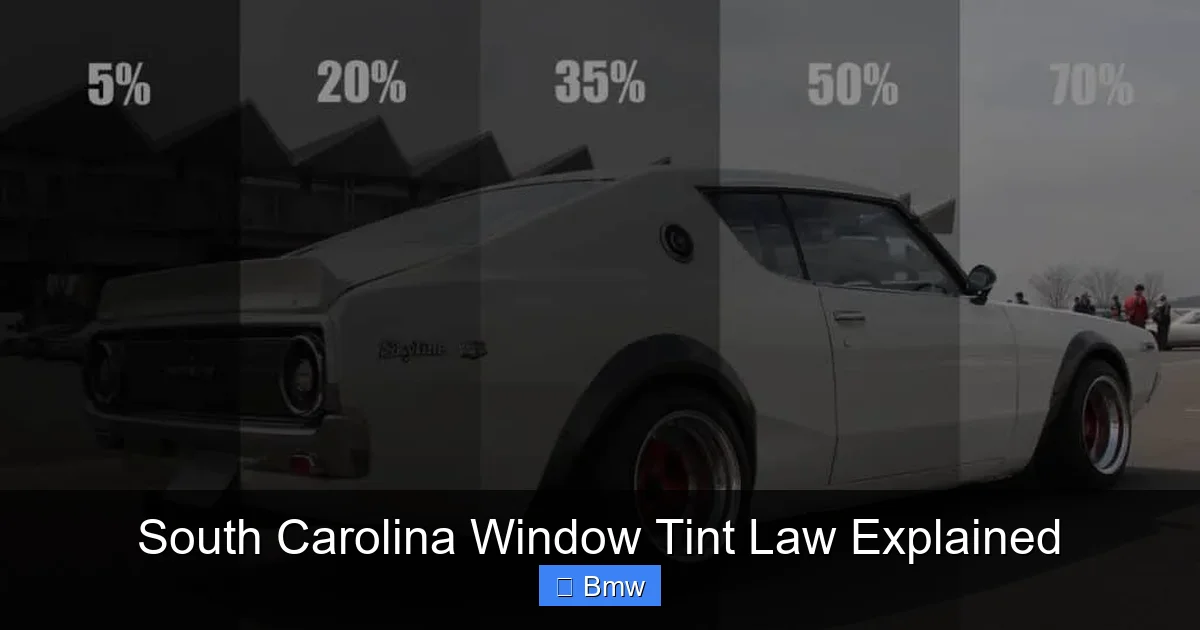
Visual guide about South Carolina Window Tint Law Explained
Image source: low-offset.com
Front Side Windows: The Most Common Mistake
This is where most BMW owners, and really all car owners, get tripped up. South Carolina law mandates that the front side windows (the driver’s and front passenger’s windows) must allow more than 70% of light to pass through. The key word is “more than.” This means your VLT must be 71% or higher. A 70% VLT tint is technically illegal because it does not allow “more than 70%.”
Why is this such a big deal for BMWs? Many modern BMWs, especially from the 2010s onward, come from the factory with a light tint on the front windows. This factory tint is often right around the 70% VLT mark to match the rear glass. While this might seem fine, it doesn’t meet the “over 70%” standard. If you add aftermarket tint to already-tinted factory glass, you compound the darkness, almost guaranteeing a violation. If you own a BMW and are unsure about your factory tint, you should assume it’s at the legal limit and proceed with extreme caution.
Rear Side and Back Windows: More Leeway, But Still Rules
For the rear side windows (behind the driver and passenger) and the rear back window (the trunk or hatch glass), South Carolina law requires them to allow more than 50% of light to pass through (VLT >50%). This is a darker allowance than the front, giving you more options for privacy and heat rejection. Many popular tint levels like 35% or 20% are too dark for the rear in South Carolina. You need a tint that is 51% VLT or lighter for these rear windows.
It’s important to note that this rule applies regardless of whether you have a sedan, SUV, or truck. Unlike some states, South Carolina does not have a different standard for the rear windows of SUVs and vans. The >50% rule is universal for the rear sides and back glass on all passenger vehicles.
The Windshield: Only a Strip at the Top
Tinting the entire windshield is illegal in South Carolina. The only exception is a non-reflective strip at the very top of the windshield. This strip can be any darkness, but state law does not specify an exact height. However, it’s widely accepted and recommended that this strip not extend more than 5 inches down from the top of the windshield or below the manufacturer’s AS-1 line (the line marked on most windshields). Always check with your tint professional to ensure the strip is installed within common legal guidelines.
Reflectivity and Color Restrictions
South Carolina law also regulates the reflectivity of window tint. Your windows cannot be more reflective than a standard, untinted glass window. This means highly mirrored or chrome-style tints are prohibited. Additionally, while the law doesn’t explicitly ban specific colors, tints that are red, yellow, or amber are generally discouraged as they can impair visibility and may be cited under other traffic safety regulations. Stick to neutral grey or bronze tints for safest compliance.
BMW-Specific Considerations: Factory Tint and Your Options
Now, let’s talk specifically about your BMW. The brand is known for offering certain features that intersect directly with tint laws.
Visual guide about South Carolina Window Tint Law Explained
Image source: low-offset.com
Decoding BMW’s Factory Tint
Many BMWs, particularly higher trim levels or packages, include “Privacy Glass” or “Tinted Windows” from the factory. This is not an aftermarket film; it’s glass that has been tinted during manufacturing. The VLT of this factory glass varies by model and year, but it’s commonly in the 70-75% range for front windows and 20-30% range for rear windows.
Here’s the critical issue: BMW’s 70% front factory tint is likely illegal in South Carolina because the state requires >70%. A 70% VLT is not “more than 70%.” For the rear, a factory tint of 20-30% is far darker than the required >50%, making it illegal as well. If you purchase a new or used BMW with factory tint, you must verify its actual VLT. You can do this by using a tint meter (often available at tint shops for a small fee) or by requesting the specific VLT information from a BMW dealer using your Vehicle Identification Number (VIN).
Aftermarket Tinting on Top of Factory Glass
This is a very common and risky practice. Some owners think adding a light aftermarket film to already-tinted factory glass will make it darker. This is true, but it also makes it more illegal. If your factory front glass is at 70% VLT, adding a 20% aftermarket film does not create a 90% VLT window. The layers combine to create a much darker result, often well below 70%. You must treat factory-tinted glass as your starting point. If your factory front glass is at 70% VLT, you cannot add any aftermarket film to it and remain legal in South Carolina. Your only legal options are to 1) leave it as is (and risk a ticket for being at the exact limit), or 2) replace the factory glass with clear glass before applying any aftermarket tint.
For the rear, if your factory glass is at 25% VLT, you absolutely cannot apply any additional film. You would need to replace the rear glass with a lighter option to legally add any aftermarket tint at all.
This is why consulting with a professional, reputable tint shop that knows South Carolina law is non-negotiable for BMW owners. They can measure your factory glass and advise you on the only legal path forward, which might involve glass replacement or simply not tinting certain windows.
Sunroofs and Panoramic Roofs
South Carolina law does not explicitly mention sunroofs. However, because they are considered part of the vehicle’s roof structure and are positioned in front of the rear seat occupants, they are generally interpreted under the same rules as the front side windows. This means if your BMW has a tinted sunroof (either factory or aftermarket), it likely needs to allow more than 70% of light. Many panoramic sunroofs come with a light tint from the factory, which again, may be at the 70% threshold. Be prepared for an officer to cite a very dark sunroof as a violation of the front window rule.
Penalties for Non-Compliance: What Happens If You Get Caught
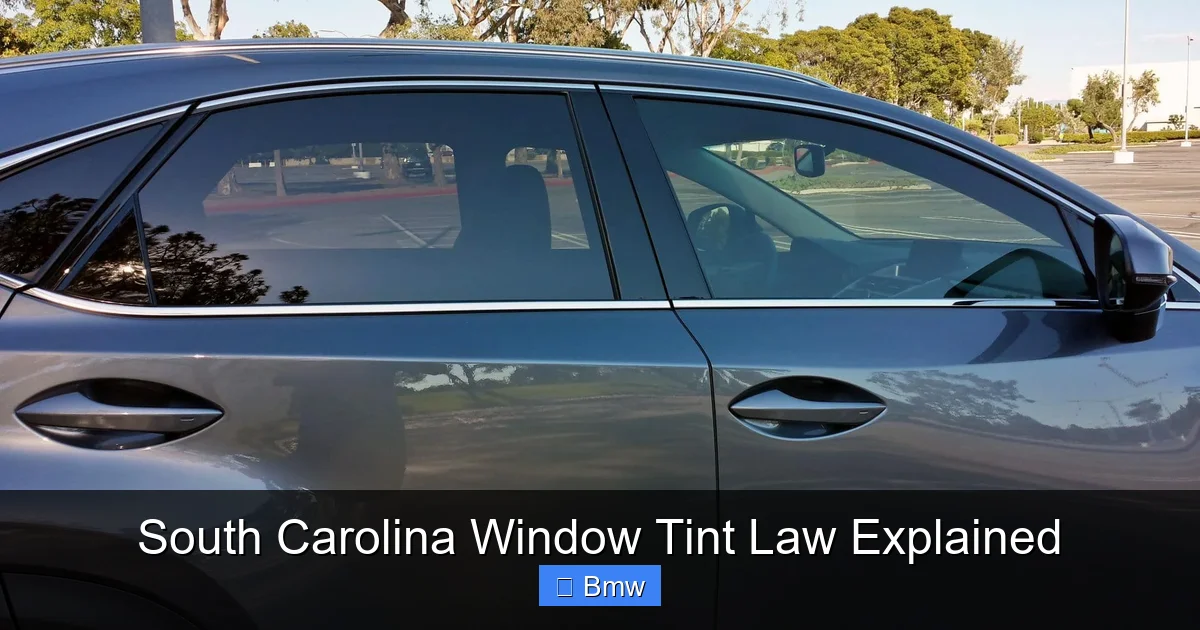
Ignoring South Carolina’s tint laws isn’t worth the risk. Law enforcement officers are trained to spot illegal tint and often carry handheld tint meters to verify their suspicions during a traffic stop.
Visual guide about South Carolina Window Tint Law Explained
Image source: low-offset.com
Types of Citations
If your tint is found to be illegal, you will receive a traffic citation. The most common is a “fix-it” ticket, also known as a corrective violation. This means you are given a specific date by which you must remove the illegal tint or replace it with compliant tint. You will likely need to provide proof of correction (like an invoice from a tint shop) to the court or magistrate. There is usually a small administrative fee associated with this process.
For repeat offenses, or if an officer deems the tint extremely dark and a significant safety hazard, you may receive a straight fine without the fix-it option. Understanding exactly how much a window tint ticket costs in South Carolina is important, as fines can vary by county and judge, but they typically start around $100 and can go higher for subsequent violations. Court costs and fees add to the total.
Additional Consequences
Beyond the fine, having an illegal tint violation on your record can have other ripple effects. While it’s a non-moving violation and usually doesn’t add points to your driver’s license, it can still be seen by your auto insurance company. Multiple violations, even minor ones, can sometimes lead to premium increases. More immediately, if you are pulled over for another reason and have illegal tint, it creates a negative interaction with law enforcement and gives them probable cause to investigate further. For a luxury car like a BMW, you simply don’t want that hassle.
How to Ensure Your BMW’s Tint is 100% Legal in South Carolina
So, you want tint. You want it done right, and you want it legal. Here is your action plan.
Step 1: Know Your Factory Glass VLT
Before you do anything, find out the VLT of your BMW’s original glass. The most reliable way is to have a professional tint shop measure each window with a calibrated tint meter. They can give you a readout. Alternatively, contact a BMW dealer with your VIN; they may be able to provide the factory specifications. Do not guess or rely on what the previous owner told you.
Step 2: Choose a Reputable, Local Tint Shop
This is the most important step. Do not use a mobile “pop-up” tint service from a questionable source. Find an established, well-reviewed shop in your area that specifically mentions knowledge of South Carolina tint laws. A good shop will:
- Measure your factory glass.
- Explain exactly what VLT film they recommend for each window to stay compliant.
- Show you the manufacturer’s roll with the VLT percentage clearly labeled.
- Provide a written certificate of compliance stating the VLT of the film installed on each window.
- Offer a warranty on both the film and the installation.
- Advise you that if your factory glass is too dark, the only legal solution may be to leave certain windows untinted.
Pro Tip: Ask the shop if they are members of the International Window Film Association (IWFA) or similar bodies. This indicates a commitment to industry standards and legal compliance.
Step 3: Understand the Film You’re Buying
Quality matters. Cheap films can fade, bubble, and change color over time, potentially altering their VLT and making you non-compliant years later. A high-quality ceramic or carbon film from a reputable manufacturer (like 3M, LLumar, or SunTek) will maintain its properties and color for a decade or more. Knowing how long car window tint lasts helps you make a long-term investment. Cheaper dyed films might only last 3-5 years before turning purple or becoming brittle, which could lead to a future ticket even if the installation was initially legal.
Step 4: Get It in Writing
Always demand a detailed receipt and a certificate of compliance. The certificate should list your vehicle’s VIN and the exact VLT percentage of the film applied to the windshield (if a strip), front doors, rear doors, and rear glass. This is your legal protection if you are ever pulled over and questioned. An officer may use a tint meter, but if you have documentation from a professional shop stating the film is 71% VLT for the front, it supports your case.
Step 5: Consider the Cost vs. Value
Getting legal, high-quality tint for your BMW is an investment. Expect to pay more than for a basic tint on a commuter car. You’re paying for precision installation on complex curves, premium film, and the shop’s legal expertise. The cost to tint a BMW 3 Series windows, for example, with compliant, ceramic film from a top shop can range from $400 to $800+ depending on the film brand and the number of windows. If your BMW requires glass replacement to become tint-legal, that cost will be significantly higher. Get multiple quotes from reputable shops, but never choose based on price alone if legality is your goal.
Conclusion: Enjoy Your BMW the Legal Way
South Carolina’s window tint law is clear: front windows >70% VLT, rear windows >50% VLT. For BMW owners, the challenge often lies with factory-tinted glass that sits right on the legal edge. Your takeaway is this: do not assume your BMW’s tint is legal. Measure it. Consult experts. If you want aftermarket tint, you may need to replace factory glass first to create a legal base.
The goal is to enhance your driving experience—reduce glare, add comfort, and style your BMW—without the constant worry of a ticket. By following the steps outlined here, working with a knowledgeable professional, and insisting on proper documentation, you can achieve that perfect look and stay firmly on the right side of the law. Your BMW deserves to be both beautiful and compliant.
Frequently Asked Questions
Can I tint my BMW’s front windows in South Carolina if they already have factory tint?
Probably not. Most BMW factory front tint is around 70% VLT, but South Carolina law requires “more than 70%.” Adding any aftermarket film to 70% factory glass will make it darker and illegal. You would need to replace the factory glass with clear glass first to legally apply any film.
What is the penalty for a first-time window tint violation in South Carolina?
You will typically receive a “fix-it” ticket, requiring you to remove or replace the illegal tint by a set date and provide proof to the court. There is a fine, usually starting around $100, plus court costs. Repeat violations can lead to higher fines without the fix-it option.
How can I check if my current BMW window tint is legal?
The only accurate way is to use a professional tint meter. Reputable tint shops will measure your windows for a small fee or sometimes for free. You can also request the factory VLT specifications from a BMW dealer using your VIN, though this is less common for older models.
Are there any medical exemptions for darker window tint in South Carolina?
Yes. South Carolina law allows for a medical exemption for individuals with a condition that requires protection from sunlight, such as lupus or porphyria. You must carry a signed statement from a licensed physician or optometrist in your vehicle at all times. The tint must still meet a minimum of 35% VLT for front windows under the exemption.
Does the rear window tint on my BMW X5 need to be the same darkness as the rear side windows?
No. South Carolina law groups the rear side windows and the rear back window (hatch/trunk glass) together under the same standard: they must all allow more than 50% of light. However, you could legally have 55% VLT on the rear sides and 51% VLT on the back window, as long as both are over 50%.
How often are South Carolina’s window tint laws updated?
South Carolina’s tint laws are codified in state statute and do not change frequently. Major updates are rare and would require legislative action. However, it’s always a good practice to verify the current law before tinting, as interpretations or enforcement priorities can shift. You can check the latest window tint laws by state for the most current overview.
