
How to Jump-start a Bmw E90

Jump-starting a BMW E90 requires extra care due to its sensitive electronics and specific battery location. You must use the designated jump-start terminals under the hood, never connect directly to the trunk battery. Following the correct connection order—positive to positive, negative to a clean engine ground—is critical to prevent costly damage to the car’s computer systems. Always let the donor car run before attempting to start the BMW and drive for at least 30 minutes afterward to recharge the battery fully.
Hey there, fellow BMW enthusiast! There you are, ready to head out, and your trusty E90 gives you nothing but a click or a slow crank. That sinking feeling is all too familiar. A dead battery can happen to anyone, but when it’s your BMW, the stakes feel higher. These cars are famous for their driving pleasure but also notorious for their sensitive electronics and, in the E90’s case, a trunk-mounted battery. Jump-starting it isn’t just about getting power; it’s about doing it correctly to avoid turning a simple inconvenience into a thousands-of-dollars repair bill. This guide will walk you through everything, from locating the right terminals to the exact connection sequence that keeps your car’s brain safe. Let’s get your Beamer running again.
Key Takeaways
- Use Only Designated Terminals: The BMW E90’s battery is in the trunk. You must use the positive (+) and negative (-) jump-start terminals located in the engine bay, not the trunk battery terminals, to avoid triggering voltage spikes.
- Connection Order is Non-Negotiable: Always connect positive to positive first, then negative to an unpainted metal bolt or bracket in the engine bay. Reversing this order can fry the car’s main computer (DME) and other modules.
- BMW Electronics are Sensitive: Modern BMWs like the E90 have complex electrical systems. Using a high-quality jumper box or donor car with a stable voltage is essential; cheap chargers or “cranking” boosts can cause damage.
- Post-Jump Procedure is Crucial: After starting, let both engines run for a few minutes before disconnecting. Drive the E90 for at least 30 minutes to allow the alternator to recharge the battery; a short trip may leave it stranded again.
- Diagnose the Root Cause: A jump-start is a temporary fix. If your battery dies repeatedly, you need to check for a parasitic drain, a failing alternator, or an old battery. A drill battery is not a suitable long-term solution.
- Know When to Call a Pro: If the battery is completely dead, frozen, or the car still won’t start after a correct jump, the issue may be beyond a simple boost. Professional diagnosis is recommended to avoid further damage.
📑 Table of Contents
Understanding Your BMW E90’s Electrical System
Before we even touch a cable, you need to understand why jump-starting an E90 is different from, say, a 1990s Honda Civic. The core reason is the battery’s location and the car’s electrical architecture.
The Trunk-Mounted Battery: Why It Matters
In most traditional cars, the battery sits under the hood. Not in the E90 (2006-2013 3 Series). BMW moved it to the trunk to improve weight distribution and handling. This is great for performance but tricky for jump-starting. You cannot and must not try to access the trunk battery directly for a jump-start. The main positive and negative terminals you need are actually located in the engine bay. These are heavy-duty terminals specifically designed for this purpose. They connect via large-gauge wires directly to the trunk battery. Trying to clamp jumper cables directly onto the trunk battery’s posts risks sending a voltage surge through the car’s sensitive electronics, as the path to ground is different and less protected.
Sensitive Electronics and the “Smart Charge” System
Your E90 is not a dumb machine. It’s controlled by dozens of electronic control units (ECUs), including the DME (Digital Motor Electronics, the engine computer), the IBS (Intelligent Battery Sensor), and a complex CAN bus network. These systems expect a clean, stable voltage. A sudden, dirty surge from a poorly connected jumper cable or a mismatched donor vehicle can send spikes through these circuits. The result? A fried DME, a corrupted transmission control module, or a host of other gremlins that will leave you with a car that’s more expensive to fix than it was to buy. This is why the order of operations and using the correct terminals is not just advice—it’s the law when dealing with a BMW.
Essential Preparation: Tools, Safety, and Location
Being prepared is 90% of the battle. Rushing this step with a flimsy set of cables is a recipe for disaster. Let’s get your kit together.
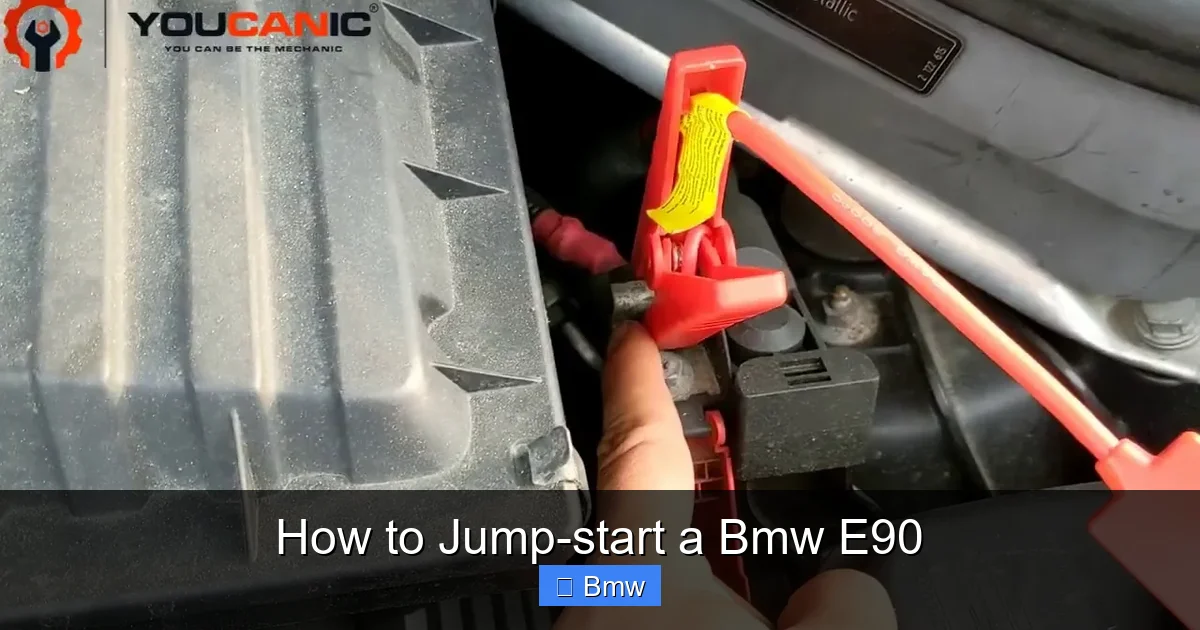
Visual guide about How to Jump-start a Bmw E90
Image source: i.ytimg.com
What You’ll Need: The Right Gear
First, you need a solid set of jumper cables. Not the thin, cheap ones from the discount store. Look for cables that are at least 4-gauge (the lower the number, the thicker the cable) and at least 12 feet long. This thickness ensures enough amperage flows safely. If you frequently face this issue, consider investing in a high-quality lithium-ion jump starter (booster pack). These are compact, reliable, and eliminate the need for a second car. They often have built-in safety features like reverse polarity protection, which is a lifesaver for BMWs. You’ll also need a basic set of wrenches or socket tools, a wire brush for cleaning terminals, and a rag.
Safety First: Gear and Precautions
Before you pop the hood, suit up. Wear safety glasses—always. A battery can vent explosive hydrogen gas, especially if it’s old or damaged. Gloves are a good idea too. Ensure both vehicles are parked, in Park (or Neutral for manuals), and have their parking brakes firmly set. Turn off all accessories: lights, radio, HVAC, heated seats. The donor car should also have everything off. This prevents a massive power draw when you make the final connection. Check the E90’s battery. If it’s cracked, leaking, or swollen, do not attempt a jump-start. A damaged battery can explode. Replace it instead.
Locating the Jump-Start Terminals on Your E90
This is the most important prep step. Pop the hood of your E90. You’re looking for a large, red plastic cover marked with a “+” symbol and a large, black cover or terminal marked with a “-“. They are typically located near the strut towers or on the front of the engine bay, often on the same side as the battery (right side for LHD cars). They are heavy-duty bolted terminals, not little wires. Lift the red cover to expose the positive terminal. The negative terminal is usually a large bolt or stud with a black plastic washer and a “-” symbol, often attached to the engine block or a metal bracket. This is your ground point. Clean any corrosion off these terminals with your wire brush. A good connection is essential. If your E90 has an aftermarket alarm or stereo, be aware of additional wiring; stick to the factory terminals.
Step-by-Step: The Correct Jump-Start Procedure for Your E90
Now, the main event. Follow these steps in exact order. One mistake can be catastrophic.
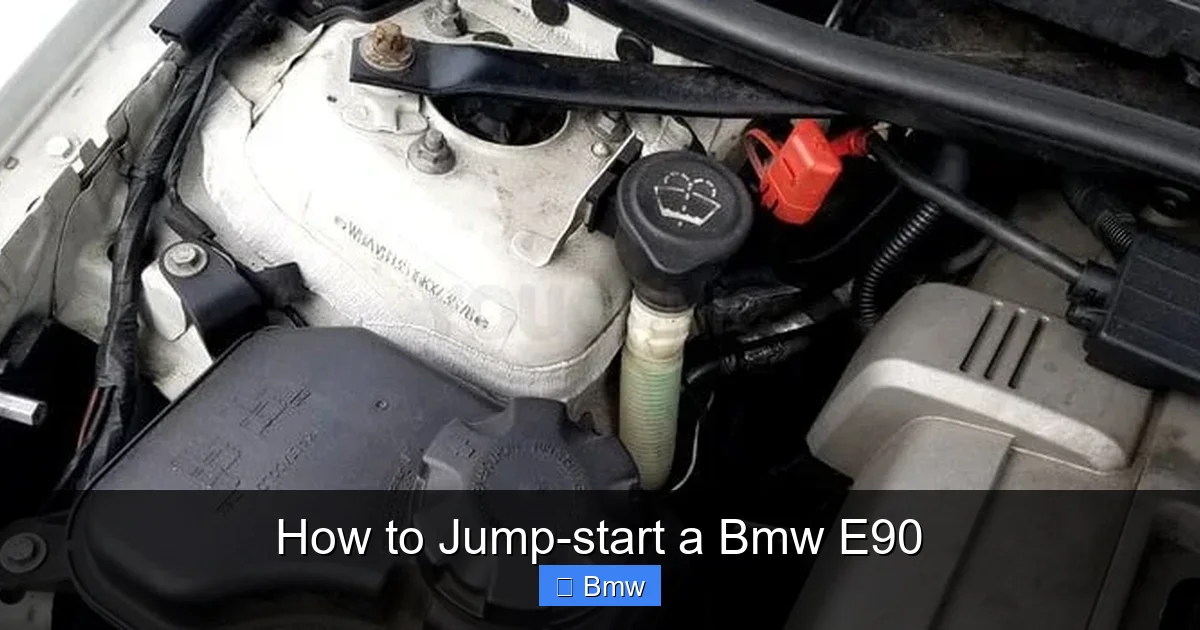
Visual guide about How to Jump-start a Bmw E90
Image source: youcanic.com
Step 1: Position the Vehicles and Prepare
Park the donor car (the good battery) close enough so the cables reach, but ensure the two vehicles do not touch any metal part. Turn off both engines and remove the keys. Open the hoods and secure them. Have your tools and cables ready. On the BMW E90, remove the red plastic cover from the positive jump-start terminal. On the donor car, you can typically clamp directly to its battery terminals (positive first), but if it has a remote terminal in the engine bay, use that for the same safety reason.
Step 2: Connect the Positive Cable (Red)
Take the red positive (+) jumper cable clamp. Attach one end firmly to the exposed positive jump-start terminal in your BMW E90’s engine bay. Then, attach the other red clamp to the positive terminal or post on the donor car’s battery. Ensure both clamps have a solid metal-to-metal connection. They shouldn’t wiggle.
Step 3: Connect the Negative Cable (Black)
Now, take the black negative (-) cable. Attach one end to the negative terminal or post on the donor car’s battery. For the other end, this is the critical BMW-specific step. You must not connect it to the negative terminal in the BMW’s engine bay. Instead, find an unpainted, clean, metal surface on the engine block or a sturdy bracket/bolt in the engine bay. Look for a shiny, non-painted metal part. The large bolt on the strut tower or a bolt on the engine itself is common. This provides a direct, safe ground away from the electronic control units. The connection spark is normal here. Make sure the clamp is secure and won’t slip off when the engine turns over.
Step 4: Start the Donor Car and Charge
Start the donor car’s engine and let it idle at a moderate RPM (around 1500-2000 rpm) for about 3-5 minutes. This allows the donor’s alternator to begin sending a stable charge to your E90’s dead battery, not just a brief surge from the donor’s battery itself. This “trickle” is gentler on the BMW’s systems. You can slightly rev the donor engine during this time to help the charge.
Step 5: Attempt to Start the BMW E90
After a few minutes of charging, get into your BMW. Ensure it’s in Park (or Neutral), foot on the brake (for automatics), and press the start/stop button as you normally would. The engine might crank slowly at first. Be patient. Let it crank for up to 10-15 seconds. If it doesn’t start, wait another minute or two with the donor car running and try again. Do not crank for more than 15 seconds at a time to avoid overheating the starter motor. If it still doesn’t start after a few attempts, the problem is likely beyond a simple dead battery. Stop and proceed to troubleshooting.
Step 6: Disconnect the Cables in Reverse Order
Once your E90 is running smoothly, it’s time to disconnect. This order is just as important as connecting. First, remove the black clamp from the engine ground bolt on the BMW. Then, remove the black clamp from the donor car’s battery. Next, remove the red clamp from the donor car’s battery. Finally, remove the red clamp from the BMW’s positive jump-start terminal. Replace the red plastic cover. Do not let any clamps touch each other or any metal surface on either car during removal.
Post-Jump-Start: What to Do Next
Your E90 is running! Don’t just shut it off and call it a day. What you do now determines whether you’ll be stranded again tomorrow.
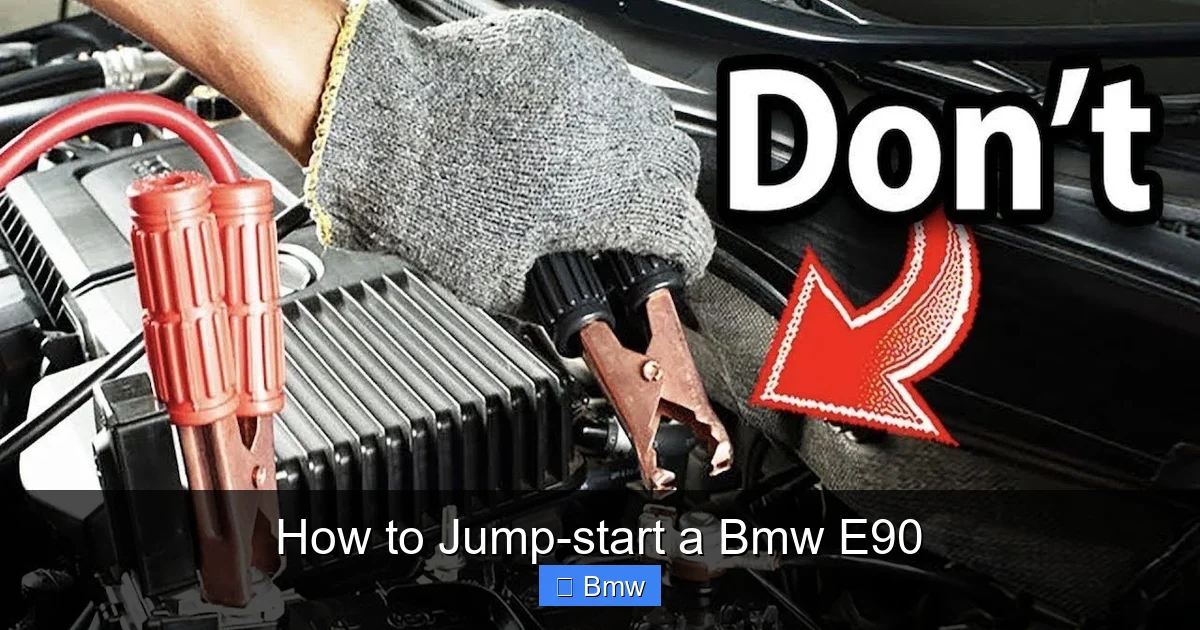
Visual guide about How to Jump-start a Bmw E90
Image source: i.ytimg.com
The Critical Drive Time
You must drive the car for a significant period. The alternator needs time to fully recharge the battery from its deeply discharged state. A 10-minute drive to the store is not enough. Aim for at least 30 minutes of continuous driving, preferably on highways or at steady speeds above 2000 rpm. This rebuilds the battery’s chemical charge. If you just drive across town and park, the battery may not have enough reserve to start again later.
Check for Warning Lights and Systems
As you drive, keep an eye on your instrument cluster. It’s common for multiple warning lights (ABS, DSC, airbag, etc.) to illuminate after a jump-start. This is often because the low voltage caused systems to reset. Usually, these lights will go out after you’ve driven for a while and the systems reboot. However, if they persist, it could indicate a deeper electrical issue. Also, check your radio and navigation system—they often require a code after a power loss.
Diagnose the Root Cause Immediately
A jump-start is a band-aid, not a cure. Your battery died for a reason. Common culprits in an E90 include: an old battery (lifespan is 4-6 years), a failing alternator, a parasitic drain from an aftermarket device or a faulty control module that doesn’t “sleep,” or even a bad ground connection. Use a multimeter to check battery voltage (should be ~12.6V off, ~14.4V with engine running). If the voltage is low with the engine running, the alternator is suspect. If it’s fine but the battery won’t hold a charge, the battery is bad. Consider having the battery and charging system tested at a reputable shop or an auto parts store (most do this for free).
Troubleshooting: When a Jump-Start Doesn’t Work
What if you followed every step perfectly and the E90 still refuses to start? Don’t panic. Let’s diagnose.
“It Clicks but Doesn’t Crank”
This usually means the starter motor is getting some power but not enough to turn the engine. It could be a severely discharged battery (try charging it slowly with a dedicated charger instead of a jump), a bad starter motor, or a poor connection at the jump-start terminals or ground point. Double-check that your ground clamp is on a clean, bare metal surface. A painted or rusty surface creates high resistance. Try wiggling the clamps while someone attempts to start it.
“It Cranks Slowly but Won’t Start”
A slow crank indicates the battery is weak but might have some charge. The battery is likely at the end of its life. A jump may give it just enough to start, but it won’t hold a charge. The solution is a new battery. Before replacing, have the battery load-tested. Also, check for a major parasitic drain. A common E90 issue is a faulty IBS sensor or a module that stays awake, draining the battery overnight. A professional can perform a “parasitic draw test” to find the culprit.
“It Cranks Normally but Still Won’t Start (No Fire)”
If the engine turns over at a normal speed but doesn’t fire, the problem is likely fuel or spark, not the battery. The jump-start gave it enough power to crank, but the underlying issue is elsewhere. This could be a failed fuel pump, a clogged fuel filter, bad spark plugs, or a sensor issue (like a crankshaft position sensor). The jump-start merely revealed the original problem. You’ll need traditional diagnostics.
All Electronics are Dead, Even with Jumper Cables Attached
If connecting the donor car does nothing—no lights, no dash illumination—you may have a complete circuit break. Check your connections again, especially the ground. If that’s fine, the main fuse or fusible link in the E90’s electrical system may be blown. This can happen from a severe short or an incorrect jump-start attempt. This requires professional electrical diagnosis and repair.
Conclusion: Confidence Through Knowledge
Jump-starting your BMW E90 doesn’t have to be a heart-stopping experience. The key takeaway is respect for the car’s sophisticated electronics. By using the dedicated engine bay terminals, following the precise connection order (positive first, negative to ground last), and understanding that this is a temporary fix, you protect your investment and get back on the road safely. Remember, the goal is not just to hear the engine turn over, but to do so without sending a destructive voltage spike through your DME or other control modules. After you’re running, make a plan to diagnose why the battery died in the first place. A healthy charging system and a strong battery are the foundations of a reliable E90. If you’re ever in doubt, calling a professional mobile jump-start service that understands BMWs is a wise and often cost-effective choice. Now, go enjoy that smooth German engineering—you’ve earned it.
Frequently Asked Questions
Can I use any car to jump-start my BMW E90?
Yes, but the donor car should have a similarly sized engine (V6 or larger is ideal) to provide enough amperage. Avoid using a small, compact car with a tiny battery if possible, as it may not supply sufficient cranking power. The most important factor is using a donor car with a healthy, fully charged battery and a running alternator.
What happens if I accidentally connect the cables backwards?
Connecting positive to negative or vice versa is the single biggest risk. It can instantly cause a massive electrical surge, likely frying the main engine computer (DME), the alternator, and various other electronic modules. This results in a very expensive repair, often exceeding the car’s value. Always double-check the terminal markings (+ and -) and cable colors (red for +, black for -) before clamping.
My BMW E90 battery is in the trunk. Can I just connect directly to it?
No, you should not. While you can physically access the trunk battery, the manufacturer-designed jump-start terminals in the engine bay are there for a reason. They provide a safer, more protected path for the jump current. Connecting directly to the trunk battery bypasses this protection and increases the risk of voltage spikes damaging the car’s electronics. Always use the engine bay terminals.
My E90 has a push-button start. Does that change the procedure?
The push-button start system itself does not change the jump-start procedure. You still connect to the engine bay terminals as described. However, with a completely dead battery, the push-button may not power up at all. Once you have a solid connection from the donor vehicle, the button should function normally to engage the starter. The key must be inside the car with the key fob present.
After a jump-start, my dashboard is a Christmas tree of warning lights. Is this normal?
Yes, it’s very common. The low battery voltage causes multiple systems to lose power and memory, triggering warning lights upon startup. As you drive for 20-30 minutes, these systems should reset and the lights will go out one by one. If they persist after a lengthy drive, it may indicate a faulty sensor or module that needs diagnosis, but initial illumination is usually nothing to panic about.
Can I use a portable jump starter (booster pack) on my E90?
Absolutely, and this is often the safest method. A quality lithium-ion booster pack designed for modern vehicles is an excellent tool. Ensure it is fully charged and set to the correct voltage (usually 12V). Connect it the same way: positive clamp to the engine bay positive terminal, negative clamp to a clean engine ground bolt. Follow the pack’s instructions precisely. This method eliminates the risk of damaging the donor car’s alternator and is very convenient.
