How to Jump a Car with a Drill Battery
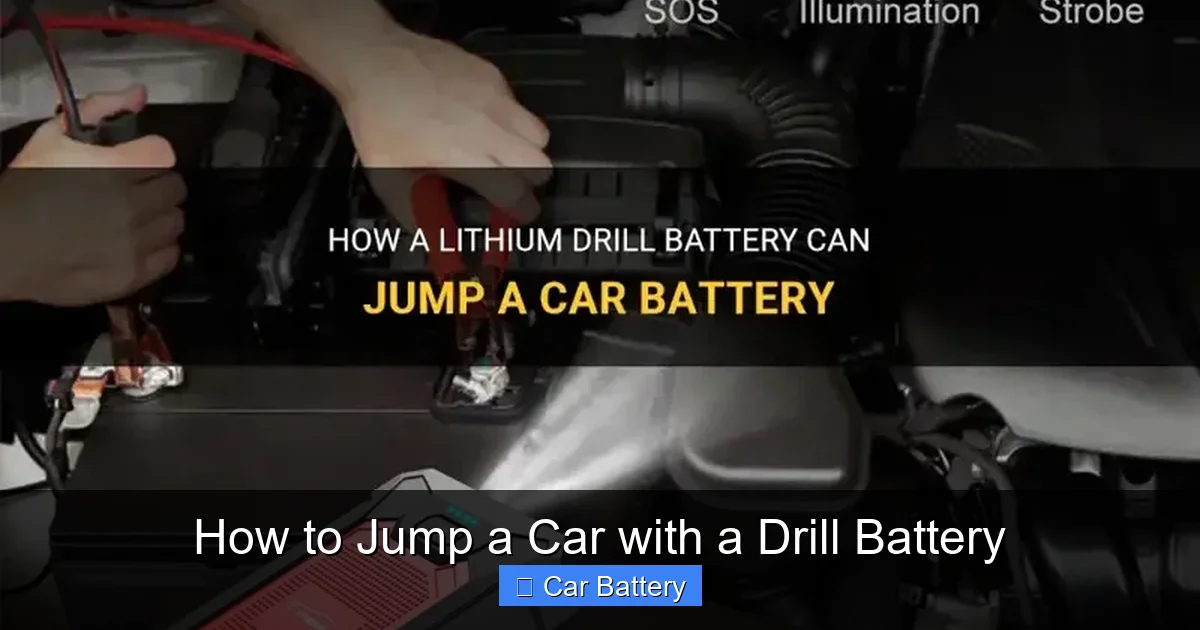
Stranded with a dead car battery and no jumper cables? A fully charged drill battery might save the day. While not ideal, this emergency method can provide enough power to start your engine in a pinch—if done correctly and safely.
In This Article
- 1 Key Takeaways
- 2 📑 Table of Contents
- 3 Introduction: When Life Gives You a Dead Battery
- 4 Why a Drill Battery Can (Sometimes) Jump a Car
- 5 What You’ll Need to Jump a Car with a Drill Battery
- 6 Step-by-Step Guide: How to Jump a Car with a Drill Battery
- 7 Safety Risks and How to Avoid Them
- 8 When This Method Won’t Work (And What to Do Instead)
- 9 Alternative Emergency Jump Methods
- 10 Conclusion: A Clever Trick, Not a Long-Term Fix
- 11 Frequently Asked Questions
Key Takeaways
- Only use high-voltage drill batteries (18V or higher): Lower voltage batteries won’t deliver enough power to crank a car engine.
- Ensure the drill battery is fully charged: A weak battery won’t provide sufficient current to start the vehicle.
- Use proper wiring and connectors: Alligator clips, copper wires, and secure connections are essential for safe power transfer.
- Follow correct polarity (red to positive, black to negative): Reversing the connections can damage electronics or cause sparks.
- This is a last-resort emergency method: It’s not reliable or safe for regular use—always carry proper jumper cables or a portable jump starter.
- Wear safety gear and work in a well-ventilated area: Prevent shocks, sparks, or battery acid exposure during the process.
- Test the connection briefly before cranking: A quick touch can confirm power flow without risking damage.
📑 Table of Contents
- Introduction: When Life Gives You a Dead Battery
- Why a Drill Battery Can (Sometimes) Jump a Car
- What You’ll Need to Jump a Car with a Drill Battery
- Step-by-Step Guide: How to Jump a Car with a Drill Battery
- Safety Risks and How to Avoid Them
- When This Method Won’t Work (And What to Do Instead)
- Alternative Emergency Jump Methods
- Conclusion: A Clever Trick, Not a Long-Term Fix
Introduction: When Life Gives You a Dead Battery
Picture this: You’re running late for work, you hop into your car, turn the key—and nothing. Not even a click. Your heart sinks. The battery is dead. You look around. No other cars in sight. No jumper cables in the trunk. And your phone? Dead too. It’s one of those days.
Now imagine you’ve got a cordless drill in your garage or toolbox. Maybe it’s a DeWalt, Milwaukee, or Ryobi—something with a beefy 18V or 20V lithium-ion battery. Could that little power pack actually help you start your car? Surprisingly, yes—under the right conditions. While it’s not something you’d want to do every day, jumping a car with a drill battery is a clever emergency hack that’s been tested by DIYers and roadside warriors alike.
This guide will walk you through exactly how to do it—safely, effectively, and with minimal risk. We’ll cover what you need, how to connect everything, and why this method works (and when it definitely won’t). Whether you’re prepping for winter, stuck on a remote road, or just curious about unconventional fixes, this is your go-to resource.
Why a Drill Battery Can (Sometimes) Jump a Car
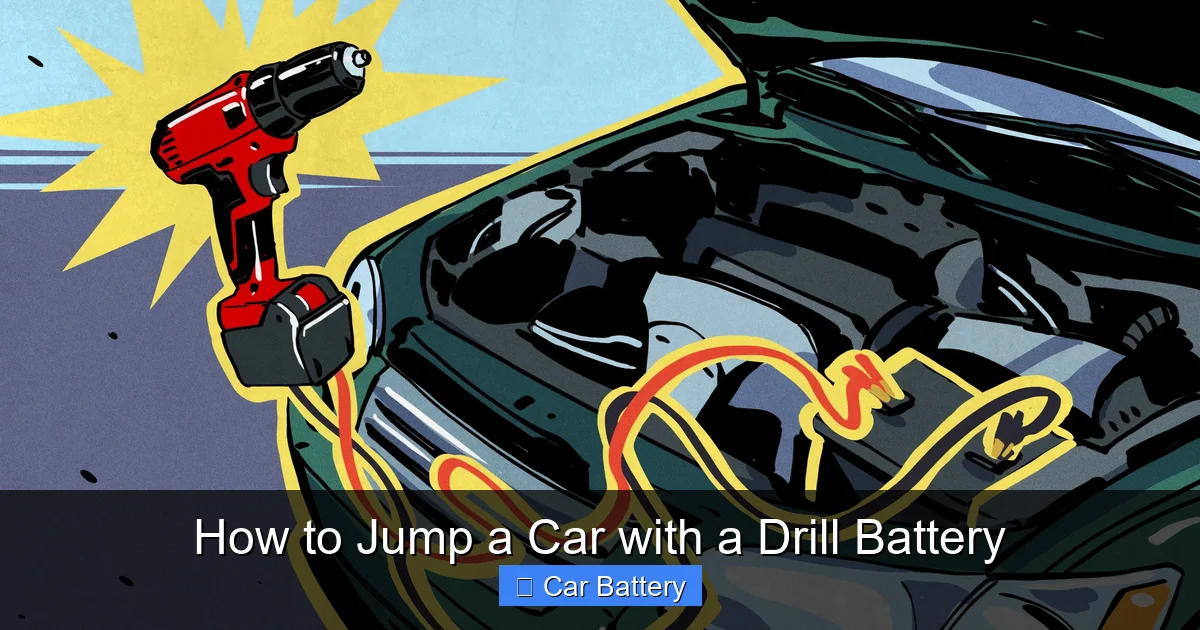
At first glance, it seems impossible. A drill battery is small, lightweight, and designed for powering tools—not starting a 2,000-pound vehicle. But here’s the science behind it: car starters require a burst of high current (measured in amps) for a short time, not sustained power. A fully charged 18V or 20V lithium-ion drill battery can deliver 30–50 amps of peak current—enough to spin a starter motor, especially in smaller engines.
Visual guide about How to Jump a Car with a Drill Battery
Image source: hackaday.com
Understanding Voltage and Current
Car batteries typically run at 12 volts, but they can deliver hundreds of amps when cranking the engine. Drill batteries, on the other hand, operate at higher voltages (18V, 20V, sometimes even 36V in industrial models) but with lower capacity (measured in amp-hours). The key is that voltage must be close enough to the car’s system to allow current flow, and the battery must be able to supply enough amps quickly.
For example, a 20V drill battery with a 5.0Ah rating can theoretically deliver 50 amps for a short burst—plenty to get a small four-cylinder engine turning over. However, larger engines (V6, V8) may need more current than a single drill battery can safely provide. That’s why this method works best for compact cars, motorcycles, or small trucks.
Real-World Success Stories
There are countless forum posts and YouTube videos of people successfully jump-starting cars with drill batteries. One Reddit user shared how he used his Milwaukee M18 battery to start his Honda Civic after a weekend of leaving the headlights on. Another mechanic in rural Montana used a DeWalt 20V pack to get a Ford Ranger running during a snowstorm when no help was available.
These stories aren’t miracles—they’re the result of understanding electrical basics and using the right tools. But they also highlight a critical point: this isn’t a guaranteed fix. It depends on battery condition, engine size, temperature, and how well you set up the connection.
What You’ll Need to Jump a Car with a Drill Battery
Before you attempt this, gather the right tools. Skimping on quality or safety can lead to sparks, damaged electronics, or even injury. Here’s your checklist:
Visual guide about How to Jump a Car with a Drill Battery
Image source: i.ytimg.com
Essential Tools and Materials
- Fully charged drill battery (18V or higher): Lithium-ion is best. NiMH or NiCd may not deliver enough current.
- Heavy-duty copper wire (10–12 gauge): At least 3–4 feet long. Thicker wire reduces resistance and heat buildup.
- Alligator clips (insulated, heavy-duty): One red (positive), one black (negative). Avoid cheap clips that can slip or overheat.
- Wire strippers and electrical tape: To prepare and insulate connections.
- Safety gloves and goggles: Protect against sparks, acid, or accidental shocks.
- Multimeter (optional but recommended): To check battery voltage and confirm polarity.
Optional but Helpful Add-ons
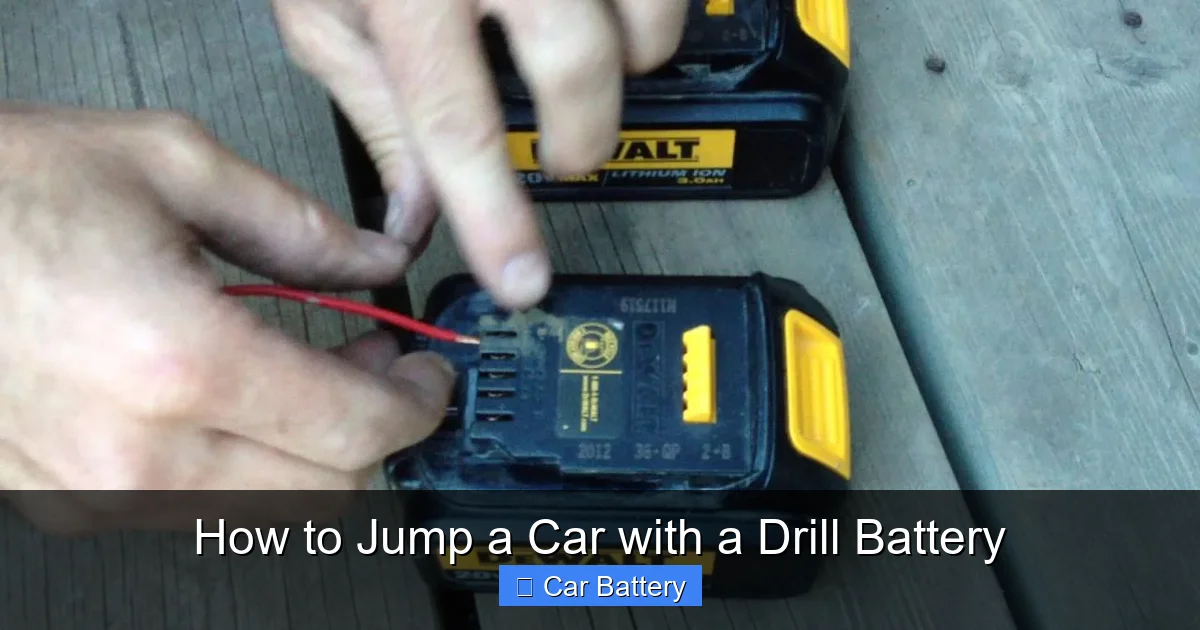
- Battery adapter or connector: Some DIYers solder wires directly to the drill battery terminals, but a proper adapter reduces risk.
- Fused jumper leads: A 30–40 amp inline fuse can protect against short circuits.
- Portable jump starter (as backup): If you’re in a real bind, a small lithium jump pack is safer and more reliable.
Pro tip: If you plan to use this method often (say, for off-grid living or emergency preparedness), consider building a dedicated “drill battery jump kit” with pre-soldered wires and a fused connector. It saves time and reduces the chance of mistakes.
Step-by-Step Guide: How to Jump a Car with a Drill Battery
Now for the main event. Follow these steps carefully. Rushing or skipping safety checks can lead to disaster.
Visual guide about How to Jump a Car with a Drill Battery
Image source: extantpower.com
Step 1: Prepare the Drill Battery
Remove the battery from the drill and inspect it. Look for cracks, swelling, or leaks—these are signs of damage. If the battery feels warm or smells odd, do not use it. Check the voltage with a multimeter. A healthy 20V lithium battery should read between 20–21 volts when fully charged. If it’s below 18V, it likely won’t have enough power.
Next, identify the positive (+) and negative (-) terminals. On most drill batteries, the positive is marked with a red cover or “+” symbol. The negative is usually black or unmarked. Never assume—double-check with your multimeter.
Step 2: Prepare the Wiring
Strip about 1 inch of insulation from both ends of your copper wire. Attach an alligator clip to one end of each wire—red to positive, black to negative. Secure the connections with electrical tape or solder for better conductivity. Make sure no bare wire is exposed where it could touch metal or each other.
If you’re using a fused connector, install a 30–40 amp blade fuse in line with the positive wire. This protects both the drill battery and your car’s electrical system from a short circuit.
Step 3: Connect to the Drill Battery
Carefully attach the alligator clips to the drill battery terminals. Red to positive, black to negative. Press firmly to ensure a solid connection. Avoid touching both clips at the same time—this can cause a short and spark.
If your battery has a proprietary connector (like DeWalt’s or Milwaukee’s), you may need to solder wires directly to the terminals. This requires skill and should only be done if you’re comfortable with basic electronics. Never force a connection.
Step 4: Connect to the Car Battery
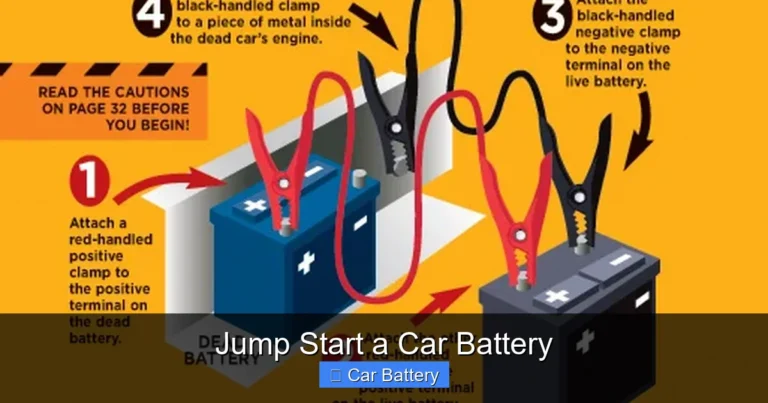
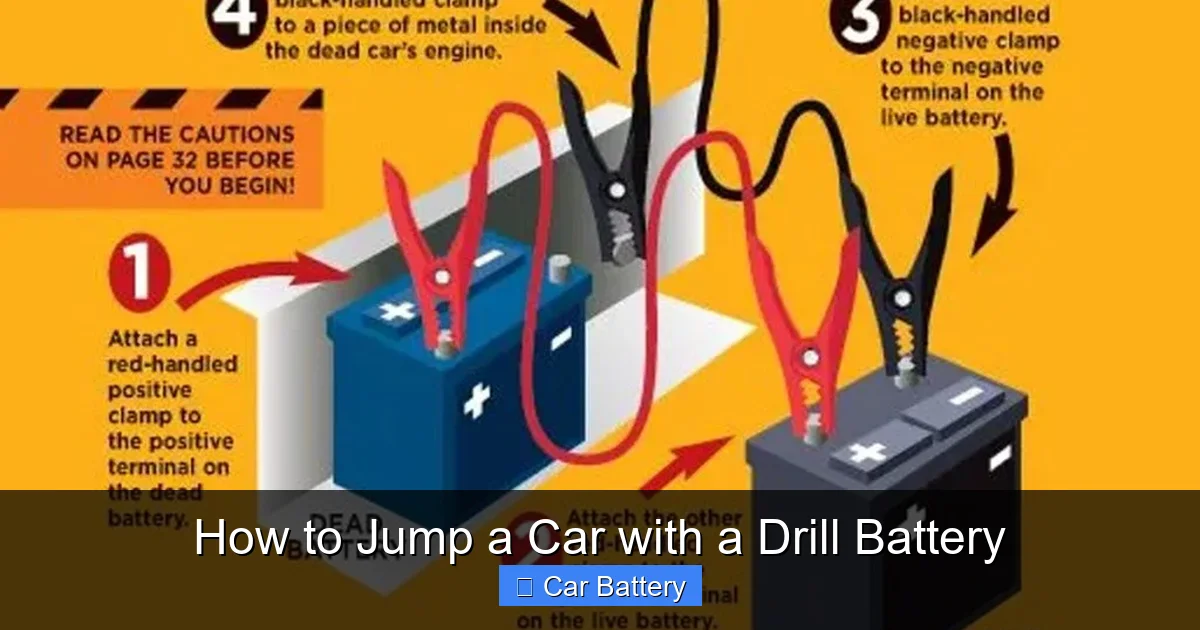
Open the car hood and locate the dead battery. Identify the positive (+) and negative (-) terminals. The positive is usually larger and marked with a “+” or red cover. The negative is smaller and may be black or unmarked.
Attach the red (positive) alligator clip to the positive terminal of the car battery. Then, attach the black (negative) clip to a grounded metal part of the engine block—not the negative battery terminal. This reduces the risk of sparks near the battery, where hydrogen gas can accumulate.
Important: Never connect the negative clip to the negative terminal of the dead battery. This can cause a spark that ignites flammable gases.
Step 5: Test and Start the Engine
Before turning the key, double-check all connections. Make sure nothing is loose or touching metal. Put on your safety gloves and goggles.
Have a helper turn the key to the “start” position while you monitor the connections. You should see the starter motor engage and the engine begin to turn over. If it doesn’t start immediately, wait 10–15 seconds before trying again. Don’t crank for more than 5–7 seconds at a time—overheating can damage the drill battery.
If the engine starts, let it run for 10–15 minutes to recharge the car battery. Then, carefully disconnect the clips in reverse order: negative first, then positive. Remove the drill battery and store it properly.
Step 6: Disconnect and Clean Up
Once the car is running, disconnect the alligator clips starting with the negative (ground) clip, then the positive. Remove the drill battery and inspect it for overheating or damage. Let it cool before recharging.
Store your jump kit in a dry, safe place. Label it clearly so you can find it quickly in an emergency.
Safety Risks and How to Avoid Them
Let’s be clear: jumping a car with a drill battery is risky. It’s not something manufacturers recommend, and it can go wrong in several ways. But with caution, you can minimize the dangers.
Risk 1: Electrical Shock or Short Circuit
High-current batteries can deliver dangerous shocks, especially if wires touch your skin or each other. Always wear insulated gloves and avoid touching metal parts while connecting.
To prevent shorts, keep the alligator clips separated until you’re ready to connect. Use electrical tape to cover any exposed wire.
Risk 2: Battery Damage or Fire
Drill batteries aren’t designed for high-drain automotive use. Forcing too much current can overheat the cells, causing swelling, leakage, or even fire. Never leave the connection unattended.
If the battery gets hot during use, disconnect immediately. Let it cool in a safe, non-flammable area.
Risk 3: Damage to Car Electronics
Modern cars have sensitive electronics that can be fried by voltage spikes or incorrect connections. Always connect to the engine block, not the battery negative terminal, to reduce risk.
If your car has a CAN bus system (most post-2000 models), avoid this method unless absolutely necessary. A portable jump starter with built-in protection is safer.
Risk 4: Explosion from Battery Gases
Car batteries can release hydrogen gas, which is highly flammable. Sparks near the battery can cause an explosion. Always work in a well-ventilated area and avoid smoking or open flames.
Connect the negative clip to the engine block, not the battery, to reduce spark risk.
When This Method Won’t Work (And What to Do Instead)
Let’s be realistic: a drill battery won’t save you every time. Here are common scenarios where it fails—and better alternatives.
Dead Drill Battery
If your drill battery is low or old, it won’t have the juice to start a car. Always test the voltage before attempting a jump. A battery below 18V is unlikely to work.
Solution: Keep a spare drill battery charged and ready. Or invest in a portable jump starter—many are smaller than a laptop and can jump-start a car 10+ times on one charge.
Large Engine or Cold Weather
V6 and V8 engines require more current to crank, especially in cold weather when oil is thick and batteries are weaker. A single drill battery may not cut it.
Solution: Use two drill batteries in parallel (if compatible) to increase current output. Or call roadside assistance—it’s safer and more reliable.
Faulty Starter or Alternator
If the car doesn’t start even with a good battery, the problem might be the starter motor or alternator. Jumping won’t fix mechanical issues.
Solution: Have the car diagnosed by a mechanic. Don’t keep trying to jump-start a car that won’t hold a charge.
No Proper Tools
Using thin wire, weak clips, or incorrect polarity can lead to failure or danger. Don’t improvise with coat hangers or paper clips.
Solution: Buy a proper jump kit or carry a portable jump starter. They’re affordable and designed for safety.
Alternative Emergency Jump Methods
If you don’t have a drill battery, don’t panic. There are other ways to get your car running in a pinch.
Portable Jump Starter
These compact devices store enough power to jump-start a car multiple times. Many include USB ports, flashlights, and safety features like reverse polarity protection. Brands like NOCO, Jump-N-Carry, and Tacklife offer reliable models under $100.
Push Start (Manual Transmission Only)
If you have a manual car, you can try a push start. Put the car in second gear, turn the key to “on,” have someone push the car to 5–10 mph, then release the clutch quickly. The engine should turn over and start.
Warning: This won’t work on automatics and can be dangerous on busy roads. Only attempt in a safe, flat area.
Call for Help
Sometimes the best solution is to call roadside assistance, a friend, or a tow truck. It’s safer, faster, and less stressful than improvising with tools.
Conclusion: A Clever Trick, Not a Long-Term Fix
Jumping a car with a drill battery is a clever, resourceful trick that can save you in a true emergency. It’s not perfect, not always safe, and definitely not something you should rely on regularly. But if you’re stranded with no other options, a fully charged 18V or 20V drill battery—paired with the right wiring and safety precautions—can give your engine the jolt it needs to start.
Remember: this method works best for small engines, warm weather, and fully charged batteries. Always prioritize safety, double-check connections, and have a backup plan. And when you get home? Invest in a quality portable jump starter or a set of jumper cables. Because while DIY hacks are fun, peace of mind is priceless.
Frequently Asked Questions
Can any drill battery jump a car?
No, only high-voltage lithium-ion batteries (18V or higher) have a chance. Lower voltage or older NiMH batteries lack the power and current delivery needed to crank an engine.
Is it safe to jump a car with a drill battery?
It can be safe if done correctly with proper tools and safety gear. However, it carries risks like electrical shock, battery damage, or fire. Always treat it as a last resort.
How long does it take to jump a car with a drill battery?
Usually just a few seconds of cranking. If the engine doesn’t start within 5–7 seconds, stop and wait 10–15 seconds before trying again to avoid overheating the battery.
Can I use two drill batteries at once?
Yes, connecting two compatible batteries in parallel can increase current output. Make sure they’re the same voltage and type, and use proper wiring to avoid imbalance.
Will this damage my car’s electronics?
There’s a risk, especially in modern cars with sensitive systems. Always connect the negative clip to the engine block, not the battery, and avoid prolonged cranking.
What’s a better alternative to using a drill battery?
A portable jump starter is the best alternative. It’s safer, more reliable, and designed specifically for jump-starting vehicles. Many models also include USB charging and LED lights.