
How to Check Tire Pressure on Mazda Cx-5 2022

Maintaining proper tire pressure in your 2022 Mazda CX-5 is non-negotiable for safety, fuel economy, and tire longevity. You can check pressure manually with a gauge or via the built-in Tire Pressure Monitoring System (TPMS) display. Always check when tires are cold and refer to the driver’s door jamb sticker for the correct PSI. If the TPMS light illuminates, inspect all tires immediately and reset the system after adjustments. Regular monthly checks are your best defense against uneven wear, poor handling, and unexpected blowouts.
Key Takeaways
- Correct PSI is on the Door Jamb: Never use the number on the tire sidewall. Find your CX-5’s specific recommended pressure on the sticker inside the driver’s door or in the owner’s manual.
- Check Monthly & Before Long Trips: Tire pressure naturally decreases about 1 PSI per month. Make it a habit to check all four tires and the spare at least once a month.
- TPMS is a Warning System, Not a Maintenance Tool: The Mazda CX-5’s TPMS light only alerts you when pressure is significantly low (usually 25% below spec). It doesn’t replace manual checks.
- Manual Gauge Use is Essential: A good quality digital or dial gauge is inexpensive and provides the most accurate reading. Always check “cold” before driving or at least 3 hours after.
- Temperature Affects Pressure Dramatically: A 10°F drop can lower pressure by 1-2 PSI. Be extra vigilant in fall and winter, and adjust pressure as seasons change.
- Don’t Forget the Spare: Your CX-5’s compact spare has a much higher recommended pressure (often 60 PSI). Check it regularly, as it’s often overlooked until needed.
- Resetting TPMS Requires Specific Steps: After inflating tires, you must use the vehicle’s menu to reset the system. Simply adding air won’t turn the light off.
📑 Table of Contents
- Why Checking Your CX-5’s Tire Pressure is More Important Than You Think
- Decoding Your Mazda CX-5’s Tire Pressure Monitoring System (TPMS)
- The Gold Standard: How to Manually Check Tire Pressure with a Gauge
- Using Your CX-5’s In-Car TPMS Display (If Equipped)
- Resetting the TPMS Light After Inflation
- Seasonal and Long-Term Tire Care for Your CX-5
- Conclusion: Your Simple Path to Safety and Savings
Why Checking Your CX-5’s Tire Pressure is More Important Than You Think
Let’s be real. When you’re rushing out the door, pausing to check tire pressure feels like just another chore. But for your 2022 Mazda CX-5, it’s one of the single most important maintenance tasks you can do. It’s not just about avoiding a flat tire. Proper inflation is the cornerstone of your SUV’s safety, performance, and even your wallet’s health. Under-inflated tires are a leading cause of tire failure and blowouts, especially at highway speeds. They also make your CX-5 work harder, guzzling more fuel. Over-inflated tires reduce the contact patch with the road, leading to a harsh ride, poor handling, and uneven, premature wear in the center of the tread.
Think of your tires as your only connection to the road. Their pressure dictates how well your CX-5 brakes, corners, and accelerates. As we move through 2026, with many 2022 models now out of warranty, proactive owner maintenance is key to longevity. This guide will walk you through everything, from finding the right number to mastering both the manual gauge method and your CX-5’s electronic Tire Pressure Monitoring System (TPMS). We’ll make it simple, so you can drive with confidence.
The Real-World Costs of Ignoring Tire Pressure
It’s easy to dismiss a few PSI low, but the consequences add up. According to the U.S. Department of Energy, for every 1 PSI drop in pressure across all four tires, your fuel efficiency decreases by about 0.2%. For a CX-5 that gets an EPA-estimated 25 MPG combined, that adds up to extra gas money over a year. More critically, low pressure causes excessive flexing and heat buildup in the tire sidewall, degrading the internal structure and leading to catastrophic failure. Proper pressure also ensures your CX-5’s advanced safety systems like i-ACTIVSENSE (including Smart City Brake Support and Lane Departure Warning) perform as intended, as they rely on stable vehicle dynamics.
Decoding Your Mazda CX-5’s Tire Pressure Monitoring System (TPMS)
Your 2022 CX-5 is equipped with a direct TPMS. This means each wheel has a small sensor inside the valve stem that actively measures the air pressure and temperature, then wirelessly transmits that data to your vehicle’s computer. When pressure in any tire drops 25% or more below the recommended level, the system triggers a warning. Understanding this system is the first step to using it effectively.
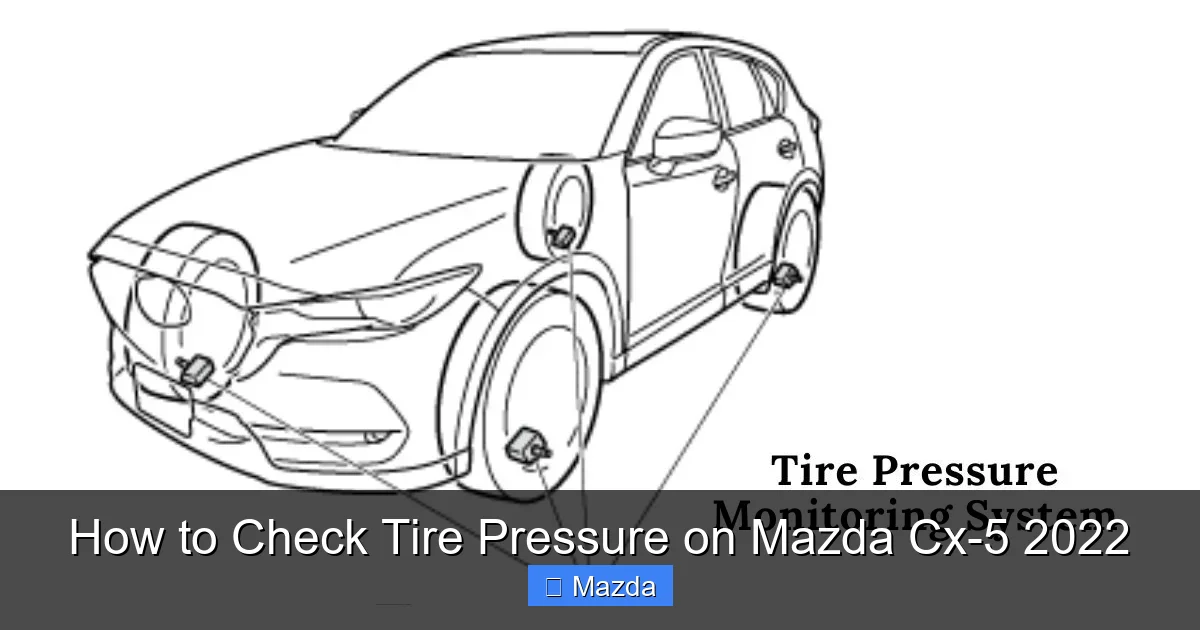
Visual guide about How to Check Tire Pressure on Mazda Cx-5 2022
Image source: dealerimages.dealereprocess.com
How the TPMS Alert Works
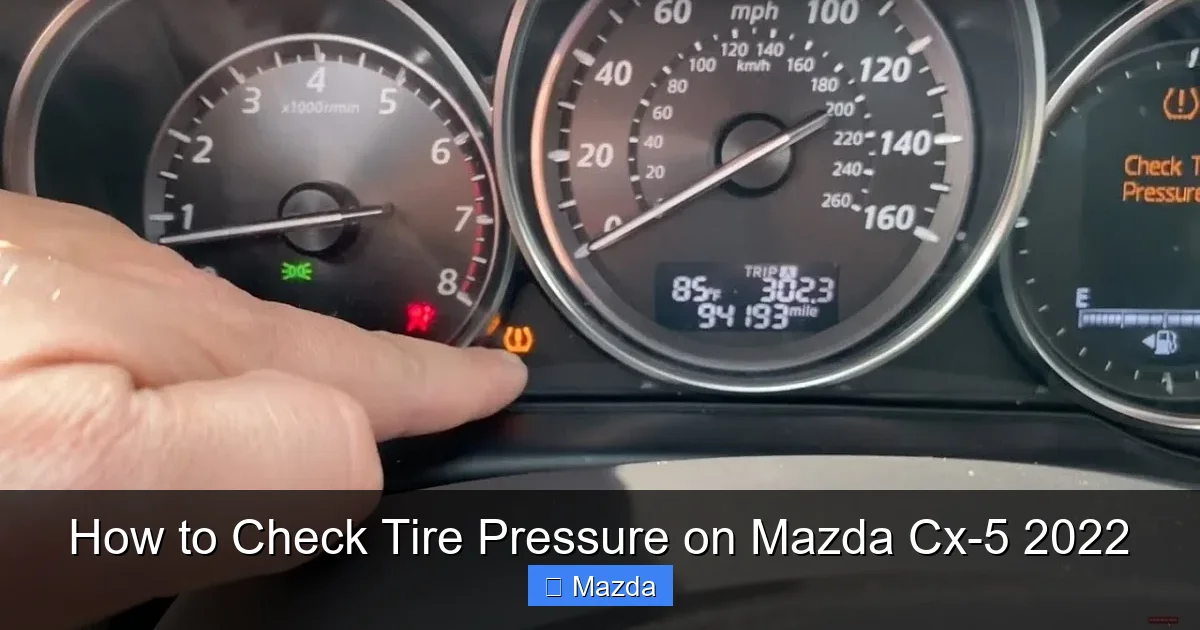
You’ll see a yellow, horseshoe-shaped icon with an exclamation point illuminate on your instrument cluster. This is not a “service soon” light—it’s a get-it-checked-now warning. The system does not tell you which tire is low on the 2022 CX-5 base model; you must check all four. Some higher trims may have a display that shows individual tire pressures. Remember, the TPMS is a last-resort safety net. It is not designed to catch a slow leak or minor seasonal pressure loss. That’s your job.
TPMS Limitations and Maintenance
The sensors are powered by internal batteries that last roughly 7-10 years. On a 2022 model, you likely won’t face battery failure until the late 2020s or early 2030s. However, sensors can be damaged during tire service. If you have a tire replaced or rotated, the shop may need to reprogram the sensor to the CX-5’s computer. Also, after seasonal tire changes (like putting on snow tires), the TPMS may need to be relearned. This is a separate process from just checking pressure. For more on Mazda-specific service procedures, resources like our guide on how to reset a Mazda CX-5 service light cover similar menu-driven diagnostic systems.
The Gold Standard: How to Manually Check Tire Pressure with a Gauge
Relying solely on the TPMS is a gamble. The best practice is a physical check with a reliable gauge at least once a month. Here’s your step-by-step guide for the CX-5.
Visual guide about How to Check Tire Pressure on Mazda Cx-5 2022
Image source: avtotachki.com
Step 1: Find the Correct Pressure
Do not guess. Do not use the pressure printed on the tire’s sidewall—that’s the maximum the tire can hold, not what your CX-5 needs. Open the driver’s door and look for the yellow and white tire information sticker on the door jamb. For a typical 2022 CX-5, the recommended cold inflation pressure is usually 33 PSI for all four tires, but this can vary by trim and wheel size. The sticker will list pressures for front, rear, and the spare. Write this number down or keep it in your phone.
Step 2: Get a Good Gauge
Skip the cheap pencil-style gauges at gas stations. Invest $10-$20 in a digital or high-quality dial gauge from an auto parts store. They are more accurate and easier to read. Store it in your CX-5’s glove compartment.
Step 3: Check “Cold” Tires
“Cold” means the car hasn’t been driven for at least three hours, or you’ve driven less than a mile. Driving heats the tires and air inside, giving a falsely high reading. This is the most common mistake.
Step 4: The Actual Check
1. Remove the valve stem cap (screw it off and put it in your pocket).
2. Press the gauge firmly onto the valve stem. You should hear a brief hiss of air.
3. Hold it straight and steady for a second. Read the pressure on the gauge.
4. Compare to your door jamb spec.
5. If low, add air in short bursts from a compressor, re-checking frequently.
6. Never exceed the max pressure on the tire sidewall when adding air.
7. Replace the valve cap securely. It keeps dirt and moisture out.
Repeat for all four tires. And yes, check the spare! Your CX-5’s temporary spare (if equipped) often requires 60 PSI, which is much higher than the main tires.
Using Your CX-5’s In-Car TPMS Display (If Equipped)
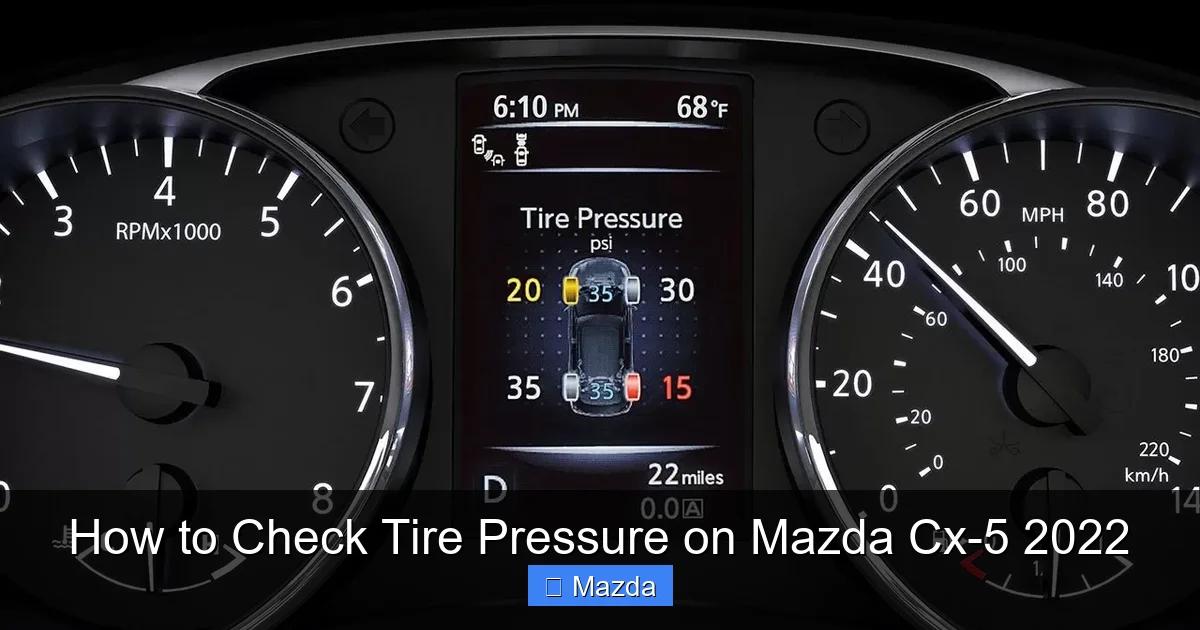
Some 2022 CX-5 trims include a feature that shows individual tire pressures on the center display. This is a fantastic tool. To access it, start the car (or turn the ignition to ON), then use the steering wheel controls or the infotainment knob to navigate to the vehicle settings or tire information menu. The path is typically: Applications > Vehicle Status > Tire Pressure. Here, you can see the real-time PSI for each wheel. This is great for confirming after you’ve manually adjusted pressures. However, remember this is still an electronic system. If a sensor fails, the display may show dashes or an erroneous reading. That’s why the manual gauge cross-check is vital.
Visual guide about How to Check Tire Pressure on Mazda Cx-5 2022
Image source: fourwheelask.com
What to Do If TPMS Shows a Single Low Tire
If your display shows one tire significantly lower than the others, you have a leak. First, try adding air to bring it to spec. If it goes low again within a day or two, you have a puncture or a faulty valve stem. You’ll need a tire repair or a new sensor. Driving on a significantly under-inflated tire can damage the tire’s internal structure and the TPMS sensor itself.
Resetting the TPMS Light After Inflation
This is a crucial step many owners miss. The TPMS light is a warning lamp, not an automatic reset system. Once you’ve inflated all tires to the correct pressure, you must tell the CX-5’s computer that the issue is resolved. Here’s how for the 2022 model:
- Ensure all tires are inflated to the exact pressure listed on the door jamb sticker.
- Turn the ignition ON (do not start the engine).
- Use the steering wheel controls or the infotainment system to go to: Applications > Vehicle Settings > TPMS.
- Select “Initialize” or “Calibrate” (the exact wording may vary).
- The system may beep or show a message like “Calibration in Progress.” Drive the vehicle at a steady speed above 20 mph for about 10-15 minutes. The system will re-learn the new pressure values.
- The light should go off after successful recalibration. If it remains on, re-check pressures. One tire may still be slightly off, or there could be a sensor fault.
Important: If you rotate your tires (front to back), the CX-5 may also require a TPMS relearn procedure, as it identifies each wheel by sensor ID. This often requires a special tool at a tire shop. For other common Mazda dashboard light procedures, you might find parallels in our article on resetting the Mazda CX-5 service light, which also involves navigating the vehicle settings menu.
Seasonal and Long-Term Tire Care for Your CX-5
Tire pressure isn’t a “set it and forget it” deal. It’s dynamic and changes with conditions.
The Winter Pressure Drop
As temperatures fall in late fall and winter, the air inside your tires contracts, and pressure drops. It’s normal to see a 1-2 PSI loss for every 10°F drop. This means you’ll likely need to add air to your CX-5’s tires as winter sets in to maintain the manufacturer’s recommended cold pressure. Come spring and summer, pressure will increase. Never let air out of a hot tire to reach spec—wait for it to cool. Over-inflating for hot weather can be just as dangerous as under-inflation in winter.
Storage and Long-Term Parking
If you plan to store your CX-5 for an extended period (several months), inflate the tires to the maximum pressure listed on the tire sidewall. This helps prevent flat spots from developing. When you bring the car out of storage, check and adjust pressure to the normal driving spec before your first trip.
Professional Inspection and Rotation
Even with perfect pressure, tires need regular rotation (every 5,000-8,000 miles) to ensure even wear. During a rotation is the perfect time for a professional to inspect tires for uneven wear patterns, damage, and to check the TPMS sensor’s condition. They can also verify your gauge’s accuracy if you’re suspicious.
Conclusion: Your Simple Path to Safety and Savings
Checking the tire pressure on your 2022 Mazda CX-5 is a five-minute monthly habit that pays massive dividends. It directly protects you and your passengers, saves you money at the pump, and extends the life of your expensive tires. The process is straightforward: find the correct PSI on your door jamb, use a reliable gauge on cold tires, adjust as needed, and remember to reset the TPMS system after any inflation. Don’t let the TPMS light be your only alert; by then, the pressure is already dangerously low. Make it a ritual. Your CX-5—and your peace of mind—will thank you for it. For specific procedures on other vehicles, such as learning how to check tire pressure on a Honda Civic 2019 or how to check tire pressure on a Nissan Altima, the core principles of manual checking remain the same across all makes and models.
Frequently Asked Questions
How often should I check the tire pressure on my 2022 Mazda CX-5?
You should check all tires, including the spare, at least once a month and before any long road trip. Temperature changes can cause pressure to fluctuate, so be extra vigilant during seasonal transitions.
Where do I find the correct tire pressure for my CX-5?
The definitive source is the tire information sticker located on the driver’s side door jamb when you open the door. It lists the recommended cold inflation pressure for the front and rear tires, as well as the spare. Never use the pressure molded onto the tire’s sidewall.
What does a solid (non-flashing) TPMS light mean?
A solid yellow TPMS light means at least one tire is significantly under-inflated (typically 25% below the recommended pressure). You should safely pull over as soon as possible and check all four tires with a gauge, then add air to the correct spec.
How do I reset the TPMS light after adding air?
After inflating all tires to the correct door-jamb pressure, turn the ignition ON. Go to Applications > Vehicle Settings > TPMS on your infotainment screen and select “Initialize” or “Calibrate.” Then drive above 20 mph for 10-15 minutes for the system to relearn the new pressures.
Can a tire gauge be inaccurate?
Yes, especially cheap pencil gauges. Digital and dial gauges are more reliable. If you suspect your gauge is off, have it checked against a known-good gauge at a tire shop. A gauge that’s off by even 2-3 PSI defeats the purpose of checking.
Does the TPMS sensor itself need maintenance?
The sensor’s internal battery lasts about 7-10 years. If the TPMS light starts flashing (not solid), it often indicates a sensor fault or dead battery, requiring sensor replacement. The valve stem cap should always be used to keep dirt and moisture out of the sensor.