
Can You Fit a 4×8 Sheet of Plywood in a Toyota Highlander?

Yes, you can fit a standard 4×8-foot sheet of plywood in a Toyota Highlander, but it requires folding all rear seats and often the front passenger seat as well. The key is the sheet’s diagonal measurement versus the Highlander’s cargo length with seats down. While possible, securing the load properly and understanding your specific model year’s dimensions is crucial for a safe and scratch-free transport.
Key Takeaways
- The Highlander’s cargo length with all seats folded is approximately 84-88 inches, just short of a full 96-inch 4×8 sheet. You must angle the sheet diagonally from the rear tailgate to the front passenger seatback.
- Folding the front passenger seat is almost always necessary. Without doing this, the sheet will not fit lengthwise, even diagonally, in most model years.
- Sheet thickness matters. Thinner plywood (like 1/4″ or 1/2″) is more flexible and easier to maneuver and angle than thick, rigid 3/4″ sheets.
- Protect your interior. Always use a moving blanket, cardboard, or protective film between the plywood and your seats, trim, and tailgate to prevent scratches and damage.
- Secure the load meticulously. Use ratchet straps or strong ropes anchored to the Highlander’s built-in cargo hooks. An unsecured sheet is a major safety hazard.
- Know your specific model year. Cargo dimensions have varied slightly over the years. A 2020+ model may have a fraction more space than a 2014-2019 model due to design tweaks.
- Consider alternative vehicles for frequent large loads. If transporting full sheets is a regular task, a truck or a larger SUV like a Toyota Sequoia or Sienna might be a more efficient tool for the job.
📑 Table of Contents
- Can You Fit a 4×8 Sheet of Plywood in a Toyota Highlander?
- Understanding the Battle of Dimensions: Highlander vs. Plywood
- The Step-by-Step Loading Process: Making the Impossible, Possible
- Alternative Techniques and Workarounds
- Safety First: Critical Precautions and Best Practices
- Model Year and Trim Level Considerations
- When the Highlander Isn’t Enough: Better Vehicles for the Job
- Conclusion: It’s a Go, But With Conditions
Can You Fit a 4×8 Sheet of Plywood in a Toyota Highlander?
So, you’re staring at that pristine, full-sheet of plywood at the lumber yard. Your project is ready to start, but there’s a tiny hurdle between you and your workshop: getting that giant, flat, awkward rectangle home. Your trusty vehicle? A Toyota Highlander. It’s a fantastic, spacious three-row family hauler, but is it a makeshift lumber truck? The short answer is yes, you can fit a standard 4×8 sheet of plywood in a Toyota Highlander. The long answer involves a bit of geometry, some seat-folding acrobatics, and a heavy dose of preparation to do it without damaging your car or your cargo. Let’s break down exactly how to make it work, what to watch out for, and why this isn’t as simple as just tossing it in the back.
This question plagues DIYers and homeowners everywhere. It’s the same logic that leads people to ask if you can fit a queen mattress in a Subaru Outback or if a 65-inch TV fits in a Toyota Corolla. It’s all about understanding the specific interior dimensions of your vehicle versus the standard dimensions of common household goods. The Toyota Highlander sits in a popular mid-size SUV category, prized for its passenger space. But its cargo space, while generous for suitcases and groceries, hits a physical limit when faced with a 96-inch (8-foot) long, 48-inch wide sheet of material. The trick is leveraging the entire cabin length, from the tailgate to the dashboard, by folding every possible seat.
Understanding the Battle of Dimensions: Highlander vs. Plywood
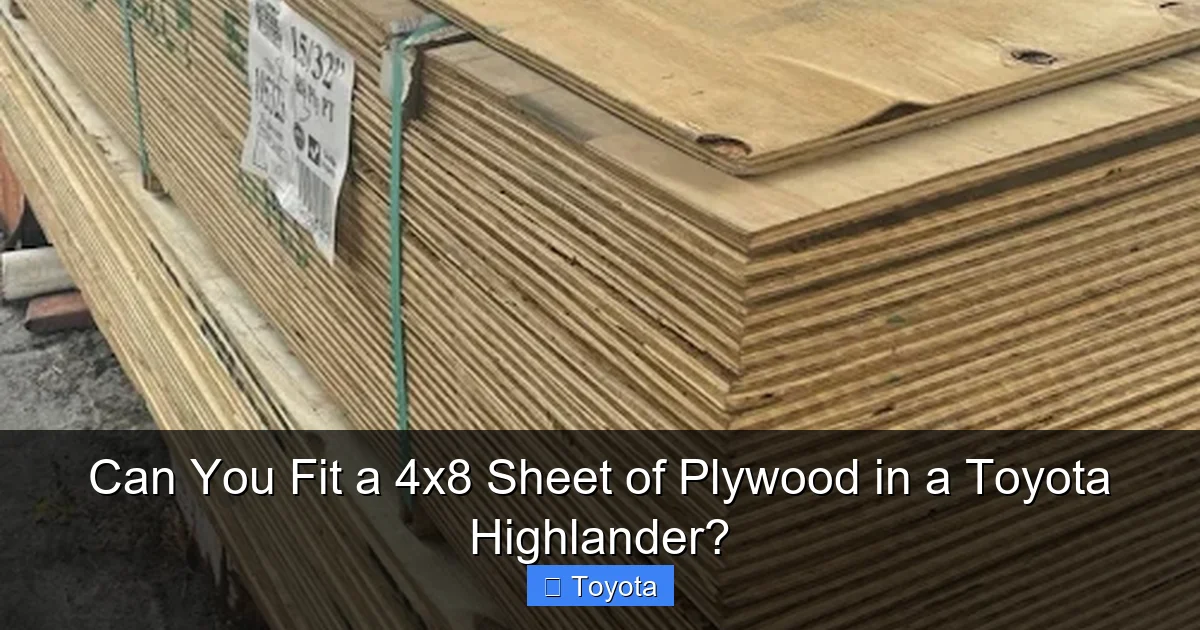
Before we talk technique, we need to talk numbers. A standard sheet of plywood, OSB, or drywall is 4 feet wide by 8 feet long. That’s 48 inches by 96 inches. The critical dimension for fitting it in any SUV is the diagonal measurement of your available cargo space. You’re not sliding it in flat; you’re angling it from the rear opening to the front of the cabin.
Visual guide about Can You Fit a 4×8 Sheet of Plywood in a Toyota Highlander?
Image source: westburyhardware.com
The Highlander’s Cargo Footprint
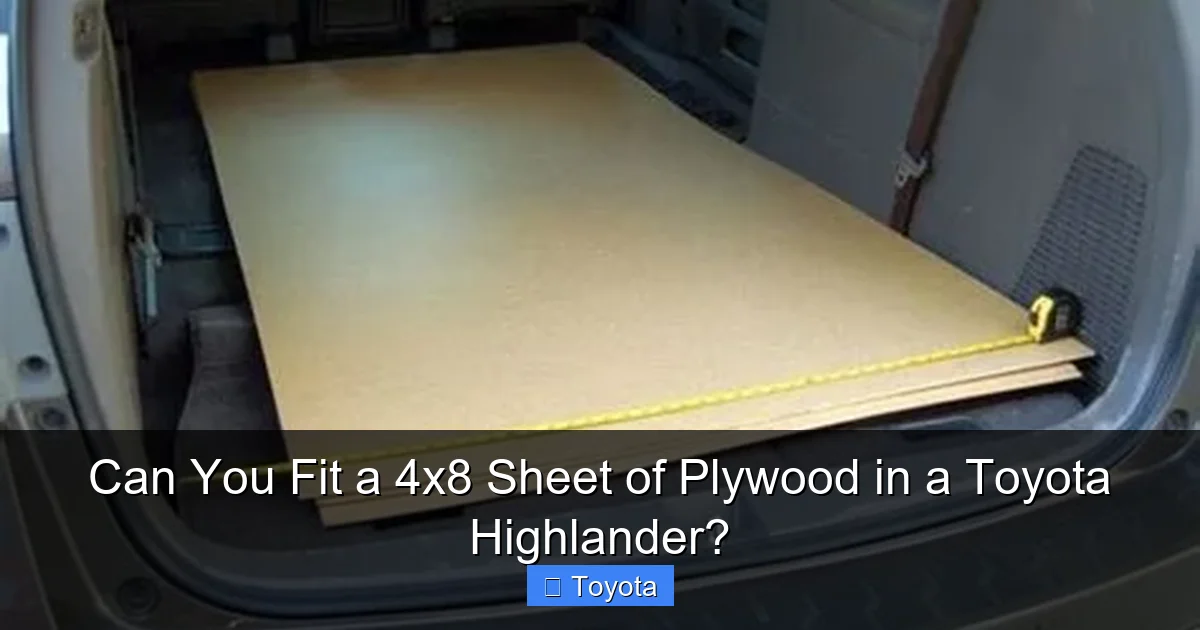
The Toyota Highlander’s cargo area length varies slightly by model generation. With the third-row seats folded flat (which they must be), and the second-row seats also folded, you create one long, mostly flat space from the tailgate to the back of the front seats.
- 2020-Present (XU70) Highlander: With 2nd and 3rd rows folded, the floor length is approximately 84-88 inches, depending on seat position. The width between wheel wells is about 40-42 inches.
- 2014-2019 (XU50) Highlander: Similar configuration yields a floor length of roughly 80-84 inches. Earlier models may have a few inches less.
See the problem? Even the longest Highlander cargo length (88″) is still 8 inches shorter than the 96-inch plywood sheet. You cannot place it in the vehicle lengthwise without angling it. That’s where the diagonal comes in. The diagonal of the Highlander’s folded-cabin rectangle (length x width) is what truly matters. With a width of ~42″ and a length of ~88″, the diagonal is roughly sqrt(42² + 88²) = sqrt(1764 + 7744) = sqrt(9508) ≈ 97.5 inches. That’s just barely over 96 inches. This is why it’s a tight, precise fit that requires perfect execution.
The Plywood’s Reality
Not all “4×8” sheets are created equal. The nominal 4×8 measurement is before sanding and planing; actual dimensions are typically 49″ x 97″ or even 49.5″ x 97.5″. This half-inch matters! Furthermore, thickness is a huge variable. A 1/4″ sheet is flimsy and can be bent slightly to fit the diagonal path. A 3/4″ sheet is incredibly rigid and will not bend. A 1/2″ sheet is the most common and is stiff but manageable with help. Your approach will change based on this thickness.
The Step-by-Step Loading Process: Making the Impossible, Possible
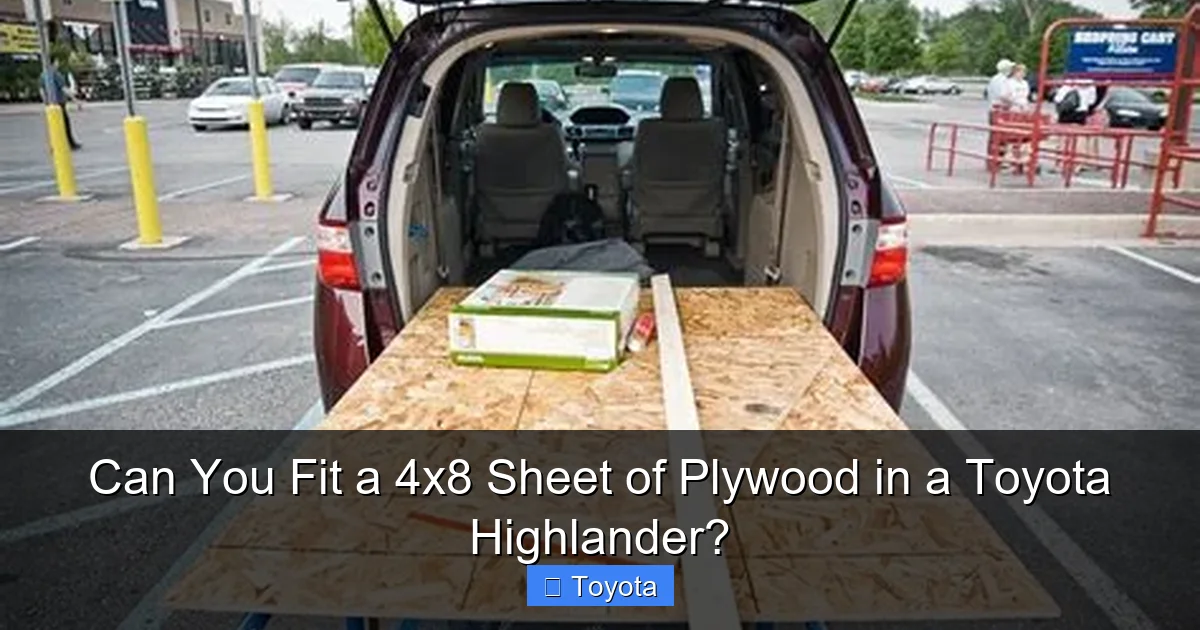
Alright, theory is done. Let’s get practical. Here is the definitive, step-by-step method for getting a full 4×8 sheet into your Highlander. You’ll need at least one strong helper, preferably two.
Visual guide about Can You Fit a 4×8 Sheet of Plywood in a Toyota Highlander?
Image source: autozonic.com
Step 1: Prepare the Vehicle and Your Tools
This is non-negotiable. Go to the effort now to avoid heartache later.
- Fold all seats: Lower the third-row seats completely. Then, fold the second-row seats. In most Highlanders, the second-row seats fold flat, but the seatbacks themselves create a small lip. You must fold them so the entire cabin from tailgate to front seatbacks is as flat as possible.
- Fold the front passenger seat: This is the most critical step. The front passenger seat must be folded forward and reclined, or in some models, fully folded flat onto the floor (if it has a “fold-flat” feature). You are creating the final inch or two of length needed. Without this, the sheet will hit the seatback.
- Lay down protection: Place a thick moving blanket, old comforter, or several pieces of cardboard over the entire folded seat and cargo area floor. This protects your Highlander’s leather or fabric from scratches and the weight of the plywood.
- Clear the path: Remove all floor mats, cargo nets, and anything else from the cabin floor.
Step 2: The Lift and Angle
With your helper(s), lift the sheet together. It’s heavy, and you need to control it completely.
- Carry the sheet to the rear of the Highlander. Have one person at the tailgate end and one at the middle.
- Tilt the sheet so it’s at a 45-degree angle or so relative to the vehicle. The leading corner (the one going in first) should be the rear-lower corner of the sheet.
- Guide the leading corner into the cargo area first, aiming it toward the front passenger footwell area (where the folded seat is).
- As the sheet enters, slowly rotate it and slide it forward. The sheet will essentially be “walking” through the cabin on a diagonal path. The helper at the back will be pushing and guiding, while the helper inside is pulling and steering.
- The goal is to have the sheet rest diagonally across the entire folded cabin, with one corner near the tailgate latch and the opposite corner resting on the folded front passenger seatback or floor.
Step 3: Final Positioning and Securing
Once the sheet is fully inside and lying diagonally, you must secure it. This is a safety requirement. An unsecured 100+ lb sheet of wood becomes a lethal projectile in a sudden stop.
- Use the cargo hooks: Your Highlander has metal tie-down hooks in the cargo area floor (usually four, two on each side). This is what they’re for.
- Use ratchet straps: This is the best method. Loop a strap through a hook, over the center of the plywood sheet, and attach it to the opposite hook. Tighten it firmly. Do this in two directions (an “X” pattern) if possible to prevent any shifting.
- Alternative: If you don’t have ratchet straps, use several strong ropes or bungee cords, but ensure they are tight and knotted securely.
- Close all doors and tailgate: Gently but firmly shut the tailgate. It should close without excessive force. If it binds, your sheet is positioned wrong. Re-position it. Do the same for the rear and front passenger doors. The sheet will likely be pressing slightly against the back of the front passenger seat and the tailgate seal. This is normal, but ensure the seals close fully.
Alternative Techniques and Workarounds
What if the diagonal method seems too daunting, or you have a particularly thick, rigid sheet? Here are other strategies.
Visual guide about Can You Fit a 4×8 Sheet of Plywood in a Toyota Highlander?
Image source: autozonic.com
The “Two-Person Slide” (For Thinner Sheets)
For 1/4″ or 1/2″ plywood, you can sometimes get away without folding the front seat if you have two people. One person stands at the tailgate, the other at the front passenger door. You slide the sheet in horizontally while the person in front pulls and angles the leading edge up and over the folded second-row seats, guiding it to rest on the dashboard (protected by a blanket!). This is trickier and risks scratching the dash, so protection is key.
Partial Loading: Cutting the Sheet
The most obvious solution is to have the lumber yard cut the 4×8 sheet into smaller, more manageable pieces. Two 4×4 sheets or four 2×4 sheets will fit with ease, even with all seats up. This is often the smartest move for smaller projects or if you don’t have help. The cost of a cut is usually minimal or free at big-box stores.
Consider a Roof Rack
If your Highlander has a factory or aftermarket roof rack, you can transport the sheet on top. You’ll need long enough crossbars and proper tie-down straps (cam buckle straps are best). This keeps the interior clean but introduces wind noise, reduces fuel economy, and requires careful securing at highway speeds. Ensure your load does not exceed the roof rack’s weight capacity (typically 150-200 lbs). A full sheet of 3/4″ plywood weighs about 70-80 lbs, so it’s usually within limits.
Safety First: Critical Precautions and Best Practices
Skipping these steps can lead to damaged interior, a lost load on the highway, or worse.
- Never drive with an unsecured load. This is the #1 rule. The forces during braking or a collision are immense.
- Check your visibility. The sheet will block your rearview mirror. You must rely on your side mirrors. Ensure they are properly adjusted before you move. Be extra cautious when changing lanes or reversing.
- Mind the weight. A full sheet of 3/4″ plywood weighs 70-80 lbs. Combined with the awkward handling, it’s easy to strain your back. Lift with your knees, and don’t be afraid to ask for help from the lumber store staff.
- Protect your seals. When closing the tailgate on the sheet, do it gently. The plywood corner can tear the rubber tailgate seal if slammed. A small piece of cardboard over the corner can help.
- Test drive cautiously. Before merging onto a highway, drive a short distance on local roads. Listen for any creaking or shifting. Re-check your straps after the first 5-10 miles of driving, as loads can settle.
- Know the law. In many jurisdictions, it is illegal to have a load that obstructs your rearview. By blocking your mirror, you are technically in a legal gray area. Use your best judgment, drive defensively, and consider using a load extender flag if any part of the sheet extends past the tailgate (which it shouldn’t in this method).
Model Year and Trim Level Considerations
Not all Highlanders are created equal in the cargo department. Here’s what changes.
- Hybrid vs. Gas Models: The Highlander Hybrid (introduced in 2020) has its battery pack under the second-row seats. This can slightly raise the floor in the cargo area and may reduce the effective flat floor length by an inch or two. It may also make folding the second-row seats slightly different. Always measure your specific vehicle if you own a Hybrid.
- Captain’s Chairs vs. Bench Seat: In older model years (pre-2020), the second row was often a bench seat. Folding it creates a longer, flatter surface. The newer models (2020+) with optional captain’s chairs have two separate seats that fold individually. The gap between them might be a minor issue, but the overall length is similar. The captain’s chairs, when folded, might not create a perfectly continuous flat surface, but the length is the primary concern.
- All-Weather Floor Liners: If you have deep, ribbed all-weather mats, they can create a tripping hazard and may prevent a sheet from sitting flush. Remove them for the loading process.
- The Snow Button’s Role: You might have heard of the snow button in a Toyota Highlander. This feature modulates throttle response and shift points for better traction in slippery conditions. It has absolutely no effect on cargo capacity or space. Don’t confuse it with any cargo-specific function.
When the Highlander Isn’t Enough: Better Vehicles for the Job
If you find yourself regularly needing to transport 4×8 sheets, the Highlander is a compromise. You’re using passenger space for cargo. For frequent large loads, consider these alternatives:
- Toyota Tacoma or Tundra: A pickup truck is the natural tool. A 5-foot bed in a Tacoma will fit a 4×8 sheet flat between the wheel wells (though it will be 8 feet long, requiring a tailgate down or a bed extender). A full-size Tundra’s bed is even better.
- Toyota Sienna: The minivan is the unsung hero of cargo hauling. With all seats folded, the Sienna’s flat floor length exceeds 100 inches in many model years. A 4×8 sheet fits with room to spare. In fact, you can fit a queen mattress in a Toyota Sienna with ease, which is a similarly sized bulky item.
- Larger SUVs: Vehicles like the Toyota Sequoia or non-Toyota full-size SUVs (Ford Expedition, Chevrolet Tahoe) offer more straightforward, longer cargo areas that often fit a 4×8 sheet without angling, especially with the rear seats folded.
- Utility Trailer: The most versatile and damage-free solution. A small 4×8 utility trailer can be rented for a day from most hardware stores or U-Haul locations. It keeps your vehicle pristine and is designed for exactly this task.
Conclusion: It’s a Go, But With Conditions
So, can you fit a 4×8 sheet of plywood in a Toyota Highlander? Absolutely. It’s a testament to the vehicle’s versatile interior design that you can even attempt it. However, it’s not a simple slide-in job. It’s a deliberate process that requires folding every seat, using protection, enlisting help, and securing the load with extreme care. The Highlander’s diagonal measurement just clears the 96-inch hurdle, but you’re working with millimeters of margin. Your success depends on your specific model year, the plywood’s thickness, and your willingness to prepare properly.
For the occasional DIY project, this capability is a huge advantage of the Highlander over a smaller sedan. You wouldn’t even try this in something like a Toyota Camry, where cargo space is designed for suitcases, not sheets of lumber. But if large, flat material transport is a core need, you should weigh the compromises against the utility of a dedicated truck, van, or minivan. For now, measure your interior, grab a friend, lay down a blanket, and get that project started. Just remember to drive slowly and check those straps!
Frequently Asked Questions
Can I fit a 4×8 sheet of plywood in a Highlander without folding the front passenger seat?
In almost all model years, the answer is no. The cargo length with only the rear seats folded is typically 70-75 inches, far short of the 96-inch sheet. Folding the front seat is essential to create the necessary diagonal length.
What is the maximum thickness of plywood I can fit using this method?
1/2″ thick plywood is the most common and manageable. 1/4″ sheet is very easy. 3/4″ plywood is extremely rigid and will be a very tight, stiff fit that requires significant force to angle into place and may put more stress on interior panels. It can be done but is not ideal.
Will the plywood damage my Highlander’s interior or seats?
It absolutely will if you don’t protect it. The wood’s edges and corners are sharp and can easily cut into leather, fabric, and plastic trim. Always use thick moving blankets, cardboard, or painter’s film between the plywood and every surface of your car.
Does the Highlander Hybrid have less cargo space for plywood than the gas model?
Yes, potentially. The Hybrid’s battery pack resides under the second-row seats, which can raise the floor and slightly reduce the effective flat length. The difference is usually small (1-2 inches), but on a fit that’s already borderline, it could be the difference between success and failure. Measure your specific Hybrid’s interior.
What if my 4×8 sheet is slightly longer than 96 inches (like 97″)?
This is common with actual sheet dimensions. You will need to be extremely precise with your diagonal angle. It may require folding the front seat into its absolute most forward and reclined position. In some cases, you might need to angle it even more aggressively or accept that it will press very firmly against the tailgate and dashboard.
Can I transport the plywood on the roof instead of inside?
Yes, if your Highlander has a roof rack with adequate crossbars and weight capacity. You must use proper ratchet straps or cam buckle straps to secure it firmly in multiple directions. Be aware of increased wind noise, reduced fuel economy, and the need to drive cautiously. Ensure the load does not extend past the front or rear of the vehicle without proper flags.
